The Truth About Pore Strips, Pore Vacuums, and 'Shrinking' Your Pores
You cannot shrink a pore. But you can change how visible it is — and almost everything sold to 'minimize' pores is pulling the wrong lever.
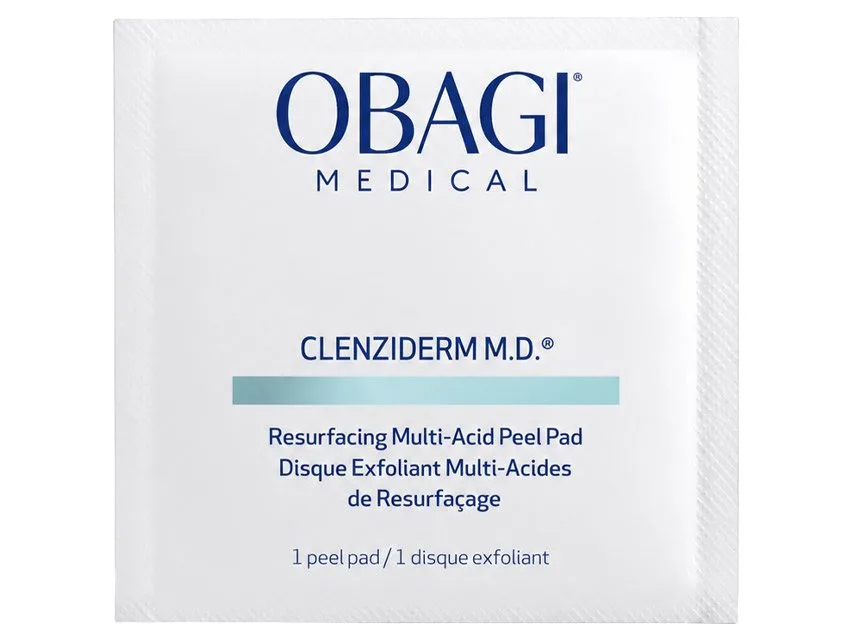
Where most at-home peel pads pick one or two acids and hide the strengths, these declare four, 4% glycolic, 3% phytic, 2% salicylic and 1% mandelic, chosen to work at different depths and solubilities, and put niacinamide seventh to calm what they stir up. The dual-textured pad and the single-use sachets are the clinical-brand touches; the alcohol, menthol and musk are the CLENZIderm habits the formula could have lost.
A well-reasoned four-acid pad, every strength disclosed, niacinamide placed to calm it, single sachets to keep it fresh, and a real if brand-run eight-week study. For oily, congested, resilient skin it resurfaces and clears on schedule. It also carries denatured alcohol, menthol and a musk fragrance that a leave-on acid did not need, it is new enough that its tolerability record is thin, and $100 for thirty pads is a physician-brand price.
These pads launched in August 2026 and have only a few dozen reviews, so this assessment rests on the disclosed acid percentages, the independent literature for each acid and Obagi's eight-week brand study, which reports participant-agreement figures and has not published its sample size. Tolerability across skin types beyond the oily, resilient target is not yet well documented.
The case for it
Same rule for everyone. “Good choice” is the verdict on 9,564 of 45,024 concern verdicts across the catalog; rule R5 decided 9,072 of them. As of September 25, 2026, engine 5.1.1.
Brand or formulator? Disclose a concentration or correct a fact →
The studies behind the evidence row
The case for it
Cautions: known irritants.
Same rule for everyone. “Strong choice” is the verdict on 1,459 of 45,024 concern verdicts across the catalog; rule R2 decided 892 of them. As of September 25, 2026, engine 5.1.1.
Brand or formulator? Disclose a concentration or correct a fact →
The studies behind the evidence row
The case for it
Same rule for everyone. “Strong choice” is the verdict on 1,459 of 45,024 concern verdicts across the catalog; rule R2 decided 892 of them. As of September 25, 2026, engine 5.1.1.
Brand or formulator? Disclose a concentration or correct a fact →
The studies behind the evidence row
The case for it
What would change this: A declared concentration would move this to a firmer reading of the dose.
Same rule for everyone. “Promising” is the verdict on 7,858 of 45,024 concern verdicts across the catalog; rule R9p decided 7,858 of them. As of September 25, 2026, engine 5.1.1.
Brand or formulator? Disclose a concentration or correct a fact →
The studies behind the evidence row
The case for it
Same rule for everyone. “Good choice” is the verdict on 9,564 of 45,024 concern verdicts across the catalog; rule R5 decided 9,072 of them. As of September 25, 2026, engine 5.1.1.
Brand or formulator? Disclose a concentration or correct a fact →
The studies behind the evidence row
The case for it
Cautions: known irritants; a photosensitising active — use sun protection.
What would change this: A declared concentration would move this to a firmer reading of the dose.
Same rule for everyone. “Good choice” is the verdict on 9,564 of 45,024 concern verdicts across the catalog; rule R5 decided 9,072 of them. As of September 25, 2026, engine 5.1.1.
Brand or formulator? Disclose a concentration or correct a fact →
The studies behind the evidence row
The case for it
Cautions: a photosensitising active — use sun protection.
What would change this: A declared concentration would move this to a firmer reading of the dose.
Same rule for everyone. “Promising” is the verdict on 7,858 of 45,024 concern verdicts across the catalog; rule R9p decided 7,858 of them. As of September 25, 2026, engine 5.1.1.
Brand or formulator? Disclose a concentration or correct a fact →
The studies behind the evidence row
A verdict is DermApproved’s assessment of how well a product’s ingredients fit a concern — never a claim about what the product treats. Evidence dots and collected reviews sit beside it and are never blended in. Rules 0.5.1 · evidence table ev-2026.09-r228 · how we decide
Four, three, two, one. Obagi prints the acid percentages on the box of its new peel pads, 4% glycolic, 3% phytic, 2% salicylic, 1% mandelic, and for a brand that sold its previous at-home peel for years without stating a single strength, that is the most important thing about them. The Revivify Multi-Acid Facial Peel, a prep-and-peel kit that has been slipping out of retailers through 2026, asked you to trust the name. The Resurfacing Multi-Acid Peel Pads, launched in August 2026 under the CLENZIderm M.D. banner, tell you what you are putting on your face, and that changes how the product can be judged.
The four-acid logic holds up. Glycolic at 4% is the small, fast, water-soluble acid doing the visible surface work, loosening the compacted cells so skin is smoother by morning. Salicylic at 2%, the monograph maximum, is oil-soluble and follows sebum into the pore, which is the comedolytic inheritance from the CLENZIderm system and the reason these pads are aimed at congestion and breakouts as much as texture. Phytic at 3% is the gentle chelating acid Obagi has used in Nu-Derm for decades, binding the metal ions behind oxidative pigment and mildly inhibiting tyrosinase, and mandelic at 1% is the large, slow AHA with a record in darker skin where glycolic alone can provoke marks. All four are partly neutralised with sodium hydroxide, and niacinamide sits seventh, directly ahead of the salicylic acid, to calm redness, support the barrier the acids thin and add its own slow tone work. Willow bark extract and glycerin follow. It is a considered formula, broader than a single-acid pad and more honest about its doses than most of the category.
The pad itself is a lyocell disc, smooth on one side and lightly ridged on the other, sealed in a foil sachet so the acids and the alcohol do not evaporate or weaken over the weeks a jar of pads would sit open. Wipe it over cleansed, dry skin in the evening, avoid the eyes, do not rinse, and follow with an oil-free moisturizer once it has dried. The sensation is a tingle for a minute with a cool menthol edge, a sharper sting on any open spot, a little pinkness for half an hour, and then, by morning, skin that is noticeably smoother. Over two to four weeks pores look cleaner and congestion loosens; Obagi's eight-week study reported most participants seeing smoother texture at four weeks and, at eight, fewer breakouts, brighter tone and faded post-blemish marks. The study is the brand's own and it has not published the participant count, so the percentages are perception data rather than proof, but the effects they describe are what four acids at these strengths would be expected to produce on the right skin.
The right skin is the qualifier. Alcohol denat. is second in the list, menthol is present, and ethylene brassylate, a synthetic musk, adds fragrance to a product that will sit on the face all night. On oily, resilient, congestion-prone skin those are tolerable and the alcohol is arguably useful, carrying the acids and drying to a matte finish. On combination, normal, dry or sensitive skin they are three unnecessary irritants layered on top of four acids, and they are the reason the early complaints, stinging, dryness and flaking in the first weeks, cluster among users who were not the target. A clinical brand launching a new leave-on acid in 2026 could have dropped all three; that it kept them is the CLENZIderm line's oldest habit.
Because the pads are new, the honest caveat is that their real-world tolerability record is a few dozen reviews long. The acids are well known; the combination, the pad and the alcohol base are not yet proven across the range of skin that will buy them. Obagi's own guidance, two or three nights a week as tolerated, is the right pace, and starting at two is where most people should stay for the first fortnight.
The two-sided pad deserves a word, because it is the most useful design detail and the easiest to misuse. The smooth side deposits the solution with almost no friction and is what most faces should use for most passes; the ridged side adds a physical buff that, on rough or congested patches, helps the acids reach compacted cells, and that, dragged across the whole face on the third night of the week, is how people end up with a raw jawline. The pad gives you the choice; the discipline is yours.
On price, $100 for thirty pads is about $3.30 a treatment and lasts ten to fifteen weeks at the recommended frequency, which is $25 to $40 a month. That is a physician-brand premium over drugstore peel pads that disclose one or two acids, and a reasonable price against clinical-brand pads that disclose nothing. The value case rests on the four-acid design and the transparency; the alcohol, menthol and musk are the parts you pay for and would rather not.
For oily, combination or normal skin with congestion, uneven texture and lingering post-acne marks, and the resilience to take a four-acid pad two or three nights a week, this is a well-built, well-labelled option that should deliver what its box says. For sensitive, dry, rosacea-prone or barrier-compromised faces, the alcohol and fragrance settle the question before the acids do, and a gentler polyhydroxy or mandelic product will resurface without the sting.
The hero actives that drive this product's performance.
| Ingredient | Function | Evidence |
|---|---|---|
| Glycolic Acid 4% (4%) | The lead acid at a declared 4%, third in the list and partly neutralised by the sodium hydroxide, doing the surface work: loosening the compacted outer cells so the pad leaves skin smoother by the next morning. At this level in a leave-on pad used two or three nights a week it resurfaces steadily rather than peeling. | Established mechanism for Rough Texture · established mechanism |
| Salicylic Acid 2% (2%) | The oil-soluble acid at the monograph maximum, eighth in the list, reaching into pores the water-soluble acids cannot; it is the CLENZIderm inheritance in the formula and the reason the pads are pitched at congested, breakout-prone skin rather than only at texture. | Established mechanism for Rough Texture · established mechanism |
| Phytic Acid 3% (3%) | A chelating plant acid at 3%, fourth in the list, that exfoliates gently, binds the metal ions that drive oxidative pigment and mildly inhibits tyrosinase, which is where the pads' brightening and post-blemish-mark claims come from; Obagi has used it as its sensitive-skin acid in Nu-Derm for decades. | Not yet assessed |
| Mandelic Acid 1% (1%) | The largest and slowest AHA at a modest 1%, adding lipophilic exfoliation and a track record in darker skin tones where glycolic alone can provoke pigment; it rounds out a four-acid blend that works at different depths and speeds. | Limited for Acne |
| Niacinamide | Seventh in the list, directly ahead of the salicylic acid, niacinamide is the counterweight: it calms the redness four acids can raise, supports the barrier lipids they thin, and adds its own tone-evening work to the phytic acid's, which is why the pads claim clarity as well as resurfacing. | Emerging for Hyperpigmentation |
Ingredient standings describe the active at treatment-level doses and vehicles; this product's own condition grades weigh its actual formula.
Aqua (Water), Alcohol Denat., Glycolic Acid, Phytic Acid, Ethoxydiglycol, Sodium Hydroxide, Niacinamide, Salicylic Acid, Mandelic Acid, Salix Alba (Willow) Bark Extract, Glycerin, Menthol, Ethylene Brassylate, Phenoxyethanol
treatment
PM
Wipe one pad over cleansed, dry skin in the evening, two or three nights a week, avoiding the eyes; do not rinse, and follow with an oil-free moisturizer once it has dried. Keep retinoids and benzoyl peroxide for the other nights, and wear sunscreen every morning.
A tingle on the night and smoother skin by the next morning after the first use. Obagi's study reported visibly smoother texture at four weeks and, at eight, smoother skin, fewer breakouts and brighter tone with faded post-blemish marks; the pigment work of phytic and mandelic acids is the slowest part and needs the full eight to twelve weeks.
The pads combine four acids that the exfoliation literature characterises separately, and the rationale for stacking them is that each works at a different depth and solubility. Glycolic acid, the smallest alpha-hydroxy acid, penetrates fastest and reduces corneocyte cohesion in the lower stratum corneum; a 2013 review in Clinical, Cosmetic and Investigational Dermatology summarised its use across acne, scarring, melasma, post-inflammatory hyperpigmentation and photoaging, noting that depth of effect scales with concentration, contact time and pH and that it is safe in Fitzpatrick types I to IV. At a declared 4%, partly neutralised, in a leave-on pad used two or three nights a week, it acts as a steady resurfacer rather than a peel. Salicylic acid at 2% is lipophilic and desmolytic, disrupting the junctions between corneocytes inside the sebum-filled follicle, which is the basis of its comedolytic action and its place in acne care. Phytic and mandelic acids are the gentler, slower members: phytic acid chelates metal ions and mildly inhibits tyrosinase, and mandelic acid, a large lipophilic AHA, penetrates slowly and is favoured in darker skin. Comparative peel work in melasma has found phytic acid combinations less effective than glycolic or salicylic-mandelic peels at professional strengths, which is consistent with their supporting rather than leading role here.
Niacinamide, seventh in the list ahead of the salicylic acid, addresses the two costs of a four-acid leave-on: it reduces inflammatory signalling and stimulates barrier lipid synthesis, and it inhibits melanosome transfer, contributing to the post-blemish-mark claim alongside the phytic and mandelic acids. Willow bark extract supplies salicylates and polyphenols in a minor role, and glycerin provides modest humectancy. The vehicle is a denatured-alcohol-and-water solution with ethoxydiglycol as a penetration enhancer, which improves delivery of the acids and dries to a matte finish at the cost of barrier dryness, and menthol and ethylene brassylate, a synthetic musk, are sensory additions without therapeutic effect. Sodium hydroxide partly neutralises the acids to a leave-on pH. Obagi's eight-week clinical study, reporting visibly smoother texture at four weeks and, at eight, smoother skin, improved breakouts and brighter tone with reduced post-blemish marks, is brand data with participant-agreement endpoints and an undisclosed sample size, and should be read as consistent with the acids' known effects rather than as independent confirmation.
Multi-acid leave-on pads at modest, disclosed strengths occupy a reasonable place in clinical advice for oily, congested or textured skin, typically as a two-or-three-nights-a-week step alternating with a retinoid or benzoyl peroxide, and the combination of glycolic and salicylic acids for surface and pore with phytic and mandelic acids for gentler, pigment-oriented work is a coherent design that practitioners would recognise as more thoughtful than the single-acid pads that dominate the category. Transparency about percentages is welcomed because it lets a clinician predict tolerance and advise on frequency. The reservations are about the vehicle: denatured alcohol, menthol and fragrance in a product left on overnight are avoidable irritants that increase barrier disruption and, in darker skin, the risk of post-inflammatory pigmentation that the phytic and mandelic acids are meant to address, so dermatologists would generally restrict the pads to resilient oily skin and steer sensitive, rosacea-prone, eczema-prone or melasma patients toward alcohol-free alternatives. As a new product with only a brand study behind it, expectations would be set on the known behaviour of the acids rather than on the marketing figures, with the usual instructions on sunscreen, spacing from other actives and pausing on irritated skin.
Use in the evening, two or three nights a week, on cleansed and thoroughly dry skin. Tear open one sachet, unfold the pad and wipe it over the face in gentle strokes, using the smooth side for a light pass and the ridged side only on rough or congested areas, and avoiding the eye contour, lips and any open or inflamed spots. Do not rinse; let the solution dry for a minute, then apply an oil-free moisturizer. Begin with two nights a week, spaced apart, for the first two weeks and add a third only if there is no lingering tightness, flaking or redness; if there is, drop back or pause. Keep retinoids, benzoyl peroxide and vitamin C for the other nights, and do not combine the pads with any other exfoliant. Wear broad-spectrum sunscreen every morning while using them and for a week after stopping. Discard the pad after one use and keep unopened sachets away from heat.
One hundred dollars for thirty pads is roughly $3.30 per treatment, and at Obagi's two or three nights a week the box lasts ten to fifteen weeks, so the running cost is $25 to $40 a month. That is a premium over drugstore peel pads with one or two disclosed acids and roughly level with other clinical-brand pads, most of which disclose less. What the money buys is a four-acid formula with every strength stated, niacinamide placed to soften it, sealed single sachets and Obagi's physician channel; what it does not buy is a gentler vehicle, since the alcohol, menthol and musk are the cheap part of the formula and the part that limits who can use it. It is also $75 cheaper than the Revivify kit it replaces while offering more than seven times the treatments. For oily, resilient skin already spending on a clinical acne routine, the value is fair; for anyone who needs to skip pads to stay comfortable, the per-treatment maths worsens quickly.
People with oily, combination or normal skin that is congested, rough or marked by post-acne pigment, who want a disclosed-strength multi-acid pad to use two or three nights a week alongside a retinoid or benzoyl peroxide routine, and who tolerate alcohol-based leave-ons without trouble. CLENZIderm system users and former Revivify buyers are the natural audience.
Skin that is dry, reactive, rosacea-prone or eczema-prone, or a barrier that is already compromised, should avoid a four-acid pad in an alcohol, menthol and fragrance base, and melasma or easily pigmenting skin should be cautious about the irritation. Anyone pregnant should ask a doctor before a leave-on salicylic product, and anyone who cannot commit to sunscreen every morning should not use acids at night.
Ready to try Obagi Resurfacing Multi-Acid Peel Pads?
Buy at Amazon ♥A dual-textured lyocell pad, smooth on one side and lightly ridged on the other, soaked in a thin alcohol-water solution that spreads cool and evaporates within a minute to a dry, matte finish
A sharp menthol-and-alcohol note over a soft musky perfume, noticeable for a minute or two
Thirty individually sealed foil sachets in a box, each holding one pre-soaked pad
The first pad tingles for a minute, with a cool menthol edge and a sharper sting on any open spot, and the skin looks slightly pink for half an hour. By morning it feels noticeably smoother. Some tightness or light flaking in the first two weeks is normal at this acid load, and the two-nights-a-week start Obagi suggests is sensible; jumping to three nights at once is how most early complaints happen.
About ten to fifteen weeks at two or three pads a week
All Year
Obagi's at-home peel history runs from the professional Blue Peel to the Revivify Multi-Acid Facial Peel kit, a four-treatment prep-and-peel set that has been quietly disappearing from retailers through 2026. The Resurfacing Multi-Acid Peel Pads launched in August 2026 as its successor under the CLENZIderm M.D. banner, trading the two-step kit for thirty single pads, adding phytic and mandelic acids and niacinamide, and publishing the percentages the old kit never did.
Obagi has been a physician-dispensed brand since dermatologist Zein Obagi founded it in 1988, and the CLENZIderm M.D. line has been its acne system for nearly two decades. These pads launched in August 2026 with disclosed acid percentages and an eight-week brand clinical study whose participant count Obagi has not published; the four acids each have independent literature.
Four acids means four times the exfoliation.
The acids are chosen for different jobs at different depths: glycolic and salicylic for surface and pore, phytic and mandelic for gentle turnover and pigment, all at modest declared strengths and partly neutralised. The total effect is broader than a single acid, not four times stronger, and the pads are still meant for two or three nights a week.
Peel pads are a substitute for a professional peel.
In-office peels use unneutralised acids at 20 to 70% for minutes and are washed off. These pads leave a low-strength, buffered blend on the skin overnight and work through gradual resurfacing over weeks. They maintain and refine; they do not do what a supervised peel does in one sitting.
Two or three evenings a week on cleansed, dry skin, or less if the skin stings or flakes; Obagi's directions say as tolerated. Start with two nights, spaced apart, and only add a third once the first two weeks have passed without persistent tightness. Do not rinse.
Four, all disclosed: 4% glycolic, 3% phytic, 2% salicylic and 1% mandelic, partly neutralised with sodium hydroxide, plus niacinamide and willow bark extract. That is a moderate total acid load designed for repeated use, well below professional peel strengths.
Not on the same night. Use the pads on two or three evenings and the retinoid or benzoyl peroxide on the others, and expect to reduce the pads if the combination dries the skin. Stacking them will over-exfoliate.
Not really. Four acids in a denatured-alcohol base with menthol and a musk fragrance is a lot for reactive skin, and Obagi pitches the pads at oily, congested and blemish-prone faces. Sensitive users wanting gentle resurfacing would do better with a polyhydroxy acid product.
That is part of the design: phytic acid chelates and mildly inhibits tyrosinase, mandelic acid has a record in pigment-prone skin, and niacinamide slows pigment transfer. Obagi's study reported reduced post-blemish marks at eight weeks; expect it to be the slowest of the pads' effects.
Revivify was a four-treatment kit with a prep pad and a peel pad per session, built on kojic, salicylic, lactic and glycolic acids with undisclosed strengths, and it has been disappearing from retailers. The pads are thirty single-step treatments with four declared acids, niacinamide added and kojic acid dropped, sold at $100 rather than $175.
They contain 2% salicylic acid in a leave-on along with three other acids, and many obstetricians advise limiting leave-on salicylic products in pregnancy. Ask your doctor before using them while pregnant or breastfeeding.
Recurring themes our editors read across retailer reviews of this product — summaries in our words, not quotations, and not a substitute for your own patch test.
Smoother skin the morning after the first pad
Pores and congestion clear within a few weeks
Convenient, no-rinse, no measuring
Dual-textured pad lets you choose how much to buff
Stings and dries in the first weeks
Alcohol and menthol in a leave-on acid
Fragrance
$100 for 30 pads is steep