


Glycolic Is the Fastest Acid. That's Its Design Flaw.
The smallest AHA gets deepest and shows results soonest — which is precisely why routines built around it overshoot, and why the people who do best with it use it least.
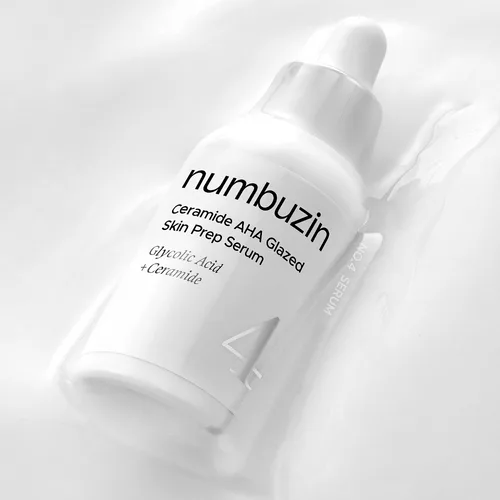
Most exfoliating serums treat exfoliation and barrier repair as separate steps — you exfoliate with one product, then repair with another. This serum combines a gentle AHA/PHA duo with a five-ceramide complex, cholesterol, and phytosphingosine, creating a formula that resurfaces and repairs simultaneously. The result is a prep serum that smooths without compromising — a concept central to the K-beauty glass skin philosophy where healthy barrier and luminous texture are inseparable goals.
Numbuzin's No. 4 serum is a clever K-beauty innovation: an exfoliating prep step that repairs the barrier while it resurfaces. The low-dose AHA/PHA blend paired with five ceramides makes this one of the gentlest exfoliating serums on the market, and for dry or sensitive skin types chasing the glass skin look, it fills a gap that most acid products ignore.
Note: This serum was released recently and our assessment is based on limited real-world data. This score is built mainly on ingredient analysis, formulation quality, and the brand's track record. Longer-term data may revise this scoring upward or downward.
The case for it
What would change this: A concentration inside the studied range would raise this a step.
Same rule for everyone. “Supporting role” is the verdict on 8,197 of 45,024 concern verdicts across the catalog; rule R7 decided 258 of them. Unchanged since September 5, 2026, engine 5.1.1.
Brand or formulator? Disclose a concentration or correct a fact →
The studies behind the evidence row
The case for it
What would change this: A concentration inside the studied range would raise this a step.
Same rule for everyone. “Supporting role” is the verdict on 8,197 of 45,024 concern verdicts across the catalog; rule R7 decided 258 of them. Unchanged since September 5, 2026, engine 5.1.1.
Brand or formulator? Disclose a concentration or correct a fact →
The studies behind the evidence row
The case for it
What would change this: A declared concentration would move this to a firmer reading of the dose.
Same rule for everyone. “Good choice” is the verdict on 9,564 of 45,024 concern verdicts across the catalog; rule R5 decided 9,072 of them. Unchanged since September 5, 2026, engine 5.1.1.
Brand or formulator? Disclose a concentration or correct a fact →
The studies behind the evidence row
The case for it
Same rule for everyone. “Good choice” is the verdict on 9,564 of 45,024 concern verdicts across the catalog; rule R5 decided 9,072 of them. Unchanged since September 5, 2026, engine 5.1.1.
Brand or formulator? Disclose a concentration or correct a fact →
The studies behind the evidence row
The case for it
What would change this: A concentration inside the studied range would raise this a step.
Same rule for everyone. “Supporting role” is the verdict on 8,197 of 45,024 concern verdicts across the catalog; rule R7 decided 258 of them. Unchanged since September 5, 2026, engine 5.1.1.
Brand or formulator? Disclose a concentration or correct a fact →
The studies behind the evidence row
A verdict is DermApproved’s assessment of how well a product’s ingredients fit a concern — never a claim about what the product treats. Evidence dots and collected reviews sit beside it and are never blended in. Rules 0.5.1 · evidence table ev-2026.09-r228 · how we decide
There's a tension at the heart of K-beauty philosophy that most Western skincare brands don't even acknowledge. On one side, the glass skin ideal demands a surface so smooth that light bounces off it uniformly — which requires exfoliation. On the other side, the barrier-health obsession demands an intact, well-hydrated lipid layer — which exfoliation can compromise. Most routines resolve this tension sequentially: exfoliate with one product, repair with the next. Numbuzin's No. 4 serum resolves it simultaneously, in a single bottle, and that's genuinely interesting.
The formula pairs two gentle exfoliants — 3.01% glycolic acid and 3% gluconolactone — with a five-ceramide complex supported by cholesterol and phytosphingosine. That's not a marketing gimmick. That's a complete barrier-mimetic lipid system built into an exfoliating serum. As the AHA and PHA dissolve the bonds between dead surface cells, the ceramides are right there, ready to integrate into the freshly exposed lipid matrix. The skin doesn't go through that vulnerable, stripped phase between exfoliating and moisturizing. The repair starts before you even reach for your next product.
The acid concentrations are deliberately modest. Three percent glycolic acid won't blow anyone's mind if they're used to 10% or higher formulas — and it's not supposed to. This isn't a treatment peel or a corrective serum. It's a prep step. Its job is to gently clear the dead-cell debris that dulls your complexion and blocks product absorption, creating a smooth canvas for everything that follows. Think of it as sweeping the floor before you apply the polish, not sanding it down.
Gluconolactone, the PHA component at 3%, is an underappreciated exfoliant. Its molecular size is large enough that it doesn't penetrate as deeply or aggressively as glycolic acid, and it functions simultaneously as a humectant — drawing water to the skin while it exfoliates. Critically, PHAs don't increase photosensitivity the way AHAs do, which makes the overall formula more forgiving for daytime use, though Numbuzin positions it as a PM product.
The supporting cast is where the brand's Amorepacific DNA shows. Panthenol at 2% provides anti-inflammatory support — enough to actively calm any theoretical irritation from the acids, though at these concentrations, most people won't experience any. Niacinamide amplifies the ceramide work by stimulating the skin's own ceramide production, creating a positive feedback loop between the exogenous ceramides in the formula and the endogenous ones your skin builds. Three forms of hyaluronic acid — regular, hydrolyzed, and crosslinked — provide multi-depth hydration. Beta-glucan adds another layer of soothing. Adenosine contributes mild anti-aging signaling.
The texture is a milky, lightweight serum that feels more like a hydrating essence than an acid treatment. There's no tingling, no stinging, no tight feeling afterward. It absorbs quickly into a dewy, smooth finish that genuinely improves the way subsequent products layer on top. If you've ever applied a serum or moisturizer that seemed to just sit on your skin rather than sinking in, this prep step might be the missing piece.
At $19.50 for 30 mL, the pricing is accessible for the ingredient quality. Five ceramides, niacinamide, panthenol, three forms of hyaluronic acid, beta-glucan, adenosine — individually, these are ingredients that justify their own dedicated products. Getting them all in a single prep step, alongside the gentle exfoliation, represents genuine value. The 30 mL size is the main limitation; with twice-daily use, it'll last about four to six weeks, which makes the effective monthly cost around $10-15. That's reasonable, but a 50 mL option would be welcome.
The brand behind it is young but credible. Numbuzin was founded in 2019 by two former Amorepacific employees — meaning the formulation expertise is inherited from Korea's largest and most research-intensive beauty conglomerate. The brand's numbered system (each number represents a skin goal) has resonated enough to earn top honors at the 2022 Olive Young Awards and expand to 16 countries. They're not a legacy brand, and their track record is limited, but the pedigree is real.
The honest limitation is that this serum won't satisfy anyone looking for visible exfoliation. If you want to see dead skin rolling off, feel a satisfying tingle, or watch dark spots fade in real time, the acid concentrations here are simply too low for that level of drama. This product works in the background, improving texture and absorption incrementally, day after day. The results are real but quiet — the kind you notice in the mirror after three weeks and think, my skin just looks... better.
For dry and sensitive skin types who have been burned by aggressive exfoliants, this serum is a revelation. It proves that exfoliation doesn't have to mean irritation, that you can resurface and repair simultaneously, and that the glass skin ideal isn't reserved for people with resilient, oily skin types. It's a prep step that thinks about what happens to your barrier after the exfoliation, not just during it — and that's a K-beauty philosophy worth borrowing.
The hero actives that drive this product's performance.
| Ingredient | Function | Evidence |
|---|---|---|
| Glycolic Acid (3.01%) (3.01%) | At a deliberately gentle 3% concentration, glycolic acid provides mild surface exfoliation that dissolves dead skin cell buildup without the intensity of higher-percentage formulas. Paired with the PHA gluconolactone and five ceramides, this low dose is calibrated for skin prep rather than aggressive resurfacing — clearing the surface so subsequent products absorb better. | Established mechanism for Rough Texture · established mechanism |
| Gluconolactone (3%) (3%) | A polyhydroxy acid that exfoliates more gently than AHAs due to its larger molecular size, while simultaneously acting as a humectant. Unlike glycolic acid, gluconolactone does not significantly increase photosensitivity. In this formula, it works alongside glycolic acid to provide dual-mechanism exfoliation that's mild enough for sensitive and dry skin types. | Not yet assessed |
| Ceramides NP, NS, AP, AS, EOP | Five ceramide types work together to replenish the skin's lipid barrier while the AHA and PHA exfoliate. This simultaneous exfoliate-and-repair approach is what makes this serum unusual — most exfoliating products strip the barrier and rely on subsequent products to restore it. The ceramides here repair in real time, supported by cholesterol and phytosphingosine for a complete barrier-mimetic complex. | Established mechanism for Dryness · established mechanism |
| Panthenol (2%) (2%) | Provides anti-inflammatory and wound-healing support that helps calm any mild irritation from the glycolic acid. At 2%, panthenol also acts as a humectant, drawing moisture to the skin and enhancing the overall hydrating profile of this barrier-focused exfoliant. | Established mechanism for Dehydration · established mechanism |
| Niacinamide | Supports ceramide synthesis in the skin, amplifying the barrier-repair work of the five exogenous ceramides in the formula. Niacinamide also contributes mild brightening and pore-minimizing effects that complement the exfoliation from the AHA and PHA. | Established mechanism for Compromised Skin Barrier · established mechanism |
Ingredient standings describe the active at treatment-level doses and vehicles; this product's own condition grades weigh its actual formula.
Water, Glycerin, Glycolic Acid, Butylene Glycol, Gluconolactone, Betaine, Dipropylene Glycol, Niacinamide, Panthenol, Pentylene Glycol, Sodium Hydroxide, Sphingomonas Ferment Extract, Sodium Hyaluronate, Hydrolyzed Hyaluronic Acid, Hyaluronic Acid, Diphenyl Dimethicone, Triethylhexanoin, Hydroxyethyl Urea, Hydroxyethylcellulose, Polyglyceryl-10 Laurate, Hydrogenated Lecithin, Caprylic/Capric Triglyceride, Ethylhexylglycerin, 1,2-Hexanediol, Propanediol, Urea, Adenosine, Sodium Hyaluronate Crosspolymer, Hydrolyzed Glycosaminoglycans, Ceramide NP, Benzyl Glycol, Beta-Glucan, Tocopherol, Stearic Acid, Ceramide NS, Cholesterol, Phytosphingosine, Ceramide AP, Ceramide AS, Ceramide EOP, Cetearyl Alcohol
serum
PM
Apply after cleansing and toning, before heavier serums and moisturizers. The milky texture acts as a prep step that smooths the skin surface for better absorption of subsequent products. Can be layered under retinoids on non-sensitive nights — the low acid concentration and ceramide content provide a gentle buffer.
Immediate smoothing and a glazed, prepped feeling after the first application. Skin texture refinement visible within 1-2 weeks. Improved barrier resilience and reduced flakiness at the 3-4 week mark. The glass skin glow builds cumulatively with consistent daily use.
The combination of AHA exfoliation with ceramide replenishment in a single formula addresses a well-documented challenge in chemical exfoliation: barrier disruption. Work appearing in the Journal of Investigative Dermatology demonstrated that glycolic acid application, even at low concentrations, temporarily increases transepidermal water loss as the stratum corneum's cohesion is disrupted. By including a five-ceramide complex with cholesterol and phytosphingosine, this serum provides the three essential lipid components that research has shown are necessary for barrier repair in a ratio that mimics the skin's natural intercellular lipid composition.
Gluconolactone, the polyhydroxy acid in this formula, has been studied as a gentler alternative to traditional AHAs. Work appearing in Dermatologic Surgery found that gluconolactone provided comparable exfoliation to glycolic acid at equivalent concentrations but with significantly less irritation, attributed to its larger molecular size and humectant properties. Notably, PHAs do not increase UV sensitivity to the same degree as AHAs, making gluconolactone a particularly smart choice for a product that may be used in climates with high UV exposure.
Panthenol at 2% has been shown in clinical studies to improve stratum corneum hydration, reduce transepidermal water loss, and accelerate epithelial wound healing — properties that directly support skin undergoing exfoliation. The inclusion of niacinamide further amplifies barrier repair, as research published in the British Journal of Dermatology demonstrated that niacinamide increases ceramide and free fatty acid synthesis in the stratum corneum, effectively boosting the skin's own production of the same lipids being supplied exogenously by the formula.
Dermatologists note that the biggest barrier to successful chemical exfoliation in sensitive and dry skin types is the irritation cycle: acid causes mild barrier disruption, which triggers inflammation, which makes the skin more sensitive to the next application. This serum's approach of combining low-dose exfoliation with barrier-mimetic ceramides represents a strategy that dermatologists have long recommended in concept — apply ceramides immediately after exfoliation — but packaged more conveniently in a single step. Clinicians would consider the 3% glycolic acid and 3% gluconolactone concentrations appropriate for daily maintenance in most skin types, including those with mild sensitivity.
After cleansing and toning, dispense 2-3 drops onto clean, slightly damp skin. Pat gently across the face and neck, avoiding the eye area. Allow 30-60 seconds for absorption before applying subsequent serums or moisturizer. Can be used evening only or both morning and evening, depending on skin tolerance. Start with once daily for the first week. No mandatory SPF requirement from the gluconolactone component, but SPF 30+ is always recommended when using any exfoliant.
At $19.50 for 30 mL, the per-milliliter cost is comparable to mid-range K-beauty serums but with a notably more complex formulation. Five ceramides, niacinamide, panthenol at 2%, three forms of hyaluronic acid, beta-glucan, and adenosine — buying these ingredients individually across separate products would cost considerably more. The value proposition is strongest for those who currently use both an exfoliating step and a barrier-repair step, as this serum consolidates both into one. The main value limitation is the 30 mL size; a larger format would improve the cost-per-use equation significantly.
Dry, sensitive, or dehydrated skin types who want the texture-smoothing benefits of chemical exfoliation without the irritation that typically accompanies it. Also ideal for K-beauty enthusiasts building a glass skin routine, and for anyone who finds their serums and moisturizers don't absorb well — this prep step clears the surface for better penetration.
Anyone expecting dramatic exfoliation results — this is a maintenance and prep product, not a corrective treatment. Users with oily, acne-prone skin looking for pore-clearing or breakout-reducing exfoliation would be better served by higher-concentration AHA or BHA products. If your skin already tolerates strong acids well, the 3% concentrations here may feel underwhelming.
Ready to try Numbuzin No. 4 Ceramide AHA Glazed Skin Prep Serum?
Buy at Amazon ♥A lightweight, milky serum with a slightly viscous, slippery feel. Absorbs quickly without leaving any tacky or filmy residue. The texture is more hydrating than typical acid serums.
Fragrance-free with no noticeable scent.
A 30 mL glass dropper bottle. Compact and portable but small for the price — a mini kit of 10 individual sachets is also available for trial.
No stinging or tingling on first use — the 3% glycolic acid concentration combined with ceramides and panthenol makes this one of the gentlest exfoliating serums you'll encounter. Skin feels immediately smoother and slightly dewy. No purging period expected at this low acid concentration.
Roughly 4-6 weeks applied morning and night
All Year
Numbuzin's numbered system assigns each product a skin goal, and No. 4 represents 'glazed skin' — that specific K-beauty ideal of luminous, smooth, almost translucent-looking skin. This serum is the newest addition to the No. 4 line, designed as a prep step that clears surface texture to unlock the glazed finish. It reflects the brand's Amorepacific heritage — both founders cut their teeth at Korea's largest beauty conglomerate before launching a brand built on simplifying the notoriously complex Korean skincare routine.
Numbuzin was launched in 2019 by Benow, a South Korean beauty startup co-founded by Lee Il-joo and Kim Dae-young, both Seoul National University alumni and former Amorepacific employees. The brand won top honors at the 2022 Olive Young Awards and has expanded to 16 countries. Its numbered product system is designed for simple, goal-based skincare routines.
You need high-percentage acids to see any exfoliation results.
At 3% glycolic acid paired with 3% gluconolactone, this serum provides measurable exfoliation — sufficient to smooth texture and improve product absorption — without the irritation, redness, or photosensitivity that higher concentrations cause. For maintenance exfoliation on sensitive or dry skin, lower percentages are often more effective because users can apply them daily without needing recovery days.
Ceramides and exfoliating acids cancel each other out.
They actually work synergistically in this formula. The mild acids remove dead cells from the surface, and the ceramides immediately fill in the lipid barrier of the newly exposed skin. This is more effective than sequential application because the ceramides are present exactly when the barrier needs them most — right as the exfoliation occurs.
Yes. The 3% glycolic acid and 3% gluconolactone concentrations are deliberately low, and the five-ceramide complex with panthenol and niacinamide provides soothing barrier support. This was clinically tested for low irritation potential and is designed specifically for dry, flaky, and sensitive skin types.
Yes. The low acid concentration (3% AHA, 3% PHA) and barrier-supporting ceramides make this one of the few exfoliating serums that can be safely layered with retinoids for most skin types. Apply this serum first as a prep step, wait a few minutes, then apply your retinoid. If you notice irritation, alternate nights instead.
In K-beauty, 'glazed skin' refers to a smooth, luminous, almost translucent-looking complexion — similar to 'glass skin.' This serum is designed as a preparation step that smooths surface texture and enhances the absorption and performance of the products you apply afterward, creating the smooth canvas needed for that glazed finish.
Most AHA serums focus solely on exfoliation and can compromise the skin barrier in the process. This serum pairs a gentle AHA/PHA blend with a five-ceramide complex, cholesterol, and phytosphingosine — a full barrier-repair system built into the exfoliating step. It exfoliates and repairs simultaneously rather than treating them as separate routines.
For daily maintenance exfoliation, yes. At 3%, glycolic acid provides meaningful surface exfoliation — clearing dead cells and improving product absorption — without the irritation, redness, or increased photosensitivity that 8-10% formulas cause. Think of it as steady, daily maintenance versus periodic intensive treatment.
Recurring themes our editors read across retailer reviews of this product — summaries in our words, not quotations, and not a substitute for your own patch test.
Gentle enough for sensitive skin
Milky texture feels hydrating, not stripping
Skin looks smoother and more prepped for next steps
Good for glass skin routine
Affordable for the ingredient quality
Small 30 mL size runs out quickly
Too gentle for those wanting aggressive exfoliation
Ceramide concentrations are very low on the INCI list