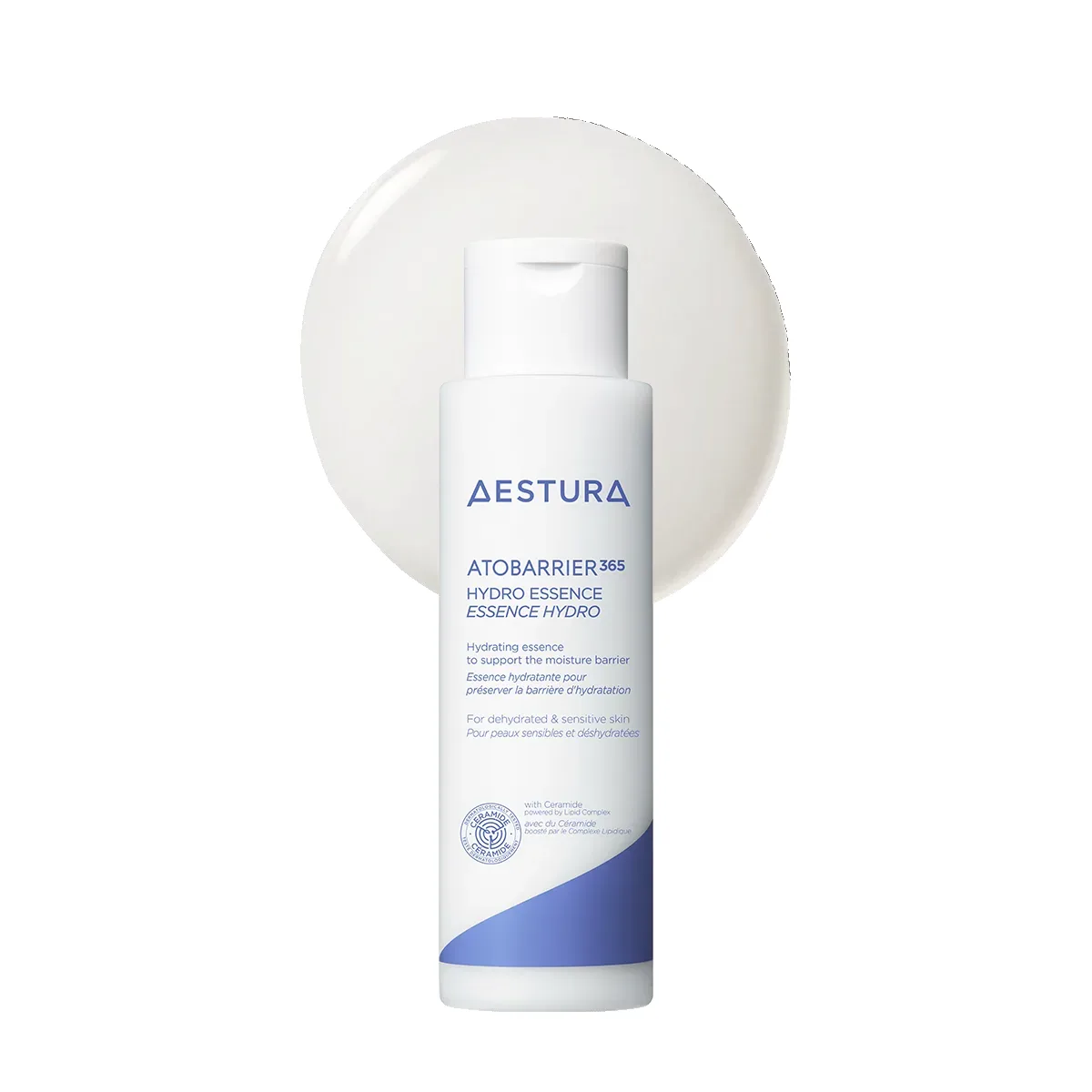


Hyaluronic Acid Can Actually Dehydrate Your Skin (Here's When)
The internet's favorite hydrator has a counterintuitive dark side — in dry air, a humectant with nothing to seal it can pull water out of your skin instead of into it.

The name spells out the idea — Cera-HA, ceramide plus hyaluronic acid — and the pairing is genuinely complementary. Hyaluronic acid draws water into the skin; the ceramide-cholesterol-fatty-acid lipid complex builds the barrier that holds it there. It is a two-part hydration system, not just another HA serum, and it comes from a dedicated barrier-repair brand.
A genuinely well-built barrier-hydration serum whose name explains its logic — Cera-HA, ceramides plus hyaluronic acid. The HA draws water in, the ceramide-cholesterol-fatty-acid complex builds the wall that holds it. Fragrance-free, gentle and effective for dry, dehydrated, barrier-stressed skin, from a dermatologist-developed brand. A modest 30 mL is the main caveat.
Note: This serum belongs to an established Aestura line, and our assessment combines ingredient analysis with a growing body of real-world feedback. Longer-term data may revise this scoring upward or downward.
The case for it
Same rule for everyone. “Good choice” is the verdict on 9,564 of 45,024 concern verdicts across the catalog; rule R5 decided 9,072 of them. Unchanged since September 5, 2026, engine 5.1.1.
Brand or formulator? Disclose a concentration or correct a fact →
The studies behind the evidence row
The case for it
What would change this: A declared concentration would move this to a firmer reading of the dose.
Same rule for everyone. “Good choice” is the verdict on 9,564 of 45,024 concern verdicts across the catalog; rule R5 decided 9,072 of them. Unchanged since September 5, 2026, engine 5.1.1.
Brand or formulator? Disclose a concentration or correct a fact →
The studies behind the evidence row
The case for it
Same rule for everyone. “Good choice” is the verdict on 9,564 of 45,024 concern verdicts across the catalog; rule R5 decided 9,072 of them. Unchanged since September 5, 2026, engine 5.1.1.
Brand or formulator? Disclose a concentration or correct a fact →
The studies behind the evidence row
The case for it
What would change this: A declared concentration would move this to a firmer reading of the dose.
Same rule for everyone. “Promising” is the verdict on 7,858 of 45,024 concern verdicts across the catalog; rule R9p decided 7,858 of them. Unchanged since September 5, 2026, engine 5.1.1.
Brand or formulator? Disclose a concentration or correct a fact →
The studies behind the evidence row
Also listed for Winter Skin — the actives here (Niacinamide, Panthenol (Vitamin B5) are in our research queue for that concern; there is no verdict until their evidence rows are written. That is a gap in our table, not a mark against the product.
Where our review and the verdict differ. The review below was written on the formulation and the published trials; the verdicts above apply the stricter standing test in our methodology — an active earns a recommendation only with guideline or regulatory standing for the concern. Where the two disagree, the verdict is DermApproved’s position.
A verdict is DermApproved’s assessment of how well a product’s ingredients fit a concern — never a claim about what the product treats. Evidence dots and collected reviews sit beside it and are never blended in. Rules 0.5.1 · evidence table ev-2026.09-r228 · how we decide
Reach for a hyaluronic acid serum the moment your skin feels dry and you are doing the thing almost everyone has been trained to do. It is a reasonable instinct, and it is also only half-right, which is why so many people end up disappointed when their HA serum leaves their face feeling no less parched by mid-afternoon. Hyaluronic acid is a superb humectant, capable of binding many times its weight in water and pulling it toward the skin. What it cannot do, on its own, is keep that water there. Aestura's Atobarrier 365 Hydro Cera-HA Serum is interesting precisely because it is built around the half of the hydration equation that the HA-fixes-everything story conveniently skips over.
That missing half is retention, and it depends on the lipid barrier — the brick-and-mortar wall of ceramides, cholesterol and fatty acids that decides whether moisture stays in or evaporates into the air. In dry conditions, hyaluronic acid used without a barrier to seal it can actually work against you, drawing water up from deeper layers only to lose it to the environment. So a genuinely complete hydration product needs to do two jobs at once: attract water, and build the structure that holds it. The serum's name, Cera-HA, lays the logic out in plain sight — ceramides plus hyaluronic acid — and for once the naming is descriptive rather than decorative.
The formula backs up the concept with real substance rather than a token sprinkle of each. On the holding side it supplies the full barrier-lipid set: true Ceramide NP plus a pseudo-ceramide, cholesterol, and the fatty acids stearic, palmitic, oleic and arachidic, along with sphingolipids. That completeness is the point, because ceramides alone do not reassemble into a competent barrier; they need cholesterol and free fatty acids alongside them in the right company. On the drawing-in side, sodium hyaluronate handles the humectant work, reinforced by niacinamide, which independently reduces water loss and offers a third well-evidenced route to a stronger barrier while gently improving tone, and by panthenol, a provitamin-B5 humectant placed high in the formula that soothes and leaves stressed skin feeling comfortable rather than tight. Each of these is well-established science, not wishful thinking, which is part of why this reads as a designed system rather than a hopeful blend.
On the skin it behaves like a serum that knows it is a serum. The texture is lightweight and slightly gel-like, spreading easily and sinking in quickly to a soft, cushioned, non-greasy finish, and there is no perfume to contend with — just a faint neutral note. It layers cleanly under sunscreen and makeup, which matters for a product meant to slot into the middle of a routine. Immediately your skin feels hydrated, plumper and more at ease; the deeper improvement in barrier-related dryness, tightness and dullness accumulates over roughly two to four weeks of consistent twice-daily use as the barrier lipids build up. This is supportive, gradual repair, not an overnight transformation, and the brand's framing is honest about that.
The limitations are worth stating plainly so expectations stay realistic. The 30 mL bottle is modest for something you are meant to use morning and night, lasting roughly six to eight weeks at that pace, which is the main reason its value lands as good rather than exceptional. A serum is a treatment layer, not a complete routine, so this one still needs a moisturizer over it to seal everything in — the two steps perform different functions, and skipping the second undercuts the first. Because the formula contains cholesterol and sphingolipids it is not vegan, and the emulsifiers and lipids mean it is not fungal-acne safe, so the malassezia-prone should look elsewhere. None of these are flaws in execution so much as honest boundaries on what the product is.
Value tracks with that. At around thirty-four dollars for 30 mL this sits at treatment tier, and the formula earns the positioning: a complete barrier-lipid set paired intelligently with hyaluronic acid, niacinamide and panthenol is genuinely more substantial than a typical single-humectant HA serum, and Aestura's pedigree adds confidence. The brand is a dermatologist-developed Korean line owned by Amorepacific, founded in 2004 with a barrier-repair focus, and its Atobarrier 365 range is one of Korea's best-known ceramide families — now expanding into Western retail including Sephora. That track record means the formula's claims rest on more than marketing. The only real drag on value is the small size; the substance inside the bottle is not in question.
Who should buy it comes into focus easily. Dry, dehydrated, normal, combination or barrier-stressed skin that wants a gentle, fragrance-free hydration step with actual retention behind it will be well served, particularly through winter and after periods of over-exfoliation. Those chasing dramatic, fast results, anyone on a tight budget who burns through serum quickly, vegans, and the fungal-acne-prone are the ones who should pass. For everyone else, this is a smart, well-reasoned serum that treats hydration as the two-part problem it actually is — drawing water in, and building the wall that holds it — and does so without fuss, fragrance or overreach.
The hero actives that drive this product's performance.
| Ingredient | Function | Evidence |
|---|---|---|
| Ceramide Complex (Ceramide NP, Hydroxypropyl Bispalmitamide MEA) | Half of the 'Cera-HA' name — two ceramide-functional ingredients, true Ceramide NP and a pseudo-ceramide, plus cholesterol, fatty acids and sphingolipids. They rebuild the skin's lipid barrier, which is what holds hydration in — the wall that stops the hyaluronic acid's drawn-in water from escaping. | Established mechanism for Dryness · established mechanism |
| Hyaluronic Acid (Sodium Hyaluronate) | The other half of 'Cera-HA' — a humectant that draws and binds water into the skin. On its own, HA can struggle to keep that water in dry conditions; pairing it with the ceramide barrier complex is what makes the hydration in this serum actually hold. | Established mechanism for Dehydration · established mechanism |
| Niacinamide | Sits high on the list, reinforcing the barrier and reducing water loss — it adds a third, well-evidenced route to a stronger barrier, working with the ceramides and HA, while also gently improving tone. | Established mechanism for Compromised Skin Barrier · established mechanism |
| Cholesterol | One of the three core barrier lipids — ceramides do not reassemble into a healthy barrier without cholesterol and fatty acids. Its presence, alongside stearic, palmitic and arachidic acids, completes the physiologic lipid set that gives the serum genuine repair function. | Not yet assessed |
| Panthenol | Provitamin B5 humectant placed high in the formula — it soothes, supports the barrier and reinforces the serum's hydration, leaving dry, stressed skin feeling comfortable rather than tight. | Established mechanism for Dehydration · established mechanism |
Ingredient standings describe the active at treatment-level doses and vehicles; this product's own condition grades weigh its actual formula.
Water/Aqua/Eau, Butylene Glycol, Glycerin, Niacinamide, 1,2-Hexanediol, Betaine, Panthenol, Carbomer, Ethylhexylglycerin, Sodium Hyaluronate, 3-O-Ethyl Ascorbic Acid, Cellulose Gum, Tromethamine, Sodium Trimetaphosphate, Dipotassium Glycyrrhizate, Propanediol, Adenosine, Hydroxypropyl Bispalmitamide MEA, Sodium Metaphosphate, Glyceryl Caprylate, Potassium Hydroxide, Sodium Lactate, Biosaccharide Gum-1, Caprylic/Capric Triglyceride, Pentylene Glycol, Citric Acid, Hydroxyethyl Urea, Polyglyceryl-10 Stearate, Cholesterol, Propylene Glycol, Potassium Cetyl Phosphate, Tocopherol, Ceramide NP, Mannitol, Stearic Acid, Silica, Acrylates/Ammonium Methacrylate Copolymer, Hydrogenated Lecithin, Palmitic Acid, Oleic Acid, Arachidic Acid, Sphingolipids
serum
AM & PM
Apply after toner and before moisturizer, morning and evening. Crucially, follow with a moisturizer — a hydrating serum draws and holds water, but a moisturizer on top seals the routine. It layers cleanly under sunscreen and makeup.
Immediate: skin feels hydrated, plumper and more comfortable. Improvement in barrier-related dryness, tightness and dullness builds over 2-4 weeks of consistent twice-daily use as the barrier lipids accumulate.
The serum is built on a sound and well-established hydration principle. Dermatology consistently notes that humectants such as hyaluronic acid draw water into the skin but do not, on their own, retain it, and that in dry environments humectants used without an occlusive or barrier-lipid component can be counterproductive, potentially drawing water from deeper layers that is then lost to the air. Effective hydration therefore requires both attracting water and holding it. The Cera-HA pairing addresses exactly this: sodium hyaluronate provides the humectant function, while the ceramide-cholesterol-fatty-acid complex rebuilds the barrier that retains the moisture.
The barrier-lipid side has a strong evidence base. The ceramide-cholesterol-fatty-acid framework is a cornerstone of barrier-repair dermatology, and supplying the complete lipid set is regarded as more effective than ceramides in isolation, since ceramides do not reassemble into a competent barrier without cholesterol and free fatty acids. This formula provides true Ceramide NP and a pseudo-ceramide (hydroxypropyl bispalmitamide MEA), cholesterol, the fatty acids stearic, palmitic, oleic and arachidic, and sphingolipids, which is the full physiologic set rather than a partial one. Niacinamide adds an independently well-evidenced barrier mechanism, reducing transepidermal water loss, and panthenol contributes documented humectant, soothing and barrier-supporting activity.
The honest, evidence-aligned conclusion is that this is a well-reasoned barrier-hydration serum: it pairs a humectant with the complete barrier-lipid set, addressing hydration more completely than HA-only formulas. The relevant clinical caveat is one of routine structure rather than efficacy — a serum is a treatment layer and should be followed by a moisturizer, particularly on dry or compromised skin, since the two steps perform different functions. Active eczema warrants medical treatment with supportive barrier skincare used alongside.
The pairing of humectants with barrier lipids is well aligned with dermatological understanding of hydration. Clinicians frequently note that hyaluronic acid and other humectants draw water into the skin but do not retain it, and that in dry environments humectants used without an occlusive or barrier-lipid component can be counterproductive — making the ceramide-plus-HA approach of this serum a sound one. The ceramide-cholesterol-fatty-acid framework is a cornerstone of barrier-repair dermatology, and supplying the complete lipid set, as this formula does, is regarded as more effective than ceramides in isolation. Niacinamide is well endorsed for barrier support. Aestura's pedigree as a dermatologist-developed, clinic-recommended brand, and its Atobarrier line's focus on dry and atopic-prone skin, fit this clinical framing. Dermatologists would, however, reinforce that a serum is a treatment layer: it should be followed by a moisturizer, particularly on dry or compromised skin, since the two steps perform different functions. Fragrance-free formulation is consistently preferred for sensitive skin, and active eczema warrants medical treatment alongside supportive barrier skincare.
Apply the serum after toner and before moisturizer, morning and evening. The crucial step is to follow it with a moisturizer, since a hydrating serum draws and holds water while a moisturizer on top seals the routine, and the two steps do different jobs. It layers cleanly under sunscreen and makeup. Slightly damp skin can help a humectant-forward serum work, and a daytime routine should finish with broad-spectrum sunscreen.
At around $34 for 30 mL, this serum is priced as a treatment-tier product, and the value is good rather than exceptional. The formula genuinely earns the positioning — a complete barrier-lipid set paired intelligently with hyaluronic acid and niacinamide is more substantial than a typical HA serum. The 30 mL size is the limiting factor: at twice-daily use the bottle lasts roughly one and a half to two months, so the running cost is moderate, and there is no larger size. Compared with ceramide and barrier-repair serums from Western brands, which often run $40 to $90, Aestura's pricing is competitive, and the dermatologist-developed pedigree of the Atobarrier line adds confidence. For dry, dehydrated or barrier-compromised skin, the spend is justified by a formula that addresses hydration more completely than HA-only serums at similar prices.
Dry, dehydrated or barrier-compromised skin that wants a hydration step which both draws water in and helps the skin hold it is the natural audience, and it is a sensible upgrade for anyone relying on a hyaluronic acid serum that has not kept their skin hydrated through dry conditions. Sensitive and combination skin will also find it gentle and comfortable. Being a treatment layer, it suits people willing to follow it with a moisturizer.
Anyone wanting a single-step product should note this is a serum that still needs a moisturizer over it. Strict vegans should skip it because of the cholesterol and sphingolipids, those needing a fungal-acne-safe routine should look elsewhere, and anyone seeking a corrective active serum for pigmentation or wrinkles should choose a different product.
Ready to try Aestura Atobarrier 365 Hydro Cera-HA Serum?
Buy at Amazon ♥A lightweight, slightly gel-like serum that spreads easily and absorbs quickly to a soft, hydrated, non-greasy finish. It feels cushioned rather than heavy.
No perfume here -- a faint neutral note is all you will catch.
30 mL bottle with a dropper, in Aestura's clean, clinical design. The dropper allows controlled dosing; the size is standard for a treatment serum.
First use feels like a light, cushiony hydration step — the serum absorbs cleanly with no sting or tackiness, and dry, tight skin feels eased and plumper straight away. The comfort is immediate; the deeper barrier benefit builds quietly over a few weeks.
About 1.5-2 months with twice-a-day use
All Year
Aestura's Atobarrier 365 line is one of Korea's most recognized ceramide barrier ranges, built for dry and atopic-prone skin. The Hydro Cera-HA Serum pairs that ceramide expertise with hyaluronic acid in a dedicated serum step, and is among the products carrying the brand into Western retail through Sephora.
Aestura is a dermatologist-developed Korean skincare brand owned by Amorepacific, founded in 2004 with a focus on barrier repair. Its Atobarrier 365 line is one of Korea's best-known ceramide barrier ranges, and this serum is part of the brand's expansion into Western retail, including Sephora.
A hyaluronic acid serum is all you need to hydrate dry skin.
Hyaluronic acid is a humectant — it draws water in, but it does not hold it there. In dry air, HA can even pull moisture from deeper skin and let it evaporate, leaving skin drier. HA works best paired with barrier lipids or an occlusive that seal the moisture in, which is exactly what the ceramide complex in this serum provides.
A barrier serum can replace a moisturizer.
This serum genuinely hydrates and supplies barrier lipids, but it is still a lightweight treatment layer. It works best applied before a moisturizer, which seals the routine. On very dry skin especially, a serum and a moisturizer do different jobs and both are needed.
It is a barrier-hydration serum. The 'Cera-HA' pairs ceramides — with cholesterol and fatty acids — and hyaluronic acid: the HA draws water into the skin, and the ceramide barrier complex builds the lipid wall that holds it there. Niacinamide and panthenol add further barrier support, so it both hydrates and strengthens.
Because they solve each other's weakness. Hyaluronic acid draws water in but cannot keep it there, and in dry air it can even leave skin drier. Ceramides, cholesterol and fatty acids rebuild the skin barrier, the wall that holds moisture in. Together they hydrate and seal — a more complete approach than HA alone.
No — it works best before a moisturizer, not instead of one. The serum genuinely hydrates and supplies barrier lipids as a treatment layer, but a moisturizer on top seals the routine. For dry or barrier-compromised skin especially, the serum and the moisturizer do complementary jobs.
Yes — it is well suited to it. The formula is fragrance-free, focused on barrier repair, and comes from Aestura's Atobarrier line, built for dry and atopic-prone skin. It contains niacinamide, panthenol and licorice for soothing support, and has no harsh actives, making it gentle for reactive skin.
Apply it after cleansing and toner, morning and evening, pressing a few drops over the face. Always follow with a moisturizer to seal in the hydration, and with sunscreen in the morning. It layers cleanly under other products and is gentle enough for twice-daily use.
Recurring themes our editors read across retailer reviews of this product — summaries in our words, not quotations, and not a substitute for your own patch test.
Genuinely hydrating, with the hydration lasting rather than fading
Lightweight texture that absorbs cleanly and layers well
Calms and comforts dry, tight, stressed skin
Fragrance-free, from a trusted dermatologist-developed brand
30 mL size is modest for a twice-daily serum
Still needs a moisturizer on top — not a complete routine alone
Contains cholesterol and sphingolipids, so not vegan
Not fungal-acne safe, owing to certain emulsifiers and lipids