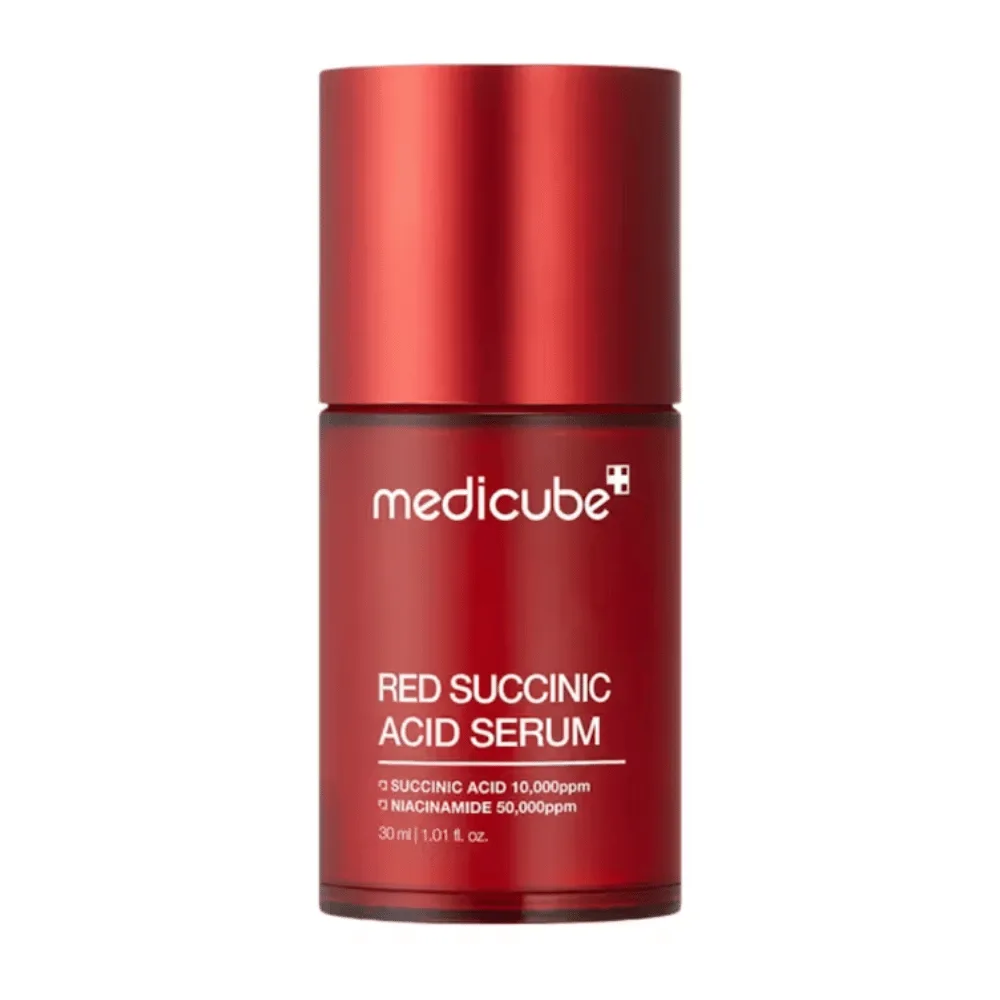
Most acne serums choose between aggressive exfoliation and gentle soothing — this formula tries to do both by combining a low-dose BHA and succinic acid with substantial panthenol (3.2%) and ceramide NP for barrier support. The disclosed concentrations (unusual for K-beauty) let you know exactly what you're getting, and the non-comedogenic, fragrance-free formula removes many of the usual acne-serum caveats.
A refreshingly gentle acne serum that pairs succinic acid's emerging antimicrobial properties with niacinamide and substantial panthenol for barrier support, delivering consistent breakout reduction without the irritation tax most acne treatments demand — though the small bottle and modest BHA concentration may leave aggressive-treatment seekers wanting more.
Four years of availability since roughly 2022 have produced a moderate, still-growing pool of about 500 reviews. The rating draws heavily on the unusually transparent disclosed concentrations (5% niacinamide, 1% succinic acid, 0.2% BHA, 3.2% panthenol) plus the barrier-support cast; what remains uncertain is clinical comparison data against higher-strength acne serums.
Verdicts
How well it fits each concern
Verdict by concern tap a concern for the case
Good choicefor AcneIn your profileYou chose · Salicylic Acid is an approved or monograph active for acne, but this serum carries it at 0.2% — below the 0.5–2% the evidence and approvals rest on.Moderate evidenceStandard tolerabilityNo reviews collected yet
The case for it
Salicylic Acid is a first-line active — approved, monograph-listed or named in current guidelines — for this concern.
It is present below the studied range.
The formula carries no trigger this concern is sensitive to, with the cautions noted.
Cautions: fungal-acne triggers.
What would change this: A concentration inside the studied range would raise this a step.
Same rule for everyone. “Good choice” is the verdict on 9,564 of 45,024 concern verdicts across the catalog; rule R4 decided 84 of them.
Unchanged since September 5, 2026, engine 5.1.1.
R4 — Right molecule, weak dose: still a reasonable choice, not the strong one. · the full register
Carrying active
Salicylic Acid
Standing
first line — a regulator recognises it for this use; trials support it · per § 333.310 Acne active ingredients. (U.S. Food and Drug Administration — 21 CFR Part 333 Subpart D (Topical Acne Drug Products), Code of Federal Regulations via GovInfo), opened July 27, 2026
Form
sub threshold (declared 0.2%) — studied range 0.5–2%, from the OTC monograph or label; judge it after ~6 weeks
Tolerability
standard — fungal triggers
Row checked
against its sources on July 27, 2026 (evidence table ev-2026.09-r228)
Promisingfor Excess OilinessIn your profileYou chose · Niacinamide has trial-level evidence for excess oiliness but no guideline or regulatory standing yet — promising, short of a recommendation; the other actives here are not yet assessed for it.Moderate evidenceStandard tolerabilityNo reviews collected yet
The case for it
Niacinamide has trial-level evidence for this concern but no guideline or regulatory standing yet.
It is present at an effective concentration, declared or high in the ingredient list.
The formula carries no trigger this concern is sensitive to, with the cautions noted.
Cautions: fungal-acne triggers.
What would change this: Guideline or regulatory standing for the active on this concern would move this from a promising bet to a recommendation.
Same rule for everyone. “Promising” is the verdict on 7,858 of 45,024 concern verdicts across the catalog; rule R9p decided 7,858 of them.
Unchanged since September 5, 2026, engine 5.1.1.
R9p — 0.5.0: 'Unproven' beside three filled dots read as one question answered twice with opposite words (7,018 rows). The chip measures standing, the dots measure trial volume; where the row carries at least one RCT or a tier-2 source (moderate dots) and the active is present at a working level, the honest word is Promising. Unproven is reserved for plausible-standing rows with limited or weak evidence, or an under-dosed form. Same rank as Unproven — a bet either way; the dots order them. · the full register
Carrying active
Niacinamide
Standing
plausible — trials support it
Form
adequate (declared 5%) — studied range 2%, from the trials on the row; needs leave-on contact; judge it after ~8 weeks
Tolerability
standard — fungal triggers
Row checked
against its sources on July 17, 2026 (evidence table ev-2026.09-r228)
Promisingfor Large PoresIn your profileYou chose · Niacinamide has trial-level evidence for large pores but no guideline or regulatory standing yet — promising, short of a recommendation; the other actives here are not yet assessed for it.Moderate evidenceGentleNo reviews collected yet
The case for it
Niacinamide has trial-level evidence for this concern but no guideline or regulatory standing yet.
It is present at an effective concentration, declared or high in the ingredient list.
The formula carries none of the triggers this concern is sensitive to.
What would change this: Guideline or regulatory standing for the active on this concern would move this from a promising bet to a recommendation.
Same rule for everyone. “Promising” is the verdict on 7,858 of 45,024 concern verdicts across the catalog; rule R9p decided 7,858 of them.
Unchanged since September 5, 2026, engine 5.1.1.
R9p — 0.5.0: 'Unproven' beside three filled dots read as one question answered twice with opposite words (7,018 rows). The chip measures standing, the dots measure trial volume; where the row carries at least one RCT or a tier-2 source (moderate dots) and the active is present at a working level, the honest word is Promising. Unproven is reserved for plausible-standing rows with limited or weak evidence, or an under-dosed form. Same rank as Unproven — a bet either way; the dots order them. · the full register
Carrying active
Niacinamide
Standing
plausible — trials support it
Form
adequate (declared 5%) — studied range 4%, from the trials on the row; needs leave-on contact; judge it after ~8 weeks
Tolerability
gentle
Row checked
against its sources on July 17, 2026 (evidence table ev-2026.09-r228)
Supporting rolefor Rough TextureIn your profileYou chose · Salicylic Acid is a reference standard by mechanism for rough texture, but this serum carries it below the studied range — a supporting role at best.Moderate evidenceGentleNo reviews collected yet
The case for it
Salicylic Acid has trial-supported standing for this concern.
It is present below the studied range.
The formula carries none of the triggers this concern is sensitive to.
What would change this: A concentration inside the studied range would raise this a step.
Same rule for everyone. “Supporting role” is the verdict on 8,197 of 45,024 concern verdicts across the catalog; rule R7 decided 258 of them.
Unchanged since September 5, 2026, engine 5.1.1.
R7 — A supported active under-dosed cannot be recommended for the concern; if the category has a supportive job it may still help alongside treatment. · the full register
Carrying active
Salicylic Acid
Standing
supported — its mechanism is established
Form
sub threshold (declared 0.2%) — studied range 0.5–2%, from the trials on the row; needs leave-on contact; judge it after ~6 weeks
Tolerability
gentle
Row checked
against its sources on July 17, 2026 (evidence table ev-2026.09-r228)
The studies behind the evidence row
International Cosmetic Ingredient Dictionary and Handbook — declared function — Personal Care Products Council
United States Pharmacopeia / National Formulary — excipient monograph — USP-NF
Good choicefor BlackheadsIn your profileYou chose · Salicylic Acid is an approved or monograph active for blackheads, but this serum carries it at 0.2% — below the 0.5–2% the evidence and approvals rest on.Moderate evidenceStandard tolerabilityNo reviews collected yet
The case for it
Salicylic Acid is a first-line active — approved, monograph-listed or named in current guidelines — for this concern.
It is present below the studied range.
The formula carries no trigger this concern is sensitive to, with the cautions noted.
Cautions: fungal-acne triggers.
What would change this: A concentration inside the studied range would raise this a step.
Same rule for everyone. “Good choice” is the verdict on 9,564 of 45,024 concern verdicts across the catalog; rule R4 decided 84 of them.
Unchanged since September 5, 2026, engine 5.1.1.
R4 — Right molecule, weak dose: still a reasonable choice, not the strong one. · the full register
Carrying active
Salicylic Acid
Standing
first line — a regulator recognises it for this use; trials support it · per 21 CFR § 333.350 - Labeling of acne drug products. (US Code of Federal Regulations (Legal Information Institute, Cornell Law School)), opened July 27, 2026
Form
sub threshold (declared 0.2%) — studied range 0.5–2%, from the OTC monograph or label; judge it after ~6 weeks
Tolerability
standard — fungal triggers
Row checked
against its sources on July 27, 2026 (evidence table ev-2026.09-r228)
The studies behind the evidence row
OTC monograph, Topical Acne Drug Products — salicylic acid 0.5–2% recognized as an acne treatment active — US Food and Drug Administration
Also listed for Dullness — the actives here (Niacinamide, Panthenol (Vitamin B5) are in our research queue for that concern; there is no verdict until their evidence rows are written. That is a gap in our table, not a mark against the product.
A verdict is DermApproved’s assessment of how well a product’s ingredients fit a concern — never a claim about what the product treats. Evidence dots and collected reviews sit beside it and are never blended in.
Rules 0.5.1 · evidence table ev-2026.09-r228 · how we decide
Assessment
Pros & Cons
Pros
✓ Transparent disclosed concentrations let you evaluate exactly what you're getting
✓ Fragrance-free and alcohol-free — genuinely gentle for an acne treatment
✓ 3.2% panthenol and ceramide NP provide substantial barrier repair alongside actives
✓ Lightweight, fast-absorbing texture layers effortlessly in any routine
✓ Suitable for twice-daily use without irritation or dryness
✓ Non-comedogenic formula won't contribute to the problem it's trying to solve
Cons
✗ 30ml bottle at ~$30 represents modest value for a twice-daily serum
✗ 0.2% salicylic acid may be too gentle for severe or entrenched acne
✗ Contains trace geranium oil which is a potential allergen for very sensitive individuals
✗ Not widely available in physical retail stores outside Korea
✗ Results require 4-6 weeks of patience compared to faster-acting aggressive treatments
Review
Full Review
There is a quiet revolution happening in acne treatment philosophy. For decades, the prevailing wisdom was simple: if your skin is breaking out, hit it harder. Higher concentrations, stronger acids, more aggressive exfoliation. Medicube's Red Succinic Acid Serum represents the counter-argument — that consistent, gentle multi-target treatment can achieve what brute-force exfoliation often cannot, without destroying your skin barrier in the process.
The formula reads like a diplomatic negotiation between efficacy and tolerance. Niacinamide at 5% leads the active roster, a concentration with strong clinical backing for sebum regulation, barrier strengthening, and post-inflammatory hyperpigmentation reduction. Succinic acid at 1% provides the signature antimicrobial action that Medicube has built their Red Line around — targeting Cutibacterium acnes bacteria through a mechanism distinct from traditional acne actives. Salicylic acid at 0.2% offers gentle pore-clearing action, just enough to keep follicular openings clear without the dryness and peeling of higher concentrations. And tying it all together, panthenol at a generous 3.2% provides the barrier repair and anti-inflammatory support that keeps this serum comfortable for daily use.
What makes this formulation noteworthy is the transparency. K-beauty brands are not traditionally known for disclosing exact active concentrations — many hide behind proprietary complexes and marketing percentages. Medicube puts the numbers on the label: 5% niacinamide, 1% succinic acid, 0.2% salicylic acid, 3.2% panthenol. You know exactly what you're getting, and more importantly, you can evaluate whether those concentrations are meaningful. They are.
The supporting ingredient list reinforces the barrier-first philosophy. Ceramide NP and phytosphingosine work together to rebuild the lipid matrix that acne and over-treatment typically compromise. Squalane provides lightweight, non-comedogenic emollience. Allantoin adds another layer of soothing support. Beta-glucan contributes wound-healing properties. Read further down and you find an entire herbal apothecary of anti-inflammatory botanicals — neem leaf and flower, holy basil, turmeric, noni fruit, bitter melon, gromwell root — none at headline concentrations, but collectively signaling a formula built around calming inflamed skin rather than stripping it. Even adenosine makes an appearance, adding a quiet anti-aging note to what is nominally an acne product. The result is a serum that treats acne while simultaneously repairing the damage that both acne and acne treatment cause — a remarkably self-aware formulation.
Texture is uncomplicated and pleasant. A lightweight gel-serum from a frosted-glass dropper bottle that absorbs within seconds, leaving no sticky residue, no film, and no interference with subsequent products. It layers beautifully under moisturizer and sunscreen, and it doesn't pill — a surprisingly common problem with serums that try to pack this many actives into a single formula. Morning and evening use feels comfortable, not like you're applying a treatment product at all. If your routine also includes a retinoid, the clean split is this serum in the morning and the retinoid at night; keep benzoyl peroxide and high-strength acids out of the same application window, where they would pile irritation onto a formula designed to avoid it.
The fragrance-free, alcohol-free formula is another point in its favor. In a market saturated with acne products that add essential oils, drying alcohols, and synthetic fragrances to products intended for already-compromised skin, the restraint here is appreciated. The faintest herbal note comes from the geranium maculatum oil listed near the bottom of the INCI — it's barely detectable and present at trace levels unlikely to cause sensitization for most users.
Results arrive with the patience that gentle treatment demands. Users report calmer, less red skin within the first week — this is the niacinamide and panthenol doing their barrier-repair work. Reduced breakout frequency typically becomes apparent in weeks two through three, as the succinic acid's antimicrobial action and the salicylic acid's pore-clearing work start to show cumulative effects. By six to eight weeks, the full picture emerges: fewer breakouts, less post-inflammatory marking, smoother texture, and visibly smaller-looking pores. The few hundred reviews gathered so far — amplified by the serum's viral run through TikTok's K-beauty corners — repeat one observation often enough to notice: under-skin bumps flattening faster than expected, which tracks with an antimicrobial-plus-anti-inflammatory mechanism rather than an exfoliating one. Early feedback deserves early-feedback caution, but the pattern is consistent.
The limitation of this approach is its ceiling. If you're dealing with severe cystic acne, hormonal breakouts that don't respond to topical treatment, or deeply entrenched comedonal congestion, the 0.2% salicylic acid and 1% succinic acid are unlikely to be enough. This is a maintenance and mild-to-moderate acne serum, not a rescue treatment. It works best as a daily companion to more targeted interventions — alongside the brand's own Succinic Acid Peel for weekly deep exfoliation, or paired with prescription actives that a dermatologist might recommend for more stubborn cases. One more boundary worth stating plainly: the salicylic acid content takes it off the shelf for pregnancy, gentle as the concentration is.
Value is where the math gets less flattering. At roughly $30 for 30ml, you're paying a dollar per milliliter — reasonable for a treatment serum, but the bottle will last only two to three months with twice-daily use. The known concentrations help justify the price (you're not paying for mystery percentages), but budget-conscious consumers can find niacinamide and BHA serums at lower price points, albeit without the succinic acid component.
The Medicube Red Succinic Acid Serum is a thoughtful, well-formulated daily treatment that earns its place through intelligent ingredient selection rather than aggressive concentration. It won't wow you with overnight drama, but it will quietly, consistently improve your skin without the collateral damage that most acne treatments accept as inevitable.
Formula
Key Ingredients
The hero actives that drive this product's performance.
The primary active alongside succinic acid, niacinamide at 5% regulates sebum production, strengthens the skin barrier, and fades post-inflammatory hyperpigmentation — addressing the aftermath of breakouts while the succinic acid and salicylic acid work on active acne.
The formula's signature ingredient provides targeted antimicrobial activity against acne-causing Cutibacterium acnes bacteria, working through a different mechanism than the salicylic acid in this formula to address the bacterial root cause of inflammatory breakouts.
At a generous 3.2% concentration, panthenol provides substantial barrier repair and anti-inflammatory support, counterbalancing the exfoliating actives to keep this serum gentle enough for daily use on acne-compromised skin.
A gentle BHA concentration that penetrates into pores to dissolve sebum plugs without the aggressive exfoliation of higher-percentage formulas, making this serum suitable for daily leave-on use even on moderately sensitive skin.
Established mechanismfor Rough Texture · established mechanism
Reinforces the lipid barrier that acne and exfoliation can compromise, working alongside the phytosphingosine to restore the structural integrity of the skin's protective layer while the actives clear breakouts.
Not yet assessed
Ingredient standings describe the active at treatment-level doses and
vehicles; this product's own condition grades weigh its actual formula.
Apply after toner and before moisturizer. Can be used morning and evening. If using with other actives like retinol, apply this serum in the morning and retinol at night to avoid over-exfoliation.
Results Timeline
Reduced redness and calmer skin noticeable within 1 week. Visible pore clarity and fewer new breakouts within 2-3 weeks. Significant improvement in overall skin texture and post-acne marks after 6-8 weeks of consistent use.
The Red Succinic Acid Serum's formulation leverages three well-studied active pathways at concentrations supported by clinical evidence. Niacinamide at 5% falls within the range validated by multiple studies for acne management. A randomized controlled trial by Draelos et al. (2006) published in Cutis demonstrated that 2% topical niacinamide significantly reduced sebum excretion rate over four weeks, while Gehring (2004) in the International Journal of Cosmetic Science confirmed its barrier-strengthening effects through increased ceramide and free fatty acid synthesis.
Succinic acid's antimicrobial mechanism against C. acnes is distinct from BHA's anti-inflammatory pathway. Research by Barnard et al. published in the Journal of Investigative Dermatology showed that succinic acid produced by commensal skin bacteria can suppress C. acnes growth and biofilm formation — suggesting that topical application mimics a natural defense mechanism. At 1% concentration, the succinic acid in this formula provides meaningful antimicrobial activity while remaining below the irritation threshold.
The 0.2% salicylic acid concentration is intentionally conservative. While clinical studies typically use 1-2% for therapeutic acne treatment, the lower concentration in this daily-use serum provides gentle comedolytic activity — enough to maintain pore clarity without the dryness and irritation of higher doses. This strategy aligns with the growing dermatological consensus that sustained low-dose exfoliation can match or exceed the long-term outcomes of intermittent high-dose treatment with better tolerability.
Panthenol at 3.2% provides clinically relevant barrier repair. Proksch and Nissen (2002) in the Journal of Dermatological Treatment demonstrated that dexpanthenol (the precursor to panthenol) at concentrations above 1% significantly improves skin hydration, reduces transepidermal water loss, and accelerates barrier recovery — all critical for skin undergoing concurrent acne treatment.
References
Propionic and Succinic Acid Produced by Cutibacterium acnes Strain Type Contribute to Biofilm Formation — Journal of Investigative Dermatology (2019)
Dermatologists increasingly advocate for gentler, multi-target acne approaches over single-agent high-concentration treatments, particularly for patients with concurrent barrier issues. The clinical consensus is that the combination of niacinamide, low-dose BHA, and barrier-supporting ingredients in this serum aligns with current best practices for long-term acne management. The succinic acid component is viewed as a promising addition, though dermatological validation of specific topical concentrations is still developing. This type of formulation is commonly recommended as a maintenance serum for patients who have cleared active acne with prescription treatments and want to prevent recurrence without ongoing prescription use.
Guidance
Usage & Recommendations
How to Use
Apply 2-3 drops to clean skin after toner, morning and evening. Spread evenly across the face, focusing on acne-prone areas. Allow 30 seconds to absorb before applying moisturizer. In the morning, follow with broad-spectrum SPF 50. Can be used alongside the Medicube Red Succinic Acid Peel — use the peel 2-3 times weekly and the serum daily for a comprehensive treatment protocol.
Value Assessment
At approximately $30 for 30ml, the Red Succinic Acid Serum sits at a moderate price point for a treatment serum. The transparent concentration disclosure (5% niacinamide, 1% succinic acid, 0.2% BHA, 3.2% panthenol) provides tangible value — you know exactly what you're buying. The bottle lasts 2-3 months with twice-daily use, putting the monthly cost around $10-15. While not the cheapest acne serum available, the barrier-supportive formulation and unique succinic acid component justify the premium over basic niacinamide serums.
Who Should Buy
Anyone with mild to moderate acne, oily or combination skin, and enlarged pores who wants a gentle daily treatment that won't compromise their barrier. Ideal for those who have tried aggressive acne products and found them too drying or irritating, and for post-acne maintenance after clearing active breakouts.
Who Should Skip
Those with severe cystic acne who need prescription-strength treatment, very dry skin types who need richer formulations, and anyone looking for dramatic overnight results. The gentle approach requires patience — if you want aggressive pore clearing, the brand's own Succinic Acid Peel is the better choice.
Lightweight, slightly viscous serum with a gel-like consistency that absorbs quickly without leaving residue
Scent
Very faint herbal scent from geranium oil and botanical extracts — no added fragrance
Packaging
Frosted glass dropper bottle with red accents, 30ml
Finish
lightweightnon-greasyfast-absorbing
What to Expect on First Use
This is a gentle serum with no burning or stinging expected on first use. Some users notice reduced redness within the first few applications. Unlike aggressive acne treatments, there is no purging period typically associated with this formula due to the low BHA concentration.
How Long It Lasts
About 2-3 months per unit applied morning and night
The Red Succinic Acid Serum represents Medicube's daily-use answer to their more aggressive Red Succinic Acid Peel. Where the peel delivers high-dose acid exfoliation in a 1-minute wash-off format, this serum is designed to maintain clearer skin between peel sessions with gentler concentrations that won't compromise the barrier. It was developed as part of the brand's commitment to making succinic acid a mainstream acne-fighting ingredient.
About Medicube Established Brand (5–20 years)
Medicube was founded in South Korea in 2014 and has built a reputation through dermatologist-informed formulations and beauty technology devices. The brand surpassed $100M in TikTok Shop sales and is widely available at Ulta Beauty and major K-beauty retailers, though independent peer-reviewed research on its specific product formulations remains limited.
Brand founded: 2018 · Product launched: 2022
Myth vs. Reality
Common Myths
Myth
You need high-percentage BHA to treat acne effectively.
Reality
This serum uses just 0.2% salicylic acid combined with 1% succinic acid and 5% niacinamide, targeting acne through multiple gentle mechanisms rather than a single aggressive one. The multi-pathway approach can be more sustainable for long-term use without the irritation and barrier damage of high-dose BHA.
Myth
Acne serums dry out your skin and make it worse before it gets better.
Reality
This formula was specifically designed to avoid that cycle. The 3.2% panthenol, ceramide NP, and phytosphingosine actively repair and hydrate the barrier while the actives address acne, reducing the likelihood of the dryness and purging that aggressive treatments cause.
FAQ
Frequently Asked Questions
Can you use Medicube Red Succinic Acid Serum every day?
Yes — this serum was designed for daily use, morning and evening. The low 0.2% salicylic acid concentration and 3.2% panthenol make it gentle enough for consistent application without compromising your skin barrier, unlike more aggressive acne treatments that require rest days.
Is Medicube Red Succinic Acid Serum good for acne scars?
The 5% niacinamide helps fade post-inflammatory hyperpigmentation over time, while the succinic acid and salicylic acid prevent new breakouts from forming additional marks. For best results with existing scars, use consistently for 6-8 weeks alongside daily sunscreen.
Can you use Medicube Red Succinic Acid Serum with retinol?
Yes, but use them at different times — apply this serum in the morning and retinol at night. The low BHA concentration makes morning use safe, and the niacinamide actually helps buffer potential retinol irritation when used in the same routine.
What is the difference between Medicube Red Succinic Acid Serum and the Peel?
The serum is a gentle, leave-on daily treatment with 1% succinic acid and 0.2% BHA designed for consistent use. The peel is a concentrated 21% multi-acid wash-off treatment used 2-3 times weekly for deeper exfoliation. They can be used together — the peel for weekly deep cleaning, the serum for daily maintenance.
Is Medicube Red Succinic Acid Serum safe for sensitive skin?
Yes — the low acid concentrations, alcohol-free formula, fragrance-free base, and 3.2% panthenol make this one of the gentler acne serums available. It's been dermatologically tested and is suitable for moderately sensitive skin, though those with severe sensitivity should patch test first.
Does Medicube Red Succinic Acid Serum help with pore size?
The combination of 0.2% salicylic acid (which clears pore-clogging debris) and 5% niacinamide (which regulates sebum and visibly tightens pores) works together to reduce the appearance of enlarged pores over 3-4 weeks of consistent use.
Reviews
What Reviewers Tend to Say
Recurring themes our editors read across retailer reviews of this product — summaries in our words, not quotations, and not a substitute for your own patch test.
Common Praise
Noticeable reduction in breakouts within first week
Under-skin bumps flatten quickly
Gentle enough for daily use without irritation
Non-greasy texture absorbs well under moisturizer
Common Complaints
Small 30ml bottle for the price
Mild geranium oil scent bothers some users
Slow results for severe acne
Availability can be inconsistent outside Korea
Notable Endorsements
Viral on TikTok K-beauty communitiesAvailable through major K-beauty retailers globally
Cosmax and Kolmar Korea develop and manufacture for thousands of competing brands at every price tier. Knowing that reframes what a brand is actually selling you — and it is not the thing most dupe posts assume.
The whole case for salicylic acid rests on one unglamorous fact of chemistry: it dissolves in oil. Understand that, and you know exactly when it beats a glycolic acid — and when it's overkill.
Products, answers, therapy guides, tools and articles in one search. Brand names,
slang and abbreviations all work — accutane finds isotretinoin, bacne finds truncal acne.