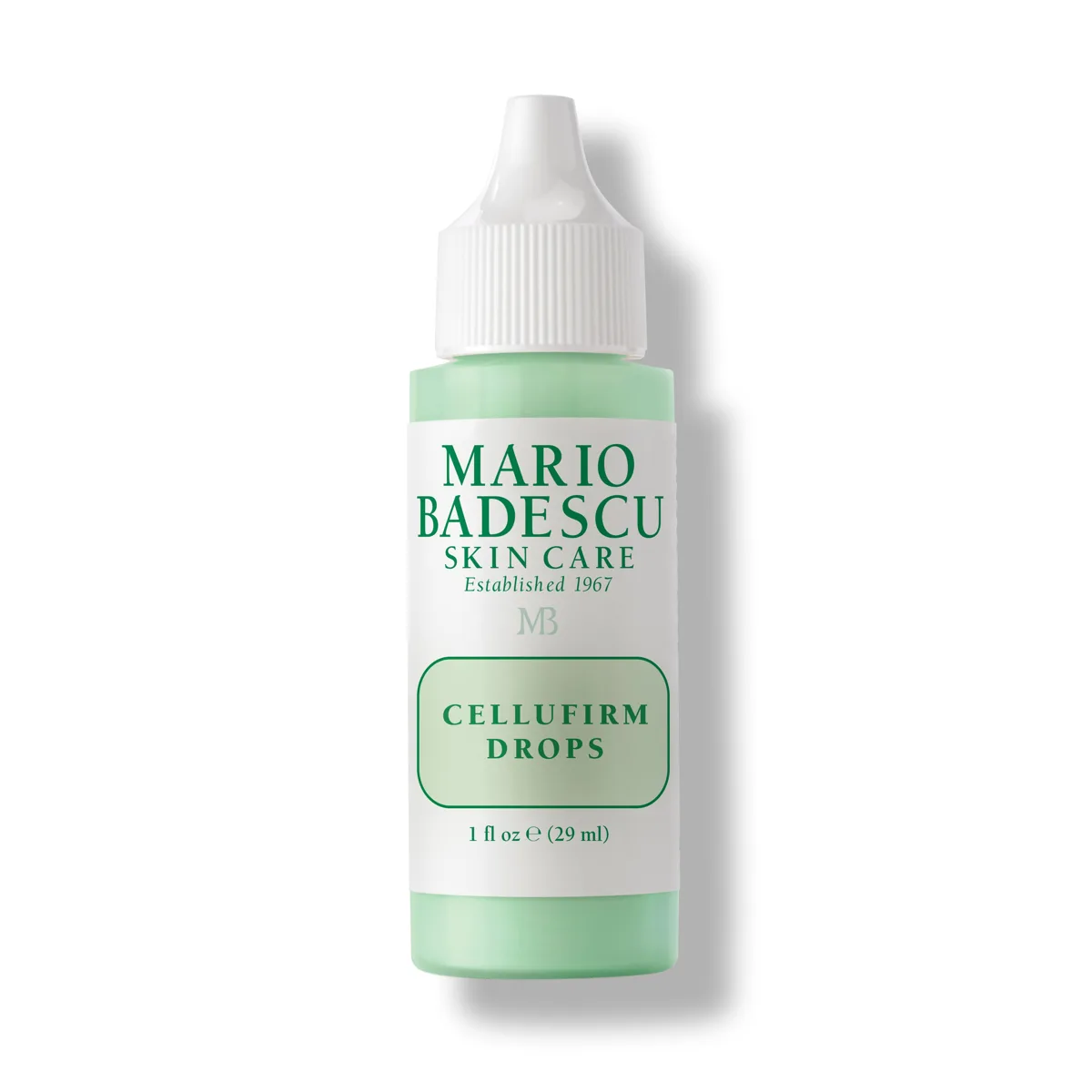
It is a protein serum from the era that invented the category: collagen, elastin, glycosaminoglycans, DNA, RNA and pollen extract in a corn-oil-and-glycerin emulsion, with a synthetic oligopeptide placed high on the list and a trace of retinyl palmitate as later additions. Few products still sell that vocabulary unchanged, and the milky, tightening texture that made it a salon favourite is what keeps it a best-seller.
A milky corn-oil, glycerin and urea emulsion that hydrates and smooths well, dressed in the full 1980s protein vocabulary, collagen, elastin, GAGs, DNA, RNA and pollen, that leaves a tightened feel as it dries and washes off with the next cleanse. The peptide is unproven, the retinyl palmitate is a trace, and fragrance, a formaldehyde releaser, parabens and three dyes keep it from sensitive skin. A well-liked hydrator with a firming name it cannot earn.
More than 430 brand-site reviews and retailer feedback describe the texture and the tightened feel reliably, but the brand has published no testing, the peptide and retinyl palmitate are undosed, and the firming claim is assessed from the well-known behaviour of surface proteins rather than from any measurement on this serum.
Verdicts
How well it fits each concern
Verdict by concern tap a concern for the case
Good choicefor DehydrationIn your profileYou chose · Urea is a reference standard by mechanism for dehydration; this emulsion carries it high in the ingredient list.Moderate evidenceStandard tolerabilityNo reviews collected yet
The case for it
Urea has trial-supported standing for this concern.
It is present at an effective concentration, declared or high in the ingredient list.
The formula carries no trigger this concern is sensitive to, with the cautions noted.
Same rule for everyone. “Good choice” is the verdict on 9,564 of 45,024 concern verdicts across the catalog; rule R5 decided 9,072 of them.
As of September 25, 2026, engine 5.1.1.
Supporting rolefor DrynessIn your profileYou chose · Nothing here targets dryness directly; humectant hydration is the recognised companion to treating it, and this emulsion does that without known triggers.Not yet assessedStandard tolerabilityNo reviews collected yet
The case for it
Zea Mays has no evidence row yet for this concern — it is in the research queue.
The formula carries no trigger this concern is sensitive to, with the cautions noted.
Cautions: fragrance.
What would change this: A researched evidence row for the lead active would replace this with a verdict.
Same rule for everyone. “Supporting role” is the verdict on 8,197 of 45,024 concern verdicts across the catalog; rule R8 decided 4,250 of them.
As of September 25, 2026, engine 5.1.1.
R8 — The category's job (barrier care, humectant hydration, gentle cleansing, photoprotection) is the documented supportive role for this concern. This is the honest verdict for a moisturizer on an acne page. · the full register
Promisingfor AgingIn your profileYou chose · Peptides has trial-level evidence for aging but no guideline or regulatory standing yet — promising, short of a recommendation; the other actives here are not yet assessed for it.Moderate evidenceStandard tolerabilityNo reviews collected yet
The case for it
Oligopeptide-5 has trial-level evidence for this concern but no guideline or regulatory standing yet.
It is plausibly present at a working level, though the concentration is not declared.
The formula carries no trigger this concern is sensitive to, with the cautions noted.
What would change this: A declared concentration would move this to a firmer reading of the dose.
Same rule for everyone. “Promising” is the verdict on 7,858 of 45,024 concern verdicts across the catalog; rule R9p decided 7,858 of them.
As of September 25, 2026, engine 5.1.1.
R9p — 0.5.0: 'Unproven' beside three filled dots read as one question answered twice with opposite words (7,018 rows). The chip measures standing, the dots measure trial volume; where the row carries at least one RCT or a tier-2 source (moderate dots) and the active is present at a working level, the honest word is Promising. Unproven is reserved for plausible-standing rows with limited or weak evidence, or an under-dosed form. Same rank as Unproven — a bet either way; the dots order them. · the full register
Carrying active
Oligopeptide-5
Standing
plausible — trials support it
Form
plausible — studied range 0.0003%, from the trials on the row; needs leave-on contact
Tolerability
standard
Row checked
against its sources on July 17, 2026 (evidence table ev-2026.09-r228)
A verdict is DermApproved’s assessment of how well a product’s ingredients fit a concern — never a claim about what the product treats. Evidence dots and collected reviews sit beside it and are never blended in.
Rules 0.5.1 · evidence table ev-2026.09-r228 · how we decide
Assessment
Pros & Cons
Pros
✓ Glycerin, urea and sodium hyaluronate give real humectant hydration
✓ Light, milky corn-oil emulsion that absorbs fast and layers under anything
✓ Surface proteins leave a pleasant tightened, smoothed feel as it dries
✓ Comfortable on dry and normal skin under moisturizer and sunscreen
✓ Twenty-five dollars lasts about two months
✓ More than four hundred consistent brand-site reviews on feel
Cons
✗ Collagen, elastin, GAGs, DNA and RNA cannot enter the skin; the firming is a film
✗ Oligopeptide-5 has no published skin trials despite its high position
✗ Retinyl palmitate is a trace after the preservatives
✗ Fragrance, a formaldehyde-releasing preservative, two parabens and three dyes
✗ Corn oil base is a little rich for oily and acne-prone skin
✗ Pollen and wheat germ extracts are minor allergen notes
Review
Full Review
Put a few drops of Cellufirm on a clean cheek and, a minute later, the skin feels faintly taut, the way it does after a sheet mask or an egg-white folk remedy. That sensation is the reason this serum has more than four hundred reviews on the brand's site and a place among its best-sellers, and it deserves a plain explanation before the label supplies a grander one. The tightness is a film. Hydrolysed elastin, soluble collagen, hydrolysed glycosaminoglycans, DNA and RNA are large water-binding fragments that sit on the surface of the skin, contract slightly as the emulsion dries and hold moisture underneath; they cannot pass through intact skin, they do not become part of its own collagen or elastin, and the effect ends at the next wash. It is a pleasant, real and entirely superficial thing, and the brand's language about protein enrichment and a more youthful appearance is describing it in the vocabulary of the decade that invented it.
Underneath the proteins is a decent light hydrator. Water, corn oil, glycerin, a sclerotium gum, stearic acid and triethanolamine make a thin, milky emulsion with a light oily slip that absorbs in a minute and dries satin; propylene glycol, urea tenth and sodium hyaluronate further down are a proper natural-moisturising-factor trio that softens rough, dehydrated skin within days. Dry and normal skin will find the drops comfortable under a moisturizer and sunscreen, and the reviews say so: light, layers under anything, hydrates without heaviness. Oily and congestion-prone faces will find the corn oil a little rich for a serum and are better served elsewhere.
Two ingredients suggest the formula has been touched since the salon days, and neither carries its weight. Oligopeptide-5 sits eighth on the list, an unusually high position for a peptide, and it is a short synthetic sequence with laboratory data on cell signalling and no published trials on skin; its placement is the strongest thing about it. Retinyl palmitate sits fourth from the end, after the preservatives, a trace of the gentlest retinoid ester at a dose that cannot convert meaningfully to retinoic acid, and its presence on the label invites a comparison with retinol serums that the formula cannot support. The botanicals, soybean, olive, bladderwrack, wheat germ and pollen extracts, are at trace positions with no expected effect, and the pollen and wheat germ are minor allergen notes.
The tail is the familiar salon-era set. A light floral fragrance, methylparaben and propylparaben, diazolidinyl urea as a formaldehyde-releasing preservative, and Yellow 5, Red 40 and Blue 1 to tint a milky serum mint green. None of it is dangerous on resilient skin; all of it is avoidable, and the combination is why the mature, often reactive skin this serum is sold to should look at the back of the bottle before the front. The brand's newer formulas leave every one of these out, which makes their persistence here a choice rather than a necessity.
It is only fair to say why the sensation has kept the product alive for so long, because it is not stupidity on the part of its buyers. A serum that produces a feelable result within a minute is doing something most serums cannot, and the tightness maps closely onto what people imagine firming should feel like; the brand has simply never been obliged to explain that the feeling and the biology are different things. A more candid label would sell the drops as an instant-tightening hydrator, which is a real category, and would lose very little in doing so.
Which makes the recommendation a matter of expectations. Bought as a light, milky hydrating serum for dry and normal skin that likes the faint tightened feel and does not mind a floral scent, the drops are pleasant, well tolerated by the resilient, and fairly priced at twenty-five dollars for two months. Bought as a firming or anti-ageing treatment on the strength of the collagen, elastin, peptide and retinyl palmitate on the label, they will disappoint, because the only one of those doing anything is the film, and the film washes off.
On price there is little to argue with. Twenty-five dollars for an ounce is twenty-five dollars an ounce, mid-range for a serum, and a few drops twice a day stretch it to about two months; the ingredients are inexpensive, and the price reflects the brand and the vocabulary rather than the chemistry. A fragrance-free hydrating serum with a declared niacinamide or a real retinoid at the same price does more over time, which is the comparison that decides the value for anyone who is not already a loyalist.
So the recommendation is affectionate and firm. For the dry-skinned Badescu customer who has used these drops for years and likes what they feel like, there is nothing here to stop them. For anyone shopping for firming, the honest advice is that the tightness is a film, the actives are traces, and a retinoid and a sunscreen are where the money belongs.
Formula
Key Ingredients
The hero actives that drive this product's performance.
Eighth on the list, ahead of the preservatives, an unusually high position for a peptide and the one modern-reading choice in the formula; a short synthetic peptide with laboratory data on cell signalling and no published trials, so the firming claim rests on its position more than its evidence.
Eleventh, with soluble collagen, glycosaminoglycans, DNA and RNA hydrolysates behind it, the protein roster the brand calls enriching; large fragments that hold water in a surface film and give the tightened, smoothed feel as the emulsion dries, without entering the skin.
Second on the list, the linoleic-rich oil that makes these drops a milky emulsion rather than a water serum, and the source of the light, comfortable slip and the antioxidant vitamin E the brand credits to its oils.
Tenth, a natural-moisturising-factor humectant that with glycerin third does the honest hydrating work, softening rough, dehydrated skin so the surface reads as smoother within days.
Established mechanismfor Dehydration · established mechanism
Fourth from the end, after the preservatives, a trace of the gentlest retinoid ester at a dose too low to convert meaningfully to retinoic acid; a nod to anti-ageing on the label rather than a working dose.
Twenty-first, a light floral that, with a formaldehyde-releasing preservative, parabens and three dyes, marks the formula as salon-era and limits it for reactive skin.
Not yet assessed
Ingredient standings describe the active at treatment-level doses and
vehicles; this product's own condition grades weigh its actual formula.
A few drops pressed onto clean skin before moisturizer, morning and night; it sits under sunscreen without pilling and over a hydrating toner, and pairs with a retinoid only if the skin tolerates the fragrance beside it.
Results Timeline
Skin feels smoother and slightly tightened as the drops dry, and dehydrated skin looks plumper within a few days from the glycerin, urea and hyaluronate. The firming is the film-forming proteins at work and resets each wash; nothing in the formula changes lines or laxity over time, since the peptide is unproven and the retinyl palmitate is a trace.
The evidence for this serum divides between what it hydrates with and what it firms with. The hydration is well grounded: glycerin, urea and sodium hyaluronate are natural-moisturising-factor components and established humectants that raise stratum corneum water content, and a linoleic-rich oil such as corn oil supplies emollience; those effects account for the smoother, plumper skin users report within days. The firming rests on ingredients whose limits are equally well established. Soluble collagen, hydrolysed elastin, glycosaminoglycans and nucleic acids are large, hydrophilic molecules that do not cross the stratum corneum; on the surface they form a water-binding film that contracts slightly on drying, which is the tightened sensation, and there is no evidence that topical collagen or elastin contributes to the skin's own. A 2010 evidence-based review of botanicals in the American Journal of Clinical Dermatology makes the broader point that applies to the soybean, olive, bladderwrack, wheat germ and pollen extracts here: laboratory antioxidant activity at meaningful concentrations rarely translates to an effect at the trace doses used in cosmetics.
The two newer additions have thin support. Oligopeptide-5 is a short synthetic peptide marketed for cell-activating and firming effects, with in vitro data and no published clinical trials on human skin; its eighth-place position is notable but cannot substitute for evidence. Retinyl palmitate, the retinol ester, has a small literature showing modest effects on photoaged skin at defined concentrations after conversion through retinol to retinoic acid, a two-step process that is inefficient at low doses; listed here after the preservatives, it is far below any studied amount.
The tolerance profile is the formula's weak point for its target audience. The fragrance is undeclared as to components, and fragrance remains the most frequent cosmetic contact allergen in the 2017 Contact Dermatitis multicentre patch-test study; diazolidinyl urea is a formaldehyde-releasing preservative and an established sensitiser; the parabens are well studied and safe at cosmetic levels; and the three certified dyes serve no function. Pollen and wheat germ extracts are occasional allergens in sensitised individuals.
Firming is the claim clinicians most often have to unpick, because the sensation of tightness that protein and film-forming serums produce is real and persuasive and has nothing to do with the dermal collagen and elastin that actually determine laxity. A serum like this would be described to a patient as a light hydrator with a cosmetic tightening effect, appropriate for dry or normal skin as a comfortable layer under moisturizer, and irrelevant to lines or sagging; for those, the evidence supports a nightly retinoid, daily broad-spectrum sunscreen and, where warranted, in-office procedures. The retinyl palmitate would be noted as too small a dose to count as retinoid therapy. The reservations are the usual ones for a salon-era formula: fragrance and a formaldehyde-releasing preservative are the two ingredients most often implicated in facial dermatitis, and patients with rosacea, eczema, reactive skin or a contact-allergy history would be steered to a fragrance-free serum. For a resilient, dry-skinned patient who enjoys it, there is no clinical reason to object.
Guidance
Usage & Recommendations
How to Use
Twice a day, once the face is clean and toned, squeeze a few drops from the nozzle into the palm and press them over the face and neck, avoiding the eye area, then let the emulsion dry for a minute; the faint tightening as it sets is normal. Follow with moisturizer and, in the morning, sunscreen. It layers under other serums and creams without pilling. Patch-test on the jaw for a few days first if fragrance or preservatives have caused reactions before, and keep the nozzle cap screwed tight, since the emulsion is runny.
Value Assessment
Twenty-five dollars for one ounce is twenty-five dollars an ounce, squarely mid-market for a face serum, and a few drops twice a day stretch the bottle to about two months, so the monthly cost is modest. The ingredients, water, corn oil, glycerin, urea and protein hydrolysates, are inexpensive, and the price is paying for the brand and the firming vocabulary rather than for an active that does the firming. A fragrance-free hydrating serum at the same price delivers the same moisture with none of the allergen tail, and a real retinoid at the same price delivers what the firming claim promises over months; for anyone not already attached to the drops, either is the better spend. Fair value as a well-liked hydrator; poor value as a treatment.
Who Should Buy
Dry and normal, non-reactive skin that wants a light, milky hydrating serum with a pleasant tightened feel as it dries, layers well under moisturizer and sunscreen, and costs little, and long-time Mario Badescu users who know and like the drops. It suits people who enjoy the sensation and understand it is cosmetic.
Who Should Skip
Anyone expecting the collagen, elastin, peptide or retinyl palmitate to firm skin or soften lines over time, since none is at a working dose or able to act; oily, acne-prone or fungal-acne-prone skin, given the corn-oil base; and sensitive, rosacea-prone, eczema-prone or fragrance-reactive skin, given the fragrance, formaldehyde releaser and dyes.
A thin, pale-green milky emulsion that spreads from a few drops with a light oily slip, absorbs within a minute and dries to a soft, faintly taut, satin finish.
Scent
A light, sweet floral fragrance, noticeable on application and faint within minutes.
Packaging
A small clear plastic bottle showing the mint-green emulsion, with a white ribbed screw cap over a narrow nozzle tip and the brand's green-on-white label, 1 fl oz; the nozzle doses the runny emulsion a few drops at a time.
Finish
satinlightweight
What to Expect on First Use
A pleasant, light application that dries to a faint tightness some users read as firming, with skin that feels smoother and more hydrated by the second day. There is no sting or purge; reactive skin may notice the fragrance, and oily skin may find the corn-oil base a little rich for the morning.
How Long It Lasts
About two months at a few drops twice a day on the face and neck.
Cellufirm was the Badescu salon's firming serum for mature clients in the decades when collagen, elastin and nucleic acids were the prestige actives, and the retail drops carry that formula forward with a peptide and a retinyl palmitate trace grafted on. It has become one of the brand's most reviewed products, largely on the strength of the tightened feel it leaves as it dries.
About Mario Badescu Legacy Brand (20+ years)
Mario Badescu has sold salon-derived skincare from New York since 1967 and is stocked by Ulta, Nordstrom and its own store. Cellufirm Drops is one of its longest-running and best-reviewed salon-era serums; the brand publishes no clinical testing, and its standing rests on retail longevity and a loyal following.
Brand founded: 1967
Myth vs. Reality
Common Myths
Myth
Collagen and elastin in a serum rebuild the skin's own.
Reality
Both are far too large to pass through intact skin. On the surface they bind water and form a film, which is where the tightened, smoothed feel comes from, and it washes off with the next cleanse. The skin's own collagen is built by retinoids, sun protection and time, none of which this serum delivers at a working dose.
Myth
Retinyl palmitate on the label makes this a retinol serum.
Reality
Retinyl palmitate is the gentlest retinoid ester and needs two conversions to become active; here it sits after the preservatives at a trace, a fraction of the doses shown to do anything. The serum is a hydrating protein emulsion, not a retinoid treatment.
FAQ
Frequently Asked Questions
What are the Mario Badescu Cellufirm Drops supposed to do?
The brand sells them as a protein-enriched firming serum with collagen, elastin, RNA and antioxidant oils. In practice they are a milky corn-oil and glycerin emulsion with urea and hyaluronate that hydrates and smooths, and surface proteins that leave a tightened feel as they dry.
Do the Mario Badescu Cellufirm Drops actually firm the skin?
They tighten the feel of the surface as the film-forming proteins dry, which resets after washing. Nothing in the formula changes lines or laxity over time: the oligopeptide-5 is unproven, and the retinyl palmitate is a trace at the end of the list.
Do the Mario Badescu Cellufirm Drops contain fragrance or parabens?
Both. There is a light floral fragrance, methylparaben and propylparaben, diazolidinyl urea, a formaldehyde-releasing preservative, and three dyes. Sensitive or fragrance-reactive skin should choose an unscented serum.
Are the Mario Badescu Cellufirm Drops good for oily skin?
They are better suited to dry and normal skin. Corn oil is second on the list, which makes the drops a light emulsion rather than a water serum, and oily or acne-prone faces may find the base a little rich.
How do I use the Mario Badescu Cellufirm Drops?
Press a few drops onto clean skin morning and night before moisturizer, and under sunscreen in the day. They layer under other products without pilling.
Are the Mario Badescu Cellufirm Drops vegan?
No. They contain soluble collagen, hydrolysed elastin, glycosaminoglycans, DNA, RNA and pollen extract of animal origin.
Reviews
What Reviewers Tend to Say
Recurring themes our editors read across retailer reviews of this product — summaries in our words, not quotations, and not a substitute for your own patch test.
Essential oils are declared by botanical name rather than as fragrance, which is why the most heavily perfumed products in the natural aisle can carry the reassuring word — and why the bottle gets more sensitising the longer you own it.
Every post that dismantles a home remedy owes the reader a replacement. The honest replacement list is embarrassingly cheap, and one item on it is cheaper still — it is a bath.
Every word on a plant oil label describes what was left in — including the proteins that sensitise and the compounds that go rancid — and the variable that decided the one head-to-head trial isn't printed anywhere.
The fourth most frequent positive patch test in North America is an oxidation product of a molecule that occurs naturally in lavender. Nobody synthesised it into your face cream.
Products, answers, therapy guides, tools and articles in one search. Brand names,
slang and abbreviations all work — accutane finds isotretinoin, bacne finds truncal acne.