Hydrolyzed Elastin
Products with Hydrolyzed Elastin
 Budget Moisturizing Staple
Renewing Collagen & Elastin Moisturizer
A brutally honest product: it's an effective mineral oil moisturizer for dry skin at an almost absurdly low price, but the collagen and elastin in the name are decorative — present at trace levels that do nothing meaningful for aging. Buy it for hydration, not for the promise on the label.
 Budget Hydration Classic
Timeless Skin Moisturizer Collagen Elastin
An honest, no-pretense moisturizer that delivers reliable hydration at a price that borders on absurd. The collagen and elastin are cosmetic window dressing rather than anti-aging workhorses, but the mineral oil and propylene glycol base genuinely keeps dry skin soft and comfortable all day.
 Instant Tightening Sheet
Mediu Amino Lifting Mask
A hydrating sheet mask whose 'lift' is real but temporary: hydrolysed elastin, collagen, wheat and soy proteins form a light, tightening film that makes skin feel firmer for a few hours. Retinyl palmitate and three peptides appear, but mostly near the end of the list. It is a good pre-event smoother at a fair price, not a long-term firming treatment, and fragrance and wheat protein warrant caution.
 Nine Collagens, One Active
The Effect Collagen Firming Mask
A bouncy, glycerin-rich gel sheet that leaves skin plump and smooth for the evening, with adenosine as its real anti-aging active. The nine collagens total about 1.4 parts per million, and the US listing's '32 hyaluronic acids' are nowhere on the official ingredient list. A nice pre-event mask for dry and normal skin; not a firming treatment, and not vegan despite the vegan-certified sheet.
 Milky Everyday Moisture Essence
Hyalucollagen Essence Origin
A pleasant, dependable milky essence that hydrates and softens with a stated 1% panthenol, glycerin and light emollients — enough to replace a moisturiser on oily skin in summer. The hyaluronic acid and collagen in the name are minor players, and lavender oil makes it a so-so choice for sensitive skin, but as an everyday comfort layer it does its job well.
 K-Beauty Collagen Cult Favorite
No. 4 Collagen 73% Pudding Serum
A genuinely fun serum with a viral-worthy texture that backs up its gimmick with a solid multi-HA and dual-peptide formula. The 73% collagen headline oversells what topical collagen can do, but the overall hydration and plumping performance earn this its cult following — especially at this price point.
 Minimalist Hydrator
Elas (100) + Hyal (100)
A refreshingly minimal five-ingredient serum — water, elastin, hyaluronic acid, a humectant, a preservative — that hydrates and smooths exceptionally gently. For sensitive-skin minimalists who want one clean, fragrance-free hydration step, it is genuinely lovely. The catches: the 'elasticity' from topical elastin is surface feel, not structural firming, and the price is high for what is essentially elastin and HA in water.
 K-Beauty Glow Mask
Collagen Enhancer Skin Renewal Mask
A surprisingly loaded collagen sheet mask that punches above the basic-hydration tier thanks to a fermented-rice base, three collagen weights, elastin and a peptide. The immediate plump-and-glow is real and the fragrance-free essence is gentle. Firming is subtle and the per-sheet price runs a little high, but as a treatment-leaning glow mask it delivers.
 Caviar-Named Comfort Cream
Caviar Day Cream
A rich, comfortable glycerin-and-ester day cream that hydrates dry, mature skin well, sits under makeup and costs twenty dollars, with caviar extract, elastin and nucleic acids as trace luxury garnish from the 1980s spa era. It has no SPF, its esters and lanolin are wrong for congestion-prone faces, and its fragrance, formaldehyde releaser, parabens and four dyes rule out sensitive ones. Buy it for the base, not the name.
 Salon-Era Protein Serum
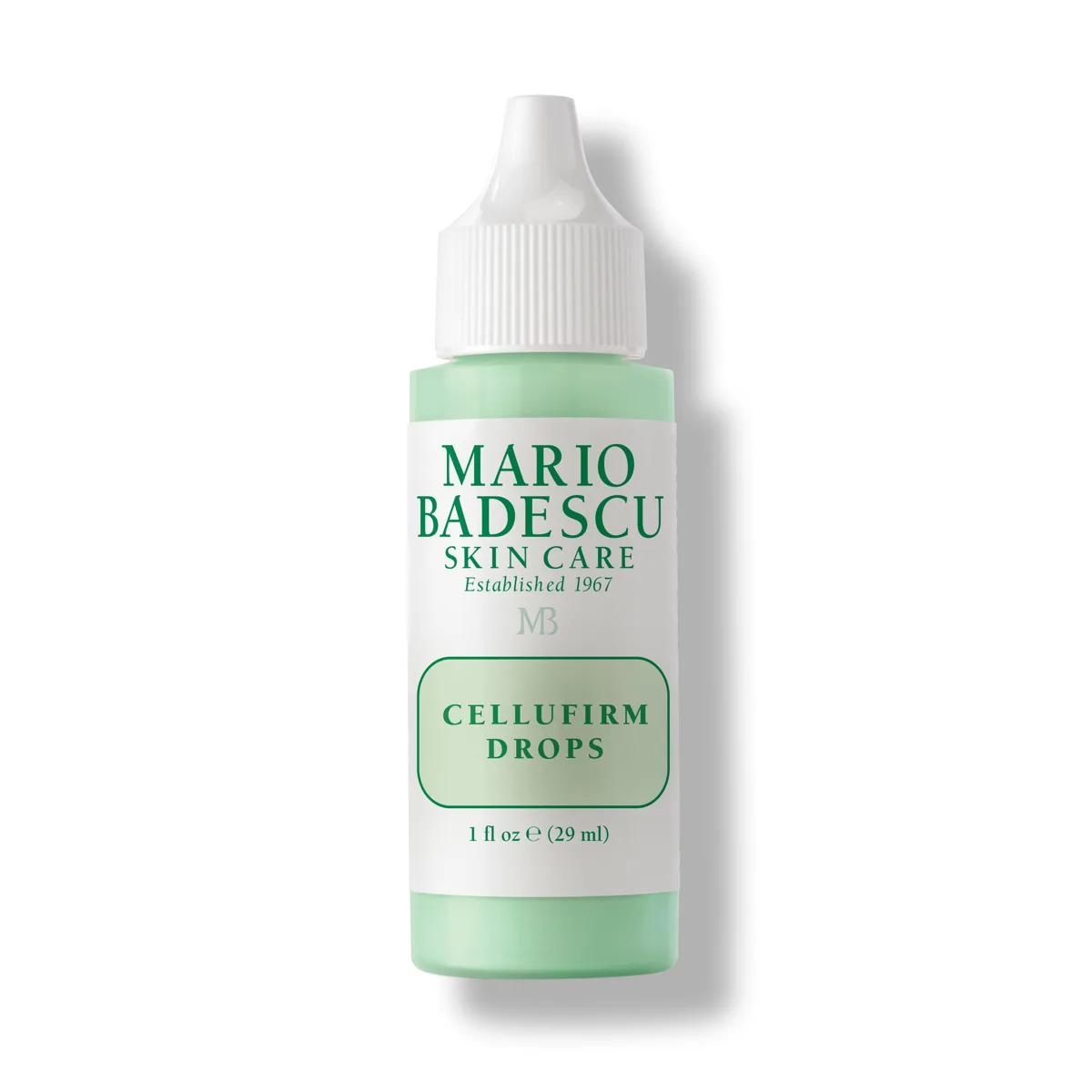
Cellufirm Drops
A milky corn-oil, glycerin and urea emulsion that hydrates and smooths well, dressed in the full 1980s protein vocabulary, collagen, elastin, GAGs, DNA, RNA and pollen, that leaves a tightened feel as it dries and washes off with the next cleanse. The peptide is unproven, the retinyl palmitate is a trace, and fragrance, a formaldehyde releaser, parabens and three dyes keep it from sensitive skin. A well-liked hydrator with a firming name it cannot earn.
 Day-Night Pump, Dated Preservatives
2 in 1 Elastin Essential Eye Essence
Marubi's 2 in 1 Elastin Essential Eye Essence packs a clever dual-chamber pump, a night cream with coenzyme Q10 in a genuinely good position and a ceramide trio, and then preserves both phases with methylisothiazolinone and iodopropynyl butylcarbamate alongside parabens and rose oil. The format deserves a better formula; at sixty dollars from a reseller with no reviews, it is one to admire from a distance.
 Collagen-Themed Comfort Cream
Double Collagen Cream
A soft, comfortable everyday cream for dry and normal skin, with niacinamide and adenosine doing more than its collagen theme suggests. The collagen and elastin are surface conditioners at 0.1 percent, and a perfume with four declared allergens makes it a poor pick for sensitive skin.
 Elastin Smoothing Eye Essence
Elastin Eye Essence
A lightweight, genuinely active eye essence built around Marubi's signature hydrolyzed elastin, backed by credible peptides and antioxidants, that smooths and hydrates the under-eye and layers neatly under richer creams. It's pleasant and broadly tolerable, with honest caveats: topical elastin conditions the surface rather than rebuilding structure, there's a rose fragrance near the eyes, and independent international data is thin.
 Rich Cream, Rose Scented
Elastin Protein Firming Cream
Marubi's Elastin Protein Firming Cream is a genuinely rich, well-made moisturizer for dry, mature skin, with a luxurious oil phase and coenzyme Q10 doing quiet, real work underneath a headline ingredient that mostly delivers a tightening sensation. At the eighty-dollar reseller price it is a pleasant cream sold at a premium the formula does not justify, and oily or reactive skin should look elsewhere.
 Elastin Line Toner, Priced High
Elastin Protein Firming Nourishing Lotion
Marubi's Elastin lotion is a watery hydrating toner with a convincing tightening feel borrowed from witch hazel and a protein film, decent glycerin-and-hyaluronate hydration, and a handful of avoidable extras: alcohol, rose flower oil and a yellow dye. At around seventy dollars for 100 ml on reseller sites it is expensive for what it is, and the firming in the name is a sensation, not a result.
 Sulfate Gel, Prestige Price
Congeal Renewal Cleanser
Marubi's Congeal Renewal Cleanser is a sulfate-based foaming gel with a rose scent and a methylparaben, wearing hydrolyzed elastin and beta-glucan that rinse away with the foam. It cleans oily skin thoroughly and dry skin harshly, and at close to fifty dollars on reseller sites it is one of the least defensible purchases in the brand's range.
 Instant-Tightening Splurge
Firming Serum Supreme
A luxurious serum that delivers a genuinely satisfying instant tightening and blurring effect — courtesy of film-forming silicones and good hydration — wrapped around a long roster of traditional botanical 'firming' extracts whose deeper benefits are far less proven. At $330, with a heavy alcohol and fragrance load, it is a sensory indulgence dressed as a firming treatment, and a poor fit for sensitive skin.
The full hydrolyzed elastin guide
Elastin is the protein that gives healthy skin its snap-back recoil, so it sounds like the perfect anti-aging ingredient.
Hydrolyzed elastin is that protein chopped into smaller peptides and amino acids, usually sourced from animal connective tissue. In skincare it shows up in firming serums and 'collagen-elastin' moisturizers, where it behaves as a humectant and conditioning film-former rather than a fiber-rebuilder.
How it's regulated in the US
FDA does not classify ingredients — it classifies products, by what they are sold to do. The same molecule can be a drug active in one product and a cosmetic ingredient in the next, and only the claim on the label decides which. What follows is a statement about that legal standing, not about whether it works — the evidence question is answered separately above.
Cosmetic Hydrolyzed Elastin is a cosmetic ingredient in the US: no OTC monograph covers it and it is not an active in any FDA-approved drug, so a product built around it is a cosmetic rather than a drug.
Evidence is thin. Topically it reliably hydrates and smooths the surface, but it cannot replenish the elastin fibers in your dermis. The most cited cosmetic study is an in-vitro membrane model, not human skin. A few small oral-supplement trials hint at elasticity gains, but topical anti-wrinkle claims remain largely unproven.
How it works
Native elastin is an enormous, cross-linked, insoluble fiber woven through the dermis, where it lets skin stretch and recoil. Cosmetic elastin is hydrolyzed — broken down by acid or enzymatic hydrolysis into water-soluble peptides and free amino acids — specifically so it can be dissolved into a formula. That same processing strips away the property that made elastin valuable: the elastic, fiber-forming network. What remains are short peptide fragments that work at the skin's surface. They are humectants, binding water in the stratum corneum to boost immediate hydration, and they form a thin conditioning film that smooths rough texture and reduces transepidermal water loss, leaving skin feeling softer and more supple. Because the fragments are still too large and the dermis too well-defended for meaningful penetration, they do not travel down to where elastin fibers actually live, nor do they signal fibroblasts to manufacture new elastin. The 'elasticity' you feel is a surface conditioning effect, not structural repair. In many products it appears low on the INCI list at trace levels, included as much for the marketing pairing with collagen as for measurable performance.
Key benefits
- Acts as a humectant that binds water in the upper skin layers for immediate hydration
- Forms a smoothing conditioning film that improves surface softness and suppleness
- Helps reduce transepidermal water loss, supporting a more comfortable skin feel
- Temporarily blurs fine, dehydration-related lines by plumping the surface
- Pairs cosmetically with hydrolyzed collagen for a richer skin-conditioning matrix
- Generally well tolerated, with a low irritation profile across most skin types
Concentration & usage
Because the surface effects are conditioning rather than structural, no anti-aging percentage has ever been established. Raw materials are often supplied as dilute solutions (around 1 to 20 percent active in water), and finished products typically use it at fractions of a percent. Its position low on most INCI lists signals trace inclusion driven by label appeal as much as performance.
Who it's for & who should be cautious
Who it's for
Anyone wanting a gentle hydration and smoothing boost in a moisturizer or serum, especially dry or normal skin types who like the silky after-feel of protein conditioners. It is a reasonable bonus ingredient, not a reason to buy a product on its own.
Who should be cautious
Vegans and vegetarians should note it is almost always animal-derived. Anyone seeking genuine wrinkle correction or restored skin firmness should look to proven actives instead, since elastin cannot rebuild dermal fibers. Those with known protein or animal-tissue sensitivities should patch test first.
Pairs with & conflicts
Pairs well with: Hydrolyzed Collagen, Hyaluronic Acid, Glycerin, Panthenol (Pro-Vitamin B5), Peptides
Myths & facts
Myth: Topical hydrolyzed elastin replaces the elastin your skin loses with age.
Reality: It can't. Hydrolysis destroys the fiber-forming structure, and the resulting peptides stay at the surface. Lost dermal elastin is not restored by applying elastin to the skin.
Myth: A 'collagen and elastin' moisturizer firms and lifts sagging skin.
Reality: These proteins act as surface humectants and film-formers that make skin feel smooth and hydrated. They do not penetrate to firm tissue or reverse laxity; the firming impression is cosmetic and temporary.
Frequently asked questions
Does hydrolyzed elastin actually improve skin elasticity?
Topically, it improves the feel and surface smoothness of skin through hydration and conditioning, not true mechanical elasticity. The fragments don't reach the dermis where elastic fibers live, so any 'bounce' you notice is a short-term surface effect, not structural repair.
Is hydrolyzed elastin vegan or animal-derived?
It is almost always animal-derived, typically from connective tissue. There is no widely used plant source, so vegan shoppers should treat any product containing it as non-vegan unless the brand states a synthetic or biotech origin.
How is it different from collagen in skincare?
Both are large structural proteins hydrolyzed into peptides for cosmetic use, and both function mainly as humectants and film-formers on the surface. They are often paired together for marketing appeal, but neither rebuilds the protein it's named after in the dermis.
Is hydrolyzed elastin worth paying extra for?
Not on its own. It's a pleasant conditioning ingredient that adds slip and surface hydration, but it usually appears at trace levels low on the INCI list. Judge a product by its full formula rather than the presence of elastin on the label.
Can sensitive skin use hydrolyzed elastin?
Generally yes. It has a low irritation profile and behaves like other gentle protein humectants. As with any new ingredient, those with protein or animal-tissue sensitivities should patch test before regular use.