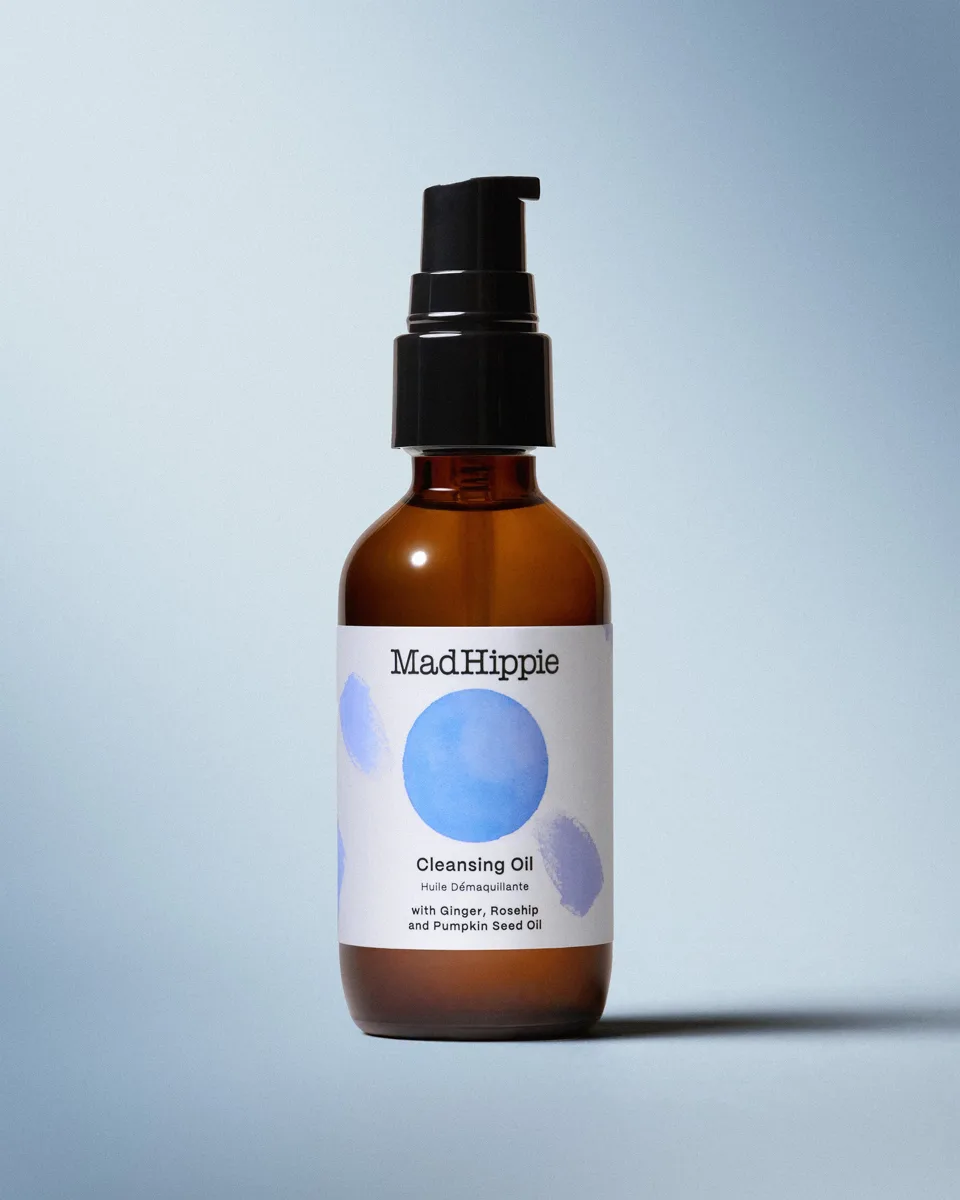
It has no emulsifier — nine plant ingredients, all oils and extracts, and nothing that turns milky under the tap — which makes it a cleansing oil in the older, washcloth sense rather than the modern rinse-off one. The base is a high-linoleic safflower with squalane second, the lightest and least congesting pairing a cleansing oil can have, which is how a straight oil earns a 'non-comedogenic' label most oils cannot.
Nine plant ingredients, no emulsifier, no rinse: a cleansing oil in the washcloth sense, built on high-linoleic safflower and squalane so it dissolves waterproof makeup without congesting. It works beautifully and asks for a cloth, a minute, and usually a second cleanser. Lightly scented with ginger and lime, small bottle, fair price — for makeup wearers with dry-to-combination skin who like the ritual.
Seventy-eight reviews on the brand's site over eight years, strongly positive and self-selected, and Ulta and Amazon counts that could not be retrieved this session, give this oil a moderate record; the brand publishes no comedogenicity or other testing of the product, so the non-comedogenic claim rests on the well-documented profile of its oils rather than on data from this bottle.
Verdicts
How well it fits each concern
Verdict by concern tap a concern for the case
Supporting rolefor DrynessIn your profileYou chose · Rinse-off oil: Squalane gets seconds of contact, so this supports a routine for dryness rather than treating it.Moderate evidenceGentleNo reviews collected yet
The case for it
Squalane has trial-supported standing for this concern.
It is in a rinse-off product, so it gets seconds of contact rather than the leave-on exposure the evidence assumes.
The formula carries none of the triggers this concern is sensitive to.
What would change this: The same active in a leave-on form would be judged on its evidence rather than its contact time.
Same rule for everyone. “Supporting role” is the verdict on 8,197 of 45,024 concern verdicts across the catalog; rule R6 decided 2,017 of them.
As of September 25, 2026, engine 5.1.1.
R6 — Contact time cannot deliver a leave-on claim; the product is judged on its job (cleansing without aggravating). Explicit exceptions (BPO wash, SA cleanser, medicated shampoos) never reach this rule because their rows set rinse_off_ok. · the full register
Carrying active
Squalane
Standing
supported — its mechanism is established
Form
contact limited — studied range 1–100%, from the trials on the row; needs leave-on contact
Tolerability
gentle
Row checked
against its sources on July 17, 2026 (evidence table ev-2026.09-r228)
The studies behind the evidence row
International Cosmetic Ingredient Dictionary and Handbook — declared function — Personal Care Products Council
Harry's Cosmeticology / Baran & Maibach Textbook of Cosmetic Dermatology — humectant, emollient and occlusive classification — standard reference text
Good choicefor SensitivityIn your profileYou chose · No fragrance, drying alcohol, declarable allergens or sensitising preservatives in this oil — the profile sensitive skin looks for.Not yet assessedGentleNo reviews collected yet
The case for it
Squalane has no evidence row yet for this concern — it is in the research queue.
The formula carries none of the triggers this concern is sensitive to.
What would change this: A researched evidence row for the lead active would replace this with a verdict.
Same rule for everyone. “Good choice” is the verdict on 1,938 of 45,024 concern verdicts across the catalog; rule F2 decided 1,938 of them.
As of September 25, 2026, engine 5.1.1.
Also listed for Dehydration and Dullness — the actives here (Squalane, Colloidal Oatmeal, Ginger, Plant & Seed Oils) are in our research queue for those concerns; there is no verdict until their evidence rows are written. That is a gap in our table, not a mark against the product.
As a cleanserNot judged: what a cleanser is for — surfactant mildness, pH match to skin, rinses clean without stripping — cannot yet be measured from the ingredient list (only puts something back can).
A verdict is DermApproved’s assessment of how well a product’s ingredients fit a concern — never a claim about what the product treats. Evidence dots and collected reviews sit beside it and are never blended in.
Rules 0.5.1 · evidence table ev-2026.09-r228 · how we decide
Assessment
Pros & Cons
Pros
✓ High-linoleic safflower and squalane base — unusually light and non-congesting for a straight oil
✓ Removes waterproof mascara, long-wear foundation and mineral sunscreen completely
✓ No surfactant, alcohol or acid; soft, dewy after-feel on dry skin
✓ Rosehip, pumpkin and oat oils reinforce a barrier-friendly linoleic profile
✓ Doubles as a light facial oil for dry skin that skips the second cleanse
✓ Vitamin E, white tea and ginger keep the unsaturated oils stable
✓ Amber glass pump bottle, FSC carton and soy inks
Cons
✗ No emulsifier — does not rinse off and needs a warm washcloth
✗ Most skin types need a second, water-based cleanser after it
✗ Scented with ginger and lime despite the 'no synthetic fragrance' label
✗ Two-ounce bottle lasts only six to eight weeks at a pump a night
✗ Not suitable for fungal-acne-prone skin
✗ Residual oil film is too much for oily skin
Review
Full Review
Try to rinse it off and it will not go. That is the first thing to know about this bottle, and the brand does say so, in the third step of its directions — 'drape warm, damp washcloth over face until cooled' — but a decade of jelly-to-milk and oil-to-milk cleansers has trained most of us to expect a cleansing oil to turn white under the tap and disappear. This one stays put. Massage it in, add water, and you have a slightly wetter oily face. The reason is in the ingredient list, or rather not in it: nine plant ingredients, all oils and extracts, and no emulsifier anywhere. Mad Hippie has made a cleansing oil in the older sense — the one you lift off with a warm cloth, the way a balm was used before balms learned to rinse — and everything good and inconvenient about the product follows from that choice.
The brand added it in 2018, its second cleanser after a decade with only a surfactant-free cream, and it fits Mad Hippie's Portland clean-beauty philosophy exactly: cold-pressed oils, antioxidants to keep them fresh, glass, soy inks, nothing synthetic. What lifts it above the average 'natural' oil cleanser is the choice of base. Safflower oil leads, and specifically the high-linoleic grade — the thinnest, fastest-spreading plant oil in common use and the one with the fatty-acid profile that congestion-prone skin tolerates best. Squalane is second, stable and sebum-identical. Then rosehip, pumpkin seed and oat kernel oil, all linoleic-leaning, with vitamin E, white tea and ginger to protect them and a steam-distilled lime extract for the top note. It is an unusually light, unusually pore-friendly blend for a straight oil, and it is why the 'non-comedogenic' on the label is a defensible claim rather than the usual hope.
What it does is remove makeup completely. A pump — about a teaspoon — massaged into a dry face for a full minute dissolves waterproof mascara, long-wear foundation and mineral sunscreen with a thoroughness the brand's jelly and cream cleansers cannot match, because there is no water or emulsifier diluting the solvent. The oil goes cloudy with pigment. Then the cloth: warm, damp, draped until it cools, wiped. That step is where the reviews divide. For people who enjoy a ritual — and the 78 on the brand's site are 87 percent five stars — the cloth is the best part of the day. For people who wanted a cleanser, it is a chore, and the residual oil film that remains after wiping is a second one. Dry skin often loves that film and stops there, effectively using the bottle as a face oil, and in winter that single-step routine is a perfectly reasonable way to use it. Combination and oily skin will want a water-based second cleanse, which turns a seventeen-dollar oil into half of a two-product routine.
The formula treats the skin kindly throughout. There is no alcohol, no surfactant, no acid, nothing that stings; oat kernel oil adds a ceramide-rich soothing fraction; and the after-feel is soft and faintly dewy. The scent is the one reservation, and it is a familiar one for this brand: 'no synthetic fragrances' is true, and the oil is still scented, warmly, with ginger and lime. The lime is steam-distilled, which strips the furocoumarins that make cold-pressed citrus phototoxic, so there is no sun concern — but citrus and ginger are both sensitizers for a minority, and rosacea-prone or fragrance-reactive skin should patch-test a bottle it cannot return. Fungal-acne-prone skin should skip it entirely; nearly every plant oil feeds the yeast involved, and a blend this linoleic-rich is no exception, however kind it is to ordinary congestion.
The small bottle is the practical limit. Two ounces at a pump a night is six to eight weeks, and at eighteen dollars that makes it a moderately expensive cleansing step for daily makeup wearers, though a fair one for weekend use or as an occasional face oil. The pump helps — it doses a teaspoon cleanly — and the amber glass keeps the unsaturated oils from turning, which matters in a blend this rich in linoleic acid; a clear bottle on a sunny windowsill would have this one smelling of crayons inside a couple of months. Half a pump is plenty on a bare face, which stretches a bottle toward three months for anyone who saves it for makeup nights.
So the recommendation depends on temperament as much as skin. If you wear makeup, have dry-to-combination skin, own a washcloth, and like the idea of a minute's massage with a warm, ginger-scented oil before the day comes off, this is a lovely, well-chosen version of exactly that product, from a brand with fifteen years of retail history and formulas it is not shy about showing. If you want an oil that rinses, buy the brand's jelly. If you want fragrance-free, buy the cream. This bottle is the one for people who want the old way done properly.
Formula
Key Ingredients
The hero actives that drive this product's performance.
The base of the bottle and the reason it can call itself non-comedogenic: the high-linoleic grade is the thinnest, fastest-spreading of the common plant oils and the one whose fatty acid profile congestion-prone skin tolerates best, so it dissolves sunscreen and pigment without the heaviness of olive or coconut and wipes away without leaving the pore-friendly residue those would.
Second in the list, the stable, sebum-identical hydrocarbon that gives the oil its slip and its skin-compatible after-feel; it is what lets the cleanser double as the light face oil many users end up using it as, and its stability is why a bottle of nine plant ingredients does not go rancid in a bathroom.
Established mechanismfor Dryness · established mechanism
Third, carrying the linoleic and linolenic acids and the trace of natural retinoids and carotenoids that the brand credits with 'evening and rejuvenating' — in a product wiped off after a minute those benefits are modest, but the oil does reinforce the linoleic-rich, barrier-friendly profile of the base and gives the bottle its faint amber tint.
The oil the front label credits with 'melting away makeup' — a rich, dark green seed oil high in linoleic acid, zinc and vitamin E that adds a little body to the thin safflower base so the blend clings to pigment and sunscreen long enough to lift it; it is the workhorse of the makeup removal, placed fifth.
A ceramide-rich oat lipid rather than the colloidal oat powder used in barrier creams, placed sixth to lend the blend a soothing, skin-identical fraction — one of the reasons reactive skin can use an oil that contains ginger and a citrus extract without complaint.
The antioxidant-and-scent trio at the tail of the list: ginger and white tea protect the unsaturated oils from oxidising and give the bottle its warm note, and a steam-distilled lime extract — free of the phototoxic furocoumarins in cold-pressed citrus — adds the fresh top note; they are why the oil is not fragrance-free, and why citrus-sensitive skin should patch-test.
Not yet assessed
Ingredient standings describe the active at treatment-level doses and
vehicles; this product's own condition grades weigh its actual formula.
This is a true oil with no emulsifier, so it does not rinse off with water — massage it into dry skin for a minute, then lift it with a warm, damp washcloth, and follow with a second, water-based cleanser if you want a fully clean finish. Used alone it leaves a light oil film that dry skin may enjoy as a moisturizing step; combination and oily skin should double-cleanse.
Results Timeline
Makeup, sunscreen and waterproof mascara dissolve within the minute of massage and lift with the cloth. Skin feels soft and looks slightly dewy immediately. Dry skin notices less flaking within a week of using it as the first evening step. There is no cumulative effect beyond that; a wiped-off oil's benefit is thorough, gentle removal.
The interesting science in this bottle is the choice of oils, because not all plant oils behave alike on skin. In their 2017 review in the International Journal of Molecular Sciences, Lin, Zhong and Santiago surveyed the evidence for topical plant oils — safflower, sunflower, olive, coconut, jojoba, oat, rosehip, argan and others — and their effects on inflammation, wound healing and barrier repair, and drew a distinction that formulators now rely on: oils rich in linoleic acid tend to support the stratum corneum's lipid organisation and barrier function, while oils dominated by oleic acid can disrupt it and increase permeability. Safflower, the base of this cleanser, is among the highest-linoleic oils reviewed; rosehip and pumpkin seed are linoleic-rich as well; oat kernel oil brings ceramides and avenanthramide antioxidants with anti-inflammatory activity. The review also notes the antioxidant content of these oils — tocopherols, carotenoids, polyphenols — which is relevant to a product that is wiped off rather than absorbed, since the main job of the vitamin E, white tea and ginger here is keeping the polyunsaturated oils from oxidising in the bottle.
The cleansing mechanism is pure solvency. Makeup pigments, sunscreen filters and sebum are lipophilic and dissolve readily into a compatible oil; a minute of massage with a low-viscosity, high-linoleic blend loosens them more thoroughly than a surfactant-and-water system can, which is why straight oils outperform emulsifying cleansers on waterproof mascara. What the formula lacks is the polyglyceryl or PEG ester that would let water carry the loaded oil away; without it, removal depends on a warm damp cloth, which lifts the oil mechanically, and on a second cleanser for anyone who wants no residue. Squalane at second position matters here: it is a fully saturated hydrocarbon identical to the hydrogenated form of human sebum's squalene, resists oxidation, and leaves a compatible, non-occlusive trace that the skin tolerates well — the reason the residual film feels like a face oil rather than a coating.
The comedogenicity claim is supported by composition rather than testing. High-linoleic safflower and squalane rate at the bottom of comedogenic scales, and the blend avoids coconut, olive and other oleic-heavy oils implicated in congestion; the brand has not published a comedogenicity study, and the fungal-acne caveat stands for any plant-oil product. The ginger and steam-distilled lime extracts are fragrance components with antioxidant activity; distillation removes the furocoumarins responsible for citrus phototoxicity, leaving ordinary contact-sensitisation risk for a minority.
Oil cleansing has a respectable place in clinical advice for dry, mature and sunscreen-wearing skin, and dermatology tends to judge an oil cleanser on two things: the fatty-acid profile of its oils and whether it removes cleanly. This one scores well on the first — a high-linoleic safflower and squalane base is about the most barrier-friendly and least congesting choice a straight oil can make, with linoleic-rich rosehip, pumpkin and oat behind it — and asks something on the second, since with no emulsifier it requires a cloth and, for most patients, a second water-based cleanse to avoid residue that could trap sweat or debris. Skin specialists would flag the ginger and lime extracts for patients with rosacea or fragrance dermatitis, note that the steam-distilled lime removes the phototoxicity concern, and steer fungal-acne-prone and very oily patients toward an emulsifying or foaming alternative. For a dry-skinned makeup wearer who will use the cloth and follow with a gentle cleanser, it is a sensible, well-composed first step.
Guidance
Usage & Recommendations
How to Use
Use it in the evening on a dry face with dry hands. Pump about a teaspoon into your palm, warm it briefly, and massage over the face and closed eyes for a full minute, working the oil into makeup, sunscreen and along the lash line until it turns cloudy. Wet a clean washcloth with comfortably warm water, wring it out, drape it over the face until it cools, then wipe gently from the centre outward; rinse the cloth and repeat once. Follow with a water-based cleanser if you want a fully clean finish — the brand's jelly is the natural partner — or, on dry skin, leave the faint oil film as a moisturizing layer and go straight to serum. Use a fresh cloth each night. Patch-test on the jawline if you react to citrus or ginger, and keep the amber bottle away from heat and sun.
Value Assessment
Eighteen dollars for two ounces is about nine dollars an ounce, which is mid-range for a cleansing oil and pricey for a straight plant-oil blend with no emulsifier; the bottle lasts six to eight weeks at a pump a night, and a subscription trims the cost. The value is best for occasional makeup wearers and for dry skin that uses it as both cleanser and face oil, since it is a genuinely good facial oil; it is weakest for daily heavy-makeup wearers, who will get through a bottle in six weeks and still need a second cleanser, and for whom an emulsifying oil that rinses does the same job more cheaply. What the price buys is a well-chosen, stable, non-congesting oil blend in glass from a brand with fifteen years of retail reputation and no trials — fair for what it is, provided you want the cloth-off method rather than merely tolerating it.
Who Should Buy
Makeup and sunscreen wearers with dry, normal or combination skin who want a thorough, gentle, non-congesting oil to dissolve the day, and who like — or at least accept — the warm-cloth method. It suits people who appreciate cold-pressed oils, glass packaging and a light natural scent, and dry skin that would happily use the same bottle as a face oil.
Who Should Skip
Anyone expecting a cleansing oil that rinses with water, anyone who wants fragrance-free, and anyone with fungal-acne-prone skin, which plant oils aggravate. Very oily skin will find the residual film too much, and daily heavy-makeup wearers will find a two-ounce bottle too small for the price.
A thin, pale golden, fast-spreading oil with a dry, silky slip from the safflower and squalane that turns slightly cloudy as it lifts makeup and wipes away with a warm cloth
Scent
A soft, warm natural scent — ginger with a fresh lime top note — noticeable on application and gone once wiped away; no synthetic fragrance
Packaging
Two-ounce amber glass bottle with a pump, in an FSC-certified carton with soy inks — protective and recyclable, but small and not travel-friendly
Finish
dewysatin
What to Expect on First Use
The first use is a small re-education: pump the oil onto a dry face, massage for a full minute as the day's makeup goes cloudy, then drape a warm damp cloth over the face and wipe — no lather, no rinse, and if you try to rinse with water alone the oil stays. What remains is a soft, faintly oily glow that dry skin enjoys and combination skin will want to follow with a second cleanser. Nothing purges or stings; the ginger-lime scent is the only thing to notice.
How Long It Lasts
About six to eight weeks at a pump a night; longer if used only on makeup days
Mad Hippie added the Cleansing Oil in 2018, its second cleanser after a decade with only the Cream Cleanser, as a makeup remover built on the same cold-pressed, antioxidant-heavy philosophy as its serums. It arrived before the brand's emulsifying Jelly Cleanser and has kept its no-emulsifier, cloth-off design since, gaining a pastel label in the 2024 rebrand and remaining the brand's smallest and most old-fashioned cleanser.
About Mad Hippie Established Brand (5–20 years)
Mad Hippie is a Portland clean-beauty brand founded in 2010 and best known for a vitamin C serum that reached Whole Foods, Ulta and Anthropologie; its small range is built on cold-pressed oils and antioxidants with fully disclosed formulas. It has no dermatological founder and publishes no clinical work — 'dermatologist recommended' is a marketing line — and its credibility comes from a fifteen-year retail and review record.
Brand founded: 2010 · Product launched: 2018
Myth vs. Reality
Common Myths
Myth
A cleansing oil rinses off with water like any other cleanser.
Reality
Only emulsifying cleansing oils do, and this one has no emulsifier — it is nine plant oils and extracts. Water alone will not remove it; the brand's method is a warm, damp washcloth, and most people follow with a water-based cleanser for a fully clean finish.
Myth
Oil on the face causes breakouts, so an oil cleanser is wrong for acne-prone skin.
Reality
It depends on the oil. High-linoleic safflower and squalane are among the least comedogenic lipids in skincare, which is why this blend can claim non-comedogenic status; oleic-heavy oils like coconut or olive are the ones that congest. Fungal-acne-prone skin is the exception, since most plant oils feed Malassezia.
Myth
'No synthetic fragrances' means the oil is fragrance-free.
Reality
It contains ginger root extract and a steam-distilled lime extract, which give it a warm citrus scent. The lime is distilled rather than cold-pressed, so it is not phototoxic, but it is still a citrus fragrance component, and the oil is scented in the ordinary sense.
FAQ
Frequently Asked Questions
Does the Mad Hippie Cleansing Oil rinse off with water?
No. It contains no emulsifier, so water will not turn it milky or carry it away. The brand's method is to massage it into dry skin for a minute, then drape a warm, damp washcloth over the face and wipe. Most people follow with a water-based cleanser for a fully clean finish.
Will the Mad Hippie Cleansing Oil clog pores?
Unlikely for most skin. The base is high-linoleic safflower oil with squalane second, two of the least comedogenic lipids available, and the rosehip and pumpkin oils are linoleic-rich as well. Fungal-acne-prone skin is the exception, since plant oils feed the yeast involved.
Does the Mad Hippie Cleansing Oil remove waterproof mascara?
Yes — this is what it does best. A minute of massage dissolves waterproof mascara, long-wear foundation and mineral sunscreen, and the warm cloth lifts them off. It outperforms the brand's jelly and cream cleansers on heavy makeup because it is a straight oil.
Is the Mad Hippie Cleansing Oil fragrance-free?
No, though it has no synthetic fragrance. Ginger root extract and a steam-distilled lime extract give it a warm citrus scent that fades once wiped away. The distillation removes the phototoxic compounds in cold-pressed lime, but citrus-sensitive skin should patch-test.
Can I use the Mad Hippie Cleansing Oil as a face oil instead of a cleanser?
Many people do. Safflower, squalane, rosehip, pumpkin and oat oils with vitamin E make a perfectly good light facial oil, and dry skin that skips the second cleanse is effectively using it that way. It is a more expensive face oil than a cleanser, though, given the two-ounce bottle.
How much of the Mad Hippie Cleansing Oil should I use per wash?
One pump — about a teaspoon — is enough for the whole face on a makeup day; half a pump on a bare face. At a pump a night the two-ounce bottle lasts six to eight weeks, which is the main complaint about it.
Reviews
What Reviewers Tend to Say
Recurring themes our editors read across retailer reviews of this product — summaries in our words, not quotations, and not a substitute for your own patch test.
Common Praise
Removes waterproof mascara and sunscreen completely
Leaves dry skin soft and glowing rather than stripped
Light enough not to clog pores on combination skin
Pleasant warm ginger-citrus scent
Common Complaints
Does not rinse off — needs a washcloth and often a second cleanser
Two-ounce glass bottle goes quickly at a full pump per wash
Scented, which fragrance-averse users did not expect from a 'no synthetic fragrance' label
Every word on a plant oil label describes what was left in — including the proteins that sensitise and the compounds that go rancid — and the variable that decided the one head-to-head trial isn't printed anywhere.
Cutting a beard hair takes about a twentieth of a newton. You press with two and stretch your skin by a fifth — which is why almost every shaving problem is a technique problem wearing a hardware costume.
The burn trials are real and the skeptics who dismiss aloe as folklore are wrong — but the same substance has delayed healing in other wounds, and none of it says anything about what a soothing gel does to intact skin.
Your immune cells already make it to kill microbes. Now it's in a spray bottle for breakouts and redness, and the real evidence is quietly stronger than the 'miracle mist' marketing that's outrunning it.
Jan 18, 2026· 4 min
Questions people ask about sensitive skin
Verified answers from our questions library — the nuance a product page cannot carry.
Products, answers, therapy guides, tools and articles in one search. Brand names,
slang and abbreviations all work — accutane finds isotretinoin, bacne finds truncal acne.