Hypochlorous Acid Is Everywhere in 2026 — and the Science Is Better Than the Hype Deserves
Your immune cells already make it to kill microbes. Now it's in a spray bottle for breakouts and redness, and the real evidence is quietly stronger than the 'miracle mist' marketing that's outrunning it.
Read the preview
From the DermApproved blog, in Ingredient Science: hypochlorous acid — the molecule that ate 2026. Here's the strange part. Your own immune cells make this stuff to kill invaders. Now it's in a spray bottle for breakouts and redness, misting over sweaty backs and fresh tattoos everywhere you look. And the science? Quietly better than the 'miracle mist' marketing even deserves — antimicrobial, calming, no sting. So what's the problem? There's a catch built right into the chemistry, one that means the bottle in your bag might be closer to water than you think. Where it truly belongs in your routine — and where the hype outruns the evidence — at dermapproved.com/blog.
The disinfectant your body already makes
Hypochlorous acid isn't a lab novelty dressed up as nature — it's the opposite. When your white blood cells engulf a bacterium, one of the weapons they deploy against it is hypochlorous acid, produced on demand inside the immune cell to oxidize and destroy the invader. Skincare's 2026 obsession is essentially bottling that same molecule at a gentle concentration and spraying it on the outside of your skin.
That origin story explains the ingredient's defining trait: it is antimicrobial without being harsh. It carries no acid sting, no benzoyl-peroxide dryness, no fragrance bite. A 2025 review in Biomedicines surveying HOCl across dermatology and several other specialties concluded it is "well tolerated and considered safe, with no serious adverse effects reported," while acting simultaneously on microbial burden and inflammation. For a category where the effective ingredients usually come with a tolerability tax, a genuinely gentle antimicrobial is a real find — which is exactly why it went everywhere this year.
Why 2026 turned into peak mist
HOCl had a quiet clinical life for years — wound care, post-surgical irrigation, eyelid hygiene — before it broke into consumer skincare and then, in 2026, into body care. The pitch is almost frictionless: a rinse-free spray you can mist over a sweaty back, a fresh tattoo, a post-workout face, or a red patch after a procedure, with nothing to rub in and nothing to wash off. Brands leaned into 'reset,' 'rescue,' and 'calm' language, and a molecule that started in operating rooms became a gym-bag staple.
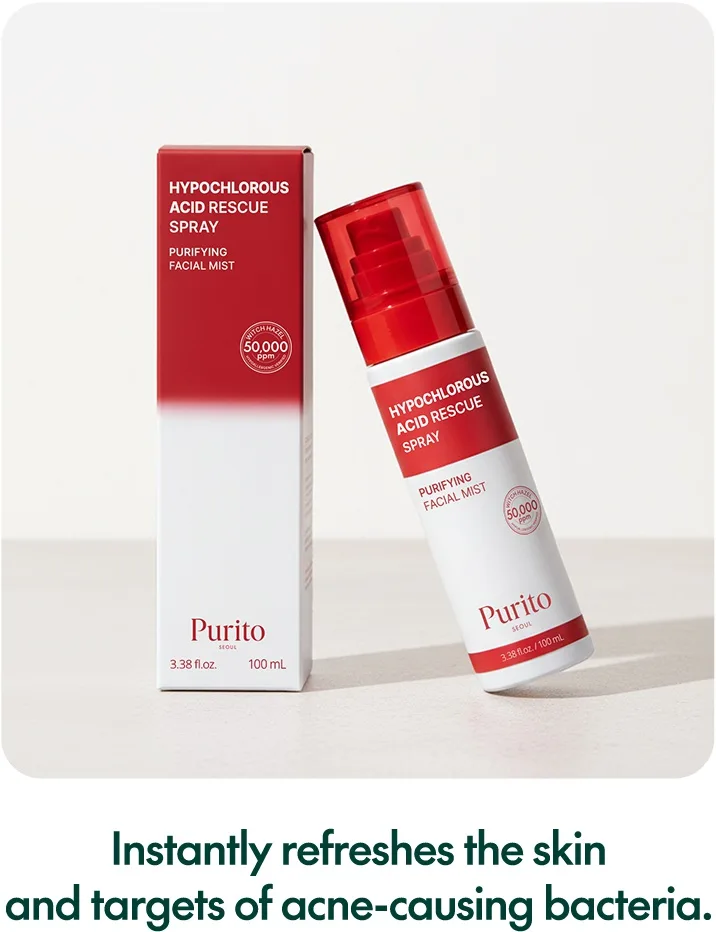
The catalog reflects the surge. A fan favorite like Tower 28 SOS Daily Rescue Facial Spray built much of the mainstream awareness, and it's now flanked by budget-friendly options such as the Purito Hypochlorous Acid Rescue Spray and body-focused formats like the AcneFree Hypochlorous Acid All Over Soothing Spray. Even legacy face-mist brands joined in — the Mario Badescu Repairing Facial Spray with Hypochlorous Acid swaps the old herbal formula for the molecule of the moment. If you want to check whether a 'soothing mist' you already own is actually HOCl-based or just marketing borrowing the halo, run its ingredient list through our ingredient-decoder tool.
What the evidence actually supports
The clinical case for HOCl is real and specific. A 2018 status report in the Journal of Clinical and Aesthetic Dermatology by Del Rosso and Bhatia documented therapeutic benefit across acne vulgaris, atopic-dermatitis-associated itch, seborrheic dermatitis, and slow-healing wounds, noting that stabilized, pH-neutral HOCl is more effective as an antimicrobial than unstabilized versions. The mechanism is a two-for-one: it lowers the bacterial load that feeds inflammatory acne while damping the inflammatory signaling that drives redness and swelling.
That's the honest ceiling, though. This is promising adjunct data, not blockbuster acne-drug data. The evidence base for everyday acne, rosacea-type redness, and 'barrier support' remains far thinner than the mountain of trials behind retinoids, benzoyl peroxide, or azelaic acid. HOCl is a supporting player — excellent for calming an irritated, breakout-prone complexion and reducing microbial burden between active treatments, but not a stand-in for a proven regimen. If you're mapping where it fits alongside your actual acne actives and your skin's sensitivities, our my-skin tool can help you slot it in as the gentle step rather than the workhorse.
The catch nobody mists over: it's fragile
Here's the part the 'miracle' framing skips. Hypochlorous acid is chemically unstable. Its activity depends tightly on pH and formulation, and it naturally degrades over time — which is why the good products are engineered around stability and why the 2018 JCAD report stressed that a properly stabilized, pH-controlled formula outperforms a sloppy one. A cheap or poorly made HOCl spray can be closer to plain water by the time you finish the bottle.
Practically, that means storage and shelf life matter more here than with a typical serum: respect the period-after-opening, keep it out of heat and direct light, and don't stockpile bottles you won't use promptly. Treat it as what it is — a gentle, genuinely useful, evidence-backed calming and antimicrobial mist that plays a supporting role. Buy it to soothe and reduce microbial load, not to replace the retinoid or benzoyl peroxide doing the real structural work on your acne. On those terms, the hive of 2026 hype actually lands close to the truth.
Products mentioned
Independently reviewed and scored — the real products behind this piece.



References
- Hypochlorous Acid: Clinical Insights and Experience in Dermatology, Surgery, Dentistry, Ophthalmology, Rhinology, and Other Specialties — Biomedicines, 2025
- Status Report on Topical Hypochlorous Acid: Clinical Relevance of Specific Formulations, Potential Modes of Action, and Study Outcomes — Journal of Clinical and Aesthetic Dermatology, 2018
Every cited link is verified to resolve to the paper named. Where a source could not be independently confirmed, it is listed without a link rather than pointing you somewhere wrong.
Frequently asked
Does hypochlorous acid actually clear acne, or just calm it?
It does both to a degree — HOCl reduces the acne-associated bacteria on the skin and dampens the inflammation behind redness and swelling. But the evidence positions it as a gentle adjunct, not a primary acne treatment. It works best alongside proven actives like benzoyl peroxide, retinoids, or azelaic acid rather than replacing them.
Why doesn't hypochlorous acid sting like other acne ingredients?
Because it's the same molecule your own immune cells make to kill microbes, applied at a gentle concentration and a skin-friendly pH. It's antimicrobial through oxidation rather than through exfoliation or drying, so it skips the sting of an acid and the flakiness of benzoyl peroxide. Clinical reviews consistently describe it as very well tolerated.
Can I spray hypochlorous acid on body acne and after workouts?
Yes — the rinse-free, leave-on format is a big reason it spread into body care in 2026. Misting it on a sweaty back or chest after exercise is a reasonable, low-risk way to reduce microbial load. Just remember it's a supporting step, not a cure for stubborn body acne, which may still need a targeted active.
Why does my hypochlorous acid spray seem to stop working?
HOCl is chemically unstable and degrades over time, with its activity tied to pH and formulation. A poorly stabilized or expired spray can lose potency and drift toward being little more than water. Respect the period-after-opening, store it away from heat and light, and don't stockpile bottles you won't finish soon.