Hypochlorous Acid (HOCl)
Products with Hypochlorous Acid (HOCl)
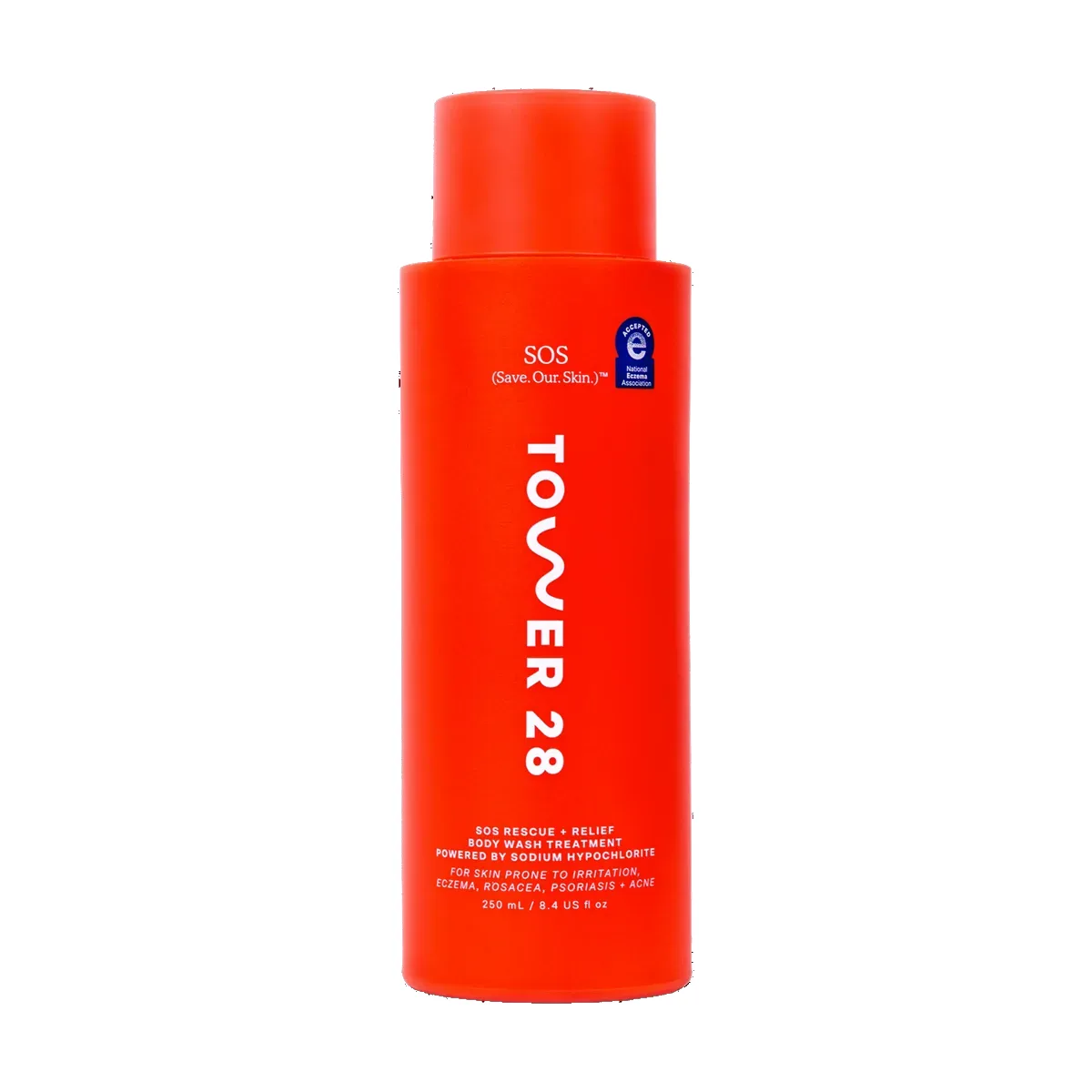 Hypochlorous Acid Body Wash
 SOS Rescue + Relief Body Wash
Tower 28's December 2025 SOS Rescue + Relief Body Wash brings hypochlorous acid into body wash format — combined with mild amphoteric surfactants, cactus flower extract, apple fruit extract, and glycerin. At $22 for 250ml the value is reasonable. Genuinely suitable for sensitive, eczema, rosacea, body acne, and fungal acne users. Safe for babies 6+ months and pregnancy.
 Hypochlorous Acid Original
 SOS Daily Rescue Facial Spray
The product that put cosmetic hypochlorous acid on the US map and the foundation Tower 28's whole brand was built around. Four ingredients — saltwater plus hypochlorous acid — used to address acne, eczema, rosacea, post-procedure recovery, and just about any skin condition where bacterial overgrowth or barrier inflammation is a factor. Pricey for what it is, but uniquely well-tolerated.
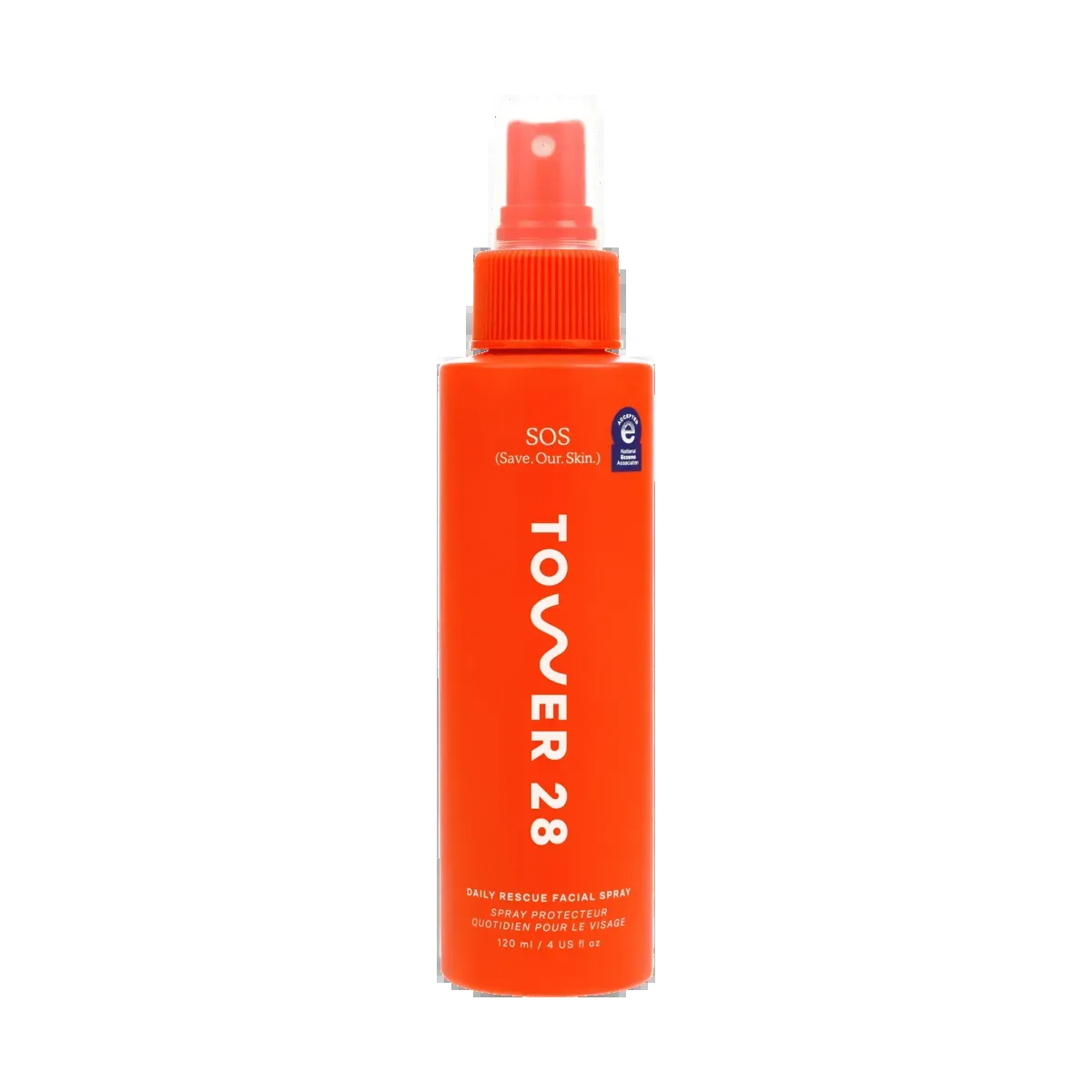 Reactive-Skin Cult Favorite
 SOS Save Our Skin Daily Rescue Facial Spray
The product that single-handedly brought hypochlorous acid into mainstream skincare. A fine-mist HOCl spray with genuine dermatology-organization validation, a near-perfect tolerability profile, and a cult following among people whose skin reacts to everything else. The price runs steeper than medical-grade HOCl, but the stabilization and design are worth the difference for daily use.
 Affordable Hypochlorous Pick
 Repairing Facial Spray with Hypochlorous Acid
Mario Badescu's 3-ingredient HOCl spray nails the minimalist hypochlorous acid formulation philosophy at a 10-dollar discount to Tower 28. National Eczema Association seal, fragrance-free, completely non-stinging — a legitimate gym-bag, post-procedure, eczema-flare staple. The closest thing to a no-downside skincare product in the category.
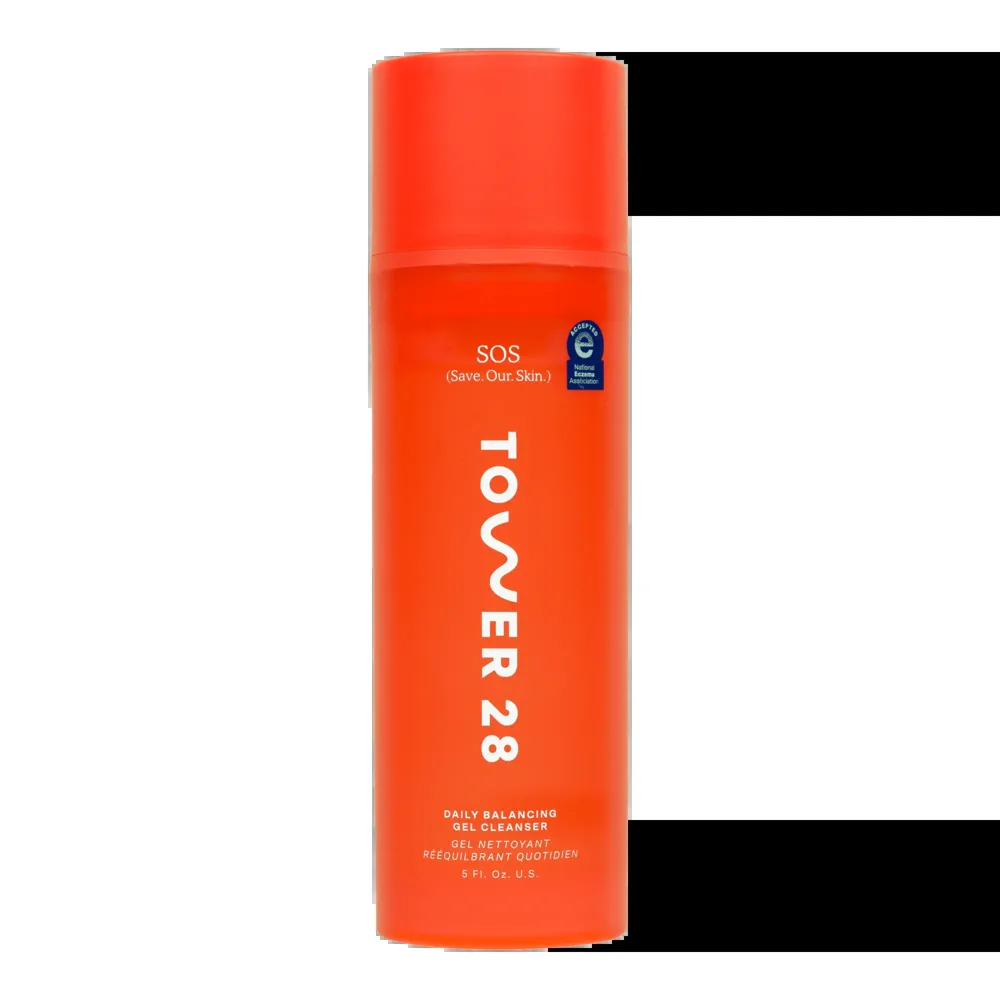 Sensitive-Skin Daily Cleanser
 SOS Daily Balancing Gel Cleanser
A genuinely sensitive-skin-friendly daily gel cleanser that uses a sulfate-free glucoside-and-isethionate surfactant system at skin-matched pH, with Tower 28's signature hypochlorous acid and a soothing cica supporting cast. Lands the rare middle between effective and gentle.
 FDA-Cleared Hypochlorous Acid Mist
 Antimicrobial Purifying Mist
PanOxyl 2026 launch FDA-cleared hypochlorous acid antimicrobial mist with 4-ingredient minimalist formulation. Exceptional suitability breadth (works for all skin types including sensitive, pregnant, post-procedure) and irritation risk (no comedogenic ingredients, no fragrance, no alcohol, no sensitizers). $15 value tier represents excellent accessibility for FDA-cleared antimicrobial positioning.
 Reactive Skin MVP
 SOS Intensive Rescue Serum
A minimalist hypochlorous acid serum with genuine dermatology-organization validation and a near-perfect irritation profile. It won't replace your actives, but for reactive skin mid-flare, it's one of the few 'serums' that does exactly what it promises without the stinging that usually accompanies soothing claims. The $34 price for five ingredients is the only real friction point.
 Four-Acid Daily Pad
 No.0 Zero Blemish Azela Cica Balancing Dual Pads
A clever daily pad for oily, clog-prone skin that exfoliates with salicylic and polyhydroxy acid on one face and calms with centella on the other, with a low, undisclosed dose of azelaic acid running through both. It is more gentle than the four-acid billing suggests and better at blackheads than at inflamed spots. Dry or reactive skin should sit this one out, and the missing percentages cost it some trust.
 Big-Bottle HOCl Bargain
 Hypochlorous Acid Spray
The standard hypochlorous acid spray — four ingredients, 0.018%, nothing added — in a bottle twice the size of the famous ones for the same fifteen dollars. It calms redness, razor irritation, maskne and new inflamed spots without a sting, works on eyelids and over makeup, and is the one Eva Naturals product whose label and list say the same thing. The only real unknowns are its shelf life and its youth.
 Gentle Clarifying Refresh
 Evenly Clear Clarifying Spray
A genuinely gentle hypochlorous acid spray — a legitimate antimicrobial molecule with real medical heritage, in a simple, fragrance-free face-and-body mist. It is exceptionally non-irritating and pleasant as a clarifying refresh. The honest catch: it is a supportive step for acne-prone skin, not a treatment that clears acne.
 Gentle Calming Mist
 Hypochlorous Acid All Over Soothing Spray
A genuinely gentle, do-almost-no-harm hypochlorous acid mist that calms redness and reduces breakout-causing bacteria with essentially zero irritation risk, suitable for virtually any skin — sensitive, oily, rosacea-prone, freshly-shaved, or post-procedure. It brings a clinically-used antimicrobial to the drugstore affordably; just set expectations for a gentle, preventive support rather than a dramatic acne treatment, and use it up within a few months since it degrades.
 Sunburn Kit Essential
 Recovery+ Mist
Three ingredients, no fragrance, no preservatives, nothing to react to: COOLA's Recovery+ Mist is hypochlorous acid at its plainest, and for sunburn, post-workout flush, shaving nicks and inflamed spots that is exactly what is wanted. It does not disclose its concentration, launched in March 2026 with no user record, and at $20 it is priced like the category rather than under it.
 Leaping Bunny HOCl Mist
 Hypochlorous Acid Facial Mist
Water, salt, hypochlorous acid — the entire category in three ingredients, from a Leaping Bunny brand, for fifteen dollars. It calms redness, razor bumps and new spots without sting, smell or residue, exactly as the molecule should. What it does not do is tell you the concentration, pH or shelf life, which for a product whose whole worth is its potency is the one omission that costs it.
 Gentle HOCl Spray
 Clean Landing Daily Purifying Spray
Bubble's Clean Landing is a refreshingly simple, genuinely useful product: a hypochlorous acid spray, just water and HOCl, a gentle antimicrobial that also calms inflammation. HOCl is the same molecule your immune cells make to fight bacteria, so it's exceptionally gentle and safe — used in wound and eye care — and on skin it reduces acne-causing bacteria and soothes redness and irritation without stinging or stripping. It's great for spritzing after sweating or shaving, over breakouts, or on reactive skin, and it's fragrance-free and suits all skin types, including sensitive, rosacea-, and eczema-prone. The honest caveats are that it doesn't hydrate (pair with a moisturizer), isn't a standalone acne cure, and degrades over time. As a gentle purifying, soothing spray, it's a smart, affordable pick.
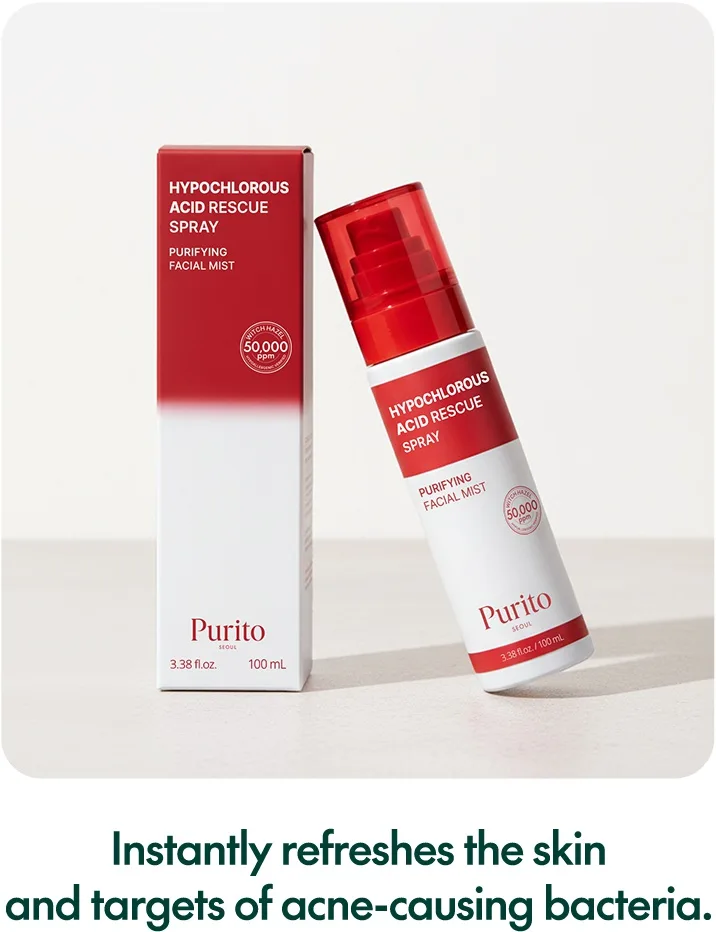 Calm-Down In A Bottle
 Hypochlorous Acid Rescue Spray
A genuinely gentle, well-made hypochlorous acid spray at a functional 104 ppm, in a clean, fragrance-free base with soothing witch hazel water and botanicals. It is exceptionally tolerable and broadly useful as a calming refresh — just buy it as the comfort product it is, not as a treatment that fixes skin concerns.
 Cheapest Derm-Grade Calming Mist
 Save Your e.l.f. Hypochlorous Mist
A three-ingredient hypochlorous acid mist that calms red, hot, blemish-prone and eczema-prone skin within minutes, carries the National Eczema Association seal and costs $12, roughly half the specialist brands that made the category. It does nothing else, and e.l.f. keeps the concentration to itself, which for this particular ingredient is a real gap; still the easiest recommendation in the brand's skincare range.
 Gentle Rinse-Off Exfoliant
 Hypochlorous Acid Rice Peel Shot
Medicube's Hypochlorous Acid Rice Peel Shot is a genuinely gentle, effective rinse-off exfoliating and purifying treatment — a nice, affordable way to smooth texture and refine pores without harsh scrubbing. You massage it onto dry skin, where a protease enzyme and light physical action gently exfoliate dead cells while charcoal lifts oil and impurities, then rinse it off. It's fragrance-free and soothed with hypochlorous acid, panthenol, and ceramide, so it's mild enough for sensitive and troubled skin. The honest caveat is inherent to rinse-off products: the soothing hypochlorous acid, ceramide, rice, and hydrating actives largely wash off, so those benefits are modest — the real payoff is the gentle exfoliation and pore-purifying, which do work on contact. At $26, a reasonably-priced, kind-to-skin exfoliant.
 Gentle Body Smoothing Exfoliant
 Hypochlorous Acid Rice Body Peel Shot
Medicube's Hypochlorous Acid Rice Body Peel Shot is a genuinely gentle, effective rinse-off body exfoliant that smooths rough, bumpy body skin without harsh scrubbing — the body-format version of its face peel shot, in a generous 280 ml size for arms, legs, back, and chest. You massage it onto dry skin, where a protease enzyme and light physical action gently exfoliate while charcoal purifies, then rinse off. It targets rough texture, bumps like keratosis pilaris ('chicken skin'), body acne, and dullness, and it's fragrance-free and gentle. The honest caveat is the rinse-off format: the soothing hypochlorous acid and nourishing rice largely wash off, so the real benefit is the gentle exfoliation and smoothing — follow with a body moisturizer for lasting hydration. At $28 for 280 ml, good value for gentle body exfoliation.
 HOCl Mist With Extras
 Hypochlorous Acid Power Soothing Spray
A hypochlorous acid mist that refuses to be minimal: 150 ppm HOCl plus a real niacinamide dose, panthenol, allantoin, a buffer system and three essential oils, which makes it a genuinely useful calming toner for oily, blemish-prone, resilient skin and a worse choice than the plain sprays for anyone reactive. The extras give it more to offer over weeks and more to react with in the bottle; buy it for the multitasking, keep it away from eczema and vitamin C, and use it up within months.
 Airless Rescue Spray
 Hypochlorous Daily Mist
Three ingredients, no irritants, and the one packaging decision that matters in this category: an airless tube that keeps the hypochlorous acid from turning into salt water before the mist is used up. It calms itch, redness and freshly irritated skin within minutes and lowers the surface bacteria around breakouts over weeks, which is exactly what the category promises and no more. At $18 for 50 mL it is pricier than the big-bottle competition, and the airless tube is the reason to pay it.
 Pore-Strip Theater, Rebranded
 Hypochlorous Acid Peel Mask
A satisfying peel-off pore mask dressed up in trendy hypochlorous acid branding. The instant blackhead-and-pore results are real but mechanical and short-lived — you're lifting surface sebaceous filaments that refill within days, exactly like a pore strip. The HOCl is along for marketing more than function. Fun as an occasional ritual, but at nearly nine dollars a single-use sheet, it's a pricey way to buy a temporary effect.
 Hypochlorous Acid + Clay Clarifying Mist
 Redness + Hydrating Clarifying Mist
Peace Out Skincare hypochlorous acid antimicrobial mist with triple clay blend + zinc oxide + niacinamide + arnica + Centella + willow bark + multi-humectant pool. Substantive clarifying platform in mist format with hydrating additions. Bergamot + lavender essential oils limit sensitive-skin appropriateness. $24 for 3.3 fl oz is mid-tier pricing for the mist category.
The full hypochlorous acid (hocl) guide
Your own neutrophils manufacture hypochlorous acid the instant they corner a pathogen — it's the oxidant the immune system uses to dismantle bacteria within seconds.
Formulators figured out how to stabilize that same molecule at very low concentrations and bottle it as a spray, and early results for inflammatory acne, rosacea, and compromised skin are quietly encouraging. What makes it interesting isn't marketing; it's that the underlying antimicrobial chemistry is one of the best-characterized in human biology, now repurposed at skin-safe strengths.
How it's regulated in the US
FDA does not classify ingredients — it classifies products, by what they are sold to do. The same molecule can be a drug active in one product and a cosmetic ingredient in the next, and only the claim on the label decides which. What follows is a statement about that legal standing, not about whether it works — the evidence question is answered separately above.
Cosmetic A cosmetic ingredient as sold in facial sprays. Some wound-care presentations of hypochlorous acid reach the market by a different route entirely; the skincare mist is not one of them.
Topical HOCl has a reasonable, if still maturing, clinical record for antimicrobial and wound-support uses — though most trials are small to moderate, short-duration, and frequently industry-funded. A double-blind acne trial found stabilized HOCl comparable to benzoyl peroxide for inflammatory lesions over roughly 12 weeks, with better reported tolerability. A 2018 status report in the Journal of Clinical and Aesthetic Dermatology surveyed multiple formulation studies and described consistent signals for infection prevention, inflammatory modulation, and wound healing, while noting the absence of major adverse events. A 2025 clinical review across several specialties catalogued 61 original studies published since 2000, reflecting a deeper literature than the recent skincare buzz suggests. Reported benefits for hypertrophic scars and keloids — improvements in vascularity, pliability, and height — also appear in that body of work. The evidence is not as deep or long-running as retinoids or niacinamide, and much of it is mechanistic or small-trial rather than large randomized data, so the honest read is "promising with a strong biological rationale," not flagship-tier proof.
How it works
Inside phagosomes, neutrophils use the enzyme myeloperoxidase to convert hydrogen peroxide and chloride into hypochlorous acid, which then oxidizes bacterial proteins, DNA, and lipid membranes — killing pathogens in seconds. Topical products recreate that chemistry at stabilized, skin-tolerable strengths, generally around 0.005% to 0.02%. At those levels it appears too dilute to harm human cells, yet still disrupts bacterial cell walls and the biofilms that let Cutibacterium acnes and Staphylococcus aureus settle into follicles and broken skin. A separate anti-inflammatory effect seems to run alongside the antimicrobial one. HOCl is reported to dampen pro-inflammatory cytokine signaling — including mediators such as IL-6 and TNF-alpha — which may help explain why it can calm redness in reactive skin somewhat independently of bacterial load. It also appears to support re-epithelialization in wound settings, a use that predates its skincare popularity by years among surgeons and wound-care clinicians. The catch is stability. HOCl readily breaks down toward saline once it meets air, organic matter, or other reactive ingredients, so products are almost always spare, low-ingredient sprays — you can't pack them with other actives without the HOCl oxidizing them. That same eagerness to break down is also why it leaves no buildup: residue on skin reverts to harmless salt water shortly after it acts.
Key benefits
- Reduced inflammatory acne lesions comparably to benzoyl peroxide in trials, with gentler tolerability
- Calms redness in rosacea-prone and reactive skin without typical active-ingredient stinging
- May curb S. aureus overgrowth that aggravates eczema and atopic flares
- Supports post-procedure recovery and shows promise for hypertrophic scar improvement
- Breaks down to harmless saline, leaving no residue or product buildup
- Gentle enough for use around the eye and mouth area in cosmetic formulas
Concentration & usage
Cosmetic formulas typically run between 0.005% and 0.02% HOCl, and stability depends on holding pH roughly between 4.0 and 6.5 — drift outside that band and the molecule either degrades or shifts toward a less active sodium hypochlorite form. On an INCI list it appears as "HYPOCHLOROUS ACID" (CosIng ID 90748), and the famously short ingredient line-up (often just water, sodium chloride, and hypochlorous acid) is a reliability cue, not a sign the formula is underbuilt. Medical and wound-care versions sometimes reach 0.05% to 0.1%, but everyday skin-maintenance sprays sit at the lower end. Be wary of products padded with long inactive-ingredient lists: HOCl tends to oxidize most actives it shares a bottle with, so elaborate formulas often trade away stability.
Who it's for & who should be cautious
Who it's for
People managing inflammatory acne who want a non-drying option — especially anyone burned by benzoyl peroxide's bleaching of fabrics or its dryness. It also suits rosacea-prone skin that needs bacterial and inflammatory calming without the sting of stronger actives. Those in a post-procedure window after laser, microneedling, or extractions may appreciate its wound-support and infection-prevention reputation. Eczema-prone individuals who battle recurrent S. aureus flares are another group with a plausible reason to try it.
Who should be cautious
Anyone sensitive to chlorine-based compounds should patch-test first; serious reactions are rare in the literature, but individual sensitivity exists. HOCl is not a substitute for prescribed antimicrobials in severe or actively infected skin disease — those situations need a clinician. If you run a full multi-active routine, time it carefully: applying it at the same moment as vitamin C, retinol, or other oxidation-sensitive actives can degrade both. And it's a poor fit for purely comedonal (non-inflammatory) acne, where it doesn't address the underlying pore congestion.
Pairs with & conflicts
Pairs well with: Ceramides, Panthenol (Pro-Vitamin B5), Centella Asiatica (Cica), Allantoin, Hyaluronic Acid, Colloidal Oatmeal, Beta-Glucan
Use with care alongside: Vitamin C (L-Ascorbic Acid), Retinol, Retinal (Retinaldehyde), Benzoyl Peroxide, Azelaic Acid, Salicylic Acid (BHA), Glycolic Acid (AHA), Vitamin E (Tocopherol), Ferulic Acid
Myths & facts
Myth: Hypochlorous acid is basically bleach you're putting on your face.
Reality: HOCl and sodium hypochlorite (household bleach) are chemically related but behave very differently. Bleach is strongly alkaline and caustic; HOCl at cosmetic strength is slightly acidic, reverts to saline within seconds, and is the very molecule your immune cells make. The comparison conflates a dilute, pH-controlled antimicrobial with a corrosive cleaning agent.
Myth: It's just a TikTok trend with no real science behind it.
Reality: HOCl was studied in wound care, ophthalmology, and dermatology for years before it became a skincare category. The 2018 JCAD status report reviewed multiple clinical studies, and a 2025 clinical review catalogued 61 original studies published since 2000. The social-media attention arrived late to an existing body of research.
Myth: You can layer it with your vitamin C serum as long as you let it dry first.
Reality: Letting HOCl dry (roughly 30 to 60 seconds) lowers the odds of a direct interaction, but spraying an oxidizer right before an antioxidant-dependent active is still a poor sequence — HOCl's oxidizing power gets spent on whatever reactive thing it meets. Slotting vitamin C into a separate AM or PM window is the safer move.
Frequently asked questions
Is HOCl gentle enough to spray on every day?
Generally yes — it's among the better-tolerated daily-use options, which is much of its appeal for chronic conditions like acne and rosacea. Most sprays are made for twice-daily use, and unlike benzoyl peroxide or salicylic acid there's no cumulative dryness to ration.
Is it safe to mist near my eyes?
Ophthalmic-grade HOCl is routinely used in clinics on eyelid margins and eye infections, which is a reassuring signal for the periocular area. Cosmetic versions at 0.005% to 0.02% are generally considered fine around the eyes, though they aren't sterile or calibrated for direct ocular use the way dedicated eye products are.
Why does my HOCl spray have almost nothing in it but salt water?
Because HOCl is a strong oxidizer that degrades most actives — antioxidants, retinoids, vitamin C — it would share a bottle with. The bare-bones formula isn't cost-cutting; it's what keeps the HOCl stable and active until it reaches your skin. A HOCl product crowded with ten actives is a red flag, not a feature.
Does HOCl do anything for fungal acne?
There's a reasonable theoretical basis, since its broad-spectrum action touches fungi as well as bacteria, but specific evidence for Malassezia folliculitis is thin compared with its data on bacterial acne. It's unlikely to hurt and may help as a supporting step, though dedicated antifungal treatments remain the better-supported primary approach.
How does this differ from a diluted bleach bath for eczema?
Diluted sodium hypochlorite baths and topical HOCl chase the same antimicrobial goal but differ in pH, concentration, and chemistry. A bleach bath generates HOCl in situ once hypochlorite meets acidic skin; a HOCl product delivers that active form directly, skips the alkaline step, and can be used on the face without the logistics of a soak.
Will it bleach my pillowcases the way benzoyl peroxide can?
No — this is one of its genuinely practical edges over benzoyl peroxide. HOCl breaks down to saline before it can oxidize fabric dyes, so towels and shirts stay intact. People who've ruined bedding with benzoyl peroxide often cite this exact reason for switching.