



Homemade Sunscreen Fails for a Reason You Cannot Fix in a Kitchen
Every other DIY mistake announces itself. This one stays silent for eight hours, and the equipment that would prevent it does not fit on a countertop.
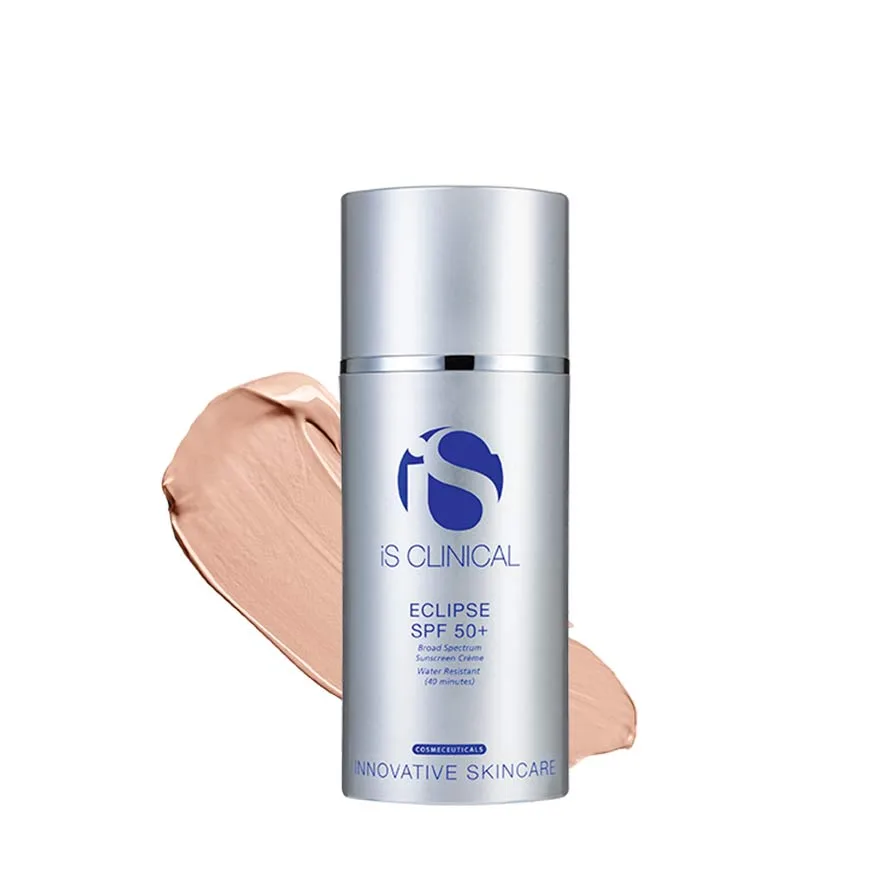
Many mineral sunscreens sacrifice cosmetic elegance for protection — they are chalky, white, and heavy. Eclipse SPF 50+ uses transparent titanium dioxide and micronized zinc oxide to achieve genuine SPF 50+ protection in a formula that feels like a lightweight moisturizer. The iron oxides add visible light (HEV/blue light) protection that most sunscreens lack, making it particularly effective for preventing hyperpigmentation and melasma exacerbation.
A mineral sunscreen that finally solved the elegance problem — lightweight, matte, and virtually invisible on the skin while delivering SPF 50+ protection from mineral filters alone. The iron oxides add visible light protection that most sunscreens ignore, making it particularly valuable for hyperpigmentation-prone skin, though the low zinc oxide concentration may concern UV purists.
The case for it
Same rule for everyone. “Full protection” is the verdict on 2,288 of 45,024 concern verdicts across the catalog; rule P1 decided 2,232 of them. Unchanged since September 5, 2026, engine 5.1.1.
Brand or formulator? Disclose a concentration or correct a fact →
The studies behind the evidence row
The case for it
What would change this: A declared concentration would move this to a firmer reading of the dose.
Same rule for everyone. “Full protection” is the verdict on 2,288 of 45,024 concern verdicts across the catalog; rule P1 decided 2,232 of them. Unchanged since September 5, 2026, engine 5.1.1.
Brand or formulator? Disclose a concentration or correct a fact →
The studies behind the evidence row
The case for it
What would change this: A researched evidence row for the lead active would replace this with a verdict.
Same rule for everyone. “Full protection” is the verdict on 2,288 of 45,024 concern verdicts across the catalog; rule P1 decided 2,232 of them. Unchanged since September 5, 2026, engine 5.1.1.
Brand or formulator? Disclose a concentration or correct a fact →
The case for it
What would change this: A researched evidence row for the lead active would replace this with a verdict.
Same rule for everyone. “Good choice” is the verdict on 1,938 of 45,024 concern verdicts across the catalog; rule F2 decided 1,938 of them. Unchanged since September 5, 2026, engine 5.1.1.
Brand or formulator? Disclose a concentration or correct a fact →
The case for it
What would change this: A researched evidence row for the lead active would replace this with a verdict.
Same rule for everyone. “Full protection” is the verdict on 2,288 of 45,024 concern verdicts across the catalog; rule P1 decided 2,232 of them. Unchanged since September 5, 2026, engine 5.1.1.
Brand or formulator? Disclose a concentration or correct a fact →
Does the jobDoes what a sunscreen is for: UVA coverage, kind to the skin wearing it. Not measured from the label: pleasant enough to actually use.
A verdict is DermApproved’s assessment of how well a product’s ingredients fit a concern — never a claim about what the product treats. Evidence dots and collected reviews sit beside it and are never blended in. Rules 0.5.1 · evidence table ev-2026.09-r228 · how we decide
The dirty secret of sun protection is that the best sunscreen is the one you actually wear. Every dermatologist knows this. They can prescribe the most protective formula in existence, but if it feels like spackling compound on the face, it ends up in the medicine cabinet instead of on the skin. iS Clinical built Eclipse SPF 50+ on this uncomfortable truth: a slightly less protective sunscreen worn consistently every day beats a maximally protective one that sits in a drawer.
The formula uses two mineral UV filters — titanium dioxide at 5.20% and zinc oxide at 1.10% — to achieve broad-spectrum SPF 50+ protection. The titanium dioxide handles the heavy lifting on UVB protection, while the zinc oxide extends coverage into the UVA range. The concentrations are notably lower than many mineral sunscreens, which commonly feature zinc oxide at 15-25%. iS Clinical compensates through advanced particle processing: transparent titanium dioxide and micronized zinc oxide that disperse more evenly and efficiently across the skin, maximizing the protection-per-particle ratio. Polyhydroxystearic acid, alumina and triethoxycaprylylsilane are the unglamorous dispersants that keep those particles from clumping into a chalky mess.
The cosmetic performance is where Eclipse earns its devoted following. This is a mineral sunscreen that does not feel like a mineral sunscreen. It applies as a lightweight, slightly cooling cream that absorbs within a minute or two to a genuinely matte finish. There is no chalkiness, no pastiness, and no greasy film. On light and medium skin tones, it is effectively invisible. The tinted PerfecTint version extends this invisibility to a broader range of skin tones while adding the iron oxide bonus. The reflexive assumption that a mineral filter must mean a white face belongs to a decade of formulation ago; particle engineering has moved on, even if the folk wisdom hasn't.
Speaking of iron oxides — their inclusion is not just cosmetic. Research has demonstrated that iron oxides provide protection against visible light, including the high-energy visible (HEV) or blue light range that standard UV filters do not address. This matters particularly for melasma and hyperpigmentation, conditions where visible light can exacerbate pigmentation even when UV is fully blocked. The iron oxides in Eclipse add a layer of protection that most sunscreens lack, making it a particularly smart choice for anyone managing pigmentation concerns — and it means the tinted version is, counterintuitively, the more protective one.
Vitamin E appears in two forms — tocopherol and tocopheryl acetate — providing antioxidant support that catches the free radicals UV radiation generates even when the physical filters block the majority of rays. No sunscreen blocks 100% of UV; the antioxidants address the damage from the small percentage that gets through.
The formula is completely fragrance-free, paraben-free, and designated as marine-safe. These attributes, combined with the mineral-only filter system, have made it a go-to recommendation for post-procedure patients in dermatology and plastic surgery offices. After chemical peels, laser treatments, and other procedures that sensitize the skin, patients need sun protection that is both effective and non-irritating. Eclipse fills that role reliably, and it's pregnancy-safe into the bargain.
The main consideration for UV-protection purists is the zinc oxide concentration. At 1.10%, it is significantly lower than many mineral sunscreens on the market. While the SPF testing confirms 50+ protection against UVB, the UVA protection provided by 1.10% zinc oxide is inherently less robust than formulas with 15-20% zinc oxide. For daily urban use — commuting, office work, errands — this level of protection is more than adequate. For extended outdoor activity or extreme UV environments, a higher zinc oxide concentration might be preferable, and this isn't water-resistant enough for a swim regardless.
On the SPF number itself, a small correction to a widespread piece of internet arithmetic. SPF 30 blocks about 97% of UVB and SPF 50 about 98%, which sounds like a rounding error and is usually presented as one. But almost nobody applies the two milligrams per square centimetre at which those numbers were measured — most people manage a quarter to a half of it — and at a half-dose, the higher number is what preserves a usable margin. SPF 50 isn't overkill. It's insurance against your own hand.
At $54 for 3.5 ounces, the pricing is competitive for the professional skincare tier. The generous tube size provides two to three months of daily use at recommended application amounts, making the per-use cost quite reasonable. This is notably better value than many premium sunscreens that offer one to two ounces at similar prices — and for a product you are meant to apply by the quarter-teaspoon every single morning, tube size is not a trivial specification.
Eclipse SPF 50+ represents a pragmatic philosophy about sun protection: maximum compliance through maximum wearability. It may not have the highest zinc oxide content on the market, but it achieves something arguably more important — it makes you want to put it on your face every morning. For a product category built on daily consistency, that matters more than any ingredient percentage on the label.
The hero actives that drive this product's performance.
| Ingredient | Function | Evidence |
|---|---|---|
| Titanium Dioxide (5.20%) (5.20%) | The primary UV filter in this formula, providing broad-spectrum UVB protection through physical reflection and scattering of UV radiation. The transparent grade used here is micronized to minimize white cast while maintaining protective efficacy. Works alongside the zinc oxide to cover both UVA and UVB wavelengths. | Regulator-approved for Sun Damage · limited certainty |
| Zinc Oxide (1.10%) (1.10%) | Complements the titanium dioxide by providing superior UVA protection — the longer-wavelength radiation responsible for photoaging and deep skin damage. Even at a relatively low concentration, the micronized zinc oxide extends the protection spectrum and contributes anti-inflammatory benefits beneficial for sensitive and post-procedure skin. | Regulator-approved for Sun Damage · limited certainty |
| Tocopherol and Tocopheryl Acetate (Vitamin E) | Dual vitamin E forms provide antioxidant protection that supplements the physical UV filters. Tocopherol (active form) scavenges free radicals generated by UV exposure, while tocopheryl acetate (stable form) provides sustained antioxidant reserve. Together they help prevent the oxidative damage that UV radiation causes even when the physical filters block most rays. | Limited for Sun Damage |
| Iron Oxides | Beyond providing the subtle tint in the PerfecTint versions, iron oxides offer protection against visible light (HEV/blue light) — a portion of the spectrum that titanium dioxide and zinc oxide do not fully cover. Research shows iron oxides reduce visible light-induced hyperpigmentation, making this sunscreen particularly effective for melasma-prone skin. | Not yet assessed |
Ingredient standings describe the active at treatment-level doses and vehicles; this product's own condition grades weigh its actual formula.
Active Ingredients: Titanium Dioxide 5.20%, Zinc Oxide 1.10%. Inactive Ingredients: Water, C12-15 Alkyl Benzoate, Caprylic/Capric Triglyceride, Butylene Glycol, Octyldodecyl Neopentanoate, Cetearyl Glucoside, Cetearyl Alcohol, Glyceryl Stearate, PEG-100 Stearate, Polyhydroxystearic Acid, Alumina, Methicone, Triethoxycaprylylsilane, Tocopherol, VP/Eicosene Copolymer, Styrene/Acrylates Copolymer, Sorbitan Laurate, Tocopheryl Acetate, Xanthan Gum, 1,2-Hexanediol, Caprylyl Glycol, Disodium EDTA, Iron Oxides (CI 77491, CI 77492, CI 77499)
sunscreen
AM
Save this for the last step in your morning skincare routine, after moisturizer. Apply generously — at least a nickel-sized amount for the face. Reapply every 2 hours during prolonged sun exposure or after swimming/sweating. The matte finish works well under makeup or alone.
Immediate UV protection upon application. No adjustment period — the matte finish and skin feel are consistent from the first use. Long-term prevention of photoaging and sun damage with consistent daily use.
The mineral UV filter combination of titanium dioxide (5.20%) and zinc oxide (1.10%) provides broad-spectrum protection through physical reflection and scattering of UV radiation. Titanium dioxide is particularly effective at blocking UVB radiation (290-320nm), while zinc oxide provides superior UVA protection (320-400nm). Research reported in the Journal of the American Academy of Dermatology (2019) confirmed that modern micronized and coated mineral filters achieve SPF values comparable to chemical filters when formulated with advanced dispersion technology, which Eclipse employs through its transparent titanium dioxide processing.
The iron oxide component deserves particular attention. A landmark study published in the Journal of Cosmetic Dermatology (2012) demonstrated that iron oxides significantly reduce visible light transmission through sunscreen films. Subsequent research in Photodermatology, Photoimmunology & Photomedicine (2014) showed that tinted sunscreens containing iron oxides provided superior protection against visible light-induced hyperpigmentation compared to untinted mineral sunscreens with higher SPF values. For melasma patients, this distinction is clinically significant — visible light is now recognized as a meaningful contributor to melanogenesis.
Tocopherol (vitamin E) serves as a chain-breaking antioxidant that neutralizes lipid peroxyl radicals generated by UV exposure. Research in the Journal of Investigative Dermatology has established that vitamin E supplementation in sunscreen formulations reduces photoimmune suppression and the formation of thymine dimers — DNA damage markers associated with skin cancer development. The dual vitamin E approach (tocopherol plus tocopheryl acetate) provides both immediate and reservoir antioxidant capacity.
Dermatologists and plastic surgeons consistently recommend iS Clinical Eclipse SPF 50+ as a daily-wear mineral sunscreen, particularly for patients with sensitive skin, post-procedure patients, and those managing hyperpigmentation or melasma. Within dermatology, the cosmetic elegance of this formula significantly improves patient compliance with sun protection — a critical factor in preventing photoaging and skin cancer. The iron oxide content is viewed as a meaningful bonus for melasma management, where visible light protection is increasingly recognized as essential. Dermatologists acknowledge that the zinc oxide concentration is lower than some competitors but note that the tested SPF 50+ rating provides a comfortable margin of protection for daily urban use.
Apply a nickel-sized amount (approximately 1/4 teaspoon) to the face 15 minutes before sun exposure. Spread evenly across forehead, cheeks, nose, chin, and neck. Reapply every 2 hours during extended sun exposure, or immediately after swimming, sweating, or towel-drying. For daily commute and office use, a single morning application is generally adequate. Apply as the last step in your skincare routine, before makeup. Can be used directly on the skin or over moisturizer and serum layers.
At $54 for 3.5 oz, Eclipse SPF 50+ offers strong value in the professional sunscreen category. Many premium mineral sunscreens charge $30-40 for 1.7 oz or less — Eclipse delivers twice the product at a modest price premium. For a sunscreen that needs to be applied generously and daily, tube size matters enormously for value. The cosmetic elegance removes the compliance barrier that wastes money on sunscreens people buy but do not use. The formula's suitability for virtually all skin types, including post-procedure and pregnancy, means it rarely ends up unused.
This sunscreen is ideal for anyone who hates the feel of sunscreen — the lightweight matte finish removes every excuse not to wear daily SPF. It is particularly well-suited for sensitive skin, post-procedure patients, pregnant individuals seeking mineral-only protection, and anyone managing melasma or hyperpigmentation who benefits from the iron oxide visible light protection.
Those seeking maximum zinc oxide concentration for extended outdoor activity or extreme UV environments may want a more heavily mineral-loaded formula. Individuals with very deep skin tones may find the translucent version shows a white cast (opt for the tinted version instead). Those who prefer chemical sunscreens for their superior UVA-PF ratings should look elsewhere.
Ready to try iS Clinical Eclipse SPF 50+?
Buy at Amazon ♥Ultra-sheer, lightweight cream that absorbs quickly to a smooth matte finish. Does not feel heavy, greasy, or chalky despite being a mineral sunscreen.
None — completely fragrance-free
Squeezable tube in iS Clinical's white branding. Available in translucent and tinted (PerfecTint Beige) versions.
Applies smoothly and absorbs within a minute or two to a dry, matte finish. No white cast with the tinted version; the translucent may show a slight white cast initially that fades as it settles. Feels weightless on the skin — you may forget you are wearing sunscreen. Works immediately as a makeup primer with no pilling.
2-3 months with daily face application at recommended amount
All Year
iS Clinical developed Eclipse to solve the compliance problem in sun protection: people skip sunscreen because they hate how it feels and looks. By engineering a mineral formula with the cosmetic elegance of a chemical sunscreen — matte, lightweight, no white cast — they removed the most common barrier to daily SPF use. The formula quickly became a post-procedure staple in dermatology and plastic surgery offices, where patients need gentle, reliable sun protection during healing.
iS Clinical was co-founded in 2002 by biochemist Bryan Johns and Alec Call. The brand is rooted in pharmaceutical-grade formulation and is distributed through dermatologists, plastic surgeons, and medical spas in over 125 countries.
Mineral sunscreens always leave a white cast and feel heavy.
This sunscreen uses transparent titanium dioxide and micronized zinc oxide — advanced processing that reduces particle size enough to minimize white cast while maintaining UV protection. The matte, lightweight finish rivals many chemical sunscreens in cosmetic elegance.
SPF 50+ is overkill — SPF 30 is plenty for daily use.
SPF 30 blocks about 97% of UVB rays, while SPF 50 blocks about 98%. The practical difference increases with imperfect application — most people apply only 25-50% of the recommended amount, so a higher SPF provides a larger margin of error for real-world protection.
The tinted PerfecTint version leaves no white cast on any skin tone. The translucent version may show a very slight white cast initially on medium to deep skin tones, but it fades within a few minutes as the formula settles. The transparent titanium dioxide and micronized zinc oxide are specifically processed to minimize this common mineral sunscreen issue.
Yes — the formula uses mineral-only UV filters (titanium dioxide and zinc oxide) and is designated as marine-safe. It does not contain oxybenzone or octinoxate, the chemical filters most commonly associated with coral reef damage.
Yes — this sunscreen is specifically recommended by dermatologists and plastic surgeons for post-procedure use. The mineral-only formula is gentle on healing skin, fragrance-free, and provides the high-level UV protection critical after procedures that increase photosensitivity.
Reapply every 2 hours during prolonged sun exposure, or immediately after swimming, sweating, or towel-drying. For daily indoor/commute use with limited sun exposure, the morning application provides adequate protection, though midday reapplication is recommended for optimal defense.
Yes — mineral sunscreens using zinc oxide and titanium dioxide are considered safe during pregnancy. These physical UV filters sit on the skin's surface rather than being absorbed into the bloodstream, making them the sunscreen type most commonly recommended by OB-GYNs for pregnant individuals.
Recurring themes our editors read across retailer reviews of this product — summaries in our words, not quotations, and not a substitute for your own patch test.
Lightweight, non-greasy matte finish
No white cast despite being a mineral sunscreen
Works beautifully under makeup without pilling
Gentle enough for sensitive and post-procedure skin
Generous 3.5 oz tube provides good value
Can feel slightly heavy when layered under thick foundation
Translucent version may leave a slight white cast on deeper skin tones
Tinted version has limited shade range
Lower zinc oxide concentration compared to some competitors
Verified answers from our questions library — the nuance a product page cannot carry.