




Dehydration vs Dryness, Bought Correctly
One is a shortage of oil, the other a shortage of water, and the products that fix them sit on the same shelf doing opposite jobs.
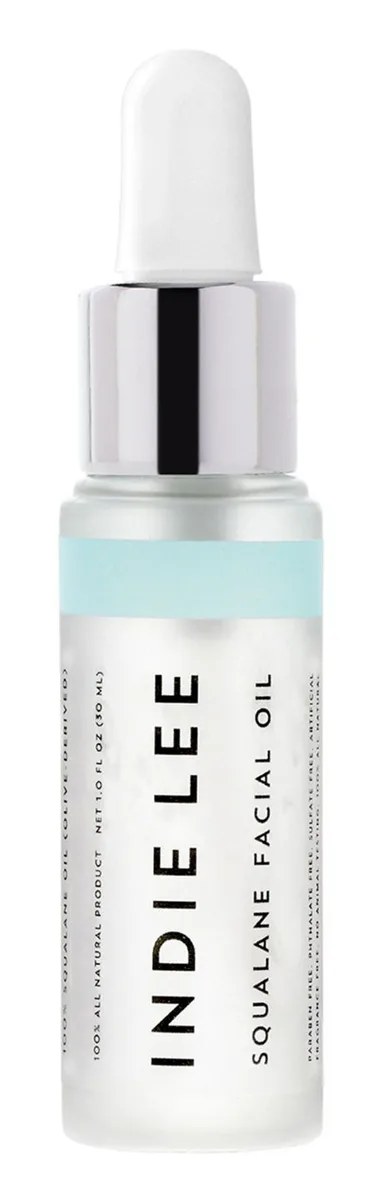
Most facial oils combine multiple plant oils with antioxidants and supporting actives. Indie Lee's Squalane Facial Oil is intentionally single-ingredient — 100% olive-derived squalane and nothing else. The minimalism is appropriate for sensitive skin and users who want maximum compatibility with their existing routine products.
One ingredient, no fillers, no fragrance — just 100% olive-derived squalane in a glass bottle. It's a genuinely universal oil that works on everything from oily to eczema-prone skin and conflicts with nothing in your routine. The catch is purely financial: the exact same molecule is available for a fraction of the price elsewhere, so you're paying for the clean-beauty label.
The case for it
Same rule for everyone. “Good choice” is the verdict on 9,564 of 45,024 concern verdicts across the catalog; rule R5 decided 9,072 of them. Unchanged since September 5, 2026, engine 5.1.1.
Brand or formulator? Disclose a concentration or correct a fact →
The studies behind the evidence row
The case for it
What would change this: A researched evidence row for the lead active would replace this with a verdict.
Same rule for everyone. “Supporting role” is the verdict on 8,197 of 45,024 concern verdicts across the catalog; rule R8 decided 4,250 of them. Unchanged since September 5, 2026, engine 5.1.1.
Brand or formulator? Disclose a concentration or correct a fact →
Also listed for Dehydration — the actives here (Squalane) are in our research queue for that concern; there is no verdict until their evidence rows are written. That is a gap in our table, not a mark against the product.
As a oilNot judged: what a oil is for — fatty-acid profile, seals moisture, resists going rancid — cannot yet be measured from the ingredient list (only pore and malassezia risk can).
A verdict is DermApproved’s assessment of how well a product’s ingredients fit a concern — never a claim about what the product treats. Evidence dots and collected reviews sit beside it and are never blended in. Rules 0.5.1 · evidence table ev-2026.09-r228 · how we decide
Most facial oils want you to know how complicated they are. They list a roll-call of botanical oils, dust in some antioxidants, throw a few buzzy actives on top, and present the result as a finely tuned elixir. Indie Lee's Squalane Facial Oil does the opposite, and that restraint is the whole point. The INCI list reads, in its entirety: Squalane. That's it. One ingredient, nothing else, in a 30ml glass dropper bottle. In a category that treats complexity as a virtue, a single-molecule product is almost a provocation — and it happens to be a smart one.
Squalane is worth understanding because it's not just another plant oil. It's a saturated, hydrogenated form of squalene, a lipid your own skin manufactures and secretes as part of its natural sebum. The hydrogenation step matters: raw squalene oxidizes quickly and goes rancid, while squalane is stable, shelf-steady, and won't develop that off smell partway through the bottle. Because it so closely mimics a lipid your skin already produces, it slots into the stratum corneum's intercellular lipid matrix rather than just sitting on top like a heavy occlusive. The practical result is an oil that reduces transepidermal water loss — by a meaningful margin, with some sources citing around 20% — while still feeling breathable and weightless. That combination of barrier support without heaviness is the trick that makes squalane behave differently from richer oils.
The most genuinely useful thing about squalane is its universality. It carries a comedogenicity rating of 0 to 1, which puts it among the safest oils for acne-prone and oily skin — the famous 'no oils for oily skin' rule applies to comedogenic culprits like coconut oil, not to a sebum-mimicking lipid like this one. It's also saturated, meaning it doesn't supply the mid-chain fatty acids that Malassezia yeast feeds on, so it clears the bar for strict fungal-acne-safe routines. Dry skin gets emollient comfort; sensitive and eczema-prone skin gets a barrier-supporting lipid with essentially zero irritant load; oily skin gets hydration without congestion. There's a reason the skin-match data here lists every single skin type as a best match — that's not generous scoring, it's just what squalane is.
The single-ingredient design also makes it the most cooperative product in any routine. With nothing but squalane in the bottle, there's nothing to conflict with — no pH to worry about, no actives to destabilize. It layers happily over retinol, vitamin C, niacinamide, hyaluronic acid, and acids without drama. Used as the final step it seals in everything underneath; mixed into a moisturizer it adds slip; on its own it works as a light oil for combination or oily skin that doesn't want anything heavier. It even functions as a clean, fast-absorbing base under makeup. Indie Lee, founded in 2009 in the US clean-beauty pioneer wave, has kept this as a foundational product in the lineup for nearly a decade, and the roughly 720 reviews skew strongly positive — the recurring praise is that it's genuinely non-greasy despite being a pure oil, and that it plays nicely with everything.
The texture lives up to that reputation. It's a clear, thin, weightless oil that absorbs within a minute or two and leaves a soft satin finish rather than a slick. It's essentially scentless. Because squalane is so stable, the bottle won't oxidize or discolor across its use cycle, and a 30ml bottle lasts three to four months at two or three drops a day. It's also genuinely pregnancy-safe — single-ingredient squalane is about as low-risk as skincare gets.
So where's the criticism? It's not about the product working — it works exactly as it should. It's about the price-to-substance ratio. At $32 for 30ml, this is premium pricing for a commodity ingredient. Squalane is squalane: the molecule in this bottle is functionally identical to the squalane in versions selling for a third of the price. There is no proprietary processing, no special concentration, no supporting cast to differentiate it. You are paying for clean-beauty positioning, US manufacturing, and the Indie Lee name — all legitimate things to value, but none of them change what touches your skin. The other honest note is one of philosophy: a pure squalane oil deliberately lacks the antioxidants and supporting actives that more elaborate facial oils include, so if you want your oil to also be delivering vitamin E or rosehip's vitamin A precursors, this minimalism is a limitation rather than a feature. And the glass dropper bottle, while elegant, is fragile.
The recommendation is straightforward. As a product, this is excellent — a universally tolerated, conflict-free, barrier-supporting oil that genuinely earns the 'works for everyone' claim. As a purchase, it comes down to how much the clean-beauty label is worth to you, because the molecule itself is a bargain ingredient dressed in premium clothing. If you're loyal to Indie Lee or you want the reassurance of the brand's clean standards, it's a fine buy. If you simply want squalane on your skin, your money goes considerably further elsewhere.
The hero actives that drive this product's performance.
| Ingredient | Function | Evidence |
|---|---|---|
| Squalane (100%) (100%) | The entire product is olive-derived squalane — a saturated, oxidation-stable lipid that closely mimics the skin's natural surface sebum composition. Squalane is non-comedogenic at most concentrations, non-greasy in feel, and provides skin-identical emollient activity that supports barrier function without disrupting it. The single-ingredient formulation is a deliberate minimalist choice that lets the user combine the oil with their other routine products without ingredient conflicts. | Established mechanism for Dryness · established mechanism |
Ingredient standings describe the active at treatment-level doses and vehicles; this product's own condition grades weigh its actual formula.
Squalane
occlusive
AM & PM
Apply 2-3 drops as the final step of the routine, after moisturizer. Can also be mixed with moisturizer for added emollient feel, or used alone as a lightweight facial oil for combination/oily skin. Compatible with all subsequent products including SPF.
Immediate: soft hydrated finish without greasy residue. 1-2 weeks: stable skin comfort and barrier support. 4-8 weeks: cumulative barrier improvement for users using oil consistently as the final step.
Squalane's evidence base is unusually well settled, which is part of why a single-ingredient product can be assessed with confidence. Squalane is the hydrogenated, oxidation-stable form of squalene, a hydrocarbon lipid that human sebaceous glands naturally produce; the hydrogenation step converts an unstable, rancidity-prone oil into a shelf-stable emollient without changing its skin-identical character. Because it shares structural similarity with native sebum lipids, squalane integrates into the intercellular lipid matrix of the stratum corneum rather than forming a purely surface film, which is why it supports barrier function and measurably reduces transepidermal water loss while still feeling lightweight — a distinction from heavier occlusives like petrolatum that work almost entirely at the surface. Dermatological sources consistently place squalane at a comedogenicity rating of 0 to 1, the basis for its safety in acne-prone and oily skin; the mechanism is that, unlike comedogenic oils, it does not promote follicular hyperkeratinization or feed acne-associated bacteria. Its saturated structure also means it lacks the mid-chain fatty acids that Malassezia yeast metabolizes, which is the formulation rationale behind its fungal-acne-safe status. The important scientific nuance for this specific product is that there is no formulation to evaluate beyond the molecule itself: with a one-ingredient INCI, the question is purely about squalane's intrinsic properties, and those are well characterized. Modern olive-derived squalane is, after hydrogenation, functionally equivalent to historical shark-derived squalene, with the advantages of sustainability and no animal sourcing. There are no specific clinical trials unique to this product, which is expected for a single-ingredient commodity material rather than a proprietary formulation.
Dermatologists frequently recommend squalane as a low-risk emollient precisely because of its skin-identical profile and minimal irritation potential. It is commonly suggested for patients who want the barrier benefits of a facial oil but have acne-prone or oily skin that reacts poorly to comedogenic oils — practicing dermatologists agree that squalane's 0-to-1 comedogenicity rating makes it one of the few oils appropriate across that range. It is also frequently mentioned as a useful adjunct for patients on retinoids or undergoing in-office procedures, since a non-occlusive lipid can ease dryness without interfering with treatment. Dermatologists generally regard single-ingredient squalane as safe in pregnancy and for sensitive, eczema-prone skin. The common clinical caveat is one of expectations: squalane is a supportive moisturizing ingredient, not an active treatment, so it conditions and protects the barrier but should not be expected to address pigmentation, fine lines, or acne on its own.
Apply two to three drops as the final step of your routine, after moisturizer, pressing it gently over the face to seal in everything underneath. For combination or oily skin that wants something lighter, you can use it on its own in place of a heavier cream, or mix a drop or two into your moisturizer for added slip. It layers under sunscreen and makeup without pilling — allow a minute or two for full absorption before applying foundation. Because squalane conflicts with nothing, it can follow retinol, vitamin C, niacinamide, or exfoliating acids without issue. Both morning and evening use are fine. Store the glass bottle somewhere it won't be knocked over, since the dropper is fragile.
This is where the verdict gets blunt. At $32 for 30ml, Indie Lee is charging a clean-beauty premium for an ingredient that is, chemically, a commodity — the squalane in this bottle is functionally identical to versions sold for well under half the price. There is no proprietary process, no supporting actives, and no concentration story to justify the gap; you are paying for the brand's clean standards, US manufacturing, and its nearly decade-long track record as an established label. Only one size is offered, so there is no larger format to improve per-milliliter economics. The product itself performs exactly as squalane should, and three to four months of use per bottle is reasonable longevity. But on pure price-to-substance, value-focused shoppers can do meaningfully better.
Buy this if you want a universally tolerated, conflict-free oil and you specifically value Indie Lee's clean-beauty standards and US manufacturing. It suits every skin type — oily, dry, combination, normal and sensitive alike — and is an especially safe pick for acne-prone, fungal-acne-prone, eczema-prone, or pregnant users who want barrier support without irritation risk.
It is not your product if you are price-conscious, because the identical molecule is available for a fraction of the cost from other brands. This one is also wrong for you if you want your facial oil to multitask — this is pure squalane with no antioxidants or supporting actives, so anyone after a treatment-oriented oil should look at a more elaborate formulation.
Ready to try Indie Lee Squalane Facial Oil?
Buy at Amazon ♥Clear, lightweight oil that absorbs without greasy residue
Essentially scentless
Glass bottle with dropper
First applications absorb within 1-2 minutes leaving a soft, non-greasy finish. No reactivity typical even for sensitive users. The oil's stability means no rancid smell or oxidation discoloration over the use cycle.
3-4 months at 2-3 drops daily
All Year
Indie Lee built the Squalane Facial Oil as the brand's foundational oil product, leveraging squalane's universal compatibility and minimal-ingredient appeal. The product has remained a steady part of the brand's lineup since launch.
Indie Lee was founded in 2009 by Indie Lee following her own brain tumor diagnosis, which prompted her to create a non-toxic skincare line. The brand is part of the US clean-beauty pioneer wave alongside Beautycounter and Tata Harper, sold through Sephora, Credo, and clean-beauty boutiques. Indie Lee's formulations prioritize clean-beauty standards (no parabens, sulfates, synthetic fragrance, formaldehyde) with a more accessible price point than the prestige clean-beauty tier.
Oily skin shouldn't use facial oils.
Squalane is one of the few oils genuinely safe for oily and acne-prone skin because its molecular structure mimics natural sebum and doesn't clog pores. The 'no oils for oily skin' rule applies to comedogenic oils like coconut oil — pure squalane is in a different category.
Plant-derived squalane is inferior to shark-derived squalene.
Modern olive-derived squalane is functionally identical to historical shark-derived squalene after the hydrogenation step that makes squalane stable. The plant-derived version is also more sustainable and avoids animal-source concerns.
Same active ingredient at different price points. The Ordinary's version is $9 for 30ml; Indie Lee is $32 for 30ml. Both deliver pure olive-derived squalane. The Indie Lee premium reflects brand context, US manufacturing, and clean-beauty positioning rather than formulation differences.
Yes — squalane is non-comedogenic and one of the few oils safe for acne-prone and oily skin. Its molecular structure mimics natural sebum without clogging pores.
Yes — squalane is saturated and not a Malassezia food source. Appropriate for strict fungal-acne avoidance protocols.
Yes — squalane absorbs cleanly and works as a primer-like base under makeup for users wanting a dewy finish. Allow 1-2 minutes for full absorption before applying foundation.
Yes — single-ingredient squalane is among the safest skincare ingredients for pregnancy and breastfeeding.
Olive-derived — extracted from olive oil through hydrogenation of squalene to create the stable saturated squalane form. Sustainable and animal-source-free.
Recurring themes our editors read across retailer reviews of this product — summaries in our words, not quotations, and not a substitute for your own patch test.
Genuinely non-greasy despite being pure oil
Works for all skin types including oily
Compatible with all routine actives
Fragrance-free and minimal-ingredient formulation
Premium price vs The Ordinary 100% Plant-Derived Squalane at $9
Glass bottle with dropper can be fragile
Pure squalane lacks the antioxidant or active inclusion of more elaborate facial oils