Dry vs Dehydrated Skin: The Distinction That Changes Your Whole Routine
One is missing oil. The other is missing water. Confuse them and you'll spend money making the actual problem worse.
Read the preview
From the DermApproved blog, in Dryness and Dehydration: the one distinction that quietly decides whether your routine works. Your skin feels tight, looks dull, maybe there's a fine line that wasn't there yesterday — so you reach for the richest cream you own and slather. Sometimes that's the fix. Sometimes it's exactly how you make it worse. Here's the catch nobody spells out: 'parched' describes two completely different problems with opposite solutions, and one of them can hide inside oily, shiny skin without you ever suspecting it. There's a mistake that's making millions of people greasy and tight at the same time — and a second trap that manufactures the problem out of thin air. We untangle which one you actually have, and the three tools that fix each. That's at dermapproved.com/blog.
Two problems that feel identical and aren't
Your skin feels tight, looks a little dull, maybe shows fine lines that weren't there last week. The instinct is to reach for the richest cream you own and slather. Sometimes that's right. Sometimes it's exactly how you make things worse — because "my skin feels parched" describes two completely different problems with opposite solutions.
Dry skin and dehydrated skin get used interchangeably, and the mix-up is more than pedantic. One is a lack of oil; the other is a lack of water. They present with overlapping symptoms — tightness, dullness, rough patches — which is precisely why so many people treat the wrong one and wonder why their expensive routine isn't landing.
The fix starts with a piece of vocabulary most product marketing deliberately blurs. Dry is a skin type. Dehydrated is a condition. Get that straight and the right routine mostly writes itself.
Lipids vs water: what's actually missing
Your skin retains moisture through two separate systems, and understanding them is the whole game. As reviews of skin-hydration mechanisms describe, water is held in the stratum corneum by natural moisturizing factor — a mix of hygroscopic, water-grabbing molecules like amino acids, sodium PCA, and urea sitting inside your surface cells — while a network of intercellular lipids (ceramides, cholesterol, fatty acids) forms the barrier that stops that water from evaporating out. Glycerol even shows up naturally in the stratum corneum as your skin's own built-in humectant.
Dry skin is a lipid problem. It's a skin type: your skin chronically underproduces the oils and barrier lipids that seal moisture in, so it tends toward flaking, a tight papery feel, and sometimes visible scaling — year-round, as a baseline. A decrease in stratum-corneum ceramides is a known driver of dry, barrier-disrupted skin, which is why the classic fix is lipid replacement.
Dehydrated skin is a water problem, and crucially it's temporary and situational. The water-holding side of the equation is depleted — often because NMF got stripped or transepidermal water loss spiked — so the skin is short on water regardless of how much oil it makes. It shows up as tightness, dullness, and those fine "dehydration lines" that plump right back up when you hydrate. It can hit anyone, in any season, at any oil level.
Why oily skin can be — and often is — dehydrated
This is the counterintuitive core of the whole topic, and the point where most routines go wrong. Because dehydration is about water and dryness is about oil, oily skin can absolutely be dehydrated at the same time. You can have a shiny T-zone and a skin that's gasping for water, simultaneously.
It happens constantly, and often it's self-inflicted. Someone with oily or acne-prone skin declares war on the shine: harsh foaming cleansers, daily acids, astringent toners, maybe a drying acne active on top. All of that strips NMF and damages the lipid barrier, water evaporates faster, and the skin ends up dehydrated. Worse, oil production and hydration are independent, so the skin frequently responds to the barrier assault by pumping out even more oil. Now you've got the paradox: greasy and tight at once.
The reflex is to double down on oil control, which pours fuel on the fire. What dehydrated-but-oily skin actually needs is water and gentleness — humectants in a lightweight base, not more stripping. A watery, oil-free hydrator like Isntree Hyaluronic Acid Aqua Gel Cream delivers the water without the heavy occlusive layer that would feel suffocating on oily skin, and it's a far smarter move than reaching for another mattifying acid.
Humectant, occlusive, emollient: matching the tool to the deficit
Once you know which problem you have, moisturizer stops being one blurry category and becomes three distinct tools.
Humectants — glycerin, hyaluronic acid, and NMF ingredients like amino acids, urea and sodium PCA — attract and bind water. They're the answer to dehydration. A humectant-forward product like The Ordinary Natural Moisturizing Factors + HA essentially resupplies the water-grabbing molecules your skin uses natively. In a vehicle-controlled trial, a formulation built around humectants, NMF and ceramide significantly improved hydration and reduced transepidermal water loss in people with very dry skin — humectants doing the water job, ceramides doing the barrier job.
Occlusives — petrolatum, dimethicone, plant butters — form a physical seal that stops water escaping; petrolatum alone can cut transepidermal water loss by around 99%. They're central to treating true dry skin, where the barrier can't hold water on its own. Emollients — the fatty ingredients like squalane, cholesterol and ceramides — slot into the lipid matrix, smoothing and softening while helping rebuild the barrier itself.
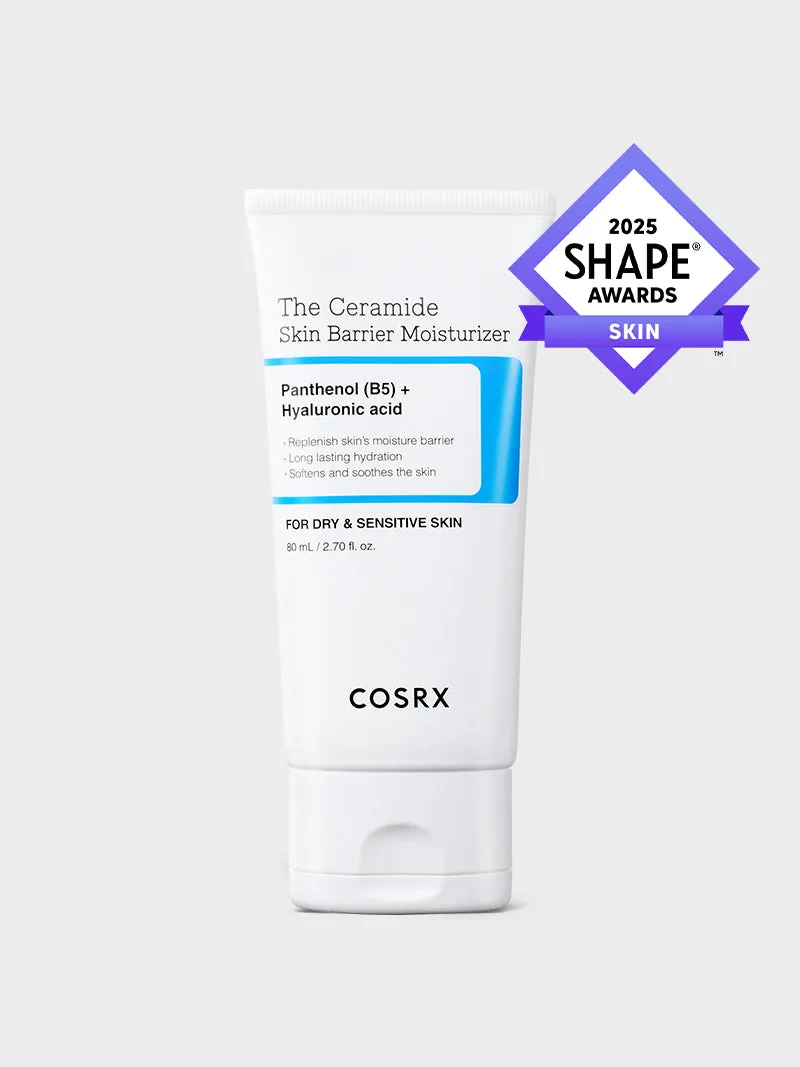
For genuinely dry skin, you want all three working together, which is why the gold-standard dry-skin creams stack them. Something like CeraVe Moisturizing Cream pairs ceramides and cholesterol (the lipid rebuild) with petrolatum (the occlusive seal) and hyaluronic acid and glycerin (the humectants). And here's the rule people miss: a humectant applied alone in dry air can actually backfire, pulling water up from deeper layers only to let it evaporate off the surface. Humectants need something on top to lock the water in — which is why a barrier-supportive cream such as COSRX The Ceramide Skin Barrier Moisturizer over a hydrating serum outperforms either one alone.
The two traps: over-moisturizing and over-exfoliating
Knowing the categories is only half the battle; the other half is not overdoing it in either direction.
The over-moisturizing trap catches people who assume more product is always better. Piling heavy occlusive creams onto skin that's dehydrated but not lipid-deficient — oily, dehydrated skin especially — can clog pores and leave the underlying water problem untouched, because you added oil to a skin that was short on water. The symptom said "parched"; the treatment answered the wrong deficit. Match the tool to the actual gap.
The over-exfoliating trap is the bigger one, and it manufactures dehydration in skin that was previously fine. Every over-zealous acid session, every harsh foaming cleanse, strips away NMF and chips at the lipid barrier, driving up water loss. People chasing "glow" with daily exfoliation frequently exfoliate themselves straight into a compromised, dehydrated barrier — then misread the tightness as needing more exfoliation. It's a loop worth breaking: pull back, cleanse gently, and let the barrier rebuild.
The honest bottom line: before you buy anything, diagnose which problem you actually have. If you're not sure whether you're dry, dehydrated, or an oily-and-dehydrated combination, our [skin-type-quiz](/tools/skin-type-quiz/) will help you sort it, and saving your profile to [my-skin](/my-skin/) tailors product suggestions to the real deficit. The most expensive cream in the world won't fix a water problem with oil — or an oil problem with water.
Products mentioned
Independently reviewed and scored — the real products behind this piece.


References
- Skin hydration: a review on its molecular mechanisms — Journal of Cosmetic Dermatology, 2007
- Treatment of xerosis with a topical formulation containing glyceryl glucoside, natural moisturizing factors, and ceramide — The Journal of Clinical and Aesthetic Dermatology, 2012
Every cited link is verified to resolve to the paper named. Where a source could not be independently confirmed, it is listed without a link rather than pointing you somewhere wrong.
Frequently asked
How do I tell if my skin is dry or dehydrated?
Dry skin is a chronic type — it's short on oil year-round and tends to flake, feel papery, and sometimes scale. Dehydrated skin is a temporary condition of low water: it feels tight and looks dull with fine 'dehydration lines' that plump back up once you hydrate. The clearest tell is that oily skin can be dehydrated but is never truly dry.
Can oily skin actually be dehydrated?
Yes, very commonly. Oil and water are separate systems, so skin can overproduce oil while still lacking water — often because harsh cleansers, acids, and drying acne actives stripped its natural moisturizing factor and damaged the barrier. The fix is lightweight humectants and gentleness, not more oil-control products that deepen the problem.
Will a hydrating serum alone fix dehydrated skin?
Not in dry conditions. Humectants like hyaluronic acid attract water, but applied alone in dry air they can pull moisture from deeper skin and let it evaporate off the surface. You need to seal them with a moisturizer or occlusive on top — humectant first, then something to lock the water in.
What ingredients should I look for if my skin is genuinely dry?
Lipid replacements and a seal. Look for ceramides, cholesterol and fatty acids to rebuild the barrier, plus an occlusive like petrolatum or dimethicone to stop water escaping, ideally alongside humectants like glycerin. Creams that stack all three tend to outperform single-purpose products for true dry skin.
Can over-exfoliating cause dehydrated skin?
Absolutely — it's one of the most common causes. Aggressive acids and harsh foaming cleansers strip away natural moisturizing factor and damage the lipid barrier, which spikes water loss and leaves skin dehydrated even if it was fine before. If tightness followed a period of heavy exfoliation, the answer is to pull back, not exfoliate more.