Does Oily Skin Actually Need Moisturizer? Yes — and Here's Why
Skipping moisturizer to 'dry out' oily skin is the most self-defeating move in skincare. Your barrier doesn't care about your aesthetic preferences.
Read the preview
From the DermApproved blog, in Oily Skin and Shine: does oily skin actually need moisturizer? It's the most intuitive rule in skincare — skin's already greasy, so don't add more moisture, skip the cream, let it dry out. It feels airtight. It's also quietly sabotaging millions of faces. Here's the twist: the thing you're trying to fight and the thing moisturizer actually does are two different substances entirely, and confusing them kicks off a feedback loop that makes your skin greasier the harder you fight it. There's a documented cycle where stripping your skin trains it to pump out more oil — and a fix that has nothing to do with adding heaviness. We get into what your sebaceous glands are really reacting to, and the one habit worth quitting today. That's at dermapproved.com/blog.
The myth that punishes the people who believe it
It's one of the most intuitive-sounding ideas in skincare, which is exactly why it's so hard to kill: if your skin is oily, don't add more moisture. Skip the moisturizer. Let it dry out. Fight grease with absence. The logic feels airtight — until you realize it rests on confusing two completely different things.
Moisturizer doesn't add oil. It adds and retains water, supports the lipid barrier, and keeps the whole system regulated. Oily skin has plenty of oil and can still be short on water and running a compromised barrier — and when you strip it in pursuit of a matte finish, you're not teaching it a lesson. You're provoking it.
The cruel part is that this myth is self-reinforcing. People skip moisturizer, their skin gets greasier, and they read that as proof they were right to skip it — when the extra grease is often the direct consequence of skipping it. Breaking the loop means understanding what actually drives your oil.
The rebound-oil cycle, and why your barrier fights back
Your sebaceous glands aren't just running on a fixed genetic setting; their output responds to what you do to your skin. And one of the things they respond to is barrier damage.
Here's the mechanism. When you over-cleanse — harsh foaming washes twice a day, astringent toners, a scrub for good measure — you strip away sebum and, more importantly, you damage the lipid barrier and drive up water loss. Your skin registers that damage as a threat, and one of its protective responses is to produce more oil to compensate. A comprehensive 2025 review of sebum's role in skin health states it plainly: barrier disruption from over-cleansing elicits compensatory sebum overproduction. You didn't dry your skin out. You trained it to pump harder.
That's the rebound-oil cycle in one sentence: strip, panic, overproduce, strip again. It's why so many people with oily skin feel like their face is greasier at 2pm the harder they scrubbed at 8am. The intervention that feels like it's fighting oil is quietly manufacturing it. The way out isn't more stripping — it's giving the barrier what it needs so the glands stop overreacting.
It's worth being precise about what a stripped barrier actually is, because that's what closes the loop. Barrier disruption doesn't just mean dry-feeling skin; it means a compromised lipid matrix, elevated water loss, and a mild inflammatory state that your sebaceous glands read as a call to action. Calm that inflammation and restore those lipids, and the compensatory signal quiets down. This is why the counterintuitive prescription — hydrate more, strip less — so often reduces oiliness rather than adding to it.
Oil is not water: the distinction that fixes everything
The whole confusion collapses once you separate two things the word "moisturizer" mashes together. Oil is sebum — the lipid your sebaceous glands secrete. Water is hydration — the moisture held in your stratum corneum. They are independent, which is why the single most counterintuitive fact about oily skin is true: oily skin can be dehydrated.
When oily-but-dehydrated skin gets misdiagnosed as "too oily," people double down on oil control and strip away what little water-holding capacity the skin had, deepening the dehydration and, per the rebound cycle, often the oiliness too. You can end up greasy and tight at the same time — shine and a parched, tight feeling coexisting on the same cheek — which makes no sense until you realize one is an oil signal and the other is a water signal.
So "does oily skin need moisturizer" is really "does oily skin need hydration and barrier support," and the answer to that is unambiguously yes. What oily skin doesn't need is a heavy, occlusive, oil-rich cream designed for dry types. The trick is decoupling hydration from heaviness — delivering water and barrier support in a texture that doesn't sit on the skin like a film.
How to hydrate oily skin without the heaviness
This is where texture and ingredient choice do all the work. Oily skin thrives on lightweight, water-based hydration: gel and water-gel moisturizers built around humectants rather than rich butters and heavy occlusives.
Look for humectants — hyaluronic acid, glycerin, panthenol — that pull in water, in a base that absorbs fast and finishes matte or satin rather than dewy-greasy. A water-gel like CeraVe Hydrating Hyaluronic Acid Water Gel pairs hyaluronic acid and glycerin with ceramides and niacinamide, so it hydrates and supports the barrier without an oily afterfeel, and a featherweight option such as Geek & Gorgeous Jelly Joker Gel Moisturizer leans on glycerin, squalane and HA in a jelly texture that disappears on oily skin.
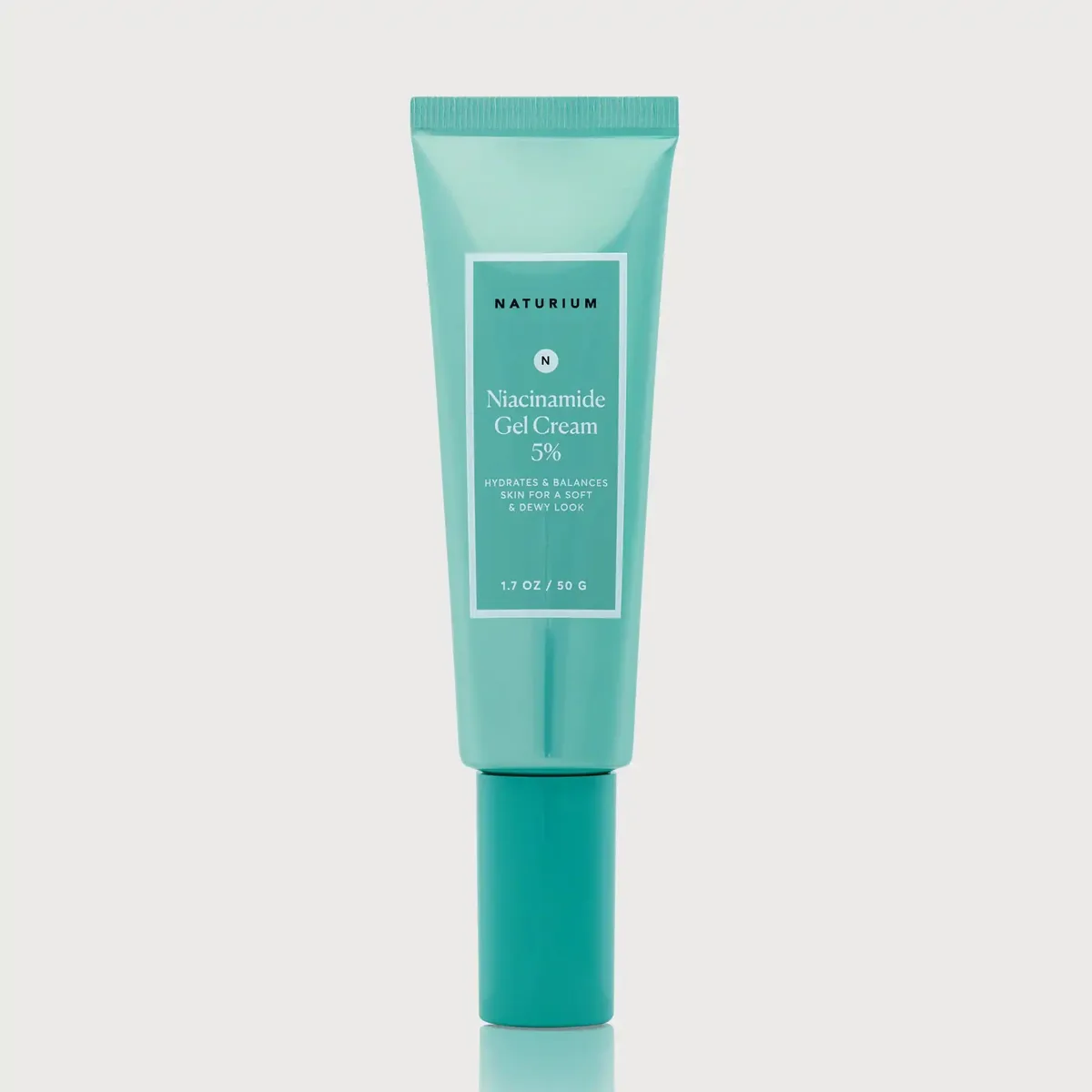
Niacinamide deserves a special mention because it's close to purpose-built for this skin type. It reinforces the barrier and reduces water loss — a randomized controlled trial found nicotinamide reduced transepidermal water loss — and it's widely used at 2 to 5% for its oil-balancing reputation. A niacinamide-forward gel-cream like Naturium Niacinamide Gel Cream 5% hydrates while working on the shine you're actually trying to manage. And if you genuinely want a mattifying finish, formulas built for oily skin — like Avène Cleanance Mattifying Aqua-Gel — hydrate and blur shine at once, which is a smarter answer than skipping moisture altogether.
Stop stripping: the routine changes that matter most
If you take one thing from this, it's that the products you thought were fighting oil are often feeding it. The highest-impact change most oily-skinned people can make isn't adding a fancy serum — it's subtracting the harsh stuff.
Swap the squeaky, stripping foaming cleanser for a gentle one that cleans without leaving your skin tight; that tight feeling is the sound of barrier damage, not cleanliness. Retire the astringent, alcohol-heavy toners that promise to "degrease" — they strip and provoke rebound oil for a few minutes of matte payoff. Don't over-exfoliate; two or three acid sessions a week is plenty, and daily exfoliation is a fast route to a compromised barrier that produces more oil. And moisturize consistently, morning and night, with something light — consistency keeps the barrier stable so your glands settle down.
The honest bottom line: managing oily skin is mostly about calming your barrier, not waging war on your sebum. Give it steady, lightweight hydration and stop the stripping, and the oil very often eases on its own. If you're not sure whether your skin is truly oily, dehydrated, or both, our [skin-type-quiz](/tools/skin-type-quiz/) can help you tell them apart, and the [routine-finder](/routine-finder/) will build a lightweight, oily-skin-appropriate routine around that answer — moisturizer included, because it belongs there.
Products mentioned
Independently reviewed and scored — the real products behind this piece.



References
- A Comprehensive Review: The Bidirectional Role of Sebum in Skin Health — Bioengineering (Basel), 2025
- Oral nicotinamide reduces transepidermal water loss: a randomized controlled trial — British Journal of Dermatology, 2016
Every cited link is verified to resolve to the paper named. Where a source could not be independently confirmed, it is listed without a link rather than pointing you somewhere wrong.
Frequently asked
If my skin is already oily, why would I add moisturizer?
Because moisturizer adds water and barrier support, not oil — two different things. Oily skin can still be dehydrated and running a compromised barrier, and skipping moisturizer to 'dry it out' often backfires: stripping the skin can trigger compensatory oil production. The goal is lightweight hydration, not more grease.
Does skipping moisturizer make oily skin produce more oil?
It can, indirectly. Going without hydration usually goes hand in hand with over-cleansing and stripping, and barrier disruption from over-cleansing has been shown to elicit compensatory sebum overproduction. So the routine meant to reduce shine can end up increasing it — the rebound-oil cycle.
What kind of moisturizer is best for oily skin?
Lightweight, water-based gels and water-gels built around humectants like hyaluronic acid and glycerin, ideally with niacinamide for barrier and oil support. Skip heavy, occlusive, oil-rich creams designed for dry skin — you want hydration that absorbs fast and finishes matte or satin, not a greasy film.
Can oily skin be dehydrated at the same time?
Yes, and it's common. Oil and water are independent systems, so you can overproduce sebum while lacking water — often because harsh cleansers and toners stripped the skin's water-holding capacity. The tell-tale sign is skin that's shiny and tight simultaneously; that combination points to dehydration on top of oiliness.
Should I use a toner to control oil?
Not the astringent, alcohol-heavy kind. Those strip the skin and often trigger rebound oil after a brief matte payoff. If you like a toner step, choose a gentle hydrating one; the more effective oil-control strategy is a gentle cleanser, consistent lightweight moisturizer, and something like niacinamide rather than degreasing your face.