




Niacinamide vs Vitamin C: You're Asking the Wrong Question
They brighten through completely different machinery — which is exactly why the 'pick one' framing is a trap.
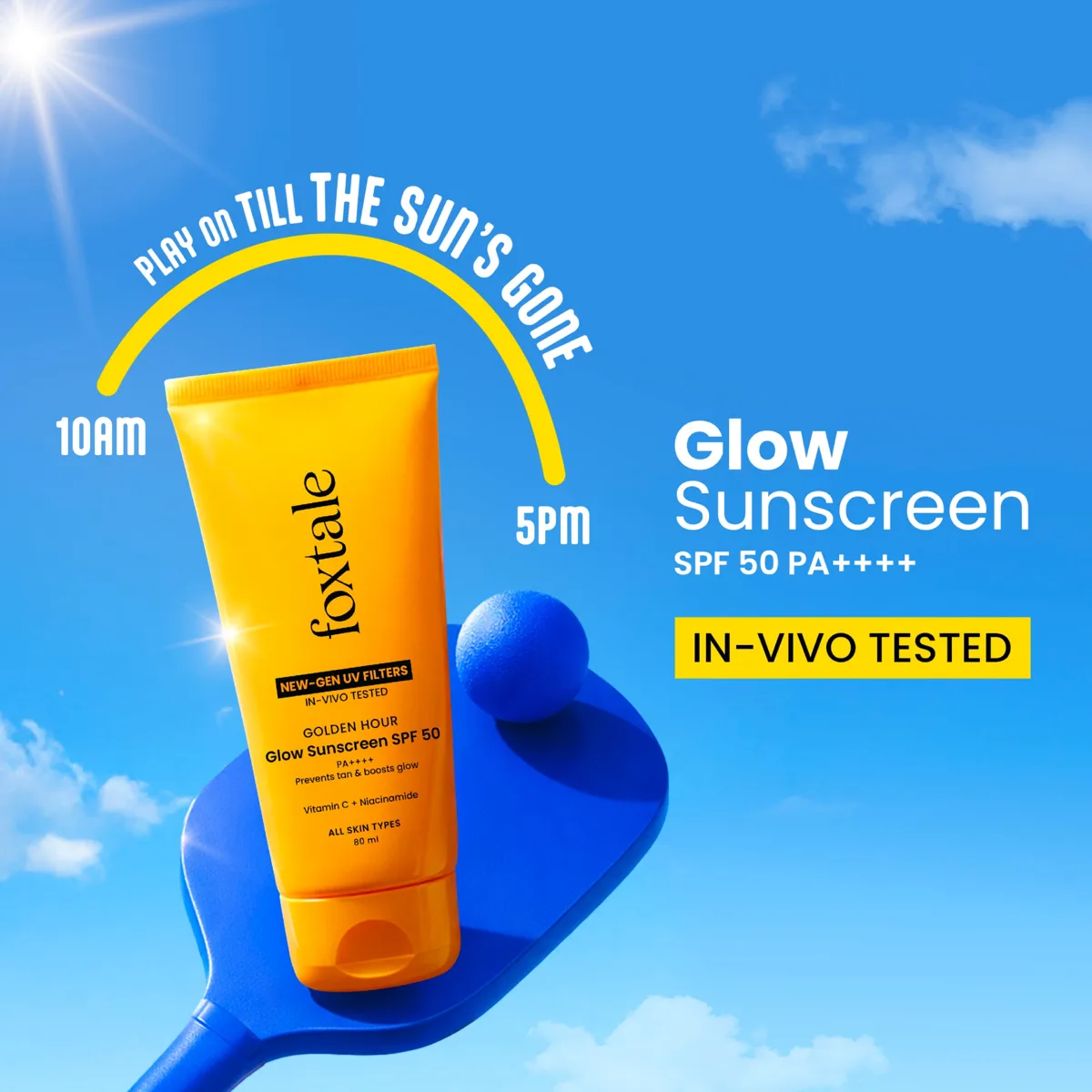
It pairs Tinosorb M — a hybrid, photostable, no-cast filter — with Uvinul A Plus and Ethylhexyl Triazone for genuine PA++++ UVA protection, then adds niacinamide and vitamin C for glow and tone, all for around four dollars. Premium filter chemistry, a luminous finish, and brightening actives at a price that explains its bestseller status.
The sunscreen that made Foxtale: a luminous, no-white-cast glow SPF 50 PA++++ built on Tinosorb M and modern filters, with niacinamide and vitamin C, for around four dollars. It earns its bestseller status — genuinely good protection, a flattering finish, and brightening extras at a giveaway price. The only catches are a fragrance and a base that isn't fungal-acne safe.
Foxtale's flagship sunscreen has a large, growing review base reporting strong glow and no white cast, giving solid real-world feedback, though the brand is young and public finished-product SPF testing is limited. Its modern filters are extensively documented for photostability and broad-spectrum coverage, so the protection rationale rests on well-established filter science.
The case for it
What would change this: A declared concentration would move this to a firmer reading of the dose.
Same rule for everyone. “Full protection” is the verdict on 2,288 of 45,024 concern verdicts across the catalog; rule P1 decided 2,232 of them. Unchanged since September 5, 2026, engine 5.1.1.
Brand or formulator? Disclose a concentration or correct a fact →
The studies behind the evidence row
The case for it
What would change this: A declared concentration would move this to a firmer reading of the dose.
Same rule for everyone. “Full protection” is the verdict on 2,288 of 45,024 concern verdicts across the catalog; rule P1 decided 2,232 of them. Unchanged since September 5, 2026, engine 5.1.1.
Brand or formulator? Disclose a concentration or correct a fact →
The studies behind the evidence row
The case for it
What would change this: A declared concentration would move this to a firmer reading of the dose.
Same rule for everyone. “Full protection” is the verdict on 2,288 of 45,024 concern verdicts across the catalog; rule P1 decided 2,232 of them. Unchanged since September 5, 2026, engine 5.1.1.
Brand or formulator? Disclose a concentration or correct a fact →
The studies behind the evidence row
Also listed for Dullness — the actives here (Tinosorb, Uvinul A Plus (DHHB) are in our research queue for that concern; there is no verdict until their evidence rows are written. That is a gap in our table, not a mark against the product.
Does the jobDoes what a sunscreen is for: UVA coverage, holds up in sunlight. Not measured from the label: pleasant enough to actually use.
A verdict is DermApproved’s assessment of how well a product’s ingredients fit a concern — never a claim about what the product treats. Evidence dots and collected reviews sit beside it and are never blended in. Rules 0.5.1 · evidence table ev-2026.09-r228 · how we decide
Every market has that one sunscreen everyone suddenly seems to own, and in India over the last few years it's been this one. Foxtale's Glow Sunscreen became a genuine phenomenon — the product that took a 2021 startup and turned it into a household name. When a budget product goes that viral, skepticism is the right reflex: is it actually good, or just well-marketed and cheap? In this case, refreshingly, the formula mostly justifies the fuss.
Start with the protection, because that's where viral sunscreens usually disappoint and this one doesn't. The lead filter is Tinosorb M — a hybrid, micro-fine filter that absorbs, scatters, and reflects UV across the spectrum, and is famously photostable. It's one of the best filters in the world for delivering high, cosmetically-elegant protection without a white cast, and it's the backbone of the SPF 50 PA++++ rating here. Alongside it sit Uvinul A Plus, a modern dedicated UVA filter, and Ethylhexyl Triazone, a strong UVB filter. That PA++++ rating — the top of the UVA scale — matters enormously in a hot, sunny climate where tanning and pigmentation are the concerns people actually bring to a dermatologist, and these filters genuinely earn it. None of this chemistry is even approved in the US, which remains stuck with older filters and a regulatory queue that has moved barely at all in twenty years.
The 'Glow' in the name is the second half of the appeal, and it's the reason it went viral rather than just being a competent sunscreen. The base is lightweight and luminous, leaving a lit-from-within finish with no white cast on any skin tone — the finish people screenshot and share. Crucially, that glow comes from the base and hydration, not glitter, and this distinction is the whole answer to the reflexive assumption that a glow sunscreen must be shimmer with token SPF stapled on. There is no mica here. The radiance and the protection are produced by different parts of the formula and do not trade against each other. Meanwhile niacinamide and a stable vitamin C derivative add real tone-evening and antioxidant brightening, so it doubles as a light skincare-and-glow step, which is exactly what made it feel like a discovery to its market.
The supporting cast is workmanlike and unglamorous, which is what you want. C12-15 alkyl benzoate provides the slip and helps dissolve the filters. Cetearyl olivate and sorbitan olivate emulsify the whole thing with olive-derived surfactants. Dimethicone and simethicone smooth the finish and keep the film from feeling tacky. Tocopherol adds antioxidant support and protects the actives. Octenidine, unusually, does some antimicrobial duty alongside the phenoxyethanol. Nothing here is decorative, and nothing is expensive.
A few caveats are modest. It contains fragrance — an allergen-free fragrance, formulated to avoid the common sensitizers, so lower-risk than typical scent, but still fragrance, which matters to those who avoid it on principle. It's silicone-containing for that elegant slip. And between the olivate emulsifiers and esters, it's not fungal-acne safe, so anyone managing malassezia should look elsewhere. The luminous finish can also tip into shine on very oily skin, which is partly why Foxtale also makes a mattifying version — match the finish to your skin type and you'll be happier. None of these dent the core value.
What will dent it is under-application, which is the failure mode of every sunscreen ever tested. Two finger-lengths for face and neck, applied over a moisturizer that has finished settling, in one even layer rather than three anxious ones — the silicone base will pill if you fight it. Then let the glow arrive before you put makeup over it. Reapply every couple of hours if you're actually outdoors. The number on the tube is a laboratory measurement made with more product than you instinctively want to use, and no filter chemistry in the world rescues a third of a dose.
And the value is the headline-grabber. At around four to five dollars for 50ml — six to eight weeks of correct daily use, with an 80ml size that improves the math — this delivers a world-class filter system plus brightening actives for less than the tax on a premium Western sunscreen. Sun protection comes from filters and proper application, not price, so going budget here costs you nothing in protection, and the modern filters arguably beat what far pricier US sunscreens can offer.
A fair word on the brand: Foxtale is young, founded in 2021, and grew fast on exactly this kind of science-forward, affordable product. It lacks a long track record and published clinical studies of its own, so confidence rests on the well-documented filter chemistry rather than brand-specific testing — but on that basis the formula is excellent. As with any budget sunscreen, the finished product's exact SPF testing isn't public, the standard caveat; the filter selection, though, is first-rate.
So this suits almost anyone wanting modern, high broad-spectrum protection with a luminous finish and a brightening bonus — normal, combination, and dry skin above all, though most people will get on with it. Very oily skin that wants matte should take the mattifying sibling instead; anyone avoiding fragrance or managing fungal acne should look elsewhere entirely. For nearly everyone else, the hype is earned: this is one of the best-value sunscreens you can buy, and a deserving bestseller.
The hero actives that drive this product's performance.
| Ingredient | Function | Evidence |
|---|---|---|
| Tinosorb M (Methylene Bis-Benzotriazolyl Tetramethylbutylphenol) | A hybrid micro-fine filter that absorbs, scatters, and reflects UV across the spectrum and is exceptionally photostable, doing the heavy lifting for the SPF 50 PA++++ rating while staying invisible — the key to the no-white-cast glow finish. | Regulator-approved for Sun Damage · limited certainty |
| Uvinul A Plus + Ethylhexyl Triazone | A modern UVA filter and a strong UVB filter that round out the Tinosorb M, giving the broad-spectrum, high-PA++++ UVA protection that matters most for preventing tanning and pigmentation. | Regulator-approved for Sun Damage · limited certainty |
| Niacinamide | Adds tone-evening and barrier support to the daily SPF, working with the vitamin C to push the glow-and-brighten angle this sunscreen is sold on. | Emerging for Hyperpigmentation |
| Vitamin C (3-O-Ethyl Ascorbic Acid) + Vitamin E | A stable vitamin C derivative paired with vitamin E for daytime antioxidant defense, mopping up UV-generated free radicals and reinforcing the brightening, glow-leaning purpose. | Limited for Sun Damage |
Ingredient standings describe the active at treatment-level doses and vehicles; this product's own condition grades weigh its actual formula.
Water, C12-15 Alkyl Benzoate, Propylene Glycol, Methylene Bis-Benzotriazolyl Tetramethylbutylphenol (Tinosorb M), Decyl Glucoside, Xanthan Gum, Diethylamino Hydroxybenzoyl Hexyl Benzoate, Cetearyl Olivate, Sorbitan Olivate, Ethylhexyl Triazone, Dimethicone, Niacinamide, Glyceryl Stearate, Phenoxyethanol, Ethylhexylglycerin, Octenidine HCl, 3-O-Ethyl Ascorbic Acid, Acrylates/C10-30 Alkyl Acrylate Crosspolymer, Tocopherol, Aminomethyl Propanol, Disodium EDTA, Simethicone, Allergen-Free Fragrance
sunscreen
AM
Apply as the final morning step over moisturizer, using about two finger-lengths for the face and neck to reach SPF 50. It blends to a glow that works as a makeup base; reapply through the day with sun exposure.
Protection and a luminous finish are immediate; the niacinamide and vitamin C add gradual tone-evening over weeks, with sun-damage prevention as the long-term payoff.
The protection here is anchored by Tinosorb M (methylene bis-benzotriazolyl tetramethylbutylphenol), an organic-particulate hybrid filter that works by absorption, scattering, and reflection across UVB and UVA, with excellent photostability and the ability to stabilize other filters — properties that make it a benchmark for high, no-cast broad-spectrum protection. It is complemented by diethylamino hydroxybenzoyl hexyl benzoate (Uvinul A Plus), a photostable long-wave UVA filter, and ethylhexyl triazone, a potent photostable UVB filter; together they support the SPF 50 PA++++ rating, with PA++++ denoting the highest tier of UVA protection on the PPD scale. This emphasis on stable UVA coverage is clinically meaningful, as UVA drives tanning, pigmentation, and photoaging. The supporting actives are well-chosen: niacinamide has strong evidence for tone-evening and barrier support, and 3-O-ethyl ascorbic acid is a stable vitamin C derivative providing antioxidant and mild brightening activity (promising rather than fully established), with tocopherol for additional antioxidant defense. The filter molecules are large with limited absorption, generally viewed favorably for safety. As always, delivered protection depends on applying ~2 mg/cm² and reapplying. The reasonable scientific summary is that this is a high-quality, photostable modern filter system with credible brightening support.
Dermatologists regard Tinosorb M highly for delivering strong, photostable, cosmetically-elegant broad-spectrum protection without white cast, and many note its unavailability in the US. Many dermatologists emphasize that high PA (UVA) protection is critical for preventing tanning, pigmentation, and photoaging, which this filter combination provides. They view niacinamide and a stable vitamin C derivative as sensible, low-risk additions for daytime use. The standard guidance applies: protection depends on generous, even application and reapplication. Dermatologists would note the formula contains fragrance (albeit low-allergen) and isn't suited to those managing fungal acne, and that very oily skin may prefer a matte finish. For daily broad-spectrum protection across most skin types, it is considered an excellent, evidence-aligned choice.
Apply as the final step of your morning routine, over moisturizer, using a generous amount — about two finger-lengths for the face and neck — to actually achieve the labeled SPF 50, since under-application is the main cause of sunscreen failure. Let it settle into its glow before makeup, for which it makes a good base. Reapply every two to three hours during sun exposure and after sweating or swimming. Apply over a settled moisturizer in an even layer to keep the silicone base from pilling.
At around $4.50 for 50ml, this is among the best sunscreen values anywhere — a Tinosorb-M-led filter system that outclasses many premium Western sunscreens, plus niacinamide and a vitamin C derivative, for less than a coffee. Protection comes from the filters and application rather than price, so there's no penalty for the low cost; the modern filters are the opposite of a compromise. The 80ml size improves cost per milliliter further, and a tube lasts six to eight weeks of proper daily use. The only buyers who won't capture full value are very oily skin wanting matte, the fragrance-averse, and the fungal-acne-prone. For everyone else, it's a remarkable deal and a justified bestseller.
This is a superb everyday sunscreen for most people, especially normal, combination, and dry skin wanting modern, high broad-spectrum protection with a luminous glow and brightening niacinamide and vitamin C. It's ideal for anyone who wants a no-white-cast finish that doubles as a light makeup base.
Very oily skin that wants a matte finish should choose Foxtale's mattifying version, and anyone avoiding fragrance entirely or managing fungal acne should look elsewhere, given the low-allergen scent and the esters in the base.
Ready to try Foxtale Glow Sunscreen SPF 50 PA++++?
Buy at Amazon ♥Lightweight cream that blends to a luminous, non-greasy finish
Light allergen-free fragrance
Tube
It blends in fast and leaves a luminous, lit-from-within glow with no white cast — the finish that made it a bestseller. There's a faint allergen-free fragrance. It sits well under makeup and feels like skincare rather than a heavy SPF; very oily skin may read the glow as shine, but most see healthy radiance.
About 6-8 weeks of daily facial use per 50ml at proper application amounts
All Year
The Glow Sunscreen was Foxtale's breakout product, riding India's surge of interest in cosmetically-elegant, modern-filter sunscreens. Its no-white-cast glow finish and low price turned it into a domestic bestseller and helped put the young brand on the map.
Foxtale, an Indian D2C brand founded in December 2021, built much of its reputation on this glow sunscreen, which became a domestic bestseller. The brand uses modern, well-regarded filters at low prices; its track record is short and it has no published clinical studies, but the filter chemistry here is well-established.
A glow sunscreen is just shimmer with token SPF.
The glow here comes from a luminous lightweight base and hydration, not glitter, while the SPF 50 PA++++ rating is delivered by serious modern filters led by Tinosorb M. The radiance and the protection are independent — you're not trading one for the other.
It became a bestseller by combining a luminous, no-white-cast glow finish with serious modern filters (led by Tinosorb M) and brightening niacinamide and vitamin C, all at around four dollars — a rare mix of cosmetic elegance, real protection, and low price.
No — it relies on invisible modern organic and hybrid filters rather than high mineral levels, so it blends in with a luminous finish and no white cast on any skin tone.
PA++++ is the highest rating on the Asian UVA-protection scale, indicating very strong protection against UVA rays, which cause tanning, pigmentation, and photoaging. It's delivered here by Tinosorb M and Uvinul A Plus.
It suits most skin types, but its luminous finish can read shiny on very oily skin, which may prefer Foxtale's mattifying version. It's also not fungal-acne safe, so those managing that should choose another option.
No — it contains an allergen-free fragrance, formulated to avoid common fragrance allergens, so it's lower-risk than typical scent but not suitable for those avoiding fragrance entirely.
Its modern filters are large molecules with minimal absorption, generally considered favorable for pregnancy, and it avoids older filters some prefer to skip, though confirming with your provider is always sensible.
Recurring themes our editors read across retailer reviews of this product — summaries in our words, not quotations, and not a substitute for your own patch test.
Luminous, glowy finish
No white cast on any tone
Lightweight, works under makeup
Exceptional value
Contains fragrance
Not fungal-acne safe
Glow may read shiny on very oily skin
Reapplication needed like any SPF
Verified answers from our questions library — the nuance a product page cannot carry.