Most drugstore makeup wipes rely on micellar technology or surfactant-based systems that can strip the skin. Cetaphil's approach uses emollient solvents (isohexadecane, dicaprylyl ether) to dissolve makeup combined with a five-botanical soothing blend (aloe, chamomile, green tea, cucumber, cornflower) — a dissolve-and-soothe approach rather than a strip-and-rinse one.
A genuinely gentle alternative in a category dominated by skin-stripping surfactant wipes — the emollient dissolution system and five-botanical soothing blend make these notably kinder to sensitive skin. They're a solid convenience product, but they don't replace a proper cleanse, and the environmental cost of disposable wipes deserves honest acknowledgment.
Good choicefor SensitivityIn your profileYou chose · No fragrance, drying alcohol, declarable allergens or sensitising preservatives in this wipe — the profile sensitive skin looks for.Not yet assessedGentleNo reviews collected yet
The case for it
Isohexadecane has no evidence row yet for this concern — it is in the research queue.
The formula carries none of the triggers this concern is sensitive to.
What would change this: A researched evidence row for the lead active would replace this with a verdict.
Same rule for everyone. “Good choice” is the verdict on 1,938 of 45,024 concern verdicts across the catalog; rule F2 decided 1,938 of them.
Unchanged since September 5, 2026, engine 5.1.1.
Supporting rolefor DrynessIn your profileYou chose · Rinse-off wipe: Glycerin gets seconds of contact, so this supports a routine for dryness rather than treating it.Moderate evidenceGentleNo reviews collected yet
The case for it
Glycerin has trial-supported standing for this concern.
It is in a rinse-off product, so it gets seconds of contact rather than the leave-on exposure the evidence assumes.
The formula carries none of the triggers this concern is sensitive to.
What would change this: The same active in a leave-on form would be judged on its evidence rather than its contact time.
Same rule for everyone. “Supporting role” is the verdict on 8,197 of 45,024 concern verdicts across the catalog; rule R6 decided 2,017 of them.
Unchanged since September 5, 2026, engine 5.1.1.
R6 — Contact time cannot deliver a leave-on claim; the product is judged on its job (cleansing without aggravating). Explicit exceptions (BPO wash, SA cleanser, medicated shampoos) never reach this rule because their rows set rinse_off_ok. · the full register
Carrying active
Glycerin
Standing
supported — its mechanism is established
Form
contact limited — studied range 2–20%, from the trials on the row; needs leave-on contact; judge it after ~1 weeks
Tolerability
gentle
Row checked
against its sources on July 17, 2026 (evidence table ev-2026.09-r228)
The studies behind the evidence row
International Cosmetic Ingredient Dictionary and Handbook — declared function — Personal Care Products Council
Harry's Cosmeticology / Baran & Maibach Textbook of Cosmetic Dermatology — humectant, emollient and occlusive classification — standard reference text
Does the jobDoes what a cleanser is for: surfactant mildness, rinses clean without stripping. Not measured from the label: pH match to skin.
A verdict is DermApproved’s assessment of how well a product’s ingredients fit a concern — never a claim about what the product treats. Evidence dots and collected reviews sit beside it and are never blended in.
Rules 0.5.1 · evidence table ev-2026.09-r228 · how we decide
Assessment
Pros & Cons
Pros
✓ Emollient dissolution system removes makeup without harsh surfactant stripping
✓ Five-botanical soothing blend actively calms skin during the removal process
✓ Ophthalmologist tested and safe for sensitive eye area and contact lens wearers
✓ Soft cloth texture provides effective removal without abrasion or excessive friction
✓ Skin feels comfortable and hydrated after use rather than tight and dry
✓ Convenient travel-friendly packaging for on-the-go and gym use
Cons
✗ Leaves an emollient residue requiring a follow-up rinse for thorough cleansing
✗ Contains Iodopropynyl Butylcarbamate, a preservative with increasing sensitization rates
✗ Marketed as fragrance-free but contains ethylene brassylate masking agent
✗ Heavy or multi-layer makeup requires two to three wipes for complete removal
✗ Disposable format generates non-biodegradable waste with each use
Review
Full Review
The makeup wipe occupies an uncomfortable position in modern skincare. Dermatologists discourage them as a sole cleansing step. Environmental advocates point to the waste. Skincare enthusiasts treat them as a necessary evil at best. And yet, they remain one of the most consistently purchased skincare products in the drugstore aisle, because convenience is a force that no amount of double-cleansing evangelism has managed to overcome.
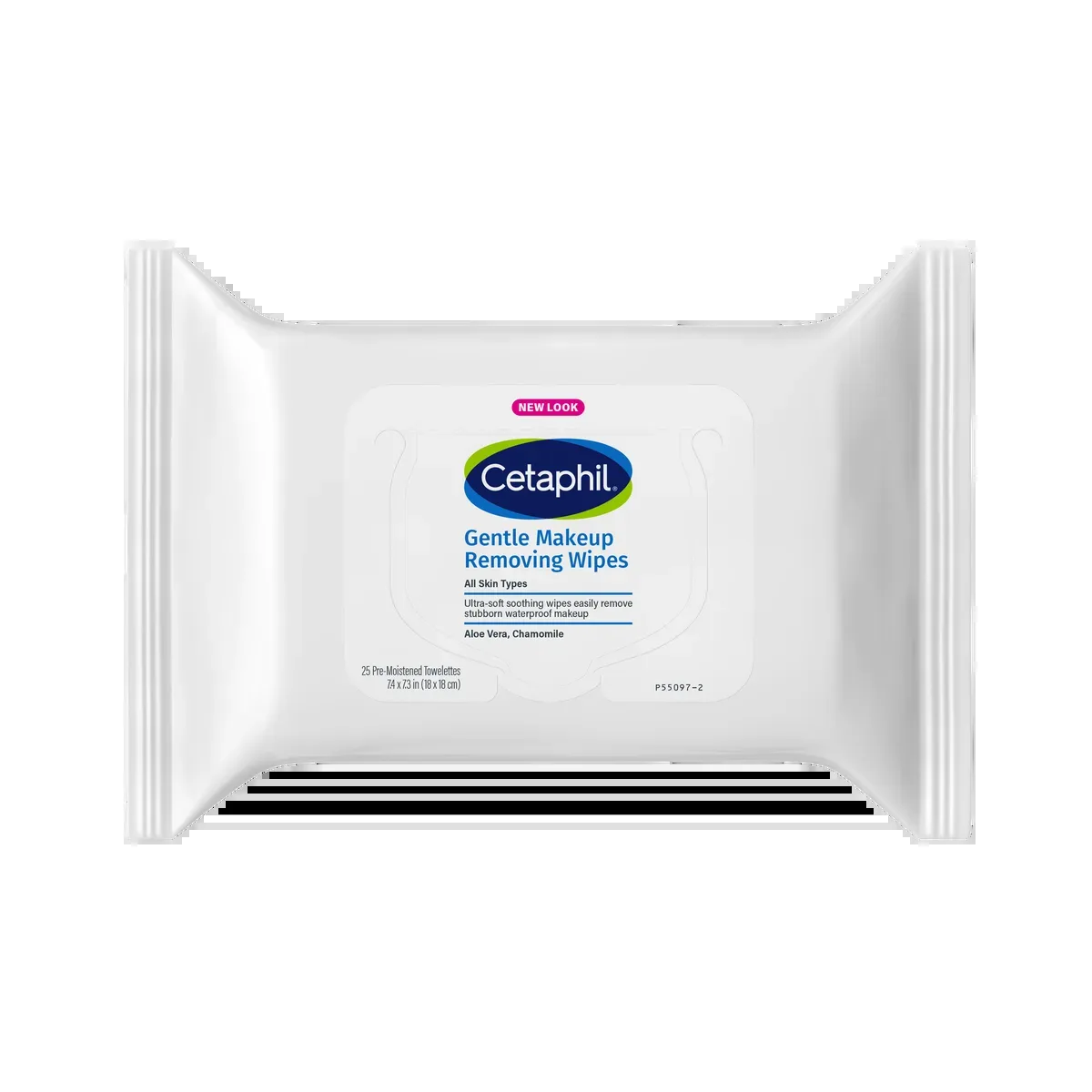
Cetaphil's Gentle Makeup Removing Wipes don't attempt to argue that wipes can replace a proper face wash. Instead, they try to make the wipe step as skin-friendly as possible — and the formula behind that effort is more thoughtful than the category usually gets.
The most interesting formulation choice is what these wipes don't use. Most makeup wipes rely on micellar technology — surfactant molecules that trap oil and pigment in tiny spheres for removal. Micelles work, but they're essentially detergents, and wiping surfactants across your face without rinsing can leave behind irritating residue. Cetaphil took a different path, building the formula around emollient solvents. Isohexadecane and dicaprylyl ether — listed second and third — dissolve makeup through oil-based chemistry. The cosmetic pigments literally melt into the wipe's emollient base rather than being scrubbed off by surfactants. The difference in skin feel is immediately noticeable: less friction, less pulling, less of that raw sensation that aggressive wipes leave behind.
The botanical blend adds a soothing dimension that elevates this beyond typical convenience-category formulation. Five plant extracts — aloe, chamomile, green tea, cucumber, and cornflower — work together as an anti-irritation system that calms skin during the removal process. Aloe and chamomile provide immediate soothing, green tea delivers antioxidant protection, and cornflower extract (a traditional eye-care ingredient in European skincare) adds gentle support for the periorbital area. It's a genuinely considered botanical lineup for a product that many brands treat as an afterthought.
The cloth itself is soft without being flimsy. It has enough structural integrity to feel like it's actually doing something when you wipe, but the weave is gentle enough that it doesn't scratch or abrade. The moisture level is well-calibrated — saturated enough to work effectively, but not so wet that the wipe drips or slides around. For waterproof mascara, a brief hold against the lash line lets the emollients dissolve the formula before you wipe. For everyday makeup, a single pass is usually sufficient.
Here's where the honest assessment begins. These wipes leave a residue. A light, emollient film that you can feel on your skin after use. This is actually a feature of the dissolution-based approach rather than a defect — it means the formula is working through oil chemistry rather than stripping — but it also means these wipes function best as a first cleansing step rather than a standalone routine. If you use these and go straight to bed, you're sleeping on a thin layer of emollient solvent mixed with dissolved makeup. Not ideal.
The ingredient list has a few items that deserve scrutiny. Iodopropynyl butylcarbamate, the preservative, is a known contact allergen with increasing rates of sensitization documented in dermatological literature. It's used within the cosmetic limit of 0.1%, but for a product marketed to sensitive skin, there are gentler preservation options available. Ethylene brassylate — a synthetic musk categorized as a masking fragrance — appears despite the product being marketed as fragrance-free. At trace concentrations, most people won't detect it or react to it, but the gap between the marketing claim and the ingredient reality is a familiar Cetaphil contradiction.
Heavy makeup users should calibrate expectations. A full face of long-wear foundation, concealer, setting powder, and waterproof eye makeup will likely require two or three wipes to fully remove. That's not a failure of the product — it's a limitation of the format. Wipes are fundamentally less efficient at thorough removal than oil cleansers or cleansing balms, regardless of brand.
The environmental consideration is worth addressing directly. Disposable wipes generate waste, and unlike tissue, most are not readily biodegradable. Cetaphil doesn't market these as eco-friendly, and they shouldn't. If sustainability is a priority, reusable microfiber cloths with a cleansing oil will achieve the same gentle removal with zero waste. These wipes earn their place through convenience — travel, gym bags, late nights when the full routine isn't happening — not through any environmental virtue.
At roughly eight dollars for twenty-five wipes, the value is reasonable for the category. Each wipe costs about thirty-two cents — less than most premium brand alternatives and roughly comparable to other pharmacy-brand options. The packaging's resealable lid works adequately to maintain moisture, though pressing it firmly shut every time requires more diligence than the average tired person exercises at eleven at night.
For what they are — a gentle, botanically enriched convenience product for makeup removal — these wipes are among the best the drugstore offers. They won't replace your face wash, and they shouldn't try to. But when life's too short for double cleansing, having a wipe that dissolves rather than scrubs, soothes rather than strips, and leaves your skin comfortable rather than raw is worth the thirty-two cents.
Formula
Key Ingredients
The hero actives that drive this product's performance.
Listed second in this formula, this lightweight emollient solvent is the primary makeup-dissolving agent — it breaks down cosmetic pigments and waterproof formulas through oil-based dissolution rather than harsh surfactant stripping, which is why these wipes feel gentle rather than abrasive.
Provides immediate soothing and anti-inflammatory benefits that counteract the physical friction of wiping, calming the skin in real time during the makeup removal process.
Works synergistically with the aloe in this five-botanical blend to reduce redness and irritation from the wiping action — particularly important for the delicate eye area where these wipes are ophthalmologist-tested.
Green tea extract delivers antioxidant protection via EGCG polyphenols, providing a mild defensive benefit as the wipe removes the day's environmental exposure along with makeup.
Acts as the humectant anchor in this formula, preventing the dehydrating effect that most makeup wipes produce — it deposits a thin moisture-binding layer that keeps skin comfortable rather than tight after use.
Established mechanismfor Dryness · established mechanism
Ingredient standings describe the active at treatment-level doses and
vehicles; this product's own condition grades weigh its actual formula.
Best used as a first cleansing step to remove makeup before following with a proper face wash. Not ideal as a sole cleansing method — the emollient-based formula can leave residue that benefits from a rinse-off cleanser afterward.
Results Timeline
Makeup is removed immediately upon use. Skin feels clean and comfortable right away. These are a convenience product rather than a treatment — no cumulative skincare benefits develop over time.
The formula's approach to makeup removal is built on emollient solvent chemistry rather than the micellar surfactant technology that dominates the wipe category. This distinction has practical implications for skin barrier integrity.
Isohexadecane, listed second in the formula, is a branched-chain hydrocarbon that functions as a lightweight emollient solvent. It dissolves cosmetic pigments and waxes through the principle of like-dissolves-like — oil-based formulas (which most makeup is) break down in the presence of compatible oil-phase solvents. This mechanism avoids the surfactant-barrier interaction that occurs with micellar wipes, where detergent molecules can disrupt the stratum corneum's lipid matrix when left on the skin without rinsing.
The botanical soothing system draws on ingredients with documented anti-inflammatory properties. Chamomile (Matricaria) extract contains bisabolol and chamazulene, compounds with demonstrated anti-inflammatory activity in dermatological research. Green tea extract's primary active, epigallocatechin gallate (EGCG), has been extensively studied for its antioxidant and anti-inflammatory properties in skin applications, with multiple reviews confirming its ability to neutralize reactive oxygen species generated by UV exposure and environmental pollutants.
Glycerin's role as a humectant in a leave-on context (since wipe residue remains on the skin) is well-supported by research. Studies demonstrate that glycerin not only attracts water to the stratum corneum but also modulates aquaporin-3 channels in keratinocytes, facilitating water transport through the epidermis. In a wipe formula where some residue is expected to remain on the skin, glycerin provides a lasting hydrating benefit rather than the drying effect associated with surfactant-based wipes.
The preservation system warrants transparency. Iodopropynyl butylcarbamate (IPBC) is effective at low concentrations (restricted to 0.1% in cosmetics) but has seen increasing rates of allergic contact dermatitis in patch testing studies over the past decade. A Cosmetic Ingredient Review safety assessment concluded it is safe as used in rinse-off products and at restricted levels in leave-on products, but the trend toward sensitization has led some formulators to seek alternatives.
Dermatologist Perspective
Dermatologists generally view makeup wipes as a convenience product rather than a recommended cleansing method, and this product doesn't challenge that perspective — it simply makes the convenience step gentler. Practicing dermatologists appreciate the emollient-based removal approach over surfactant-based alternatives, as it reduces the risk of barrier disruption in a no-rinse context. The ophthalmologist testing provides clinical confidence for recommending use around the periorbital area. However, dermatologists consistently advise that these wipes should precede, not replace, a proper rinse-off cleanser, particularly for patients on active treatment regimens where thorough cleansing is essential.
Guidance
Usage & Recommendations
How to Use
Remove one wipe from the resealable pouch and press the lid firmly shut. Gently wipe across the face, starting with the eye area — hold the wipe against closed eyelids for 3-5 seconds to dissolve waterproof formulas before wiping away. Use gentle, sweeping motions rather than aggressive scrubbing. Follow with a rinse-off cleanser for thorough cleansing. Dispose of the wipe in the trash — do not flush. For best results, use within 12 months of opening and store the pouch face-down to keep remaining wipes moist.
Value Assessment
At approximately $7.99 for 25 wipes, each wipe costs about $0.32 — reasonable for the category and competitive with other pharmacy-brand options. Premium brand wipes from Neutrogena or Garnier are similarly priced, while luxury brand alternatives can cost significantly more. The value is strongest when used as intended — a first-step makeup remover before a proper cleanse — rather than as a sole cleansing method, which would burn through the pack quickly. The Cetaphil brand heritage and Galderma's pharmaceutical formulation standards provide ingredient quality that matches or exceeds competitors at this price point.
Who Should Buy
Anyone who needs a gentle on-the-go makeup removal option — travelers, gym-goers, and those with busy schedules. Particularly well-suited for sensitive and dry skin types who find most wipes irritating. A good option for the nightstand when the full double-cleanse routine isn't going to happen.
Who Should Skip
Those with confirmed sensitivity to Iodopropynyl Butylcarbamate or propylene glycol. Sustainability-conscious consumers who prefer reusable alternatives. Anyone looking for a single-step nighttime cleansing solution — these need to be followed by a proper face wash for thorough results.
Ready to try Cetaphil Gentle Makeup Removing Wipes?
Ultra-soft, pre-moistened cloths with a gentle, non-abrasive weave. Adequately saturated without being dripping wet. The cloth has enough structure to feel effective during wiping without being rough on skin.
Scent
Marketed as fragrance-free, though the formula contains ethylene brassylate at trace levels as a masking agent. In practice, users detect no discernible fragrance — the wipes smell essentially neutral.
Packaging
Resealable soft plastic pouch with a flexible flip-top closure lid designed to maintain wipe moisture. Compact and travel-friendly. White and teal Cetaphil branding with clear product claims on the front.
Finish
non-greasysatin
What to Expect on First Use
First use feels immediately gentle — the cloth is soft against the skin and makeup dissolves with light pressure rather than aggressive rubbing. A slight residue remains after use, which is normal for emollient-based wipes and indicates the formula is working through dissolution rather than harsh stripping.
How Long It Lasts
25 uses (one wipe per use); approximately 2-4 weeks depending on frequency
Cetaphil developed these wipes to extend their sensitive-skin philosophy to the convenience category, recognizing that many consumers skip proper cleansing when wipes feel harsh or drying. The ophthalmologist testing reflects Galderma's pharmaceutical approach — ensuring the formula meets clinical safety standards for the most sensitive area of the face.
About Cetaphil Legacy Brand (20+ years)
Cetaphil was created by pharmacist Erwin S. Whiting in 1947 and is now owned by Galderma, a Swiss dermatological pharmaceutical company. The brand is one of the most frequently recommended skincare lines by dermatologists worldwide, with nearly eight decades of clinical trust.
Brand founded: 1947 · Product launched: 2017
Myth vs. Reality
Common Myths
Myth
Makeup wipes are a sufficient replacement for face wash in a nighttime routine.
Reality
Wipes remove surface makeup and some grime, but they cannot replicate the deep pore cleansing of a proper face wash. These wipes work best as a first step in double cleansing — removing the bulk of makeup before a rinse-off cleanser handles the rest.
Myth
All makeup wipes are equally harsh and bad for sensitive skin.
Reality
This formula uses emollient-based dissolution rather than harsh surfactants, and includes five botanical soothing agents. The gentle removal mechanism and conditioning ingredients make it meaningfully different from surfactant-heavy wipes that strip the skin barrier.
FAQ
Frequently Asked Questions
Can Cetaphil Gentle Makeup Removing Wipes remove waterproof mascara?
Yes — the emollient-based formula with isohexadecane dissolves waterproof formulas effectively. Hold the wipe gently against the eye area for a few seconds to let the solvents break down the mascara before wiping, rather than rubbing aggressively.
Do I still need to wash my face after using these wipes?
Yes, ideally. These wipes remove surface makeup and grime but leave a light emollient residue and cannot deeply cleanse pores. For the best nighttime routine, use the wipe as a first step followed by a gentle rinse-off cleanser.
Are Cetaphil makeup wipes safe for contact lens wearers?
Yes — the formula is ophthalmologist tested and safe for use around the eye area, including for contact lens wearers. The emollient-based removal system is less likely to cause eye irritation than surfactant-heavy alternatives.
Are these wipes truly fragrance-free?
The formula contains ethylene brassylate, a synthetic musk used at trace levels as a masking agent to neutralize raw ingredient odors. While technically not 100% fragrance-free, the concentration is so low that users report no detectable scent. Those with severe fragrance sensitivities should be aware of its presence.
How do I keep the wipes from drying out?
Press the flip-top closure firmly shut after each use. Store the package face-down (lid side down) so the remaining wipes stay in contact with the moisture at the bottom. Keep away from direct heat or sunlight, which accelerates evaporation.
Reviews
What Reviewers Tend to Say
Recurring themes our editors read across retailer reviews of this product — summaries in our words, not quotations, and not a substitute for your own patch test.
Common Praise
Gentle and non-irritating even around the sensitive eye area
Effectively removes most makeup including waterproof mascara
Soft cloth texture that does not scratch or abrade the skin
No chemical smell or noticeable fragrance
Skin feels comfortable and hydrated after use rather than dry and tight
Convenient for travel, gym bags, and on-the-go touch-ups
Common Complaints
Heavy or full-coverage makeup requires multiple wipes for complete removal
Leaves a slight oily residue that necessitates a follow-up rinse
Wipes can dry out if the package seal is not pressed shut firmly after each use
Not sufficient as the sole cleansing step for a thorough nighttime routine
Disposable wipes generate unnecessary waste compared to reusable alternatives
Notable Endorsements
Dermatologist testedOphthalmologist testedGalderma (dermatological pharmaceutical company) developed
Chamomile's active fraction inhibits the same inflammatory pathways a steroid does, at a fraction of the strength — and the version that works best is grubbed out of Brazilian cerrado, while the synthetic substitute is half inactive by construction.
The burn trials are real and the skeptics who dismiss aloe as folklore are wrong — but the same substance has delayed healing in other wounds, and none of it says anything about what a soothing gel does to intact skin.
Products, answers, therapy guides, tools and articles in one search. Brand names,
slang and abbreviations all work — accutane finds isotretinoin, bacne finds truncal acne.