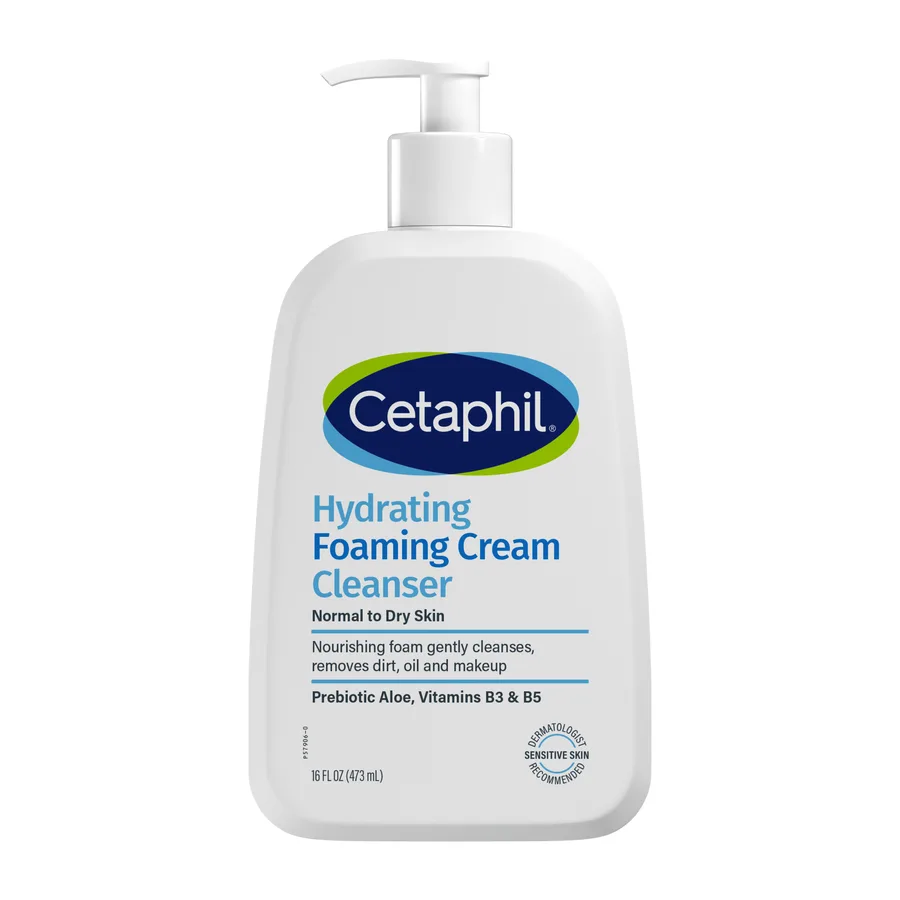
It threads a needle most foaming cleansers miss: a creamy, satisfying lather built entirely on mild isethionate and amino-acid surfactants, so it foams without the stripping tightness that usually comes with it. The leave-behind glycerin, niacinamide, panthenol, and aloe make it one of the rare big-bottle drugstore foamers that's both fungal-acne safe and genuinely kind to a dry, compromised barrier.
A creamy, barrier-friendly cream-to-foam cleanser that delivers a satisfying lather without the stripped, tight feeling foaming washes are infamous for. It's gentle, fungal-acne safe, fragrance-free, and the big pump is excellent value — ideal for dry and sensitive skin, if a touch tame for very oily complexions.
Supporting rolefor DrynessIn your profileYou chose · Rinse-off foam: Glycerin gets seconds of contact, so this supports a routine for dryness rather than treating it.Moderate evidenceStandard tolerabilityNo reviews collected yet
The case for it
Glycerin has trial-supported standing for this concern.
It is in a rinse-off product, so it gets seconds of contact rather than the leave-on exposure the evidence assumes.
The formula carries no trigger this concern is sensitive to, with the cautions noted.
Cautions: a stronger surfactant system.
What would change this: The same active in a leave-on form would be judged on its evidence rather than its contact time.
Same rule for everyone. “Supporting role” is the verdict on 8,197 of 45,024 concern verdicts across the catalog; rule R6 decided 2,017 of them.
Unchanged since September 5, 2026, engine 5.1.1.
R6 — Contact time cannot deliver a leave-on claim; the product is judged on its job (cleansing without aggravating). Explicit exceptions (BPO wash, SA cleanser, medicated shampoos) never reach this rule because their rows set rinse_off_ok. · the full register
Carrying active
Glycerin
Standing
supported — its mechanism is established
Form
contact limited — studied range 2–20%, from the trials on the row; needs leave-on contact; judge it after ~1 weeks
Tolerability
standard — cleanser harshness
Row checked
against its sources on July 17, 2026 (evidence table ev-2026.09-r228)
The studies behind the evidence row
International Cosmetic Ingredient Dictionary and Handbook — declared function — Personal Care Products Council
Harry's Cosmeticology / Baran & Maibach Textbook of Cosmetic Dermatology — humectant, emollient and occlusive classification — standard reference text
Supporting rolefor DehydrationIn your profileYou chose · Rinse-off foam: Glycerin gets seconds of contact, so this supports a routine for dehydration rather than treating it.Moderate evidenceStandard tolerabilityNo reviews collected yet
The case for it
Glycerin has trial-supported standing for this concern.
It is in a rinse-off product, so it gets seconds of contact rather than the leave-on exposure the evidence assumes.
The formula carries no trigger this concern is sensitive to, with the cautions noted.
Cautions: a stronger surfactant system.
What would change this: The same active in a leave-on form would be judged on its evidence rather than its contact time.
Same rule for everyone. “Supporting role” is the verdict on 8,197 of 45,024 concern verdicts across the catalog; rule R6 decided 2,017 of them.
Unchanged since September 5, 2026, engine 5.1.1.
R6 — Contact time cannot deliver a leave-on claim; the product is judged on its job (cleansing without aggravating). Explicit exceptions (BPO wash, SA cleanser, medicated shampoos) never reach this rule because their rows set rinse_off_ok. · the full register
Carrying active
Glycerin
Standing
supported — its mechanism is established
Form
contact limited — studied range 20%, from the trials on the row; needs leave-on contact; judge it after ~1 weeks
Tolerability
standard — cleanser harshness
Row checked
against its sources on July 17, 2026 (evidence table ev-2026.09-r228)
The studies behind the evidence row
USP glycerin monograph / Fluhr et al., glycerol and the skin (review) — glycerin is the reference humectant, drawing and holding water in the stratum corneum — reference work
Good choicefor SensitivityIn your profileYou chose · No fragrance, drying alcohol, declarable allergens or sensitising preservatives in this foam — the profile sensitive skin looks for.Not yet assessedGentleNo reviews collected yet
The case for it
Sodium Cocoyl Isethionate has no evidence row yet for this concern — it is in the research queue.
The formula carries none of the triggers this concern is sensitive to.
What would change this: A researched evidence row for the lead active would replace this with a verdict.
Same rule for everyone. “Good choice” is the verdict on 1,938 of 45,024 concern verdicts across the catalog; rule F2 decided 1,938 of them.
Unchanged since September 5, 2026, engine 5.1.1.
Supporting rolefor Compromised Skin BarrierIn your profileYou chose · Rinse-off foam: Niacinamide gets seconds of contact, so this supports a routine for compromised skin barrier rather than treating it.Moderate evidenceStandard tolerabilityNo reviews collected yet
The case for it
Niacinamide & Panthenol has trial-supported standing for this concern.
It is in a rinse-off product, so it gets seconds of contact rather than the leave-on exposure the evidence assumes.
The formula carries no trigger this concern is sensitive to, with the cautions noted.
Cautions: a stronger surfactant system.
What would change this: The same active in a leave-on form would be judged on its evidence rather than its contact time.
Same rule for everyone. “Supporting role” is the verdict on 8,197 of 45,024 concern verdicts across the catalog; rule R6 decided 2,017 of them.
Unchanged since September 5, 2026, engine 5.1.1.
R6 — Contact time cannot deliver a leave-on claim; the product is judged on its job (cleansing without aggravating). Explicit exceptions (BPO wash, SA cleanser, medicated shampoos) never reach this rule because their rows set rinse_off_ok. · the full register
Carrying active
Niacinamide & Panthenol
Standing
supported — its mechanism is established
Form
contact limited — studied range 2%, from the trials on the row; needs leave-on contact; judge it after ~8 weeks
Tolerability
standard — cleanser harshness
Row checked
against its sources on July 17, 2026 (evidence table ev-2026.09-r228)
Does the jobDoes what a cleanser is for: puts something back, surfactant mildness. Not measured from the label: pH match to skin.
A verdict is DermApproved’s assessment of how well a product’s ingredients fit a concern — never a claim about what the product treats. Evidence dots and collected reviews sit beside it and are never blended in.
Rules 0.5.1 · evidence table ev-2026.09-r228 · how we decide
Assessment
Pros & Cons
Pros
✓ Creamy, satisfying lather that doesn't strip the barrier
✓ Built on mild isethionate and amino-acid surfactants, no sulfates
✓ Glycerin, niacinamide, panthenol leave skin soft, not tight
✓ Fungal-acne safe — rare for a big-bottle foaming cleanser
✓ Fragrance-free and friendly to sensitive, reactive skin
✓ Outstanding value on the large 16 oz pump
✓ Available in two sizes for trial or stocking up
Cons
✗ Too gentle for those who want a deep, stripping clean
✗ Won't remove heavy waterproof makeup on its own
✗ Plain, no-frills sensory experience
✗ Lather is modest compared to harsh gel cleansers
✗ Pump can clog if the bottle sits unused
Review
Full Review
Ask most people about foaming cleansers and you'll hear the same instinctive verdict: foam means stripped. The mental association runs deep, and it's not baseless — for years, the cleansers that lathered most enthusiastically were the ones built on harsh sulfates at a punishing pH, the kind that left your face feeling so aggressively clean it actually felt tight. That experience taught a generation of skincare-conscious people to treat lather as a warning sign and to retreat toward creamy, low-foam cleansers in the name of barrier protection. Cetaphil's Hydrating Foaming Cream Cleanser is built to dismantle that association, and it mostly succeeds.
The trick is in the surfactant choices, which are genuinely modern. Instead of leading with a sulfate, this formula's primary cleansing agent is sodium cocoyl isethionate — the mild, coconut-derived surfactant you'll recognize from gentle syndet bars and creamy cleansers prized for not stripping. Backing it up are sodium cocoyl glutamate and sodium lauroyl sarcosinate, both amino-acid-derived and known for low irritation, plus cocamidopropyl betaine to round out the lather. Crucially, glycerin sits third on the entire ingredient list, doing the quiet work of keeping the wash from dragging your skin's own moisture down the drain. The result is a cleanser that genuinely foams — it whips into a soft, cushiony lather that feels like washing your face is supposed to feel — without delivering the tight, parched aftermath that foam usually implies.
The sensory experience is the selling point. It pumps out as a soft white cream, and the moment you add water and work it in, it transforms into a low-density, satisfying foam. There's a real pleasure to that texture; it makes the wash feel substantial in a way that thin gel cleansers don't, and it gives dry and sensitive skin a foaming option that doesn't punish them for wanting one. When you rinse, skin feels clean and soft rather than squeaky and stretched. No fragrance, no sting, no menthol-y fake freshness — just a competent, comfortable clean.
Under the surfactants sits a quiet supporting cast that earns the 'hydrating' on the label. Niacinamide and panthenol — vitamins B3 and B5 — are present at leave-behind levels to support the barrier, and Cetaphil's 'prebiotic aloe,' an aloe juice powder, is folded in for its soothing, microbiome-friendly marketing story. None of these are at treatment concentrations in a rinse-off product, and you shouldn't expect this to brighten or fade anything. But they tilt the after-feel firmly toward comfort, and that's the right ambition for a daily cleanser.
There's also a detail worth flagging for a specific audience: this formula is fungal-acne safe. It contains no fatty-acid esters, polysorbates, or other ingredients that feed Malassezia, which makes it a rare big-bottle drugstore foamer that people managing fungal acne can use without parsing the ingredient list in a panic. Combined with its gentleness, that broadens its appeal well beyond the dry-skin crowd it's marketed to.
The limitations are honest and predictable. If your skin runs very oily and you crave that brisk, deep-cleaned feeling, this will feel tame — it cleans thoroughly but politely, and it won't give you the aggressive stripping some oily-skinned people actually like. It also won't remove a full face of heavy, waterproof makeup on its own; like most water-based cleansers, it wants an oil cleanser or balm to go first for that job. And the experience is, frankly, plain. There's no spa-like indulgence here, no interesting scent or texture story beyond the cream-to-foam transformation. This is a workhorse, not a treat.
Value is where it quietly excels. The 16 oz pump is enormous, and at well under fifteen dollars it works out to a tiny cost per wash; even with twice-daily use it lasts the better part of half a year. An 8 oz size exists for those who want to try it first, but the large bottle is the obvious buy for anyone who's settled on it — the per-ounce math strongly favors going big. This is classic Cetaphil: unglamorous, dependable, and priced so reasonably that recommending it feels almost too easy.
Where this lands is as a near-default recommendation for dry, normal, and sensitive skin that wants the satisfaction of a lather without the barrier tax. It resolves the foam-versus-gentleness dilemma with smart surfactant chemistry, throws in soothing extras, happens to be fungal-acne safe, and costs next to nothing per use. It won't excite anyone, and it isn't trying to. It's just a genuinely good cleanser doing exactly what it claims — and for a daily essential, that's the highest praise there is. There's a broader point here about what 'a good cleanser' even means, and this product is a useful illustration of it. For years the skincare-savvy advice was essentially 'cleanse as gently as possible,' which pushed people toward low-foam or no-foam options and treated lather as the enemy. But the truth is more nuanced: the act of cleansing should remove the day's grime, sweat, sunscreen, and excess oil while leaving the barrier intact, and there's no rule that says it can't feel satisfying while doing so. This cleanser is, in a sense, a vindication of that nuance — proof that with the right surfactants you can have the sensory reward of a real lather and still protect the skin. For anyone who quietly missed foam but felt they'd been told to give it up, it's a small, welcome permission slip.
Formula
Key Ingredients
The hero actives that drive this product's performance.
The lead surfactant and the reason this cleanser feels creamy rather than harsh — a mild, coconut-derived cleansing agent that lifts oil and makeup while sitting far gentler on the barrier than the sulfates it replaces here.
Third on the list and central to the 'hydrating' claim — it counteracts the mild dehydration any rinse-off surfactant blend causes, leaving the skin soft instead of squeaky after the cream-to-foam lathers away.
Established mechanismfor Dryness · established mechanism
The vitamin B3-and-B5 pair appears at leave-behind levels to support the barrier and soothe; in a wash they reinforce the non-stripping finish rather than acting as treatment doses.
Established mechanismfor Compromised Skin Barrier · established mechanism
Cetaphil's 'prebiotic aloe' marketing ingredient, included to soothe and round out the gentle profile so the cleanser stays comfortable for the dry and sensitive skin it targets.
Established mechanismfor Dehydration · measured
Ingredient standings describe the active at treatment-level doses and
vehicles; this product's own condition grades weigh its actual formula.
Use as your first or second cleanse on damp skin; the cream-to-foam texture rinses fully, so follow promptly with a hydrating toner or serum and moisturizer before skin dries down.
Results Timeline
Comfortable, non-tight skin from the first wash. The main payoff is day-to-day comfort; over 1-2 weeks of use, dry and dehydrated skin typically reports less post-cleanse tightness and flaking.
The relevant science here is the now well-established principle that a cleanser's barrier impact is driven by surfactant identity and formula pH, not by whether it foams. This formula leads with sodium cocoyl isethionate, an isethionate surfactant repeatedly shown in cleansing-science literature to be among the mildest practical options, producing markedly less protein denaturation and stratum-corneum disruption than sulfate surfactants like sodium lauryl sulfate. The supporting amino-acid surfactants — sodium cocoyl glutamate and sodium lauroyl sarcosinate — are similarly documented as low-irritation cleansing agents, and glycerin's prominent placement matters because humectants in a rinse-off base measurably reduce post-wash transepidermal water loss. Panthenol has solid evidence for improving stratum-corneum hydration and reducing irritation, converting in skin to pantothenic acid; at the leave-on level a cleanser provides, it functions as a barrier-supportive adjunct rather than a star active. Niacinamide is present but, as with any wash-off product, at a fraction of the concentration used in clinical barrier and sebum studies, so it should be read as a gentle plus rather than a treatment. The aloe juice powder is included largely for its soothing reputation and 'prebiotic' marketing framing; the human evidence for meaningful microbiome modulation from a rinse-off ingredient is limited. The honest takeaway is that this is sound, evidence-aligned cleanser formulation — the foam-without-stripping result is a predictable consequence of the surfactant chemistry, not a marketing flourish.
Dermatologist Perspective
Cream-to-foam cleansers built on mild isethionate and amino-acid surfactants are commonly endorsed for patients with dry, sensitive, and barrier-compromised skin who nonetheless prefer the feel of a lather. Clinical guidance has shifted toward judging cleansers by their gentleness and pH rather than their foaming power, and a sulfate-free formula with prominent glycerin fits that recommendation well. The fungal-acne-safe profile makes it a practical option dermatologists can suggest to patients with Malassezia-driven breakouts, who must avoid many lipid-containing cleansers. In practice, very oily or acne-prone patients may be steered toward a gel cleanser for a brisker finish, while dry and reactive skin benefits from this kind of low-stripping formula. Its value and wide availability also make it an easy, low-cost recommendation for patients building a barrier-friendly routine.
Guidance
Usage & Recommendations
How to Use
Wet your face with lukewarm water, dispense one to two pumps into damp hands, and massage the cream into a light foam across the face for fifteen to thirty seconds, avoiding the eyes. Rinse thoroughly and follow promptly with the rest of your routine while skin is still slightly damp to lock in hydration. Use morning and night, or just at night if your skin is on the drier side. For a full face of heavy or waterproof makeup, pre-cleanse with an oil cleanser or balm first, then follow with this as your second cleanse.
Value Assessment
This is value done the Cetaphil way: a large 16 oz pump for well under fifteen dollars works out to pennies per wash, and even twice-daily use stretches it across several months. The smaller 8 oz size exists for trial, but the per-ounce math clearly favors the big bottle once you know you like it. You're paying for a competent, gentle, fungal-acne-safe surfactant system from a brand with decades of tolerability credibility — not for fragrance, packaging, or hype. For a daily essential, there's almost no scenario in which the price feels unjustified; it's one of the easiest-to-recommend cleansers at the drugstore on cost alone.
Who Should Buy
Buy this if your skin runs dry, normal, or sensitive and you want a foaming cleanser that lathers satisfyingly without leaving you tight and stripped. It's also a smart pick for anyone managing fungal acne who needs a gentle, lipid-free foaming wash, or for budget-minded shoppers who want a barrier-friendly daily cleanser in a big, long-lasting bottle.
Who Should Skip
Skip it if you have very oily skin and crave a deep, squeaky-clean finish, since this cleans gently and won't deliver that stripped feeling. Heavy waterproof-makeup wearers will need an oil cleanser first, and anyone seeking an indulgent, spa-like sensory cleanse should look elsewhere — this is deliberately plain and functional.
Ready to try Cetaphil Hydrating Foaming Cream Cleanser?
Dispenses as a soft white cream that whips into a cushiony, low-foam lather the moment you work it with water, then rinses clean without slip or film.
Scent
Fragrance-free; only the faint neutral smell of the surfactant base, gone after rinsing.
Packaging
Large pump bottle (8 oz and 16 oz options) that dispenses the cream pre-foam — sanitary and easy to dose.
Finish
non-greasylightweight
What to Expect on First Use
First wash feels reassuringly soft: the cream cushions rather than squeaks, and there's no tingling or tightness as it rinses. People used to high-foam gels may find the lather modest, which is intentional — the goal is a clean that leaves the skin comfortable rather than stripped.
How Long It Lasts
The 16 oz pump lasts roughly 5-7 months with twice-daily use; the 8 oz size around half that.
It belongs to Cetaphil's expansion beyond its original non-foaming cleanser into the cream-to-foam category, aimed at people who want the sensory satisfaction of a lather without the barrier cost. The 'prebiotic aloe' and B-vitamin additions reflect the brand's push to modernize its gentle-cleanser line for a microbiome-aware audience.
About Cetaphil Legacy Brand (20+ years)
Cetaphil has been a pharmacy-shelf and dermatologist-recommended staple since 1947, and its cleansers are formulated under a Galderma research umbrella with a consistent emphasis on barrier-friendly, low-irritation surfactant systems.
Brand founded: 1947 · Product launched: 2022
Myth vs. Reality
Common Myths
Myth
A foaming cleanser is always more stripping than a cream one.
Reality
Stripping comes from harsh surfactants and high pH, not foam itself. This cleanser foams using mild isethionate and amino-acid surfactants buffered with glycerin, so it lathers while leaving the barrier intact.
Myth
Cetaphil cleansers don't actually clean — they just feel gentle.
Reality
This formula uses effective modern surfactants that remove sebum, sunscreen, and light makeup well. What it skips is the harsh, tight-skinned over-cleansing that many people mistake for 'really clean.'
FAQ
Frequently Asked Questions
Is the Cetaphil Hydrating Foaming Cream Cleanser fungal-acne safe?
Yes — its formula contains no fatty-acid esters, polysorbates, or other ingredients known to feed Malassezia, making it a rare big-bottle foaming cleanser that's safe for fungal acne. The gentle surfactant base adds to its appeal for that concern.
Does this Cetaphil cleanser strip the skin?
No. It's built on mild sodium cocoyl isethionate and amino-acid surfactants buffered with glycerin, so it lathers without the tight, stripped feeling harsh sulfate cleansers cause. Skin feels soft and comfortable after rinsing.
Can the Cetaphil foaming cream cleanser remove makeup?
It removes light makeup and sunscreen well, but it won't fully take off heavy, waterproof makeup on its own. For a full face, pre-cleanse with an oil cleanser or balm, then use this as your second cleanse.
Is the Cetaphil Hydrating Foaming Cream Cleanser good for oily skin?
It works for oily skin but is optimized for dry, normal, and sensitive types. Very oily skin that wants a brisk, deep-cleaned finish may find it too gentle and prefer a gel cleanser instead.
Is this cleanser safe to use during pregnancy?
Yes. It contains no retinoids, salicylic acid, or other actives commonly flagged in pregnancy — it's a fragrance-free, gentle daily cleanser, which makes it a worry-free choice for pregnancy routines.
What sizes does the Cetaphil Hydrating Foaming Cream Cleanser come in?
It's sold in 8 oz and 16 oz pump bottles. The 16 oz size offers clearly better per-ounce value and lasts the better part of half a year with twice-daily use.
Reviews
What Reviewers Tend to Say
Recurring themes our editors read across retailer reviews of this product — summaries in our words, not quotations, and not a substitute for your own patch test.
Common Praise
Creamy lather that doesn't strip
No tight feeling afterward
Big bottle lasts ages
No fragrance or irritation
Common Complaints
Not deep-cleansing enough for very oily skin
Doesn't remove heavy waterproof makeup alone
Plain, clinical experience
Pump can clog if left unused
Notable Endorsements
Cetaphil dermatologist-recommended positioningMarketed for dry to normal sensitive skin
The burn trials are real and the skeptics who dismiss aloe as folklore are wrong — but the same substance has delayed healing in other wounds, and none of it says anything about what a soothing gel does to intact skin.
The cheapest humectant on the ingredient list is also the best-studied, the most reliable in dry air, and the one your favorite moisturizer is quietly built around.
The poreless, lit-from-within look is part real barrier health and part genetics, lighting, and a good primer — and chasing it literally can wreck the very skin you're trying to perfect.
Jun 25, 2026· 6 min
Questions people ask about sensitive skin
Verified answers from our questions library — the nuance a product page cannot carry.
Products, answers, therapy guides, tools and articles in one search. Brand names,
slang and abbreviations all work — accutane finds isotretinoin, bacne finds truncal acne.