

The Truth About Pore Strips, Pore Vacuums, and 'Shrinking' Your Pores
You cannot shrink a pore. But you can change how visible it is — and almost everything sold to 'minimize' pores is pulling the wrong lever.
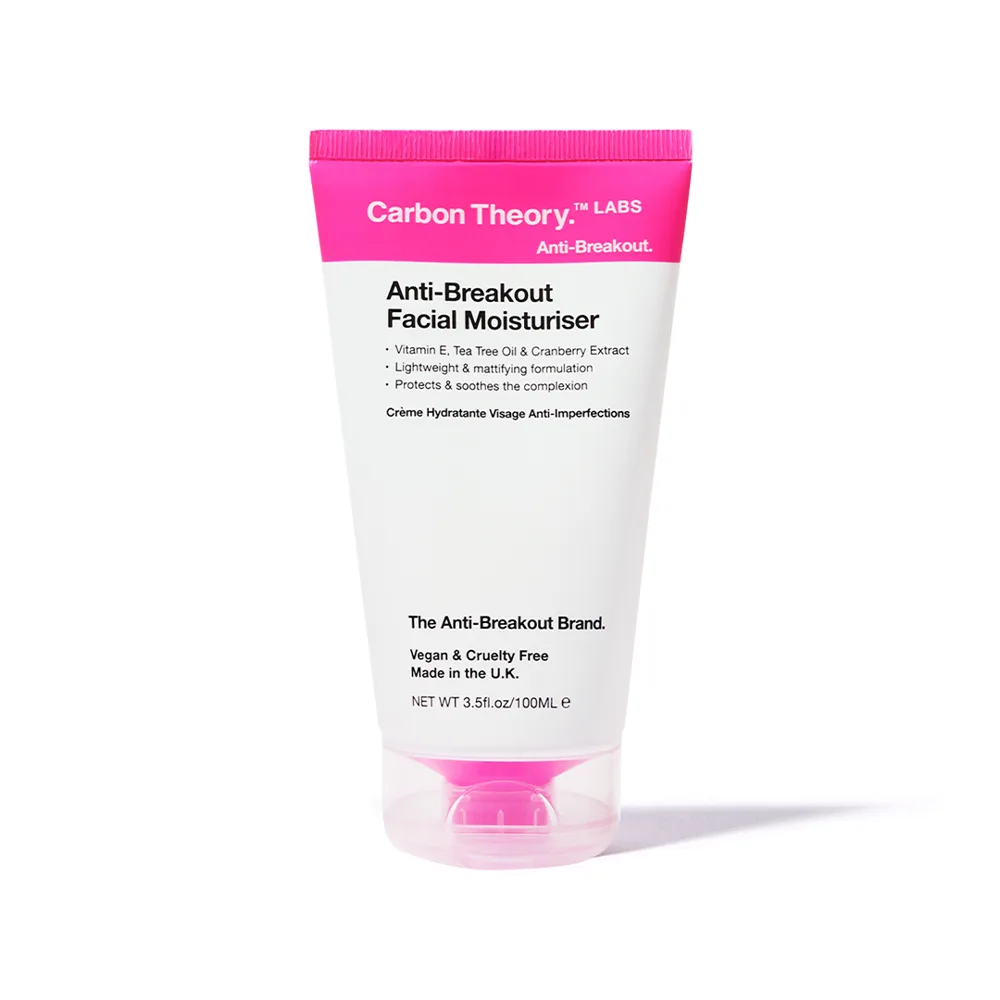
Most acne moisturisers either add hydration or deliver a BHA — this one builds a low daily dose of salicylic acid directly into a cream base, so acne-prone users get an exfoliating leave-on step without juggling a separate acid product. The inclusion of niacinamide and shea butter buffers what would otherwise be a drying treatment.
A smart, wallet-friendly acne moisturiser that builds a low-dose BHA directly into the cream — meaning acne-prone users skip the separate acid step without losing hydration. The tea tree scent and combined irritant load keep it firmly in the oily-and-resilient lane rather than a universal pick.
Note: This cream has mid-volume user data from UK and US retailers. Our scoring reflects both ingredient analysis and the real-world feedback we could verify, and we'll revisit it as more reviews accumulate.
The case for it
Cautions: fragrance; fungal-acne triggers.
Same rule for everyone. “Strong choice” is the verdict on 1,459 of 45,024 concern verdicts across the catalog; rule R2 decided 892 of them. Unchanged since September 5, 2026, engine 5.1.1.
Brand or formulator? Disclose a concentration or correct a fact →
The studies behind the evidence row
The case for it
Cautions: fungal-acne triggers.
Same rule for everyone. “Strong choice” is the verdict on 1,459 of 45,024 concern verdicts across the catalog; rule R2 decided 892 of them. Unchanged since September 5, 2026, engine 5.1.1.
Brand or formulator? Disclose a concentration or correct a fact →
The studies behind the evidence row
The case for it
Cautions: fungal-acne triggers.
What would change this: A declared concentration would move this to a firmer reading of the dose.
Same rule for everyone. “Promising” is the verdict on 7,858 of 45,024 concern verdicts across the catalog; rule R9p decided 7,858 of them. Unchanged since September 5, 2026, engine 5.1.1.
Brand or formulator? Disclose a concentration or correct a fact →
The studies behind the evidence row
The case for it
What would change this: A declared concentration would move this to a firmer reading of the dose.
Same rule for everyone. “Promising” is the verdict on 7,858 of 45,024 concern verdicts across the catalog; rule R9p decided 7,858 of them. Unchanged since September 5, 2026, engine 5.1.1.
Brand or formulator? Disclose a concentration or correct a fact →
The studies behind the evidence row
Does the jobDoes what a moisturizer is for: draws in water, softens and smooths.
A verdict is DermApproved’s assessment of how well a product’s ingredients fit a concern — never a claim about what the product treats. Evidence dots and collected reviews sit beside it and are never blended in. Rules 0.5.1 · evidence table ev-2026.09-r228 · how we decide
Carbon Theory might be the most improbable success story in UK skincare of the last decade. Founder Rachael Henke, worn down by her own adult acne and unable to find anything affordable that worked, built a charcoal-and-tea-tree cleansing bar in her kitchen, pitched it to Boots, watched it sell out repeatedly, and woke up with a viral brand on her hands. This moisturiser is the leave-on companion to that famous bar, a low-dose BHA cream designed to keep doing the bar's job after you have rinsed the wash off, finishing what the cleanser started. Understanding it as that second half of a one-two routine, rather than as a standalone product, is the key to judging whether it is for you.
The formulation choice that earns the Breakout Control name is the 0.5% salicylic acid sitting in the middle of the ingredient list, buffered to a roughly skin-friendly pH. That is low enough to function as a daily leave-on treatment rather than a weekly exfoliant, which means acne-prone users can collapse moisturiser and BHA into a single step instead of juggling a separate acid product. Around that salicylic acid sit niacinamide to reduce sebum and redness, tea tree oil for antimicrobial action against the bacteria implicated in acne, allantoin to calm the visible flush around active breakouts, and panthenol for comfort, with shea butter and triglycerides keeping the cream from drying skin the way a straight salicylic toner would. It is a coherent, acne-specific piece of formulation, not just a standard moisturiser with tea tree dropped in for marketing. The niacinamide in particular is doing double duty, buffering the combined irritation of the acid and the essential oil while targeting the same oil-and-inflammation pathway driving the breakouts in the first place.
The texture sits between a gel and a traditional cream, spreading softer than the ingredient list might lead you to expect, with a non-greasy, slightly velvety finish that oily and combination skin can wear comfortably under SPF. On first application there is a distinct herbal tea tree note that lingers for a few minutes, not unpleasant if you grew up with chemist-shop spot treatments but unmistakably present. If you are scent-sensitive, this one will not work for you, and there is no unfragranced alternative in the range to fall back on. Expect a softer feel after the first few uses, reduced oiliness and fewer small comedones within two to three weeks, and the fuller clarity improvements arriving around six to eight weeks of consistent twice-daily use. That timeline is worth internalizing, because the temptation with any acne product is to declare it a failure at the two-week mark; here the surface comfort comes early but the real clarity is a slow accrual, and the people who report the best results are the ones who simply kept using it morning and night without overthinking it.
Where it genuinely helps is the everyday, low-grade congestion that plagues oily and combination skin. After a couple of weeks, users tend to notice fewer small comedones across the forehead and chin, less midday shine, and a quieter complexion overall, because the 0.5% BHA is doing exactly what a daily low-dose acid should, dissolving the dead cells that plug pores before they surface as visible spots, while the niacinamide regulates oil on top. Where it runs into its limits is deeper inflammatory acne, which a leave-on cream simply cannot reach. If you are getting cystic breakouts, you need a prescription route, and this is far better positioned as the keep-the-calm-going cream alongside that treatment than as the hero of the routine.
Its honest limitation is the irritation budget. A moisturiser that stacks salicylic acid, tea tree oil, and the fragrance terpenes linalool and limonene is not playing a light hand, and that combined load is exactly why the suitability score sits where it does. On resilient oily skin with no barrier trouble, that is perfectly fine. On skin that is already dry, flushed, or recovering from a retinoid, it is a recipe for stinging, and the fragrance-free crowd, which by now includes most modern derm-recommended acne moisturisers, will find this a step backwards. The shea butter softens the experience but also kills any hope of fungal-acne safety, and the small tube disappears fast with twice-daily use.
On value, it is one of the stronger things Carbon Theory sells. An acne-targeted leave-on moisturiser with a measured BHA dose at this price genuinely undercuts most of what shares the active-acne shelf, and although Carbon Theory is still an emerging brand with limited formal clinical validation behind its products, the formula reads as a thoughtful synthesis of well-established single-ingredient evidence rather than guesswork. You are not buying luxurious packaging or a long list of prestige extracts; you are buying a focused acne cream from a small brand that understood the category well enough to build the product around the actual problem. For the right user, oily, breakout-prone, not sensitive, and prepared for the tea tree scent, that is a surprisingly hard combination to beat at this price. For anyone with reactive, dry, or compromised skin, something fragrance-free and niacinamide-centric will treat you better.
The hero actives that drive this product's performance.
| Ingredient | Function | Evidence |
|---|---|---|
| Salicylic Acid (0.5%) | Delivers a low-dose leave-on BHA treatment through the moisturiser itself — dissolves oil and dead cells inside the pore while the niacinamide and panthenol here keep the barrier calm, so acne-prone users get daily exfoliation without stacking a separate acid step. | Regulator-approved for Acne · emerging certainty |
| Niacinamide | Reduces sebum output and redness, which pairs directly with the salicylic acid and tea tree in this formula — the niacinamide buffers the irritation risk from those actives while targeting the same oil-and-inflammation pathway driving breakouts. | Limited for Acne |
| Tea Tree Oil | Adds antimicrobial activity against C. acnes — in this lightweight cream the tea tree sits alongside salicylic acid, so you get a topical one-two punch on bacterial and follicular plugging causes of acne rather than relying on a single mechanism. | Not yet assessed |
| Shea Butter | Replaces the lipids that salicylic acid and tea tree can strip, keeping the texture from drying out acne-prone skin the way traditional gel moisturisers often do. | Not yet assessed |
| Allantoin | Calms the visible redness around active breakouts — important in a leave-on product that includes both an acid and an essential oil, since users applying it twice daily need something to soften the combined irritation load. | Not yet assessed |
Ingredient standings describe the active at treatment-level doses and vehicles; this product's own condition grades weigh its actual formula.
Aqua (Water), Caprylic/Capric Triglyceride, Glycerin, Cetearyl Alcohol, Glyceryl Stearate, Niacinamide, Butyrospermum Parkii (Shea) Butter, Dimethicone, Salicylic Acid, Melaleuca Alternifolia (Tea Tree) Leaf Oil, Tocopheryl Acetate, Allantoin, Panthenol, Sodium Hyaluronate, Xanthan Gum, Phenoxyethanol, Ethylhexylglycerin, Citric Acid, Sodium Hydroxide, Linalool, Limonene
moisturizer
AM & PM
Apply after cleansing and any leave-on treatments. Avoid pairing with additional BHA or strong retinoids on the same day, since this already delivers a daily acid dose.
Softer feel after the first few uses. Reduced oiliness and small comedones within 2-3 weeks. Fuller clarity improvements at 6-8 weeks of consistent twice-daily use.
The evidence base for each individual active in this moisturiser is solid. Salicylic acid at 0.5-2% is well-studied for mild-to-moderate acne vulgaris, with lipophilic penetration into the follicle that allows it to dissolve sebum plugs — multiple dermatology reviews have confirmed its usefulness as a daily keratolytic. Niacinamide at 2-5% has been shown in randomised trials to reduce inflammatory acne lesions comparably to topical clindamycin in at least one controlled study, with the additional benefit of lowering sebum excretion rate. Tea tree oil has moderate evidence for mild inflammatory acne; a commonly cited Australian study compared 5% tea tree oil gel to 5% benzoyl peroxide and found tea tree slower but better tolerated, though the dose in a leave-on moisturiser like this is much lower than those trial concentrations. What's more interesting from a formulation science standpoint is the decision to combine these three at sub-treatment doses and let them share the daily workload, rather than pushing any one to its clinical ceiling. The result is a buffered, lower-risk acne cream — but it's also a reason not to expect the dramatic clearance you'd see from a prescription retinoid or a 2.5% benzoyl peroxide. Studies specific to this exact combination within a moisturiser matrix are not published, so the formulation should be understood as a thoughtful synthesis of single-ingredient evidence rather than a clinically validated combination.
Dermatologists frequently recommend low-dose leave-on BHA moisturisers like this as an entry point for acne-prone patients who find dedicated acid toners too drying. In clinical practice, the 0.5% salicylic acid dose here is high enough to meaningfully affect comedogenesis over weeks of daily use, while being low enough to fit within most patients' irritation tolerance. The tea tree oil is viewed more cautiously — it's one of the more common fragrance allergens in acne products, and derms will often steer sensitive patients toward fragrance-free equivalents. This cream is generally seen as appropriate for mild-to-moderate comedonal acne on resilient skin and a poor fit for patients with co-existing rosacea, eczema, or a known history of essential oil reactions.
Apply a pea-sized amount twice daily after cleansing and any leave-on serums. Start with once-daily use for the first week if you haven't used salicylic acid before, and watch for stinging around the nose and chin. Don't stack with another BHA, retinol, or benzoyl peroxide on the same application — alternate retinoids to opposite nights. Always follow with sunscreen in the morning, since daily salicylic acid does modestly increase photosensitivity. Discontinue if you develop redness or flaking that doesn't settle within a few days.
At roughly $18 for a 50ml tube, this sits in the lower-middle of the acne moisturiser market. The value case is that you're getting both a moisturiser and a daily BHA in one step, which simplifies routines and shaves cost off what would otherwise be two separate products. Compared to prestige acne creams charging double for similar actives, this is obviously a stronger buy. Compared to fragrance-free drugstore niacinamide moisturisers from larger derm-developed brands, the calculation is closer — you're paying a small premium for the BHA integration and the indie branding. No larger size is available, which is a mild frustration if it becomes a staple.
Oily and combination skin with mild-to-moderate comedonal acne, small whiteheads, and visible pores. Users who want their moisturiser to be actively working on breakouts and are comfortable with a herbal tea tree scent. Good fit for teenagers and young adults starting their first acne routine on a budget.
Dry, sensitive, or rosacea-prone skin. Anyone with a compromised barrier, a retinoid already in rotation, or a fragrance allergy. Pregnant users, fungal acne sufferers, and people who prefer unscented products should all look elsewhere.
Ready to try Carbon Theory Breakout Control Facial Moisturiser?
Buy at Amazon ♥Medium-weight cream that spreads out into a soft, slightly velvety finish
Distinct herbal tea tree note
Squeeze tube with a flip cap — hygienic for acne-prone users
Expect a recognisable tea tree scent on first application and a mild tingle if you have any active breakouts — both should settle within minutes. Users with compromised barriers may see short-term tightness.
2 months applied morning and evening to the face
All Year
Carbon Theory launched in 2018 after founder Rachael Henke struggled with adult acne and wanted a simpler, more affordable alternative to the big clinical skincare brands. The charcoal and tea tree cleansing bar went viral in Boots UK, and this moisturiser was built to sit in the same routine — trading the bar's purging wash-off for a leave-on BHA hit.
Carbon Theory was founded in 2018 in the UK by Rachael Henke after her own adult acne struggles, and became a Boots viral success story. The brand focuses on affordable acne care and its cleansing bar has strong anecdotal backing, though formal clinical validation of its products remains limited.
A moisturiser with acne actives will dry you out like a spot treatment.
This formula keeps the salicylic acid at a low 0.5% and pairs it with shea butter, glycerin, and panthenol, so the net effect is closer to a soft cream than a targeted treatment.
For most users, yes — the 0.5% salicylic acid baked into this moisturiser delivers a mild daily BHA dose, which is why stacking it with another leave-on acid usually causes more irritation than benefit.
We'd skip it. It combines salicylic acid with tea tree oil, and both are commonly avoided during pregnancy even at low doses. A fragrance-free niacinamide cream is a safer swap.
Not on the same night. The salicylic acid and tea tree here already layer two irritants, and adding retinol on top typically tips acne-prone skin into peeling. Alternate nights instead.
The scent is a real dose of the essential oil, not a masking fragrance, so it persists for a few minutes after application. If you're scent-sensitive, this won't be the moisturiser for you.
No. It contains shea butter and caprylic/capric triglyceride, which can feed Malassezia. Fungal acne sufferers should look at the Carbon Theory range's lighter wash-off products instead.
Expect slightly smoother texture within a week and a drop in new comedones around the 2-3 week mark. Deeper cystic acne won't clear from a leave-on BHA alone — you'd need a prescription route for that.
Recurring themes our editors read across retailer reviews of this product — summaries in our words, not quotations, and not a substitute for your own patch test.
doesn't feel heavy on oily skin
calms active breakouts
affordable
tea tree scent is strong
too active for sensitive skin
small 50ml tube
Verified answers from our questions library — the nuance a product page cannot carry.