




You Can't Wash Your Way to Less Oily Skin
Sebum is set by hormones and genetics, not by how hard you scrub — which is why the war on shine keeps backfiring.
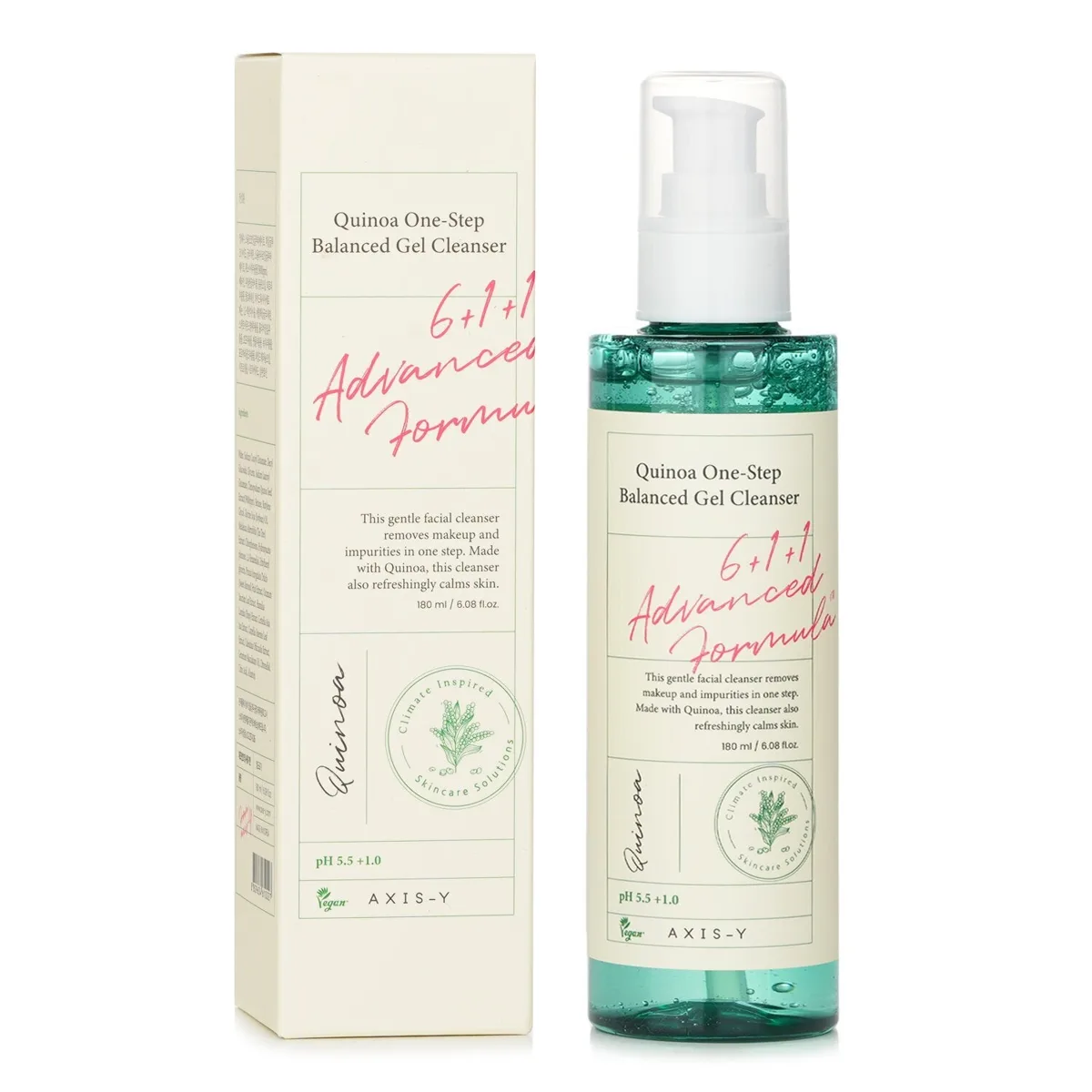
Quinoa extract isn't a headline cleanser ingredient in most brands — it usually shows up in hair or body products. This cleanser uses it in the third INCI slot alongside a coco-betaine and lauryl glucoside surfactant system, producing a gentle cleanse supported by amino acids and antioxidants rather than aggressive surfactants.
A fragrance-free, sulfate-free gel cleanser built around quinoa seed extract and a gentle amphoteric-plus-nonionic surfactant pair. Non-stripping, broadly suitable, and priced reasonably — one of the safest recommendations in the daily gentle cleanser category.
The case for it
What would change this: The same active in a leave-on form would be judged on its evidence rather than its contact time.
Same rule for everyone. “Good choice” is the verdict on 1,938 of 45,024 concern verdicts across the catalog; rule F2 decided 1,938 of them. Unchanged since September 5, 2026, engine 5.1.1.
Brand or formulator? Disclose a concentration or correct a fact →
The studies behind the evidence row
The case for it
What would change this: The same active in a leave-on form would be judged on its evidence rather than its contact time.
Same rule for everyone. “Supporting role” is the verdict on 8,197 of 45,024 concern verdicts across the catalog; rule R6 decided 2,017 of them. Unchanged since September 5, 2026, engine 5.1.1.
Brand or formulator? Disclose a concentration or correct a fact →
The studies behind the evidence row
The case for it
What would change this: The same active in a leave-on form would be judged on its evidence rather than its contact time.
Same rule for everyone. “Supporting role” is the verdict on 8,197 of 45,024 concern verdicts across the catalog; rule R6 decided 2,017 of them. Unchanged since September 5, 2026, engine 5.1.1.
Brand or formulator? Disclose a concentration or correct a fact →
The studies behind the evidence row
The case for it
What would change this: The same active in a leave-on form would be judged on its evidence rather than its contact time.
Same rule for everyone. “Supporting role” is the verdict on 8,197 of 45,024 concern verdicts across the catalog; rule R6 decided 2,017 of them. Unchanged since September 5, 2026, engine 5.1.1.
Brand or formulator? Disclose a concentration or correct a fact →
The studies behind the evidence row
Excellent at the jobDoes what a cleanser is for, on every measure we can take from the label: pH match to skin, surfactant mildness.
A verdict is DermApproved’s assessment of how well a product’s ingredients fit a concern — never a claim about what the product treats. Evidence dots and collected reviews sit beside it and are never blended in. Rules 0.5.1 · evidence table ev-2026.09-r228 · how we decide
Quinoa is an ingredient you expect to find in a breakfast bowl rather than a cleanser. The seed is a complete protein, rich in amino acids and a modest antioxidant profile, and it shows up occasionally in hair products and body washes, but in the K-beauty cleanser category it's extremely rare as a headline ingredient. Most gentle gel cleansers in this tier lead with centella, green tea, rice water, or — for the brands chasing a more clinical vibe — a ceramide mention. Axis-Y made a genuinely distinctive choice when it put quinoa seed extract in the third INCI slot of this cleanser, above most of the secondary surfactants and alongside the main gentle surfactant system. That placement tells you the brand is treating the extract as a functional ingredient, not a decorative one. It fits the house style: Axis-Y is a young Korean-Singaporean indie founded in 2018 on an ingredient-transparency pitch, and choosing quinoa in 2020 was a deliberate swerve away from the centella-saturated cleanser shelf — a differentiator that has since become a brand signature.
The practical effect of leading with quinoa extract, amino acids, and a mild surfactant pair rather than with sulfates is that the cleanser washes off without stripping the barrier. The surfactant architecture is the thing to notice. Coco-betaine is an amphoteric surfactant that carries both positive and negative charges and cleanses gently, and it's paired with lauryl glucoside, a nonionic sugar-based surfactant that's among the mildest detergents in common cosmetic use. Together they produce a low-foaming, pH-balanced cleanse that stays in the 5.5 range and doesn't disrupt the acid mantle the way traditional sulfate-based gel cleansers often do. Sodium methyl cocoyl taurate fills in a secondary cleansing role without adding harshness. The supporting cast of centella asiatica, panthenol, allantoin, niacinamide, and sodium hyaluronate keeps the post-cleanse feel soft and comfortable rather than tight, with betaine adding another osmolyte cushion and a dash of Korean elm root extract — a traditional soothing botanical — as a quiet regional touch. It's a classic well-tuned gentle cleanser formula, with the quinoa extract adding a slight differentiator on top. The whole thing is also fragrance-free, vegan, fungal-acne safe, and considered pregnancy-safe, which makes its compatibility footprint about as wide as a cleanser's can be.
The daily experience is where this cleanser actually earns its reputation. The gel is clear, mildly viscous, and produces a light, fine-bubbled lather when massaged with water — not the dramatic foam of a sulfate cleanser, but a real clean nonetheless. If the modest lather worries you, it shouldn't: foam volume reflects surfactant chemistry, not cleansing power, and the equation of suds with cleanliness is one of the older pieces of skincare folklore that deserves retiring. It rinses off completely in lukewarm water without leaving film or residue, and the skin feels soft and genuinely clean rather than squeaky or stripped. For users coming from a sulfate-based cleanser who had accepted chronic post-cleanse tightness as normal, the switch to this one tends to resolve baseline dehydration within a week or two. Sensitive and reactive skin tolerates it without flushing. Combination and oily skin find it adequate for daily use without feeling greasy afterward. Dry skin gets a cleanse that doesn't make the dryness worse. For once, the 'suitable for all skin types' claim is actually accurate — the skin-match list on this one genuinely spans oily through dry through reactive, which very few cleansers earn.
The suitability framing is important. This cleanser is not a makeup remover — at least not a thorough one. For PM cleansing after a day of sunscreen or makeup, it works as the water-cleanse second step after an oil cleanser or balm, not as a solo cleanse. Using it alone to try to remove heavy SPF or foundation will leave residue and is not the use case the formula is designed for. For AM cleansing, when you're starting from a clean slate overnight, it works well as a standalone gentle step. For users who don't wear makeup or heavy sunscreen, it can function as a single cleanse throughout the day. Be clear about the role and it delivers consistently.
Value is where this product genuinely shines. Twenty-two dollars for 180ml puts the cost per month around five to seven dollars depending on usage — a bottle runs three to four months — which is excellent for a fragrance-free, sulfate-free, amino-acid-supported cleanser with a real formulation story. Comparable gentle cleansers from established derm-adjacent brands often cost fifteen to thirty-five dollars for similar or smaller sizes, so Axis-Y's price here is competitive without being cheap. The pump dispenser works reliably for most (a minority report inconsistent pumping), the bottle is a sensible size for the formula, and the cleanser has been on the market long enough to accumulate serious real-world validation — roughly 8,500 reviews averaging 4.5, plus steady word-of-mouth in K-beauty YouTube and Reddit circles, with users consistently praising the non-stripping wash and sensitive-skin friendliness. For readers building a sensitive-skin-friendly routine who want a daily cleanser that won't compromise the actives in the rest of the routine, this is one of the easiest recommendations in the category.
The hero actives that drive this product's performance.
| Ingredient | Function | Evidence |
|---|---|---|
| Quinoa Seed Extract | Sits in the third INCI slot above most of the secondary surfactants, which is unusually high for a cleanser hero. Quinoa extract contributes amino acids and antioxidants that support the skin's natural moisture factor and soften the cleansing experience. | Not yet assessed |
| Coco-Betaine + Lauryl Glucoside | An amphoteric-plus-nonionic surfactant pair that cleanses through gentle chemistry rather than harsh sulfates. The combination produces a low-foaming, non-stripping cleanse that keeps the skin's pH near the 5.5 range and doesn't compromise the barrier on daily use. | Established mechanism for Dehydration · established mechanism |
| Centella Asiatica Extract | Adds a familiar calming contribution to the cleanser, consistent with the brand's other products. In a rinse-off format the centella effect is modest, but it's real enough to reduce the mild flushing that stronger cleansers sometimes cause. | Limited for Rosacea |
| Panthenol + Niacinamide | A supporting pair that bridges the cleansing and barrier-support functions, keeping the skin from feeling tight or dehydrated after rinsing. This is the formulation detail that separates a good gentle cleanser from a drying one. | Established mechanism for Compromised Skin Barrier · established mechanism |
| Sodium Hyaluronate | Adds a modest humectant contribution to the rinse-off formula, helping the skin retain a baseline level of hydration through the cleansing process. Not a primary active, but useful for keeping the post-cleanse feel comfortable. | Established mechanism for Dehydration · established mechanism |
Ingredient standings describe the active at treatment-level doses and vehicles; this product's own condition grades weigh its actual formula.
Water, Coco-Betaine, Chenopodium Quinoa Seed Extract, Glycerin, Lauryl Glucoside, Sodium Methyl Cocoyl Taurate, 1,2-Hexanediol, Butylene Glycol, Cocamidopropyl Betaine, Polyglyceryl-10 Laurate, Centella Asiatica Extract, Panthenol, Allantoin, Niacinamide, Betaine, Sodium Hyaluronate, Ulmus Davidiana Root Extract, Tocopherol, Polyquaternium-7, Citric Acid, Sodium Benzoate, Disodium EDTA, Ethylhexylglycerin
cleanser
AM & PM
Use as the first or second cleansing step. Pairs well after an oil cleanser in a double-cleanse routine for PM use, or as a single cleanse for AM.
Immediate clean, non-stripped feeling on first use. Over 1-2 weeks of daily use, baseline dehydration from prior stripping cleansers typically resolves.
The formulation science of gentle cleansers rests primarily on surfactant selection and pH. Amphoteric surfactants like coco-betaine and nonionic surfactants like lauryl glucoside are well-characterized in the cosmetic chemistry literature as mild alternatives to traditional anionic sulfates like sodium lauryl sulfate. Work published by Draelos and colleagues in Dermatologic Therapy has reviewed the differential impact of surfactant classes on stratum corneum lipids and established that amphoteric-plus-nonionic pairs produce measurably less disruption to barrier function than sulfate-based cleansers at equivalent cleansing efficacy. pH balance is the other critical factor — the healthy stratum corneum sits at an acidic pH of roughly 4.5-5.5, and cleansers that push skin pH higher disrupt the acid mantle and compromise the enzymes that govern desquamation and barrier repair. This cleanser's 5.5 target is consistent with the evidence-supported range. Quinoa seed extract has a thinner topical literature than the surfactant side of the formula, but its amino acid content and antioxidant profile have been characterized in food science and some cosmetic ingredient literature as potentially supportive of skin hydration and oxidative balance. The inclusion is best interpreted as a functional differentiator supported by traditional and emerging use rather than a rigorously validated clinical active at the finished-product level.
Dermatologists frequently recommend sulfate-free, pH-balanced gel cleansers for patients with sensitive, reactive, or compromised skin, and this formula fits comfortably within the category. Clinical dermatologists mention that the use of coco-betaine and lauryl glucoside as the primary surfactants represents one of the gentler approaches in gel-cleanser formulation, and that fragrance-free positioning is preferable for daily use on reactive skin. Clinicians typically emphasize that a gentle cleanser should be evaluated on post-cleanse feel and pH balance rather than on foaming volume, and that for evening cleansing of sunscreen and makeup residue, a preceding oil cleanser is still recommended even with a well-formulated water-based cleanser like this one.
Apply one or two pumps to damp skin, massage gently across the face for thirty to sixty seconds, then rinse thoroughly with lukewarm water. Use twice daily — once in the morning and once in the evening as the second step of a double cleanse after an oil cleanser or balm. Avoid using hot water, which compromises the barrier regardless of how gentle the cleanser is. Pat the skin dry with a soft towel and follow with the rest of the routine within a minute.
At twenty-two dollars for 180ml, this cleanser offers excellent value for a well-formulated gentle gel. Comparable sulfate-free amino-acid cleansers from established brands often cost in the fifteen-to-thirty-five-dollar range for similar or smaller sizes, and the Axis-Y version is competitive without being a budget pick. With twice-daily use the bottle lasts three to four months, giving a cost per month around six dollars. There's no larger size available, so retail sales are the only way to further reduce per-unit cost. For readers who want a gentle daily cleanser with a real formulation story rather than marketing decoration, the value proposition is among the strongest in the mid-tier K-beauty category.
Readers with sensitive, reactive, combination, or dry skin looking for a fragrance-free daily gel cleanser that doesn't strip the barrier. Particularly strong pick for users switching from sulfate-based cleansers who have been dealing with chronic post-cleanse tightness.
Anyone looking for a one-step cleanser to remove heavy makeup or waterproof sunscreen on its own — use an oil cleanser first. Readers who strongly prefer rich-foaming cleansers aesthetically will find this too low-lather.
Ready to try Axis-Y Quinoa One Step Balanced Gel Cleanser?
Buy at Amazon ♥A thin, mildly viscous clear gel that spreads easily and produces a light, fine, low-volume foam when massaged with water.
Fragrance-free; essentially scentless with a faint clean base note.
180ml pump bottle. The pump dispenses a controlled amount and the bottle is a reasonable size for the price.
Noticeably non-stripping from the first use — skin feels clean and soft rather than tight. Most users report resolving baseline dehydration from prior sulfate cleansers within a week or two of switching.
Approximately 3-4 months applied morning and evening single-cleanse use or PM double-cleanse second step.
All Year
Axis-Y launched this cleanser in 2020 as part of the brand's early lineup expansion, explicitly aiming for a gentle daily option that could work for sensitive skin and still function as the water-cleanse step in a full double-cleanse routine. The quinoa extract positioning was chosen as a differentiator from the centella-dominated K-beauty cleanser category and has become a signature touch.
Axis-Y is an indie Korean-Singaporean brand founded in 2018. Its ingredient-transparency approach has earned a following in the K-beauty community, though long-term independent clinical validation of specific products is still developing.
A cleanser needs lots of foam to really clean.
Foaminess comes from surfactant volume, not cleansing efficacy. Low-foaming gentle cleansers with well-chosen surfactant systems clean just as well as foamy ones, usually with less barrier disruption.
You don't need to double-cleanse if you use a gentle cleanser.
Gentle water-based cleansers like this one are not designed to remove heavy sunscreen, waterproof makeup, or oil-based residue on their own. An oil cleanser or balm is still the correct first step in an evening double cleanse.
Yes — the sulfate-free, fragrance-free, amino-acid-supported formula is one of the more reliable options for sensitive and reactive skin. The amphoteric coco-betaine and nonionic lauryl glucoside surfactant pair is much gentler than traditional SLS-based gel cleansers.
For AM cleansing or when you're not wearing sunscreen or makeup, yes. For PM cleansing after a day of sunscreen or makeup, use an oil cleanser first and follow with this one as the second step.
A little. The lather is light and low-volume rather than dramatic. If you prefer a rich foamy cleanser aesthetically, this isn't one. The low foam is by formulation choice — not a flaw.
Yes. No added fragrance of any kind, which matches the brand's approach for its sensitive-skin-friendly products.
For gentle rinse-off cleansing, yes. For removing eye makeup, a dedicated eye makeup remover or a micellar cleanser is still the better first step.
No — it rinses cleanly with lukewarm water and leaves the skin soft but not coated. Rinse thoroughly, especially around the hairline.
Recurring themes our editors read across retailer reviews of this product — summaries in our words, not quotations, and not a substitute for your own patch test.
Non-stripping
Fragrance-free
Doesn't leave skin tight
Affordable
Works in double-cleanse routines
Great for sensitive skin
Minimal foam compared to typical gel cleansers
Needs a separate oil cleanser for heavy makeup
Pump can be inconsistent
Verified answers from our questions library — the nuance a product page cannot carry.