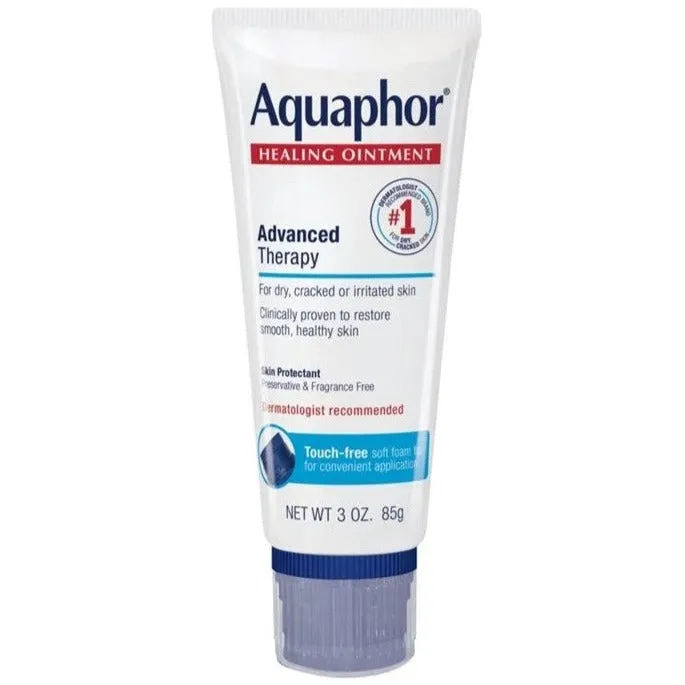
This is Aquaphor's century of healing ointment expertise reformulated into a mess-free stick. The formula swaps the original's lanolin for avocado oil and shea butter — reducing allergen risk while maintaining the petrolatum-based occlusive function that dermatologists trust. The stick format solves the biggest complaint about traditional Aquaphor: greasy hands.
A century of healing ointment expertise distilled into a pocket-sized stick. The lanolin-free, mess-free format solves the biggest complaint about traditional Aquaphor while maintaining the petrolatum-based barrier protection that dermatologists trust — though the tiny size and premium per-ounce price make it an expensive convenience.
Strong choicefor DrynessIn your profileYou chose · Petrolatum is an approved or monograph active for dryness; this stick carries it at 30%.Moderate evidenceGentleNo reviews collected yet
The case for it
Petrolatum is a first-line active — approved, monograph-listed or named in current guidelines — for this concern.
It is present at an effective concentration, declared or high in the ingredient list.
The formula carries none of the triggers this concern is sensitive to.
Same rule for everyone. “Strong choice” is the verdict on 1,459 of 45,024 concern verdicts across the catalog; rule R2 decided 892 of them.
Unchanged since September 5, 2026, engine 5.1.1.
Strong choicefor EczemaIn your profileYou chose · Petrolatum is an approved or monograph active for eczema; this stick carries it at 30%.Moderate evidenceGentleNo reviews collected yet
The case for it
Petrolatum is a first-line active — approved, monograph-listed or named in current guidelines — for this concern.
It is present at an effective concentration, declared or high in the ingredient list.
The formula carries none of the triggers this concern is sensitive to.
Same rule for everyone. “Strong choice” is the verdict on 1,459 of 45,024 concern verdicts across the catalog; rule R2 decided 892 of them.
Unchanged since September 5, 2026, engine 5.1.1.
R2 — A regulator- or guideline-recognised first-line active, declared at an effective strength, in a form the claim supports. · the full register
Carrying active
Petrolatum
Standing
first line — a regulator recognises it for this use; its mechanism is established; trials support it · per 21 CFR § 347.50 - Labeling of skin protectant drug products. (US Code of Federal Regulations (Legal Information Institute, Cornell Law School)), opened July 27, 2026
Form
adequate (declared 30%) — studied range up to 100%, from the OTC monograph or label; needs leave-on contact; judge it after ~1 weeks
Tolerability
gentle
Row checked
against its sources on July 27, 2026 (evidence table ev-2026.09-r228)
Good choicefor Compromised Skin BarrierIn your profileYou chose · Petrolatum is a reference standard by mechanism for compromised skin barrier; this stick carries it at 30%.Moderate evidenceGentleNo reviews collected yet
The case for it
Petrolatum has trial-supported standing for this concern.
It is present at an effective concentration, declared or high in the ingredient list.
The formula carries none of the triggers this concern is sensitive to.
Same rule for everyone. “Good choice” is the verdict on 9,564 of 45,024 concern verdicts across the catalog; rule R5 decided 9,072 of them.
Unchanged since September 5, 2026, engine 5.1.1.
Good choicefor SensitivityIn your profileYou chose · No fragrance, drying alcohol, declarable allergens or sensitising preservatives in this stick — the profile sensitive skin looks for.Not yet assessedGentleNo reviews collected yet
The case for it
Petrolatum has no evidence row yet for this concern — it is in the research queue.
The formula carries none of the triggers this concern is sensitive to.
What would change this: A researched evidence row for the lead active would replace this with a verdict.
Same rule for everyone. “Good choice” is the verdict on 1,938 of 45,024 concern verdicts across the catalog; rule F2 decided 1,938 of them.
Unchanged since September 5, 2026, engine 5.1.1.
Good choicefor Post-ProcedureIn your profileYou chose · Petrolatum is a reference standard by mechanism for post procedure; this stick carries it at 30%.Moderate evidenceGentleNo reviews collected yet
The case for it
Petrolatum has trial-supported standing for this concern.
It is present at an effective concentration, declared or high in the ingredient list.
The formula carries none of the triggers this concern is sensitive to.
Same rule for everyone. “Good choice” is the verdict on 9,564 of 45,024 concern verdicts across the catalog; rule R5 decided 9,072 of them.
Unchanged since September 5, 2026, engine 5.1.1.
Also listed for Winter Skin — the actives here (Petrolatum, Panthenol (Vitamin B5) are in our research queue for that concern; there is no verdict until their evidence rows are written. That is a gap in our table, not a mark against the product.
A verdict is DermApproved’s assessment of how well a product’s ingredients fit a concern — never a claim about what the product treats. Evidence dots and collected reviews sit beside it and are never blended in.
Rules 0.5.1 · evidence table ev-2026.09-r228 · how we decide
Assessment
Pros & Cons
Pros
✓ Mess-free twist-up format solves the biggest usability complaint about traditional Aquaphor
✓ Lanolin-free reformulation reduces allergen risk compared to the original Healing Ointment
✓ Ten-ingredient formula with panthenol-bisabolol synergy provides clinically supported barrier repair
✓ FDA-registered OTC drug with 30% petrolatum as verified active ingredient
✓ Versatile multi-use for lips, cuticles, dry patches, elbows, heels, and chafing prevention
✓ Backed by a century of dermatological trust and Beiersdorf's clinical heritage
✓ HSA/FSA eligible as a classified OTC skin protectant
Cons
✗ Small 0.65 oz size at 0-13 makes this expensive per ounce compared to the full-size ointment
✗ Stick tube appears only half-full — a persistent consumer complaint that feels ungenerous
✗ Lower petrolatum concentration (30% vs 41%) provides less heavy-duty occlusion than the original
✗ Can soften or melt in warm environments, limiting warm-weather portability
Review
Full Review
Aquaphor Healing Ointment has been a medicine cabinet staple since Calvin Coolidge was president. That is not marketing hyperbole — the brand literally dates to 1925, and in the century since, its petrolatum-based formula has become so deeply embedded in dermatological practice that "put some Aquaphor on it" might as well be the eleventh commandment of skincare. Dermatologists prescribe it after laser treatments. Tattoo artists recommend it for fresh ink. Parents slather it on diaper rash. It is the duct tape of the skincare world.
The problem, of course, has always been the mess. Scooping healing ointment from a tub leaves your hands coated in a greasy film that transfers to everything you touch — your phone, your steering wheel, the document you were just about to sign. Aquaphor recognized this was their biggest consumer complaint and in 2021 finally answered it with the Healing Balm Stick: the same healing philosophy, in a twist-up format that keeps your hands clean.
The formula is not identical to the original, and the differences are worth understanding. The stick uses 30% petrolatum versus the ointment's 41%, which means slightly less heavy-duty occlusion. More significantly, it replaces lanolin alcohol — the emollient backbone of the original formula — with avocado oil and shea butter. Lanolin is an excellent skin conditioner, but it is also one of the more common contact allergens in skincare. By removing it, Aquaphor made the stick accessible to the small but meaningful percentage of people who develop sensitivity to lanolin derivatives.
The ten-ingredient list reads like a masterclass in restraint. Petrolatum provides the occlusive barrier. Caprylic/capric triglyceride and avocado oil deliver lightweight emollience. Microcrystalline wax and beeswax give the stick its solid structure. Shea butter adds richness. Panthenol and bisabolol provide the active soothing — and here the formula gets interesting, because research has shown these two ingredients work synergistically, reducing transepidermal water loss and erythema more effectively together than either achieves alone. Glycerin and tocopherol round out the list with basic humectant and antioxidant functions. There is nothing here that does not need to be here.
Since petrolatum anxiety is perennial, the record should be stated plainly: the molecule carries a comedogenicity rating of zero — it physically cannot penetrate a pore — and a century of dermatological use backs its safety. The acne caution attached to products like this is about technique, not chemistry: dragging a rich occlusive across breakout-prone cheeks traps whatever sits underneath. Used as intended, dabbed on discrete dry patches rather than swiped everywhere, it earns its hypoallergenic reputation.
The application experience is where the stick format earns its premium. It glides on with surprising smoothness — creamier and less waxy than you might expect from a petrolatum-based solid. The avocado oil and shea butter melt on skin contact, creating a thin protective layer that feels more like a rich moisturizer than an ointment. On chapped lips, it provides immediate relief. On cracked cuticles, it softens and protects. On dry patches around the nose during cold season, it soothes without the greasy residue that makes you look like you forgot to blot.
The versatility is genuine. This is a product that lives in your coat pocket in winter and gets pulled out dozens of times a day — for lips, for hands, for that dry patch on your knuckle that cracks every time you wash your hands. As a chafing preventative, it glides on cleanly and stays in place. For eczema patches, it provides a mess-free alternative to slathering ointment.
Its place in a routine is the anchor leg. Occlusives go last — over moisturizer, over a hyaluronic or ceramide layer — because their whole job is sealing in what came before; applied to bare skin they lock in nothing. Keep it a spot tool rather than a face cream: lips, cuticles, nostril edges, knuckles. The payoff schedule is quick by skincare standards — relief on contact, visible improvement in cracked spots within one to three days, stubborn chronic patches within a week or two. It's pregnancy-safe, and with a twenty-four-month period-after-opening, the stick that lives in your coat pocket this winter will still be legitimate next winter.
Here is where the honest reckoning begins: this product is expensive for what you get. At 0-13 for 0.65 ounces, the per-ounce price is significantly higher than the full-size Healing Ointment. And the stick tube appears to be only half-full — a consistent complaint across reviews that feels particularly stingy at this price point. If you use it across lips, hands, cuticles, and dry patches throughout the day, the stick can last as little as four weeks. For a family of Aquaphor users, that adds up quickly.
The lower petrolatum concentration means this is not a direct replacement for the original ointment in medical contexts. Post-procedure care, fresh tattoo healing, and severe barrier damage still call for the 41% petrolatum formula. The stick is designed for maintenance and convenience — the everyday dry patches, the commuter's chapped lips, the office worker's cracked hands — not for acute skin rescue.
The public scorecard is about as good as this category gets: thousands of reviews averaging 4.7, an FDA-registered OTC skin protectant designation, and praise that circles the same virtues — mess-free, endlessly versatile, gentle enough for the crankiest skin. The gripes, notably, are all economics rather than performance: the half-full-looking tube, the small size, the per-ounce premium. People love what it does; they just wish there were more of it.
Beiersdorf has taken the most trusted name in healing ointment and made it portable without fundamentally compromising what makes it work. The lanolin-free reformulation is a genuine improvement for sensitive individuals. The stick format solves a real usability problem. Whether the convenience premium justifies the price-per-ounce depends on how many times a day you reach for it — and if you live in a cold, dry climate, the answer is probably enough to make it worth it.
Formula
Key Ingredients
The hero actives that drive this product's performance.
The FDA-registered active ingredient, providing an occlusive barrier that reduces transepidermal water loss by up to 98%. Research has shown petrolatum does more than passively block — it actively upregulates antimicrobial peptides and barrier differentiation markers like filaggrin and loricrin, making it a therapeutic ingredient rather than merely a sealant.
Regulator-approvedfor Dryness · established mechanism
Rich in oleic acid and phytosterols, avocado oil provides emollient softening that complements the petrolatum's occlusive function. In this stick format, it replaces the lanolin found in the original Healing Ointment, offering similar barrier-nourishing benefits with lower allergen risk.
A rich emollient that adds creaminess and skin-conditioning properties to the stick format. Shea butter's triterpene esters provide anti-inflammatory activity that supports the healing function of the petrolatum base.
Established mechanismfor Dryness · established mechanism
Penetrates the skin and converts to pantothenic acid, attracting and holding moisture within skin cells. Working with the bisabolol in this formula, panthenol has been shown to reduce TEWL and erythema more effectively than either ingredient alone — a synergy that accelerates barrier recovery.
A chamomile-derived anti-irritant that calms redness and inflammation. In combination with panthenol, clinical data shows enhanced reduction in transepidermal water loss and erythema compared to either ingredient solo, making this pairing particularly effective for irritated or post-procedure skin.
Not yet assessed
Ingredient standings describe the active at treatment-level doses and
vehicles; this product's own condition grades weigh its actual formula.
Save this for the last step in your routine to seal in moisture and protect compromised skin. Use on specific dry patches, chapped lips, cracked cuticles, or areas of irritation rather than as an all-over face product. Can be applied over any moisturizer for enhanced occlusion.
Results Timeline
Immediate barrier protection and relief from dryness on first application. Chapped, cracked skin shows visible improvement within 1-3 days of consistent use. Chronic dry patches and post-procedure healing typically improve significantly within 1-2 weeks.
Pairs Well With
any moisturizerceramide creamshyaluronic acid serums
Petrolatum is the most extensively studied occlusive agent in dermatology, with a safety and efficacy record spanning over a century. At 30% concentration in this formula, it forms a semi-permeable barrier that reduces transepidermal water loss by up to 98% while still allowing the skin to "breathe." Crucially, research published by Czarnowicki et al. in the Journal of Allergy and Clinical Immunology (2016) demonstrated that petrolatum is far from inert — it actively upregulates antimicrobial peptides (human beta-defensin 2 and 3), increases expression of key barrier differentiation markers (filaggrin and loricrin), and reduces T-cell infiltrates in atopic dermatitis skin. This means petrolatum does not merely seal the barrier; it actively helps rebuild it.
Ghadially et al. confirmed in the Journal of the American Academy of Dermatology (1992) that petrolatum accelerates barrier recovery after disruption rather than impeding it — overturning an earlier misconception that occlusives slow natural repair by making the skin "lazy." The reality is precisely the opposite: by maintaining optimal hydration levels, petrolatum allows the enzymatic processes of barrier repair to function at their most efficient.
The panthenol-bisabolol combination in this formula has its own evidence base. Camargo et al. published in the Journal of Cosmetic Science (2011) that panthenol at 1-5% produces significant decreases in TEWL after 30 days of application. When combined with bisabolol, the synergy has been shown to produce greater reductions in both TEWL and erythema than either ingredient alone at day 14 — a clinically meaningful enhancement that justifies the inclusion of both in this healing formula.
Bisabolol, derived from chamomile, has anti-inflammatory activity through inhibition of the cyclooxygenase pathway. In this formulation, it complements the petrolatum's barrier function with active anti-inflammatory support, particularly relevant for irritated, chapped, or post-procedure skin.
Dermatologists have recommended Aquaphor products for decades, and the Healing Balm Stick extends that trust into a more practical format. Most dermatologists mention that the 30% petrolatum concentration provides clinically meaningful barrier protection, and the removal of lanolin eliminates a common source of allergic contact dermatitis that occasionally limited the original formula's universal recommendation. Dermatologists commonly recommend this stick for patients managing chronic dry skin conditions, post-procedure recovery, and winter-related barrier compromise, with the convenience factor improving compliance in patients who previously found ointment application too messy for consistent daytime use.
Guidance
Usage & Recommendations
How to Use
Twist up a small amount and glide directly onto dry, chapped, or irritated skin. Apply to lips, cuticles, elbows, heels, around the nose, or any areas prone to dryness and cracking. Can be applied over moisturizer as a final occlusive seal. For chafing prevention, apply to areas of friction before physical activity. Reapply as needed throughout the day. Cap after each use to prevent the stick from drying out or collecting debris.
Value Assessment
At 0-13 for 0.65 oz, this is a significant premium over the original Healing Ointment on a per-ounce basis. You are paying for the convenience of the stick format and the lanolin-free reformulation. For occasional targeted use on lips and small dry patches, a single stick can last 6-8 weeks and represents reasonable value. For heavy users who apply across multiple body areas daily, the cost adds up quickly — consider keeping the original tub at home and the stick for portable use to optimize the cost-to-convenience ratio.
Who Should Buy
Anyone who loves Aquaphor but hates the mess. Ideal for people with chronically dry hands, chapped lips, or eczema patches who need portable, mess-free barrier protection. Excellent for cold-weather commuters, frequent hand-washers, and anyone who wants healing ointment convenience without greasy fingers.
Who Should Skip
Those seeking a heavy-duty healing ointment for post-procedure care or severe barrier damage — the original 41% petrolatum formula is better suited. Vegan consumers should note this contains beeswax. Budget-conscious users who primarily use Aquaphor at home may find the per-ounce premium hard to justify over the tub format.
Solid balm in a twist-up stick that glides on smoothly and melts slightly on skin contact. Lighter and less greasy than the original Healing Ointment due to the reformulated base with avocado oil and shea butter instead of lanolin.
Scent
Fragrance-free with a barely perceptible faint waxy scent from the beeswax component.
Packaging
Compact twist-up stick in Aquaphor's signature blue-and-white branding. Cap included. Travel-friendly size that fits in a pocket, purse, or desk drawer. Similar form factor to a large lip balm.
Finish
dewynon-greasy
What to Expect on First Use
On first use, the balm glides easily and deposits a thin, protective film that feels smooth rather than heavy. The avocado oil and shea butter give it a creamier, less waxy feel than expected from a petrolatum-based stick. Immediate relief from tightness and cracking. No stinging or irritation.
How Long It Lasts
4-8 weeks depending on frequency of use and number of application areas
FDA OTC Drug RegistrationHSA/FSA EligibleHypoallergenic
Background
The Story Behind This Product
Aquaphor has been the go-to healing ointment for dermatologists and hospitals since 1925, but its greasy tub format limited its portability. In 2021, Beiersdorf launched this stick format to address the most consistent consumer request: a way to use Aquaphor on-the-go without the mess. The reformulation also removed lanolin — a common allergen — making it accessible to the small percentage of users who react to the original.
About Aquaphor Legacy Brand (20+ years)
Aquaphor was introduced in 1925 by Beiersdorf Inc. and has over a century of use in clinical and consumer settings. The brand is the #1 dermatologist-recommended for dry, cracked skin and its Healing Ointment is a staple in post-procedure care protocols. FDA-registered OTC drug products.
Brand founded: 1925 · Product launched: 2021
Myth vs. Reality
Common Myths
Myth
Petrolatum clogs pores and causes breakouts.
Reality
Petrolatum has a comedogenicity rating of 0 and has been used safely in dermatological practice for over a century. Research published in the Journal of Allergy and Clinical Immunology (2016) showed petrolatum actually upregulates barrier repair genes rather than smothering skin. Breakouts attributed to petrolatum are typically caused by trapping existing comedogenic ingredients underneath.
Myth
Petroleum jelly is just a cheap filler ingredient with no real benefits.
Reality
Petrolatum is one of the most extensively studied and effective skin protectants available. It reduces transepidermal water loss by up to 98%, upregulates antimicrobial peptides, and accelerates barrier recovery. The FDA classifies it as an active drug ingredient for skin protection — a designation that requires clinical evidence of efficacy.
FAQ
Frequently Asked Questions
How is the Healing Balm Stick different from regular Aquaphor Healing Ointment?
The stick uses 30% petrolatum (vs 41% in the ointment) and replaces lanolin with avocado oil and shea butter. This makes it less greasy, lanolin-free (lower allergen risk), and mess-free in a twist-up format. The trade-off is slightly less heavy-duty occlusion than the original ointment.
Can I use this on my face?
Yes — the fragrance-free, hypoallergenic formula is safe for facial use on specific dry patches, around the nose during cold season, or as a lip balm. However, those with acne-prone skin should use it sparingly on the face, as the occlusive layer can trap existing comedogenic products underneath.
Is the Aquaphor Healing Balm Stick good for tattoo aftercare?
While Aquaphor Healing Ointment is commonly recommended for tattoo aftercare, the balm stick's lower 30% petrolatum concentration and different emollient base make it less ideal for fresh tattoos. The original ointment provides heavier occlusion better suited for wound healing. Consult your tattoo artist.
Does this contain lanolin?
No — unlike the original Aquaphor Healing Ointment, this stick formula does not contain lanolin alcohol. It uses avocado oil and shea butter instead, making it suitable for people with lanolin sensitivities while maintaining effective barrier protection.
Is this HSA/FSA eligible?
Yes — as an FDA-registered OTC skin protectant drug, the Aquaphor Healing Balm Stick qualifies for Health Savings Account (HSA) and Flexible Spending Account (FSA) reimbursement.
Reviews
What Reviewers Tend to Say
Recurring themes our editors read across retailer reviews of this product — summaries in our words, not quotations, and not a substitute for your own patch test.
Common Praise
Mess-free stick format eliminates greasy hands — perfect for on-the-go application
Versatile multi-use for lips, cuticles, dry patches, elbows, heels, and chafing prevention
Effective immediate relief for chapped, cracked, or wind-burned skin
Fragrance-free and hypoallergenic — suitable for the most sensitive skin
Compact travel-friendly size fits in a pocket or purse
Glides on smoothly without pulling or tugging on irritated skin
Common Complaints
Stick tube appears only half-full of product — feels like poor value for the price
Small 0.65 oz size runs out quickly with regular use across multiple areas
Pricy per ounce at 0-13 for less than one ounce of product
Can soften or melt in warm weather or if left in a hot car
Not as heavy-duty as the original Healing Ointment due to lower petrolatum concentration (30% vs 41%)
Notable Endorsements
#1 Dermatologist Recommended brand for dry cracked skinGood Housekeeping Seal (brand)FDA-registered OTC Skin Protectant
Occupational hand dermatitis is one of the most common work-related diseases on earth, it follows a script, and the cheapest fix works only if you start it before the skin splits.
Every post that dismantles a home remedy owes the reader a replacement. The honest replacement list is embarrassingly cheap, and one item on it is cheaper still — it is a bath.
Chamomile's active fraction inhibits the same inflammatory pathways a steroid does, at a fraction of the strength — and the version that works best is grubbed out of Brazilian cerrado, while the synthetic substitute is half inactive by construction.
Aug 28, 2026· 9 min
Questions people ask about Eczema
Verified answers from our questions library — the nuance a product page cannot carry.
Products, answers, therapy guides, tools and articles in one search. Brand names,
slang and abbreviations all work — accutane finds isotretinoin, bacne finds truncal acne.