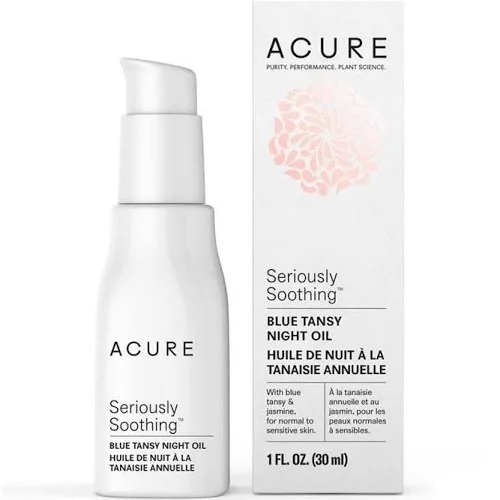
Most blue tansy face oils are priced as luxury items because the essential oil itself is expensive. Acure's version delivers an actual blue tansy oil at a budget price by anchoring the formula with caprylic/capric triglyceride and standard carrier oils, then layering the more expensive blue tansy and botanical essential oils on top. The result is a real blue tansy product at roughly a third of the prestige price — but with the same essential-oil sensitivity caveats.
Acure Seriously Soothing Blue Tansy Night Oil Review
Aromatic Comfort Oil
oiloilclean beautyParaben FreeCruelty FreeVegan
A budget-friendly blue tansy face oil that delivers the aromatic ritual and visible blue color of the prestige category at a fraction of the price. The essential oil load means the soothing marketing doesn't quite hold up for very sensitive skin — but for normal-to-dry skin that loves a botanical face oil, it's a fair pick.
Good choicefor DrynessIn your profileYou chose · Caprylic/Capric Triglyceride is a reference standard by mechanism for dryness; this oil carries it high in the ingredient list.Moderate evidenceStandard tolerabilityNo reviews collected yet
The case for it
Caprylic/Capric Triglyceride has trial-supported standing for this concern.
It is present at an effective concentration, declared or high in the ingredient list.
The formula carries no trigger this concern is sensitive to, with the cautions noted.
Cautions: fragrance.
Same rule for everyone. “Good choice” is the verdict on 9,564 of 45,024 concern verdicts across the catalog; rule R5 decided 9,072 of them.
Unchanged since September 5, 2026, engine 5.1.1.
Avoidfor Compromised Skin BarrierIn your profileYou chose · This formula carries fragrance — a known trigger for compromised skin barrier — so it is not a fit however good its actives are.Not yet assessedCarries a triggerNo reviews collected yet
The case for it
Caprylic/Capric Triglyceride has no evidence row yet for this concern — it is in the research queue.
The formula carries a known trigger for this concern, which decides the verdict before any efficacy question.
What would change this: Removing the trigger named above would let the actives be judged on their own.
Same rule for everyone. “Avoid” is the verdict on 1,909 of 45,024 concern verdicts across the catalog; rule R1 decided 1,304 of them.
Unchanged since September 5, 2026, engine 5.1.1.
R1 — Safety outranks praise (MASTER-PLAN §1.7). A condition-weighted trigger (multiplier ≥ 2 in condition-fit-matrix) decides the verdict before any efficacy question. · the full register
Also listed for Dehydration and Winter Skin — the actives here (Caprylic/Capric Triglyceride, Argan Oil, Blue Tansy, Chamomile Extract) are in our research queue for those concerns; there is no verdict until their evidence rows are written. That is a gap in our table, not a mark against the product.
As a oilNot judged: what a oil is for — fatty-acid profile, seals moisture, resists going rancid — cannot yet be measured from the ingredient list (only pore and malassezia risk can).
A verdict is DermApproved’s assessment of how well a product’s ingredients fit a concern — never a claim about what the product treats. Evidence dots and collected reviews sit beside it and are never blended in.
Rules 0.5.1 · evidence table ev-2026.09-r228 · how we decide
Assessment
Pros & Cons
Pros
✓ Real blue tansy at a budget price compared to prestige versions
✓ Lightweight caprylic/capric base absorbs without heaviness
✓ Pleasant aromatic ritual for face oil enthusiasts
✓ Vitamin E adds antioxidant support
✓ Beautiful blue color and herbal scent for sensory experience
✓ EWG Verified, vegan, and cruelty-free
Cons
✗ Essential oils contradict the soothing-for-sensitive-skin marketing
✗ Rose, chamomile, and yarrow are common cosmetic sensitizers
✗ Sweet almond and castor oils may be comedogenic for acne-prone skin
✗ Strong herbal scent is divisive
✗ Not pregnancy-safe due to multiple essential oils
✗ Not fungal-acne (malassezia) safe
Review
Full Review
There's a marketing contradiction baked into the entire essential-oil-driven facial oil category, and Acure's Seriously Soothing Blue Tansy Night Oil is a textbook case. The product is named for its soothing properties and explicitly marketed as gentle, calming, and barrier-supportive — language that strongly implies it's a good choice for sensitive skin. The actual formulation includes blue tansy oil, rose flower oil, chamomile flower oil, yarrow oil, jasmine extract, and rosemary leaf extract. Blue tansy, rose, and chamomile are all on dermatology's standard lists of common cosmetic sensitizers. The compounds that give them their distinctive scents — linalool, limonene, citronellol — are allergens regulated by the EU and required to be disclosed in cosmetics for that reason.
This isn't a scandal; it's a tension worth naming. Essential oils can absolutely be soothing for skin that tolerates them, and the natural anti-inflammatory compounds in blue tansy (chamazulene) and chamomile (bisabolol) are real. But "soothing" as a category covers two very different things: soothing-because-anti-inflammatory and soothing-because-non-irritating. This oil leans into the first definition while implying the second. For people with truly reactive skin, perioral dermatitis, rosacea, or essential oil sensitivities, the marketing language is misleading. For people with dry, normal, or moderately resilient skin who happen to enjoy aromatic botanical oils, the formula does what it promises.
With that caveat established, what's actually in the bottle is decent. The base is caprylic/capric triglyceride — a lightweight coconut-derived fractionated oil that absorbs cleanly without the heavy occlusive feel of pure coconut oil and has a much lower comedogenic profile. Sweet almond oil and jojoba oil follow as the main carrier oils, with castor oil and argan oil rounding out the rich emollient layer. Jojoba is particularly good in facial oils because it mimics the skin's natural sebum chemistry, allowing it to absorb without sitting on the surface. Tocopherol (vitamin E) provides antioxidant support and helps stabilize the oils against oxidation.
The blue tansy itself sits relatively low on the INCI, which suggests a small but meaningful presence rather than the central concentration the marketing implies. That's typical for blue tansy products — the essential oil is expensive, and even prestige brands use it sparingly. The blue color you see in the bottle is from the chamazulene molecule and is the most visible signature of the ingredient. It doesn't transfer to your skin during application, which is sometimes a disappointment for users expecting a more dramatic experience.
On application, the oil feels lightweight despite the rich ingredient deck. The caprylic/capric triglyceride base does the heavy lifting on absorption — it sinks in without leaving a slick film, and skin feels comforted rather than coated. The herbal scent is distinctive: chamomile-forward with a sweet rose note and the unmistakable green-aromatic character of blue tansy. People either love it or find it overwhelming. It's one of the most opinionated scents in the budget facial oil category, and you should sniff before committing.
For dry or dehydrated skin during winter or in dry climates, this oil is a perfectly reasonable last-step seal in a nighttime routine. Layer it over your moisturizer to lock in hydration, or use it as a treatment oil between cleansing and moisturizing for skin that's especially parched. After 1-2 weeks of consistent nightly use, dryness should improve and skin should feel more comfortable on waking. The carrier oils do the real work here — the essential oils contribute aromatic and soothing color, but they're not the reason the dryness improves.
Where this oil doesn't work is for the audience the marketing implies. Sensitive skin? The essential oils mean a meaningful percentage of users will react. Acne-prone skin? The sweet almond and castor oils have moderate comedogenic potential. Pregnant users? Multiple essential oils on the not-recommended list, including blue tansy, rose, and rosemary. Fungal acne? The fatty acid profile of these oils can feed Malassezia. So despite the soothing branding, the actual ideal user is normal-to-dry skin without active sensitivities or breakouts — not exactly the population you'd think of when you read "seriously soothing."
At $20 for one ounce, the price is fair for a blue tansy facial oil. Prestige blue tansy oils run $50-$200 at the same volume. The Acure version doesn't try to compete with luxury brands on concentration or ingredient sourcing, but it delivers a real blue tansy product at an accessible price point. That's a value proposition for the right user — someone who wants the ritual and aromatic experience of a botanical facial oil without the prestige markup.
As a thoughtful budget alternative to luxury blue tansy oils, this product earns its place. As the soothing essential it claims to be, it overpromises. Buy it for what it actually is: a pleasant aromatic carrier oil blend with blue tansy as a feature ingredient, well-suited for dry skin in dry seasons, and not the right pick if your skin reacts to fragrance or essential oils. Read the marketing skeptically, patch test before committing, and the math can work out.
Formula
Key Ingredients
The hero actives that drive this product's performance.
The lightweight base oil that anchors this blend. Derived from coconut, it has a much lower comedogenic profile than coconut oil itself and absorbs quickly without leaving heavy residue, giving this oil its lightweight character despite the rich emollient ingredient list.
Established mechanismfor Dryness · established mechanism
The two main carrier oils provide the cream's emollient body. Jojoba mimics the skin's natural sebum chemistry closely, helping it absorb without feeling slick, while sweet almond contributes oleic acid and vitamin E for additional barrier support.
Established mechanismfor Dryness · established mechanism
The hero ingredient and source of the oil's signature blue color. Blue tansy contains chamazulene, a compound with documented anti-inflammatory activity. In this oil it sits low on the INCI, suggesting a small but meaningful presence — enough for the soothing claim and the color, not so much that it overpowers the carrier base.
Adds vitamin E and additional fatty acid diversity to the blend. Argan is one of the better-studied facial oils and contributes to the formula's barrier-supporting and soothing character without weighing it down.
Three traditional botanicals associated with calming reactive skin. Together with the blue tansy, they form the formula's soothing botanical complex — providing fragrance, color, and a layered approach to the anti-irritation goal.
Not yet assessed
Ingredient standings describe the active at treatment-level doses and
vehicles; this product's own condition grades weigh its actual formula.
Apply 3-5 drops as the final step of a nighttime routine after moisturizer, or layer between moisturizer and SPF in winter. The essential oils mean some sensitive users may not tolerate it — patch test before full use.
Results Timeline
Immediate softness and barrier comfort overnight. Long-term soothing benefits accumulate over weeks of consistent use as part of a barrier-supportive routine. Visible dryness improvement typically within 1-2 weeks.
Blue tansy (Tanacetum annuum) essential oil contains chamazulene, a sesquiterpene compound with documented anti-inflammatory activity in laboratory studies. Research on chamazulene has shown it can inhibit certain inflammatory pathways in vitro, providing a mechanistic basis for the soothing claims associated with blue tansy products. However, the concentration of chamazulene delivered through topical application of a typical blue tansy facial oil is small, and clinical evidence specifically tied to topical anti-inflammatory effects in humans is more limited than the marketing implies.
The carrier oils in this formulation have stronger and more consistent evidence for skin barrier support. Caprylic/capric triglyceride is a fractionated coconut-derived ester widely used in cosmetic formulation for its light texture, low irritation profile, and reduced comedogenicity compared to whole coconut oil. Jojoba oil is one of the most studied facial oils, with research supporting its ability to integrate with sebum chemistry and support barrier function without heavy occlusion. Argan oil contains a high concentration of vitamin E and unsaturated fatty acids and has documented benefits for hydration and skin comfort.
The essential oil components — rose, chamomile, yarrow, jasmine, rosemary — are well-documented cosmetic sensitizers in dermatology databases. The compounds responsible for their characteristic scents (linalool, limonene, citronellol, geraniol) are listed in EU cosmetic regulations as required allergen disclosures because they trigger contact dermatitis at meaningful rates in sensitized individuals. The frequency of reaction varies by individual and concentration, but the ingredients are not categorically gentle — they should be patch tested before use on reactive skin.
Dermatologist Perspective
Dermatologists generally view facial oils as supportive emollient products that can be helpful for dry or barrier-compromised skin, but they consistently caution patients about essential oil content. Working dermatologists typically recognize that essential oils are among the most common causes of cosmetic contact dermatitis, and that products marketed as soothing or gentle can ironically be the most irritating for truly sensitive skin. For patients with rosacea, perioral dermatitis, eczema, or fragrance sensitivities, dermatologists typically recommend essential-oil-free facial oils with simple carrier bases like squalane or jojoba. For dry skin without active reactivity, a blend like this one can be an enjoyable supplementary product as long as patch testing confirms tolerance.
Guidance
Usage & Recommendations
How to Use
Apply 3-5 drops to clean skin as the final step of a nighttime routine, after moisturizer. Warm the drops between your palms and press into the face, neck, and décolleté. Avoid the immediate eye area. Use as needed for dryness or barrier discomfort. Patch test on the inner arm for 48 hours before first full-face use to check for essential oil reactions. Store the bottle upright and away from direct sunlight. Discontinue if redness, stinging, or irritation occurs.
Value Assessment
At around $20 for one ounce, this oil is priced fairly for a blue tansy facial oil at the budget tier. Comparable prestige products run $50-$200 for the same volume. The Acure version doesn't match luxury concentration or sourcing, but delivers a meaningful blue tansy presence at an accessible price. The bottle lasts about 2-3 months with nightly use. For users who specifically want the blue tansy experience without paying prestige prices, the value is real. For users seeking a generic soothing facial oil, simpler essential-oil-free options can deliver more soothing for less money.
Who Should Buy
Normal to dry skin types looking for an aromatic budget facial oil with blue tansy. Face oil enthusiasts who want to experience blue tansy without paying prestige prices. People in dry climates or experiencing seasonal winter dryness. Those who enjoy strongly herbal-scented skincare rituals.
Who Should Skip
Sensitive, rosacea-prone, or fragrance-reactive skin (despite the soothing marketing). Acne-prone or fungal-acne-prone users. Pregnant or nursing users. Anyone who finds essential oil scents overwhelming.
Ready to try Acure Seriously Soothing Blue Tansy Night Oil?
Lightweight blue-tinted oil that absorbs cleanly without heavy residue
Scent
Distinctive herbal blue tansy and chamomile aromatic note from the essential oils
Packaging
Glass bottle with dropper applicator; opaque packaging protects the oils from light
Finish
satinnon-greasy
What to Expect on First Use
Skin feels lightly oiled and soft on application, with a noticeable herbal scent. The blue color is distinctive but doesn't transfer to the skin. Some sensitive users experience redness or tingling from the essential oils — discontinue if this happens.
The Seriously Soothing line launched in 2018 as Acure's calming-and-comfort range, built around blue tansy, which had become a hot ingredient in the natural beauty space following May Lindstrom and other luxury brands using it. Acure's version brought the ingredient into the mass-market price range, becoming one of the most accessible blue tansy face oils on shelves. The line's marketing positions it for sensitive skin, though the essential-oil-heavy formulation is technically a contradiction.
About Acure Established Brand (5–20 years)
Acure launched in 2010 as a budget clean beauty brand sold widely at Target, Whole Foods, and Ulta. The Seriously Soothing line is positioned for sensitive and reactive skin and built around blue tansy, a natural ingredient with established but modest soothing evidence.
Brand founded: 2009 · Product launched: 2018
Myth vs. Reality
Common Myths
Myth
Essential oils are gentler than synthetic ingredients because they're natural.
Reality
Essential oils are some of the most common cosmetic sensitizers in dermatology databases. Compounds like linalool, limonene, and citronellol — found in many essential oils, including the rose and chamomile in this blend — are required to be labeled as allergens in EU cosmetics. Natural origin doesn't equal low irritation risk.
Myth
Blue tansy face oils work specifically because of the chamazulene.
Reality
Chamazulene does have documented anti-inflammatory activity in lab studies, but the concentration in a typical blue tansy facial oil is small, and the soothing benefits people experience from a face oil come from the carrier oils' barrier-supporting fatty acids as much as from the chamazulene itself. The blue color is more aesthetic than therapeutic.
FAQ
Frequently Asked Questions
Is this oil really good for sensitive skin?
It depends on what you mean by sensitive. The carrier oils are gentle, but the formula contains rose, chamomile, blue tansy, and yarrow essential oils, which are known cosmetic sensitizers. Truly reactive or rosacea-prone skin may react despite the soothing marketing. Patch test on the inner arm for 48 hours before applying to the full face.
What does the blue tansy in this oil actually do?
Blue tansy contains chamazulene, a compound with documented anti-inflammatory activity in lab studies. In this oil it contributes a small soothing signal alongside the chamomile and yarrow. The blue color comes from the chamazulene molecule and is the most visible signature of the ingredient.
Can I use this oil on acne-prone skin?
Probably not the best choice. The formula contains sweet almond oil and castor oil, which can be moderately comedogenic for acne-prone users. The essential oils can also irritate active breakouts. For acne-prone skin, look for a non-comedogenic facial oil with squalane or jojoba as the primary base.
Is this oil pregnancy-safe?
No. Several of the essential oils in this blend (blue tansy, rose, yarrow, rosemary) are generally not recommended for use during pregnancy. Look for an essential-oil-free facial oil during this period.
How does this compare to luxury blue tansy oils?
Luxury blue tansy oils (May Lindstrom The Blue Cocoon, etc.) typically use higher concentrations of the essential oil and more expensive carrier oils, with prices three to five times higher. The Acure version delivers the experience of using a blue tansy oil at a budget price, but the formulation is closer to a botanical carrier oil blend with blue tansy as a feature ingredient than to a high-concentration treatment.
Reviews
What Reviewers Tend to Say
Recurring themes our editors read across retailer reviews of this product — summaries in our words, not quotations, and not a substitute for your own patch test.
Common Praise
Beautiful blue color and herbal scent
Non-greasy absorption
Helps with winter dryness
Affordable blue tansy oil compared to prestige versions
Common Complaints
Essential oils caused reactions for some sensitive users
Strong herbal scent isn't for everyone
Not actually low-irritant despite the soothing marketing
Notable Endorsements
EWG VerifiedTarget beautyWhole Foods Premium Body Care
Chamomile's active fraction inhibits the same inflammatory pathways a steroid does, at a fraction of the strength — and the version that works best is grubbed out of Brazilian cerrado, while the synthetic substitute is half inactive by construction.
The burn trials are real and the skeptics who dismiss aloe as folklore are wrong — but the same substance has delayed healing in other wounds, and none of it says anything about what a soothing gel does to intact skin.
The poreless, lit-from-within look is part real barrier health and part genetics, lighting, and a good primer — and chasing it literally can wreck the very skin you're trying to perfect.
Products, answers, therapy guides, tools and articles in one search. Brand names,
slang and abbreviations all work — accutane finds isotretinoin, bacne finds truncal acne.