


A Realistic Niacinamide Routine (No, You Don't Need 10%)
Nearly every trial that made this ingredient famous ran at 2–5%. The double-digit numbers on the shelf are answering a question the biology never asked.
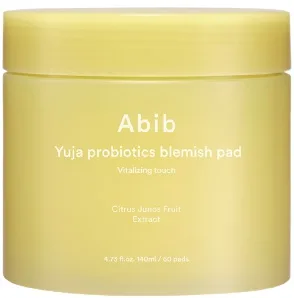
Most brightening toner pads rely on either active acids or L-ascorbic acid — both of which sting and irritate the skin types that most need brightening (post-inflammatory, sensitive, reactive). This pad takes the gentler route: yuja extract for natural vitamin C, rice ferment for amino acid hydration, niacinamide for the clinical heavy lifting, and gluconolactone for whisper-mild exfoliation. It's a rare brightener you can give to truly sensitive skin.
The gentlest brightening toner pad you can reasonably buy. Niacinamide does the heavy lifting, yuja and rice ferment add a hydrating glow, and the formula is so non-irritating you can use it twice a day even with reactive skin. Not a vitamin C replacement, but a perfect daily companion to one.
Several thousand reviews since 2021 across Amazon, YesStyle, and Korean retailers make tolerability and texture well-documented for these pads. Where the data thins is long-term brightening efficacy, which leans on emerging evidence for yuja and rice ferment rather than established clinical heroes, so that portion of the score is more cautious.
The case for it
Same rule for everyone. “Good choice” is the verdict on 9,564 of 45,024 concern verdicts across the catalog; rule R5 decided 9,072 of them. Unchanged since September 5, 2026, engine 5.1.1.
Brand or formulator? Disclose a concentration or correct a fact →
The studies behind the evidence row
The case for it
What would change this: A declared concentration would move this to a firmer reading of the dose.
Same rule for everyone. “Unproven” is the verdict on 1,111 of 45,024 concern verdicts across the catalog; rule R9 decided 1,111 of them. Unchanged since September 5, 2026, engine 5.1.1.
Brand or formulator? Disclose a concentration or correct a fact →
The studies behind the evidence row
The case for it
Same rule for everyone. “Good choice” is the verdict on 9,564 of 45,024 concern verdicts across the catalog; rule R5 decided 9,072 of them. Unchanged since September 5, 2026, engine 5.1.1.
Brand or formulator? Disclose a concentration or correct a fact →
The studies behind the evidence row
The case for it
What would change this: A researched evidence row for the lead active would replace this with a verdict.
Same rule for everyone. “Supporting role” is the verdict on 8,197 of 45,024 concern verdicts across the catalog; rule R8 decided 4,250 of them. Unchanged since September 5, 2026, engine 5.1.1.
Brand or formulator? Disclose a concentration or correct a fact →
Also listed for Dullness — the actives here (Probiotics & Prebiotics, Niacinamide, Allantoin, Gluconolactone) are in our research queue for that concern; there is no verdict until their evidence rows are written. That is a gap in our table, not a mark against the product.
Does the jobDoes what a toner is for: not alcohol-driven, adds something real. Not measured from the label: restores skin pH, plays well with what follows.
Where our review and the verdict differ. The review below was written on the formulation and the published trials; the verdicts above apply the stricter standing test in our methodology — an active earns a recommendation only with guideline or regulatory standing for the concern. Where the two disagree, the verdict is DermApproved’s position.
A verdict is DermApproved’s assessment of how well a product’s ingredients fit a concern — never a claim about what the product treats. Evidence dots and collected reviews sit beside it and are never blended in. Rules 0.5.1 · evidence table ev-2026.09-r228 · how we decide
There's a paradox at the heart of brightening skincare. The people who most need to fade dark spots — folks with post-inflammatory hyperpigmentation from acne, sensitive skin that pigments easily, melasma sufferers whose skin flushes at the slightest provocation — are also the people whose skin tolerates strong brightening actives the worst. L-ascorbic acid stings. Hydroquinone irritates. Strong AHAs and BHAs trigger the very inflammation that creates more pigment. So you watch the dark spots form, you reach for the brightening serum, and you have to put it down because your face is on fire.
Abib's Yuja Probiotics Blemish Pad is built squarely for that paradox. It's the rare brightening product that aims for gentleness as a primary feature rather than an afterthought. Niacinamide sits in the upper INCI at a clinically meaningful 2-3% concentration — that's the workhorse. It's been studied for decades in fading post-inflammatory hyperpigmentation, and unlike vitamin C, it's exceptionally well tolerated. The mechanism explains the gentleness: niacinamide doesn't block melanin synthesis at the source, it interrupts the transfer of pigment packets from melanocytes to the surface cells. Slower, quieter, and far less likely to provoke the inflammation that started the problem.
Around it, the formula adds yuja extract (Korean citrus, naturally vitamin-C-adjacent), Lactobacillus/rice ferment for amino acid hydration, centella asiatica and allantoin for soothing, and a small dose of gluconolactone for whisper-soft PHA exfoliation. There are no AHAs, no BHAs, no L-ascorbic acid, no retinoids. Nothing to sting. The supporting bench keeps the same temperament: peony root, chamomile flower, gardenia fruit, panthenol, adenosine, and sodium hyaluronate — soothing, hydrating, and studiously uninterested in picking a fight.
The practical experience matches the formula. The pads are thick, plush, and saturated — none of that dry-towelette feel some K-beauty pads have. The essence is slightly viscous, almost gel-like, and absorbs without leaving tackiness. There's a faint citrus note from the yuja but no added fragrance. Swipe one across the face, neck included, then pat the leftover essence in rather than wiping it away — the actives are meant to absorb, not be discarded. After about a week of using it twice a day, most people notice their skin feels softer and looks subtly more luminous. After 4-6 weeks, the brightening starts to show on darker spots — slowly, gently, but visibly, with the fuller niacinamide payoff arriving somewhere around the two-to-three-month mark. It's not the dramatic glow that a fresh L-ascorbic acid serum delivers in the first week, but it's also not a glow that costs you three days of redness when you push it too far.
Where this pad really earns its place in a routine is as a partner to other treatments. Niacinamide pairs beautifully with retinoids — it offsets dryness and irritation, and the two work on pigment through complementary mechanisms. So if you've been wanting to add a retinoid but your skin hasn't tolerated past attempts, layering this pad underneath it is genuinely a good strategy. Same goes for vitamin C: use a mid-strength L-ascorbic acid serum in the morning if you can tolerate one, and use this pad as your evening tone-evening step. The combination outperforms either alone. There's also no need to cycle off it — this is a permanent-fixture product, not a course of treatment.
A few honest limitations. First, the price-to-pad math isn't great. At around $22 for 60 pads, you're paying closer to 37 cents per use, which adds up fast — twice-daily use empties the jar in about a month. The actives are reasonable but not exotic; you could replicate much of this benefit with a $15 niacinamide serum and a cotton round, if you don't mind the extra step. What you're paying for is the format: the convenience, the saturated cotton, the dual-purpose hydration-and-treatment in one swipe. Second, the open-jar packaging is less hygienic than individually wrapped pads. Use clean hands or tweezers, don't store it in a steamy bathroom, and you'll be fine. Third, if you have severe melasma or deep, stubborn sun damage, this pad alone isn't enough. It's a supporting cast member, not a lead.
One thing worth clarifying: the "probiotics" in the name are slightly misleading. The pad doesn't contain live bacteria — it contains Lactobacillus/rice ferment, which is what's left after the bacteria have done their work on rice. So if you bought it expecting microbiome modulation, that's not what's happening. What's happening is that fermentation has broken the rice down into small peptides and amino acids that hydrate the skin, and that benefit is real even though it isn't the marketing story. Yuja deserves a similar clarification — it carries real vitamin C and flavonoids, but at plant-extract concentrations, not serum concentrations. Treat it as a brightening companion to the niacinamide, not a stand-in for a dedicated vitamin C step.
What makes this pad genuinely good is what it represents: a Korean indie brand looking at the toner-pad category, noticing that almost everything on the shelf was either aggressive (acids) or boring (basic hydration), and building a third option for the people in the middle. Sensitive skin that wants brightening. Reactive skin that wants tone correction without inflammation. Pregnant users who have had to shelve their retinoids and still want something that works. Routines that need a gentle daily step that doesn't pick a fight with the rest of the lineup. That's a real gap, and Abib filled it competently — nearly six thousand reviews and a Soko Glam Best of K-Beauty nod later, the market seems to agree. Not glamorously, not with a hero ingredient that'll make headlines — just thoughtfully, in a way that becomes obvious after a couple of weeks of use.
The hero actives that drive this product's performance.
| Ingredient | Function | Evidence |
|---|---|---|
| Yuja (Citrus Junos) Fruit Extract (12,500 ppm) | The Korean citrus that gives this pad its name brings naturally occurring vitamin C and flavonoids. In this formula, it works as a brightening adjunct to the niacinamide rather than a primary anti-pigment ingredient — a gentler approach than L-ascorbic acid serums. | Not yet assessed |
| Lactobacillus/Rice Ferment (25,000 ppm) | The probiotic component that anchors the formula's brightening claim. Fermentation breaks rice down into amino acids and small peptides that hydrate and theoretically support the skin microbiome — a different brightening mechanism than the niacinamide also in this pad. | Not yet assessed |
| Niacinamide (2.4-2.9%) | Sits in the upper part of the INCI at a meaningful 2-3% concentration to address the same pigment and barrier goals as the yuja and rice ferment, but through a much better-studied mechanism: inhibiting melanosome transfer. | Established mechanism for Compromised Skin Barrier · established mechanism |
| Centella Asiatica + Allantoin | Provides the soothing layer that makes this pad usable for sensitive or post-inflammatory skin. Unlike the brand's Pine Needle pad, this Yuja version skips active acids entirely, so the centella isn't buffering anything — it's reinforcing a calm baseline. | Limited for Post-Procedure |
| Gluconolactone | A polyhydroxy acid (PHA) that provides extremely mild surface exfoliation without the sting of AHA or BHA. In this pad, it's the closest thing to an exfoliant — gentle enough to use daily even on reactive skin. | Not yet assessed |
Ingredient standings describe the active at treatment-level doses and vehicles; this product's own condition grades weigh its actual formula.
Purified Water, Dipropylene Glycol, Glycerin, Lactobacillus/Rice Ferment, Niacinamide, Citrus Junos Fruit Extract, 1,2-Hexanediol, Panthenol, Butylene Glycol, Paeonia Suffruticosa Root Extract, Centella Asiatica Extract, Chamomilla Recutita (Matricaria) Flower Extract, Polyglyceryl-10 Laurate, Glyceryl Caprylate, Carbomer, Tromethamine, Ethylhexylglycerin, Allantoin, Adenosine, Xanthan Gum, Sodium Hyaluronate, Gluconolactone, Glyceryl Acrylate/Acrylic Acid Copolymer, Gardenia Florida Fruit Extract, Pantolactone, PVM/MA Copolymer, Diethylhexyl Sodium Sulfosuccinate, Dextrin, Disodium EDTA
toner
AM & PM
Use after cleansing and before serums. Gentle enough for daily AM and PM use. Pat residual essence into the skin rather than wiping it off — the niacinamide and yuja extract are meant to absorb, not be removed.
Immediate skin softness and a slight glow from the humectants. Gradual brightening and tone evening over 4-6 weeks of consistent twice-daily use. Niacinamide-driven barrier and pigment improvements peak around 8-12 weeks.
Niacinamide is one of the most extensively studied topical brightening agents in dermatology. Peer-reviewed research has documented its ability to inhibit melanosome transfer from melanocytes to keratinocytes — the cellular step that delivers pigment to the surface. Concentrations between 2% and 5% have been shown effective for post-inflammatory hyperpigmentation and general tone evening over 8-12 weeks of consistent use. The 2-3% concentration in this pad sits at the bottom of the effective range but is well-tolerated and accumulates benefit through twice-daily application.
Lactobacillus/rice ferment is less rigorously studied. The available evidence supports its role as a humectant and amino acid source rather than a microbiome-active ingredient. Saccharomyces and Lactobacillus ferment filtrates have been shown in vitro to influence skin moisturization and barrier markers, but human clinical data on visible brightening is limited. The mechanism here is best understood as gentle hydration that supports overall skin appearance, not direct pigment reduction.
Yuja (Citrus junos) extract contains naturally occurring vitamin C and flavonoids including hesperidin and naringenin. These compounds have antioxidant activity in vitro, but the concentration delivered through plant extract in a leave-on toner is much lower than a dedicated L-ascorbic acid serum. Yuja's role in this formula is best characterized as a brightening support ingredient that contributes to the overall effect alongside the niacinamide.
The gluconolactone in this pad is a polyhydroxy acid (PHA), studied as a milder alternative to AHAs. PHAs have larger molecular structures than glycolic or lactic acid and penetrate the stratum corneum more slowly, producing exfoliation with significantly less irritation. For sensitive skin types, PHAs are often recommended as a tolerable entry point to chemical exfoliation.
Dermatologists routinely recommend niacinamide as a first-line treatment for post-inflammatory hyperpigmentation, particularly for patients who can't tolerate stronger brighteners like hydroquinone or L-ascorbic acid. Practitioners have long observed that niacinamide's mechanism of action — inhibiting melanosome transfer rather than blocking melanin synthesis directly — makes it a slow but reliable tool in long-term pigment management. Many dermatologists pair niacinamide with retinoids for patients with mild-to-moderate hyperpigmentation, citing the complementary mechanisms and the niacinamide's ability to soften the side effects of retinoid use. For patients with sensitive skin or rosacea who develop pigment from inflammation, dermatologists generally favor low-irritation brighteners like niacinamide over more aggressive options.
Use after cleansing, twice daily. Take one pad and gently swipe across the entire face, including forehead, cheeks, nose, chin, and neck. Pat any residual essence into the skin rather than wiping it off. Follow with serums, treatments (including retinoids), and moisturizer in your usual order. Always apply broad-spectrum SPF in the morning. Suitable for daily use long-term — there's no need to cycle off.
At around $22 for 60 pads, this lands in the middle tier of K-beauty toner pads. The actual actives — niacinamide, yuja extract, rice ferment, gluconolactone — are not exotic and could be replicated more cheaply with a basic niacinamide serum applied via cotton round. What you're paying for is the format convenience and the thoughtful gentle blend. From an emerging brand without legacy clinical data, the price feels fair if the format-and-gentleness combination matches your needs, but harder to justify if you're comfortable with a serum-and-cotton-pad routine.
Anyone with sensitive, reactive, or post-inflammatory hyperpigmentation-prone skin who wants a gentle daily brightening step. People who've struggled to tolerate vitamin C serums or AHAs. Pregnant or nursing users who want a brightening tool that's safe for the whole nine months. Beginners building a first K-beauty routine.
People with severe melasma or deep sun damage who need a stronger primary treatment. Anyone looking for dramatic fast results who'd be happier with a 15% L-ascorbic acid serum. Routine minimalists who already use a niacinamide serum and don't need the pad format.
Ready to try Abib Yuja Probiotics Blemish Pad Vitalizing Touch?
Buy at Amazon ♥Cotton pads soaked in a slightly viscous, gel-like essence that absorbs without tackiness
Subtle yuja citrus note from the extract; no added fragrance
Wide-mouth plastic jar with inner seal and lid; pads stacked inside, single-textured smooth cotton
Refreshing on application with no sting or tingle. Skin should feel softer immediately and look subtly more even-toned within the first week. There's no purge or adjustment period because the formula contains no aggressive actives.
About 1 month with twice-a-day use, or roughly 2 months as an evening-only step
All Year
Yuja is a Korean citrus traditionally used in winter teas and folk remedies for brightening and skin nourishment. Abib launched the Yuja Probiotics line in 2021 as the gentler counterpart to its more active Pine Needle pad — same form factor, completely different chemistry. The pad became a sleeper hit among reviewers who needed a brightening step their reactive skin could actually tolerate.
Abib launched in 2017 as a Korean indie brand built on plant-derived, minimalist formulas. Its toner pad line is the brand's most recognized category, with sizable followings on TikTok and Korean beauty retailers, though independent clinical validation remains limited.
Probiotic skincare doesn't really do anything for the microbiome.
True for most products — but this pad doesn't actually contain live probiotics. It contains Lactobacillus/rice ferment, which is the byproduct of fermentation, not the bacteria themselves. The benefit isn't microbiome modulation — it's the amino acids and small peptides released during the fermentation process.
Yuja is just a marketing version of regular vitamin C.
Yuja extract contains naturally occurring ascorbic acid plus flavonoids and limonene compounds, but at much lower concentrations than a 10-20% L-ascorbic acid serum. Think of it as a gentle brightening adjunct that supports the niacinamide, not a replacement for a dedicated vitamin C step.
The Pine Needle Clear Touch is an exfoliating pad with four acids (salicylic, betaine salicylate, glycolic, lactic) for oily and congested skin. The Yuja Vitalizing Touch is a gentle daily brightening pad with no strong acids — just niacinamide, yuja extract, rice ferment, and PHA. They're built for opposite use cases.
Yes — it's specifically designed for daily twice-a-day use. Because the formula contains no AHAs, BHAs, or other strong actives, daily use won't compromise the barrier. It's one of the most beginner-friendly toner pads on the market.
Niacinamide at 2-3% has well-documented evidence for fading post-inflammatory hyperpigmentation over 8-12 weeks. The yuja extract and rice ferment add a mild brightening boost. For deep melasma or stubborn sun spots, you'll likely need a stronger active like a vitamin C serum or prescription tretinoin alongside this pad.
Yes. It contains no salicylic acid, retinoids, or other ingredients flagged for pregnancy. Niacinamide, yuja extract, rice ferment, and centella are all considered pregnancy-safe by mainstream dermatology guidance.
Yes — that's actually one of its best use cases. Niacinamide pairs well with retinoids and helps offset the dryness and irritation they cause. Apply this pad after cleansing, then layer your retinoid on top once the essence absorbs.
Yes. The formula contains no fatty acids, esters, or ferments known to feed Malassezia yeast. It's one of the few brightening toner pads that works for people with pityrosporum folliculitis.
A very mild tingle can come from the gluconolactone (PHA) or the niacinamide — both are normal at the concentrations used here. If you experience burning, persistent redness, or stinging, discontinue use and check whether your barrier is compromised from another product in your routine.
Recurring themes our editors read across retailer reviews of this product — summaries in our words, not quotations, and not a substitute for your own patch test.
Genuinely gentle even for sensitive skin
Visible glow after 2-3 weeks
Saturated, non-drying pads
Non-stinging brightening for skin that can't tolerate vitamin C serums
Brightening effect is slow compared to L-ascorbic acid
Jar packaging less hygienic than wrapped pads
Pricier than basic cotton-and-toner setups
Verified answers from our questions library — the nuance a product page cannot carry.