Hyaluronic Acid Can Actually Dehydrate Your Skin (Here's When)
The internet's favorite hydrator has a counterintuitive dark side — in dry air, a humectant with nothing to seal it can pull water out of your skin instead of into it.
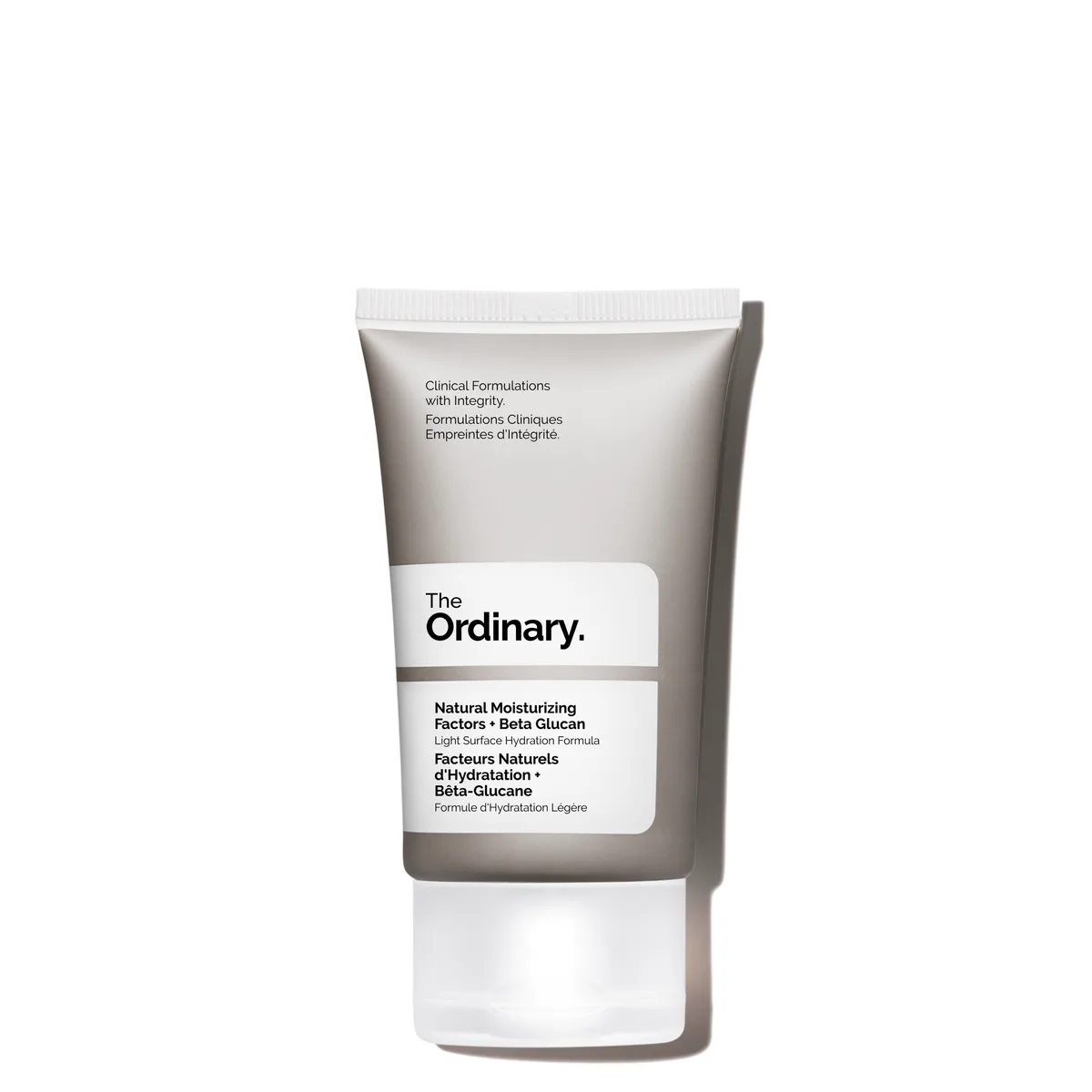
It is the oil-free, silicone-free member of The Ordinary's NMF trio, a gel-cream that puts beta-glucan fifth and the skin's own water-binders, eight amino acids, PCA, lactate and urea, in the top half of the list with a second tier of sugars and osmolytes behind them, so that a moisturiser with no oil at all keeps oily, acne-prone and reactive skin hydrated and calm for a day at six and a half dollars; the trade, no occlusion, is the honest reason the line has two other versions.
The oil-free member of The Ordinary's NMF trio, a fragrance-free, silicone-free gel-cream with beta-glucan fifth and the skin's own water-binders in the top half of the list, that hydrates and calms oily, combination, acne-prone and reactive skin for a day at six and a half dollars. It draws water superbly and seals nothing, which is exactly right for skin that makes its own oil and not enough for skin that does not.
The case for it
What would change this: A declared concentration would move this to a firmer reading of the dose.
Same rule for everyone. “Good choice” is the verdict on 9,564 of 45,024 concern verdicts across the catalog; rule R5 decided 9,072 of them. As of September 25, 2026, engine 5.1.1.
Brand or formulator? Disclose a concentration or correct a fact →
The studies behind the evidence row
The case for it
What would change this: A researched evidence row for the lead active would replace this with a verdict.
Same rule for everyone. “Good choice” is the verdict on 1,938 of 45,024 concern verdicts across the catalog; rule F2 decided 1,938 of them. As of September 25, 2026, engine 5.1.1.
Brand or formulator? Disclose a concentration or correct a fact →
The case for it
What would change this: A researched evidence row for the lead active would replace this with a verdict.
Same rule for everyone. “Supporting role” is the verdict on 8,197 of 45,024 concern verdicts across the catalog; rule R8 decided 4,250 of them. As of September 25, 2026, engine 5.1.1.
Brand or formulator? Disclose a concentration or correct a fact →
The case for it
What would change this: A researched evidence row for the lead active would replace this with a verdict.
Same rule for everyone. “Supporting role” is the verdict on 8,197 of 45,024 concern verdicts across the catalog; rule R8 decided 4,250 of them. As of September 25, 2026, engine 5.1.1.
Brand or formulator? Disclose a concentration or correct a fact →
Also listed for Excess Oiliness — the actives here (Beta-Glucan, Allantoin, Phospholipids, Amino Acids) are in our research queue for that concern; there is no verdict until their evidence rows are written. That is a gap in our table, not a mark against the product.
Falls shortJudged as a moisturizer, it comes up short on: seals moisture in, softens and smooths.
A verdict is DermApproved’s assessment of how well a product’s ingredients fit a concern — never a claim about what the product treats. Evidence dots and collected reviews sit beside it and are never blended in. Rules 0.5.1 · evidence table ev-2026.09-r228 · how we decide
Skin hydrates itself with a set of small molecules it makes on purpose. As corneocytes mature they break down a protein called filaggrin into free amino acids, which combine with pyrrolidone carboxylic acid, lactate, urea and a few salts to form what dermatology calls the natural moisturizing factor, the water-binding filling of the stratum corneum, and a skin that is short of it, from over-cleansing, actives, winter or eczema, is dry in a way that oils alone do not fix. The Ordinary's NMF line supplies those molecules from a tube, and this beta-glucan version is the one that supplies them with nothing else, no oil, no silicone, no wax, so that the hydration is all humectant and the finish is a cool satin-matte that oily skin has always wanted from a moisturiser and rarely gets.
The list is a small lesson in the idea. Water, then PPG-24-glycereth-24 and propanediol, humectant glycols; betaine, an osmolyte; beta-glucan fifth, a large film-forming polysaccharide from oats or yeast that holds water at the surface and has a separate literature for calming the epidermis through its effect on immune cells; then eight free amino acids, arginine to lysine, in the sixth to thirteenth places, followed by glucose, maltose, fructose, trehalose and a xylitol trio, sodium PCA and PCA, sodium lactate, urea, allantoin and hyaluronate. Phospholipids and sphingolipids at twenty-seventh and twenty-eighth are the only lipid gesture, a trace of skin-identical fat standing in for the ceramides the line's phytoceramides version carries in quantity. Glycerin, oddly, comes late, which the glycols and sugars ahead of it more than compensate for, and the preservative system is a modern one without parabens or formaldehyde releasers. What matters is that the NMF compounds are the substance of the formula rather than a garnish at the tail, which a six-dollar-fifty gel has no business managing and this one does.
On the face it is exactly what the list promises. A pea of thin, translucent gel-cream spreads with a cool slip, sinks in within a minute and leaves the skin calm, hydrated and satin-matte with no film, no shine and nothing for makeup or sunscreen to pill against. Oily and combination skin reads that as the moisturiser it has been asking for; acne-prone and fungal-acne-prone skin gets a formula with no oils, esters, fatty alcohols or silicones to worry about, which is rare; and reactive skin gets beta-glucan and allantoin taking the redness down from whatever active went on before. Over two to four weeks of twice-daily use the complexion steadies, and a retinoid or acid routine on oily skin becomes easier to sustain with this as the buffer. The one sensation to know is a brief tingle from the urea and lactate on skin that has just been exfoliated or shaved, which passes in seconds and is the NMF compounds meeting a barrier that is a little open.
What it does not do is the half of moisturising it deliberately skipped. Humectants draw and hold water; oils and occlusives slow its escape; this gel does only the first, and on dry skin, in winter or in a heated room, the water it draws leaves again by evening and the skin feels dry. That is not a flaw so much as a design, and the line's other two versions exist for it: the original NMF + HA for normal skin with a little lipid, and NMF + Phytoceramides for dry skin with a lot. Dry-skinned users who like the beta-glucan version's calm can layer an occlusive over it or use it as a hydrating base under a richer cream, which works well and costs almost nothing.
Six dollars and fifty cents for 30 ml, or a better rate for the 100 ml, is The Ordinary's pricing at its most disarming. The 30 ml lasts about six weeks at a pea twice a day, the formula is fragrance-free, vegan and stable, and the brand's decade of consistent formulating shows in a gel that does not separate, pill or smell. The line has been sold since 2017, the beta-glucan version since 2023, and the review history across the brand's store and the big retailers is large and consistent in its two themes, that oily and reactive skin loves it and that dry skin wants more. The brand publishes no trial of the product, and for a formula built on the best-documented hydration compounds in dermatology, that hardly matters.
For oily, combination, acne-prone, fungal-acne-prone or reactive skin that wants a fragrance-free, oil-free moisturiser that hydrates and calms without a trace of shine, this is close to the best value in skincare and a formula that would be respectable at any price. For dry skin it is half a moisturiser, honestly labelled as light surface hydration on the tube, and the other half is in the tube beside it on the shelf.
The hero actives that drive this product's performance.
| Ingredient | Function | Evidence |
|---|---|---|
| Beta-Glucan | Fifth on the list, ahead of every amino acid, the oat- or yeast-derived polysaccharide that gives this version of the NMF line its name and its character: a large, film-forming humectant that holds water at the surface, calms irritated skin through its effect on immune cells in the epidermis, and leaves the faintly cushioned, soothing feel that the oil-free gel would otherwise lack. It is the reason this is the NMF for reactive, breakout-prone skin rather than dry skin. | Not yet assessed |
| Natural Moisturizing Factors (Amino Acids, PCA, Sodium Lactate, Urea) | Eight free amino acids at sixth to thirteenth, then sodium PCA, PCA, sodium lactate and urea, the compounds the skin's own corneocytes make by breaking down filaggrin to hold water in the stratum corneum; supplying them from outside is the line's whole idea, and in this formula they sit high enough on the list to be the substance rather than the garnish, which is more than most humectant lotions manage. | Not yet assessed |
| Betaine, Trehalose, Xylitol Complex and Sugars | Betaine fourth with glucose, maltose, fructose, trehalose and the xylitylglucoside, anhydroxylitol and xylitol trio behind, a second layer of osmolyte and sugar humectants that draw and hold water alongside the NMF set and give the gel-cream its lasting, non-tacky hydration; together with the PPG-24-glycereth-24 second on the list they are why an oil-free lotion this thin keeps skin comfortable for a full day. | Established mechanism for Dehydration · established mechanism |
| Phospholipids and Sphingolipids | Twenty-seventh and twenty-eighth, a small skin-identical lipid note in an otherwise oil-free formula, standing in for the ceramide and cholesterol that the line's phytoceramides version carries in quantity; here they are a supplement, and the formula relies on humectancy rather than occlusion, which is the trade an oil-free gel makes. | Not yet assessed |
| Allantoin and Sodium Hyaluronate | Twenty-fifth and twenty-sixth, a soothing agent and a surface humectant that round out the calming, hydrating brief; supporting notes in a formula whose top of the list already does the work. | Not yet assessed |
Ingredient standings describe the active at treatment-level doses and vehicles; this product's own condition grades weigh its actual formula.
Aqua (Water), PPG-24-Glycereth-24, Propanediol, Betaine, Beta-Glucan, Arginine, Glycine, Alanine, Serine, Proline, Threonine, Glutamic Acid, Lysine HCl, Glucose, Maltose, Fructose, Trehalose, Xylitol, Anhydroxylitol, Xylitylglucoside, Sodium PCA, PCA, Sodium Lactate, Urea, Allantoin, Sodium Hyaluronate, Phospholipids, Sphingolipids, Glycerin, Pentylene Glycol, Acrylates/C10-30 Alkyl Acrylate Crosspolymer, Sodium Hydroxide, Sodium Chloride, Sodium Citrate, Citric Acid, Tocopherol, P-Anisic Acid, Aminomethyl Propanol, Phenoxyethanol, Chlorphenesin
moisturizer
AM & PM
Last leave-on step morning and night after serums, or under sunscreen in the morning: a pea to a fingertip pressed over the face while the skin is slightly damp from toner, which the humectants reward. It sits under makeup and sunscreen without pilling and over any active without conflict, buffers a retinoid or acid on oily skin, and on dry skin or in winter it wants an occlusive or the line's phytoceramides version layered over it, since it carries no oil to seal the water it draws. It is a sound moisturiser for a barrier that is irritated rather than stripped.
Cool, calm, hydrated skin with a soft matte-satin finish within a minute of application and comfortable through the day, with less of the tightness a stripped or over-exfoliated face carries; over two to four weeks of twice-daily use, a steadier, less reactive complexion as the NMF and beta-glucan keep the stratum corneum hydrated between actives. It does not occlude, so very dry skin will still feel dry by evening in a heated room, and it treats no pigment, texture or line, which is not its job.
The evidence for this gel is the evidence for natural moisturizing factors, which is among the most secure in skincare, plus a growing literature on beta-glucan. The stratum corneum holds water through a mixture of free amino acids, pyrrolidone carboxylic acid, lactate, urea and inorganic salts that corneocytes generate by proteolysis of filaggrin; a 2007 review in the Journal of Cosmetic Dermatology set out the molecular mechanisms of skin hydration, describing how these natural moisturizing factors bind water within the corneocyte, how their depletion by surfactants, low humidity and filaggrin deficiency produces dry, scaling skin, and how topical humectants restore hydration when supplied in a suitable vehicle. This formula supplies the NMF set directly, eight amino acids, PCA and sodium PCA, sodium lactate and urea, at positions that make them the bulk of the solids, alongside osmolytes and sugars, betaine, trehalose and the xylitol complex, that bind water by the same principle and have corneometric evidence for sustained hydration. Beta-glucan, fifth on the list, is a large polysaccharide with two relevant literatures: as a film-forming humectant it reduces transepidermal water loss and increases surface hydration in leave-on studies, and as an immunomodulator it binds receptors on epidermal immune cells and has been shown to reduce irritation and support wound repair in laboratory and small clinical settings, which is the basis for its calming reputation and its choice over hyaluronic acid as this version's headline. Allantoin has leave-on evidence for soothing, and hyaluronate adds surface water-binding. What the formula lacks is documented as clearly as what it has: without oils or occlusives it cannot reduce water loss by sealing, so its effect on very dry or barrier-damaged skin is limited to what humectancy alone achieves, which the same hydration literature shows is incomplete in low humidity. Urea and lactate, both NMF components, are mild irritants on compromised skin at the levels used here, which explains the brief tingle some users report. The Ordinary publishes no trial of the product, and the assessment rests on the hydration literature applied to a formula that follows it closely.
A humectant-based, oil-free, fragrance-free moisturiser built on natural moisturizing factors is close to what dermatologists describe when an acne patient on retinoids or benzoyl peroxide asks what to put over them, and this gel would be an easy recommendation for oily, combination, acne-prone and rosacea-prone skin, and for patients with Malassezia folliculitis who need a moisturiser free of oils and esters. The clinical caveat is the one the formula makes plain: humectants alone do not restore a stripped barrier, so patients with eczema, winter xerosis or a genuinely compromised barrier would be steered to a moisturiser with ceramides and an occlusive, or told to layer one over this. Urea and lactate can sting on fissured or freshly exfoliated skin, which is a reason for eczema patients to patch-test. Beta-glucan's calming evidence is reasonable and its safety record is clean. For the skin types it is designed for, it is a sound, inexpensive daily moisturiser with no ingredients a dermatologist would remove.
Twice a day, once serums have absorbed, squeeze a pea-sized amount from the tube and press it over the face and neck while the skin is still slightly damp from toner or a hydrating serum, spreading it thinly and letting it sink in for a minute. In the morning follow with sunscreen; at night it can be the last step on oily or normal skin, or the layer under an occlusive or a richer cream on dry skin or in winter. It layers over retinoids, acids, niacinamide and vitamin C without conflict. A brief tingle on freshly exfoliated skin is normal and passes; persistent stinging means the barrier needs an occlusive first. Use a little less if it feels tacky, which usually means too much on skin that is not oily.
Six dollars and fifty cents for 30 ml, and a better rate for the 100 ml, is among the lowest prices for any moisturiser that puts natural moisturizing factors and beta-glucan in the top half of its list; a pea twice a day makes the small tube last about six weeks and the large one four to five months. The money buys a fragrance-free, oil-free, vegan, non-pilling gel-cream that hydrates and calms oily and reactive skin as well as gel moisturisers sold at thirty to fifty dollars, and The Ordinary's decade of consistent formulating; it does not buy occlusion, so dry skin will need to spend a few dollars more on the line's phytoceramides version or an occlusive to layer over it. As a daily moisturiser for oily, combination, acne-prone and sensitive skin it is about as good as value gets.
People with oily, combination, acne-prone, fungal-acne-prone or reactive skin who want a fragrance-free, oil-free, silicone-free moisturiser that hydrates and calms without shine, sits under sunscreen and makeup, and buffers actives, at a price that makes it a routine staple. It suits anyone who found the line's HA version too rich in summer and anyone building an inexpensive routine around The Ordinary's actives.
People with dry, eczema-prone or barrier-stripped skin who need occlusion, for whom the line's phytoceramides version or a ceramide cream is the right choice on its own; they can still use this as a hydrating layer underneath. Anyone whose skin stings persistently from urea and lactate, and anyone who wants a moisturiser to do more than hydrate and calm.
Ready to try The Ordinary Natural Moisturizing Factors + Beta Glucan?
Buy at Amazon ♥A light, translucent white gel-cream that spreads thinly from the tube with a cool, watery slip, sinks in within a minute and leaves a soft, satin-matte, faintly cushioned finish with no oil, no film and no shine, taking sunscreen and makeup cleanly.
None; unfragranced, with no detectable scent from the gel.
The Ordinary's soft grey 30 ml tube with a white flip cap and the brand's plain black label reading Natural Moisturizing Factors + Beta Glucan and Light Surface Hydration Formula; a 100 ml tube is also sold, and the tube keeps the gel clean and doses a pea precisely.
The first application is cool and light, a thin gel that sinks in without a trace and leaves the face calm and satin-matte rather than moisturised in the traditional cushioned sense, which oily and combination skin reads as exactly right and dry skin reads as not enough. On skin fresh from an acid or a retinoid it can tingle for a few seconds from the urea and lactate, then soothe. Over a couple of weeks reactive skin is steadier and shine is no worse, and nothing pills, clogs or scents.
About six weeks of the 30 ml at a pea twice a day; four to five months of the 100 ml.
spring summer
The Ordinary's original Natural Moisturizing Factors + HA was one of its launch products in 2017, a cream built on the filaggrin breakdown products that hydrate the stratum corneum, and it became the brand's default moisturiser; the line grew in 2022 and 2023 into a trio with a richer phytoceramides version for dry skin and this beta-glucan gel-cream for oily and sensitive skin, the three sharing the NMF core and differing in lipid content. The beta-glucan version answered years of requests for an oil-free NMF that would not break out acne-prone faces.
The Ordinary, DECIEM's Toronto flagship founded in 2016 and owned by Estée Lauder since 2021, is known for declared-percentage actives at drugstore prices; its Natural Moisturizing Factors line reproduces the skin's own water-binding compounds, and this lightweight beta-glucan version, added in 2023 as the oil-free member of the trio, is a bland, well-studied formula the brand sells for a few dollars without publishing a trial of it.
An oil-free gel cannot really moisturise.
Moisturising has two halves, drawing and holding water in the stratum corneum, which humectants do, and slowing its escape, which oils and occlusives do; this gel does the first half unusually well with the skin's own NMF compounds, beta-glucan and osmolyte sugars, and skips the second. Oily and normal skin, which make their own sealing lipids, are fully served, and dry skin needs an occlusive over it.
Beta-glucan is just another humectant like hyaluronic acid.
Beta-glucan is a large polysaccharide that films and holds water like hyaluronic acid, and it also has a separate literature for calming irritation through its effect on immune cells in the epidermis and supporting repair, which is why it heads this formula rather than hyaluronate; it is the soothing half of the gel as much as the hydrating half.
Both share the natural moisturizing factor core of amino acids, PCA, lactate and urea; the HA version is a light cream with some lipids and hyaluronic acid for normal skin, while the beta-glucan version is an oil-free, silicone-free gel-cream with beta-glucan fifth on the list for oily, combination, acne-prone and reactive skin. The phytoceramides version is the rich one for dry skin.
Yes; it contains no oils, esters, silicones or fatty alcohols, which makes it one of the few moisturisers that fungal-acne-prone skin can use without concern, and the beta-glucan and allantoin calm the redness that comes with breakouts and their treatments. It buffers benzoyl peroxide, retinoids and acids without clogging.
On its own, usually not; it draws and holds water with humectants but carries no oil to slow its escape, so dry skin in a heated room or a cold climate feels dry again by evening. Layering an occlusive or the line's phytoceramides version over it, or using it as a hydrating layer under a richer cream, solves that.
As the last leave-on step morning and night, after serums and before sunscreen in the morning, a pea pressed over slightly damp skin; it layers over retinoids, acids, niacinamide and vitamin C without conflict and takes makeup and sunscreen without pilling.
Urea and sodium lactate, two of the natural moisturizing factors, can tingle briefly on skin that has just been exfoliated, shaved or over-cleansed; it passes within seconds and the gel then soothes. Persistent stinging means the barrier is stripped rather than irritated and needs an occlusive first.
For a daily moisturiser, yes; the 30 ml lasts about six weeks at a pea twice a day and the 100 ml four to five months at a better price per millilitre. The 30 ml is the sensible first purchase to check the oil-free finish suits the skin.
Recurring themes our editors read across retailer reviews of this product — summaries in our words, not quotations, and not a substitute for your own patch test.
Light, cooling gel that never pills or clogs
Calms redness from actives on oily skin
Genuinely oil-free and fungal-acne-friendly
Absurd value for the formula
Not enough for dry skin in winter
Slight tackiness if over-applied on dry skin
Tube is small at 30 ml
Can sting briefly on freshly exfoliated skin