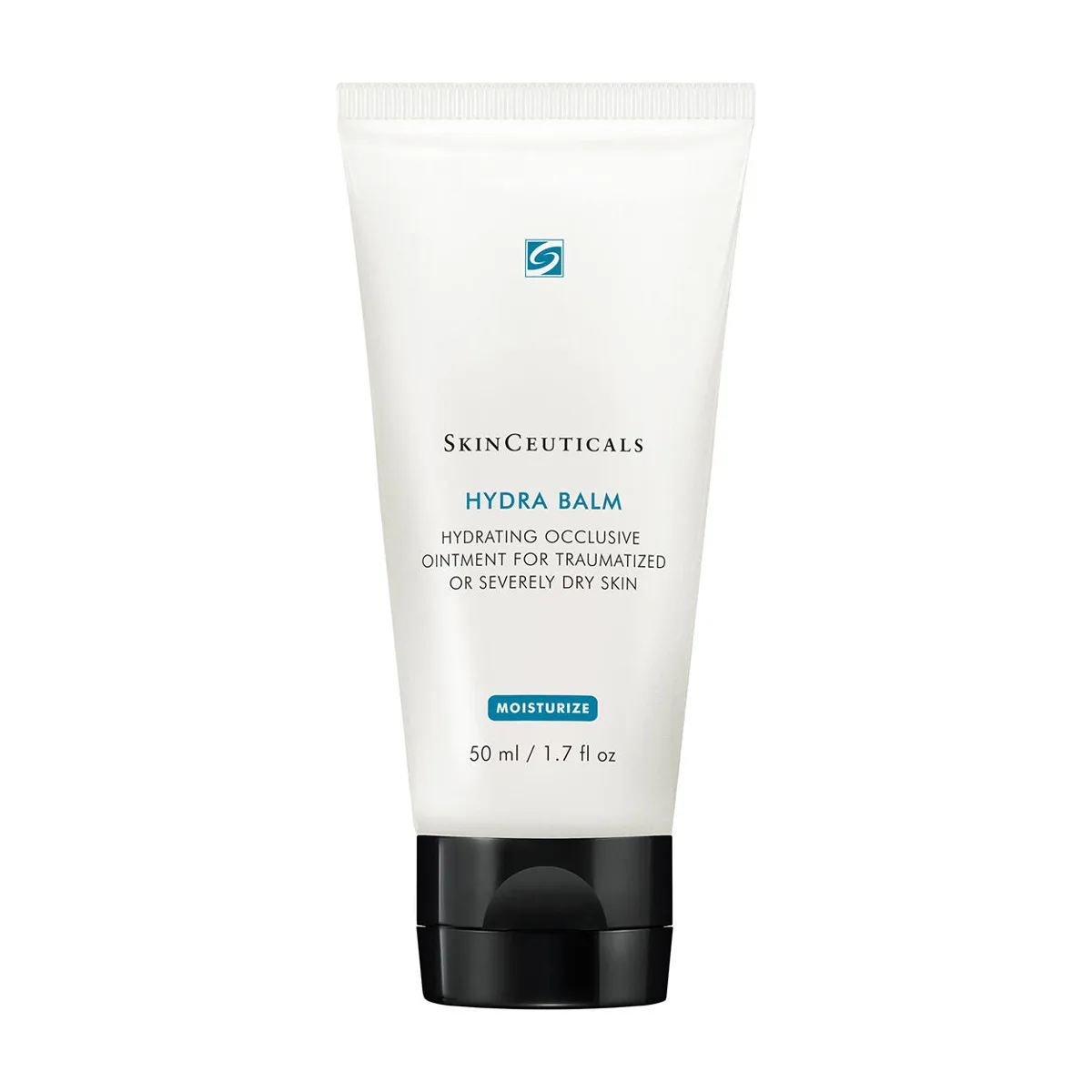
It is a petrolatum ointment that admits it — eleven ingredients, no water, no claims beyond sealing and soothing — but one that thins the petrolatum with squalane and folds in linoleic-rich rosehip and rice bran oils so it spreads over a peeled face or a wound edge without dragging. Its origin in post-operative care, and its pharmacy-level price from a brand that charges $180 for a serum, are what make it stand out on the SkinCeuticals shelf.
The most honest product SkinCeuticals sells: a petrolatum ointment that seals peeled, lasered, chapped or eczematous skin overnight, thinned with squalane and enriched with rosehip and rice bran oils so it spreads better than the jelly it is mostly made of. Twenty-five dollars is a pharmacy price from a clinical brand, and the only real complaints are a jar where a tube belongs, esters that keep it off oily faces, and a farnesol the very reactive may want to avoid.
Strong choicefor DrynessIn your profileYou chose · Petrolatum is an approved or monograph active for dryness; this ointment carries it high in the ingredient list.Moderate evidenceGentleNo reviews collected yet
The case for it
Petrolatum is a first-line active — approved, monograph-listed or named in current guidelines — for this concern.
It is present at an effective concentration, declared or high in the ingredient list.
The formula carries none of the triggers this concern is sensitive to.
Same rule for everyone. “Strong choice” is the verdict on 1,459 of 45,024 concern verdicts across the catalog; rule R2 decided 892 of them.
As of September 25, 2026, engine 5.1.1.
Good choicefor Compromised Skin BarrierIn your profileYou chose · Petrolatum is a reference standard by mechanism for compromised skin barrier; this ointment carries it high in the ingredient list.Moderate evidenceGentleNo reviews collected yet
The case for it
Petrolatum has trial-supported standing for this concern.
It is present at an effective concentration, declared or high in the ingredient list.
The formula carries none of the triggers this concern is sensitive to.
Same rule for everyone. “Good choice” is the verdict on 9,564 of 45,024 concern verdicts across the catalog; rule R5 decided 9,072 of them.
As of September 25, 2026, engine 5.1.1.
Good choicefor Post-ProcedureIn your profileYou chose · Petrolatum is a reference standard by mechanism for post procedure; this ointment carries it high in the ingredient list.Moderate evidenceGentleNo reviews collected yet
The case for it
Petrolatum has trial-supported standing for this concern.
It is present at an effective concentration, declared or high in the ingredient list.
The formula carries none of the triggers this concern is sensitive to.
Same rule for everyone. “Good choice” is the verdict on 9,564 of 45,024 concern verdicts across the catalog; rule R5 decided 9,072 of them.
As of September 25, 2026, engine 5.1.1.
Strong choicefor EczemaIn your profileYou chose · Petrolatum is an approved or monograph active for eczema; this ointment carries it high in the ingredient list.Moderate evidenceStandard tolerabilityNo reviews collected yet
The case for it
Petrolatum is a first-line active — approved, monograph-listed or named in current guidelines — for this concern.
It is present at an effective concentration, declared or high in the ingredient list.
The formula carries no trigger this concern is sensitive to, with the cautions noted.
Cautions: a declarable fragrance allergen.
Same rule for everyone. “Strong choice” is the verdict on 1,459 of 45,024 concern verdicts across the catalog; rule R2 decided 892 of them.
As of September 25, 2026, engine 5.1.1.
R2 — A regulator- or guideline-recognised first-line active, declared at an effective strength, in a form the claim supports. · the full register
Carrying active
Petrolatum
Standing
first line — a regulator recognises it for this use; its mechanism is established; trials support it · per 21 CFR § 347.50 - Labeling of skin protectant drug products. (US Code of Federal Regulations (Legal Information Institute, Cornell Law School)), opened July 27, 2026
Form
adequate — studied range up to 100%, from the OTC monograph or label; needs leave-on contact; judge it after ~1 weeks
Tolerability
standard — allergen count
Row checked
against its sources on July 27, 2026 (evidence table ev-2026.09-r228)
Supporting rolefor Winter SkinIn your profileYou chose · Nothing here targets winter skin directly; occlusive hydration is the recognised companion to treating it, and this ointment does that without known triggers.Not yet assessedGentleNo reviews collected yet
The case for it
Petrolatum has no evidence row yet for this concern — it is in the research queue.
The formula carries none of the triggers this concern is sensitive to.
What would change this: A researched evidence row for the lead active would replace this with a verdict.
Same rule for everyone. “Supporting role” is the verdict on 8,197 of 45,024 concern verdicts across the catalog; rule R8 decided 4,250 of them.
As of September 25, 2026, engine 5.1.1.
R8 — The category's job (barrier care, humectant hydration, gentle cleansing, photoprotection) is the documented supportive role for this concern. This is the honest verdict for a moisturizer on an acne page. · the full register
Does the jobDoes what a moisturizer is for: seals moisture in, draws in water.
A verdict is DermApproved’s assessment of how well a product’s ingredients fit a concern — never a claim about what the product treats. Evidence dots and collected reviews sit beside it and are never blended in.
Rules 0.5.1 · evidence table ev-2026.09-r228 · how we decide
Assessment
Pros & Cons
Pros
✓ Petrolatum-based — the best-evidenced occlusive in dermatology
✓ Squalane and oils make it spread far more easily than plain jelly
✓ Linoleic-rich rosehip and rice bran oils feed a depleted barrier
✓ Calms peeled, lasered or wind-burned skin within minutes
✓ Eleven ingredients, no water, no fragrance, no preservative needed
✓ Twenty-five dollars — a pharmacy price from a clinical brand
✓ Safe in pregnancy and on eczema, lips, heels and cuticles
✗ Jar packaging is the wrong format for freshly wounded skin
✗ Farnesol is a declared allergen the very reactive may not want
✗ Too greasy for daytime or under makeup and sunscreen
✗ Plain petroleum jelly does most of the job for far less
✗ Small 50 mL jar for whole-face or body use
Review
Full Review
Every dermatologist and plastic surgeon faces a small branding problem at the end of a procedure. The patient has just paid a good deal of money for a peel, a laser, a mole removal or a lift, and the aftercare instruction for the next week is the same one it has been for fifty years: keep it covered in petrolatum. The evidence for that instruction is close to unimpeachable — moist wound healing under an occlusive is faster, cleaner and leaves better scars than anything else — but handing a patient a drugstore jar of Vaseline after a two-thousand-dollar treatment lands badly. Hydra Balm is SkinCeuticals' solution to that awkwardness, and the brand is candid about it: the balm, it says, was originally created to aid post-operative recovery in the practices it sells through. It is petrolatum with the clinic's name on it, and a few thoughtful additions to justify the name.
The formula has eleven ingredients and no water, which for a moisturizer is almost startling in its plainness. Petrolatum leads and is the great majority of the jar. Rosehip fruit oil is second, a linoleic-acid-rich seed oil that supplies the barrier fatty acid dry and eczematous skin lacks and carries a trace of natural retinoic acid that gives the brand a scar-care story to tell; squalane is third, a skin-identical emollient that thins the petrolatum so it spreads like a rich cream rather than a jelly. Then microcrystalline wax for body, two isopropyl esters for slip, rice bran oil with its oryzanol, a vitamin E ester, and at the bottom the soothers — bisabolol from chamomile, a trace of aloe — and farnesol, a naturally occurring aroma compound and mild antimicrobial that European law lists as a declared allergen. That last is the one ingredient I would question in a post-procedure ointment, because the whole point of petrolatum on fresh skin is that it is inert, and farnesol is not quite. Most healing skin will never notice it. The very reactive should know it is there.
What the additions buy is texture, and texture matters more than it sounds. Plain petrolatum on a freshly peeled face is heavy, drags across raw skin, and sits in a thick, smothering layer that patients hate and therefore under-apply. Hydra Balm melts on warm fingertips into something closer to a dense cream, presses over a wound edge or a lasered cheek without pulling, and settles into a glossy film that stays comfortable through the night. The sting of a peel or a wind burn goes quiet within a minute of application, and by morning the flaking is softer and the skin underneath calmer, which is the occlusive doing the only thing an occlusive does — cutting water loss through a damaged barrier by as much as 98 percent so that the repair happening beneath it is not undone every hour by evaporation. Cracked heels under socks and split lips heal in days. Eczema patches stop itching under it. None of this is the rosehip or the aloe; it is the petrolatum, and the brand's own claims stay honest about that.
On a healthy face, the calculus changes. Petrolatum is not comedogenic in itself, but the two isopropyl esters that give this balm its slip are among the most comedogenic emollients in the formulator's toolbox, and rice bran oil is not far behind; nightly Hydra Balm over an oily or acne-prone face will, in time, trap sebum and produce the clogged pores that the ingredient has been unfairly blamed for on its own. Dry and normal skin can wear a thin layer over moisturizer on winter nights and wake up comfortable. Oily and combination skin should keep it to lips, cuticles and the odd raw patch. And nobody should put makeup or sunscreen over it, because nothing spreads on petrolatum, which is why it is a night product for anyone who is not actively healing.
The jar is the other reasonable complaint. Fifty millilitres in a squat white pot is fine for lips and heels, but for a product designed to go on freshly wounded skin a tube would be safer, and a clean spatula is the sensible workaround. For body use the jar is also small; a week of nightly whole-face application after a laser will empty a good part of it, though as a spot treatment it lasts many months.
At twenty-five dollars for 50 mL, Hydra Balm is the cheapest thing on the SkinCeuticals shelf by a wide margin and, by the brand's standards, almost a public service — a clinical house that charges $180 for a vitamin C serum selling its post-procedure occlusive at a price a pharmacy brand would recognise. Plain petroleum jelly still does ninety percent of the job for a tenth of the money, and a ceramide-and-petrolatum healing ointment from the drugstore does much the same with better packaging. What Hydra Balm offers over both is a nicer texture, a linoleic-rich oil fraction, and a name your surgeon's front desk can hand you without apology. Whether that is worth the difference depends on how much a jar of Vaseline bothers you.
Who should buy it? Anyone with a procedure on the calendar who wants the occlusive their clinician will approve of in a texture they will actually apply enough of; anyone with dry, eczematous or winter-cracked skin who wants a petrolatum balm that spreads well; anyone who has priced the rest of the brand and would like one product from it that costs what it should. Who should skip it? Oily, combination and acne-prone faces beyond the lips; anyone reactive to farnesol; and anyone content with the drugstore jar, which is a perfectly respectable position and, clinically, the same instruction.
Formula
Key Ingredients
The hero actives that drive this product's performance.
First on an eleven-ingredient list and the overwhelming bulk of the balm, petrolatum is the most effective occlusive known — it cuts water loss through damaged skin by up to 98 percent — and here it is doing exactly what it does in a surgeon's post-op instructions: sealing a compromised barrier while the skin underneath repairs itself.
Regulator-approvedfor Dryness · established mechanism
Second on the list, a linoleic-acid-rich seed oil that lends the petrolatum base a supply of the barrier fatty acid dry and eczematous skin runs short of — and, with its trace of natural tretinoin precursors, the ingredient that lets the brand call this more than a jar of Vaseline.
Third, and the reason the balm spreads more like a rich cream than a jelly — a skin-identical, non-comedogenic emollient that thins the petrolatum enough to apply over a wound edge or a peeled face without dragging.
Established mechanismfor Dryness · established mechanism
A second plant oil bringing oryzanol and vitamin E antioxidants into an ointment that will sit on skin for hours, alongside a stable vitamin E ester — modest additions that keep the oils from going rancid and lend a little antioxidant cover to healing skin.
The two soothing agents at the bottom of the list — chamomile-derived bisabolol and a trace of aloe — give a post-procedure ointment its calming gesture; the farnesol beside them is a natural fragrance component and mild antimicrobial that reactive skin should know is there.
Not yet assessed
Ingredient standings describe the active at treatment-level doses and
vehicles; this product's own condition grades weigh its actual formula.
It is a last step, and a thin one — a rice-grain-sized amount warmed between the fingertips and pressed over the driest, rawest patches after everything else has absorbed, or over a whole face on the nights after a peel or laser once your clinician clears it. Nothing goes on top. On lips, cuticles, heels and knuckles it can go on alone at any time; on the face it is a night product for most people and an all-day one only for skin that is actively healing.
Results Timeline
Immediate: stinging, flaking or tight skin feels sealed and comfortable within minutes, and stays that way for hours. Short term (2-5 days): cracked heels, chapped lips, wind-burned cheeks and post-peel flaking heal visibly faster under nightly occlusion. Full effect (ongoing): a barrier-support tool that stops water loss while the skin repairs — the benefit is what it prevents, and it is fully delivered on the first night.
Pairs Well With
ceramide or hyaluronic acid serum underneathbland hydrating moisturizer underneathpost-procedure cleansercotton gloves or socks for overnight hands and feet
THIS PRODUCT (thin layer over dry or healing areas)
Evidence
Science & Expert Perspective
The Science
Petrolatum has the deepest evidence base of any moisturizing ingredient, and it is the whole of this product's scientific case. Its occlusive effect on transepidermal water loss was quantified decades ago — reductions of up to 98 percent through damaged skin in the classic barrier studies — and its role in wound care is established by controlled trials: a 1996 study by Smack and colleagues in the Journal of the American Medical Association compared white petrolatum with bacitracin ointment on more than 900 post-surgical wounds and found equivalent infection rates and healing, with fewer allergic reactions in the petrolatum group, which is why plain petrolatum became the standard post-procedure dressing in dermatologic surgery. Ghadially and colleagues showed in 1992 in the Journal of the American Academy of Dermatology that petrolatum does more than sit on the surface: it penetrates into the outer stratum corneum and accelerates barrier recovery after acetone or tape-stripping damage, rather than merely occluding. The moist-healing principle it enables — that covered wounds re-epithelialise faster and scar less than air-dried ones — dates to Winter's 1962 work in Nature and underpins modern post-procedure care.
The additions have thinner evidence. Rosehip (Rosa canina) fruit oil is rich in linoleic and alpha-linolenic acids and contains trace trans-retinoic acid; small clinical studies, including a 2015 prospective study of post-surgical scars treated with rosehip seed oil, suggest modest improvements in scar appearance, but the oil's concentration in this balm is undisclosed and its contribution beyond emollience is unproven. Squalane is a well-characterised, non-comedogenic skin-identical emollient. Rice bran oil contributes oryzanol and tocotrienols with in-vitro antioxidant activity. Bisabolol has in-vitro anti-inflammatory data and a long record as a cosmetic anti-irritant; aloe leaf extract at this position is a trace. Farnesol is a sesquiterpene alcohol with antimicrobial activity that is listed among the 26 declared fragrance allergens under EU cosmetic regulation, which is relevant to a product intended for compromised skin. The isopropyl myristate and palmitate esters are well documented as comedogenic in rabbit-ear and human back assays, explaining the balm's poor suitability for acne-prone faces. No trial of Hydra Balm itself exists; none is needed to establish what a petrolatum ointment does, and the brand claims nothing beyond that.
References
Infection and allergy incidence in ambulatory surgery patients using white petrolatum vs bacitracin ointment. A randomized controlled trial — JAMA (1996)
Effects of petrolatum on stratum corneum structure and function — Journal of the American Academy of Dermatology (1992)
Dermatologist Perspective
A bland petrolatum-based ointment is the single most common post-procedure recommendation in dermatology and dermatologic surgery, and clinicians generally regard a branded version like this one as interchangeable with plain white petrolatum in function, differing only in texture and price. Its uses are well defined: occlusion after peels, ablative and non-ablative lasers, microneedling, cryotherapy and minor excisions once the clinician clears emollient use; nightly treatment of hand eczema, cracked heels and lip chapping, ideally under cotton gloves or socks; and a winter barrier for severely dry facial skin. The advice that accompanies it is standard — apply a thin layer with clean hands or a spatula, since jars can be contaminated on wounded skin; keep it off oily, acne-prone facial skin because of the comedogenic esters; and avoid it under sunscreen or makeup, which will not spread over it. Two ingredient-level cautions apply. Farnesol is a declared fragrance allergen, and although reactions are uncommon, a patient with a known sensitivity or an unusually reactive healing site should use pure petrolatum from a tube instead; and the rosehip and rice bran oils, while well tolerated, mean this is not the absolutely inert formula that some post-surgical protocols specify. For the great majority of patients it is a sensible, well-priced occlusive that they are more likely to apply generously than plain jelly, which is the outcome that matters.
Guidance
Usage & Recommendations
How to Use
For healing skin: once your clinician has cleared emollient use, scoop a small amount with a clean spatula, warm it between clean fingertips and press a thin, even layer over the treated area — a rice-grain amount covers a cheek. Reapply whenever the skin feels tight or looks dry, usually two or three times a day during the first week, and do not let the area dry out. For dry or eczematous skin: apply a thin layer as the last step at night over moisturizer, concentrating on cracked or flaking patches. For hands and feet: coat lightly in the evening and cover with cotton gloves or socks overnight. Keep it to lips and small patches on oily or acne-prone faces, and never under makeup or sunscreen. Store with the lid tight and away from heat, and avoid dipping fingers into the jar when using it on wounded skin.
Value Assessment
Twenty-five dollars for 50 mL is, by SkinCeuticals' standards, remarkable — the cheapest product on a shelf where serums run $180 — and by the standards of the petrolatum-ointment category it is merely reasonable: plain petroleum jelly costs a few dollars for several times the volume and does the occlusive job identically, and the drugstore healing ointments with ceramides or panthenol land at roughly half this price in a more hygienic tube. What the money buys is texture — the squalane and oils make it markedly nicer to apply over raw skin than jelly, which means patients use enough of it — plus the linoleic-rich oil fraction, the soothers and a name a clinic can hand over with a straight face. As a spot treatment for lips, heels and patches, a jar lasts many months and the per-use cost is trivial; as a nightly whole-face post-laser dressing it empties fast and the drugstore alternative starts to look sensible. One size only.
Who Should Buy
Anyone with a peel, laser, microneedling or minor procedure ahead who wants the clinician-approved occlusive in a texture they will apply generously; people with dry, eczematous, winter-cracked or wind-burned skin looking for a petrolatum balm that spreads better than jelly; and anyone with cracked heels, split cuticles or chronically chapped lips. It also suits SkinCeuticals users who would like one product from the brand priced like a staple.
Who Should Skip
Oily, combination or acne-prone skin should keep it well away from the face beyond the lips — the isopropyl esters and rice bran oil are comedogenic under occlusion. Anyone with a known farnesol sensitivity or an extremely reactive healing site should use pure petrolatum from a tube, and anyone perfectly happy with a drugstore jar of petroleum jelly is, clinically, already using the same thing.
A dense, translucent, pale-golden ointment — softer and more spreadable than plain petroleum jelly thanks to the squalane and oils — that melts on warm fingertips into a glossy, cushioned film and stays put for hours without absorbing.
Scent
Essentially unscented — a faint, clean, slightly nutty note from the rosehip and rice bran oils, with no added fragrance; the farnesol on the list is a natural aroma component too low to register.
Packaging
A 50 mL squat white jar with a screw lid — sturdy and easy to scoop, but a jar is the wrong format for a product meant to go on freshly wounded or peeled skin, where a clean tube would be safer; use a clean spatula.
Finish
glowy
What to Expect on First Use
The first application on raw skin is relief — the sting of a peel or a wind burn settles within a minute as the petrolatum seals it, and the glossy film stays comfortable through the night without the heavy, smothering weight of plain jelly. By morning the flaking is softer and easier to leave alone. There is no adjustment period and nothing to purge; on a normal face it is simply too greasy for daytime.
How Long It Lasts
Many months as a spot treatment for lips, heels and patches; 3-4 weeks if used nightly over a whole healing face.
SkinCeuticals sells overwhelmingly through dermatology and plastic-surgery practices, and every such practice needs a bland occlusive to send patients home with after a peel, a laser or a procedure — traditionally plain petrolatum. Hydra Balm was, by the brand's own account, created for that post-operative role: a petrolatum ointment elegant enough to carry the clinic's brand name, with a few emollient oils and soothers added, and it has been the brand's quiet workhorse in the recovery tier for well over a decade.
About SkinCeuticals Legacy Brand (20+ years)
SkinCeuticals has been a dermatologist-channel clinical brand since 1997 and is owned by L'Oréal; Hydra Balm is one of its oldest and plainest products, an eleven-ingredient petrolatum ointment the brand says was originally created for post-operative recovery in the practices it sells through. It carries no clinical study of its own and needs none — petrolatum's occlusive record is the best-documented in dermatology — and it is the rare SkinCeuticals product priced like a pharmacy staple.
Brand founded: 1997
Myth vs. Reality
Common Myths
Myth
Petrolatum suffocates the skin and stops it breathing.
Reality
Skin does not breathe through its surface in any meaningful sense, and petrolatum's occlusion is precisely the point: it reduces water loss through a damaged barrier by up to 98 percent while allowing enough gas exchange for normal function, which is why it is the standard in post-surgical wound care. The concern on oily, acne-prone skin is not suffocation but trapped sebum and comedogenic esters — a different and legitimate issue.
Myth
Rosehip oil in the balm delivers vitamin A and fades scars.
Reality
Rosehip fruit oil contains a trace of trans-retinoic acid and a good deal of linoleic acid, and small studies suggest it may help post-surgical scar appearance, but in this balm it is one oil inside a petrolatum base and no dose is disclosed. The scar benefit of Hydra Balm is the occlusion itself — moist wound healing is the best-evidenced way to improve how a healing site looks — not any retinoid effect from the rosehip.
FAQ
Frequently Asked Questions
What is SkinCeuticals Hydra Balm used for?
It is a petrolatum-based occlusive ointment for skin that is severely dry or healing — after peels, lasers, microneedling or minor procedures, on cracked heels and lips, and on eczema patches — where it seals in moisture and cuts water loss while the barrier repairs. SkinCeuticals says it was created for post-operative recovery in the practices that sell it.
Is SkinCeuticals Hydra Balm just expensive Vaseline?
Mostly, and that is not an insult — petrolatum is the best occlusive there is. Hydra Balm thins it with squalane and adds rosehip and rice bran oils, bisabolol and aloe, so it spreads more easily and feels less heavy on a peeled face, and at $25 for 50 mL it is priced like a pharmacy product rather than a clinical serum. Plain petroleum jelly does 90 percent of the job for a fraction of the cost.
Can I use Hydra Balm on my face every night?
Dry or healing skin can, as a thin last layer over moisturizer; the petrolatum locks in what is underneath. Oily, combination or acne-prone faces should keep it to lips and patches — the isopropyl myristate and palmitate in the formula are comedogenic esters, and nightly petrolatum over an oily face tends to trap sebum and clog pores.
Is Hydra Balm safe to use after a chemical peel or laser?
That is its intended use — a bland occlusive for freshly treated skin — but apply it only once your clinician clears you, use a clean spatula rather than fingers in the jar, and keep the layer thin. It contains bisabolol, aloe and farnesol, so it is not the absolute plainest option; anyone with very reactive healing skin may prefer pure petrolatum from a tube.
Is SkinCeuticals Hydra Balm fragrance-free?
There is no added fragrance, but the list ends with farnesol, a naturally occurring aroma compound and mild antimicrobial that is a declared allergen in the European cosmetic framework. The balm smells of almost nothing, and most skin — including post-procedure skin — tolerates it, but anyone with a known farnesol sensitivity should choose a plain petrolatum ointment.
Can Hydra Balm be used during pregnancy?
Yes. Petrolatum, squalane, plant oils, vitamin E, bisabolol and aloe are all considered safe in pregnancy, and the trace of natural retinoic acid in rosehip oil is far too small to matter. It is a sensible choice for the dry, itchy skin many people experience in pregnancy, particularly on the belly, hands and lips.
Reviews
What Reviewers Tend to Say
Recurring themes our editors read across retailer reviews of this product — summaries in our words, not quotations, and not a substitute for your own patch test.
Common Praise
Calms peeled, lasered or wind-burned skin overnight
Cracked heels and lips heal in days
Spreads more easily than plain petroleum jelly
Cheap for a SkinCeuticals product
Common Complaints
Greasy — clogs pores on acne-prone faces
Small 50 mL jar for body use
Basically fancy Vaseline
Jar packaging is unhygienic on healing skin
Notable Endorsements
SkinCeuticals' post-procedure occlusive, originally developed for post-operative recovery in the practices it sells throughSold through dermatology and plastic-surgery practices, Dermstore, Bluemercury and LovelySkin
Occupational hand dermatitis is one of the most common work-related diseases on earth, it follows a script, and the cheapest fix works only if you start it before the skin splits.
Every post that dismantles a home remedy owes the reader a replacement. The honest replacement list is embarrassingly cheap, and one item on it is cheaper still — it is a bath.
The viral overnight Vaseline trick is genuinely great for some skin and a breakout machine for others — and the deciding factor is entirely what's underneath.
Products, answers, therapy guides, tools and articles in one search. Brand names,
slang and abbreviations all work — accutane finds isotretinoin, bacne finds truncal acne.