



Menopause Changes the Skin You Are Treating, Not Just How It Looks
The collagen number is real. It is also the wrong thing to fix first — because the substrate your routine was built on has quietly been replaced.

Nowhere else does pure retinol come as a 200ml splash lotion with three ceramides and a fermented-soy hydration base for lunch money — the format itself (retinoid as toner, dosed generously, cushioned by design) is a Japanese drugstore invention that Western retinol culture, with its pea-sized rationing, has no equivalent for.
Japan's soy-milk drugstore dynasty sells pure retinol as a 200ml splash toner with three ceramides built in, for about twelve dollars — the gentlest, cheapest retinoid on-ramp in this catalog. The dose is undisclosed and conservative, the results gradual, and the alcohol and soy load exclude the usual suspects; for everyone else, it makes nightly retinol consistency almost embarrassingly easy.
Sana publishes neither the retinol percentage nor product-specific trials, and the N-generation lotion's Western footprint runs through importers with shallow review volume — so while the wrinkle line's Japanese record stretches back to 2017, the conclusions here rest on retinol's independent literature and the standardized dryness-line certification rather than on deep English-language user data or disclosed dosing.
The case for it
What would change this: A declared concentration would move this to a firmer reading of the dose.
Same rule for everyone. “Good choice” is the verdict on 9,564 of 45,024 concern verdicts across the catalog; rule R5 decided 9,072 of them. Unchanged since September 5, 2026, engine 5.1.1.
Brand or formulator? Disclose a concentration or correct a fact →
The studies behind the evidence row
The case for it
What would change this: A declared concentration would move this to a firmer reading of the dose.
Same rule for everyone. “Good choice” is the verdict on 9,564 of 45,024 concern verdicts across the catalog; rule R5 decided 9,072 of them. Unchanged since September 5, 2026, engine 5.1.1.
Brand or formulator? Disclose a concentration or correct a fact →
The studies behind the evidence row
Also listed for Dullness and Rough Texture — the actives here (Probiotics & Prebiotics, Soybean (Glycine Soja) are in our research queue for those concerns; there is no verdict until their evidence rows are written. That is a gap in our table, not a mark against the product.
Does the jobDoes what a toner is for: not alcohol-driven, adds something real. Not measured from the label: restores skin pH, plays well with what follows.
A verdict is DermApproved’s assessment of how well a product’s ingredients fit a concern — never a claim about what the product treats. Evidence dots and collected reviews sit beside it and are never blended in. Rules 0.5.1 · evidence table ev-2026.09-r228 · how we decide
Western retinol culture has rituals of scarcity: pea-sized amounts, buffer creams, sandwich techniques, two-night-a-week ramp schedules discussed in the tones of medication titration. So there's genuine cultural whiplash in picking up a 200ml bottle from Japan's gentlest drugstore brand — the soy-milk line your Osaka grandmother keeps next to the bath — and reading 'pure retinol' on a lotion you're meant to splash on like aftershave. Sana's Nameraka Honpo Wrinkle Lotion N isn't being reckless; it's executing a different philosophy entirely. Where the West treats retinol as a controlled substance to be micro-dosed in cream, the Japanese drugstore treats it as a daily nutrient to be diluted generously, cushioned thoroughly, and used forever. This bottle is that philosophy for twelve dollars, and it's quietly one of the smartest retinoid formats sold anywhere.
Look at the architecture before judging the dose. The retinol — encapsulated, eighth on the INCI, understudied by retinyl palmitate — arrives inside a thick-water lotion built on the franchise's twenty-year soy platform: fermented soymilk filtrate fifth on the list, isoflavones, soy protein and sterols, with methyl gluceth and glycosyl trehalose stacking the humectant load. Then the detail that elevates the formula: ceramides NG, AP, and NP, the exact barrier lipids dermatologists tell retinoid patients to buy in a separate moisturizer, are already in the bottle. The standard beginner failure mode with retinol is barrier collapse — dryness, flaking, quitting by week three. Sana engineered the failure mode out at the formula level and priced the result like shampoo. The encapsulation slows the retinol's release; the watery dilution spreads it thin across a generous application; the ceramides repair as it works. It is, structurally, the retinol sandwich technique collapsed into one step.
What should you honestly expect? The line's certification is precise and modest: Japan's standardized efficacy evaluation covers making fine lines caused by dryness less noticeable — a claim sitting at the intersection of the heavy humectancy (which plumps such lines within weeks) and the conservative retinol (which smooths texture over months). Used nightly, the realistic arc is comfort and plumpness immediately, finer texture by week six, and softened dry-skin lines by month three. What it won't do is perform like prescription tretinoin or even high-percentage Western retinol serums on deep-set wrinkles; the undisclosed dose is certainly entry-strength, and Sana's refusal to publish a number — standard across Japanese drugstore retinol, maddening to spreadsheet-keeping enthusiasts — means you calibrate by response, not by label. The adjustment period exists but runs gentle: a whisper of warmth, perhaps some fine flaking around the nose in week one, far short of the retinoid initiation stories Western formats generate.
The exclusions are the usual cast plus one. Retinoids and pregnancy don't mix, full stop — this bottle sits out conception through breastfeeding, whatever its gentleness. Alcohol in the formula's middle ranks and a methylparaben at the tail will turn away the reactive and the principled respectively, and the soy saturation that gives the line its identity makes it a genuine allergen vehicle for the soy-sensitive. Strict fungal-acne routines will object to the lecithins and polysorbates. And every retinol user, gentle format or not, owes the active a non-negotiable morning sunscreen — the lotion's photosensitivity fine print doesn't shrink with the price. One usage clarification worth bolting on: because the format reads as a toner, people instinctively follow it with treatment serums — but in this routine, the toner IS the treatment. Layer hydrators and moisturizers above it freely; just don't unknowingly stack a second retinoid or an acid serum on top out of habit.
The value framing is where this product becomes almost unfair. Twelve dollars and fifteen cents, imported, for two-and-a-half to three months of nightly retinoid use works out to under fifteen cents a night — with the ceramide moisturizer functionally included. The comparable Western starter kit (entry retinol serum plus barrier cream) runs five to eight times that before tax. Even within J-beauty the line undercuts itself elsewhere: the matching wrinkle emulsion and creams exist for those who want the full stack, but this lotion alone, followed by any basic moisturizer, is a complete beginner retinoid program in two steps. The wrinkle line has run since 2017 — long enough for Japanese review platforms to accumulate a deep, consistent record of exactly the arc described above — and the N generation's refinements (encapsulation, the ceramide trio) addressed the original's only common complaints.
The recommendation, then, sorts by temperament as much as skin. If you're retinol-curious but intimidated, this is the most forgiving on-ramp money can buy, and the money is trivial. If you're a seasoned tretinoin user, this is a holiday-from-prescription maintenance splash, not a replacement. If your skin is reactive, soy-allergic, or pregnant-adjacent, the line's plain hydrating siblings exist for you. And if you're the type who needs a percentage on the label to feel in control — the bottle will frustrate you, and your skin, three gentle months from now, will quietly suggest you got over it.
The hero actives that drive this product's performance.
| Ingredient | Function | Evidence |
|---|---|---|
| Pure Retinol (nano-encapsulated) | Eighth on the list and the line's entire reason for existing — encapsulated retinol backed by retinyl palmitate, dosed for daily splash-on use in a watery lotion rather than the cautious pea-sized cream Western retinol habits expect. | Emerging for Aging |
| Ceramides NG, AP and NP | A three-ceramide escort for the retinol — the barrier lipids most retinoid routines have to buy separately are built into the same splash here, blunting the dryness that makes beginners quit. | Established mechanism for Dryness · established mechanism |
| Soymilk Ferment Filtrate | The franchise's fermented Kyushu-soy signature sits fifth, lending its humectant-conditioning base so the retinol arrives on plumped, water-rich skin instead of bare dryness. | Not yet assessed |
| Soy Isoflavones | The line's phytoestrogen conditioning agents pull anti-aging duty alongside the retinol, with small-study support for elasticity in mature skin getting a proper leave-on window. | Not yet assessed |
| Glycosyl Trehalose | A moisture-retention sugar that helps the watery format hold hydration against the mild dehydrating pull of both the alcohol and the retinoid response. | Not yet assessed |
Ingredient standings describe the active at treatment-level doses and vehicles; this product's own condition grades weigh its actual formula.
Water, Butylene Glycol, Glycerin, Methyl Gluceth-10, Soymilk Ferment Filtrate, Glycine Soja (Soybean) Seed Extract, Glycine Soja (Soybean) Protein, Retinol, Soy Isoflavones, Retinyl Palmitate, Ceramide NG, Styrene/Acrylates Copolymer, PEG-20 Hydrogenated Castor Oil, PEG-60 Hydrogenated Castor Oil, Sorbitan Isostearate, Alcohol, Glyceryl Caprylate, Carbomer, Xanthan Gum, Glycosyl Trehalose, Cyclodextrin, Ceramide AP, Ceramide NP, Glycine Soja (Soybean) Sterols, Caprylic/Capric Triglyceride, Trilaureth-4 Phosphate, Pullulan, Polyquaternium-51, Polysorbate 20, Polysorbate 80, Lecithin, Hydrogenated Starch Hydrolysate, Sodium Hydroxide, Hydrogenated Lecithin, Phenoxyethanol, Methylparaben
toner
PM
Use as the evening toner step: splash or palm-press a 500-yen-coin amount over clean skin, follow with the line's emulsion or any moisturizer. Start three nights weekly if you're retinol-new. Keep it out of the morning routine — retinol and UV are a poor couple — and don't stack it with strong acids the same night.
Expect a mild adjustment fortnight — possible faint flaking or warmth, gentler than Western retinol creams thanks to encapsulation and the ceramide escort. Texture smoothing typically reads at four to six weeks; the dryness-line softening the efficacy testing covers arrives across two to three months of consistent nightly use.
Retinol's photoaging literature is among the deepest in dermatology — randomized trials demonstrate improvements in fine wrinkling, texture, and dyspigmentation, with the canonical caveat that effect size tracks dose and duration. The interesting science in this product is delivery strategy rather than the active itself. Encapsulation (cyclodextrin appears in the INCI alongside the capsule polymers) addresses retinol's twin liabilities — oxidative instability and burst irritation — by metering release; published work on encapsulated retinoids shows comparable efficacy to free retinol with measurably reduced irritation scores, the entire premise of this format. The co-formulated ceramide trio leans on the well-documented finding that retinoid therapy transiently depletes barrier lipids, and that ceramide-dominant moisturization reduces retinoid dermatitis; building the counter-measure into the vehicle is rational engineering rather than garnish. The watery high-humectant base does double duty: glycerin, methyl gluceth, and glycosyl trehalose plump the stratum corneum — directly addressing the 'dryness fine lines' of the official claim through hydration physics alone — while diluting the retinoid across a large application volume, lowering per-area exposure, consistent with the gentle-adjustment reports. The soy platform contributes its separate, smaller evidence stream: topical isoflavones have modest controlled-study support for elasticity and photoaging endpoints in mature skin, plausibly through estrogen-receptor-mediated collagen signaling. The efficacy-evaluation certification (効能評価試験済み) reflects a standardized Japanese industry test for dryness-induced fine lines — a real but deliberately narrow bar. What's absent from the public record is the retinol percentage and any product-specific trial, so the formula's case rests on well-established component science assembled sensibly rather than on direct clinical demonstration.
Dermatologists spend a remarkable amount of clinic time talking patients out of quitting retinoids, and the failure pattern is consistent: too much, too fast, no barrier support, abandonment by week three. Against that pattern, the Japanese drugstore format embodied here reads like applied compliance science — conservative encapsulated dosing, ceramide co-formulation, and a price that removes rationing anxiety are all aligned with how clinicians actually coach retinoid initiation. The professional caveats are equally consistent: an undisclosed entry-level dose means tempered expectations (clinically meaningful wrinkle remodeling at prescription strength remains a different tier), nightly sunscreen counseling applies in full, and the standard contraindications — pregnancy, breastfeeding, concurrent strong exfoliants on the same nights — don't soften with gentleness. For retinoid-naive patients, sensitive-leaning-but-resilient skin, and lapsed users rebuilding tolerance, clinicians would see this format as a sensible, low-stakes entry; for established tretinoin users it's a travel or recovery-week understudy at best.
Evenings only: after cleansing, pour a 500-yen-coin pool into palms and press evenly across face and neck on dry or barely damp skin, then follow with the line's emulsion or any moisturizer once it settles. Retinol newcomers should run three nights a week for the first two weeks, advancing to nightly if no stinging or flaking objects. Keep exfoliating acids and benzoyl peroxide on the off-nights, and wear broad-spectrum sunscreen every morning without exception — the active's photosensitivity outlives its gentleness. Skip the bottle entirely during pregnancy or breastfeeding. Store it capped away from light, use it within six months of opening for the retinol's sake, and resist the urge to 'upgrade' by over-pouring; the format's generosity is already the dose.
Twelve dollars and fifteen cents for 200ml of nightly retinoid is the kind of pricing that breaks comparison frameworks: under fifteen cents a night for two-and-a-half to three months, with the barrier-support layer — normally a separate $15-30 ceramide purchase — already in the formula. Western entry retinol serums run $25-60 for 30ml at similar or modestly higher (also often undisclosed) strengths, making this bottle's per-month cost roughly a fifth of the category norm before counting the bundled buffer. The honest discounts on that headline: you're buying entry strength with no published percentage, importer pricing fluctuates a few dollars either way, and committed users will eventually outgrow it toward stronger formats. As a first retinoid, a tolerance rebuilder, or a no-thought maintenance splash, the value is essentially unanswerable.
Retinol-curious beginners who've been scared off by Western initiation horror stories, lapsed retinoid users rebuilding tolerance, and value-minded routines that want a complete entry retinoid program — active plus barrier support — in one twelve-dollar step. J-beauty layerers get a wrinkle-line anchor that slots straight into the lotion step they already run.
Pregnant and breastfeeding users, categorically. Soy-allergic skin faces the franchise's defining ingredient; alcohol-reactive and barrier-compromised faces should enter retinoids through a blander vehicle; seasoned tretinoin users will find the strength quaint; and anyone who requires a disclosed percentage to commit should shop where labels itemize.
Ready to try Sana Nameraka Honpo Wrinkle Lotion N?
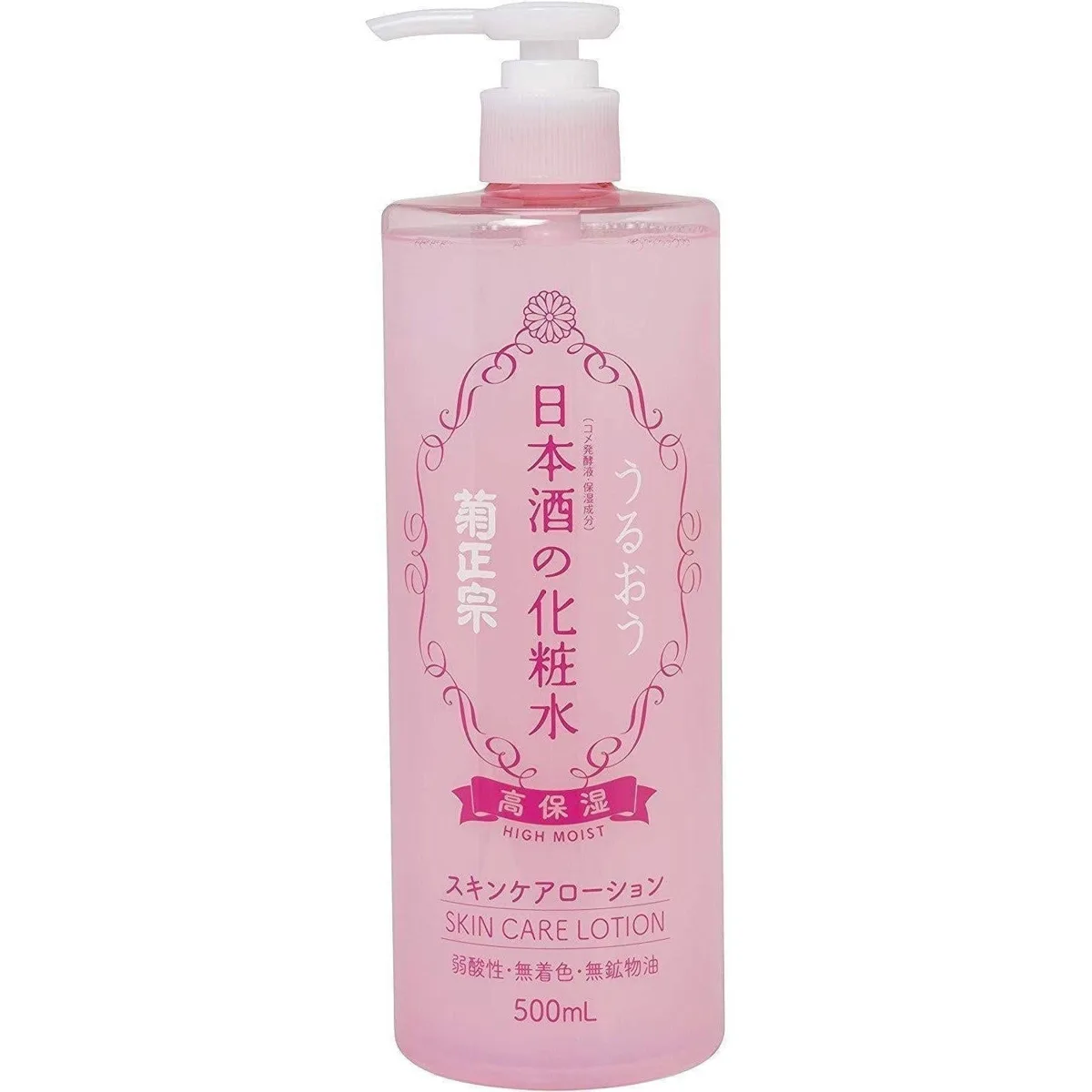
Buy at Amazon ♥A thick water — viscous enough to cling to palms, breaking instantly on skin and absorbing to a plump, faintly tacky-then-smooth finish typical of high-humectant Japanese lotions.
Unfragranced, with the line's faint natural soy note on application that fades within a minute.
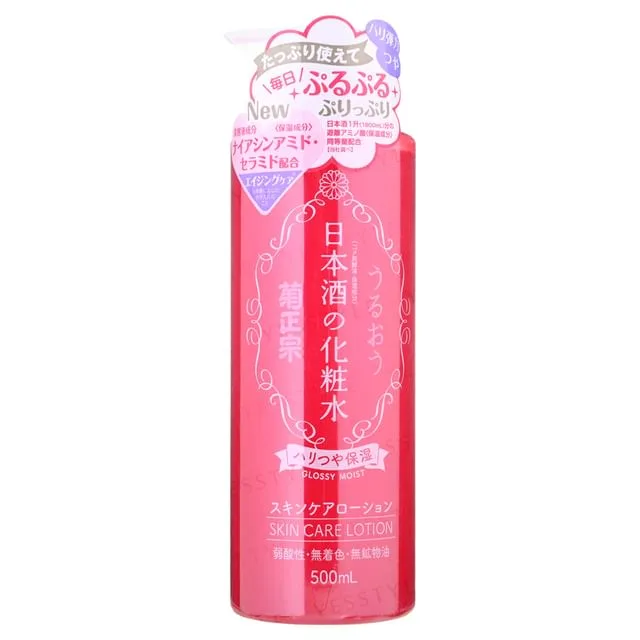
The wrinkle line's gold-accented 200ml bottle with a simple screw cap — pour-and-press dispensing, drugstore-honest, nothing to break.
The first week sets the contract: skin feels conspicuously plumped from the humectant load, with perhaps a whisper of warmth or fine flaking around the nose as the retinol introduces itself. It's a noticeably gentler on-ramp than Western retinol creams — the encapsulation, ceramides, and watery dilution all conspire to keep the adjustment civil.
Two and a half to three months of nightly use.
All Year
When Sana added a pure-retinol wrinkle line to Nameraka Honpo in 2017, it put a once-gatekept active into the soy-milk brand Japanese families had trusted for a decade — and the N generation refined that bet with encapsulation and the ceramide escort. The line's efficacy-evaluation testing (効能評価試験済み) covers the official claim: making fine dryness lines less noticeable.
Sana's Nameraka Honpo wrinkle line brought pure retinol to Japanese drugstore shelves in 2017 and has iterated it since — this N-generation lotion folds the brand's twenty-year soy-fermentation platform around encapsulated retinol at a price that assumes daily, whole-bottle-splashing use. Tokiwa Pharmaceutical's 1976 heritage stands behind the line's efficacy-evaluation testing.
A twelve-dollar retinol lotion can't contain a working dose.
Sana doesn't disclose the percentage, and it's certainly conservative — but conservative retinol applied nightly across months is exactly how the Japanese drugstore approach works, and retinol's literature supports low-dose, long-duration efficacy on photoaging. The price reflects drugstore economics, not an empty formula.
Retinol in a watery lotion is more irritating because it penetrates faster.
The opposite logic applies here: the retinol is encapsulated, diluted across a generous application volume, and accompanied by three ceramides and heavy humectants. That's why this format earns its reputation as an on-ramp — though it remains a true retinoid, and the adjustment period, sunscreen duty, and pregnancy caution all still apply.
Sana doesn't publish the percentage — standard practice for Japanese drugstore retinol, which favors conservative encapsulated doses designed for nightly, generous application. Treat it as an entry-strength retinoid: meaningful over months, not a tretinoin substitute.
Most skin can, after a short ramp — start three nights a week for two weeks, then go nightly if no flaking or stinging appears. The built-in ceramides and humectant load make this one of the most forgiving retinol formats sold anywhere.
Night only. Retinol degrades in sunlight and raises photosensitivity, so the lotion belongs in the evening slot with broad-spectrum sunscreen every following morning — a pairing that's mandatory, not optional, for the results to accumulate.
No — like all retinoids, it's conventionally avoided during pregnancy and breastfeeding. The line's retinol-free soy siblings cover hydration safely in the interim, and bakuchiol or azelaic acid formulas are the usual pregnancy-window substitutes.
It takes the toner slot in your evening routine, directly after cleansing, with moisturizer over it. Keep exfoliating acids and benzoyl peroxide on alternate nights, and don't stack it with another retinoid — the watery format makes it easy to forget it's a real active.
Japan's 効能評価試験 allows a specific tested claim: making fine lines caused by dryness less noticeable. It's a real standardized test and a modest one — deeper wrinkle remodeling is retinol's longer, less guaranteed game, not what the certification certifies.
Recurring themes our editors read across retailer reviews of this product — summaries in our words, not quotations, and not a substitute for your own patch test.
gentlest retinol entry most users have tried
thick-watery texture absorbs without stickiness
price makes nightly consistency painless
no disclosed retinol percentage frustrates planners
results are gradual rather than dramatic
soy scent divides households