




Menopause Changes the Skin You Are Treating, Not Just How It Looks
The collagen number is real. It is also the wrong thing to fix first — because the substrate your routine was built on has quietly been replaced.
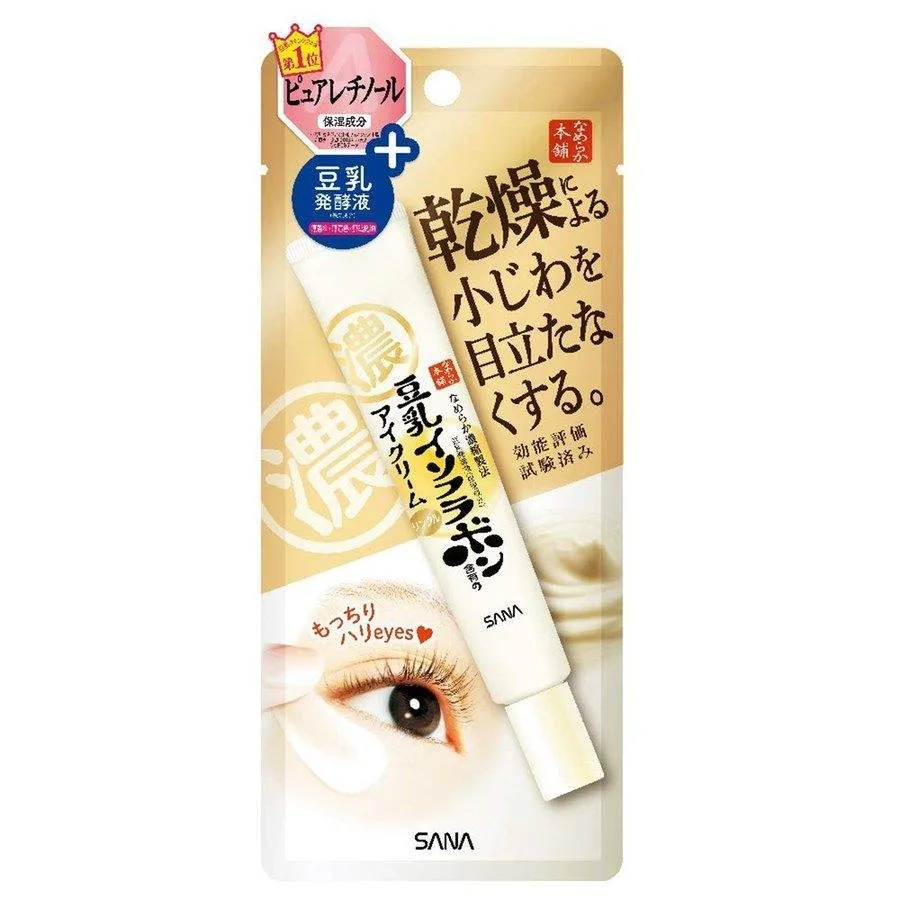
Most eye creams at this price point skip retinol entirely to avoid formulation complexity. Sana squeezes low-dose retinol, fermented soy actives, and a ceramide into a 20g jar that costs less than a cocktail, a combination essentially unique in the sub-$15 eye cream category.
A J-beauty drugstore anomaly: real retinol, fermented soy actives, and a ceramide packed into a 20g jar that costs less than a movie ticket. It is not the most sophisticated eye cream on earth, but per-yen it is unmatched, and the gentle delivery makes it a genuine option for retinol beginners scared to put actives near their eyes.
The case for it
What would change this: A declared concentration would move this to a firmer reading of the dose.
Same rule for everyone. “Good choice” is the verdict on 9,564 of 45,024 concern verdicts across the catalog; rule R5 decided 9,072 of them. Unchanged since September 5, 2026, engine 5.1.1.
Brand or formulator? Disclose a concentration or correct a fact →
The studies behind the evidence row
The case for it
Same rule for everyone. “Good choice” is the verdict on 9,564 of 45,024 concern verdicts across the catalog; rule R5 decided 9,072 of them. Unchanged since September 5, 2026, engine 5.1.1.
Brand or formulator? Disclose a concentration or correct a fact →
The studies behind the evidence row
Also listed for Dullness — the actives here (Squalane, Retinol, Probiotics & Prebiotics, Soybean (Glycine Soja) are in our research queue for that concern; there is no verdict until their evidence rows are written. That is a gap in our table, not a mark against the product.
Does the jobDoes what a eye cream is for: safe for eye skin, targets a real eye concern. Not measured from the label: hydrates without heaviness, stays where it's put.
A verdict is DermApproved’s assessment of how well a product’s ingredients fit a concern — never a claim about what the product treats. Evidence dots and collected reviews sit beside it and are never blended in. Rules 0.5.1 · evidence table ev-2026.09-r228 · how we decide
Most eye creams under fifteen dollars are flavored moisturizers. They skip retinol because retinol is expensive, annoying to stabilize, and dangerous to dose wrong in a jar aimed at the most sensitive skin on the face. Sana Nameraka Honpo's Soy Milk Isoflavone Eye Cream, a fixture of Japanese drugstore shelves for nearly two decades, does not have that problem. It contains both retinol and retinyl palmitate, ranked high enough on the INCI list to be functional rather than ornamental, and it still retails for roughly the price of a coffee and a pastry.
The formula is a textbook example of how to get retinol close to the eye without causing a revolt. Squalane sits in the top five ingredients, providing the cushiony emollient base that buffers the actives. Macadamia ternifolia seed oil and beeswax add further richness. Ceramide NG, a single synthetic ceramide, helps reinforce the barrier in the exact place where barrier damage shows up fastest as crepiness. Then come the soy stars: soymilk ferment filtrate, soy isoflavones, soybean seed extract, soy protein — the fermented cocktail that gives the entire Nameraka Honpo line its identity. Traditional Japanese beauty wisdom has relied on soy for centuries; Sana's contribution was codifying that into a drugstore range that felt modern enough for the 21st century. The house behind it is Tokiwa Pharmaceutical, which has run Sana since 1976 — a pharmaceutical parent whose fingerprints show in the unglamorous competence of the formula — and the line's standing in Japan includes @cosme Best Cosmetics Awards finalist recognition, the country's most trusted crowd-sourced beauty ranking.
Texture is where this eye cream earns its reputation. In the jar it looks like a stiff ivory cream, but the instant you warm it on a fingertip it softens into a silky, almost weightless film that spreads much further than you expect. There is no greasy residue, no milkiness under concealer, no fragrance. The scent — really, the absence of scent — is one of the nicer things about it. Many Japanese eye creams insist on a faint floral note. This one smells like almost nothing, which for a retinol product used close to the eye is exactly right.
On first application expect a cool, slightly tacky feel that settles within a minute. The retinol is modestly dosed and buffered by so much emollient that stinging is rare, even for people who cannot tolerate a Western retinol eye cream. Over the first week you will notice softer, more hydrated-looking under-eye skin — that is the squalane and soy proteins doing their work before the retinol has had time to matter. Around the six-week mark the real change starts — and it keeps building through week twelve, the honest horizon for judging any retinol product: finer lines soften, the crepey texture that develops around the orbital bone looks less pronounced, and the whole area reflects light a little more evenly. While we're on soy: the recurring worry that topical isoflavones act like estrogen deserves deflation. Applied to skin they behave as antioxidants and mild signaling molecules with no meaningful systemic absorption — the pregnancy exclusion here comes from the retinol, not the soybeans.
There are honest limitations. Denatured alcohol appears mid-list, which is not ideal for an eye-area product and is the reason sensitive users should proceed carefully. Methylparaben is in there, which matters if you are trying to avoid parabens as a personal preference. The 20g jar is tiny compared to Western eye creams, and the screw-top design exposes the retinol to light and air at every use — not ideal for stability, though the dense packaging and quick turnaround helps. And because retinol is in there, this is a pregnancy no-go. The retinol also dictates the schedule: night use only, sunscreen the next morning without fail, an every-third-night ramp for newcomers, and quick lid-on-jar discipline — use the included spatula, and note the six-month period-after-opening, which nightly use will comfortably beat.
The value story, though, is almost impossible to argue with. A 20g jar lasts four to six months with nightly use on both eyes, because a rice-grain amount covers the whole orbital area. That math works out to roughly two to three dollars a month for an eye cream with retinol, fermented soy, ceramide, and squalane. There is essentially nothing in the Western drugstore market that compares at this price. You can spend five times as much on something more polished with more refined texture and no alcohol — but the active content of this jar will hold its own against many of them.
The natural buyers are retinol beginners who want to dip into eye-area treatment without the price tag of a clinical brand, J-beauty enthusiasts building out the Nameraka Honpo routine, and anyone looking for an honest working eye cream under fifteen dollars. The wrong matches are sensitive-skin types who cannot tolerate denatured alcohol, people avoiding parabens on principle, and anyone pregnant or nursing. The rest of us can treat it as one of the quietest great deals in the category — the 3,500-strong review base averaging 4.3 has clearly reached the same conclusion, with value and gentleness leading the praise and the alcohol, parabens, and tiny jar carrying the dissent.
The hero actives that drive this product's performance.
| Ingredient | Function | Evidence |
|---|---|---|
| Soymilk Ferment Filtrate | The signature active of the entire Nameraka Honpo line, this fermented soymilk extract delivers soy proteins and peptides that help support the look of firmness around the thin periorbital skin, working with the soy isoflavones further down the list to create the brand's core anti-aging delivery system. | Not yet assessed |
| Soy Isoflavones | Phytoestrogens that, in this eye-specific formula, are paired with low-dose retinol to target fine lines without the aggressive irritation a standalone retinol product would cause around the eyes. The isoflavones add antioxidant support and help soften the appearance of crepiness. | Not yet assessed |
| Retinol | Dosed at a deliberately low concentration suitable for eye-area use, buffered here by squalane, macadamia oil, and Ceramide NG to minimize the stinging that often deters people from using retinol so close to the eye. Supports collagen turnover over 8-12 weeks of consistent use. | Emerging for Aging |
| Squalane | Positioned high on the INCI list to act as the main emollient that cushions both the retinol and alcohol, mimicking the skin's own sebum to prevent the tight, dry feeling retinol eye creams often leave behind. | Established mechanism for Dryness · established mechanism |
| Ceramide NG | A single ceramide included to reinforce the barrier in the area most prone to looking dehydrated and crepey, working with the squalane-oil-beeswax trio to keep the formula from disrupting the delicate eye-area barrier during retinol use. | Established mechanism for Dryness · established mechanism |
Ingredient standings describe the active at treatment-level doses and vehicles; this product's own condition grades weigh its actual formula.
Water, Glycerin, Butylene Glycol, Squalane, Dipentaerythrityl Tetrahydroxystearate/Tetraisostearate, Behenyl Alcohol, PVP, Pentaerythrityl Tetraethylhexanoate, PEG-150, Dimethicone, Pentylene Glycol, Beeswax, Dipentaerythrityl Tri-Polyhydroxystearate, PEG-60 Glyceryl Isostearate, Macadamia Ternifolia Seed Oil, Glyceryl Stearate, Trimethylsiloxysilicate, Retinol, Retinyl Palmitate, Soymilk Ferment Filtrate, Soy Isoflavones, Glycine Soja (Soybean) Seed Extract, Glycine Soja (Soybean) Protein, Ceramide NG, Sodium Tocopheryl Phosphate, Dipropylene Glycol, PEG-40 Hydrogenated Castor Oil, PPG-4-Ceteth-20, Sodium Ascorbate, Alcohol, Ethylhexylglycerin, Carbomer, Xanthan Gum, Zea Mays (Corn) Oil, Tocopherol, Caprylic/Capric Triglyceride, Polysorbate 80, Inulin Lauryl Carbamate, Lecithin, Sodium Hydroxide, Phenoxyethanol, Methylparaben
moisturizer
PM
Apply a rice-grain amount to the orbital bone area after serums and before your face moisturizer. Because it contains retinol, use only at night and always follow with SPF in the morning.
Immediate softening and hydration from the first application. Reduction in fine dehydration lines within 2 weeks. Visible improvement in crepiness and expression lines after 8-12 weeks of nightly use.
The two star active categories here are retinoids and soy isoflavones, and their evidence bases look very different. Retinol's ability to increase collagen synthesis, normalize epidermal turnover, and reduce fine wrinkles is one of the most thoroughly studied facts in cosmetic dermatology, with decades of peer-reviewed work demonstrating benefit even at concentrations well below 0.1 percent when delivered in a supportive vehicle. The relevant point for this product is that periorbital skin is roughly half the thickness of cheek skin, so a lower-than-usual retinol dose buffered by occlusive emollients is both safer and, in many studies, sufficient to deliver measurable improvement after 8-12 weeks. Soy isoflavones, particularly genistein and daidzein, have been investigated for their antioxidant activity and their ability to modulate photoaging pathways in skin. Published work has documented improvements in dyspigmentation and skin elasticity with topical soy extracts over 12-week periods, though the quality of evidence is more variable than for retinoids and depends heavily on the specific extract and concentration used. What is interesting about Sana's formulation is the combination: low-dose retinol provides the well-established collagen benefit, soy isoflavones add antioxidant protection against the photodamage retinol cannot reverse on its own, and a single ceramide plus squalane prevent the barrier disruption that would otherwise turn a gentle eye cream into an irritating one. It is not a revolutionary formula, but the pieces fit together in a way that mirrors modern eye-care best practice, executed at a drugstore price.
Dermatologists frequently recommend starting retinol around the eye area slowly and in a well-buffered vehicle, which is essentially what this product offers. Practicing dermatologists commonly acknowledge that the periorbital skin is among the thinnest on the face and benefits from emollient-rich retinol delivery to minimize irritation and transepidermal water loss. Soy-based actives are commonly cited in dermatology literature as gentle antioxidants appropriate for sensitive or aging skin, though they are not considered first-line anti-aging actives on their own. Dermatologists do flag that pregnant or nursing patients should avoid any retinoid-containing eye cream, and that patients with active eczema or rosacea around the eyes should use the cream no more than two or three nights a week, or skip it entirely.
Use at night only, after cleansing, toning, and any serums. Dispense a rice-grain amount onto a clean fingertip, warm briefly, and pat gently onto the orbital bone — avoid pulling the skin and do not apply directly to the lash line or lid crease. Follow with your regular face moisturizer to lock in. In the morning, always wear sunscreen (retinol increases photosensitivity). If you are new to retinol, start every third night and build up to nightly over 2-3 weeks. Do not layer with other retinoids, strong acids, or benzoyl peroxide on the same night.
At roughly $12.50 for 20g, this is one of the strongest value propositions in the entire eye-cream category. A 20g jar stretches to four to six months with nightly use, putting the effective monthly cost at about two to three dollars for a product that delivers functional retinol, fermented soy actives, squalane, and a ceramide. Only one size is sold, but that size lasts long enough that a second size is not missed. Compared to the $50-90 retinol eye creams from clinical brands, the gap in finished polish and stability is real, but the gap in active ingredient delivery is surprisingly small. For shoppers who care about what is on the INCI list more than what is on the box, the value here is essentially uncontested.
Retinol beginners who want to treat their eye area without spending $60, J-beauty enthusiasts building out the Nameraka Honpo routine, budget shoppers who read INCI lists, and anyone whose main eye-area concern is early fine lines and dehydration. Also a solid pick for people who dislike fragranced eye creams.
Anyone pregnant or nursing, people with very sensitive skin who react to denatured alcohol, those committed to paraben-free formulations, and anyone with active eczema or rosacea around the eyes. It is similarly a skip if you are already using a prescription retinoid nightly and do not want to layer additional retinol onto the orbital area.
Ready to try Sana Nameraka Honpo Soy Milk Isoflavone Eye Cream?
Buy at Amazon ♥Medium-weight cream that starts firm in the jar and softens on contact with skin, melting into a silky semi-matte film without the thickness of Western retinol eye creams.
Essentially scentless — a faint clean note from the soy ferment but no added fragrance.
Small 20g screw-top jar with a plastic spatula — economical but exposes the retinol to light and air each use.
On first application expect a cool, slightly tacky feel that settles within a minute. No tingling for most users thanks to the squalane and oil buffering. First week: softer, plumper-looking under-eyes. If you are new to retinol, start every third night and build up.
4-6 months with nightly use on both eyes — the 20g jar lasts surprisingly long because so little product is needed per application.
All Year
The Nameraka Honpo line launched in 2005 to bring traditional Japanese soy-based beauty wisdom into affordable modern skincare. The eye cream was added later to complete the range, responding to Japanese consumer demand for gentle but active eye-area treatments at drugstore prices. It has remained essentially unchanged, reformulated only slightly over the years to add Ceramide NG.
Sana is a Japanese skincare brand owned by Tokiwa Pharmaceutical, founded in 1976. The Nameraka Honpo line launched in 2005 and has remained one of Japan's most reliable drugstore anti-aging ranges, built on fermented soy ingredients long used in Japanese cosmetic tradition.
Cheap Japanese retinol eye creams are just moisturizers with a marketing claim.
This one contains both free retinol and retinyl palmitate high enough on the INCI to be functional, buffered by squalane and ceramide — the formulation is genuinely active, just modestly dosed for eye-area tolerance.
Soy isoflavones in skincare are essentially estrogen and unsafe.
Topical soy isoflavones work as antioxidants and mild signaling molecules without meaningful systemic absorption. They are not recommended during pregnancy as a precaution, and this cream's retinol rules it out for pregnancy anyway.
Yes — the INCI list shows both Retinol and Retinyl Palmitate relatively high up, buffered by squalane, macadamia oil, and Ceramide NG. The dose is lower than a dedicated face retinol but enough to deliver real collagen-turnover benefits over 8-12 weeks.
No. It contains both retinol and retinyl palmitate, which are generally avoided during pregnancy and breastfeeding. The soy isoflavones also make it a belt-and-suspenders no. Swap to a peptide or ceramide-focused eye cream instead.
Proceed cautiously. The retinol combined with denatured alcohol can sting sensitive eye-area skin. If you are sensitive, start every third night, watch for redness, and consider applying a gentle moisturizer underneath as a buffer.
The eye cream is the only product in the line that relies meaningfully on retinol. The face lotion and moisturizing cream focus on fermented soy and hydration without retinol, so you can use the eye cream at night and the line's other pieces morning and evening without stacking retinoids.
Japanese Taste, YesStyle, Amazon third-party sellers, and a handful of Asian beauty shops like Murasaki Cosmetics ship internationally. Expect $10-15 USD plus shipping.
Most users report no visible purging because the retinol dose is modest and the vehicle is heavily emollient. Some first-time retinol users see very mild flaking in the first two weeks — back off to every other night until it settles.
With nightly use on both eyes, expect 4-6 months from the 20g jar. A rice-grain amount covers both orbital bones, and because the cream is dense a little goes far.
Recurring themes our editors read across retailer reviews of this product — summaries in our words, not quotations, and not a substitute for your own patch test.
Incredible value for a retinol eye cream
Cushiony non-greasy texture
No fragrance
Gentle enough for eye-area retinol beginners
Noticeable smoothing over time
Contains alcohol
Contains parabens
Small 20g jar
Not easily available outside Japan
Contains retinyl palmitate alongside retinol