

Hyaluronic Acid Can Actually Dehydrate Your Skin (Here's When)
The internet's favorite hydrator has a counterintuitive dark side — in dry air, a humectant with nothing to seal it can pull water out of your skin instead of into it.
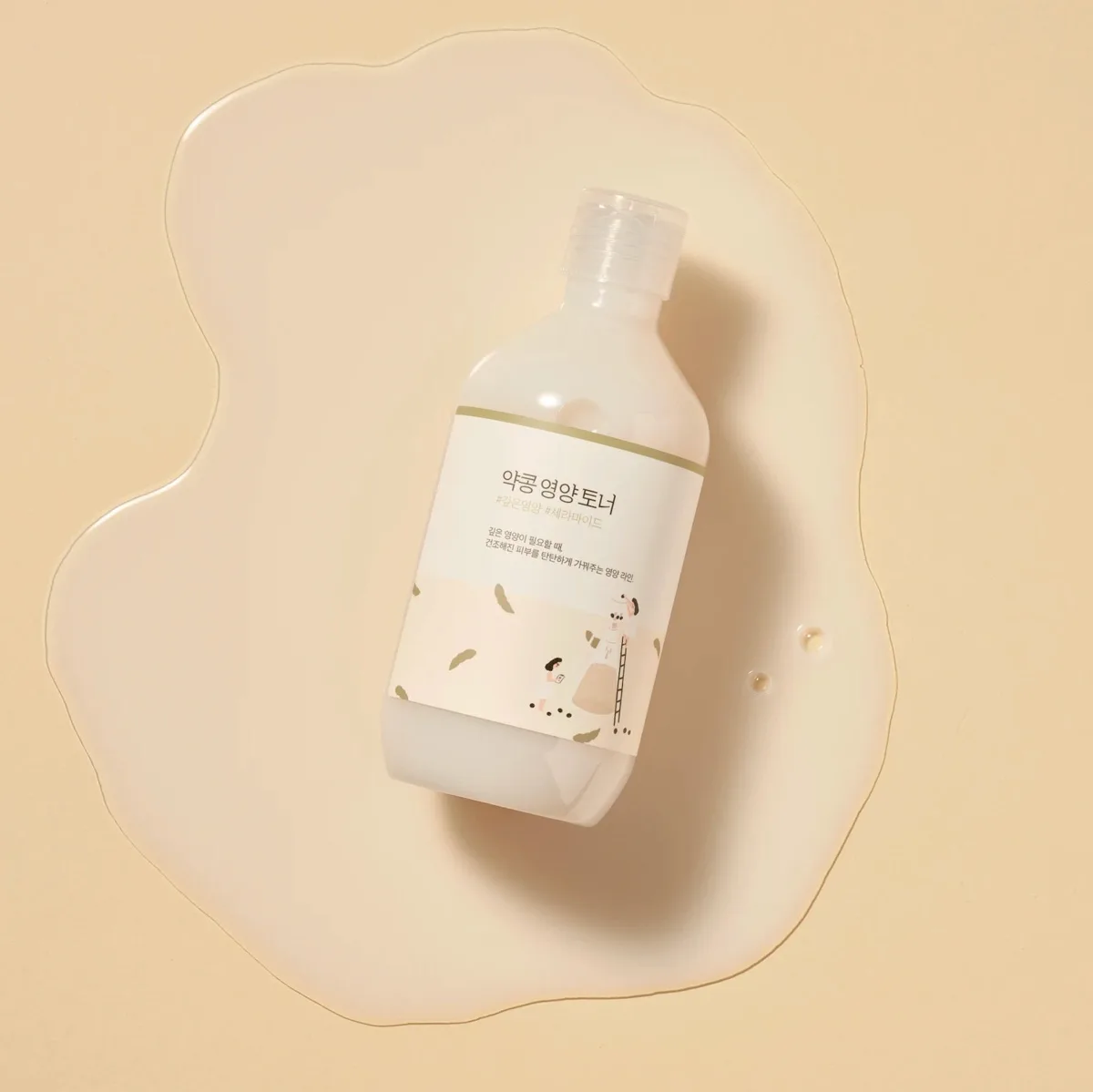
Most Korean nourishing toners fall into two camps: minimalist hydrating formulas that don't really justify the 'nourishing' label, or heavily fragranced ferment-based essences positioned as luxury products. Round Lab splits the difference by building a fragrance-free fermented soybean base with bifida ferment lysate and lactobacillus support, keeping the nourishment theme credible while maintaining the brand's minimalist ingredient restraint.
The nourishing-focused counterpart to Round Lab's cult 1025 Dokdo Toner — fermented soybean base, bifida ferment lysate, niacinamide, and humectant support, built for dry and mature skin. Less universally suitable than the Dokdo version, but a clearly better pick for its target audience.
The case for it
Same rule for everyone. “Good choice” is the verdict on 9,564 of 45,024 concern verdicts across the catalog; rule R5 decided 9,072 of them. Unchanged since September 5, 2026, engine 5.1.1.
Brand or formulator? Disclose a concentration or correct a fact →
The studies behind the evidence row
The case for it
What would change this: A concentration inside the studied range would raise this a step.
Same rule for everyone. “Unproven” is the verdict on 1,111 of 45,024 concern verdicts across the catalog; rule R9 decided 1,111 of them. Unchanged since September 5, 2026, engine 5.1.1.
Brand or formulator? Disclose a concentration or correct a fact →
The studies behind the evidence row
The case for it
Same rule for everyone. “Good choice” is the verdict on 9,564 of 45,024 concern verdicts across the catalog; rule R5 decided 9,072 of them. Unchanged since September 5, 2026, engine 5.1.1.
Brand or formulator? Disclose a concentration or correct a fact →
The studies behind the evidence row
Also listed for Dryness — the actives here (Niacinamide, Panthenol (Vitamin B5) are in our research queue for that concern; there is no verdict until their evidence rows are written. That is a gap in our table, not a mark against the product.
Does the jobDoes what a toner is for: not alcohol-driven, adds something real. Not measured from the label: restores skin pH, plays well with what follows.
A verdict is DermApproved’s assessment of how well a product’s ingredients fit a concern — never a claim about what the product treats. Evidence dots and collected reviews sit beside it and are never blended in. Rules 0.5.1 · evidence table ev-2026.09-r228 · how we decide
The distinction between dehydrated and dry skin is one of those textbook dermatology lessons that most skincare shoppers ignore at their own expense. Dehydration is transient — it's what happens when the stratum corneum loses water faster than it's being replenished, and it responds well to humectants, occlusives, and general hydration support. Dry skin is structural — it's what happens when the skin's oil and lipid production is insufficient over time, and it needs different ingredients: emollients, ferments, soothing support, sometimes phytoestrogen-like compounds for mature skin concerns. Round Lab's Dokdo line is designed around the first problem; the Soybean line is designed around the second. Understanding which of the two you actually need is the whole question this toner answers.
The Soybean Nourishing Toner sits at the water-based step of the Soybean routine, paired with the Soybean Nourishing Cream for a two-product approach to dry and mature skin. The first ingredient on the INCI list is fermented Glycine Soja seed extract, which replaces purified water as the formula's base and ties the product into Korean traditional skincare aesthetics around fermented soy as nourishing and softening. Soybean extract carries amino acids, isoflavones like genistein and daidzein, and small peptides. The clinical evidence base on topical soybean is smaller than for a single well-characterized ingredient, but it isn't purely marketing either — published research has suggested possible benefits for mature-skin concerns at meaningful topical concentrations.
That distinction — a real but emerging evidence base, honestly labeled — is worth holding onto, because the fermented-ingredient category attracts both uncritical enthusiasm and reflexive dismissal. Neither is right. Bifida ferment lysate has genuine published work behind it for skin resilience and recovery from environmental stress. It also has nowhere near the depth of literature that niacinamide has. A formula can contain both and be honest about which one is carrying the clinical weight.
The supporting cast is where Round Lab's formulation discipline shows up. Niacinamide at the brand's consistent 2% provides broad barrier and tone support without compounding irritation when layered with other products in the line. Lactobacillus-fermented soybean extract reinforces the fermentation theme from a second angle. Panthenol, allantoin, and a botanical tail of centella asiatica, houttuynia, portulaca, licorice, camellia, and rosemary handle soothing and anti-inflammatory support. Adenosine, sitting quietly mid-list, is a Korean regulatory-approved anti-wrinkle active and one of the few ingredients here with an official functional claim attached to it. Humectancy comes from glycerin, propanediol, trehalose, betaine, and sodium hyaluronate — a heavier load than the minimalist Dokdo Toner, matching the nourishing positioning. Tocopherol and disodium EDTA handle stability. The pH sits at 5.5, comfortably within the skin's own range, which is why nothing about this toner stings.
Two structural notes deserve mention. The formula is fragrance-free, alcohol-free, and free of essential oils. And unlike the Soybean Cream, the toner is fungal-acne safe, because there are no olive-derived emulsifiers or polysorbates in it to feed Malassezia — a meaningful difference for anyone who has had to abandon a cream but wants to keep the routine.
In use, the toner is slightly more substantial than a minimalist hydrating formula. It's still watery, still absorbs quickly, but there's a noticeable softness and very slight viscosity from the fermented base that distinguishes it from pure humectant toners. The right technique is the Korean layered one: two or three passes, hand-patted onto skin still damp from cleansing, each layer absorbing before the next. Dry skin typically reports immediate softening and reduced tightness, with cumulative nourishment building across one to three weeks. It's particularly effective in winter, or as a dedicated nourishing step for anyone on retinoids or exfoliating acids that push skin toward dryness — it layers cleanly under both, and conflicts with neither. The opaque bottle and flip cap are unglamorous and entirely correct for a formula carrying ferments and tocopherol.
The limitations are narrow but they matter. Soy allergy is the hard stop: the formula is built on soybean extract and includes a second fermented soybean component, so anyone with a soy sensitivity needs to avoid it entirely rather than patch test their way toward a bad afternoon. Oily and combination-oily skin will probably find it heavier than they want, and the Dokdo Toner is the better fit there. The Soybean line is also less famous than the Dokdo range, which means thinner review volume and less long-term community commentary — a couple of thousand reviews rather than the tens of thousands the cult product has accumulated. The formulation quality is nonetheless consistent with the brand's track record, and the several thousand people who have weighed in say much the same thing: more nourishing than the Dokdo, good in winter, slightly heavy for some.
At roughly twenty dollars for 200 ml, lasting two to three months of twice-daily use, the value is straightforwardly good. Fermented Korean toners at comparable volume routinely cost more, and prestige Western ferment-based toners cost several times as much for less.
For dry, mature, and winter-compromised skin, this toner is a legitimate upgrade over a minimalist hydrating step, and paired with the Soybean Nourishing Cream it forms one of the more thoughtful dry-skin routines in K-beauty at this price. Just make sure your problem is actually dryness and not dehydration before committing. The Dokdo Toner remains the right call for most people, and choosing the wrong Round Lab toner for your skin type will leave you underwhelmed in a way the brand hasn't earned.
The hero actives that drive this product's performance.
| Ingredient | Function | Evidence |
|---|---|---|
| Fermented Soybean (Glycine Soja) Seed Extract | The first INCI ingredient and formula base — fermented soybean extract replaces purified water to carry amino acids, isoflavones, and small peptides that Korean formulators traditionally associate with nourishing and softening mature skin. | Not yet assessed |
| Niacinamide (2%) | Sits at Round Lab's signature low, well-tolerated concentration — broad barrier and tone support without compounding irritation when layered with other Soybean or Dokdo line products. | Established mechanism for Compromised Skin Barrier · established mechanism |
| Bifida Ferment Lysate | A popular Korean fermented ingredient with emerging evidence for supporting skin resilience and recovery — reinforces the nourishment theme alongside the soybean base and its fermented counterpart lower in the list. | Not yet assessed |
| Panthenol | Paired with allantoin and the calming botanical tail to keep the toner soothing on reactive or dry skin, which matters because fermented bases can occasionally feel richer than minimalist hydration bases. | Established mechanism for Dehydration · established mechanism |
| Sodium Hyaluronate | Works with glycerin, trehalose, and betaine to deliver a humectant load appropriate for dry skin — more substantial than the minimalist Dokdo Toner to match the nourishing positioning of this line. | Established mechanism for Dehydration · established mechanism |
Ingredient standings describe the active at treatment-level doses and vehicles; this product's own condition grades weigh its actual formula.
Glycine Soja (Soybean) Seed Extract, Butylene Glycol, Propanediol, Glycerin, Niacinamide, 1,2-Hexanediol, Panthenol, Bifida Ferment Lysate, Lactobacillus/Soybean Ferment Extract, Trehalose, Betaine, Allantoin, Sodium Hyaluronate, Adenosine, Xanthan Gum, Carbomer, Tromethamine, Disodium EDTA, Ethylhexylglycerin, Tocopherol, Centella Asiatica Extract, Portulaca Oleracea Extract, Houttuynia Cordata Extract, Camellia Sinensis Leaf Extract, Glycyrrhiza Uralensis Root Extract, Rosmarinus Officinalis Leaf Extract
toner
AM & PM
Apply after cleansing in 2-3 hand-patted layers for meaningful hydration impact, especially in winter. Works as a dedicated nourishing step or layered with other toners.
Immediate softness and plumping on first use. Cumulative nourishment and reduced tightness after 1-3 weeks of consistent twice-daily application.
The evidence behind this toner is strongest for the supporting cast rather than the fermentation story. Niacinamide is one of the most rigorously studied ingredients in topical dermatology, with robust evidence for supporting barrier function through increased ceramide synthesis, reducing transepidermal water loss, and improving skin tone through reduced melanosome transfer. Panthenol converts to pantothenic acid in the skin and has published evidence for accelerated barrier repair and reduced inflammation. The humectant blend — glycerin, sodium hyaluronate, trehalose, betaine — draws on well-established water-binding agents with clear evidence for supporting stratum corneum hydration. Allantoin has documented soothing and mild keratolytic activity. The fermentation side of the formula has a smaller but growing evidence base: bifida ferment lysate has published research suggesting benefits for supporting skin resilience, recovery from environmental stress, and reduced UV-induced damage, though these studies are typically smaller than the foundational niacinamide literature. Fermented soybean extract contains isoflavones like genistein and daidzein, which have been studied for their mild phytoestrogen-like activity and possible benefits for mature-skin concerns. The overall coherent story is that the toner's calming and hydration claims are well-supported, while the nourishment claims rest on an emerging but still meaningful evidence base. Compared to Round Lab's 1025 Dokdo Toner, the formulation differences are modest but real — the Soybean Toner is genuinely built for a different skin need, not just a marketing repositioning.
Dermatologists frequently recommend toners with humectant support for patients with dry or mature skin, and the Soybean Nourishing Toner fits this clinical frame. Clinical dermatologists frequently stress that fermented ingredients like bifida ferment lysate have emerging evidence for skin resilience, though they typically emphasize that well-studied ingredients like niacinamide and hyaluronic acid carry most of the clinical weight in any given formula. For patients with soy allergies, dermatologists advise strict avoidance of topical products containing soybean extract, which disqualifies this formula for that population. For dry or mature skin patients without soy sensitivities, the fragrance-free, alcohol-free formulation is consistent with what dermatologists generally recommend as a safe hydration step, and the toner layers cleanly with prescription retinoids or other active treatments.
Apply after cleansing morning and night. Dispense 2-3 pumps into clean palms and press and pat gently onto damp skin in multiple layers for meaningful nourishment impact — the Korean-style layered approach works especially well with this formula. Alternatively, apply with a cotton round as a pre-serum prep step. Follow with serums, treatments, and a richer moisturizer (ideally the Soybean Nourishing Cream for full-line benefits). Compatible with retinoids, vitamin C, and exfoliating acids. Store at room temperature; use within 12 months of opening.
At around $19-22 for 200 ml, the Soybean Nourishing Toner is fairly priced relative to its formulation quality and competitive with other fermented Korean toners at twice its volume. Compared to prestige Western fermented-ingredient toners ($40-60 for similar sizes), it undercuts the category significantly. The 200 ml size lasts 2-3 months with twice-daily use, which keeps the cost-per-application reasonable for a targeted nourishing product. For its intended dry-skin audience, the value proposition holds up against most alternatives.
Dry, mature, and winter-compromised skin users looking for a nourishing-focused Korean toner with real fermentation support. A strong pick for users committed to the Soybean routine or pairing with the Soybean Nourishing Cream.
Users with soy allergies must avoid this product entirely. Oily and combination-oily users will find the 1025 Dokdo Toner better-suited to their skin type. Users looking for a cult hero product will get more consistent reviews and long-term community support from the Dokdo line.
Ready to try ROUND LAB Soybean Nourishing Toner?
Buy at Amazon ♥Slightly viscous liquid — thicker than the minimalist 1025 Dokdo Toner but still substantially lighter than an essence or serum.
Unscented.
Tall opaque plastic bottle with flip cap — consistent with Round Lab's main line packaging.
First application feels slightly more substantial than a standard hydrating toner — a touch of that characteristic fermented softness without tackiness. The plumping effect is noticeable from day one, with cumulative nourishment building over 1-3 weeks.
Lasts about 2-3 months when used morning and evening
fall winter
Round Lab launched the Soybean line in 2021 to complement the Dokdo hydration range with a nourishment-focused alternative. The Soybean Nourishing Toner is the water-based step of the line, paired with the Soybean Nourishing Cream to form a two-product routine for dry or mature skin.
Round Lab launched in 2017 as a Korean minimalist brand built around regional ingredient sourcing. The Soybean line (2021) uses fermented soybean extract sourced from Korean soy regions and targets dry and mature skin concerns, complementing the Dokdo hydration range.
Nourishing toners are just fancy hydrating toners.
The distinction is real: nourishing formulas typically use a ferment or botanical base, include peptides or amino acid sources, and target skin softening and resilience rather than pure hydration. This toner fits that description, even if some competitor products overstate the difference.
Fermented ingredients in toners are just marketing.
Bifida ferment lysate and other fermented actives have emerging evidence for supporting skin resilience and recovery. The evidence base is smaller than for well-studied ingredients like niacinamide, but it's not purely decorative.
The Soybean Toner is built on fermented soybean extract rather than deep seawater and includes fermented actives (bifida ferment lysate, lactobacillus soybean ferment) for a nourishment-focused profile. The Dokdo Toner is a minimalist hydrating formula. Use Soybean for dry, mature, or winter-compromised skin; use Dokdo for daily hydration.
No — the first INCI ingredient is Glycine Soja (soybean) seed extract, with additional fermented soybean extract lower in the list. Anyone with a soy allergy should avoid this product.
Yes — completely unscented, consistent with the rest of Round Lab's main lineup.
Yes. The formula is non-reactive and works well as a nourishing buffer step before retinoids or vitamin C. The 2% niacinamide and humectant load specifically help reduce irritation from active routines.
It's slightly richer than a minimalist hydrating toner, so oily skin may prefer the 1025 Dokdo Toner. Combination skin usually tolerates it fine, especially during dry or winter seasons.
Recurring themes our editors read across retailer reviews of this product — summaries in our words, not quotations, and not a substitute for your own patch test.
more nourishing than the 1025 Dokdo Toner
good for dry winter skin
fragrance-free formulation
noticeable plumping effect
less iconic than the Dokdo Toner
soy allergy concerns for sensitive users
slightly heavier than minimalist toners