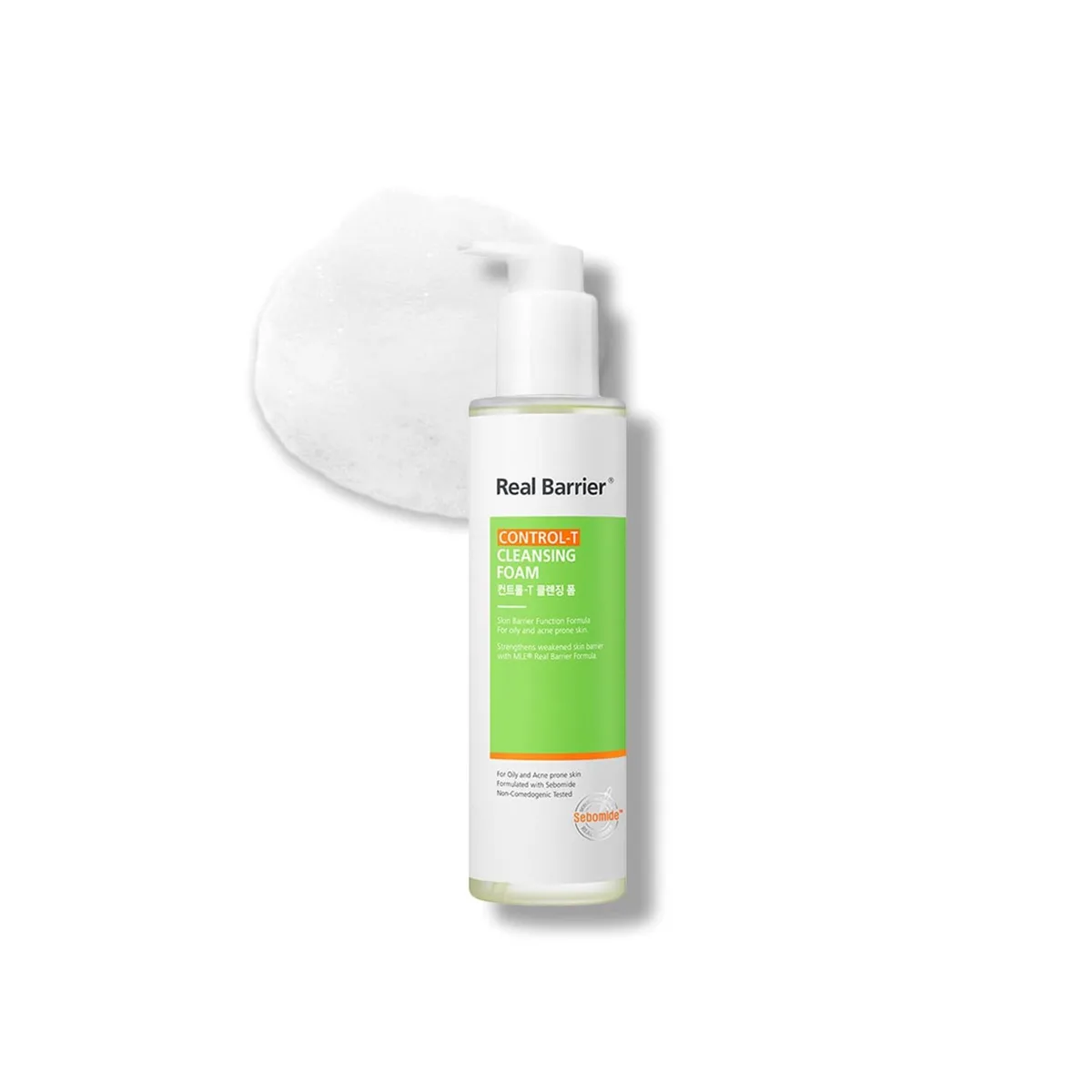
It targets oily and blemish-prone skin with sebum-calming houttuynia, tea tree, and witch hazel, but cleanses with gentle glucoside and amino-acid surfactants plus a touch of the brand's pseudo-ceramide, so it controls oil without the stripping that makes many oily-skin cleansers backfire. The trade-off is a botanical essential-oil blend that drives a strong scent.
A smartly built oil-control cleanser that manages shine without the harsh stripping most oily-skin washes rely on, using gentle glucoside and amino-acid surfactants plus sebum-calming houttuynia, tea tree, and witch hazel. It is well-priced and genuinely good for oily and combination skin. The catch is a strong herbal-woody essential-oil blend that makes it a poor fit for dry or sensitive skin.
Supporting rolefor Excess OilinessIn your profileYou chose · Nothing here targets excess oiliness directly; sebum removal without stripping is the recognised companion to treating it, and this foam does that without known triggers.Not yet assessedStandard tolerabilityNo reviews collected yet
The case for it
Houttuynia Cordata Extract has no evidence row yet for this concern — it is in the research queue.
The formula carries no trigger this concern is sensitive to, with the cautions noted.
Cautions: fungal-acne triggers.
What would change this: A researched evidence row for the lead active would replace this with a verdict.
Same rule for everyone. “Supporting role” is the verdict on 8,197 of 45,024 concern verdicts across the catalog; rule R8 decided 4,250 of them.
Unchanged since September 5, 2026, engine 5.1.1.
R8 — The category's job (barrier care, humectant hydration, gentle cleansing, photoprotection) is the documented supportive role for this concern. This is the honest verdict for a moisturizer on an acne page. · the full register
Supporting rolefor BlackheadsIn your profileYou chose · Nothing here targets blackheads directly; gentle cleansing is the recognised companion to treating it, and this foam does that without known triggers.Not yet assessedStandard tolerabilityNo reviews collected yet
The case for it
Houttuynia Cordata Extract has no evidence row yet for this concern — it is in the research queue.
The formula carries no trigger this concern is sensitive to, with the cautions noted.
Cautions: fungal-acne triggers.
What would change this: A researched evidence row for the lead active would replace this with a verdict.
Same rule for everyone. “Supporting role” is the verdict on 8,197 of 45,024 concern verdicts across the catalog; rule R8 decided 4,250 of them.
Unchanged since September 5, 2026, engine 5.1.1.
R8 — The category's job (barrier care, humectant hydration, gentle cleansing, photoprotection) is the documented supportive role for this concern. This is the honest verdict for a moisturizer on an acne page. · the full register
Supporting rolefor AcneIn your profileYou chose · Nothing here targets acne directly; gentle cleansing that does not strip is the recognised companion to treating it, and this foam does that without known triggers.Not yet assessedStandard tolerabilityNo reviews collected yet
The case for it
Houttuynia Cordata Extract has no evidence row yet for this concern — it is in the research queue.
The formula carries no trigger this concern is sensitive to, with the cautions noted.
Cautions: fragrance; known irritants; fungal-acne triggers.
What would change this: A researched evidence row for the lead active would replace this with a verdict.
Same rule for everyone. “Supporting role” is the verdict on 8,197 of 45,024 concern verdicts across the catalog; rule R8 decided 4,250 of them.
Unchanged since September 5, 2026, engine 5.1.1.
R8 — The category's job (barrier care, humectant hydration, gentle cleansing, photoprotection) is the documented supportive role for this concern. This is the honest verdict for a moisturizer on an acne page. · the full register
Carrying active
Houttuynia Cordata Extract
Standing
not assessed
Form
plausible
Tolerability
standard — fragrance load, irritant load, fungal triggers
Also listed for Large Pores — the actives here (Houttuynia Cordata (Heartleaf) are in our research queue for that concern; there is no verdict until their evidence rows are written. That is a gap in our table, not a mark against the product.
Does the jobDoes what a cleanser is for: surfactant mildness, rinses clean without stripping. Not measured from the label: pH match to skin.
A verdict is DermApproved’s assessment of how well a product’s ingredients fit a concern — never a claim about what the product treats. Evidence dots and collected reviews sit beside it and are never blended in.
Rules 0.5.1 · evidence table ev-2026.09-r228 · how we decide
Assessment
Pros & Cons
Pros
✓ Controls oil without harsh, barrier-damaging stripping
✓ Gentle glucoside and amino-acid surfactants, sulfate-free
✓ Sebum-calming houttuynia, tea tree, and witch hazel
✓ Touch of pseudo-ceramide for barrier support
✓ Soft, rich, satisfying lather
✓ Fair value with larger sizes available
Cons
✗ Strong sandalwood, mugwort, and patchouli oil scent
✗ Multiple essential oils unsuitable for sensitive skin
✗ Can be drying for dry or dehydrated skin
✗ Oil-control focus narrows who it suits
✗ Not fungal-acne-safe due to oils
Review
Full Review
Oily-skinned people have been sold a lie for decades: that the path to controlling shine is a cleanser harsh enough to leave your face squeaky and tight. The logic feels intuitive, more oil means you need to strip more away, but it is backwards. Aggressively stripping the skin damages the barrier and often triggers the oil glands to overcompensate, producing the very greasiness you were trying to fix. Real Barrier, a brand built around not stripping the skin, clearly rejects that approach, and the Control-T Cleansing Foam is its attempt to control oil the smart way. For the most part, it succeeds.
The surfactant system is the first sign of intelligent design. Rather than the sulfates that dominate cleansers marketed to oily skin, this one uses a blend of mild glucoside and amino-acid-derived cleansers, lauryl glucoside, sodium lauryl glucose carboxylate, potassium cocoyl glycinate, with only a small amount of soap-type potassium cocoate to boost the lather. The result is a cleanser that genuinely removes excess oil and the day's grime and leaves skin feeling clean and de-greased, but stops short of that stripped, tight feeling. There is even a touch of the brand's pseudo-ceramide for a little barrier support, an unusual courtesy in an oil-control wash.
Where it earns its Control-T name is the botanical lineup. Houttuynia cordata, a Korean staple for oily and blemish-prone skin, sits high on the list, joined by tea tree, witch hazel water, calendula, and spirulina, a cluster of ingredients traditionally associated with calming, clarifying, and managing sebum. None of these will single-handedly transform oily skin, a rinse-off cleanser simply does not stay on long enough for that, but together they reinforce the formula's purpose and give it a fresh, clarifying character that oily skin tends to enjoy. As a daily cleanser for managing shine and congestion without barrier damage, it does its job well, and the soft, rich lather makes it pleasant to use.
And then there is the scent, which is where this product becomes genuinely polarizing. The botanical blend includes not just tea tree but sandalwood oil, mugwort oil, and patchouli oil, and together they produce a strong, distinctly herbal-woody, almost spa-like aroma that is far more assertive than the light scents in most of the brand's other cleansers. Some people love it; others find it overpowering. More importantly, these are real essential oils carrying fragrance allergens, and while the rinse-off format limits the practical irritation risk, the sheer quantity and variety of botanical oils here makes this clearly unsuitable for sensitive, reactive, or rosacea-prone skin. This is the single biggest factor narrowing who the cleanser is for, and it is the main reason the score sits in the middle rather than higher.
The other limitation is fit, and it follows naturally. This is a cleanser for oily and combination skin, full stop. Dry skin will likely find it a touch drying despite the gentle surfactants, simply because the whole formula is oriented toward oil control rather than moisture. There is no real downside to that, it is doing what it set out to do, but it means dry-skinned shoppers should reach for the brand's Cream Cleansing Foam instead, which is gentler and more hydrating. Matching the cleanser to your skin type matters more here than with a one-size-fits-all gentle wash.
Value is solid. At around twenty-two dollars for 200 milliliters, with larger sizes available, it is reasonably priced for a thoughtfully formulated cleanser, and a little lathers a long way, so a tube lasts. You are getting gentle surfactants, sebum-calming botanicals, and a touch of barrier support from an established brand, for the price of a basic oily-skin face wash, most of which would strip your skin far more harshly. The cost-to-quality ratio is good provided the formula suits you.
The summary is clean. For oily and combination skin that wants to control shine without the stripping that makes oiliness worse, and that either enjoys or can tolerate a strong herbal-woody scent, this is a genuinely good, fairly priced daily cleanser, and a smarter choice than the harsh foaming washes oily skin is usually steered toward. For dry, sensitive, or fragrance-reactive skin, the essential oils and oil-control focus make it the wrong pick, and the brand's gentler cream cleanser is the better door into the range. Know your skin type and your tolerance for scent, and the decision makes itself. It also rewards being part of a considered routine rather than a solo fix. On its own, no cleanser will control oil for long, but used alongside leave-on actives, a niacinamide serum, or a BHA a few nights a week, it becomes the gentle, non-stripping foundation those treatments need. Too many oily-skinned people undermine their actives with a harsh cleanser that triggers rebound oil and irritation; swapping in a mild, barrier-conscious wash like this one is an easy upgrade that quietly makes the rest of the routine work better, provided the strong herbal-woody scent and the essential oils agree with your skin.
Formula
Key Ingredients
The hero actives that drive this product's performance.
The cleansing base, a blend of gentle glucoside and amino-acid-derived surfactants with a small amount of soap, chosen so the cleanser can cut oil and sebum effectively for oily skin without resorting to the harsh sulfates that would strip and rebound-oil the skin.
A Korean botanical mainstay for oily, blemish-prone skin, placed high on the list to calm and help control sebum, anchoring the Control-T line's oil-management positioning.
Added for its traditional clarifying and antibacterial reputation on breakout-prone skin, reinforcing the cleanser's focus on oil and congestion, though as part of the botanical blend it also contributes to the formula's scent.
A mildly astringent botanical water that supports the toning, pore-refining intent of the formula for oily skin, complementing the houttuynia and tea tree.
The brand's signature barrier-mimicking lipid, included so even an oil-control cleanser leaves a little barrier support behind, keeping it from over-stripping the way many cleansers for oily skin do.
Not yet assessed
Ingredient standings describe the active at treatment-level doses and
vehicles; this product's own condition grades weigh its actual formula.
Work it into a lather over damp skin, morning and night, and rinse with lukewarm water; use it as the second step of an evening double cleanse after an oil cleanser if you wear makeup or sunscreen. Follow with a hydrating, lightweight routine so oil control does not tip into dryness.
Results Timeline
Immediate: skin feels clean, fresh, and less greasy without harsh tightness. Over a few weeks, regular use can help oily and combination skin look less shiny and more refined, though a cleanser is a supporting player rather than a primary acne treatment.
The cleanser's mildness rests on well-supported surfactant science: glucoside-based surfactants (lauryl glucoside, coco-glucoside) and amino-acid-derived cleansers (potassium cocoyl glycinate, sodium methyl cocoyl taurate) are documented to be gentler on skin proteins and lipids than sulfates, producing effective oil removal with less barrier disruption, while the small amount of potassium cocoate adds cleansing strength. The sebum-control botanicals have a mixed evidence base: houttuynia cordata has promising data for anti-inflammatory and antimicrobial effects relevant to oily, blemish-prone skin, and tea tree oil has reasonable evidence for antibacterial activity against acne-related bacteria, though both are present at low levels in a rinse-off product, so their practical contribution is modest. Witch hazel offers mild astringency with limited rigorous support, and calendula and spirulina are traditional soothing botanicals with thin clinical evidence. The pseudo-ceramide provides a touch of barrier support. The key formulation tension is the essential-oil content, sandalwood, mugwort (artemisia), and patchouli oils alongside tea tree, which carry fragrance allergens and can sensitize; the brief contact of a cleanser limits real-world risk, but the variety and prominence of these oils is notable. The honest read is a genuinely mild, evidence-aligned oil-control cleanser whose botanical actives are sensible if modest in a wash-off format, with the essential-oil scent the clearest drawback.
Dermatologist Perspective
For oily and combination skin, clinical guidance increasingly favors gentle, low-stripping cleansing over harsh foaming washes, since over-cleansing can aggravate oiliness and impair the barrier. A sulfate-free cleanser using glucoside and amino-acid surfactants fits that approach well, and ingredients like houttuynia and tea tree are commonly cited for blemish-prone skin, albeit with stronger evidence in leave-on formats than in a rinse-off cleanser. The reservation a dermatologist would flag is the essential-oil content; sandalwood, mugwort, patchouli, and tea tree oils are recognized sensitizers, making this less appropriate for sensitive, rosacea-prone, or dry skin, which would be better served by a fragrance-free cleanser. For oily skin without fragrance sensitivity, it is a reasonable daily wash, ideally followed by lightweight hydration and daytime sunscreen, and paired with leave-on actives if acne control is the goal, since cleansers play only a supporting role there.
Guidance
Usage & Recommendations
How to Use
Lather a small amount between damp hands, then massage the foam gently over damp skin for fifteen to twenty seconds, focusing on oilier areas like the T-zone, and rinse thoroughly with lukewarm water. Use it morning and night, or as the second step of an evening double cleanse after an oil cleanser if you wear makeup or sunscreen. Follow with a lightweight, hydrating routine so oil control does not tip into dryness, and apply sunscreen each morning. Avoid hot water, which can leave even oily skin tight and irritated.
Value Assessment
At around twenty-two dollars for 200 milliliters, with larger sizes available, this is fair value for a thoughtfully formulated oil-control cleanser. You are paying for gentle, sulfate-free surfactants, a cluster of sebum-calming botanicals, and a touch of barrier support, a more considered formula than the harsh foaming washes oily skin is usually offered at similar prices, and a small amount lathers well, so a tube lasts a couple of months. As an established brand from Neopharm rather than a hype label, Real Barrier prices it in line with the formula. The value caveat is suitability: the essential oils and oil-control focus exclude dry, sensitive, and fragrance-reactive shoppers, but for the oily and combination skin it targets, the cost-to-quality ratio is good.
Who Should Buy
This is a good daily cleanser for oily and combination skin that wants to manage shine and congestion without the harsh stripping that makes oiliness worse, and that enjoys or tolerates a strong herbal-woody scent. It suits people who want sebum-calming botanicals in a gentle, sulfate-free base from a barrier-conscious brand.
Who Should Skip
Look to a gentler cleanser if your skin is dry, sensitive, rosacea-prone, or fragrance-reactive, since the oil-control focus can be drying and the sandalwood, mugwort, patchouli, and tea tree oils are likely to irritate; the brand's gentler Cream Cleansing Foam is the better choice. It is also unsuitable if you need a fungal-acne-safe cleanser.
Ready to try Real Barrier Control-T Cleansing Foam?
A cream-gel that lathers into a soft, rich foam and rinses clean with a fresh, de-greased finish
Scent
A distinct herbal-woody aroma from the sandalwood, patchouli, mugwort, and tea tree
Packaging
A squeeze tube of cream-gel cleanser; available in multiple sizes
Finish
non-greasylightweight
What to Expect on First Use
It lathers into a soft, cushiony foam and rinses to leave oily skin feeling clean and noticeably less greasy, but comfortable rather than squeaky. The herbal-woody scent is immediately apparent and is the most divisive part of the experience; any irritation would come from the essential oils rather than the surfactants.
How Long It Lasts
Around 2-3 months applied morning and night from the 200ml tube
The Control-T range is Real Barrier's answer for oily and combination skin that still wants the brand's barrier-conscious approach. This cleanser leans on Korean oil-control botanicals, houttuynia and tea tree chief among them, while keeping the surfactant system mild, a deliberate counter to the harsh, stripping cleansers oily-skinned shoppers are often pushed toward.
About Real Barrier Established Brand (5–20 years)
Real Barrier, the barrier-repair line from Neopharm (maker of ATOPALM), runs its Control-T range for oily and blemish-prone skin. This cleansing foam pairs the brand's gentle-cleansing philosophy with sebum-control and soothing botanicals like houttuynia, tea tree, and witch hazel. It is stocked on Amazon and at K-beauty retailers.
Brand founded: 2015 · Product launched: 2018
Myth vs. Reality
Common Myths
Myth
Oily skin needs a strong, stripping cleanser to control shine.
Reality
Over-stripping can actually trigger more oil as the skin compensates, and it damages the barrier. This cleanser uses mild surfactants plus sebum-calming botanicals to manage oil without harsh stripping, which is a smarter long-term approach for oily skin than a squeaky-clean wash.
FAQ
Frequently Asked Questions
Who is the Real Barrier Control-T Cleansing Foam designed for?
It is built for oily and combination skin. The Control-T line focuses on oil and shine control, using sebum-calming botanicals like houttuynia, tea tree, and witch hazel, while keeping the surfactants mild so it manages oil without the harsh stripping that can backfire on oily skin.
Is this cleanser sulfate-free and gentle on the barrier?
Yes, it uses gentle glucoside and amino-acid-derived surfactants instead of sulfates, plus a touch of the brand's pseudo-ceramide for barrier support. It is gentler than typical oil-control cleansers, though the essential-oil blend makes it less suitable for sensitive skin.
Does the Control-T Cleansing Foam contain fragrance or essential oils?
It has no synthetic parfum but contains a noticeable blend of botanical oils, including sandalwood, mugwort, patchouli, and tea tree, which give it a distinct herbal-woody scent. Because it is a rinse-off product the exposure is brief, but fragrance-reactive skin should be cautious.
Can dry or sensitive skin use this cleanser?
It is not the best fit. The formula is geared toward oil control and contains stimulating essential oils, so dry skin may find it drying and sensitive skin may find it irritating. Those skin types are better served by the brand's gentler Cream Cleansing Foam.
Will this cleanser clear up acne?
It can help oily, congestion-prone skin look clearer by managing oil and impurities, but a cleanser is rinsed off quickly and is a supporting step, not a primary acne treatment. Pair it with leave-on actives like niacinamide or a BHA for meaningful breakout control.
Reviews
What Reviewers Tend to Say
Recurring themes our editors read across retailer reviews of this product — summaries in our words, not quotations, and not a substitute for your own patch test.
Common Praise
Cleans oil without harsh stripping
Refreshing, clarifying feel
Rich, soft lather
Good for oily and combination skin
Fair value for the size
Common Complaints
Strong herbal-woody essential-oil scent
Sandalwood, mugwort, and patchouli oils irritate some
Can be drying if overused on combination skin
Too stimulating for sensitive skin
Notable Endorsements
Popular gentle cleanser for oily skinStocked on Amazon and major K-beauty retailers
The supplier specification for standard witch hazel water caps the tannin content — the fraction all the research is about — at a level indistinguishable from none. The tightness you feel is the solvent.
The strongest counterexample to blanket botanical scepticism is also one of the more common contact allergens — and holding both facts at once is the only honest way to read it.
Essential oils are declared by botanical name rather than as fragrance, which is why the most heavily perfumed products in the natural aisle can carry the reassuring word — and why the bottle gets more sensitising the longer you own it.
Cutting a beard hair takes about a twentieth of a newton. You press with two and stretch your skin by a fifth — which is why almost every shaving problem is a technique problem wearing a hardware costume.
Aug 28, 2026· 10 min
Questions people ask about Acne
Verified answers from our questions library — the nuance a product page cannot carry.
Products, answers, therapy guides, tools and articles in one search. Brand names,
slang and abbreviations all work — accutane finds isotretinoin, bacne finds truncal acne.