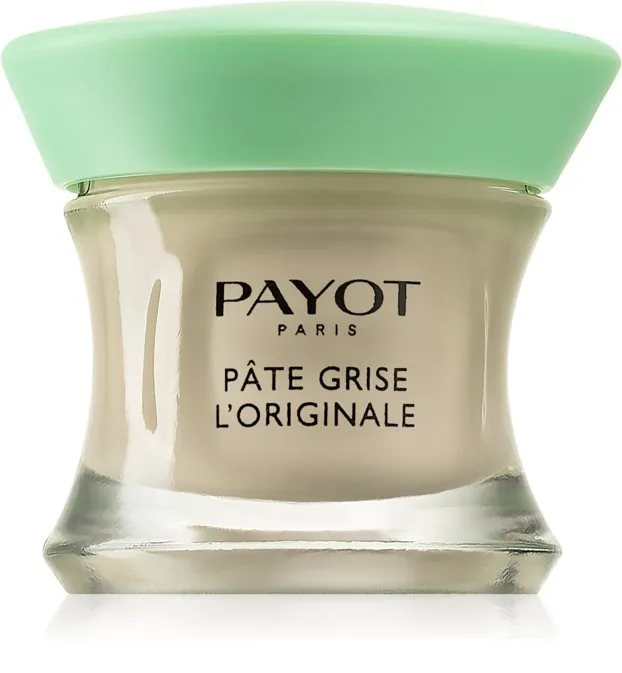
It's a genuine heritage cult object — an overnight 'grey paste' spot treatment essentially unchanged since 1947, built on shale-derived ichthammol, zinc, and talc to draw down and calm individual blemishes by morning. The traditional draw-out action, the satisfying overnight result, the affordability, and the nostalgic French-pharmacy ritual are the draw.
A genuine cult heritage object — an overnight 'grey paste' spot treatment essentially unchanged since 1947, built on shale-derived ichthammol, zinc, and talc to draw down and calm an individual blemish by morning. It's affordable, satisfying, and effective on a ready spot, with a distinctive scent and visible grey tint, and the honest understanding that it's a targeted overnight fix, not a modern acne regimen.
Listed for Acne, Blackheads and Excess Oiliness — the actives here (Sweet Almond Oil, Zinc Oxide, shale oil) are in our research queue for those concerns; there is no verdict until their evidence rows are written. That is a gap in our table, not a mark against the product.
A verdict is DermApproved’s assessment of how well a product’s ingredients fit a concern — never a claim about what the product treats. Evidence dots and collected reviews sit beside it and are never blended in.
Rules 0.5.1 · evidence table ev-2026.09-r228 · how we decide
Assessment
Pros & Cons
Pros
✓ Satisfying overnight draw-down on individual spots
✓ Genuinely affordable, and a tube lasts ages
✓ Zinc and talc calm and absorb oil
✓ Heritage cult formula essentially unchanged since 1947
✓ Fragrance-free (only the natural shale scent)
✓ A nostalgic, ritualistic spot-treatment experience
Cons
✗ A spot treatment only, not preventive acne care
✗ Distinctive medicinal scent and visible grey tint
✗ Relies on traditional, not modern, actives
✗ Shale oil can irritate sensitive skin
✗ Overnight, on-the-spot use only
Review
Full Review
Some products survive on constant reinvention; others survive, decade after decade, on simply working in a way people find quietly satisfying. Payot's Pâte Grise, literally grey paste, is firmly the second kind. Its formula has been essentially unchanged since 1947, it has been handed down across generations as a French-pharmacy secret, and it commands a devotion most modern acne products never earn. Reviewing it means honoring that heritage while being clear-eyed about exactly what it is: a targeted overnight spot treatment with a traditional, satisfying mechanism, not a comprehensive acne regimen.
The mechanism is the whole story, and it is gloriously old-school. The paste is built on shale-derived ichthammol, a sulfonated bituminous oil that is the source of both its grey color and its distinctive natural medicinal scent. Ichthammol, known in dermatology as an ammonium bituminosulfonate, has a genuinely long history in topical care for boils and inflamed lesions, valued for its anti-inflammatory, antibacterial and so-called drawing properties, and that lends the overnight blemish-settling effect real if traditionally framed rationale. You dab a small amount directly onto a spot at night, leave it, and the drawing action helps bring the blemish to a head or settle it down by morning. Zinc oxide works alongside it, a mildly antibacterial, soothing, sebum-absorbing mineral well supported for blemish-prone skin, and talc with sweet almond oil rounds out the base, mattifying and absorbing impurities while the oil softens so the spot is treated without the surrounding skin being utterly stripped. By morning the blemish often looks calmer, smaller or has come to a head, and that satisfying overnight draw-down is precisely what built and sustains the cult.
The experience is part of the appeal. The thick, opaque grey-beige paste sits visibly on the spot, which makes this strictly an overnight, on-the-blemish product and never a daytime one, and the medicinal shale scent, off-putting to some, reads to its devotees as oddly reassuring, the smell of something actually working. There is a nostalgic, ritualistic quality to it that modern odorless gels lack, and for many that is a feature rather than a flaw.
The heritage actives are not folklore, even if the framing feels old-fashioned. Ichthammol has a genuine place in dermatology, where it is still used on boils and inflamed lesions for its anti-inflammatory and antibacterial properties and its long-described drawing action, so the overnight blemish-settling effect rests on something real rather than purely nostalgic. Zinc oxide brings well-supported mild antibacterial, soothing and sebum-absorbing action that is broadly useful for blemish-prone skin, and the talc-and-ester base gives the paste its occlusive structure while sweet almond oil keeps the spot from being completely stripped. What it lacks, deliberately, is the modern comedolytic and antibacterial chemistry that addresses the causes of acne across the whole face, which is exactly why it reads as a complement to a routine rather than a replacement for one. Understanding that boundary is the difference between being delighted by it and being let down.
The framing matters more here than for almost any product, because it is the source of nearly every disappointed review. Pâte Grise treats individual blemishes that have already surfaced, drawing them out and calming them; it does not prevent new spots, treat acne across the face, or contain the modern comedolytic and antibacterial actives, salicylic acid, benzoyl peroxide, retinoids, that address acne's underlying causes. Understood as the targeted overnight fix it genuinely is, it is excellent; mistaken for an acne cure, it disappoints, and the disappointment is entirely about expectation. It also works on a different principle from modern spot treatments, drawing-and-soothing rather than directly disrupting the breakout, and reasonable people land on either side of which they prefer; both views are fair, and it complements a preventive routine rather than replacing one.
The caveats are minor and characterful. The grey tint and the scent are part of the deal rather than defects, but they confine it to overnight use, and the shale actives can occasionally irritate sensitive or rosacea-prone skin, so apply it only to the blemish itself, never the surrounding area, and patch test if you react easily. There is sweet almond oil, mildly comedogenic, which is a non-issue dabbed onto a single spot, and the paste is not fungal-acne safe in any broad sense, though again the on-the-spot use limits that concern.
Value is outstanding, and it is the kind of value that compounds over time. At twenty-two dollars for a tube you use a tiny dab at a time, this lasts many months and often more than a year, and few skincare products give you so much use for so little. Because a single spot needs only a pinhead of paste, the cost-per-use drops to something close to negligible, which is a meaningful part of why generations of users have kept a tube in the cabinet rather than replacing it with the latest launch. As a heritage product from a French dermo-cosmetic house with genuine decades behind it, the credibility rests on long, devoted use rather than clinical trials, but that history is real. For oily, combination or normal skin prone to the occasional surfaced spot, this earns its devotion: keep it for individual blemishes, apply it precisely, embrace the grey paste and the medicinal smell as part of the ritual, and it is a small, reliable pleasure, a reminder that some old methods endure simply because they work.
Formula
Key Ingredients
The hero actives that drive this product's performance.
Ingredient
Function
Evidence
Australian Shale Oil (Ichthammol + Sodium Shale Oil Sulfonate)
The traditional active and the source of the paste's grey color and distinctive scent — shale-derived ichthammol has a long history in topical blemish care for its drawing, antibacterial, and anti-inflammatory action, said to help bring a blemish to a head overnight. It's the heritage ingredient that makes Pâte Grise what it is.
A purifying, mildly antibacterial and soothing mineral that calms the blemish and helps absorb excess oil, working alongside the shale oil to settle and dry a spot down overnight rather than inflame it.
The mattifying-and-soothing base — talc absorbs impurities and excess sebum while sweet almond oil softens and conditions, balancing the drying actives so the spot is treated without the surrounding skin being overly stripped.
Not yet assessed
Ingredient standings describe the active at treatment-level doses and
vehicles; this product's own condition grades weigh its actual formula.
Dab a small amount directly onto individual blemishes at night after cleansing, leave on overnight, and rinse in the morning; use as a targeted spot treatment, not all over the face.
Results Timeline
A blemish often looks calmer and comes to a head or settles down by the next morning; works spot-by-spot rather than preventing breakouts across the face.
Pâte Grise is a traditional drawing-and-mattifying spot paste rather than a modern actives treatment. Its signature ingredient is shale-derived ichthammol (and sodium shale oil sulfonate), a sulfonated bituminous oil with a long medical history as an 'ammonium bituminosulfonate' used topically for its anti-inflammatory, antibacterial, and so-called drawing properties; it is genuinely used in dermatology for boils and inflamed lesions, lending real, if traditionally-framed, rationale to the overnight blemish-settling effect, while contributing the grey color and distinctive odor. Zinc oxide provides mild antibacterial, soothing, and sebum-absorbing action well-supported for blemish-prone skin. Talc and the polyglyceride/ester base absorb sebum and impurities and give the occlusive paste structure, with sweet almond oil softening to limit over-drying of the spot. The honest scientific position is that the formula is a targeted, traditionally-grounded spot treatment that can calm and bring an individual blemish to resolution overnight, but it does not contain modern comedolytic or antibacterial actives (salicylic acid, benzoyl peroxide, retinoids) that address acne's causes across the skin, so it complements rather than replaces a preventive regimen. The shale actives are the main irritation consideration for sensitive skin, mitigated by spot-only application.
Dermatologist Perspective
Dermatologists recognize ichthammol (ammonium bituminosulfonate) as a traditional topical with anti-inflammatory and drawing properties, historically used on boils and inflamed lesions, so a shale-oil spot paste has a legitimate, if old-fashioned, basis for calming an individual blemish overnight. Zinc oxide is acknowledged as soothing and mildly antibacterial. Clinicians would frame Pâte Grise as a targeted spot treatment rather than an acne therapy, recommending modern actives like benzoyl peroxide, salicylic acid, or retinoids for preventing and treating acne more broadly, and using a product like this as an adjunct for the occasional spot. The usual cautions apply: apply only to the lesion, patch test on sensitive or rosacea-prone skin given the shale actives, and pair ongoing acne with a full, possibly guided, regimen.
Guidance
Usage & Recommendations
How to Use
Use it at night as a targeted spot treatment. After cleansing, dab a small amount of the paste directly onto an individual blemish — only on the spot, not the surrounding skin — and leave it on overnight. Rinse it off in the morning. Use it on spots that have already appeared rather than all over the face, and pair it with a full skincare routine if you're managing ongoing acne. Patch test first if your skin is sensitive or rosacea-prone, given the traditional shale actives.
Value Assessment
Exceptional value. At an affordable price for a 30ml tube used only dab-by-dab on individual spots, it can last many months to over a year, giving an extraordinarily low cost-per-use. For an occasional-spot product, almost nothing matches it on value, and the heritage and satisfying results are a bonus. It's worth being clear that it's not a substitute for a full acne routine, so if you need ongoing treatment you'll spend on other products too. But as the targeted overnight spot fix it's meant to be, it's one of the best-value cult products in skincare — cheap, long-lasting, and effective on a ready blemish.
Who Should Buy
Anyone who wants an affordable, satisfying overnight spot treatment to draw down and calm the occasional blemish, especially fans of heritage, ritualistic products and those who like a traditional 'drawing' approach. It suits oily and combination skin dealing with individual spots and anyone wanting a long-lasting, low-cost spot fix.
Who Should Skip
Those needing to prevent or treat acne across the face should use modern actives and a full routine, not a spot paste, and sensitive or rosacea-prone skin should be cautious of the shale actives. Anyone put off by a medicinal scent and visible grey tint, or wanting a daytime-wearable treatment, should look elsewhere.
Distinctive natural medicinal-herbal note from the shale oil; no added fragrance
Packaging
Tube
Finish
mattedryingtargeted
What to Expect on First Use
Dabbed onto a spot at night, the thick grey-beige paste sits visibly on the blemish — this is strictly an overnight, on-the-spot product, not a daytime one. There's a distinctive natural medicinal scent from the shale oil that fans find oddly reassuring. By morning, the spot often looks calmer, smaller, or has come to a head, the satisfying draw-down effect that built the cult following.
How Long It Lasts
Many months to over a year, since it's used dab-by-dab on individual spots
Created by Payot in the mid-20th century, Pâte Grise — French for 'grey paste' — became a cult overnight blemish treatment passed down across generations, its formula essentially unchanged since 1947. Built on shale oil, zinc, and talc, it works the traditional way: dabbed on a spot at night to draw it out and calm it by morning, a beauty ritual with genuine heritage.
About Payot Legacy Brand (20+ years)
Pâte Grise — 'grey paste' — is one of Payot's most iconic products, a cult overnight blemish treatment whose original formula has been essentially unchanged since 1947. From a French dermo-cosmetic house founded in 1920, it's a heritage spot paste with decades of devoted use behind it, built on traditional purifying actives like shale oil and zinc.
Brand founded: 1920 · Product launched: 1947
Myth vs. Reality
Common Myths
Myth
Pâte Grise is a complete acne treatment that prevents breakouts.
Reality
It's a targeted overnight spot treatment, not a preventive acne regimen — it works on individual blemishes that have already appeared, helping draw them out and calm them, rather than stopping new ones forming. For ongoing acne, you'd pair it with a full routine; for the occasional spot, it's a satisfying quick fix.
FAQ
Frequently Asked Questions
How does Payot Pâte Grise work on spots?
It's an overnight spot treatment built on shale-derived ichthammol, zinc, and talc, dabbed directly onto a blemish at night. The traditional 'drawing' action helps bring a spot to a head or settle it down, and the zinc and talc calm and absorb oil, so the blemish often looks calmer or smaller by morning.
Is it a spot treatment or an all-over acne product?
It's strictly a targeted overnight spot treatment for individual blemishes, not an all-over or preventive acne product. Dab it only on spots at night and rinse in the morning. For ongoing acne, pair it with a full routine; for the occasional breakout, it's a satisfying quick fix.
Why is it grey and does it smell?
The grey-beige color and the distinctive natural medicinal scent both come from the shale oil (ichthammol), the heritage active. Fans find the smell oddly reassuring, but it's noticeable, and the visible tint is why it's an overnight, on-the-spot product rather than something you'd wear out.
Is the Pâte Grise Purifying Paste safe for sensitive skin?
Use with some caution — the shale oil and ichthammol are traditional actives that can occasionally irritate sensitive or rosacea-prone skin, and it's a drying spot treatment. Apply it only to the blemish, not the surrounding skin, and patch test first if your skin is reactive.
How long does a tube last?
A very long time — because you use just a small dab on individual spots rather than all over, a tube can last many months to over a year. That, plus its affordable price, makes it excellent value for an occasional-spot product.
Is it better than a modern salicylic or benzoyl peroxide spot treatment?
It works differently — Pâte Grise uses traditional drawing-and-soothing actives rather than modern acne actives like salicylic acid or benzoyl peroxide, which target the causes of acne more directly. Many people love it for its satisfying overnight draw-down on a ready spot; for preventing and treating acne more broadly, modern actives do more.
Reviews
What Reviewers Tend to Say
Recurring themes our editors read across retailer reviews of this product — summaries in our words, not quotations, and not a substitute for your own patch test.
Common Praise
Brings spots to a head overnight
Calms and shrinks blemishes
Affordable cult product
A tube lasts ages
Common Complaints
Distinctive medicinal scent
Grey tint visible on skin
Spot treatment only, not preventive
Traditional actives, not modern ones
Notable Endorsements
Iconic formula since 1947Overnight spot draw-downFrench pharmacy heritage
Cutting a beard hair takes about a twentieth of a newton. You press with two and stretch your skin by a fifth — which is why almost every shaving problem is a technique problem wearing a hardware costume.
Your immune cells already make it to kill microbes. Now it's in a spray bottle for breakouts and redness, and the real evidence is quietly stronger than the 'miracle mist' marketing that's outrunning it.
IPL is a filtered flashlamp, a true vascular laser is one wavelength aimed at haemoglobin, and the choice between them turns on a distinction almost no consult makes: whether your redness is vessels or a state.
The most common self-inflicted skincare injury is not a bad product. It is three good ones started in the same fortnight, leaving nobody able to name the culprit.
Sep 1, 2026· 7 min
Questions people ask about Acne
Verified answers from our questions library — the nuance a product page cannot carry.
Products, answers, therapy guides, tools and articles in one search. Brand names,
slang and abbreviations all work — accutane finds isotretinoin, bacne finds truncal acne.