Glycolic Is the Fastest Acid. That's Its Design Flaw.
The smallest AHA gets deepest and shows results soonest — which is precisely why routines built around it overshoot, and why the people who do best with it use it least.
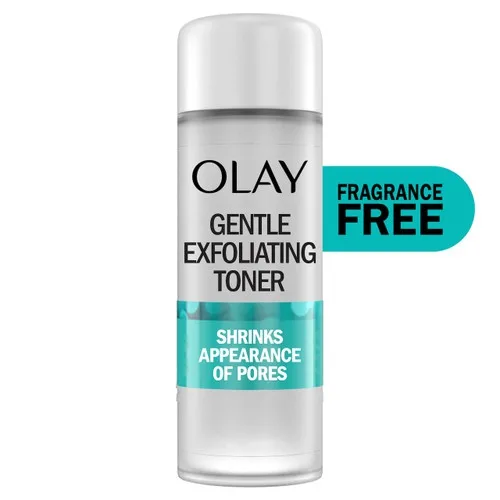
Rather than leaning on a single strong acid, it stacks a polyhydroxy acid, a BHA, and an AHA, with the gentle large-molecule PHA placed first and soothing aloe high in the list. That sequencing aims for layered, low-irritation resurfacing, which makes it a notably approachable on-ramp to chemical exfoliation at a drugstore price.
A smartly sequenced three-acid toner that resurfaces without the harshness acids are notorious for. Leading with a gentle PHA and cushioning it with aloe makes this an excellent, affordable on-ramp to chemical exfoliation. Just respect the acid load and don't overdo it.
With this toner relatively new to the lineup and only a few hundred retailer reviews in, the rating leans on its confirmed multi-acid formula and the well-established science of AHAs, BHAs, and PHAs rather than years of accumulated user feedback. As more long-term reviews appear, the assessment of how it performs across different skin types may be refined.
The case for it
What would change this: A declared concentration would move this to a firmer reading of the dose.
Same rule for everyone. “Not for this” is the verdict on 488 of 45,024 concern verdicts across the catalog; rule R10 decided 488 of them. Unchanged since September 5, 2026, engine 5.1.1.
Brand or formulator? Disclose a concentration or correct a fact →
The studies behind the evidence row
The case for it
Same rule for everyone. “Good choice” is the verdict on 9,564 of 45,024 concern verdicts across the catalog; rule R5 decided 9,072 of them. Unchanged since September 5, 2026, engine 5.1.1.
Brand or formulator? Disclose a concentration or correct a fact →
The studies behind the evidence row
The case for it
What would change this: A declared concentration would move this to a firmer reading of the dose.
Same rule for everyone. “Good choice” is the verdict on 9,564 of 45,024 concern verdicts across the catalog; rule R5 decided 9,072 of them. Unchanged since September 5, 2026, engine 5.1.1.
Brand or formulator? Disclose a concentration or correct a fact →
The studies behind the evidence row
The case for it
What would change this: A declared concentration would move this to a firmer reading of the dose.
Same rule for everyone. “Strong choice” is the verdict on 1,459 of 45,024 concern verdicts across the catalog; rule R3 decided 567 of them. Unchanged since September 5, 2026, engine 5.1.1.
Brand or formulator? Disclose a concentration or correct a fact →
The studies behind the evidence row
The case for it
What would change this: A declared concentration would move this to a firmer reading of the dose.
Same rule for everyone. “Promising” is the verdict on 7,858 of 45,024 concern verdicts across the catalog; rule R9p decided 7,858 of them. Unchanged since September 5, 2026, engine 5.1.1.
Brand or formulator? Disclose a concentration or correct a fact →
The studies behind the evidence row
Does the jobDoes what a toner is for: not alcohol-driven, adds something real. Not measured from the label: restores skin pH, plays well with what follows.
A verdict is DermApproved’s assessment of how well a product’s ingredients fit a concern — never a claim about what the product treats. Evidence dots and collected reviews sit beside it and are never blended in. Rules 0.5.1 · evidence table ev-2026.09-r228 · how we decide
Read an exfoliating toner's label from the top and the first acid you hit tells you the brand's entire philosophy. Lead with high-concentration glycolic and you're signaling a fast, aggressive resurfacer for people who want results now and can handle the sting. Lead with something gentler and you're saying this is built for tolerance and the long game. Olay's Gentle Exfoliating Toner leads with gluconolactone, a polyhydroxy acid, and that single choice is the key to understanding the whole product. The word gentle in the name isn't marketing fluff here; it's structurally true.
Gluconolactone is a PHA, which means it's a large-molecule acid that sits and works mostly at the skin's surface rather than diving deep. It exfoliates more slowly than its smaller cousins, and because it's also humectant, it draws in a little water as it goes, which softens the drying effect that exfoliation usually brings. Putting it first sets a deliberately calm tone. Beneath it sit the workhorses: salicylic acid, the oil-soluble BHA that gets into pore linings to clear the congestion behind blackheads and rough patches, and glycolic acid, the smallest and most penetrating AHA, loosening dead surface cells to smooth texture and lift dullness. So you get the full PHA-BHA-AHA trio, but stacked so the gentlest does the most surface work and the stronger ones are layered underneath in supporting roles.
The rest of the formula reinforces that intent. Aloe barbadensis juice is the third ingredient, unusually high for a soothing agent, acting as a counterweight to the acids. Glycerin, arginine, and biosaccharide gum add hydration and a touch of comfort. There's no fragrance, no drying alcohol, no oils, which keeps it fungal-acne safe and lowers the irritation ceiling. It's a clean, purpose-built little formula with nothing in it you'd flag as a problem, and the preservative system is the gentle organic-acid type rather than anything harsh.
Using it is almost anticlimactic in the best way. It's a thin, watery liquid that you can sweep on with a cotton pad or just press in with your palms, and it absorbs instantly with no residue, no tack, no film. The first few nights you'll likely feel a faint tingle, especially if acids are new to you, but it's mild and brief, nothing like the burn a strong glycolic toner can deliver. There's no purging in the breakout sense; skin may just feel a touch more reactive early on as it adjusts. Within a few uses, skin starts to feel smoother to the touch, and over three or four weeks of consistent use you'll see the pores look a little more refined, the texture even out, and that dull, slightly rough surface give way to something brighter.
The honest limitations are about expectations and discipline. This is a subtle product, not a dramatic one. If you're chasing the visible peel-and-glow of a high-strength acid, you may find this underwhelming, because gentleness is precisely the trade it makes. The bottle is also small at 4.1 ounces, so if you saturate cotton pads it disappears faster than you'd like; pressing it in by hand stretches it considerably. And despite the gentle framing, this is still a three-acid product. The most common way people go wrong with it is using it nightly, layering it with retinol the same evening, or stacking it with another exfoliant, all of which can tip even resilient skin into over-exfoliation. Two to three nights a week, on its own, is the sweet spot. Sunscreen the next morning is non-negotiable, as it is with any acid.
Who is this for? It's close to ideal for anyone curious about chemical exfoliation but nervous about irritation, and for combination or oily skin dealing with congestion, large-looking pores, and rough texture. It's a genuinely good beginner acid because it's hard to hurt yourself with if you follow basic rules. Drier skin can use it too, sparingly, thanks to the humectant PHA and aloe. The people who should be cautious are those with truly sensitive or actively compromised skin, where even a gentle multi-acid can be too much, and anyone who wants a powerful, fast peel rather than slow, steady refinement.
For the price, this is an easy thing to like. It's an inexpensive, fragrance-free, thoughtfully sequenced exfoliating toner that does what it promises without overreaching. It won't dazzle the acid veterans, but for the much larger group of people who want smoother, clearer-looking skin without gambling on irritation, it's one of the more sensible drugstore picks in the category. The order of the acids really was the whole point, and Olay got it right. It's also worth understanding how this fits alongside the rest of your actives, because exfoliation rarely lives in a vacuum. On the nights you use it, keep the rest of your routine simple and supportive: a hydrating serum and a barrier-friendly moisturizer afterward let the freshly resurfaced skin recover comfortably. On your off nights, that's the natural window for a retinoid or a richer treatment, so the two never compete for the same evening. People with combination skin often find the sweet spot is applying it just to the oilier zones, the nose, chin, and forehead, where congestion concentrates, rather than blanketing the whole face every time. And if your skin ever starts feeling tight, shiny, or strangely sensitive, that's the signal to pull back the frequency, not push through; gentle and consistent always beats aggressive and sporadic with acids.
The hero actives that drive this product's performance.
| Ingredient | Function | Evidence |
|---|---|---|
| Gluconolactone (PHA) | The gentle exfoliant headlining this formula, placed ahead of the stronger acids; as a large-molecule polyhydroxy acid it resurfaces slowly and humectantly, setting the low-irritation tone the salicylic and glycolic acids below it build on. | Not yet assessed |
| Salicylic Acid (BHA) | The oil-soluble acid in this PHA-AHA-BHA blend that penetrates into pore linings to clear congestion, working in concert with the surface-level glycolic and gluconolactone for the toner's pore-refining claim. | Established mechanism for Rough Texture · established mechanism |
| Glycolic Acid (AHA) | The smallest, most penetrating acid here; it loosens surface dead cells to smooth texture, layered beneath the milder gluconolactone so the exfoliation builds gradually rather than aggressively. | Established mechanism for Rough Texture · established mechanism |
| Aloe Barbadensis Leaf Juice | Positioned high, third on the list, as the soothing counterweight to the three acids below it, helping keep this multi-acid toner calm enough for daily use rather than a harsh weekly peel. | Not yet assessed |
Ingredient standings describe the active at treatment-level doses and vehicles; this product's own condition grades weigh its actual formula.
Water, Butylene Glycol, Aloe Barbadensis Leaf Juice, Gluconolactone, Arginine, Salicylic Acid, Glycolic Acid, Sodium Hydroxide, Glycerin, Biosaccharide Gum-1, Potassium Sorbate, Sodium Levulinate, Glyceryl Caprylate, Sodium Benzoate, Sodium Anisate, Citric Acid
treatment
PM
Sweep on after cleansing and before serums and moisturizer. Don't pair it the same night with retinol or another strong acid; alternate them on different evenings to avoid over-exfoliation, and always follow with sunscreen the next morning.
Skin feels smoother after the first few uses. Visible refinement of pores, texture, and dullness typically develops over 3-4 weeks of two-to-three-times-weekly use as cell turnover steps up.
The exfoliating logic here is the well-established hydroxy-acid hierarchy. Glycolic acid, the smallest alpha hydroxy acid, penetrates readily and weakens the bonds between corneocytes, accelerating desquamation and, with continued use, supporting smoother texture and a brighter surface; its keratolytic action is among the best-documented in cosmetic dermatology. Salicylic acid, the lipophilic beta hydroxy acid, is uniquely able to partition into sebum-filled follicles, which is why it's the standard choice for comedonal congestion and pore-related concerns. The differentiator in this formula is leading with gluconolactone, a polyhydroxy acid. PHAs exfoliate through the same general mechanism as AHAs but their larger molecular size slows penetration, and studies comparing PHAs to traditional AHAs report comparable smoothing benefits with measurably less stinging and irritation, alongside an added humectant, antioxidant-leaning quality. Sequencing a PHA ahead of the stronger acids, with aloe and glycerin for buffering, is a formulation strategy aimed at delivering multi-depth exfoliation while keeping the irritation profile low enough for frequent use. The honest scientific read is that each acid here has solid individual evidence, and the blend's value lies in the deliberate layering: surface and follicular exfoliation delivered gently, which is more about tolerability engineering than any single novel active.
Chemical exfoliation is a routine recommendation for concerns like rough texture, congestion, and the look of enlarged pores, and a blend that combines a beta hydroxy acid for follicular cleansing with alpha and polyhydroxy acids for surface renewal reflects standard practice. Clinicians often favor polyhydroxy acids such as gluconolactone for patients prone to irritation, since they deliver comparable smoothing with a gentler profile, and the PHA-forward structure here fits that approach. Typical guidance is to limit acid toners to two or three nights weekly, avoid stacking them with retinoids or other exfoliants in the same session, and reinforce daily sunscreen, since exfoliation increases photosensitivity. For sensitive or barrier-compromised skin, a more cautious introduction or a single-acid product is often advised. As an accessible, well-buffered exfoliant, this aligns with the kind of entry-level chemical exfoliation commonly suggested to acid newcomers.
In the evening, after cleansing, either sweep it across the face with a saturated cotton pad or press a few drops in with your palms, avoiding the immediate eye area. Begin with two nights a week and build to three as tolerance allows, never daily. Don't combine it with retinol or another exfoliant the same night; alternate them. Follow with a hydrating serum and moisturizer, and always apply sunscreen the next morning, since acids increase sun sensitivity. If you feel persistent stinging or see flaking, scale back the frequency.
At a drugstore price for a fragrance-free, three-acid toner, this is genuinely good value, especially as an entry point. You're getting a PHA, a BHA, and an AHA plus soothing aloe for less than many single-acid options from boutique brands cost. The one knock on value is the modest 4.1-ounce size; saturating cotton pads burns through it quickly, so applying by hand makes the bottle last meaningfully longer and improves the cost-per-use. There's no premium being charged for packaging or branding here, which is exactly right for what is a competent, no-frills exfoliant. For curious beginners especially, it's a low-risk, low-cost way to learn how your skin responds to acids.
Reach for this if you're new to acids or have combination or oily skin battling congestion, dull, rough texture, and pores that look larger than you'd like. It's an affordable, forgiving way to add gentle, multi-depth exfoliation to a routine without committing to a strong, sting-heavy peel.
Pass if your skin is truly sensitive or your barrier is currently compromised, where even a gentle three-acid blend may be too much. It's also the wrong pick if you're an acid veteran chasing a powerful, fast resurfacing effect, since its whole design prioritizes gentleness over intensity.
Thin, watery liquid that absorbs instantly with no tackiness, leaving skin feeling clean rather than stripped.
Fragrance-free, with only a faint acidic note on application that fades within seconds.
Compact 4.1-ounce bottle, typically dispensed onto a cotton pad or palms.
Expect a mild, brief tingle the first few uses, especially if you're new to acids. There's no purging in the breakout sense, but skin may feel slightly more reactive at first; starting two nights a week lets tolerance build before increasing frequency.
Roughly 2-3 months when used two to three nights a week, depending on whether you apply by hand or saturate a cotton pad.
All Year
It marks Olay's push into the chemical-exfoliant toner category that indie and K-beauty brands popularized, translating the multi-acid trend into a mass-market, fragrance-free format. The PHA-forward structure reflects the wider shift toward gentler, daily-tolerable exfoliation over harsh weekly peels.
Olay, founded in 1952 and part of Procter & Gamble, brings decades of mass-market formulation experience and substantial internal research, though its expertise is anchored more in niacinamide and retinol than in chemical exfoliants.
Exfoliating toners have to sting to work.
Effective exfoliation doesn't require discomfort. This toner leads with a gentle PHA and includes aloe to keep irritation low, so meaningful resurfacing happens without the harsh sting some acids cause.
You should use an acid toner every single day for best results.
More isn't better with acids. With a three-acid blend like this, two to three nights a week is plenty for most skin; daily use raises the risk of over-exfoliation and a compromised barrier.
It contains three: gluconolactone (a polyhydroxy acid) leading the formula, plus salicylic acid (a BHA) and glycolic acid (an AHA). The gentle PHA is placed first to keep the overall exfoliation low-irritation.
Two to three nights a week is ideal for most skin. Despite the gentle PHA lead, it's still a three-acid product, so daily use or stacking it with other exfoliants risks over-exfoliation and a damaged barrier.
It's gentler than most acid toners thanks to its PHA-forward design and high aloe content, but it's still three acids. Truly sensitive or compromised skin should introduce it cautiously or choose a single-acid option.
Not in the same session. Alternate them on different nights to avoid over-exfoliation. Using this toner one evening and retinol another keeps both effective while protecting your skin barrier.
Yes. It's oil-free and contains no fatty acids, esters, or polysorbates that feed Malassezia, so it's a suitable exfoliating step for those managing fungal acne.
It can reduce their appearance over time. The salicylic acid clears follicular congestion while the glycolic and gluconolactone smooth the surface, which collectively makes pores look less prominent after a few weeks.
Recurring themes our editors read across retailer reviews of this product — summaries in our words, not quotations, and not a substitute for your own patch test.
Noticeably smoother skin
Gentle for an acid toner
Fragrance-free
Affordable exfoliant
Small 4.1 oz bottle
Can sting on broken skin
Subtle rather than dramatic results
Easy to overuse