Hyaluronic Acid Gets the Ad Budget. Glycerin Does the Work.
The cheapest humectant on the ingredient list is also the best-studied, the most reliable in dry air, and the one your favorite moisturizer is quietly built around.
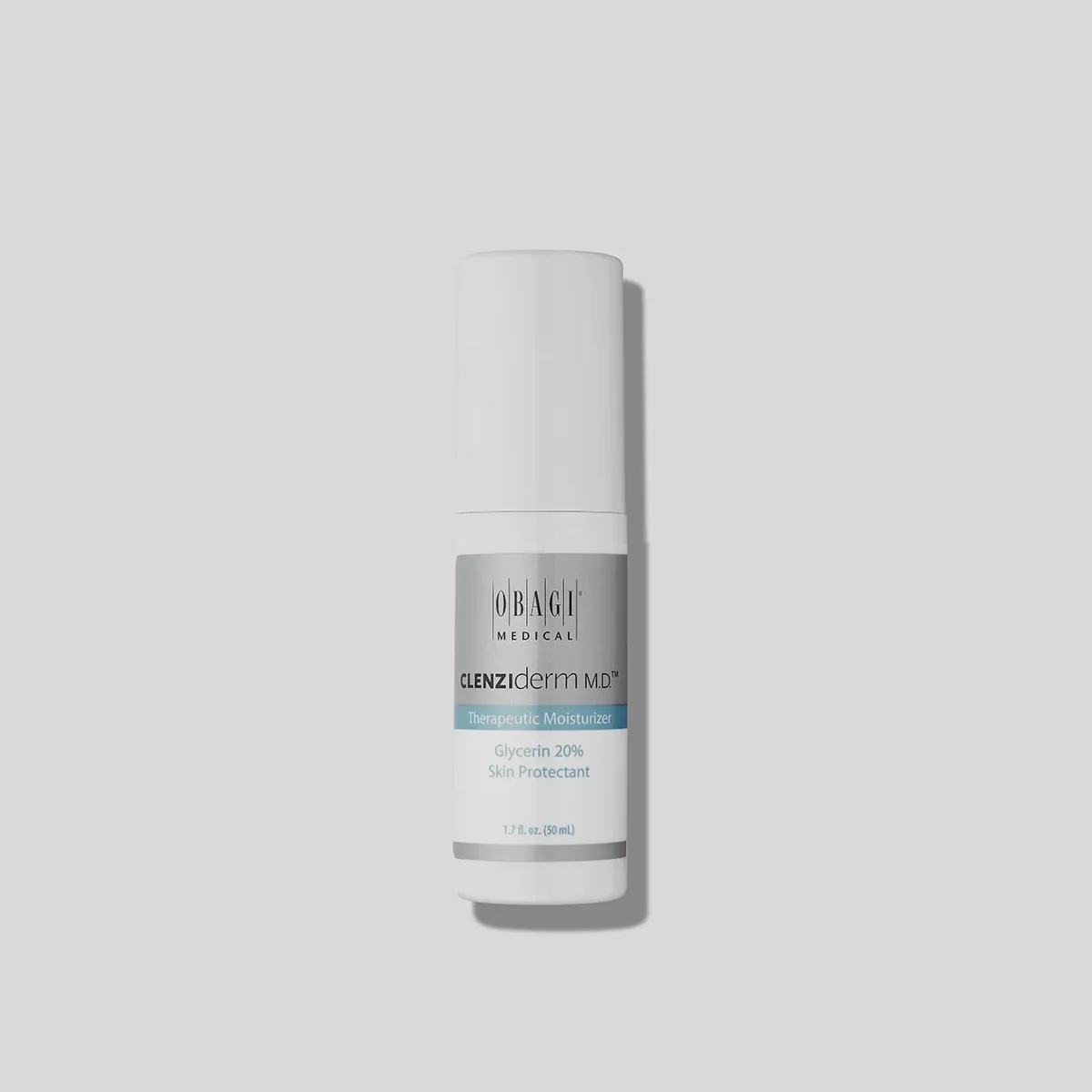
It is a monograph skin protectant, twenty percent glycerin declared as the active, in an oil-free silicone base designed specifically to sit over benzoyl peroxide and retinoids without pilling or clogging, which is a narrower and more useful brief than most 'moisturisers for acne' set themselves. It has been the unglamorous third step of a physician-dispensed acne system for nearly twenty years and has not needed to change to keep working, though its preservative system has aged badly.
The unglamorous third step of a physician-dispensed acne system, and a good one: twenty percent glycerin declared as a monograph active in an oil-free silicone cream that keeps peroxide-and-retinoid skin comfortable without clogging it. It does exactly that job and nothing else, its five-paraben preservative system now bars it from two states, and fifty dollars is a physician-shelf price for glycerin and dimethicone.
The case for it
What would change this: A researched evidence row for the lead active would replace this with a verdict.
Same rule for everyone. “Supporting role” is the verdict on 8,197 of 45,024 concern verdicts across the catalog; rule R8 decided 4,250 of them. As of September 25, 2026, engine 5.1.1.
Brand or formulator? Disclose a concentration or correct a fact →
The case for it
Same rule for everyone. “Good choice” is the verdict on 9,564 of 45,024 concern verdicts across the catalog; rule R5 decided 9,072 of them. As of September 25, 2026, engine 5.1.1.
Brand or formulator? Disclose a concentration or correct a fact →
The studies behind the evidence row
The case for it
Same rule for everyone. “Good choice” is the verdict on 9,564 of 45,024 concern verdicts across the catalog; rule R5 decided 9,072 of them. As of September 25, 2026, engine 5.1.1.
Brand or formulator? Disclose a concentration or correct a fact →
The studies behind the evidence row
Also listed for Excess Oiliness — the actives here (Glycerin, Dimethicone, Starches & Absorbent Powders, Allantoin) are in our research queue for that concern; there is no verdict until their evidence rows are written. That is a gap in our table, not a mark against the product.
Does the jobDoes what a moisturizer is for: draws in water, right weight for the job.
A verdict is DermApproved’s assessment of how well a product’s ingredients fit a concern — never a claim about what the product treats. Evidence dots and collected reviews sit beside it and are never blended in. Rules 0.5.1 · evidence table ev-2026.09-r228 · how we decide
There is a line on the Obagi product page that says this moisturiser is not available to ship to California or Maryland, with no explanation, and the explanation is on the ingredient list. The CLENZIderm M.D. Therapeutic Moisturizer is preserved with five parabens, and two of them, propylparaben and isobutylparaben, are now restricted in cosmetics sold in those two states under laws passed in the early 2020s. Obagi's response was not to reformulate but to stop shipping there. That decision says something about the product: it is a formula from 2007, the year the CLENZIderm system launched as a three-step, dermatology-office answer to acne, and in the nineteen years since, the brand has evidently judged that it works well enough to leave alone. The interesting question is whether that judgement is right, and, mostly, it is.
The formula is short and does one thing. Glycerin is declared as the active ingredient at twenty percent under the FDA's skin-protectant monograph, which is four or five times what a typical moisturiser carries and enough to make a legal claim about protecting and relieving dry skin. Around it is water, a silicone system of cyclopentasiloxane, dimethicone, a dimethicone elastomer, cetyl dimethicone and a silicone emulsifier, a modified corn starch for slip and oil absorption, an acrylate polymer and triethanolamine for structure, allantoin for soothing, and then the preservatives, phenoxyethanol plus the five parabens. No oils, no waxes, no fatty esters, no fragrance, no alcohol. It is a humectant held in a breathable occlusive film, which is the textbook construction of a moisturiser for skin being dried out by a treatment.
That construction is the reason it works, and the science is not controversial. Glycerol is a natural component of the skin's own water-holding system, and topical glycerin at high concentrations has been shown to increase stratum corneum hydration, accelerate barrier recovery after damage and reduce the tightness and scaling that follow irritant exposure; a 2008 review in the British Journal of Dermatology traced its functions from humectancy through barrier repair to desquamation. Dimethicone and the other silicones slow water loss without the comedogenic risk that plant oils carry on acne-prone skin, which is exactly the population this cream is for. Benzoyl peroxide and topical retinoids, the drugs in the rest of the CLENZIderm system and in most acne routines, dry and inflame the barrier, and the single biggest reason patients abandon them is that discomfort. A cream that removes the discomfort keeps the patient on the drug that works.
In use, it does what the design predicts. A light white cream with a primer-like glide goes on thin, sets in a minute to a satin finish, and takes the sting out of freshly treated skin; peeling settles within the first week, and oily skin does not break out from it, which is the single point on which its long threads of reviews at clinical retailers agree most firmly. The complaints are just as consistent: a faint sheen by midday, which is the glycerin, and not enough richness for truly dry winter skin, because there is no lipid in it at all, a gap that matters most for patients on isotretinoin or a strong retinoid whose skin needs fats replaced rather than water held. The two dozen reviews on Obagi's own site, at 4.6 stars, are a small sample; the years of feedback at LovelySkin and Amazon are the real record, and they describe people who have kept the same white pump bottle on the shelf for a decade.
The things to hold against it are two. The preservative system is the obvious one, not because parabens are dangerous at cosmetic levels, where their safety record is long and the alarm around them has never been matched by evidence, but because five of them in one product is a 2007 choice that a reformulation would have trimmed to one or two modern preservatives, and because the choice now excludes customers in two states. The other is the price. Fifty dollars for 1.7 ounces of glycerin and dimethicone is a physician-channel figure; the same construction exists in drugstore moisturisers at a fifth of the cost, and the CLENZIderm cream's real advantage is that it was built to the exact brief, oil-free, fragrance-free, twenty percent humectant, silicone film, rather than adapted to it.
So the verdict is straightforward. For anyone on benzoyl peroxide, adapalene or tretinoin whose skin is fighting the treatment, this is a well-made, reliable companion cream that will not clog, will not sting and will keep the routine going, and if a dermatologist has dispensed the CLENZIderm kit it belongs in it. For anyone without an acne treatment to support, it is an overpriced glycerin cream with an outdated preservative system and no lipids, and a modern barrier moisturiser would do more for less. Obagi has left it alone for nineteen years because it works; a reformulation that kept the twenty percent glycerin and dropped four parabens would let it work everywhere.
The hero actives that drive this product's performance.
| Ingredient | Function | Evidence |
|---|---|---|
| Glycerin (20%) | Declared as the active under the skin-protectant monograph at twenty percent, four to five times the level of an ordinary moisturiser; that dose is what lets a water-and-silicone cream hold moisture in skin being dried by benzoyl peroxide, and it is why the product leaves a faint dewy sheen that some reviewers read as shine. It is the entire therapeutic idea of the formula. | Established mechanism for Dehydration · established mechanism |
| Dimethicone | The occlusive partner to the glycerin, spread with cyclopentasiloxane and a silicone elastomer into a breathable film that slows water loss without any oil, which is what keeps the cream non-comedogenic and lets it sit over a benzoyl peroxide lotion without pilling; the silicone system is the reason this suits acne-prone skin where a plant-oil cream would not. | Established mechanism for Compromised Skin Barrier · established mechanism |
| Allantoin | The single soothing agent, near the end of the list, added to take the edge off the stinging and peeling that peroxide and retinoid treatments cause; its contribution is modest but real, and it is the only ingredient here chosen for comfort rather than structure. | Not yet assessed |
| Corn Starch Modified | A modified starch that absorbs a little surface oil and gives the silicone cream a soft, powdery slip as it sets, countering the tackiness twenty percent glycerin would otherwise leave; it is the reason the finish reads as satin rather than sticky on oily skin. | Not yet assessed |
Ingredient standings describe the active at treatment-level doses and vehicles; this product's own condition grades weigh its actual formula.
Active Ingredient: Glycerin 20%. Inactive Ingredients: Water (Aqua), Cyclopentasiloxane, Dimethicone, Corn Starch Modified, Dimethicone/Vinyl Dimethicone Crosspolymer, Cetyl Dimethicone, Lauryl PEG/PPG-18/18 Methicone, Acrylates/C10-30 Alkyl Acrylate Crosspolymer, Triethanolamine, Allantoin, Phenoxyethanol, Methylparaben, Ethylparaben, Propylparaben, Butylparaben, Isobutylparaben
moisturizer
AM & PM
Apply a pea to a hazelnut over the face after a benzoyl peroxide or retinoid treatment has absorbed, morning and night, and let the silicone film set for a minute before sunscreen; on days the skin is peeling, a thin second layer over the worst patches is fine. It is oil-free and fragrance-free enough to go on the neck and chest during a body acne treatment too.
The tightness and sting that follow a peroxide or retinoid application ease within minutes of putting it on, and flaking settles over the first week of twice-daily use; it has no active against acne itself, so any change in breakouts belongs to the treatment it supports, which it makes easier to keep using.
A skin-protectant moisturiser rests on two mechanisms, humectancy and occlusion, and this cream states both on its label. The humectant is glycerin at twenty percent, declared as the active ingredient under the FDA's over-the-counter skin-protectant monograph, which recognises glycerin at 20 to 45 percent for temporarily protecting and relieving chapped or irritated skin. The biology behind that recognition is broad: glycerol is a native constituent of the stratum corneum, delivered there in part by aquaporin-3 channels and lipid metabolism, and it binds water in the corneocyte matrix, keeps the intercellular lipids in a fluid crystalline state, and supports the enzymatic desquamation that prevents scaling. A 2008 review in the British Journal of Dermatology by Fluhr and colleagues drew these threads together, documenting that topical glycerol increases stratum corneum hydration, improves barrier recovery after surfactant and tape-stripping damage, and reduces the roughness and scaling of dry skin, with effects that outlast the application because glycerol is retained in the corneum. In an acne routine those effects address the specific damage that benzoyl peroxide and retinoids do, which is barrier disruption with elevated water loss and irritation, the main driver of poor adherence to those treatments.
The occlusive half is a silicone system: cyclopentasiloxane as a volatile spreading agent, dimethicone and cetyl dimethicone as the film formers, a dimethicone/vinyl dimethicone crosspolymer for a soft powdery set, and a silicone emulsifier to hold water in the mix. Silicones reduce transepidermal water loss less completely than petrolatum but are non-comedogenic and cosmetically light, which is why they dominate acne-directed moisturisers; a modified corn starch adds oil absorption and offsets the tack that high glycerin produces. Allantoin contributes mild keratolytic and soothing activity at low concentration. The preservative system is phenoxyethanol with methyl-, ethyl-, propyl-, butyl- and isobutylparaben, a combination typical of mid-2000s formulation; parabens have an extensive safety record at cosmetic concentrations and low sensitisation rates, but propyl- and isobutylparaben are among the ingredients restricted under recent California and Maryland cosmetics statutes, which explains the shipping exclusion. There is no ingredient with activity against acne, and none is claimed; the product's evidence base is the general literature on glycerin and occlusion applied to a well-defined use.
The clinical rationale for a cream like this is adherence: the most common reason acne patients stop benzoyl peroxide or a topical retinoid is dryness and irritation in the first weeks, and dermatology practices routinely pair those prescriptions with an oil-free, fragrance-free humectant moisturiser to get patients through the adjustment period. The CLENZIderm system was built around that logic, and its moisturiser is dispensed in offices for exactly that reason; the twenty percent glycerin and silicone base match what clinicians look for in a treatment-support moisturiser, and its non-comedogenic record with acne patients is long. Where clinicians differ is on whether the physician-channel price is warranted when comparable oil-free humectant creams exist at pharmacy prices, and on the preservative system, which most would regard as safe but dated; patients with a documented paraben allergy, rare as it is, are steered elsewhere. For patients with very dry skin on isotretinoin or a strong retinoid, practices tend to recommend a lipid-containing barrier cream instead, since this one has no ceramides or oils to replace what the drug strips. As a companion to peroxide and retinoids in oily and combination skin it remains a reasonable choice.
After cleansing and once any benzoyl peroxide, adapalene or tretinoin has fully absorbed, squeeze out a pea to a hazelnut of cream and smooth it over the whole face, including the areas the treatment has made dry or flaky, morning and evening. Let the silicone film set for a minute before sunscreen in the morning. On days of heavy peeling a thin second layer over the worst patches is fine, and it can be used on the neck, chest or back alongside a body acne treatment. It is safe around the eyes but not needed there. Follow the physician's directions if it was dispensed as part of the CLENZIderm system, and expect the sting and flaking of treatment to ease within the first week.
Fifty dollars for 1.7 ounces places this at the top of the acne-support moisturiser category, and there is no larger size; at a hazelnut twice daily a tube lasts about two months. What the price buys is a formula built precisely to its brief, twenty percent glycerin as a declared monograph active in an oil-free silicone base, and the reassurance of nineteen years of use by acne patients through dermatology offices. What it does not buy is anything unavailable elsewhere, since glycerin-and-dimethicone moisturisers for acne-prone skin exist at a fifth of the cost, and the preservative system is a liability rather than a premium feature. For a patient dispensed the CLENZIderm kit it is a fair part of the package; bought on its own, it is an expensive way to get a simple, effective idea.
Anyone on benzoyl peroxide, adapalene or tretinoin whose oily or combination skin is dry, tight and peeling from the treatment and needs an oil-free, fragrance-free cream that will not clog or pill, particularly patients dispensed the CLENZIderm M.D. system by their dermatologist. It suits teenagers and adults alike and anyone who wants a moisturiser whose only job is to make acne treatment bearable.
Residents of California and Maryland cannot buy it from the brand, and anyone who avoids parabens on principle or by patch-test result should pass. Very dry or winter skin without an acne treatment to support will find it too light, since it has no lipids, and anyone not on a drying treatment is paying physician-channel prices for a glycerin cream that pharmacy brands sell for far less.
A light, white silicone cream with a smooth, almost primer-like glide that thins to a thin layer, absorbs within a minute and leaves a soft satin finish with a faint humectant sheen.
None; a neutral, faintly silicone smell that disappears on application.
A 1.7 oz white airless pump bottle with a tall white cap and a grey-and-blue CLENZIderm M.D. label; the pump keeps the cream clean and doses a measured amount, and it is sold on its own or as the third step of the CLENZIderm kit.
The first application is unremarkable in the way a treatment-support moisturiser should be: a cool, light cream that glides on, feels faintly slippery from the silicone and glycerin, and takes the sting out of skin that has just had benzoyl peroxide applied. There is no tingle, no fragrance and no purging. Oily skin may notice a mild sheen by midday and dry skin may want more in winter, but flaking from a new acne treatment visibly settles within the first week.
About two months at a hazelnut twice daily; three months as a single daily layer.
All Year
CLENZIderm M.D. was Obagi's 2007 answer to prescription-adjacent acne care, a three-step system of a salicylic acid cleanser, a proprietary liquid benzoyl peroxide and this moisturiser, sold together through dermatology offices to patients who needed the peroxide to be tolerable. The moisturiser was formulated as an OTC skin protectant so it could make a monograph claim, and it has stayed essentially the same since, which is why it still carries a five-paraben preservative system that newer regulations in California and Maryland now keep it out of.
Obagi has been dispensed through dermatology offices since dermatologist Zein Obagi founded it in 1988, and CLENZIderm M.D. is its physician-channel acne system, built around a benzoyl peroxide lotion and sold as a kit. This moisturiser is the system's OTC skin-protectant step, labelled under the FDA monograph for glycerin, and is supported by the general literature on glycerin rather than by a product trial.
A moisturiser labelled 'therapeutic' treats acne itself.
The only active here is twenty percent glycerin, declared under the FDA's skin-protectant monograph, which treats dryness and irritation, not acne; its job is to make the benzoyl peroxide and retinoids in the rest of the routine tolerable enough to keep using, and any change in breakouts comes from those.
Oily, acne-prone skin should skip moisturiser during acne treatment.
Benzoyl peroxide and retinoids dry and inflame the barrier, and a damaged barrier both makes the treatment harder to tolerate and can worsen inflammation; an oil-free humectant cream like this one is the standard clinical companion to acne treatment precisely because it keeps patients on the drug that works.
It is an oil-free skin-protectant cream with twenty percent glycerin as its declared active, made to keep skin hydrated and calm while benzoyl peroxide or a retinoid does the acne work; it does not treat acne itself, and its value is in making the treatment tolerable enough to continue.
Its preservative system includes isobutylparaben and propylparaben, which recent state cosmetics laws in California and Maryland restrict in products sold there; the formula predates those rules and has not been reformulated, so Obagi excludes the two states rather than change the product.
Yes, that is what it was built for. Apply it over the treatment once it has absorbed, morning and night; the silicone base does not pill over a peroxide lotion and the glycerin offsets the dryness both drugs cause, which is why dermatology offices dispense it alongside them.
Yes. It contains no plant oils, waxes or fatty esters, only water, twenty percent glycerin, silicones, a modified starch and a preservative system, and its long record with acne patients bears out the claim; it is also free of fragrance and alcohol.
Yes, five of them: methyl-, ethyl-, propyl-, butyl- and isobutylparaben, alongside phenoxyethanol. They are effective, low-irritant preservatives with a long safety record at cosmetic levels, but the system dates the formula and is the reason it cannot be sold in two states.
For dry skin being treated for acne, usually yes, because twenty percent glycerin is a heavy humectant load; for very dry or winter skin without acne it is too light, since it has no oils or ceramides, and a richer barrier cream would serve better.
Recurring themes our editors read across retailer reviews of this product — summaries in our words, not quotations, and not a substitute for your own patch test.
Hydrates without breaking out acne-prone skin
Calms the sting and peeling from benzoyl peroxide
Lightweight and unscented
Sits well under sunscreen
Reliable for years of use
Leaves a slight sheen from the glycerin
Fifty dollars for a very basic formula
Five parabens and no reformulation
Cannot ship to California or Maryland
Not rich enough for genuinely dry winter skin