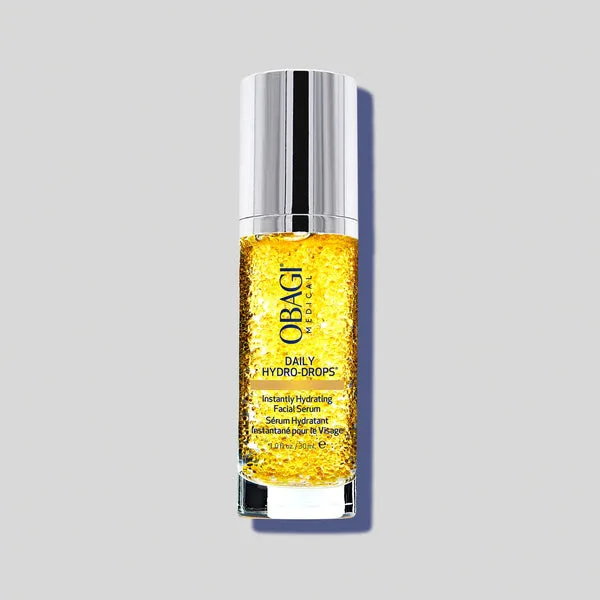
The Isoplentix microfluid technology suspends oil droplets separately within the gel serum, releasing them only upon application. This creates both the visually striking 'liquid gold' appearance and a theoretical delivery advantage — the oils remain isolated until contact with skin, preserving freshness. Whether this translates to meaningful clinical superiority over pre-mixed formulations is unsubstantiated, but the application experience is undeniably premium.
A beautifully crafted sensorial experience disguised as a clinical serum. The Isoplentix oil-droplet technology creates an undeniably luxurious application ritual, and the immediate smoothing and dewy effect is real. But at $115 for an ounce of glycerin, sub-optimal niacinamide, and seed oils you can find in $20 products, this is a case where the packaging and brand name carry more weight than the ingredient list warrants.
Good choicefor DrynessIn your profileYou chose · Glycerin is a reference standard by mechanism for dryness; this serum carries it at 3%.Moderate evidenceStandard tolerabilityNo reviews collected yet
The case for it
Glycerin has trial-supported standing for this concern.
It is present at an effective concentration, declared or high in the ingredient list.
The formula carries no trigger this concern is sensitive to, with the cautions noted.
Cautions: fragrance.
Same rule for everyone. “Good choice” is the verdict on 9,564 of 45,024 concern verdicts across the catalog; rule R5 decided 9,072 of them.
Unchanged since September 5, 2026, engine 5.1.1.
Supporting rolefor DehydrationIn your profileYou chose · Glycerin is a reference standard by mechanism for dehydration, but this serum carries it below the studied range — a supporting role at best.Moderate evidenceStandard tolerabilityNo reviews collected yet
The case for it
Glycerin has trial-supported standing for this concern.
It is present below the studied range.
The formula carries no trigger this concern is sensitive to, with the cautions noted.
What would change this: A concentration inside the studied range would raise this a step.
Same rule for everyone. “Supporting role” is the verdict on 8,197 of 45,024 concern verdicts across the catalog; rule R7 decided 258 of them.
Unchanged since September 5, 2026, engine 5.1.1.
R7 — A supported active under-dosed cannot be recommended for the concern; if the category has a supportive job it may still help alongside treatment. · the full register
Carrying active
Glycerin
Standing
supported — its mechanism is established
Form
sub threshold (declared 3%) — studied range 20%, from the trials on the row; needs leave-on contact; judge it after ~1 weeks
Tolerability
standard
Row checked
against its sources on July 17, 2026 (evidence table ev-2026.09-r228)
The studies behind the evidence row
USP glycerin monograph / Fluhr et al., glycerol and the skin (review) — glycerin is the reference humectant, drawing and holding water in the stratum corneum — reference work
Promisingfor DullnessIn your profileYou chose · Glycerin has trial-level evidence for dullness but no guideline or regulatory standing yet — promising, short of a recommendation; the other actives here are not yet assessed for it.Moderate evidenceStandard tolerabilityNo reviews collected yet
The case for it
Glycerin has trial-level evidence for this concern but no guideline or regulatory standing yet.
It is present at an effective concentration, declared or high in the ingredient list.
The formula carries no trigger this concern is sensitive to, with the cautions noted.
What would change this: Guideline or regulatory standing for the active on this concern would move this from a promising bet to a recommendation.
Same rule for everyone. “Promising” is the verdict on 7,858 of 45,024 concern verdicts across the catalog; rule R9p decided 7,858 of them.
Unchanged since September 5, 2026, engine 5.1.1.
R9p — 0.5.0: 'Unproven' beside three filled dots read as one question answered twice with opposite words (7,018 rows). The chip measures standing, the dots measure trial volume; where the row carries at least one RCT or a tier-2 source (moderate dots) and the active is present at a working level, the honest word is Promising. Unproven is reserved for plausible-standing rows with limited or weak evidence, or an under-dosed form. Same rank as Unproven — a bet either way; the dots order them. · the full register
Carrying active
Glycerin
Standing
plausible — trials support it
Form
adequate (declared 3%) — studied range 2–20%, from the trials on the row; needs leave-on contact; judge it after ~1 weeks
Tolerability
standard
Row checked
against its sources on July 17, 2026 (evidence table ev-2026.09-r228)
The studies behind the evidence row
Harry's Cosmeticology / Baran & Maibach Textbook of Cosmetic Dermatology — humectant, emollient and occlusive classification — standard reference text
Unprovenfor AgingIn your profileYou chose · Niacinamide has early or mechanistic evidence for aging — a reasonable bet, not a recommendation; the other actives here are not yet assessed for it.Moderate evidenceStandard tolerabilityNo reviews collected yet
The case for it
Niacinamide has early or mechanistic evidence for this concern, not trial-backed standing.
It is present below the studied range.
The formula carries no trigger this concern is sensitive to, with the cautions noted.
What would change this: A concentration inside the studied range would raise this a step.
Same rule for everyone. “Unproven” is the verdict on 1,111 of 45,024 concern verdicts across the catalog; rule R9 decided 1,111 of them.
Unchanged since September 5, 2026, engine 5.1.1.
R9 — Plausible-tier actives alone do not earn a recommendation, and 'not for this' would overstate the case against them. 'Unproven' with the evidence dots lets the reader judge the bet (added 0.2.0 after the first shadow run put a 10% niacinamide serum at 'not for this' for hyperpigmentation). 0.5.0: the closing clause reads the other heroes — "nothing else here addresses it" only when every other active has a researched 'none' row; "not yet assessed" when that is the truth. Rows whose dots read moderate or better now reach R9p first. · the full register
Carrying active
Niacinamide
Standing
plausible — trials support it
Form
sub threshold (declared 1.5%) — studied range 4–5%, from the trials on the row; needs leave-on contact; judge it after ~8 weeks
Tolerability
standard
Row checked
against its sources on July 17, 2026 (evidence table ev-2026.09-r228)
Where our review and the verdict differ. The review below was written on the formulation and the published trials; the verdicts above apply the stricter standing test in our methodology — an active earns a recommendation only with guideline or regulatory standing for the concern. Where the two disagree, the verdict is DermApproved’s position.
A verdict is DermApproved’s assessment of how well a product’s ingredients fit a concern — never a claim about what the product treats. Evidence dots and collected reviews sit beside it and are never blended in.
Rules 0.5.1 · evidence table ev-2026.09-r228 · how we decide
Assessment
Pros & Cons
Pros
✓ Immediately visible smoothing and dewy glow from first application confirmed by clinical testing
✓ Luxurious Isoplentix technology creates a genuinely premium application experience
✓ Lightweight gel-serum texture absorbs instantly and layers beautifully under makeup
✓ Non-comedogenic and hypoallergenic with dermatologist and ophthalmologist testing
✓ Updated pump packaging improves on previous hard-to-use dropper design
✓ Versatile enough to use as standalone lightweight moisturizer or layered under heavier cream
Cons
✗ $115 for 1 oz is difficult to justify given the modest active ingredient concentrations
✗ Contains fragrance (Parfum) which contradicts the brand's clinical positioning
✗ Niacinamide at ~2% is below the 5% threshold where most clinical benefits are demonstrated
✗ Chemical UV filters (octocrylene, homosalate, avobenzone) add irritation potential without providing SPF
✗ Hero seed oils, while pleasant, lack robust clinical data differentiating them from more common alternatives
Review
Full Review
Obagi Medical built its reputation on products that work. Not products that look beautiful in the bottle, not products that feel like a spa moment, not products that photograph well for Instagram. The Nu-Derm system, the retinol lines, the vitamin C serums — these are products dermatologists recommend because the ingredients are at effective concentrations and the clinical data supports the claims. The Daily Hydro-Drops represents a deliberate departure from that identity, and the result is a product that's easier to love using than it is to justify buying.
The first time you pump this serum and watch the visible oil droplets burst on your fingertips, you understand what $115 is buying. The Isoplentix technology suspends oil-filled microdroplets in a clear gel matrix, creating a liquid gold appearance that's genuinely mesmerizing. When the droplets contact skin and release their payload of abyssinian, hibiscus, and meadowfoam seed oils, the formula transforms from a light gel into a silky, smooth veil that absorbs in seconds. It feels expensive. It looks expensive. The sensorial engineering here is first-rate.
The immediate effect is legitimate and measurable — Obagi's own testing found that 91% of participants felt their skin was smoother after first use. And they're right. The combination of glycerin, betaine, and those released seed oils creates an instant-gratification smoothing effect that makes skin look dewy, plump, and luminous. Under makeup, it functions as an exceptional primer — foundation glides on without catching, and the dewy finish persists through the day without tipping into oiliness. If your primary criterion for a skincare product is how your skin looks and feels in the hour after application, this delivers.
But DermApproved reviews are about what's in the bottle, not how the bottle looks. And this is where the Hydro-Drops faces honest scrutiny.
Niacinamide appears seventh in the ingredient list at an estimated 1.5-2% concentration. The bulk of clinical research demonstrating niacinamide's efficacy for brightening, oil control, and barrier strengthening uses 5% or higher. At this concentration, niacinamide provides modest supporting benefits but falls short of the standalone efficacy that might justify featuring it as a hero ingredient. It's present, it's doing something, but it's not doing what a $115 product from a clinical brand should promise.
The three hero seed oils — abyssinian, hibiscus, and meadowfoam — are perfectly pleasant emollients. Abyssinian oil is lightweight with high erucic acid content; hibiscus oil contributes phytosterols and essential fatty acids; meadowfoam oil is exceptionally stable and creates a moisture barrier. All three are good. None are rare, particularly potent, or backed by the kind of clinical evidence that justifies a premium over more common but equally effective oils like squalane or jojoba. They're competent oils chosen partly for their performance and partly for their marketing appeal — they sound more exotic than they are.
Glycerin, the actual workhorse of this formula at 3-5%, is the humectant doing most of the hydrating heavy lifting. It's one of the most effective and inexpensive moisturizing ingredients in cosmetic chemistry. It appears in products ranging from $5 drugstore moisturizers to this $115 serum, performing identically in both. The betaine alongside it adds a second humectant layer. Together, they're why your skin feels hydrated after use — not because of any proprietary technology, but because glycerin is that good.
The fragrance inclusion is the most disappointing element of the formula. Obagi is a clinical brand trusted in dermatology offices. Adding Parfum to a $115 serum undermines that clinical positioning and excludes genuinely fragrance-sensitive patients who are the core medical-channel audience. The scent is described as delicate and floral — not offensive — but for a brand that charges premium prices partly on the basis of clinical credibility, fragrance is a choice that prioritizes mass-market appeal over dermatological rigor.
The presence of chemical UV filters (octocrylene, homosalate, and avobenzone) in a non-SPF product raises questions. At the concentrations listed toward the end of the ingredient list, they're not providing meaningful sun protection — they're likely serving as photoprotective stabilizers for the formula's oils and colorants. But their presence adds three more potential irritants to a formula that already contains fragrance, increasing the cumulative sensitization risk without providing functional UV protection.
The Isoplentix delivery technology, beyond its visual appeal, theoretically preserves the freshness of the oil actives by keeping them separated from the aqueous gel until application. This is a legitimate formulation advantage — isolated oils are less susceptible to oxidation during storage. Whether this translates to a measurable clinical difference compared to properly preserved pre-mixed emulsions has not been demonstrated in published research. The technology is elegant engineering; its clinical significance is assumed rather than proven.
At $115 for 1 oz, this is one of Obagi's most expensive per-ounce products — pricier than their clinically validated retinol line. The per-use cost of approximately $2.00-2.50 per application puts it in luxury skincare territory. For that investment, the formulation should either contain actives at research-validated concentrations or offer a demonstrably unique benefit that cheaper alternatives cannot replicate. The Hydro-Drops achieves neither. What it offers is an experience — a beautiful, gratifying, immediately rewarding moment of skincare that makes your skin look great right now. If that experience is worth $115 to you, the product delivers on its implicit promise. If you're paying for clinical efficacy, you'll find better value in Obagi's own retinol line or in hydrating serums from brands that put their budget into ingredients rather than delivery theater.
Formula
Key Ingredients
The hero actives that drive this product's performance.
Present at a moderate concentration below the 5% threshold most studies use for standalone efficacy. In this formula, niacinamide provides supporting barrier-strengthening and mild brightening effects rather than serving as a primary active. It works alongside the oil blend to maintain skin barrier function and improve moisture retention.
A lightweight, fast-absorbing oil rich in erucic acid (omega-9) that provides emollience without heaviness. In this formula's Isoplentix delivery system, abyssinian oil is suspended as visible droplets that release upon application, creating the signature 'liquid gold' effect while delivering fatty acids that smooth and condition the skin surface.
Rich in phytosterols and essential fatty acids (omega-9 and omega-6) with antioxidant properties. In this serum, hibiscus oil contributes to the oil-droplet suspension and provides conditioning benefits that help soften the appearance of fine lines through emollient smoothing rather than structural changes.
A highly stable seed oil with over 98% long-chain fatty acids that create a moisture-locking barrier on the skin. Meadowfoam oil's exceptional oxidative stability makes it a smart choice for a formula that needs to maintain the integrity of its suspended oil droplets over time. Provides lasting emollient hydration without the heaviness of heavier plant oils.
The primary humectant in this formula, drawing moisture from the environment and deeper skin layers to the surface. At 3-5%, glycerin provides reliable hydration that forms the foundation of this serum's moisturizing claims. Works synergistically with betaine (another humectant in the formula) to create a dual-humectant hydration system.
Established mechanismfor Dryness · established mechanism
Ingredient standings describe the active at treatment-level doses and
vehicles; this product's own condition grades weigh its actual formula.
Apply 1-2 pumps to clean skin after toning and before heavier moisturizer. Shake gently before use to redistribute the suspended oil droplets. Can be used alone as a lightweight moisturizer in humid conditions or layered under a richer cream in drier climates.
Results Timeline
Immediate: skin feels noticeably smoother and looks dewy after first application. Short-term (1-2 weeks): skin appears more hydrated, plump, and radiant with consistent use. Long-term (4-8 weeks): sustained improvement in skin texture and moisture levels, though anti-aging effects are modest given the ingredient concentrations.
Pairs Well With
Vitamin C serum underneath for enhanced brighteningHeavier cream moisturizer on top in winterRetinol treatment in PM routine
The Obagi Daily Hydro-Drops relies primarily on well-established humectant and emollient science rather than novel active ingredients. The formula's hydrating efficacy is driven by glycerin and betaine, both proven humectants that draw water from the dermis and environment to maintain stratum corneum hydration.
Glycerin's moisturizing properties are among the most extensively documented in dermatological literature. A comprehensive 2016 review in the British Journal of Dermatology confirmed that glycerin at concentrations of 2-10% significantly improves skin hydration, barrier function, and mechanical properties. At the estimated 3-5% in this formula, glycerin falls well within the effective range.
Niacinamide at the estimated 1.5-2% concentration provides some barrier-supporting benefits but falls below the threshold for most clinically demonstrated effects. The landmark 2005 study by Bissett et al. in the International Journal of Cosmetic Science used 5% niacinamide to demonstrate improvements in fine lines, hyperpigmentation, and skin elasticity. At 2%, barrier-strengthening effects through increased ceramide synthesis remain plausible — a 2000 study in Experimental Dermatology showed that niacinamide upregulates ceramide synthesis at concentrations as low as 0.01% in vitro — but the in-vivo relevance of sub-5% concentrations for visible anti-aging is less well-established.
The Isoplentix microfluid technology creates an oil-in-gel suspension where lipophilic ingredients (abyssinian, hibiscus, and meadowfoam seed oils) are encapsulated as visible droplets within the aqueous gel phase. This is a variation on established microemulsion science. The theoretical advantage is reduced oil oxidation during storage, as the oils remain physically separated from the aqueous phase and any pro-oxidant water-soluble ingredients until application. While this is formulation-sound in principle, no peer-reviewed studies have been published demonstrating that the Isoplentix system provides clinically superior outcomes compared to conventional emulsion formulations.
The seed oils contribute primarily through emollient and occlusive effects. Abyssinian oil is rich in erucic acid (approximately 55-60%), a very-long-chain monounsaturated fatty acid that provides excellent slip and moisture barrier properties. Meadowfoam seed oil contains over 98% long-chain fatty acids (predominantly eicosenoic acid) and has exceptional oxidative stability — a 2019 analysis in Industrial Crops and Products confirmed its resistance to rancidity. Hibiscus seed oil provides a mix of oleic, linoleic, and palmitic acids with phytosterol content that may have mild anti-inflammatory properties. None of these oils have robust clinical data specifically supporting anti-aging efficacy beyond general emollient effects.
Niacinamide: A B vitamin that improves aging facial skin appearance — International Journal of Cosmetic Science (2005)
Dermatologist Perspective
Dermatology professionals would likely have mixed feelings about this product. The hypoallergenic testing, non-comedogenic classification, and ophthalmologist testing add legitimate clinical credibility — this is a product that has been through proper safety validation. However, dermatologists who understand ingredient concentrations would note that the niacinamide falls below commonly recommended efficacy thresholds, and the overall active profile doesn't match the $115 price point relative to other products in Obagi's own lineup. The inclusion of fragrance in a physician-dispensed product would raise concerns for dermatologists who treat patients with rosacea, eczema, or contact dermatitis — conditions where fragrance avoidance is standard medical advice. Dermatologists would likely recommend this as a luxurious hydrating complement to a treatment-focused routine rather than as a treatment product itself.
Guidance
Usage & Recommendations
How to Use
Shake the bottle gently to redistribute the suspended oil droplets. Prime the pump if using for the first time (press several times until product flows). Apply 1-2 pumps to clean, dry skin after cleansing and toning. Gently press and pat into skin, allowing the oil droplets to release and absorb. Can be used morning and evening. In the AM, follow with sunscreen. Can be used alone as a lightweight moisturizer or layered under a richer cream for added hydration.
Value Assessment
At $115 for 1 oz, this is among the most expensive hydrating serums on the market relative to its active ingredient profile. The core formula — glycerin, niacinamide at ~2%, and botanical seed oils — can be found in products ranging from $15-35 with comparable or superior active concentrations. The price reflects the Isoplentix delivery technology, Obagi's brand prestige, physician-channel distribution, and the premium sensorial experience rather than uniquely potent or rare ingredients. For consumers who value the luxury application ritual and trust the Obagi name, the experience may justify the cost. For ingredient-focused consumers, this represents a significant premium over formulations with equivalent or better active profiles.
Who Should Buy
Those who value a premium skincare experience and can afford the price point without expecting treatment-level efficacy from the actives. Well-suited for normal to dry skin types seeking immediate visible dewiness and smoothness. Makes an excellent addition to a routine that already includes dedicated treatment products like retinol and vitamin C.
Who Should Skip
Budget-conscious consumers who prioritize active ingredient concentrations over sensorial experience. Anyone with fragrance sensitivities — despite the hypoallergenic claim, the formula contains Parfum. Those seeking measurable anti-aging or brightening results should invest in products with higher active concentrations, including Obagi's own retinol line.
Ready to try Obagi Daily Hydro-Drops Face Moisturizer?
Lightweight, silky gel-serum with visible suspended oil droplets that create a 'liquid gold' appearance in the bottle. Upon application, the droplets burst and blend into a smooth, fast-absorbing formula that feels weightless on skin.
Scent
Delicate, fresh, slightly floral fragrance from added parfum. Not overpowering but clearly noticeable during application.
Packaging
Glass bottle with an updated pump dispenser (previously a dropper pipette that users found difficult to use near the end). The pump requires initial priming. The amber-tinted glass helps protect light-sensitive ingredients. The visible oil droplets suspended in the gel create a premium visual presentation.
Finish
dewyglowylightweight
What to Expect on First Use
On first use, the serum delivers an immediately noticeable smoothing and dewy effect — 91% of clinical test participants confirmed smoother-feeling skin after first application. The oil droplets burst during application, releasing a subtle slip that makes the serum glide across skin. The dewy finish lasts several hours. The fragrance is present but not lingering. No adjustment period needed.
The Daily Hydro-Drops represents Obagi's push into the luxury hydration market, expanding beyond their clinical treatment roots (retinol, vitamin C, skin-brightening systems) into daily-use sensorial products. The Isoplentix technology was developed to differentiate the product visually and experientially in a crowded hydrating serum category. The success of this product led to a line extension — a Rejuvenating Eye Gel Cream launched in 2024.
About Obagi Legacy Brand (20+ years)
Obagi Medical was founded in 1988 by Dr. Zein Obagi, a board-certified dermatologist with over three decades of clinical experience. The brand pioneered physician-dispensed skincare systems and has extensive clinical research backing its formulations. Obagi products are widely used in dermatology practices and medical spas worldwide.
Brand founded: 1988 · Product launched: 2019
Myth vs. Reality
Common Myths
Myth
The suspended oil droplets in this serum deliver ingredients more effectively than mixed formulations.
Reality
The Isoplentix technology keeps oils suspended separately until application, which may help preserve freshness and prevent oxidation. However, there's no published clinical evidence that this delivery method provides superior ingredient penetration compared to properly formulated mixed emulsions. The visual appeal is real; the clinical advantage over conventional formulation is theoretical.
This serum's core actives — niacinamide at ~2%, glycerin, and seed oils — are widely available in products costing $15-30. The premium price reflects the brand name, the Isoplentix delivery technology, the sensorial experience, and physician-channel distribution rather than uniquely expensive ingredients. Performance should be evaluated on formulation quality, not price.
FAQ
Frequently Asked Questions
Is the Obagi Daily Hydro-Drops worth $115?
The serum delivers an undeniably luxurious experience — the visible oil droplets, immediate smoothing effect, and dewy finish feel premium. However, the core ingredients (niacinamide at ~2%, glycerin, seed oils) are widely available in serums costing a fraction of this price. You're paying significantly for the brand name, Isoplentix delivery system, and sensorial experience rather than for uniquely potent actives.
Is the Obagi Hydro-Drops fragrance-free?
No — the formula contains Parfum (fragrance) listed as approximately 0.4-0.9% of the formula. Despite being marketed as hypoallergenic and dermatologist-tested, the fragrance inclusion may irritate users with true fragrance sensitivities. The scent is described as delicate and slightly floral.
Can I use Obagi Hydro-Drops with retinol?
Yes — this serum pairs well with retinol treatments. Apply retinol first in your PM routine, wait a few minutes, then layer this serum on top. The glycerin and seed oils provide hydration that helps buffer retinol-induced dryness. The niacinamide in the formula also supports barrier function during retinoid use.
Why does Obagi Hydro-Drops contain sunscreen ingredients?
The formula includes octocrylene, homosalate, and avobenzone at low concentrations — not enough to provide meaningful SPF protection. These chemical UV filters likely serve as photoprotective stabilizers for the formula's oils and actives, preventing degradation from light exposure. This product should not replace your daily sunscreen.
How is Obagi Daily Hydro-Drops different from a regular moisturizer?
This is technically a gel-serum hybrid rather than a traditional moisturizer. The Isoplentix technology suspends oil droplets in a lightweight gel base that releases them on contact with skin. It's lighter than most creams, absorbs faster, and provides hydration primarily through humectants (glycerin, betaine) rather than heavy occlusives. In dry climates or for very dry skin, you may want to layer a cream moisturizer on top.
Reviews
What Reviewers Tend to Say
Recurring themes our editors read across retailer reviews of this product — summaries in our words, not quotations, and not a substitute for your own patch test.
Common Praise
Leaves skin visibly glowing, dewy, and radiant immediately after application
Lightweight texture absorbs quickly without greasiness or stickiness
Skin feels noticeably smoother after very first use
Works beautifully under makeup without settling into fine lines or creases
Luxurious spa-like application experience with visible oil droplets
Common Complaints
$115 for 1 oz is prohibitively expensive for a serum with modest active concentrations
Contains fragrance which contradicts the clinical brand positioning for sensitive skin
Previous dropper packaging was difficult to use near the end of the bottle
Some users report no visible anti-aging improvement despite consistent long-term use
Comparable hydration achievable from products at a fraction of the price
Notable Endorsements
Dermatologist tested and physician endorsedHypoallergenic and ophthalmologist tested
Every word on a plant oil label describes what was left in — including the proteins that sensitise and the compounds that go rancid — and the variable that decided the one head-to-head trial isn't printed anywhere.
The burn trials are real and the skeptics who dismiss aloe as folklore are wrong — but the same substance has delayed healing in other wounds, and none of it says anything about what a soothing gel does to intact skin.
Alcohol dehydrates, dilates your blood vessels, wrecks the sleep your skin repairs in, and measurably worsens rosacea. None of that is moralizing — it's just mechanism.
Five brands that own the feed, judged on their ingredient lists rather than their view counts — including the one active all five suddenly added at once, and what that tells you.
Products, answers, therapy guides, tools and articles in one search. Brand names,
slang and abbreviations all work — accutane finds isotretinoin, bacne finds truncal acne.