




You Can Mix L-Ascorbic Acid at Home. Keeping It Alive Is the Hard Part.
The one home formulation with a genuinely coherent case, taken apart on its own terms: the pH window, the oxidation clock, and what a browning serum has actually become.
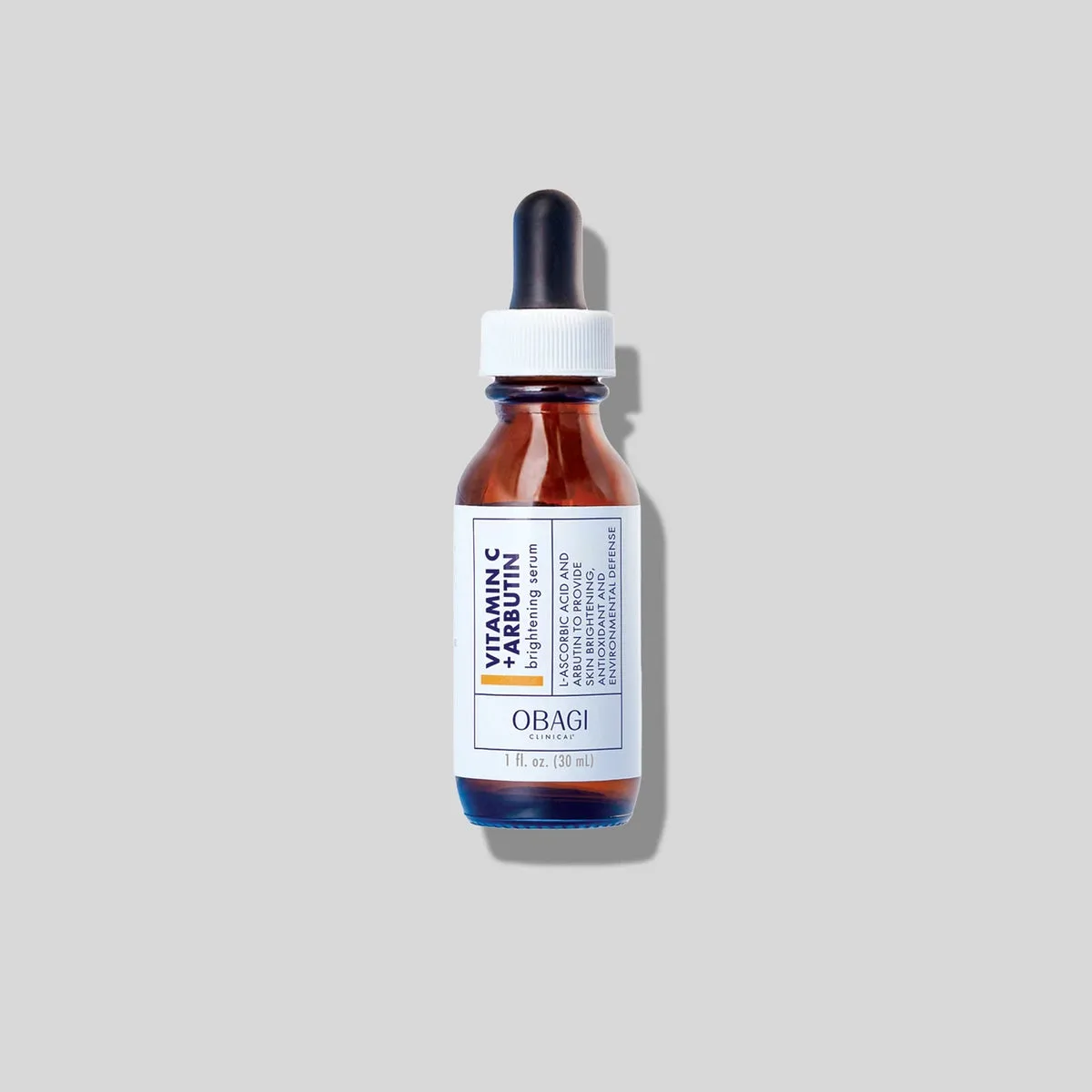
This is one of the most stripped-down vitamin C serums on the market — just 9 ingredients total, compared to the 20-30 found in most competing formulas. The combination of L-ascorbic acid with arbutin creates a dual-pathway approach to brightening that targets both oxidative pigmentation triggers and the tyrosinase enzyme directly, which is relatively uncommon in a single product.
A radically minimalist vitamin C serum that pairs L-ascorbic acid with arbutin for dual-pathway brightening. Effective for evening skin tone, but the inclusion of alcohol denat. and SLS in a leave-on formula — at $92 for one ounce — asks you to pay luxury prices while accepting drugstore-era compromises.
The case for it
Cautions: known irritants.
What would change this: Guideline or regulatory standing for the active on this concern would move this from a promising bet to a recommendation.
Same rule for everyone. “Promising” is the verdict on 7,858 of 45,024 concern verdicts across the catalog; rule R9p decided 7,858 of them. Unchanged since September 5, 2026, engine 5.1.1.
Brand or formulator? Disclose a concentration or correct a fact →
The studies behind the evidence row
The case for it
What would change this: Guideline or regulatory standing for the active on this concern would move this from a promising bet to a recommendation.
Same rule for everyone. “Promising” is the verdict on 7,858 of 45,024 concern verdicts across the catalog; rule R9p decided 7,858 of them. Unchanged since September 5, 2026, engine 5.1.1.
Brand or formulator? Disclose a concentration or correct a fact →
The studies behind the evidence row
The case for it
What would change this: Guideline or regulatory standing for the active on this concern would move this from a promising bet to a recommendation.
Same rule for everyone. “Promising” is the verdict on 7,858 of 45,024 concern verdicts across the catalog; rule R9p decided 7,858 of them. Unchanged since September 5, 2026, engine 5.1.1.
Brand or formulator? Disclose a concentration or correct a fact →
The studies behind the evidence row
The case for it
What would change this: Guideline or regulatory standing for the active on this concern would move this from a promising bet to a recommendation.
Same rule for everyone. “Promising” is the verdict on 7,858 of 45,024 concern verdicts across the catalog; rule R9p decided 7,858 of them. Unchanged since September 5, 2026, engine 5.1.1.
Brand or formulator? Disclose a concentration or correct a fact →
The studies behind the evidence row
Also listed for Dullness — the actives here (Propylene Glycol, Arbutin, Vitamin C) are in our research queue for that concern; there is no verdict until their evidence rows are written. That is a gap in our table, not a mark against the product.
Where our review and the verdict differ. The review below was written on the formulation and the published trials; the verdicts above apply the stricter standing test in our methodology — an active earns a recommendation only with guideline or regulatory standing for the concern. Where the two disagree, the verdict is DermApproved’s position.
A verdict is DermApproved’s assessment of how well a product’s ingredients fit a concern — never a claim about what the product treats. Evidence dots and collected reviews sit beside it and are never blended in. Rules 0.5.1 · evidence table ev-2026.09-r228 · how we decide
There is something almost audacious about charging ninety-two dollars for a serum with nine ingredients. The Obagi Clinical Vitamin C+ Arbutin Brightening Serum reads like a formulation exercise in radical minimalism — strip away everything except the actives, the vehicle, and a few functional necessities, then let the ingredients speak for themselves. It is a philosophy that works brilliantly on paper and almost works in practice.
The star pairing here is genuinely clever. L-ascorbic acid at 10% handles the antioxidant heavy lifting — neutralizing free radicals, inhibiting melanin synthesis at the oxidative level, and providing the photoprotective boost that makes vitamin C a morning-routine essential. Arbutin comes in from a different angle entirely, blocking the tyrosinase enzyme that is the gateway to melanin production. Together, they create a two-pronged approach to brightening that addresses pigmentation at multiple stages of the process. This is not just vitamin C with a sidekick; it is a coordinated strategy, and when it works, it works noticeably well.
The texture is practically weightless — a watery liquid that drops from the glass dropper and absorbs into the skin almost before you have finished spreading it. This is both a feature and a logistical challenge. You need to work quickly; five to seven drops on the face and neck means you have about fifteen seconds before the serum has vanished. There is no luxurious massage moment here, no rich slip. It is functional, fast, and invisible. If you prefer a serum that lets you know it is there, this one will disappoint. If you want something that disappears under moisturizer and sunscreen without a trace, it is nearly ideal.
The results, when they come, are genuinely impressive. Many users report a visible luminosity within the first day or two — that initial glow is likely the antioxidant activity doing its work, quenching the free radicals that contribute to dullness. The real brightening — the kind that addresses established dark spots and post-inflammatory hyperpigmentation — takes longer. Four to six weeks of consistent daily use is the typical timeline, with meaningful improvement in tone evenness emerging over two to three months. The arbutin appears to amplify what the vitamin C alone would achieve, and for moderate hyperpigmentation, the combination delivers.
But then there are the other seven ingredients, and this is where the minimalism goes from admirable to puzzling. Alcohol denat. sits third on the ingredient list, which means it is present in significant quantity. In a leave-on serum intended for daily use on potentially sensitized skin, denatured alcohol is a drying agent that can compromise barrier function over time. It helps the formula dry down quickly and likely improves the penetration of the actives, but it does so at a cost that more modern formulations have found ways to avoid.
Then there is the sodium lauryl sulfate. SLS in a leave-on product is unusual enough to raise eyebrows. At the trace levels suggested by its position near the end of the ingredient list, it likely functions as an emulsifier or solubilizer rather than a cleansing agent, but its reputation as an irritant precedes it. For a product marketed through dermatology offices, the inclusion of two well-known irritants in a nine-ingredient formula feels like an unforced error — especially when the competition has largely moved past both.
The fragrance-free status is a genuine positive, as is the silicone-free, paraben-free formulation. For people who react to common serum additives like dimethicone, tocopherol, or fragrance compounds, this stripped-down ingredient list actually offers fewer potential triggers — provided their skin tolerates alcohol and propylene glycol. It is a paradox: fewer ingredients means fewer things to react to, but the things that are there carry their own risks.
The amber glass dropper bottle is appropriate for vitamin C — light protection is essential for L-ascorbic acid stability — though even with good packaging, a water-based ascorbic acid formula has a limited shelf life. Plan to use the bottle within three to four months of opening, and watch for color changes. If the serum shifts from clear or pale yellow to deep orange or brown, the vitamin C has oxidized beyond usefulness.
Value is the elephant in the room. At $92 for one fluid ounce, this serum sits at a price point typically reserved for formulations with multiple patented complexes, advanced delivery systems, or stabilized vitamin C derivatives. This is pure L-ascorbic acid in a water-propylene glycol base — effective, yes, but not technologically complex. The Obagi Clinical name carries weight in dermatology circles, and the physician-channel distribution adds perceived value, but the formula itself does not justify the premium over competing vitamin C serums at half or a third of the price.
What saves this serum from being merely overpriced is that it does what it promises. The ascorbic acid and arbutin combination is clinically sound, the absorption is effortless, and for people who have struggled with heavy, sticky, or pilling vitamin C serums, the near-invisible texture is a revelation. It layers under anything without interference and plays well with most moisturizers and sunscreens. If you are already in the Obagi ecosystem and trust the brand, this will not let you down. But if you are shopping on formulation merit alone, the nine-ingredient list that includes alcohol denat. and SLS makes the ninety-two-dollar ask a difficult one to defend.
The hero actives that drive this product's performance.
| Ingredient | Function | Evidence |
|---|---|---|
| L-Ascorbic Acid (10%) (10%) | The primary brightening active in this ultra-minimalist formula, delivering pure L-ascorbic acid — the most potent and most studied form of vitamin C. At 10%, it sits at a moderate concentration that balances efficacy with tolerability. In this stripped-down formulation, the ascorbic acid works in tandem with arbutin to target hyperpigmentation from two different angles: vitamin C inhibits melanin synthesis and scavenges free radicals, while arbutin blocks tyrosinase activity downstream. | Limited for Hyperpigmentation |
| Arbutin | A naturally occurring tyrosinase inhibitor derived from bearberry that complements the vitamin C in this formula by targeting a different step in the melanin production pathway. While the ascorbic acid intercepts oxidative triggers for pigmentation, arbutin directly blocks the enzyme responsible for converting tyrosine to melanin — a dual approach that theoretically enhances brightening efficacy beyond what either ingredient achieves alone. | Not yet assessed |
| Propylene Glycol | Serves a dual role in this minimalist formula — acting as both a humectant to draw moisture into the skin and as a penetration enhancer that helps the ascorbic acid and arbutin reach deeper into the epidermis. Its high placement on the ingredient list suggests it is a significant portion of the vehicle. | Not yet assessed |
Ingredient standings describe the active at treatment-level doses and vehicles; this product's own condition grades weigh its actual formula.
Water (Aqua), Propylene Glycol, Alcohol Denat., Dipropylene Glycol, Ascorbic Acid, Arbutin, Propylene Carbonate, Sodium Lauryl Sulfate, Hydroxyacetophenone.
serum
AM
Apply to clean, dry skin before moisturizer. Wait 1-2 minutes for full absorption before layering. Follow with a broad-spectrum sunscreen — vitamin C enhances photoprotection but does not replace SPF. Avoid combining with other potent actives like retinol or AHAs in the same routine to minimize irritation.
Some users report a visible glow within 24 hours of first use due to antioxidant activity. Meaningful improvement in dark spots and uneven tone typically appears after 4-6 weeks. Full brightening benefits require 8-12 weeks of consistent daily morning use.
L-ascorbic acid is the most extensively studied form of topical vitamin C, with robust evidence for its antioxidant, photoprotective, and anti-pigmentation properties. A landmark study by Pinnell et al. published in Dermatologic Surgery (2001) established that topical vitamin C at concentrations of 10-20% provides meaningful photoprotection and collagen synthesis stimulation, with tissue levels saturating at approximately 15%. This serum's 10% concentration falls within the effective range, though it is at the lower end.
The combination with arbutin adds a complementary mechanism. Arbutin — a glycosylated hydroquinone derivative found naturally in bearberry, cranberry, and mulberry — inhibits tyrosinase activity without the cytotoxic effects associated with hydroquinone. Research reported in the Journal of Cosmetic Dermatology (2017) confirmed arbutin's efficacy as a skin-lightening agent at concentrations as low as 1%, with a favorable safety profile for extended use.
The dual-active approach in this serum is theoretically sound: L-ascorbic acid reduces melanin by intercepting reactive oxygen species that trigger melanogenesis and by directly interfering with melanin synthesis, while arbutin blocks tyrosinase activity at a downstream step. A study in Pigment Cell & Melanoma Research (2006) demonstrated that combining multiple melanogenesis inhibitors acting at different pathway points produces superior brightening compared to single-agent approaches.
The presence of alcohol denat. warrants discussion. While it enhances penetration of actives and contributes to the fast-drying texture, research published in the Journal of Investigative Dermatology has shown that repeated exposure to denatured alcohol can impair skin barrier function and increase transepidermal water loss — potentially counterproductive for skin already dealing with post-inflammatory hyperpigmentation.
Dermatologists in everyday practice frequently recommend vitamin C serums as a cornerstone of any brightening regimen, and the combination with arbutin in this product is considered a well-designed dual-active approach. Dermatologists note that 10% L-ascorbic acid provides effective antioxidant protection with lower irritation risk than 15-20% formulations, making it a reasonable starting concentration for vitamin C beginners. However, some dermatologists express concern about the alcohol denat. content in a daily-use leave-on product, advising patients with dry or barrier-compromised skin to consider alternative vitamin C formulations with gentler vehicles.
Apply 5-7 drops to clean, dry face and neck every morning. Spread quickly — the serum absorbs almost instantly. Avoid the eye area. Wait 1-2 minutes for full absorption before applying moisturizer and sunscreen. Always follow with broad-spectrum SPF 30+ when using vitamin C. Store the bottle in a cool, dark place and use within 3-4 months of opening. If the serum turns dark orange or brown, it has oxidized and should be discarded.
At $92 for 1 fl oz, this serum is significantly more expensive than comparable vitamin C and arbutin combinations from brands like The Ordinary, Timeless, and Paula's Choice. The ultra-minimalist 9-ingredient formula does not reflect the formulation complexity typically associated with premium pricing — there are no stabilizing antioxidant co-factors like ferulic acid or vitamin E, no advanced delivery systems, and no proprietary complexes. You are paying for the Obagi clinical brand and physician-channel distribution. For budget-conscious consumers, similar or superior formulations are available at a fraction of the cost.
This serum is ideal for people with normal to combination skin dealing with mild-to-moderate hyperpigmentation, sun damage, or general dullness who want a fast-absorbing, fragrance-free vitamin C that disappears under other products. Best suited for those already comfortable with active ingredients and not prone to dryness.
Anyone with dry, sensitive, or barrier-compromised skin should avoid this serum — the alcohol denat. and SLS can exacerbate dryness and irritation. Budget-conscious shoppers will find equally effective vitamin C and arbutin options at a fraction of the price from other brands.
Ready to try Obagi Clinical Vitamin C+ Arbutin Brightening Serum?
Buy at Amazon ♥Very lightweight, watery consistency that feels almost like water on the skin. Absorbs rapidly — almost instantly — requiring quick application to distribute evenly across the face.
No added fragrance. Faint chemical scent from the ascorbic acid that dissipates within seconds of application.
Amber glass dropper bottle that provides UV protection for the light-sensitive vitamin C. The dropper allows for precise 5-7 drop dosing per application.
On first application, expect a slightly tingling sensation from the ascorbic acid — this is normal and should subside within a minute. The serum absorbs almost immediately, leaving skin feeling slightly tacky for a moment before drying down. No purging expected, though some users with propylene glycol sensitivity may notice mild irritation during the first week.
2-3 months with daily morning use of 5-7 drops
All Year
The Obagi Clinical line was developed as a more accessible, direct-to-consumer complement to the brand's traditional physician-dispensed products. This serum represents Obagi's attempt to bring its brightening expertise — built over decades of prescription-grade hydroquinone products — into an OTC format using vitamin C and arbutin as the active duo.
Obagi Medical was founded in 1988 by board-certified dermatologist Dr. Zein Obagi, a pioneer in skin health restoration. The brand is widely distributed through dermatologist offices and medical spas, with decades of clinical use backing its prescription-grade and OTC product lines.
A minimalist ingredient list always means a better, gentler product.
Fewer ingredients can mean less clutter, but this formula includes alcohol denat. and SLS — ingredients that many longer-formulated serums have eliminated. Simplicity is only an advantage when every ingredient serves the skin, not just the formula.
Vitamin C serums work best at the highest possible concentration.
Research shows that 10-20% L-ascorbic acid provides effective skin penetration and antioxidant activity. Going above 20% doesn't proportionally increase benefits and significantly increases irritation risk. This serum's 10% sits at the lower-but-effective end of the range.
The combination of 10% L-ascorbic acid and arbutin targets dark spots through two mechanisms — vitamin C inhibits melanin production at the oxidative level while arbutin blocks the tyrosinase enzyme. Most users report visible improvement in dark spots after 4-6 weeks of consistent daily use, with full results by 8-12 weeks.
The alcohol denat. serves as a quick-drying solvent that helps the watery formula absorb rapidly, while SLS likely functions as an emulsifier at low concentrations. However, both ingredients can be drying and irritating, which is a notable drawback for a leave-on product targeting skin that may already be dealing with post-inflammatory hyperpigmentation.
It is best to separate them — use this vitamin C serum in the morning and retinol at night. The ascorbic acid in this formula is already potentially irritating, and layering it with retinol in the same routine increases the risk of redness, dryness, and barrier disruption.
Store in a cool, dark place away from direct sunlight. The amber glass bottle helps protect the L-ascorbic acid from light degradation, but heat and air exposure will still cause oxidation over time. If the serum turns dark orange or brown, it has oxidized and should be replaced.
Both L-ascorbic acid and arbutin are generally considered safe for topical use during pregnancy. This serum does not contain retinoids, hydroquinone, or other pregnancy-contraindicated ingredients. However, consult your OB-GYN before adding any new active to your routine during pregnancy.
Recurring themes our editors read across retailer reviews of this product — summaries in our words, not quotations, and not a substitute for your own patch test.
Visible glow and radiance within the first few days of use
Lightweight watery texture absorbs quickly without stickiness
Effective at evening out skin tone with consistent use
Fragrance-free formulation appreciated by sensitive noses
High price point relative to the simple ingredient list
Alcohol denat. can cause dryness and irritation in some users
Some users report breakouts after initial use
Needs to be spread quickly as it absorbs almost instantly
Verified answers from our questions library — the nuance a product page cannot carry.