


You Can Mix L-Ascorbic Acid at Home. Keeping It Alive Is the Hard Part.
The one home formulation with a genuinely coherent case, taken apart on its own terms: the pH window, the oxidation clock, and what a browning serum has actually become.
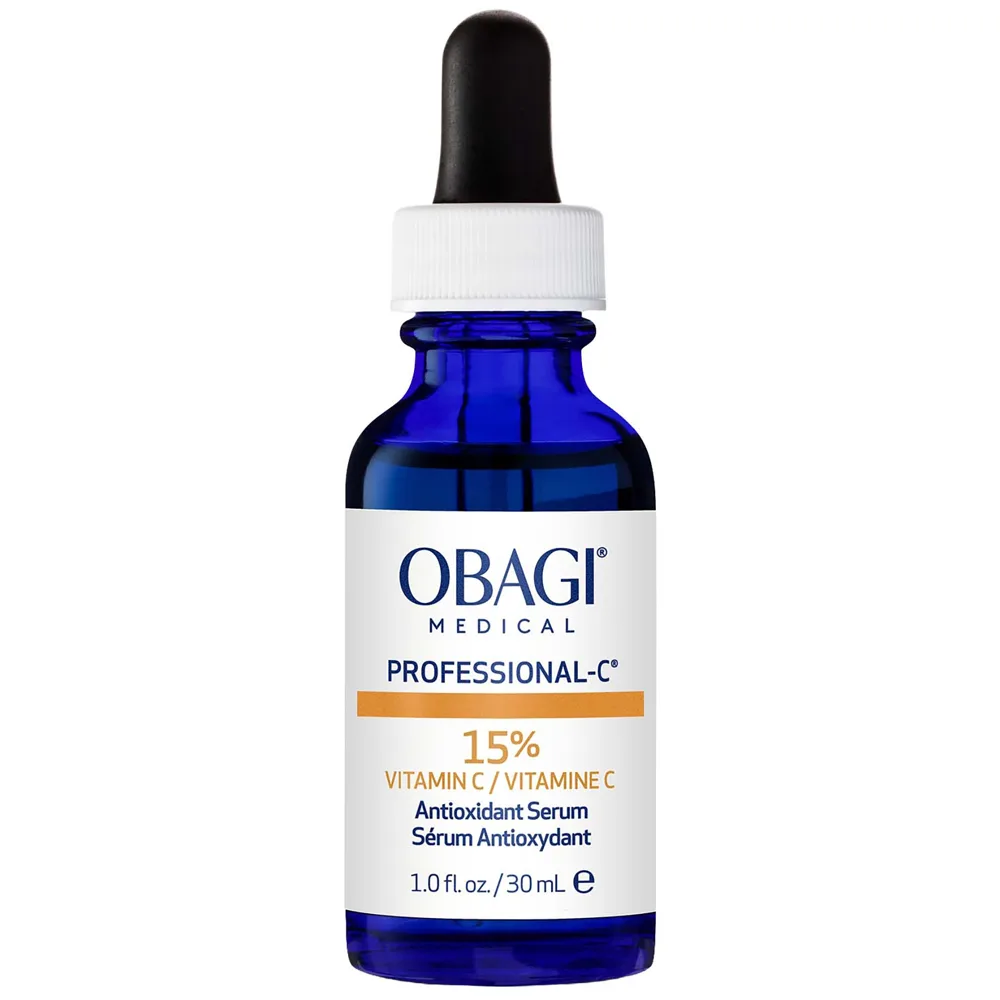
The 15% concentration matches the scientifically established saturation point for L-ascorbic acid in skin tissue, and the addition of ascorbyl glucoside creates a dual-release vitamin C system not found in the 10% formulation. This makes it the most evidence-aligned option in the Professional-C line.
The scientifically optimal concentration in Obagi's Professional-C line, with a clever dual-form vitamin C approach. Would be a standout product if it included ferulic acid and vitamin E — as it stands, it is a solid but incomplete vitamin C serum at a premium price.
The case for it
What would change this: Guideline or regulatory standing for the active on this concern would move this from a promising bet to a recommendation.
Same rule for everyone. “Promising” is the verdict on 7,858 of 45,024 concern verdicts across the catalog; rule R9p decided 7,858 of them. Unchanged since September 5, 2026, engine 5.1.1.
Brand or formulator? Disclose a concentration or correct a fact →
The studies behind the evidence row
The case for it
What would change this: Guideline or regulatory standing for the active on this concern would move this from a promising bet to a recommendation.
Same rule for everyone. “Promising” is the verdict on 7,858 of 45,024 concern verdicts across the catalog; rule R9p decided 7,858 of them. Unchanged since September 5, 2026, engine 5.1.1.
Brand or formulator? Disclose a concentration or correct a fact →
The studies behind the evidence row
The case for it
What would change this: Guideline or regulatory standing for the active on this concern would move this from a promising bet to a recommendation.
Same rule for everyone. “Promising” is the verdict on 7,858 of 45,024 concern verdicts across the catalog; rule R9p decided 7,858 of them. Unchanged since September 5, 2026, engine 5.1.1.
Brand or formulator? Disclose a concentration or correct a fact →
The studies behind the evidence row
The case for it
What would change this: Guideline or regulatory standing for the active on this concern would move this from a promising bet to a recommendation.
Same rule for everyone. “Promising” is the verdict on 7,858 of 45,024 concern verdicts across the catalog; rule R9p decided 7,858 of them. Unchanged since September 5, 2026, engine 5.1.1.
Brand or formulator? Disclose a concentration or correct a fact →
The studies behind the evidence row
Also listed for Dullness — the actives here (Propylene Glycol, Vitamin C) are in our research queue for that concern; there is no verdict until their evidence rows are written. That is a gap in our table, not a mark against the product.
Where our review and the verdict differ. The review below was written on the formulation and the published trials; the verdicts above apply the stricter standing test in our methodology — an active earns a recommendation only with guideline or regulatory standing for the concern. Where the two disagree, the verdict is DermApproved’s position.
A verdict is DermApproved’s assessment of how well a product’s ingredients fit a concern — never a claim about what the product treats. Evidence dots and collected reviews sit beside it and are never blended in. Rules 0.5.1 · evidence table ev-2026.09-r228 · how we decide
The most-cited paper in the entire field of topical vitamin C is the one that established a single, slightly unglamorous number: roughly fifteen percent. That's the concentration at which L-ascorbic acid saturates skin tissue — push higher and you don't meaningfully increase what the skin can absorb, you just increase the odds of irritation. Obagi's Professional-C Serum at fifteen percent is built squarely on that finding, sitting as the middle tier of the brand's three-concentration system. It is, by the evidence, the most efficient member of the lineup: not the gentlest, not the most aggressive, but the one calibrated to the saturation point itself. Obagi Medical was founded in 1988 by a board-certified dermatologist, and the Professional-C range has been a physician-office staple for well over a decade, so the clinical-channel provenance here is real. The frustrating part is that a formula built on such a sound concentration choice undercuts itself elsewhere.
The vitamin C strategy is genuinely clever. Rather than relying on pure L-ascorbic acid alone — which is potent but notoriously unstable in water-based formulas — this version adds ascorbyl glucoside, a stabilized derivative that the skin's own glucosidase enzymes convert back into active vitamin C. The result is a kind of dual-release system: the L-ascorbic acid delivers immediate, high-strength antioxidant activity and brightening, while the ascorbyl glucoside acts as a slower, more stable reservoir that extends vitamin C availability beyond what the pure form manages on its own. Both forms carry well-established evidence. It's not a true time-release mechanism, but it's a thoughtful acknowledgment of L-ascorbic acid's biggest weakness, and it's a step up from the simpler ten-percent version that lacks the second form entirely.
The third pillar of the formula is propylene glycol, which does the quiet but essential work of carrying the L-ascorbic acid through the stratum corneum while adding a little humectant cushioning. That cushioning matters here, because this version swaps in alcohol as a co-solvent — and that's the formulation's most debatable choice. The alcohol genuinely improves the experience: the serum dries down faster and feels less tacky than the lower-concentration version, with a thin, liquid consistency that absorbs quickly and layers cleanly under sunscreen. But alcohol can be drying and potentially barrier-disrupting with daily use, which is a real consideration for the normal-to-combination skin this product is aimed at. It's a trade-off — better immediate texture and penetration in exchange for a long-term drying risk that some users will feel and others won't.
In use, fifteen percent delivers a noticeably more active experience than the gentler tiers. There's a mild warmth on application, not quite a sting but a clear signal that the vitamin C is doing something, and it fades within about thirty seconds for most people. From there the serum absorbs fast and leaves behind a subtle glow that becomes more apparent over the first couple of weeks. Realistically, expect improved luminosity within one to two weeks, more even tone and visible brightening by four to six weeks, and meaningful movement on dark spots and fine lines around the eight-to-twelve-week mark with consistent daily use. That timeline is honest and in line with how vitamin C actually works — anyone promising faster is selling something.
Here's where I have to be direct, because the scores reflect it. The critical gap in this formula is the absence of ferulic acid and vitamin E. The gold-standard antioxidant research showed that combining L-ascorbic acid with vitamin E and ferulic acid roughly doubles photoprotective efficacy compared to vitamin C alone — it's the single most validated upgrade in the category, and this serum simply doesn't include it. For a clinical-channel product at this price, in 2026, that's a notable omission rather than a forgivable one. Then there's the fragrance, which is genuinely unnecessary in a serum positioned as clinical-grade and adds a small irritation variable for no benefit. And the price: at one hundred thirty dollars retail for a roughly six-ingredient formula, this is significantly overpriced relative to what modern competitors offer at the same concentration with better supporting actives. None of those competitors get named here, but the value math speaks for itself in the score.
It's also worth understanding how to get the most out of a serum like this, because vitamin C rewards good habits and punishes carelessness. L-ascorbic acid oxidizes on exposure to air and light, so the day a bottle starts shifting from pale yellow toward deep amber or brown is the day its potency is fading — store it somewhere cool and dark, cap it tightly, and don't expect it to last indefinitely once opened. Layered correctly, it goes on in the morning over clean, dry skin, before moisturizer and sunscreen, where its antioxidant activity genuinely complements your SPF by mopping up the free radicals that slip past the filters. That morning pairing is where vitamin C does its best work, and it's part of why the missing ferulic-and-E synergy stings: this serum is built for exactly the role where that synergy would matter most, and it shows up a step short of fully equipped for it.
Who should buy it? Normal-to-combination skin that tolerates an active vitamin C without barrier trouble, and shoppers who specifically value the physician-channel pedigree and the dual-form approach. For that person, the fifteen-percent concentration is the most evidence-aligned choice in the Professional-C range, and it absorbs and layers beautifully. Who should skip it? Anyone with dry, sensitive, or fragrance-reactive skin that the alcohol and added scent could aggravate; bargain hunters, given the price; and anyone who wants the full antioxidant synergy team, since the missing ferulic-and-E pairing is exactly what would have turned a solid serum into a standout. As it stands, this is competent vitamin C built on the right number, held back by an incomplete supporting formula and a premium it doesn't fully earn.
The hero actives that drive this product's performance.
| Ingredient | Function | Evidence |
|---|---|---|
| L-Ascorbic Acid (15%) (15%) | Pure vitamin C at the concentration most research identifies as optimal for tissue saturation. At 15%, L-ascorbic acid achieves maximal absorption into the skin, providing potent antioxidant defense, meaningful collagen stimulation, and visible brightening. This is the scientific sweet spot — higher concentrations increase irritation without proportionally improving efficacy. | Limited for Sun Damage |
| Ascorbyl Glucoside | A stabilized vitamin C derivative that supplements the primary L-ascorbic acid in this formula. While L-ascorbic acid provides immediate, potent antioxidant activity, ascorbyl glucoside offers a more stable, slower-release form that extends vitamin C availability in the skin beyond what the pure form delivers alone — creating a dual-release system. | Limited for Sun Damage |
| Propylene Glycol | The primary vehicle and penetration enhancer, facilitating L-ascorbic acid absorption through the stratum corneum while providing humectant properties that offset some of the drying effects of the alcohol co-solvent in this formula. | Not yet assessed |
Ingredient standings describe the active at treatment-level doses and vehicles; this product's own condition grades weigh its actual formula.
Propylene Glycol, Water (Aqua), L-Ascorbic Acid, Alcohol, Ascorbyl Glucoside, Fragrance.
serum
AM
Apply to clean, dry skin every morning before moisturizer and sunscreen. Allow 1-2 minutes for absorption. The alcohol in this formula means it dries down faster than the 10% version. Always follow with broad-spectrum SPF 30+.
Subtle glow and improved luminosity within the first 1-2 weeks. Noticeable brightening and more even tone within 4-6 weeks. Meaningful improvement in fine lines and dark spots by 8-12 weeks of consistent daily use.
The 15% L-ascorbic acid concentration in this serum aligns with the landmark research by Pinnell et al. (Dermatologic Surgery, 2001), which established that topical vitamin C achieves maximal tissue saturation at approximately 15%. Above this threshold, additional L-ascorbic acid does not proportionally increase skin levels but does increase irritation potential.
The dual-form vitamin C approach — combining L-ascorbic acid with ascorbyl glucoside — adds a stability dimension. Ascorbyl glucoside is enzymatically converted to L-ascorbic acid by glucosidases in the skin, providing a slower-release reservoir of active vitamin C. A clinical trial reported in Biological & Pharmaceutical Bulletin (2004) demonstrated that ascorbyl glucoside effectively delivers vitamin C activity with greater stability than pure L-ascorbic acid in aqueous solutions.
The critical scientific gap in this formula remains the absence of ferulic acid and vitamin E. Lin et al. (Journal of Investigative Dermatology, 2005) demonstrated that the combination of 15% L-ascorbic acid, 1% vitamin E, and 0.5% ferulic acid provided eight-fold protection against UV-induced erythema — compared to four-fold with vitamin C alone. This synergistic effect has been extensively validated and represents the current gold standard in antioxidant serum formulation.
Dermatology professionals consider 15% the most evidence-based concentration for topical L-ascorbic acid. Dermatologists frequently recommend this as the optimal Professional-C variant for patients with normal-to-combination skin who can tolerate moderate-strength vitamin C without barrier disruption. However, many dermatologists note that the formula would be significantly more effective with the addition of ferulic acid and vitamin E — ingredients that most modern clinical vitamin C serums now include as standard.
Apply 5-7 drops to clean, dry face and neck every morning. Spread quickly and evenly, avoiding the eye area. Allow 1-2 minutes for absorption before applying moisturizer and broad-spectrum SPF 30+. Follow with a hydrating moisturizer to offset any drying from the alcohol. Use within 3-4 months of opening.
At $130 retail for 1 oz, this serum is priced at a significant premium for a 6-ingredient formula. Sale prices around $75 bring it closer to competitive value. The dual-form vitamin C (L-ascorbic acid plus ascorbyl glucoside) adds genuine formulation value over the simpler 10% version. However, competing serums from SkinCeuticals, Timeless, and Paula's Choice offer 15% L-ascorbic acid with ferulic acid and vitamin E at comparable or lower prices.
This serum is ideal for people with normal-to-combination skin who want the scientifically optimal vitamin C concentration with clinical-grade quality. Best suited for those who have established vitamin C tolerance and want to maximize brightening and antioxidant effects without going to the 20% strength.
Those with dry or sensitive skin should opt for the 10% or a different brand's buffered vitamin C. Budget-conscious shoppers can find more complete formulations at lower prices. Anyone who wants the full CE Ferulic antioxidant synergy should look at competing formulations that include all three ingredients.
Thin, liquid consistency that absorbs faster than the 10% version due to the alcohol co-solvent. Dries down with minimal tackiness.
Light fragrance, similar to the 10% version. Not overpowering.
Dark amber glass bottle with dropper. Protects light-sensitive vitamin C.
Mild warmth or light tingling upon first application — normal and temporary. Subsides within 30 seconds for most users. Skin may feel slightly tight from the alcohol if not followed with moisturizer promptly.
2-3 months with daily morning use
All Year
Positioned as the middle tier of Obagi's three-concentration Professional-C system, the 15% is recommended by dermatologists as the optimal balance of efficacy and tolerability. The dual-form vitamin C approach — combining immediate-release L-ascorbic acid with slower-release ascorbyl glucoside — represents a formulation upgrade over the simpler 10% version.
Obagi Medical was founded in 1988 by board-certified dermatologist Dr. Zein Obagi. The Professional-C line has been a staple in dermatology offices for over a decade, representing Obagi's approach to clinical-grade antioxidant protection.
Higher percentage vitamin C always means better results.
Research shows that skin tissue saturates with vitamin C at approximately 15%. Going to 20% increases irritation without proportionally increasing absorption. The 15% concentration is the most efficient choice for most skin types.
Research by Pinnell et al. established that L-ascorbic acid achieves maximal tissue saturation at approximately 15%. Higher concentrations do not significantly increase the amount of vitamin C the skin can absorb — they primarily increase irritation risk. The 15% provides the most efficient ratio of efficacy to tolerability.
Ascorbyl glucoside is a stable vitamin C derivative that supplements the pure L-ascorbic acid. While L-ascorbic acid provides immediate potent antioxidant activity, ascorbyl glucoside offers a more stable, slower-release form that extends vitamin C availability — creating a dual-release system unique to this product.
The denatured alcohol helps the serum absorb faster and feels less tacky, but it can cause dryness with daily use, especially for already-dry skin. Follow immediately with a hydrating moisturizer to offset any drying effects. If you have dry skin, the 10% version (which is alcohol-free) may be better suited.
Both use L-ascorbic acid at 15%, but SkinCeuticals includes ferulic acid and vitamin E — a combination proven to double vitamin C's photoprotective effects. The Obagi formula adds ascorbyl glucoside instead. SkinCeuticals has more robust published clinical data but is also more expensive.
Apply this serum first on clean skin for direct absorption. After it absorbs (1-2 minutes), you can layer hydrating serums like hyaluronic acid on top. Avoid applying with niacinamide or benzoyl peroxide simultaneously, as these can reduce vitamin C effectiveness.
Recurring themes our editors read across retailer reviews of this product — summaries in our words, not quotations, and not a substitute for your own patch test.
Noticeable brightening effect within the first few weeks
Absorbs quickly with minimal tackiness
Dual-form vitamin C provides both immediate and sustained activity
Good middle-ground concentration for most skin types
Alcohol content can be drying for some users
Still lacks ferulic acid and vitamin E
Expensive for a 6-ingredient formula
Fragrance unnecessary in a clinical-grade serum
Verified answers from our questions library — the nuance a product page cannot carry.