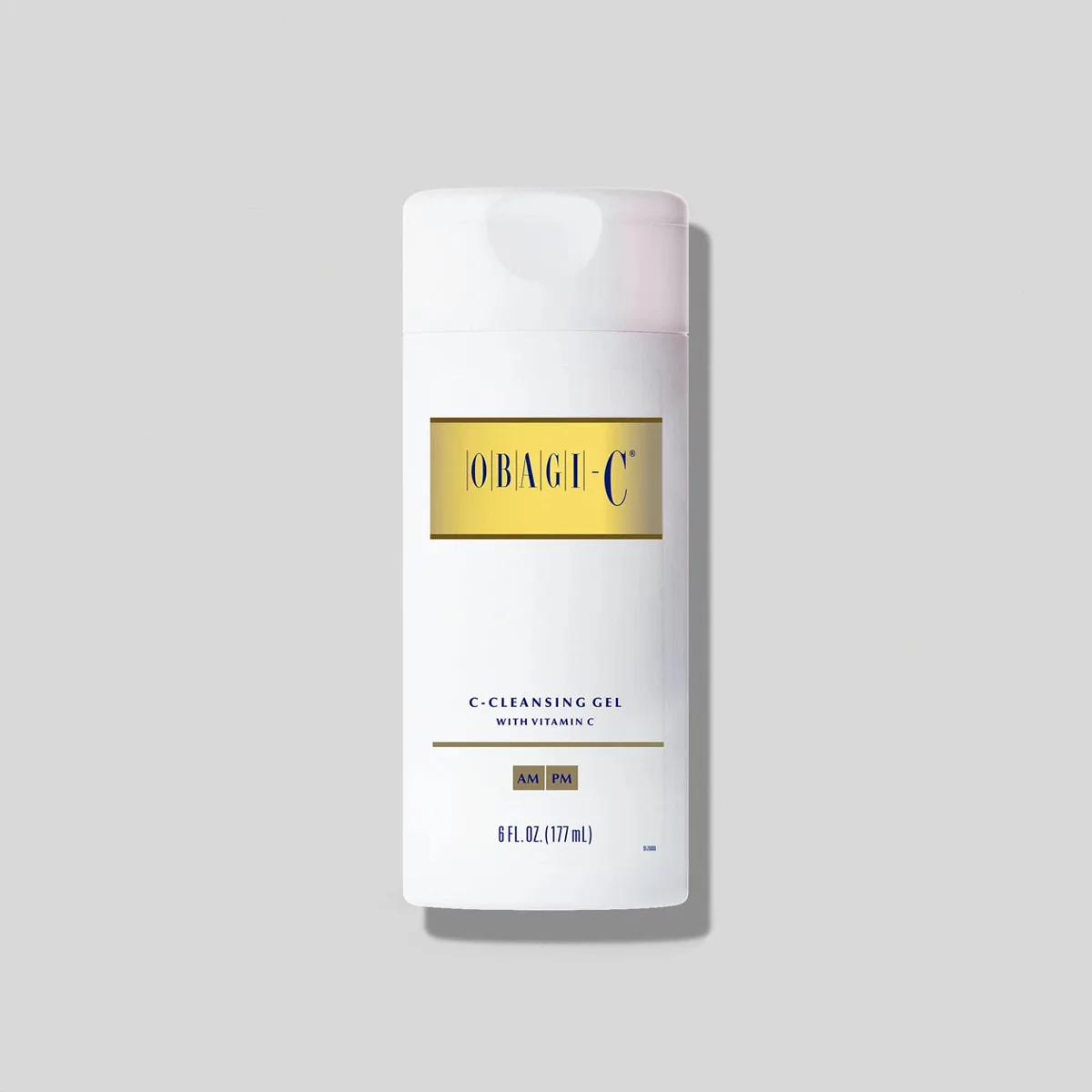
It is the entry step of a physician-dispensed vitamin C system, and beyond that role it is a conventional sulfate-foaming gel with an oat amino acid surfactant, aloe, a citrus-floral fragrance, two dyes and a trace of L-ascorbic acid near the bottom of the list, a formula that pre-dates the industry's move away from sulfates and fragrance in clinical cleansers. What sets it apart is the kit it comes in, not the chemistry.
A twenty-year-old sulfate gel with fragrance, two dyes and a trace of vitamin C fifteenth on the list, sold at fifty dollars because it opens a physician-dispensed system. It foams richly, cleans oily skin thoroughly and has loyal users who like exactly that; it is also the harshest and least defensible formula in the Obagi-C range, and the vitamin C in a rinse-off does nothing at all.
Supporting rolefor Excess OilinessIn your profileYou chose · Nothing here targets excess oiliness directly; sebum removal without stripping is the recognised companion to treating it, and this gel does that without known triggers.Not yet assessedGentleNo reviews collected yet
The case for it
Sodium Laureth Sulfate has no evidence row yet for this concern — it is in the research queue.
The formula carries none of the triggers this concern is sensitive to.
What would change this: A researched evidence row for the lead active would replace this with a verdict.
Same rule for everyone. “Supporting role” is the verdict on 8,197 of 45,024 concern verdicts across the catalog; rule R8 decided 4,250 of them.
As of September 25, 2026, engine 5.1.1.
R8 — The category's job (barrier care, humectant hydration, gentle cleansing, photoprotection) is the documented supportive role for this concern. This is the honest verdict for a moisturizer on an acne page. · the full register
Does the jobDoes what a cleanser is for: puts something back, surfactant mildness. Not measured from the label: pH match to skin.
A verdict is DermApproved’s assessment of how well a product’s ingredients fit a concern — never a claim about what the product treats. Evidence dots and collected reviews sit beside it and are never blended in.
Rules 0.5.1 · evidence table ev-2026.09-r228 · how we decide
Assessment
Pros & Cons
Pros
✓ Abundant lather removes oil, sunscreen and makeup in one wash
✓ Oat amino acid surfactant and betaine soften the sulfate base
✓ Aloe juice placed above glycerin adds a small soothing note
✓ Leaves oily skin matte and thoroughly clean
✓ Flip-cap bottle doses cleanly and lasts about four months
✓ Two decades of loyal use inside the Obagi-C system
✓ Oil-free, silicone-free and paraben-free
Cons
✗ Sodium laureth sulfate second on the list leaves skin squeaky and tight
✗ Fragrance placed above glycerin in a physician-brand cleanser
✗ Red 33 and Yellow 5 dyes serve branding, not skin
✗ Ascorbic acid at fifteenth position in a rinse-off does nothing
✗ Fifty dollars for a drugstore-grade sulfate gel
✗ Drying on normal, dry, sensitive or retinoid-treated skin
Review
Full Review
Somewhere near the bottom of this cleanser's label, fifteenth of eighteen ingredients and just above two synthetic dyes, is ascorbic acid, and it is the reason the bottle says C. L-ascorbic acid is a fine ingredient and the Obagi-C system that this gel opens is built on it, but in a serum, at a declared percentage, at a low pH, left on the skin for hours. In a foaming gel it dissolves into water that oxidises it, sits behind a wall of surfactant, touches the face for twenty seconds and goes down the drain. The vitamin C in the C-Cleansing Gel is a name, and once that is understood the product becomes what it is: a conventional mid-2000s sulfate cleanser with a citrus-floral fragrance and an orange tint, priced at fifty dollars because it comes first in a kit that dermatology offices dispense.
The list is worth reading in order because the order is the story. Water, then sodium laureth sulfate, the anionic workhorse of the shampoo aisle, milder than sodium lauryl sulfate and still the ingredient that leaves skin squeaky. Then an oat amino acid surfactant and cocamidopropyl betaine, both gentler, both softening the lather and the feel, both outranked by the sulfate above them. Salt to thicken, aloe juice, a preservative pair, fragrance in eighth place, above glycerin, then saponins, gum, borage, alfalfa, the ascorbic acid, chamomile, Red 33 and Yellow 5. There is nothing dangerous in it and nothing modern either; it is a formula from the era before clinical cleansers went sulfate-free and fragrance-free, and Obagi has left it there through two repackagings and a name change from Rx to Fx, while its newer cleansers, the Nu-Derm Gentle and the SUZANOBAGIMD foaming wash, moved on to sulfate-free systems.
The cleansing science is settled and does not favour the design. Surfactants damage skin in proportion to how strongly they bind stratum corneum proteins and extract lipids, and the reference review of mild cleansing in Dermatologic Therapy in 2004 placed pure anionics like the sulfates at the harsh end of that scale and amphoteric, zwitterionic and amino-acid surfactants at the mild end, with after-wash tightness, dryness and barrier disruption tracking that hierarchy. This gel has the mild surfactants in it, which is why it feels creamier and cleans less brutally than a plain sulfate wash, but it leads with the sulfate, and the fragrance and dyes add sensitiser risk to a step that ought to be the blandest in the routine. That matters more in this particular kit than in most, because the next steps are a witch hazel toner with a quaternary antiseptic and an L-ascorbic acid serum, and the cleanser is the one place the system could have given the barrier a rest. Glycerin, the formula's only humectant, sits tenth, beneath the fragrance, which tells you where the priorities were when it was written.
On oily and combination skin, which is who Obagi means by it, it is a satisfying wash in the old style. A squeeze of orange gel, an abundant airy foam, a bright scent, a fast squeaky rinse, and a face that feels thoroughly de-greased and matte; makeup and sunscreen come off in one pass. Long-time users at clinical retailers, sixty-odd of them across the brand's site and one major stockist at around 4.6 stars, say precisely that and have said it for years, and their satisfaction is real. So is the minority report: reviewers with normal or drier skin describe tightness within days, and at least one returning user reported dryness and a breakout rash on trying it again after years away, which is what a sulfate-and-fragrance gel does to skin that has changed. Normal, dry, sensitive and retinoid-treated faces should not be using it twice a day, and most should not be using it at all.
Fifty dollars for six ounces is the number that turns a dated formula into a bad buy. The bottle lasts about four months, so the yearly cost is not large, but the comparison is brutal: sulfate gels with aloe and fragrance are a drugstore staple at a fifth of the price, and Obagi's own Nu-Derm Gentle Cleanser, at a similar price, is a kinder wash for the same routine. The premium here buys the Obagi-C branding and the convenience of a kit, and a trace of vitamin C that cannot do anything, from a brand whose clinical credibility rests on its serums rather than its washes.
If the Obagi-C kit is already on the shelf and the skin is genuinely oily and untroubled, there is no urgent reason to throw the cleanser out; it does its old-fashioned job well for that face. For anyone buying it on its own, for anyone with skin that is not oily, and for anyone who read the C on the label and expected it to mean something, the honest advice is to spend the fifty dollars on the serum and wash with something sulfate-free.
Formula
Key Ingredients
The hero actives that drive this product's performance.
Second on the list and the reason this gel foams as generously as it does: SLES is the workhorse anionic surfactant of the shampoo aisle, milder than its lauryl cousin but still the ingredient that leaves skin squeaky, and its position here, above the gentler oat amino acid and betaine, is what dates the formula and what makes it a poor daily wash for anyone whose skin is dry or on a retinoid.
An oat-derived amino acid surfactant, third on the list, that softens the SLES lather and adds a little slip and skin-feel; it is the formula's nod to mildness, real but outranked by the sulfate above it, and it is why the cleanser feels creamier than a plain SLES gel would.
The vitamin C that justifies the name, placed fifteenth of eighteen ingredients, after the botanical extracts and just ahead of the dyes; L-ascorbic acid in a water-based, sulfate-foaming rinse-off oxidises quickly and is on the skin for under a minute, so its role here is a label claim rather than a delivered dose, and the brightening in the Obagi-C system comes from the serum that follows.
Sixth on the list, above glycerin, aloe juice is the main soothing gesture in a cleanser whose surfactant system needs one; its polysaccharides leave a faint softness after rinsing and are the reason the gel does not feel as harsh as its top three ingredients suggest.
Tenth on the list, below the fragrance and the preservatives, glycerin is the only humectant in the formula and is present at a level that the sulfate lather largely cancels; its low position, beneath a parfum and two synthetic dyes at the tail, is the clearest sign that this gel was built for sensory appeal rather than for skin that needs its cleanser to be the blandest step of the routine.
Not yet assessed
Ingredient standings describe the active at treatment-level doses and
vehicles; this product's own condition grades weigh its actual formula.
Wash with a small amount on damp skin for twenty to thirty seconds and rinse well, then move straight to the C-Balancing Toner and the vitamin C serum; oily skin can use it morning and night, while combination skin does better with it in the evening only and a milder wash in the morning. On retinoid nights or whenever the skin is peeling, swap it for a sulfate-free cleanser so the surfactant does not add to the dryness.
Results Timeline
Skin is clean, matte and squeaky within the first wash and stays that way; there is no cumulative effect, because the ascorbic acid is present at trace level for under a minute, and any brightening in the Obagi-C routine arrives with the serum over eight to twelve weeks. Dry or reactive skin may notice tightness within the first week, which is the sulfate rather than an adjustment period.
Two questions decide this cleanser: whether its surfactant system is mild, and whether its vitamin C does anything, and the literature answers both plainly. On surfactants, the 2004 review in Dermatologic Therapy by Ananthapadmanabhan and colleagues set out the mechanism that formulators still work from: cleanser damage to skin arises from surfactant binding to stratum corneum proteins and extraction of intercellular lipids, producing after-wash tightness, dryness, barrier disruption and itch, and the degree of damage follows a hierarchy in which pure anionic surfactants, sodium lauryl and laureth sulfate among them, are the harshest and amphoteric, zwitterionic and amino-acid-based surfactants the mildest, with blends of an anionic and a milder co-surfactant sitting in between. This gel is such a blend, sodium laureth sulfate leading with an oat amino acid surfactant and cocamidopropyl betaine behind it, which places it in the middle of that range: gentler than a plain sulfate wash, harsher than the sulfate-free syndets that clinical brands have since adopted. Fragrance and the azo dyes Red 33 and Yellow 5 add sensitisation risk without cleansing benefit, and the aloe juice and glycerin provide a modest humectant deposit that the surfactant load largely negates.
On vitamin C, the case is closed by chemistry and contact time. L-ascorbic acid is effective topically only when formulated at a low pH, at concentrations in the ten to twenty percent range, and left on the skin, where it accumulates over days; in aqueous solution above pH 3.5 it oxidises to dehydroascorbic acid within days to weeks, and in a surfactant-rich foaming gel with no stated pH control and a position fifteenth on the label, the amount present is small and its stability poor. A cleanser is on the skin for twenty to thirty seconds and rinsed, so even a stable, high-dose ascorbic acid would deliver a negligible fraction of what a serum provides. The saponins, borage, alfalfa and chamomile extracts are botanical gestures at low concentration with no demonstrated effect in a rinse-off. The cleanser's evidence base is therefore the general surfactant literature, which describes a moderately drying anionic gel, and the vitamin C literature, which describes why the ingredient on the label cannot contribute in this format.
Clinicians who dispense the Obagi-C system are generally frank that its value lives in the serum and that the cleanser is a legacy component: a sulfate gel with fragrance is not what dermatology now recommends as the first step of a routine that goes on to apply an acid serum, and many practices substitute a bland, sulfate-free cleanser for patients with anything other than robustly oily skin. The standing guidance for anyone on a vitamin C serum, a retinoid or an exfoliant is that the cleanser should be the blandest product in the routine, because cumulative surfactant damage is what makes actives intolerable; this gel does not meet that standard. The vitamin C claim is treated in clinic as marketing, since ascorbic acid in a rinse-off has neither the contact time nor the stability to act. For oily, non-reactive patients who like a thorough foaming wash and are already on the kit, dermatologists tend to leave it be; for dry, sensitive, rosacea-prone or retinoid-treated skin, the usual advice is to replace it, and the brand's own gentler cleansers are often the suggested swap.
Guidance
Usage & Recommendations
How to Use
Wet the face and neck with lukewarm water, squeeze a coin-sized amount of gel onto moistened fingertips and work it into a lather, then massage over the skin in gentle circles for twenty to thirty seconds, keeping it out of the eyes. Rinse thoroughly until no slip remains and pat dry, then follow with the C-Balancing Toner and vitamin C serum if using the Obagi-C system, or a moisturiser if not. Oily skin can use it morning and evening; normal and combination skin should limit it to once a day and use a sulfate-free wash at the other end, and dry, sensitive or retinoid-treated skin should choose a different cleanser altogether. Moisturise promptly after rinsing to offset the tightness the sulfate leaves.
Value Assessment
Fifty dollars for six ounces is a physician-channel price attached to a formula whose working parts, sodium laureth sulfate, an oat amino acid surfactant, betaine, aloe and fragrance, are found in drugstore gels at a fifth of the cost; a bottle lasts about four months, so the annual spend is moderate, but the per-ingredient value is among the worst in the category. The money buys the Obagi-C branding, the convenience of the kit and a trace of vitamin C that cannot act in a rinse-off, from a legacy brand whose clinical reputation rests on its serums. Obagi's own Nu-Derm Gentle Cleanser offers a kinder wash at a similar price for anyone committed to the brand, and a sulfate-free pharmacy cleanser does the job for most people at a fraction of it. For an oily-skinned system user it is tolerable; bought alone, it is poor value.
Who Should Buy
Genuinely oily, non-reactive skin that likes a rich, thorough foaming wash with a fresh scent and a matte finish, and people already using the Obagi-C system who want the matching first step and have no trouble with it. It suits those who prize a squeaky-clean feel and are untroubled by sulfates, fragrance or dyes in a cleanser.
Who Should Skip
Dry, normal, sensitive, rosacea-prone, eczema-prone or barrier-compromised skin should avoid it, as should anyone on a retinoid, an exfoliating acid or the system's own vitamin C serum who wants their cleanser to be the gentle step. Anyone who expected the C to mean a working dose of vitamin C, anyone avoiding sulfates, fragrance or synthetic dyes, and anyone comparing price per ingredient will find better options, including elsewhere in Obagi's own range.
A clear, pale-orange gel of medium thickness that turns into an abundant, airy foam with a little water, cleans with a slick, slightly squeaky feel and rinses fast, leaving skin matte and faintly tight until moisturiser goes on.
Scent
A noticeable fresh citrus-floral fragrance, brighter than most cleansers in its class, that lingers faintly on the skin after rinsing.
Packaging
A 6 oz white squeeze bottle with a flip-top cap and the gold Obagi-C label panel; it dispenses a coin of gel with a light squeeze, the bottle lasts months, and it is sold alone or as the first step of the Obagi-C Fx kit.
Finish
mattenon-greasy
What to Expect on First Use
The first wash is a familiar drugstore sensation dressed in physician packaging: a big, airy lather from a small amount, a bright citrus-floral scent, a squeaky rinse and skin that feels scrubbed clean and a little tight. Oily faces enjoy the thoroughness and the matte finish; normal and dry ones feel the pull within a day or two, and anyone starting the system's vitamin C serum at the same time may find the cleanser is what makes the first weeks uncomfortable. Nothing changes over time because nothing in it is meant to.
How Long It Lasts
About four months at a coin-sized squeeze twice daily; a small amount foams abundantly.
The Obagi-C system launched in the mid-2000s as the brand's L-ascorbic acid answer to Nu-Derm, sold through dermatology offices as a multi-step kit in Rx and later hydroquinone-free Fx versions, and the C-Cleansing Gel has been its first step throughout. It was formulated in an era when a rich sulfate lather and a pleasant scent were what patients expected from a cleanser, and while the kit has been repackaged and relabelled several times, the gel inside has stayed the same, which is why its ingredient list now reads as a period piece next to the brand's newer cleansers.
About Obagi Legacy Brand (20+ years)
Obagi has been a physician-dispensed brand since dermatologist Zein Obagi founded it in 1988, and the Obagi-C system, built around its L-ascorbic acid serums, has been in dermatology offices for two decades. The C-Cleansing Gel is the system's first step and carries no product-specific study; it is assessed on its label and the general literature on surfactants and vitamin C in rinse-off formats.
Brand founded: 1988 · Product launched: 2005
Myth vs. Reality
Common Myths
Myth
A vitamin C cleanser brightens the skin the way a vitamin C serum does.
Reality
L-ascorbic acid needs to stay on the skin at a low pH for hours to do anything, and in this gel it sits fifteenth on the list, dissolved in a foaming water base that oxidises it and is rinsed off in under a minute; whatever brightening the Obagi-C routine delivers comes from the serum step, and the cleanser's vitamin C is a name on the bottle.
Myth
The thicker the lather, the better the cleanser is working.
Reality
Foam volume is a property of sodium laureth sulfate, not of cleaning power, and the thick lather here is also the reason the gel leaves skin tight; milder amino-acid and glucoside surfactants clean oil and makeup just as well with far less protein and lipid stripping, which is why most clinical cleansers have moved away from sulfates since this one was formulated.
FAQ
Frequently Asked Questions
Does the Obagi C-Cleansing Gel contain sulfates?
Yes. Sodium laureth sulfate is its second ingredient and the source of its rich lather, softened by an oat amino acid surfactant and cocamidopropyl betaine; it is a thorough, somewhat drying cleanser best suited to oily and combination skin rather than dry or reactive faces.
Does the vitamin C in the Obagi C-Cleansing Gel do anything?
Not meaningfully. L-ascorbic acid sits fifteenth of eighteen ingredients in a water-based foaming gel that is rinsed away in under a minute, conditions in which it oxidises quickly and has no time to act; the brightening in the Obagi-C system comes from the vitamin C serum applied after it.
Is the Obagi C-Cleansing Gel good for dry or sensitive skin?
No. The sulfate lather, added fragrance and two synthetic dyes make it one of the harsher cleansers in the brand's range; dry, sensitive, rosacea-prone or retinoid-treated skin is better served by Obagi's Nu-Derm Gentle Cleanser or another sulfate-free, fragrance-free wash.
How do I use the Obagi C-Cleansing Gel in the Obagi-C routine?
Squeeze a coin-sized amount onto moistened fingertips, massage over a damp face and neck in circles for twenty to thirty seconds, and rinse completely with lukewarm water, then follow with the C-Balancing Toner and the vitamin C serum; oily skin can use it morning and evening, others should keep it to once a day.
Why is the Obagi C-Cleansing Gel orange?
Two synthetic colourants, Red 33 and Yellow 5, tint the gel to match the Obagi-C system's branding; they serve no skin purpose and are a mild sensitiser risk for a small number of users, which is one reason the formula reads as dated beside the brand's newer, dye-free cleansers.
Can I use the Obagi C-Cleansing Gel while on tretinoin?
It is not the best choice. A sulfate-and-fragrance gel adds to the dryness and irritation a retinoid causes, and dermatologists generally pair retinoids with a bland, sulfate-free cleanser; if it must be used, keep it to once a day and moisturise well afterwards.
Reviews
What Reviewers Tend to Say
Recurring themes our editors read across retailer reviews of this product — summaries in our words, not quotations, and not a substitute for your own patch test.
Common Praise
Foams richly and removes makeup and oil in one wash
Skin feels thoroughly clean and fresh
Pleasant light scent
A small amount goes a long way
Fits the Obagi-C routine
Common Complaints
Drying and tight on anything but oily skin
Fifty dollars for a sulfate gel
Fragrance and dyes in a physician-brand cleanser
Vitamin C in a wash-off does nothing
Caused breakouts or a rash for some returning users
The burn trials are real and the skeptics who dismiss aloe as folklore are wrong — but the same substance has delayed healing in other wounds, and none of it says anything about what a soothing gel does to intact skin.
Occupational hand dermatitis is one of the most common work-related diseases on earth, it follows a script, and the cheapest fix works only if you start it before the skin splits.
Every post that dismantles a home remedy owes the reader a replacement. The honest replacement list is embarrassingly cheap, and one item on it is cheaper still — it is a bath.
Products, answers, therapy guides, tools and articles in one search. Brand names,
slang and abbreviations all work — accutane finds isotretinoin, bacne finds truncal acne.