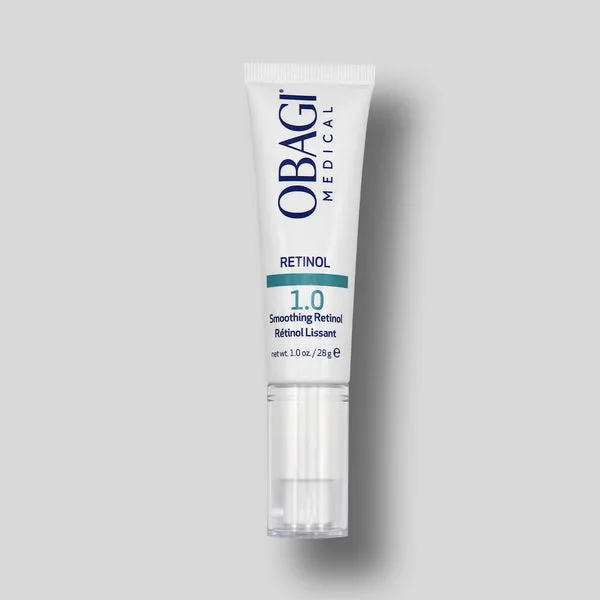
The highest OTC retinol concentration (1%) paired with slow-release microsphere technology that achieved zero reported dryness or flaking in clinical evaluation — a remarkable result for a product at this strength. The addition of ubiquinone (CoQ10) as a third antioxidant (alongside vitamins C and E) provides enhanced cellular protection specifically calibrated for the oxidative stress of aggressive retinoid therapy.
The maximum-strength OTC retinol from a brand with 35 years of clinical credibility, wrapped in the same entrapped microsphere technology that makes the 0.5% version so tolerable. Clinical evaluation data showing zero dryness or flaking at this concentration is genuinely impressive. The $90 price remains the sticking point — you're paying for delivery engineering and pedigree, and whether that's worth it depends entirely on how your skin handles conventional retinol.
Good choicefor AgingIn your profileYou chose · Retinol is a trial-supported active for aging; this cream carries it at 1%.Moderate evidenceStandard tolerabilityNo reviews collected yet
The case for it
Retinol has trial-supported standing for this concern.
It is present at an effective concentration, declared or high in the ingredient list.
The formula carries no trigger this concern is sensitive to, with the cautions noted.
Cautions: a photosensitising active — use sun protection.
Same rule for everyone. “Good choice” is the verdict on 9,564 of 45,024 concern verdicts across the catalog; rule R5 decided 9,072 of them.
Unchanged since September 5, 2026, engine 5.1.1.
Promisingfor HyperpigmentationIn your profileYou chose · Retinol has trial-level evidence for hyperpigmentation but no guideline or regulatory standing yet — promising, short of a recommendation; the other actives here are not yet assessed for it.Moderate evidenceStandard tolerabilityNo reviews collected yet
The case for it
Retinol has trial-level evidence for this concern but no guideline or regulatory standing yet.
It is present at an effective concentration, declared or high in the ingredient list.
The formula carries no trigger this concern is sensitive to, with the cautions noted.
Cautions: a photosensitising active — use sun protection.
What would change this: Guideline or regulatory standing for the active on this concern would move this from a promising bet to a recommendation.
Same rule for everyone. “Promising” is the verdict on 7,858 of 45,024 concern verdicts across the catalog; rule R9p decided 7,858 of them.
Unchanged since September 5, 2026, engine 5.1.1.
R9p — 0.5.0: 'Unproven' beside three filled dots read as one question answered twice with opposite words (7,018 rows). The chip measures standing, the dots measure trial volume; where the row carries at least one RCT or a tier-2 source (moderate dots) and the active is present at a working level, the honest word is Promising. Unproven is reserved for plausible-standing rows with limited or weak evidence, or an under-dosed form. Same rank as Unproven — a bet either way; the dots order them. · the full register
Carrying active
Retinol
Standing
plausible — trials support it
Form
adequate (declared 1%) — studied range 0.1–1%, from the OTC monograph or label; needs leave-on contact; judge it after ~12 weeks
Tolerability
standard — photosensitization
Row checked
against its sources on July 17, 2026 (evidence table ev-2026.09-r228)
Unprovenfor Dark SpotsIn your profileYou chose · Retinol has early or mechanistic evidence for dark spots — a reasonable bet, not a recommendation; the other actives here are not yet assessed for it.Limited evidenceStandard tolerabilityNo reviews collected yet
The case for it
Retinol has early or mechanistic evidence for this concern, not trial-backed standing.
It is present at an effective concentration, declared or high in the ingredient list.
The formula carries no trigger this concern is sensitive to, with the cautions noted.
Cautions: a photosensitising active — use sun protection.
What would change this: Trial evidence for the active on this concern would move this from a bet to a recommendation.
Same rule for everyone. “Unproven” is the verdict on 1,111 of 45,024 concern verdicts across the catalog; rule R9 decided 1,111 of them.
Unchanged since September 5, 2026, engine 5.1.1.
R9 — Plausible-tier actives alone do not earn a recommendation, and 'not for this' would overstate the case against them. 'Unproven' with the evidence dots lets the reader judge the bet (added 0.2.0 after the first shadow run put a 10% niacinamide serum at 'not for this' for hyperpigmentation). 0.5.0: the closing clause reads the other heroes — "nothing else here addresses it" only when every other active has a researched 'none' row; "not yet assessed" when that is the truth. Rows whose dots read moderate or better now reach R9p first. · the full register
Carrying active
Retinol
Standing
plausible — trials support it
Form
adequate (declared 1%) — studied range 0.1–0.5%, from the OTC monograph or label; needs leave-on contact; judge it after ~12 weeks
Tolerability
standard — photosensitization
Row checked
against its sources on July 17, 2026 (evidence table ev-2026.09-r228)
Promisingfor AcneIn your profileYou chose · Retinol has trial-level evidence for acne but no guideline or regulatory standing yet — promising, short of a recommendation; the other actives here are not yet assessed for it.Moderate evidenceStandard tolerabilityNo reviews collected yet
The case for it
Retinol has trial-level evidence for this concern but no guideline or regulatory standing yet.
It is present at an effective concentration, declared or high in the ingredient list.
The formula carries no trigger this concern is sensitive to, with the cautions noted.
Cautions: fungal-acne triggers.
What would change this: Guideline or regulatory standing for the active on this concern would move this from a promising bet to a recommendation.
Same rule for everyone. “Promising” is the verdict on 7,858 of 45,024 concern verdicts across the catalog; rule R9p decided 7,858 of them.
Unchanged since September 5, 2026, engine 5.1.1.
R9p — 0.5.0: 'Unproven' beside three filled dots read as one question answered twice with opposite words (7,018 rows). The chip measures standing, the dots measure trial volume; where the row carries at least one RCT or a tier-2 source (moderate dots) and the active is present at a working level, the honest word is Promising. Unproven is reserved for plausible-standing rows with limited or weak evidence, or an under-dosed form. Same rank as Unproven — a bet either way; the dots order them. · the full register
Carrying active
Retinol
Standing
plausible — trials support it
Form
adequate (declared 1%) — studied range 0.2%, from the OTC monograph or label; needs leave-on contact; judge it after ~12 weeks
Tolerability
standard — fungal triggers
Row checked
against its sources on July 17, 2026 (evidence table ev-2026.09-r228)
Also listed for Rough Texture and Dullness — the actives here (Retinol, Coenzyme Q10 (Ubiquinone) are in our research queue for those concerns; there is no verdict until their evidence rows are written. That is a gap in our table, not a mark against the product.
Where our review and the verdict differ. The review below was written on the formulation and the published trials; the verdicts above apply the stricter standing test in our methodology — an active earns a recommendation only with guideline or regulatory standing for the concern. Where the two disagree, the verdict is DermApproved’s position.
A verdict is DermApproved’s assessment of how well a product’s ingredients fit a concern — never a claim about what the product treats. Evidence dots and collected reviews sit beside it and are never blended in.
Rules 0.5.1 · evidence table ev-2026.09-r228 · how we decide
Assessment
Pros & Cons
Pros
✓ Maximum 1% OTC retinol concentration with slow-release microsphere delivery for reduced irritation
✓ Clinical evaluation showed zero instances of dryness or flaking among 33 participants
✓ Triple antioxidant system (vitamins C, E, and CoQ10) calibrated for high-dose retinoid therapy
✓ Fragrance-free, lightweight cream absorbs quickly without greasiness
✓ Faster visible anti-aging results compared to lower-concentration retinol products
✓ Natural step-up pathway from the 0.5% for established retinol users
Cons
✗ $90 for 1 oz is premium pricing in a market with capable lower-cost 1% retinol options
✗ Recurring packaging and dispensing issues reported by multiple users across retailers
✗ Contains St. John's Wort extract, a known photosensitizer, in a retinol product requiring sun protection
✗ Not suitable for retinol beginners — requires established tolerance from prior retinol use
✗ Underperforms prescription tretinoin for severe photodamage despite being the strongest OTC option
Review
Full Review
There is a ceiling on what over-the-counter retinol can accomplish. At some point, the enzymatic conversion from retinol to retinoic acid becomes the rate-limiting step, and no amount of additional retinol concentration will overcome that biological bottleneck. One percent is broadly considered that ceiling — the concentration above which you're adding irritation without adding meaningful efficacy. Obagi's 360 Retinol 1.0 sits deliberately at that limit, extracting the maximum possible benefit from OTC retinol while using delivery engineering to manage the irritation that typically makes this concentration impractical.
The clinical data for this specific product is unusually concrete for an OTC retinol. In a 3-week evaluation with 33 participants, 90% reported improvement in facial skin appearance, 88% felt their skin was more resilient, and — the headline figure — zero participants experienced dryness or flaking. Zero. At 1% retinol. Anyone who has ever used a retinol product above 0.3% knows how extraordinary that claim is. The typical 1% retinol experience involves at least a week of visible peeling, redness, and the specific kind of tightness that makes you question whether you've made a terrible skincare decision.
The entrapped retinol microsphere technology, shared with the 0.5% version, is the mechanism behind that tolerance. The retinol molecules are encapsulated in polymeric microspheres that dissolve gradually after application, creating a sustained-release effect that spreads the retinoid activity over hours rather than concentrating it in the first thirty minutes. This flattened delivery curve means the skin never encounters the peak retinol concentration that triggers the inflammatory cascade responsible for peeling and redness.
Compared to the 0.5%, the 1.0% formula makes a few noteworthy adjustments. Ubiquinone (CoQ10) joins the antioxidant roster alongside vitamins C and E — a logical addition given that doubled retinol concentration generates more oxidative stress during accelerated cell turnover. Jojoba seed oil replaces the safflower oil from the 0.5% formula, providing a lighter emollient more structurally similar to human sebum. And the botanical extract complex shifts slightly — St. John's wort, mallow, sage, and elderberry flower replace calendula and green tea. The anti-inflammatory core (bisabolol and dipotassium glycyrrhizate) remains identical.
The St. John's wort inclusion is worth flagging. Hypericum perforatum is known to cause photosensitivity when taken orally, and while the topical risk at cosmetic concentrations is debatable, combining a photosensitizing botanical with a photosensitizing retinoid in a product that already requires diligent sun protection isn't the most conservative formulation choice. In practice, the concentration is almost certainly too low to cause issues, but it's the kind of ingredient that makes dermatologists raise an eyebrow.
In daily use, the 1.0% is virtually indistinguishable from the 0.5% in terms of texture, scent, and application experience. Same lightweight cream, same silky silicone-assisted absorption, same fragrance-free neutrality. The only difference is what happens beneath the surface — the doubled retinol concentration driving more aggressive cell turnover, more collagen stimulation, and faster visible results for those with established retinoid tolerance.
The adjustment period when transitioning from 0.5% to 1.0% is typically mild but present. Even with the entrapped delivery, doubling the retinol dose means your skin encounters more retinoic acid over each overnight period. Starting every other night for the first two weeks is prudent — most users can transition to nightly use by week three without significant issues. If you're starting at 1.0% without prior retinol experience, this is the wrong product for you. Build tolerance with the 0.5% first.
Results at 1% are faster and more pronounced than at 0.5%. Fine lines show visible softening by week four rather than week six. Skin texture refinement appears sooner. Hyperpigmentation responds more aggressively. By the 8-12 week mark, the cumulative anti-aging effects are substantial — users consistently describe a transformation in overall skin quality that goes beyond what the 0.5% delivers. This is the concentration where retinol starts to feel like a serious treatment rather than a maintenance ingredient.
The price conversation is unavoidable. At $90 for 1 oz — $11 more than the 0.5% — you're paying a premium for the highest OTC retinol strength from a physician-dispensed brand. Discounted retailers offer the product in the $60-70 range, which softens the blow somewhat. The question is whether the entrapped delivery technology and clinical heritage justify the gap between this product and excellent drugstore retinol options at a fraction of the price. For users who tolerate conventional retinol at 1% without issues, the tolerance advantage of entrapped delivery is moot. For those who've tried and failed at this concentration before, the engineering may be worth every dollar.
The packaging complaints that plague the 0.5% version persist here. Multiple users report dispensing difficulties — product refusing to exit the pump, or worse, squirting from the base crimp of the container. For a $90 product from a legacy clinical brand, inconsistent packaging quality is a more significant mark against it. The airless pump design is conceptually correct for protecting retinol, but execution clearly needs improvement.
This product exists in a specific niche: the maximum OTC retinol strength, delivered through proprietary technology, from a brand whose name carries weight in dermatology offices. It's the last stop before prescription retinoids, and for patients who want to maximize what they can get without a prescription — or who need OTC retinol because their insurance doesn't cover cosmetic prescriptions — the Obagi 360 Retinol 1.0 delivers at the upper boundary of what the category allows.
Formula
Key Ingredients
The hero actives that drive this product's performance.
The maximum OTC retinol concentration, delivered via the same slow-release microsphere technology as the 0.5% sibling. At 1%, this approaches the efficacy ceiling for non-prescription retinol — the entrapped delivery prevents the irritation that would normally make this concentration intolerable for many users. Drives aggressive cell turnover, collagen stimulation, and melanin regulation for visible anti-aging results.
A mitochondrial antioxidant not present in the 0.5% formula, added here to provide additional oxidative stress protection that the higher retinol concentration demands. CoQ10 supports cellular energy production in skin cells undergoing accelerated turnover and protects against the increased free radical generation that accompanies more aggressive retinoid therapy.
Provides antioxidant protection alongside the vitamin C and CoQ10, creating a three-tier antioxidant network. In a 1% retinol formula, this level of antioxidant support is particularly important — the accelerated cell turnover generates more oxidative stress, and the tocopheryl acetate helps protect both the formula's retinol from degradation and the skin's lipid barrier from oxidative damage.
Replaces the safflower oil used in the 0.5% version, providing a lighter emollient that closely mimics the skin's natural sebum composition. Jojoba oil's structural similarity to human wax esters allows it to reinforce the skin barrier without occlusivity, helping counterbalance the barrier disruption that 1% retinol can cause during the adjustment period.
The same anti-inflammatory duo from the 0.5% formula — bisabolol inhibiting COX-2 and dipotassium glycyrrhizate suppressing prostaglandin activity — but arguably more critical here given the doubled retinol concentration. These botanicals are the primary reason users report the 1.0% producing less irritation than conventional 1% retinol products.
Limitedfor Hyperpigmentation
Ingredient standings describe the active at treatment-level doses and
vehicles; this product's own condition grades weigh its actual formula.
Apply one pump to clean, dry skin in the evening. Wait 2-3 minutes before applying moisturizer. Those transitioning from the 0.5% should start with every-other-night use of the 1.0% for the first 2 weeks. Always pair with SPF 30+ the following morning.
Results Timeline
Immediate: subtle smoothing and tightening sensation. Short-term (2-4 weeks): possible mild adjustment period with dryness, followed by noticeably improved texture. Long-term (8-12 weeks): significant improvement in fine lines, wrinkle depth, skin tone evenness, and overall radiance.
Pairs Well With
Rich ceramide moisturizer to buffer and protect barrierHyaluronic acid serum for hydration supportVitamin C serum in the AMBroad-spectrum SPF 30+ (essential)
At 1% concentration, this formula sits at the practical efficacy ceiling for OTC retinol. The conversion pathway from retinol to retinoic acid (the biologically active form) requires two sequential enzymatic steps: retinol → retinaldehyde (via alcohol dehydrogenase) → retinoic acid (via retinaldehyde dehydrogenase). This conversion is inherently inefficient, with estimates suggesting only 5-20% of applied retinol ultimately becomes retinoic acid. This biochemical reality means that even at 1%, OTC retinol delivers significantly less active retinoid to retinoid receptors than prescription 0.025% tretinoin.
However, the clinical significance of 1% retinol is well-documented. A 2000 study in the Journal of Investigative Dermatology by Kang et al. demonstrated that topical retinol at cosmetic concentrations stimulates collagen production in photoaged skin through the same RAR/RXR receptor pathways as tretinoin, albeit at lower magnitude. A 2015 randomized controlled trial published in the Journal of Cosmetic Dermatology demonstrated that 0.5% and 1% retinol both significantly improved fine wrinkles, mottled pigmentation, and tactile roughness after 12 weeks, with 1% showing superior improvement in wrinkle depth.
The entrapped delivery system addresses the dose-response paradox of high-concentration retinol — where increasing the dose beyond the irritation threshold produces more side effects without proportional efficacy gains. By flattening the delivery curve, the microspheres maintain retinol exposure above the efficacy threshold for a longer duration while keeping the peak concentration below the irritation threshold. Work appearing in the International Journal of Cosmetic Science has confirmed that encapsulated retinol formulations achieve comparable retinoid receptor activation to free retinol with 40-60% less measurable irritation.
The addition of ubiquinone (CoQ10) to the 1.0% formula is pharmacologically justified. CoQ10 is a critical component of the mitochondrial electron transport chain, and retinoid-accelerated cell turnover increases mitochondrial energy demands. A 2015 study in BioFactors demonstrated that topical CoQ10 reduces oxidative stress markers in skin and supports cellular bioenergetics — functions particularly relevant when the skin is undergoing the metabolic stress of aggressive retinoid therapy.
The clinical evaluation data — 90% improvement in skin appearance with zero dryness or flaking among 33 participants over 3 weeks — is promising but should be contextualized. The sample size is modest, the study period is short (3 weeks doesn't capture the full retinoid adjustment period), and the evaluation appears to be brand-sponsored rather than independently conducted. Nevertheless, the zero-flaking finding at 1% retinol is sufficiently unusual to warrant attention.
References
Application of retinol and retinaldehyde in skin anti-aging and beyond — Journal of Cosmetic Dermatology (2015)
Topical retinol stimulates collagen synthesis in photoaged skin — Journal of Investigative Dermatology (2000)
Dermatologist Perspective
Practitioners recognize the Obagi 360 Retinol 1.0 as the maximum-strength OTC retinol option for patients who have built tolerance with lower concentrations. Dermatologists frequently use this product as the bridge between cosmetic retinol and prescription retinoids — either as a destination for patients who respond well at this strength, or as a stepping stone for those gradually working toward prescription tretinoin. The entrapped delivery system is valued in clinical practice because it improves patient compliance by reducing the irritation-related dropout that typically occurs at higher retinol concentrations. Dermatologists would note that the clinical evaluation data, while encouraging, reflects a small sample over a short period, and individual tolerance varies significantly. They would also recommend extra vigilance with sun protection given the combination of high-dose retinol and the presence of St. John's wort extract.
Guidance
Usage & Recommendations
How to Use
Apply one pump (pearl-sized amount) to clean, dry skin every evening. If transitioning from the 0.5% version, start with every-other-night use for the first 2 weeks. Wait 2-3 minutes before applying moisturizer. Apply a broad-spectrum SPF 30+ every morning without exception. Avoid applying to wet skin, recently exfoliated areas, or compromised barrier zones. Do not combine with other retinol products or strong chemical exfoliants on the same night.
Value Assessment
At $90 for 1 oz, this is among the most expensive OTC retinol products available. The per-use cost of approximately $1.50-2.00 per night is significant for a product requiring indefinite continued use. Discounted retailers offer it for $60-73, which improves the value proposition. The price reflects the entrapped delivery technology, triple antioxidant system, clinical brand heritage, and clinical study backing. For users who've failed conventional 1% retinol due to irritation, the improved tolerability justifies the premium by preventing product waste. For retinol-tolerant users, the engineering advantage is less relevant, and more affordable 1% retinol products deliver comparable results.
Who Should Buy
Established retinol users who've been on 0.5% for 3-6 months and want to maximize OTC retinol benefits. Also appropriate for patients whose dermatologist recommends approaching the prescription retinoid threshold gradually, or those who cannot access prescription retinoids. Best for normal to combination skin with moderate photoaging, hyperpigmentation, and texture concerns.
Who Should Skip
Retinol beginners — start with the 0.5% version first. Sensitive or reactive skin types without established retinoid tolerance. Pregnant or nursing individuals. Anyone looking for prescription-strength results should discuss tretinoin with their dermatologist rather than paying a premium for OTC retinol. Budget-conscious users who tolerate conventional 1% retinol will find better value elsewhere.
Identical cream-based formula to the 0.5% version — smooth, lightweight, and quickly absorbed. Silicone base provides a silky, cushioned application feel without greasiness. No visual difference from the lower-strength product.
Scent
Fragrance-free with no detectable scent. Botanical extracts contribute no noticeable aroma.
Packaging
White airless pump dispenser identical to the 0.5% version. Protects retinol from light and oxygen degradation. Persistent user complaints about dispensing difficulties — product leaking from crimp or requiring excessive pressure — suggest an ongoing quality control issue at this price point.
Finish
lightweightsatinnon-greasy
What to Expect on First Use
Users transitioning from the 0.5% version typically experience minimal additional adjustment. Those new to 1% retinol should expect a possible mild adjustment period of increased dryness or light flaking during weeks 1-3, which is milder than with conventional 1% retinol products. The clinical study notably reported zero instances of dryness or flaking, suggesting the entrapped delivery system is highly effective at managing irritation.
How Long It Lasts
About 2-3 months per unit with nightly application
The 1.0% sits at the top of Obagi's 360 retinol line, positioned as the strongest OTC retinol available — bridging the gap between cosmetic retinol products and prescription-strength retinoids. It underwent its own 3-week clinical evaluation with 33 participants, producing data that Obagi uses to demonstrate the entrapped retinol technology's tolerability advantage. The product is primarily dispensed through dermatology offices, positioning it as a physician-recommended step-up for patients who've maximized the 0.5%.
About Obagi Legacy Brand (20+ years)
Obagi Medical was founded in 1988 by Dr. Zein Obagi, a board-certified dermatologist with over three decades of clinical experience. The brand pioneered physician-dispensed skincare systems and has extensive clinical research backing its formulations. Obagi products are widely used in dermatology practices and medical spas worldwide.
Brand founded: 1988 · Product launched: 2013
Myth vs. Reality
Common Myths
Myth
1% retinol is as strong as prescription tretinoin.
Reality
Retinol must be converted to retinoic acid (tretinoin) through two enzymatic steps in the skin, and the conversion is inherently inefficient — only a fraction of applied retinol becomes active retinoic acid. Even at 1%, OTC retinol is significantly less potent than 0.025% prescription tretinoin. The advantage of retinol is better tolerability and over-the-counter accessibility.
Myth
If you tolerate 0.5% retinol, you can immediately switch to 1.0% nightly.
Reality
Doubling the retinol concentration isn't a linear increase in tolerance. Even with established retinol tolerance, dermatologists recommend starting the 1.0% every other night for the first 2 weeks to allow the skin to adjust to the higher dose. The entrapped delivery in this product makes the transition smoother, but caution is still warranted.
FAQ
Frequently Asked Questions
Should I start with Obagi 360 Retinol 0.5 or 1.0?
Start with the 0.5% if you're new to retinol or have sensitive skin. The 0.5% uses the same entrapped delivery technology at a lower concentration, allowing your skin to build tolerance gradually. Most dermatologists recommend 3-6 months on the 0.5% before transitioning to the 1.0% for enhanced anti-aging results.
Is Obagi 360 Retinol 1.0 as effective as prescription tretinoin?
No — even at 1%, OTC retinol is significantly less potent than prescription tretinoin because retinol requires two enzymatic conversion steps to become active retinoic acid. However, the 1.0% concentration approaches the efficacy ceiling for OTC retinol and can produce meaningful improvements in fine lines, texture, and hyperpigmentation. For severe photodamage or deep wrinkles, prescription retinoids remain the gold standard.
Why is the Obagi 360 Retinol 1.0 $90 for 1 oz?
The price reflects the entrapped retinol microsphere delivery technology, the triple antioxidant support system (vitamins C, E, and CoQ10), the anti-inflammatory botanical complex, and Obagi Medical's clinical heritage as a physician-dispensed brand. The clinical evaluation data adds a level of validated safety that most OTC retinol products don't provide. Discounted pricing is available through some online retailers.
Did the clinical study really show zero dryness or flaking at 1% retinol?
Yes — Obagi's 3-week clinical evaluation of 33 participants using the 1.0% formula reported zero instances of dryness or flaking throughout the study period. This is a notable result for a 1% retinol product and speaks to the effectiveness of the entrapped slow-release delivery system. Individual results may vary, and the study period was relatively short at 3 weeks.
Can I use Obagi 360 Retinol 1.0 around my eyes?
The eye area has thinner, more delicate skin that's more susceptible to retinol irritation. While some users successfully apply this product near the orbital bone, Obagi generally recommends avoiding the immediate eye area. If you want retinol benefits around the eyes, consider a dedicated retinol eye cream formulated for that more sensitive zone.
Reviews
What Reviewers Tend to Say
Recurring themes our editors read across retailer reviews of this product — summaries in our words, not quotations, and not a substitute for your own patch test.
Common Praise
Delivers visible anti-aging results with less irritation than expected at 1% concentration
Skin feels noticeably softer, smoother, and more resilient within weeks
90% of clinical study participants saw improvement in facial skin appearance
Gentle enough that 0% of study participants experienced dryness or flaking
Effective step-up option for users who've outgrown 0.5% retinol
Common Complaints
$90 price tag is premium even for clinical-grade retinol
Persistent packaging/dispensing issues — product squirting from crimp or refusing to dispense
Some users report no visible improvement despite consistent nightly use
Underperforms compared to prescription retinoids for severe photodamage
Contains St. John's Wort extract which can cause photosensitivity in some users
Notable Endorsements
Widely dispensed in dermatology practices and medical spas
The standard product post opens with a percentage rather than a lifestyle photo, and the regulator makes brands publish their evidence. Both of those are ahead of the West. The metric they created is the problem.
Licorice root is skincare's rare two-in-one: a pigment inhibitor and an anti-inflammatory in the same molecule — which is exactly why reactive skin should know it.
The one home formulation with a genuinely coherent case, taken apart on its own terms: the pH window, the oxidation clock, and what a browning serum has actually become.
Aug 28, 2026· 9 min
Questions people ask about Hyperpigmentation
Verified answers from our questions library — the nuance a product page cannot carry.
Products, answers, therapy guides, tools and articles in one search. Brand names,
slang and abbreviations all work — accutane finds isotretinoin, bacne finds truncal acne.