Most mineral sunscreens that claim a gentle, sensitive-skin profile cut the zinc concentration to reduce white cast, trading away protection. This one commits to a hefty 21.6% zinc oxide for serious SPF 50 coverage and instead leans on a silicone-silica dry-touch system to make that heavy mineral load wearable, with feverfew added as a soothing antioxidant.
A serious sensitive-skin mineral sunscreen that doesn't cut corners on protection — 21.6% zinc oxide for real broad-spectrum SPF 50, made wearable by a clever dry-touch finish. Fragrance-free, eczema-seal-approved, and genuinely gentle. The trade-off is the white cast and dense texture that come with that much zinc, which deeper skin tones will notice most.
Full protectionfor Sun DamageIn your profileYou chose · Broad-spectrum SPF 50 with zinc oxide: the protection sun damage calls for.Moderate evidenceGentleNo reviews collected yet
The case for it
Zinc Oxide 21.6% is a first-line active — approved, monograph-listed or named in current guidelines — for this concern.
It is present at an effective concentration, declared or high in the ingredient list.
The formula carries none of the triggers this concern is sensitive to.
Same rule for everyone. “Full protection” is the verdict on 2,288 of 45,024 concern verdicts across the catalog; rule P1 decided 2,232 of them.
Unchanged since September 5, 2026, engine 5.1.1.
P1 — Photoprotection standing is regulatory (M020 / Annex VI filters; 21 CFR 201.327 attaches the early-skin-aging claim to tested broad-spectrum SPF 15+). SPF 30 is the AAD daily-use bar. · the full register
Good choicefor SensitivityIn your profileYou chose · No fragrance, drying alcohol, declarable allergens or sensitising preservatives in this lotion — the profile sensitive skin looks for.Not yet assessedGentleNo reviews collected yet
The case for it
Zinc Oxide 21.6% has no evidence row yet for this concern — it is in the research queue.
The formula carries none of the triggers this concern is sensitive to.
What would change this: A researched evidence row for the lead active would replace this with a verdict.
Same rule for everyone. “Good choice” is the verdict on 1,938 of 45,024 concern verdicts across the catalog; rule F2 decided 1,938 of them.
Unchanged since September 5, 2026, engine 5.1.1.
Supporting rolefor RosaceaIn your profileYou chose · Nothing here targets rosacea directly; photoprotection against a known trigger is the recognised companion to treating it, and this lotion does that without known triggers.Not yet assessedGentleNo reviews collected yet
The case for it
Zinc Oxide 21.6% has no evidence row yet for this concern — it is in the research queue.
The formula carries none of the triggers this concern is sensitive to.
What would change this: A researched evidence row for the lead active would replace this with a verdict.
Same rule for everyone. “Supporting role” is the verdict on 8,197 of 45,024 concern verdicts across the catalog; rule R8 decided 4,250 of them.
Unchanged since September 5, 2026, engine 5.1.1.
R8 — The category's job (barrier care, humectant hydration, gentle cleansing, photoprotection) is the documented supportive role for this concern. This is the honest verdict for a moisturizer on an acne page. · the full register
Full protectionfor Post-ProcedureIn your profileYou chose · Broad-spectrum SPF 50 with zinc oxide: the protection post procedure calls for.Not yet assessedGentleNo reviews collected yet
The case for it
Zinc Oxide 21.6% has no evidence row yet for this concern — it is in the research queue.
The formula carries none of the triggers this concern is sensitive to.
What would change this: A researched evidence row for the lead active would replace this with a verdict.
Same rule for everyone. “Full protection” is the verdict on 2,288 of 45,024 concern verdicts across the catalog; rule P1 decided 2,232 of them.
Unchanged since September 5, 2026, engine 5.1.1.
P1 — Photoprotection standing is regulatory (M020 / Annex VI filters; 21 CFR 201.327 attaches the early-skin-aging claim to tested broad-spectrum SPF 15+). SPF 30 is the AAD daily-use bar. · the full register
Does the jobDoes what a sunscreen is for: UVA coverage, kind to the skin wearing it. Not measured from the label: pleasant enough to actually use.
A verdict is DermApproved’s assessment of how well a product’s ingredients fit a concern — never a claim about what the product treats. Evidence dots and collected reviews sit beside it and are never blended in.
Rules 0.5.1 · evidence table ev-2026.09-r228 · how we decide
Assessment
Pros & Cons
Pros
✓ High 21.6% zinc oxide delivers genuine broad-spectrum SPF 50
✓ 100% mineral formula with no chemical UV filters
✓ Exceptionally gentle, with a National Eczema Association seal
✓ Dry-touch finish is matte, not greasy, for a high-zinc lotion
✓ Fragrance-free, paraben-free, and oil-free
✓ Fungal-acne safe with no malassezia-feeding esters
✓ Water-resistant for outdoor and active use
Cons
✗ Noticeable white cast on medium to deep skin tones
✗ Dense texture takes effort to blend in fully
✗ Small 3 oz bottle runs out quickly with proper use
✗ Feverfew extract can sensitize chrysanthemum-allergic users
✗ Can feel slightly drying on already very dry skin
Review
Full Review
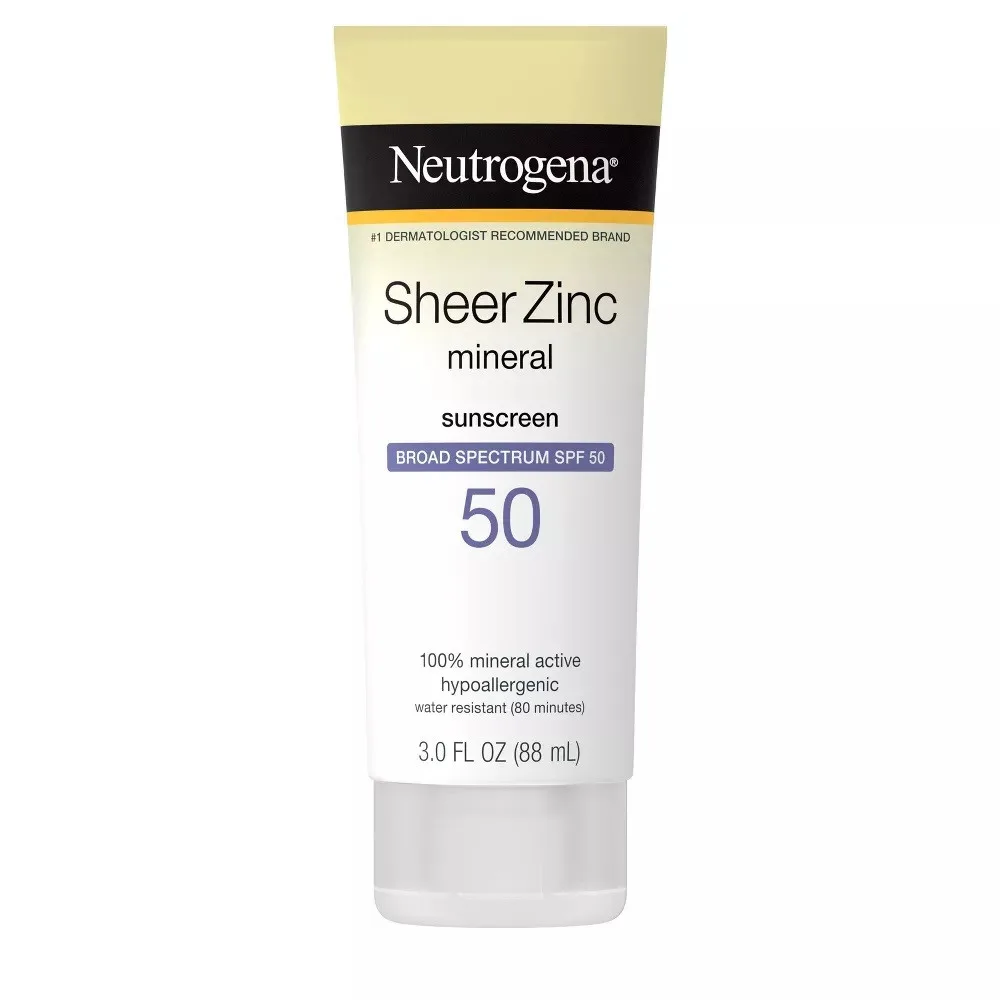
There's a quiet compromise hidden in a lot of mineral sunscreens marketed to sensitive skin, and it's worth understanding before you read another 'gentle, invisible zinc' label. White cast — that ghostly pale film mineral filters leave behind — is caused by zinc oxide and titanium dioxide reflecting light. The easiest way for a brand to reduce that cast is simply to use less of the mineral filter, which makes the sunscreen prettier on camera and weaker in the sun. Neutrogena's Sheer Zinc Dry-Touch Lotion takes the opposite bet. It loads in a hefty 21.6% zinc oxide — confirmed right on its FDA monograph — and then spends its engineering budget not on hiding that zinc but on making it bearable to wear. Whether that bet pays off depends entirely on what you need from a sunscreen and what your skin tone is.
Let's start with what's unambiguously good, because there's a lot of it. This is a 100% mineral formula with zero chemical filters, which matters for two groups in particular: people whose skin stings and flares with chemical UV filters, and people who simply prefer mineral protection. At 21.6%, the zinc isn't a token gesture — it's a high concentration that delivers genuine, tested broad-spectrum SPF 50 across both UVB (the burning rays) and UVA (the aging, deeper-penetrating ones). Zinc oxide is also about as gentle as a sunscreen active gets; it's the same ingredient in diaper-rash creams, well tolerated by reactive and eczema-prone skin, which is exactly why this product carries the National Eczema Association Seal of Acceptance. It's fragrance-free, paraben-free, and oil-free, and because it contains none of the fatty esters that feed malassezia, it's a safe pick for people managing fungal acne too. For sensitive, rosacea-prone, or post-procedure skin that needs reliable protection without provocation, this is a genuinely strong option.
The formula's signature trick is the 'dry-touch' part of the name, and it's not just marketing. A 21.6% zinc lotion would, left to its own devices, feel thick, greasy, and chalky — the classic complaint about old-school mineral sunscreens. Neutrogena's answer is a system of silicones and silica that absorb the oils and sweat sitting on the skin, pulling the finish from greasy toward matte. In practice, application starts dense: you'll squeeze out an opaque white lotion, spread it, and see a white film for a moment. But keep working it in and within a minute or two it transforms into a surprisingly dry, almost powdery matte finish. For oily and combination skin especially, that finish is a pleasure, and it's a meaningful step up from the slick zinc lotions of a decade ago. A dab of feverfew extract rounds things out as a botanical antioxidant and soothing agent, a sensible companion to the zinc.
Now the honest limitations, because this product has clear ones. The first is white cast, and it's the unavoidable flip side of that 21.6% zinc commitment. On fair skin, the cast usually blends down to negligible. On medium, deep, and especially very deep skin tones, it tends to leave a noticeable grayish-white film that doesn't fully disappear — this is the single most common complaint, and it's a real one. If you have deeper skin and you've been burned (so to speak) by ashy mineral sunscreens before, go in with realistic expectations, because no amount of dry-touch wizardry changes the optics of that much zinc. The second issue is texture: it's dense, and it takes more effort to blend than a lightweight chemical sunscreen, so the application ritual asks for patience. The third is the bottle. At 3 fluid ounces, it's small, and proper sunscreen application is generous — if you're covering your face plus exposed body skin daily, you'll run through it faster than you'd like, which nudges the per-use cost up.
There's also the feverfew caveat worth flagging, mostly because it slightly undercuts the 'pure gentle zinc' impression. Feverfew is a member of the chrysanthemum family, and a small number of people with ragweed or chamomile-family allergies can react to it. For the overwhelming majority of sensitive-skinned users it's a soothing bonus, not a problem — but 'sensitive skin' and 'literally hypoallergenic for everyone' aren't the same thing, and if you have a known composite-family allergy, patch test first.
On value, the math is solid but not spectacular. As a mid-priced drugstore mineral sunscreen, it's reasonable for the quality and the 100%-zinc, eczema-seal formula you're getting — you're paying a fair price for real protection from a major brand with the testing infrastructure to back its SPF claims. The small bottle is the asterisk; the per-ounce cost is fine, but the modest size means frequent repurchasing if it's your everyday body sunscreen, and larger-format mineral sunscreens often work out cheaper per use for full-body needs. Where this earns its keep is as a face-and-sensitive-areas sunscreen for someone who specifically wants high-percentage mineral protection and a matte finish.
The bottom line: this is a well-made, genuinely gentle, high-protection mineral sunscreen that makes an admirable choice — committing to real SPF coverage rather than diluting the zinc for cosmetic ease, and engineering around the consequences with the dry-touch finish. It's an easy recommendation for sensitive, oily, or reactive skin on the fairer end of the spectrum, and a more qualified one for deeper skin tones who'll have to weigh the white cast against the protection. Judged as what it is — a serious sensitive-skin mineral sunscreen rather than an invisible everyday glow-giver — it does its job well and honestly.
Formula
Key Ingredients
The hero actives that drive this product's performance.
The sole sunscreen active and the entire reason this lotion exists — a high 21.6% load of zinc oxide that sits on the skin and reflects and absorbs the full UVA-UVB spectrum. At this concentration it delivers genuine broad-spectrum SPF 50 protection without any chemical filters in the formula.
Regulator-approvedfor Sun Damage · limited certainty
A botanical antioxidant tucked at the end of the list to complement the zinc, intended to add a layer of free-radical defense and a soothing note that pairs well with the formula's sensitive-skin, fragrance-free positioning.
The silicone-and-silica complex behind the 'Dry-Touch' name, engineered to absorb the oils and sweat that normally make a 21.6% zinc lotion feel heavy and greasy, leaving a matte, lightweight finish instead.
Not yet assessed
Ingredient standings describe the active at treatment-level doses and
vehicles; this product's own condition grades weigh its actual formula.
Smooth it on as the last step of your morning routine after moisturizer, and give it a minute to set before dressing. Reapply every two hours of sun exposure and after swimming or heavy sweating to keep the protection intact.
Results Timeline
Sun protection is active as soon as it's rubbed in and set. There's no cumulative skincare benefit to wait for here — the payoff is daily prevention of UV-driven sunburn and photoaging over months and years of consistent use.
Pairs Well With
Hydrating serumsLightweight moisturizersAntioxidant vitamin C serums
The protective logic of this product is straightforward and well-supported: zinc oxide is a physical UV filter that absorbs and scatters ultraviolet radiation across both the UVB and UVA ranges, making it one of the few single actives capable of true broad-spectrum coverage. At a 21.6% concentration, the formula reaches the high end of what's needed for an SPF 50 mineral product, and the FDA classifies zinc oxide as a GRASE (generally recognized as safe and effective) sunscreen active, a status not shared by several chemical filters currently under review. The formulation challenge that the science addresses here is sensory, not protective: high zinc loads produce white cast and a heavy feel, so the styrene/acrylates and dimethicone-based film formers plus silica are included to optimize the spread and create the matte 'dry-touch' finish, while polyhydroxystearic acid helps disperse the zinc particles evenly to reduce clumping and patchiness. The feverfew (Chrysanthemum parthenium) extract is supported by a more modest evidence base; parthenolide-depleted feverfew has been studied for antioxidant and anti-inflammatory activity in skin, suggesting a plausible supporting role against UV-induced free radicals, though it is a complement to the zinc rather than a primary protective active. The overall scientific picture is of a robust, monograph-compliant mineral filter system with a sensible, if secondary, antioxidant addition.
Dermatologist Perspective
Mineral sunscreens built on zinc oxide are a frequent recommendation for sensitive, rosacea-prone, and post-procedure skin, and a 100% zinc formula at this concentration fits squarely within that clinical preference. Dermatologists often favor zinc oxide both for its broad-spectrum coverage and its GRASE regulatory standing, and an eczema-association seal reinforces its suitability for reactive skin. Clinical guidance consistently emphasizes that mineral sunscreens only perform when applied generously and reapplied every two hours of sun exposure, since under-application is the most common real-world failure with any SPF. The white cast inherent to high-zinc formulas is a recognized practical limitation, and patients with deeper skin tones are often counseled to test tinted mineral or hybrid options if cosmetic finish is a priority. The feverfew component is generally well tolerated but warrants caution in those with composite-family plant allergies.
Guidance
Usage & Recommendations
How to Use
Apply generously as the final step of your morning routine, after moisturizer, to all sun-exposed skin — most people under-apply, so use more than feels necessary and don't forget the ears, neck, and hairline. Work it in for a minute to let the dry-touch finish develop and minimize white film. Allow it to set before dressing or applying makeup. Reapply every two hours during sun exposure, and immediately after swimming, toweling off, or heavy sweating. For the face, roughly a nickel-sized amount is a reasonable starting point.
Value Assessment
As a drugstore mineral sunscreen from a major brand, the price is fair for what you get: a high-percentage 100% zinc formula, an eczema-association seal, and reliable broad-spectrum SPF 50 with real testing behind it. The catch is the 3 fl oz size, which is generous on protection but stingy on quantity — applied properly to face and exposed skin, it empties fast, pushing up the true cost of daily use. For face-focused sensitive-skin protection it's well-justified; for full-body coverage, a larger-format mineral sunscreen usually delivers better cost-per-application. Solid value within its lane, less so as an everyday body staple.
Who Should Buy
Reach for this if you have sensitive, rosacea-prone, eczema-prone, or post-procedure skin and want a 100% mineral sunscreen with no chemical filters and serious SPF 50 protection. Oily and combination skin will appreciate the matte dry-touch finish, and it's a safe pick for fungal-acne-prone skin.
Who Should Skip
Deeper skin tones that can't tolerate any white cast should look elsewhere, since the high zinc load leaves a noticeable film that won't fully blend. Those wanting a featherlight, invisible everyday sunscreen, or anyone with a known chrysanthemum-family allergy reacting to feverfew, are also better served by another option.
A thick, opaque white lotion that needs a moment of working in; it goes on dense but breaks down to a surprisingly dry, powdery finish once the dry-touch system kicks in.
Scent
Essentially scentless — fragrance-free, with only the faint mineral smell that high-zinc formulas tend to carry.
Packaging
Squeeze tube with a flip cap, sized for travel and reapplication rather than full-body daily coverage.
Finish
mattenon-greasy
What to Expect on First Use
The first application feels heavy and you'll see a white film as you spread it; keep rubbing and the dry-touch finish emerges within a minute or two. A white cast may linger on deeper skin tones, which is the main thing to expect rather than any stinging or irritation.
How Long It Lasts
About 3-4 weeks if used for daily face and exposed-skin coverage at the recommended amount; far less if applied generously over large body areas.
Neutrogena built the Sheer Zinc line as its answer to growing demand for 100% mineral, chemical-filter-free sun protection that sensitive and eczema-prone skin could tolerate. The dry-touch technology was the key engineering problem: making a high-zinc lotion that didn't feel like the chalky, greasy mineral sunscreens of the past, which is what earned it a National Eczema Association seal.
About Neutrogena Legacy Brand (20+ years)
Neutrogena has made sun care since long before mineral filters were fashionable, and the brand carries a National Eczema Association Seal of Acceptance on several Sheer Zinc products. Founded in 1930, it has the regulatory and testing infrastructure of a major manufacturer behind its SPF claims.
Brand founded: 1930
Myth vs. Reality
Common Myths
Myth
Mineral sunscreens like this don't protect as well as chemical ones.
Reality
At 21.6%, the zinc oxide here delivers full broad-spectrum SPF 50 protection that's been tested to monograph standards. Mineral filters protect just as effectively as chemical ones when formulated and applied at the right amount.
Myth
A 100% zinc sunscreen is automatically irritation-proof.
Reality
Zinc oxide itself is exceptionally gentle, but this formula also contains feverfew extract, a botanical that a small number of people with chrysanthemum-family allergies can react to. For most sensitive skin it's a non-issue, but it's not literally zero-risk.
FAQ
Frequently Asked Questions
How much zinc oxide is in the Neutrogena Sheer Zinc Dry-Touch Sunscreen?
It contains 21.6% zinc oxide as its sole active ingredient, a high concentration that provides genuine broad-spectrum SPF 50 protection. There are no chemical UV filters in the formula, making it a true 100% mineral sunscreen.
Does the Neutrogena Sheer Zinc sunscreen leave a white cast?
Yes, to some degree. On fair skin the cast usually blends down to negligible, but on medium to deep skin tones the high zinc content leaves a noticeable grayish-white film. The dry-touch finish helps with greasiness but doesn't eliminate the cast.
Is the Neutrogena Sheer Zinc sunscreen good for sensitive or eczema-prone skin?
Yes, it's one of its strongest uses. The 100% zinc oxide formula is fragrance-free and carries a National Eczema Association Seal of Acceptance. The only caveat is the feverfew extract, which a small number of chrysanthemum-allergic people may react to.
Is this Neutrogena Sheer Zinc sunscreen safe to use during pregnancy?
Yes. Mineral sunscreens using only zinc oxide are widely considered pregnancy-safe, and this formula contains no chemical filters, retinoids, or other ingredients typically flagged during pregnancy.
What does the dry-touch technology actually do?
It's a system of silicones and silica that absorbs surface oils and sweat, so a heavy 21.6% zinc lotion finishes matte and powdery instead of greasy. It improves how the sunscreen feels and wears, especially on oily skin, without affecting protection.
Can I use the Neutrogena Sheer Zinc lotion on my face?
Yes, it works on both face and body. Because it's oil-free and fragrance-free with no malassezia-feeding esters, it suits facial use including for acne- and fungal-acne-prone skin, though the dense texture takes a moment to blend.
Reviews
What Reviewers Tend to Say
Recurring themes our editors read across retailer reviews of this product — summaries in our words, not quotations, and not a substitute for your own patch test.
Common Praise
Genuinely gentle on sensitive and reactive skin
100% mineral with no chemical filters
Dry-touch finish less greasy than most zinc lotions
Water-resistant and reliable for outdoor use
Common Complaints
Leaves a white cast on deeper skin tones
Can feel thick and tricky to blend
Small 3 oz bottle runs out fast
Some find it drying on already-dry skin
Notable Endorsements
National Eczema Association Seal of AcceptanceFrequently recommended for sensitive and reactive skin
Every JAK inhibitor approved for alopecia areata was licensed on the same endpoint — a SALT score of 20 or less — and the arithmetic behind it is simple enough to follow before somebody else does it for you.
IPL is a filtered flashlamp, a true vascular laser is one wavelength aimed at haemoglobin, and the choice between them turns on a distinction almost no consult makes: whether your redness is vessels or a state.
Products, answers, therapy guides, tools and articles in one search. Brand names,
slang and abbreviations all work — accutane finds isotretinoin, bacne finds truncal acne.