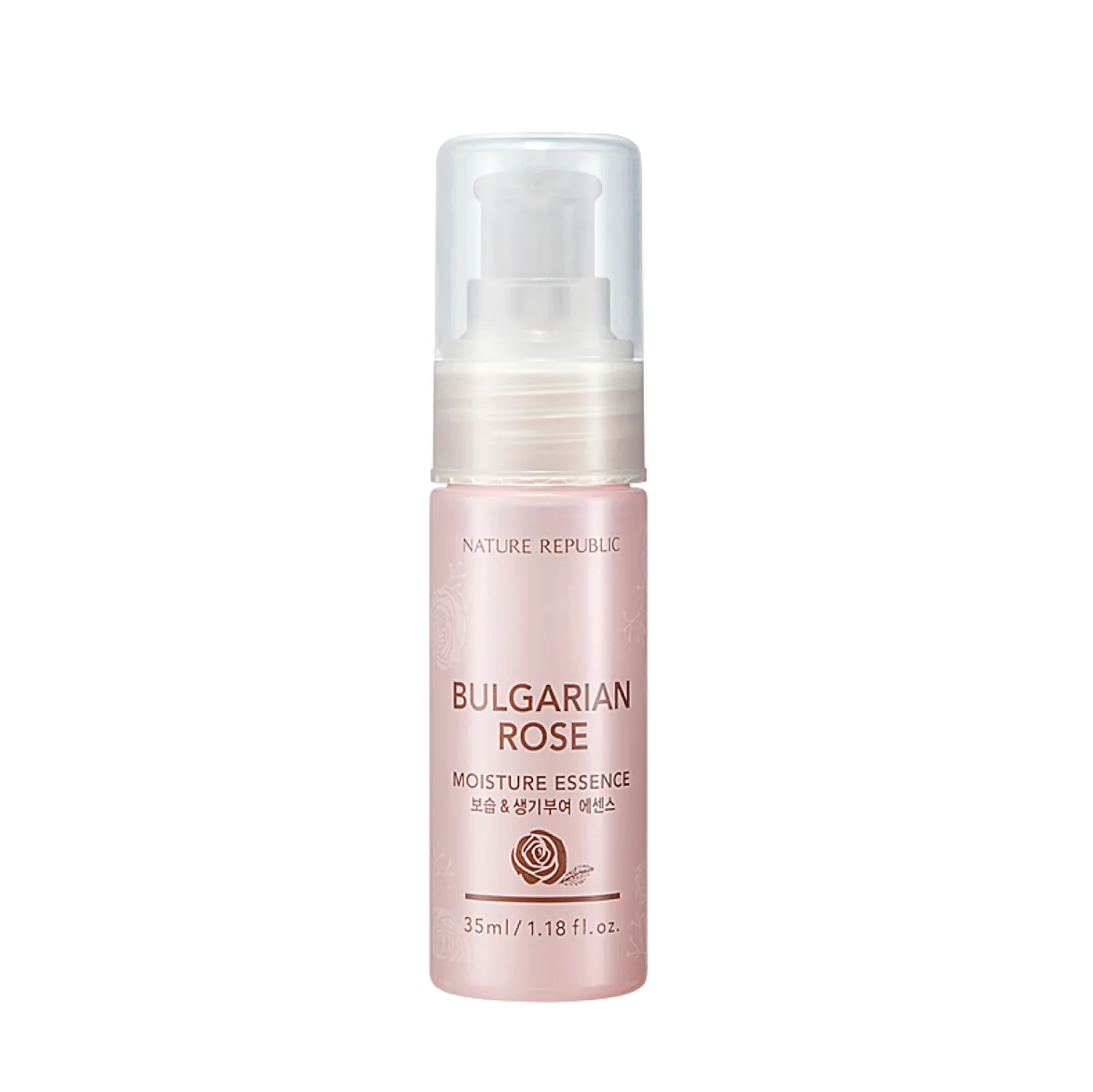
It is one of the few essences at this price to use genuine Rosa damascena flower oil rather than a synthetic rose accord, and its four-silicone base gives it a primer-smooth finish that outclasses its ten-dollar tag. The honest flip side is that it is a fragrance-and-feel product: ethanol high in the list, two layers of perfume, and no active beyond the humectants.
A ten-dollar essence that feels like a twenty-five-dollar one — silky silicone glide, a genuine damask-rose scent, a plump first morning — and formulates like a five-dollar one: ethanol fourth in the list, two layers of perfume, and glycerin as the only thing doing any work. Fine for normal, resilient skin that wants a rose-scented primer; not for dry, reactive or serious skin.
This assessment draws on the essence's full thirty-ingredient disclosure and nearly a decade of sales, set against a small and scattered review record — a few dozen ratings on the brand's US store and Korean-beauty retailers, with no large marketplace listing. The texture, scent and short-term hydration findings are consistent across those sources; how often the alcohol and double fragrance cause problems on dry or reactive skin is inferred from the formula rather than from a large body of user reports.
Verdicts
How well it fits each concern
Verdict by concern tap a concern for the case
Good choicefor DehydrationIn your profileYou chose · Glycerin is a reference standard by mechanism for dehydration; this essence carries it high in the ingredient list.Moderate evidenceStandard tolerabilityNo reviews collected yet
The case for it
Glycerin + Dipropylene Glycol + Glycereth-26 + Methyl Gluceth-20 has trial-supported standing for this concern.
It is present at an effective concentration, declared or high in the ingredient list.
The formula carries no trigger this concern is sensitive to, with the cautions noted.
Same rule for everyone. “Good choice” is the verdict on 9,564 of 45,024 concern verdicts across the catalog; rule R5 decided 9,072 of them.
As of September 25, 2026, engine 5.1.1.
adequate — studied range 20%, from the trials on the row; needs leave-on contact; judge it after ~1 weeks
Tolerability
standard
Row checked
against its sources on July 17, 2026 (evidence table ev-2026.09-r228)
The studies behind the evidence row
USP glycerin monograph / Fluhr et al., glycerol and the skin (review) — glycerin is the reference humectant, drawing and holding water in the stratum corneum — reference work
A verdict is DermApproved’s assessment of how well a product’s ingredients fit a concern — never a claim about what the product treats. Evidence dots and collected reviews sit beside it and are never blended in.
Rules 0.5.1 · evidence table ev-2026.09-r228 · how we decide
Assessment
Pros & Cons
Pros
✓ Genuine Rosa damascena flower oil ninth in the list — a natural rose scent rare at this price
✓ Four-silicone base gives a silky glide and a smooth, primer-like finish under makeup
✓ Glycerin plus three glycol humectants deliver noticeable next-morning plumpness
✓ Dries quickly and cleanly; no stickiness or pilling
✓ Ten dollars with a proper glass bottle and pump
✓ Vegan and free of parabens and sulfates
Cons
✗ Alcohol is the fourth ingredient — tightening on dry, dehydrated or reactive skin
✗ Added fragrance on top of rose oil: two perfume layers with citronellol and geraniol
✗ No active beyond humectants — hydration and scent are the whole effect
✗ 35 mL bottle empties in five to six weeks at twice-daily use
✗ Silicone-heavy finish is not to everyone's taste and offers no lasting barrier benefit
✗ Unsuitable for rosacea-prone, eczema-prone or freshly exfoliated skin
Review
Full Review
There is real damask rose oil in this bottle, and at ten dollars that is worth pausing over. Rosa damascena oil from Bulgaria's Rose Valley is among the costliest essential oils in the world — thousands of blossoms to a few millilitres — and most budget 'rose' skincare fakes it with a synthetic accord. Nature Republic's Bulgarian Rose Moisture Essence puts the real thing ninth in its ingredient list, and the first pump smells like it: sweet, green, unmistakably floral, softer and rounder than any lab rose. If the product were judged on that alone it would be a bargain. The rest of the list is where the ten dollars start to make sense.
What surrounds the rose oil is a formula built for feel. Water, glycerin, dipropylene glycol, then alcohol in fourth place; a run of glycol and PEG humectants; the rose oil and two botanical extracts — imperata root, sold to formulators as a long-lasting moisturiser, and European mistletoe, which is mostly a name. Then a four-part silicone system: cyclopentasiloxane and cyclohexasiloxane to carry the gel on and evaporate, dimethicone and dimethiconol to stay behind as a smooth film. Thickeners, solubilisers, a preservative and, in the final position, 'fragrance' — a second perfume on top of the rose oil. No vitamin, no acid, no niacinamide, no peptide, no ceramide. The 'moisture' in the name is glycerin and the glycols, and nothing else in the bottle has a mechanism.
On the skin, for the right skin, it is a genuine pleasure. The gel glides with the silky ease that silicones provide, the alcohol flashes off with a cool little chill, and a minute later the face is smooth, faintly blurred and lightly rose-scented — a finish that behaves like a primer, and one that foundation loves. Normal and combination skin wakes up softer and plumper after a week of use, which is what a humectant gel should deliver. Teenagers and students, who make up a good share of the line's audience, get a first essence that feels grown-up and costs less than lunch.
For dry or reactive skin the same list reads as a warning. Ethanol at fourth is a real dose, and while it makes the essence dry fast and dissolves the rose oil, it also strips a little lipid every time and can leave drier skin tighter after a couple of weeks than before it started — the humectants pull water in, the alcohol lets it out, and there is no occlusive to close the door. The rose oil brings citronellol and geraniol, two labelled fragrance allergens; the added fragrance brings whatever it brings. For rosacea-prone, eczema-prone or freshly exfoliated skin, this is three common triggers in one small bottle, and no amount of imperata root changes that. The product is not dangerous; it is simply built for people whose skin does not need to be careful.
It is also, honestly, not a serum in any functional sense. Korean 'essences' span everything from fermented actives to hydrating waters, and this one sits firmly at the hydrating-water end with a silicone finish: a very nice-feeling step that hydrates and primes and does nothing further. There is no arc of results to wait for. The first week's softness is the whole effect, repeated. Anyone hoping a rose essence will calm redness, brighten or firm — the claims folk medicine makes for rose — will find the laboratory antioxidant data on rose oil does not translate to a cosmetic dose under a moisturiser, and the marketing, to the brand's credit, does not promise much more than 'moisturizing and revitalizing'.
The bottle is small. Thirty-five millilitres at a pump or two twice a day lasts five or six weeks, which makes the effective cost closer to a mid-range essence than the sticker suggests, though still cheap in absolute terms. The packaging — clear glass, pink label, a proper pump — looks more expensive than it is, which is rather the theme.
Value, then, depends entirely on what is being bought. As a rose-scented, silicone-smooth hydrating primer for normal, resilient skin, ten dollars is very good value and the real rose oil is a bonus nobody at this price should expect. As a serum — a step chosen to do something for the skin — it is a small bottle of glycerin, alcohol and perfume, and the same ten dollars would buy a niacinamide or hyaluronic acid serum from a dozen brands that would actually accomplish something. The essence is not pretending to be that product, and it should not be bought as one.
Recommended narrowly: for normal or combination skin that wants a pleasant, inexpensive rose-scented essence under makeup and understands it is buying feel and fragrance. Skip it for dry, dehydrated, sensitive or rosacea-prone skin, for anyone avoiding alcohol or perfume, and for anyone shopping for results. The damask rose is real. The skincare is mostly glycerin.
Formula
Key Ingredients
The hero actives that drive this product's performance.
The essence is, at heart, a humectant cocktail: glycerin second in the list, backed by three glycol-type water-binders. That quartet is the entire source of the 'moisture' in the name — it draws water into the surface and gives the gel its slippery, plumping first minute, and it is the only part of the formula with a clear mechanism.
Established mechanismfor Dehydration · established mechanism
Ninth in the list, the essential oil the line is named for — damask rose oil, whose antioxidant and mildly anti-inflammatory constituents have laboratory support but whose main job here is scent and story. Rose oil is one of the gentler essential oils, but it sits above the silicones and film-formers, and an added 'fragrance' at the end doubles the perfume load.
Two supporting botanicals: imperata root, a desert grass extract sold to formulators as a long-acting moisturiser, and European mistletoe, a folk-medicine plant with little cosmetic evidence. They add a second hydration claim and a natural-sounding pair of names; neither carries the formula.
A four-part silicone system that gives the essence its silky glide and its smooth, slightly blurred finish — the volatile cyclosiloxanes carry it on and evaporate, the dimethicone and dimethiconol stay as a thin film. It is why the product feels more expensive than it is and why some users describe it as 'primer-like'.
Fourth in the list — ethanol at a meaningful level, used to thin the gel, speed absorption and help the rose oil dissolve. It gives the essence its quick, cool dry-down and is also the ingredient most likely to leave dry or reactive skin tighter than it found it, working against the humectants above it.
Not yet assessed
Ingredient standings describe the active at treatment-level doses and
vehicles; this product's own condition grades weigh its actual formula.
Apply a pump or two after toner and before moisturiser, morning and night, and let it set for a minute — the silicones make it a good base under sunscreen or makeup. Because ethanol sits fourth in the list, keep it off skin that is freshly exfoliated or on a retinoid, and follow it with a proper moisturiser rather than treating it as one.
Results Timeline
Immediate: a cool, slippery gel that sinks in fast and leaves a smooth, faintly blurred, rose-scented finish. Short-term (1-2 weeks): skin feels softer and looks a little plumper in the mornings from the humectants. Full benefits: there is no further arc — this is a hydrating, scented, primer-like essence with no active beyond humectants, and its effect is what you see in the first week, repeated.
The ingredient with the most interesting literature in this essence is the one doing the least skincare work. Rosa damascena, the damask rose, has a long pharmacological record: a 2011 review in the Iranian Journal of Basic Medical Sciences catalogued reported antioxidant, antibacterial, anti-inflammatory and relaxant effects of its extracts and essential oil across laboratory and animal studies, along with traditional uses ranging from wound care to mood (Boskabady et al., Iranian Journal of Basic Medical Sciences, 2011). Those findings concern concentrated extracts and oil under experimental conditions; in a leave-on cosmetic at a fragrance-level dose, rose oil's demonstrable contribution is its scent and a modest antioxidant presence, and its principal constituents — citronellol, geraniol, nerol — are also among the labelled fragrance allergens, which is why a real rose oil is both the formula's charm and one of its two tolerance risks.
The hydration mechanism is conventional and sound as far as it goes. Glycerin, the second ingredient, is the best-documented humectant in skincare, drawing water into the stratum corneum and improving its flexibility; dipropylene glycol, glycereth-26 and methyl gluceth-20 reinforce it. Imperata cylindrica root extract is marketed to formulators on a potassium-and-sugar mechanism said to bind water for extended periods, with small supplier studies and no independent clinical data; Viscum album (mistletoe) extract has essentially no cosmetic evidence. Humectants alone, however, only hold water if something slows its evaporation, and the film left by dimethicone and dimethiconol is thin — effective for a smooth finish, minimal as an occlusive.
The formula's limiting factor is ethanol at fourth position. Alcohol in the top five of a leave-on delivers fast drying and helps dissolve the rose oil, but repeated application at that level extracts stratum corneum lipids and can increase transepidermal water loss in dry or compromised skin, partially undoing the humectants' work; oily and normal skin tolerate it well, which matches the product's real audience. The volatile cyclosiloxanes evaporate after spreading, so their contribution is sensory rather than lasting. Nothing in the list has evidence for the tone, firmness or calming effects that rose folklore suggests, and the added 'fragrance' at the end of the list is an undisclosed perfume blend that compounds the allergen exposure from the rose oil. The evidence-based summary is a pleasant humectant-and-silicone gel whose two most distinctive ingredients — rose oil and ethanol — are also the two that decide who can use it.
Clinically this is a hydrating cosmetic with no therapeutic active, and its assessment turns on tolerance rather than efficacy. Two features would prompt caution from a dermatologist: ethanol in the fourth position, which is associated with barrier lipid extraction and increased water loss on dry or atopic-prone skin with repeated use, and a double fragrance load — rose essential oil, whose citronellol and geraniol are recognised contact allergens, plus an undisclosed added perfume. For patients with rosacea, atopic dermatitis, seborrhoeic dermatitis or a history of fragrance sensitisation, an unfragranced, alcohol-free humectant serum would be the standard recommendation, and there are many at similar prices. For healthy normal or oily skin the essence is low-risk and pleasant, and the silicone film makes it a reasonable base under sunscreen. Practitioners would not expect any anti-inflammatory, brightening or anti-ageing effect from the rose oil at cosmetic concentration, and would advise patients seeking those outcomes toward niacinamide, azelaic acid or a retinoid instead. Nothing in the formula is a concern in pregnancy.
Guidance
Usage & Recommendations
How to Use
Morning and night after cleansing and toner, dispense one or two pumps into the palm and smooth over the face and neck, pressing lightly; the gel absorbs within a minute. Follow with a moisturiser — it is a humectant essence, not a moisturiser, and the alcohol makes the follow-up non-optional on anything but oily skin. In the morning finish with sunscreen; the silicone film also makes it a good base under makeup. Keep it off freshly exfoliated or retinoid-irritated skin, and patch test on the jaw first if fragrance or alcohol has bothered you before. Close the pump cap and store away from heat to protect the rose oil.
Value Assessment
Ten dollars for 35 millilitres is about twenty-nine cents a millilitre — cheap in absolute terms, but the small bottle and a twice-daily pump habit mean it runs out in five or six weeks, which puts the annual cost near that of a mid-range hyaluronic serum that does more. What the money buys is real damask rose oil, a silicone finish that feels expensive, and a glass bottle with a pump — feel and fragrance rather than function, since the only working ingredients are humectants available in any budget essence. For a student or a normal-skinned person who wants a rose-scented primer-essence, the value is good and the real rose oil is a genuine treat at the price. For anyone buying a serum to accomplish something, the same ten dollars would go further on a niacinamide or hyaluronic acid product with no alcohol and no perfume. From a mass-market brand with no pricing pretensions, the number is fair for what it is.
Who Should Buy
Normal or combination skin that is not reactive, enjoys a natural rose scent and wants an inexpensive, silky essence that hydrates lightly and primes well under makeup — a pleasant first Korean essence for a teenager or a gift, bought with clear eyes about what it is.
Who Should Skip
Dry, dehydrated, sensitive, rosacea-prone or eczema-prone skin, anyone avoiding alcohol or fragrance, anyone on a retinoid or exfoliating acid, and anyone choosing a serum to improve tone, texture or ageing — this bottle contains glycerin, silicone, alcohol and rose, and nothing that will change the skin.
Ready to try Nature Republic Bulgarian Rose Moisture Essence?
A clear, lightly viscous gel-serum that spreads with a silky slip, cools as the alcohol flashes off and settles within a minute to a smooth, soft-focus film
Scent
A distinct, natural damask-rose perfume — sweet, slightly green — from the rose oil plus added fragrance, lingering for a while after application
Packaging
A small, clear glass bottle with a rose-pink label, silver collar and a pump dispenser, 35 mL
Finish
satinvelvetyfast-absorbing
What to Expect on First Use
The first pump is a small sensory pleasure: a cool, rose-scented gel that glides on, flashes off with a faint alcohol chill and leaves the skin smooth and primed. Normal and combination skin will register a plump softness the next morning; dry skin may notice the tight feeling that follows the alcohol within a few days. There is nothing to purge or adjust to, and no result beyond hydration to wait for.
How Long It Lasts
About five to six weeks used twice daily, or two to three months once a day
Nature Republic launched the Bulgarian Rose line in the mid-2010s to give the brand a romantic, scent-led counterpart to its functional aloe and ginseng ranges, trading on Bulgaria's Rose Valley — the world's main source of damask rose oil — as the origin story. The essence, emulsion and cream have sold quietly ever since as an entry-level rose routine, popular as a gift and as a first Korean essence for teenagers and students.
About Nature Republic Established Brand (5–20 years)
Nature Republic, founded in 2009, is a mass-market Korean brand that builds inexpensive lines around a single botanical — aloe, ginseng, snail, rose. The Bulgarian Rose line has sold since the mid-2010s on the strength of Rosa damascena oil and a rose scent; the brand discloses full ingredient lists but publishes no clinical testing, and this essence's standing rests on a decade of unremarkable, consistent sales rather than on data.
Brand founded: 2009 · Product launched: 2016
Myth vs. Reality
Common Myths
Myth
Rose oil in a skincare product delivers the calming, anti-ageing benefits attributed to Bulgarian rose.
Reality
Damask rose oil has antioxidant and mildly anti-inflammatory constituents in laboratory studies, but at cosmetic doses in a leave-on essence its contribution is chiefly scent. The measurable effect of this product comes from glycerin and the glycols, and rose oil's citronellol and geraniol are fragrance allergens that reactive skin should treat with caution.
Myth
An essence labelled 'moisture' can replace a moisturiser.
Reality
This one is a humectant gel with a silicone finish and ethanol fourth in the list. It draws water into the surface but seals nothing in and can leave dry skin tighter over time; a moisturiser over it is not optional except on oily skin in humid weather.
FAQ
Frequently Asked Questions
Does the Nature Republic Bulgarian Rose Moisture Essence contain alcohol?
Yes — plain alcohol is the fourth ingredient, used to thin the gel and give it a quick, cool dry-down. Normal and oily skin usually do not mind; dry, dehydrated or reactive skin may find it tightening with regular use, and it is the main reason the essence should always be followed by a moisturiser.
What does the Bulgarian Rose Moisture Essence actually do for skin?
It hydrates the surface with glycerin and three glycol humectants, leaves a smooth silicone film that works like a light primer, and smells of damask rose. There is no active beyond the humectants — no vitamin, acid, niacinamide or peptide — so its benefit is softness, plumpness and scent rather than any change to tone or texture.
Is the Bulgarian Rose Moisture Essence good for sensitive skin?
It is a poor match. Alcohol sits fourth in the list, rose oil brings citronellol and geraniol, and a separate fragrance is added on top — three of the most common triggers for reactive, rosacea-prone or eczema-prone skin in one small bottle. Anyone with a fragrance or alcohol sensitivity should choose an unscented, alcohol-free essence.
Can I use the Nature Republic Rose Essence under makeup?
Yes, and it is one of its better uses. The four-silicone base — cyclosiloxanes, dimethicone and dimethiconol — sets to a smooth, slightly blurring film that foundation glides over, and the alcohol means it dries quickly. Let it set for a minute before sunscreen or base.
Is the Bulgarian Rose Moisture Essence real rose oil or synthetic fragrance?
Both. Rosa damascena flower oil — genuine damask rose essential oil — is ninth in the list, and a separate 'fragrance' appears last, so the scent is real rose oil topped up with an added perfume. The rose oil is the reason it smells more natural than most budget rose products.
Is the Nature Republic Bulgarian Rose Essence safe during pregnancy?
Its ingredients are humectants, silicones, film-formers, rose oil and fragrance — nothing on the standard pregnancy avoid-list, and no retinoids or salicylic acid. The essential oil and perfume are comfort considerations; anyone advised to avoid essential oils in pregnancy should pick an unscented essence.
Reviews
What Reviewers Tend to Say
Recurring themes our editors read across retailer reviews of this product — summaries in our words, not quotations, and not a substitute for your own patch test.
Common Praise
lovely natural rose scent that lingers softly
silky, fast-absorbing gel that layers well under makeup
The fourth most frequent positive patch test in North America is an oxidation product of a molecule that occurs naturally in lavender. Nobody synthesised it into your face cream.
The supplier specification for standard witch hazel water caps the tannin content — the fraction all the research is about — at a level indistinguishable from none. The tightness you feel is the solvent.
Picking one skin state and selling through hospital dermatology departments is a genuinely smart strategy. Whether the house botanical earns its billing is a separate question, and the answer is not the one either side wants.
Essential oils are declared by botanical name rather than as fragrance, which is why the most heavily perfumed products in the natural aisle can carry the reassuring word — and why the bottle gets more sensitising the longer you own it.
Products, answers, therapy guides, tools and articles in one search. Brand names,
slang and abbreviations all work — accutane finds isotretinoin, bacne finds truncal acne.