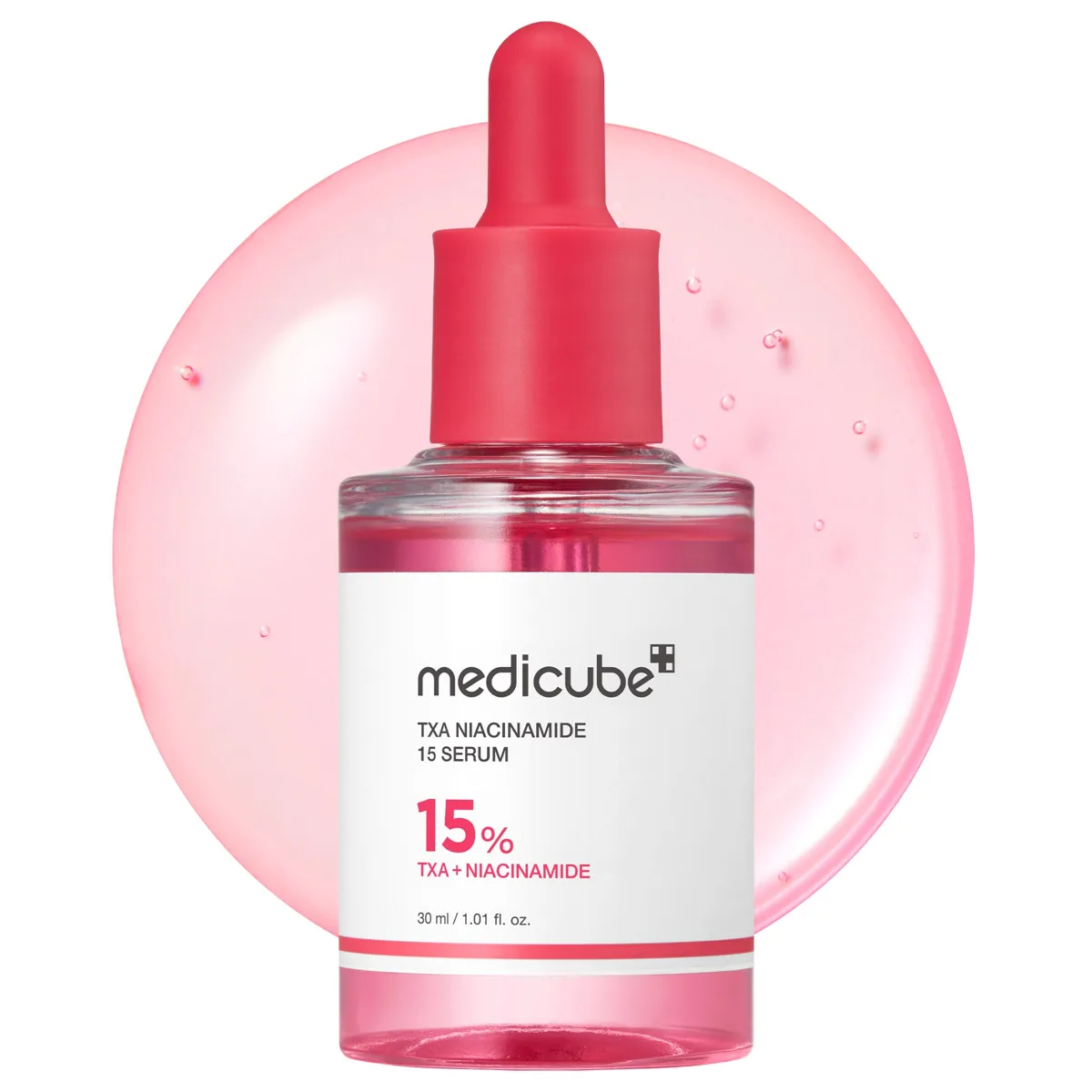
It is one of the few mass-market K-beauty brighteners to print its actives and dose them at trial levels, 5 percent tranexamic acid, 10 percent niacinamide and 2 percent arbutin, hitting three separate points in the pigmentation pathway in one thin serum, then cushioning that load with ten hyaluronate forms, panthenol and betaine. Medicube's earlier brighteners hid their kojic acid low in the list; this one leads with the numbers.
A genuinely well-dosed brightening serum that prints its numbers, 5 percent tranexamic acid, 10 percent niacinamide and 2 percent arbutin, and hits three separate points in the pigment pathway in a light, hydrating base for twenty-four dollars. It is slow, as every honest brightener is, the high niacinamide can flush reactive skin, and the fragrance-free claim ignores a rose oil, but for post-acne marks and melasma maintenance it is one of the best-value serums in its category.
Medicube's own evidence for this serum is a brand-run 72-hour panel that measured hydration and a marginal clarity change rather than pigment, so the assessment of its brightening power rests on the well-documented trial literature for tranexamic acid, niacinamide and arbutin at the disclosed 5, 10 and 2 percent doses and on seventeen months of user reports rather than on any test of the product itself. The brand does not specify whether the arbutin is the alpha or beta isomer, and no independent study exists.
Verdicts
How well it fits each concern
Verdict by concern tap a concern for the case
Promisingfor Dark SpotsIn your profileYou chose · Niacinamide has trial-level evidence for dark spots but no guideline or regulatory standing yet — promising, short of a recommendation; the other actives here are not yet assessed for it.Moderate evidenceGentleNo reviews collected yet
The case for it
Niacinamide has trial-level evidence for this concern but no guideline or regulatory standing yet.
It is present at an effective concentration, declared or high in the ingredient list.
The formula carries none of the triggers this concern is sensitive to.
What would change this: Guideline or regulatory standing for the active on this concern would move this from a promising bet to a recommendation.
Same rule for everyone. “Promising” is the verdict on 7,858 of 45,024 concern verdicts across the catalog; rule R9p decided 7,858 of them.
As of September 25, 2026, engine 5.1.1.
R9p — 0.5.0: 'Unproven' beside three filled dots read as one question answered twice with opposite words (7,018 rows). The chip measures standing, the dots measure trial volume; where the row carries at least one RCT or a tier-2 source (moderate dots) and the active is present at a working level, the honest word is Promising. Unproven is reserved for plausible-standing rows with limited or weak evidence, or an under-dosed form. Same rank as Unproven — a bet either way; the dots order them. · the full register
Carrying active
Niacinamide
Standing
plausible — trials support it
Form
adequate (declared 10%)
Tolerability
gentle
Row checked
against its sources on July 17, 2026 (evidence table ev-2026.09-r228)
Good choicefor HyperpigmentationIn your profileYou chose · Niacinamide is a trial-supported active for hyperpigmentation; this serum carries it at 10%.Moderate evidenceGentleNo reviews collected yet
The case for it
Niacinamide has trial-supported standing for this concern.
It is present at an effective concentration, declared or high in the ingredient list.
The formula carries none of the triggers this concern is sensitive to.
Same rule for everyone. “Good choice” is the verdict on 9,564 of 45,024 concern verdicts across the catalog; rule R5 decided 9,072 of them.
As of September 25, 2026, engine 5.1.1.
Good choicefor MelasmaIn your profileYou chose · Tranexamic Acid is a trial-supported active for melasma; this serum carries it at 5%.Strong evidenceGentleNo reviews collected yet
The case for it
Tranexamic Acid has trial-supported standing for this concern.
It is present at an effective concentration, declared or high in the ingredient list.
The formula carries none of the triggers this concern is sensitive to.
Same rule for everyone. “Good choice” is the verdict on 9,564 of 45,024 concern verdicts across the catalog; rule R5 decided 9,072 of them.
As of September 25, 2026, engine 5.1.1.
Not for thisfor Acne ScarringIn your profileYou chose · The actives here have been researched for acne scarring and the evidence does not support the claim.Not yet assessedGentleNo reviews collected yet
The case for it
Niacinamide has been researched for this concern and the evidence does not support it.
It is present at an effective concentration, declared or high in the ingredient list.
The formula carries none of the triggers this concern is sensitive to.
Same rule for everyone. “Not for this” is the verdict on 488 of 45,024 concern verdicts across the catalog; rule R10 decided 488 of them.
As of September 25, 2026, engine 5.1.1.
Promisingfor DullnessIn your profileYou chose · Hyaluronic Acid has trial-level evidence for dullness but no guideline or regulatory standing yet — promising, short of a recommendation; the other actives here are not yet assessed for it.Moderate evidenceGentleNo reviews collected yet
The case for it
Ten-Form Hyaluronic Complex + Panthenol + Betaine has trial-level evidence for this concern but no guideline or regulatory standing yet.
It is plausibly present at a working level, though the concentration is not declared.
The formula carries none of the triggers this concern is sensitive to.
What would change this: A declared concentration would move this to a firmer reading of the dose.
Same rule for everyone. “Promising” is the verdict on 7,858 of 45,024 concern verdicts across the catalog; rule R9p decided 7,858 of them.
As of September 25, 2026, engine 5.1.1.
R9p — 0.5.0: 'Unproven' beside three filled dots read as one question answered twice with opposite words (7,018 rows). The chip measures standing, the dots measure trial volume; where the row carries at least one RCT or a tier-2 source (moderate dots) and the active is present at a working level, the honest word is Promising. Unproven is reserved for plausible-standing rows with limited or weak evidence, or an under-dosed form. Same rank as Unproven — a bet either way; the dots order them. · the full register
Carrying active
Ten-Form Hyaluronic Complex + Panthenol + Betaine
Standing
plausible — trials support it
Form
plausible
Tolerability
gentle
Row checked
against its sources on July 17, 2026 (evidence table ev-2026.09-r228)
A verdict is DermApproved’s assessment of how well a product’s ingredients fit a concern — never a claim about what the product treats. Evidence dots and collected reviews sit beside it and are never blended in.
Rules 0.5.1 · evidence table ev-2026.09-r228 · how we decide
Assessment
Pros & Cons
Pros
✓ Tranexamic acid at a disclosed 5 percent, the top of the trialled topical range
✓ Niacinamide at 10 percent and arbutin at 2 percent complete three pigment pathways
✓ Percentages printed on the box, unusual for a mass-market K-beauty brightener
✓ Ten-form hyaluronic complex, panthenol and betaine keep it light and hydrating
✓ Layers cleanly under sunscreen, retinoids and vitamin C
✓ Around thirty-two hundred Amazon ratings at 4.6 stars
✓ Twenty-four dollars undercuts most Western tranexamic acid serums
Cons
✗ Ten percent niacinamide can tingle or flush reactive skin at first
✗ Rose flower oil in a serum marketed as fragrance-free
✗ Brand's 72-hour panel measured hydration and clarity, not pigment
✗ Slow on melasma and dependent on strict sunscreen, like every brightener
✗ Pink tint fades and niacinamide crystals form at the dropper
✗ Limited pregnancy data for topical tranexamic acid and arbutin
Review
Full Review
For a year Medicube's brightening line was built on kojic acid and turmeric, ingredients that gave the products their name and their colour while sitting far down the list at doses nobody would call therapeutic. Then in April 2025 the brand released this serum and printed three numbers on the box: 5 percent tranexamic acid, 10 percent niacinamide, 2 percent arbutin. That is a different kind of product, and a different kind of confidence. It is the ingredient-forward disclosure that the Western serum brands made standard, adopted by a K-beauty company that had been selling stories, and the reason it matters is that the numbers are the right ones.
Take them in turn. Tranexamic acid at 5 percent sits at the top of the range the topical trials have used, and its mechanism is the thing that makes the serum more than another tyrosinase inhibitor: it damps the plasmin signalling by which UV and inflammation tell melanocytes to overproduce, working upstream of pigment synthesis, which is why it has become a mainstay of melasma treatment and why a 2024 split-face randomized trial in skin of colour found a 3 percent cream comparable to 4 percent hydroquinone for mixed-type melasma over twelve weeks. Niacinamide at 10 percent, second in the list, blocks the transfer of finished melanosomes into skin cells and rebuilds barrier lipids, a dose supported by trials at 2 to 5 percent and pushed here to the ceiling most formulators consider before flushing becomes common. Arbutin at 2 percent, the glycoside that releases a little hydroquinone in skin, inhibits tyrosinase directly. Signalling, synthesis, transfer: three pathways, three disclosed doses, in one thin serum.
The base is what keeps a 15 percent active load usable. Ten forms of hyaluronic acid fill the back third of the list with panthenol and betaine above them, so the serum feels light and hydrating rather than tight, and that is what Medicube's 72-hour contract-lab panel actually measured: a hydration gain and a small clarity gain in three days. It is honest of the brand to have measured hydration, since no brightener does anything measurable to pigment in seventy-two hours, and it is also a reminder that the serum's real evidence is the trial literature on its actives, not a test of the bottle. A trio of ferulic acid, glutathione and vitamin B12 in the twenties adds antioxidant vocabulary and the pink tint, which pales in light and, as the brand's own FAQ says, changes nothing. Three peptides close the list at trace.
In use it is undramatic in the best way. A few drops sink in within a minute, sit under sunscreen or a retinoid without pilling, and leave skin a touch dewy; by the third day skin looks slightly clearer, and the marks it is bought for begin to soften around the one-month point, with the three-thousand-odd Amazon reviewers who rate it four and a half stars most consistent about post-acne marks fading over two months. Melasma is slower and needs the full twelve weeks with strict sunscreen to judge, and it will return when the sunscreen lapses, which is true of every melasma product ever sold.
The cautions are specific. Ten percent niacinamide produces a warm tingle or a flush in a meaningful minority, especially over freshly exfoliated skin, and it usually settles within a week; reactive faces should start once daily on dry skin and drop to a lower-niacinamide brightener if it persists. The serum is marketed as fragrance-free, which is true in the narrow sense that nothing is labelled parfum and false in the sense that matters, because Rosa centifolia flower oil sits at twenty-second, a rose essential oil that is the formula's one real sensitiser and an odd inclusion in a product aimed at inflamed, post-acne skin. And two cosmetic quirks confuse people: the pink fades, and a white crust of niacinamide can crystallise at the dropper, neither of which means anything.
Medicube, APR Corporation's skincare brand since 2014, is better known for pads and jelly masks and for panels that measure what is easy to measure, and it is fair to say that the brand's evidence for this serum is thin while the evidence for its ingredients is strong. At twenty-four dollars for 30 millilitres, roughly two months of twice-daily use, it undercuts most Western tranexamic acid serums by a wide margin while matching or exceeding their doses, and that arithmetic is the reason to buy it.
So credit the numbers on the box. This is the serum Medicube's brightening line should have led with: three actives at doses the trials support, disclosed, in a hydrating base, at a drugstore-adjacent price, with a rose oil it should not have added and a niacinamide dose that reactive skin will feel. For post-acne marks, sun spots and melasma maintenance it is a serious option, provided the sunscreen is as serious.
Formula
Key Ingredients
The hero actives that drive this product's performance.
The headline active at a disclosed 5 percent, fifth in the list, which is at the upper end of the two-to-five-percent range topical tranexamic acid has been trialled at for melasma and post-inflammatory marks. It works upstream of the tyrosinase inhibitors by damping the plasmin-driven signalling that tells melanocytes to overproduce, which is why it pairs so logically with the niacinamide and arbutin below it.
Second in the list at a disclosed 10 percent, the maximum most formulators use before flushing becomes common, blocking the transfer of melanosomes into keratinocytes and shoring up barrier lipids. At this dose it also explains the white powder that can crystallise around the dropper, which Medicube warns about, and the tingle some people feel on first use.
Sixth, at a disclosed 2 percent, the glycoside of hydroquinone that inhibits tyrosinase directly and is the third arm of the serum's three-pathway pitch. Medicube does not specify alpha or beta arbutin; either way the dose is meaningful and it is the ingredient that gives the serum something to fade an established spot with, rather than only prevent new ones.
The hydration half of the 72-hour claim: ten hyaluronate salts and fragments in the back third of the list with panthenol and betaine above them, which keep a 15 percent active load from feeling drying and produced the hydration reading in the brand's panel. They are supporting cast, well chosen.
An antioxidant trio in the twenties, ferulic acid and glutathione at cosmetic doses and vitamin B12, which is what tints the serum pink and, as the brand admits, fades in light without changing anything. They lend the formula a glow-serum vocabulary; the brightening is done higher up the list.
A rose essential oil at twenty-second in a serum Medicube markets as fragrance-free, which is true only in the narrow sense that no ingredient is labelled parfum. It contributes a faint rose note and the formula's one sensitiser of note, relevant on a product meant for irritated post-acne skin.
Not yet assessed
Ingredient standings describe the active at treatment-level doses and
vehicles; this product's own condition grades weigh its actual formula.
A few drops on clean skin after toner, morning and night, before moisturizer; it layers under a retinoid at night and under vitamin C in the morning without conflict, and sunscreen over it every day is the condition of it working at all. Start once daily if 10 percent niacinamide is new to you and watch for flushing.
Results Timeline
Skin looks a touch clearer and better hydrated within the first three days, which is the effect the brand's 72-hour panel measured. Post-acne marks begin to soften around four to six weeks; melasma and sun spots need eight to twelve weeks of twice-daily use with strict sunscreen before judging, and continued use to hold the gain.
Pairs Well With
Broad-spectrum sunscreen SPF 50 every morningA retinoid at nightMedicube TXA Niacinamide Capsule Cream
The serum's three disclosed actives each carry controlled evidence at or near the doses used. Tranexamic acid, a lysine analogue, inhibits plasminogen activation in keratinocytes and thereby reduces the arachidonic acid, prostaglandin and vascular endothelial growth factor signalling that stimulates melanocytes after UV exposure and inflammation; topical formulations at 2 to 5 percent have shown significant reductions in melasma severity in randomized trials, and a 2024 double-blind, split-face, randomized controlled trial in skin of colour found 3 percent tranexamic acid cream comparable in efficacy to 4 percent hydroquinone for mixed-type melasma over twelve weeks with fewer adverse effects (https://pubmed.ncbi.nlm.nih.gov/38918942/). Niacinamide at 10 percent, the second ingredient, inhibits melanosome transfer from melanocytes to keratinocytes and increases ceramide synthesis, with randomized evidence for reduced hyperpigmentation at 2 to 5 percent; doses above 5 percent add little proven efficacy and increase the incidence of transient flushing, which is the formula's principal tolerability cost. Arbutin at 2 percent is a hydroquinone glycoside that inhibits tyrosinase and releases small amounts of hydroquinone via skin hydrolysis; alpha-arbutin has the stronger evidence, and Medicube does not specify the isomer. The hydrating tail, ten hyaluronate species of varying molecular weight, panthenol and betaine, has consistent evidence for stratum corneum hydration and irritation reduction and accounts for the 18 percent hydration gain in the brand's 72-hour contract-lab panel; the 2 percent clarity figure from the same panel is within instrumental noise and is not evidence of depigmentation. Ferulic acid, glutathione and cyanocobalamin are present at cosmetic doses, the last as the photolabile pink colourant; three peptides close the list at trace. Rosa centifolia flower oil is the formula's sole sensitiser of note. No independent clinical study of the serum exists.
Tranexamic acid has moved from an off-label curiosity to a standard part of melasma and post-inflammatory hyperpigmentation management over the past decade, and an over-the-counter serum that pairs it at 5 percent with niacinamide and arbutin at meaningful doses is the kind of product clinicians are increasingly comfortable suggesting as a first step or as maintenance between prescription courses. The counselling would cover the three things that determine whether it works: daily broad-spectrum sunscreen without exception, a minimum of eight to twelve weeks before judging, and realistic expectations for melasma, which is chronic and recurs. The 10 percent niacinamide would be flagged for patients with rosacea or a reactive barrier, who often tolerate 4 to 5 percent better, and the rose flower oil noted for anyone with an essential-oil allergy despite the fragrance-free labelling. Patients who are pregnant would be advised that data on topical tranexamic acid and arbutin in pregnancy are limited and that azelaic acid is the better-studied alternative during that period. For dermal melasma or dense post-inflammatory pigment in darker skin, the serum would be positioned as an adjunct to a retinoid or a supervised hydroquinone course rather than a replacement.
Guidance
Usage & Recommendations
How to Use
Morning and evening, after cleansing and any toner, draw up three or four drops, press them over the whole face or the areas with marks, and let the serum absorb for a minute before moisturizer; in the morning follow with a broad-spectrum SPF 50, which is not optional with a brightener. If 10 percent niacinamide is new to you, begin once daily on dry skin and add the second application after a week without flushing. It layers under a retinoid at night and under vitamin C in the morning. Store the bottle out of light and cap it firmly, since the pink fades and niacinamide can crystallise at the dropper, and wipe the neck if a white crust forms. Give post-acne marks four to six weeks and melasma the full twelve before judging, and keep using it to hold the result.
Value Assessment
Twenty-four dollars for 30 millilitres, about two months of twice-daily use, puts this serum at roughly half to a third of the price of the Western tranexamic acid serums it most resembles, several of which disclose lower tranexamic doses and lean on niacinamide to carry the label, and at parity with Medicube's own kojic-and-turmeric serums, which it outclasses on disclosed actives. The money buys three trial-level doses, a hydrating base and a light texture from an established K-beauty brand whose own evidence is thin but whose ingredients' evidence is not. A prescription tranexamic or hydroquinone course will outpace it on stubborn melasma, and a plain 5 percent niacinamide serum will suit reactive skin better, but for the common case, post-acne marks and early sun spots on skin that tolerates niacinamide, it is close to the best value in the category, with Amazon typically a couple of dollars above the brand site.
Who Should Buy
People with post-acne marks, sun spots, uneven tone or melasma on oily, combination or normal skin who want a fully disclosed, trial-dosed brightening serum at a modest price, and who already wear sunscreen daily. It suits anyone who has outgrown gentler brighteners and wants tranexamic acid without a prescription or a prestige price.
Who Should Skip
Very reactive, rosacea-prone or barrier-compromised skin may flush at 10 percent niacinamide and should start with a 4 to 5 percent formula, and anyone allergic to essential oils should note the rose flower oil despite the fragrance-free label. People who are pregnant should ask their clinician first, and anyone unwilling to wear daily sunscreen should not buy a brightener at all.
A thin, pale-pink, water-gel serum with a slight slip from the hyaluronic complex that spreads in a few drops, sinks in within a minute and leaves a faintly tacky, hydrated finish that disappears under moisturizer.
Scent
Nearly none; a faint rose note from the flower oil on application that fades at once.
Packaging
A 30 mL clear glass dropper bottle with a coral-red bulb cap and a white label reading TXA Niacinamide 15 Serum and 15% TXA + Niacinamide, the on-pack name; the pink tint of the serum fades in light and a niacinamide crust can form at the dropper neck, both cosmetic.
Finish
lightweightfast-absorbingdewy
What to Expect on First Use
The first applications can bring a brief warm tingle or a flush from 10 percent niacinamide, more so on freshly cleansed or exfoliated skin, which settles within a week for most people; the serum itself feels light and hydrating and sits cleanly under sunscreen. Skin looks slightly clearer by day three. The marks it is bought for begin to change around the one-month point, and the pink colour of the serum drifting paler over time is normal.
How Long It Lasts
About two months of twice-daily full-face use from the 30 mL dropper, or three to four months used once daily.
Medicube built its brightening reputation on the kojic-and-turmeric line, whose actives sat modestly in the ingredient lists, and in April 2025 it launched the TXA line as the higher-potency counterpart, naming the serum after its tranexamic acid and printing the percentages on the box in the style of the ingredient-forward Western brands then dominating US serum sales. The brand's 72-hour panel, run by a Korean contract lab, measured clarity and hydration rather than pigment, and a capsule cream followed weeks later.
About Medicube Established Brand (5–20 years)
Medicube is the skincare brand of Seoul's APR Corporation, founded in 2014 and grown on clinic-adjacent branding, viral pads and device pairings. It commissions small instrumental panels from Korean contract labs, as with this serum's 72-hour clarity and hydration readings, and publishes no peer-reviewed trials, but it does disclose its key percentages on this product: 5 percent tranexamic acid, 10 percent niacinamide and 2 percent arbutin.
Brand founded: 2014 · Product launched: 2025
Myth vs. Reality
Common Myths
Myth
Tranexamic acid in a serum is a bleaching agent like hydroquinone.
Reality
Tranexamic acid does not bleach or kill pigment cells; it interrupts the plasmin signalling that UV and inflammation use to switch melanocytes into overdrive, so it works by turning down new pigment production. That is why it is slower than hydroquinone, safer for long-term use and best paired, as here, with tyrosinase inhibitors and sunscreen.
Myth
The pink colour fading means the serum has gone off.
Reality
The tint comes from vitamin B12, cyanocobalamin, which is photosensitive and pales in light without any effect on the actives; Medicube says so on its own page. Likewise the white powder at the dropper is niacinamide crystallising from a 10 percent solution as it dries, not contamination. Store it out of light and cap it tightly, and judge the serum by the marks, not the colour.
FAQ
Frequently Asked Questions
What percentages of actives are in Medicube TXA Niacinamide Serum?
Medicube prints them: 5 percent tranexamic acid, 10 percent niacinamide and 2 percent arbutin, which is why the product is also labelled TXA Niacinamide 15 Serum. Those doses sit within the ranges used in clinical trials of each ingredient, which is unusual for a mass-market K-beauty brightener.
Does Medicube TXA Niacinamide Serum work on melasma?
It is one of the better over-the-counter options for it, because tranexamic acid at 5 percent addresses the inflammatory and vascular signalling that drives melasma while niacinamide and arbutin slow pigment transfer and production. Expect eight to twelve weeks of twice-daily use with strict sunscreen before judging, and understand that melasma recurs when sun protection lapses.
Why does Medicube TXA Niacinamide Serum tingle or make my face flush?
Ten percent niacinamide produces a transient warmth or flush in some people, especially on freshly cleansed or exfoliated skin, and it usually settles within a week. Start once a day, apply to dry skin over a hydrating toner, and cut back if the flushing persists; a lower-niacinamide brightener may suit very reactive skin better.
Is Medicube TXA Niacinamide Serum fragrance-free?
It contains no ingredient labelled fragrance or parfum, which is the basis of the brand's claim, but it does contain Rosa centifolia flower oil, a rose essential oil, at twenty-second. The scent is faint, but people who react to essential oils should know it is there.
Can I use Medicube TXA Niacinamide Serum with retinol or vitamin C?
Yes to both. Tranexamic acid, niacinamide and arbutin are stable and compatible with retinoids at night and with vitamin C in the morning, and the combinations are commonly used together for pigmentation. Introduce one new active at a time and let the serum dry before layering.
Is Medicube TXA Niacinamide Serum safe in pregnancy?
Its actives are tranexamic acid, niacinamide and arbutin, and while topical niacinamide is widely considered fine, data on topical tranexamic acid and arbutin in pregnancy are limited, and arbutin releases small amounts of hydroquinone in skin. Many clinicians are comfortable with it, but anyone pregnant should ask their own obstetrician or dermatologist rather than assume.
Reviews
What Reviewers Tend to Say
Recurring themes our editors read across retailer reviews of this product — summaries in our words, not quotations, and not a substitute for your own patch test.
Common Praise
Post-acne marks visibly fade over a couple of months
Lightweight and layers well under everything
Skin looks brighter and more even fairly quickly
Strong actives for the price
Common Complaints
Tingling or flushing from the high niacinamide at first
Pink colour fades and white crystals form at the dropper
It was invented to stop bleeding during surgery. In 2026 it's in dozens of brightening serums — and the evidence is better than most trend ingredients can claim.
Japan runs a third regulatory tier between cosmetic and pharmaceutical, and once you can see it, the entire J-beauty aisle stops looking modest and starts looking legally precise.
Most heritage claims are unfalsifiable. This one sits on a public regulatory register — which makes it the rare case where you can check what 150 years of institutional research actually bought.
It's the benchmark every other brightener is measured against — and the one you can no longer grab off a US drugstore shelf. Here's the clear-eyed version.
May 26, 2026· 5 min
Questions people ask about Hyperpigmentation
Verified answers from our questions library — the nuance a product page cannot carry.
Products, answers, therapy guides, tools and articles in one search. Brand names,
slang and abbreviations all work — accutane finds isotretinoin, bacne finds truncal acne.