



A Realistic Niacinamide Routine (No, You Don't Need 10%)
Nearly every trial that made this ingredient famous ran at 2–5%. The double-digit numbers on the shelf are answering a question the biology never asked.
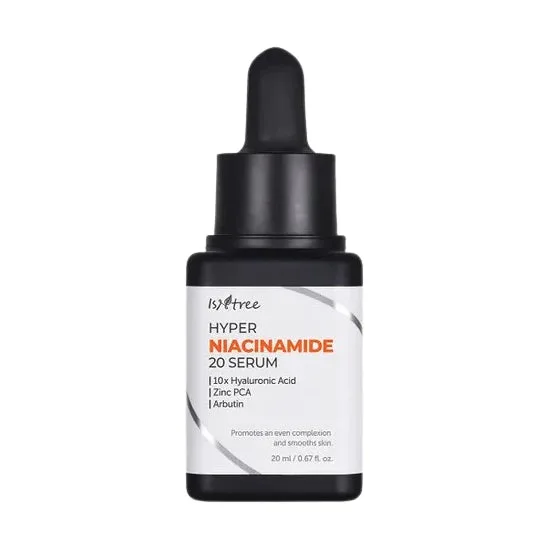
Most high-strength niacinamide serums stop at 10-15% and ship bare; this one pushes to 20% but pads the landing with nine hyaluronic forms, zinc and sodium PCA, purslane, and licorice — a maximal dose wrapped in the hydration architecture of a soothing serum. The arbutin co-star also makes it a genuine two-mechanism brightener rather than a single-note sebum tool.
The biggest niacinamide number on the K-beauty shelf, cushioned by nine hyaluronic forms and seconded by arbutin — a genuinely well-built maximalist serum for oily, pore-focused, pigment-bothered skin. Whether anyone needs 20% is a fair question the evidence doesn't flatter; that this is one of the safer ways to own it is harder to argue with.
The case for it
What would change this: Guideline or regulatory standing for the active on this concern would move this from a promising bet to a recommendation.
Same rule for everyone. “Promising” is the verdict on 7,858 of 45,024 concern verdicts across the catalog; rule R9p decided 7,858 of them. Unchanged since September 5, 2026, engine 5.1.1.
Brand or formulator? Disclose a concentration or correct a fact →
The studies behind the evidence row
The case for it
What would change this: Guideline or regulatory standing for the active on this concern would move this from a promising bet to a recommendation.
Same rule for everyone. “Promising” is the verdict on 7,858 of 45,024 concern verdicts across the catalog; rule R9p decided 7,858 of them. Unchanged since September 5, 2026, engine 5.1.1.
Brand or formulator? Disclose a concentration or correct a fact →
The studies behind the evidence row
The case for it
Same rule for everyone. “Good choice” is the verdict on 9,564 of 45,024 concern verdicts across the catalog; rule R5 decided 9,072 of them. Unchanged since September 5, 2026, engine 5.1.1.
Brand or formulator? Disclose a concentration or correct a fact →
The studies behind the evidence row
The case for it
What would change this: Guideline or regulatory standing for the active on this concern would move this from a promising bet to a recommendation.
Same rule for everyone. “Promising” is the verdict on 7,858 of 45,024 concern verdicts across the catalog; rule R9p decided 7,858 of them. Unchanged since September 5, 2026, engine 5.1.1.
Brand or formulator? Disclose a concentration or correct a fact →
The studies behind the evidence row
The case for it
What would change this: A declared concentration would move this to a firmer reading of the dose.
Same rule for everyone. “Promising” is the verdict on 7,858 of 45,024 concern verdicts across the catalog; rule R9p decided 7,858 of them. Unchanged since September 5, 2026, engine 5.1.1.
Brand or formulator? Disclose a concentration or correct a fact →
The studies behind the evidence row
Also listed for Rough Texture — the actives here (Niacinamide, Arbutin, Zinc, Licorice Root Extract) are in our research queue for that concern; there is no verdict until their evidence rows are written. That is a gap in our table, not a mark against the product.
Where our review and the verdict differ. The review below was written on the formulation and the published trials; the verdicts above apply the stricter standing test in our methodology — an active earns a recommendation only with guideline or regulatory standing for the concern. Where the two disagree, the verdict is DermApproved’s position.
A verdict is DermApproved’s assessment of how well a product’s ingredients fit a concern — never a claim about what the product treats. Evidence dots and collected reviews sit beside it and are never blended in. Rules 0.5.1 · evidence table ev-2026.09-r228 · how we decide
Skincare percentages behave like horsepower figures: nobody needs them all, everybody reads them first. Niacinamide is the category where the arms race ran hottest — the published research mostly lives at 2-to-5%, a famous budget serum planted its flag at 10% and built an empire on it, boutique brands leapfrogged to 15%, and Isntree's Hyper Niacinamide 20 sits at the top of the escalation with a number that sounds less like a formula and more like a dare. So let's ask the question the spec sheet is designed to skip: what does 20% niacinamide actually buy you that 5% doesn't? The honest answer — not much, by the evidence, and that's precisely why the rest of this formula matters more than its headline.
Start with what the literature does support, because it's substantial. Niacinamide at modest concentrations is one of the most versatile, best-tolerated actives in cosmetic science: controlled trials document reduced sebum output, improved barrier lipid production, softened fine lines, and — via interference with melanosome transfer from pigment cells to surface cells — a measurable fade in dark spots. Those benefits don't vanish at 20%; the issue is that almost no published work tests whether they improve. What demonstrably does climb with concentration is the flush lottery: warmth, tingling, and transient redness, likely tied to trace niacin conversion and vasodilation, appear far more often in the double-digit doses. A 20% serum is therefore less 'four times the results' and more 'the same results, delivered with a louder knock.'
Which is why the engineering around the number is the real review. Isntree, constitutionally incapable of shipping anything uncushioned, packed the remaining ingredient list like a crash-protection team. Nine hyaluronic forms — the brand's staggered-weight house platform — replace the water-tight feel that bare high-percentage solutions inflict. Zinc PCA and sodium PCA double down on sebum control while humectant-feeding the barrier. Purslane extract and licorice-derived dipotassium glycyrrhizate work the anti-inflammatory shift, and arbutin quietly turns the whole product into something more interesting than a sebum tool: a two-mechanism brightener. Niacinamide blocks pigment in transit; arbutin throttles it at the tyrosinase source. Run both daily under sunscreen and you're attacking post-acne marks and sun spots from opposite ends of the supply chain — the formula's smartest play, and the one the '20' on the box undersells.
In use, it's better behaved than its concentration suggests. The texture is a clear, cushioned gel-serum that settles without tack, layers under moisturizer and sunscreen cleanly, and smells like nothing. Oily and combination skin — the serum's natural constituency — typically sees the first payoff within two weeks as midday shine retreats; pore appearance follows over a month or two as oil throughput drops and the margins tighten optically. The acclimation tingle is real and usually temporary; the etiquette is to start three nights a week on dry skin and let tolerance build. Two quirks deserve pre-warning. The 20 ml dropper bottle is honest about dosing — two to three drops — but stingy about lifespan, emptying in six-to-eight weeks of devoted use. And at this percentage the niacinamide rides near its solubility ceiling, so heavy application plus a sweaty workout can recrystallize a faint white film on the skin — harmless, mildly comic, fixable with restraint. There's also a quiet compatibility note worth airing: the old internet rule that niacinamide and vitamin C cancel each other has been thoroughly retired, but at this concentration the practical advice survives for a different reason — stacking a maximal dose with low-pH ascorbic acid in the same sitting multiplies the odds of a stinging morning without multiplying any benefit. Split them across the day and both behave.
Who shouldn't be here is equally clear. Sensitive, rosacea-prone, and barrier-compromised skin gains nothing from the top shelf of the percentage race; the same benefits live at 5% with a fraction of the gamble, and a flush-prone face will find this serum keeps receipts. Beginners should treat it as a second or third niacinamide product, not a first. And anyone expecting the 20 to out-brighten a retinoid or out-fade azelaic acid on stubborn melasma is assigning it a job grade above its pay band — this is a maintenance-and-improvement serum, not a corrective procedure in a dropper.
Three years of market history have sorted the question the launch hype couldn't: the serum endures not because twenty beats ten, but because the package around the twenty is unusually competent. At $23 — and routinely near fifteen on sale — it prices like a mid-shelf serum while carrying flagship-strength actives, full INCI transparency, and the fungal-acne-safe, fragrance-free, vegan checklist that makes ingredient-literate shoppers relax. The fair verdict runs like this: as evidence-based medicine, the number is theater; as a product, the theater is staged on top of one of the better-built niacinamide serums you can buy for the money. Buy it for the formula. Let the 20 be the costume it arrived in.
The hero actives that drive this product's performance.
| Ingredient | Function | Evidence |
|---|---|---|
| Niacinamide 20% (20%) | Second only to water in this formula — a maximal dose handling sebum regulation, pore-appearance refinement, and pigment-transfer interference all at once, with the surrounding hyaluronic platform built specifically to cushion a concentration this assertive. | Emerging for Hyperpigmentation |
| Arbutin | The second brightening pathway: where the niacinamide blocks melanin transfer upstream, arbutin slows tyrosinase production at the source — a two-mechanism pincer on dark spots that neither ingredient manages alone. | Not yet assessed |
| Zinc PCA | Reinforces the sebum-control flank of the 20% niacinamide and brings PCA's native humectancy — a deliberate pick for the oily, pore-focused customer this serum courts hardest. | Limited for Excess Oiliness |
| 9-Type Hyaluronic Acid Complex | Isntree's staggered-weight HA roster acts as the shock absorber here, replacing the water that high-percentage actives tend to cost and keeping the formula wearable where bare 20% solutions feel tight. | Plausible mechanism for Dullness |
| Dipotassium Glycyrrhizate | Licorice-derived soother with its own modest brightening résumé, stationed alongside purslane extract to talk the skin down from a concentration that flirts with flush territory. | Limited for Hyperpigmentation |
Ingredient standings describe the active at treatment-level doses and vehicles; this product's own condition grades weigh its actual formula.
Water, Niacinamide, Dipropylene Glycol, Methylpropanediol, Propanediol, Arbutin, Glycerin, Zinc Pca, Sodium PCA, Portulaca Oleracea Extract, Sodium Hyaluronate, Sodium Acetylated Hyaluronate, Hydrolyzed Hyaluronic Acid, Hydrolyzed Sodium Hyaluronate, Hyaluronic Acid, Hydroxypropyltrimonium Hyaluronate, Potassium Hyaluronate, Sodium Hyaluronate Crosspolymer, Pinus Palustris Leaf Extract, Ulmus Davidiana Root Extract, Oenothera Biennis Flower Extract, Pueraria Lobata Root Extract, Ammonium Acryloyldimethyltaurate/VP Copolymer, Adenosine, Dipotassium Glycyrrhizate, Tromethamine, Butylene Glycol, Acrylates/C10-30 Alkyl Acrylate Crosspolymer, 1,2-Hexanediol, Hydroxyacetophenone
serum
AM & PM
Two or three drops onto dry or barely damp skin after toner — wet skin accelerates penetration and, at 20%, that's not a favor. Let it settle two minutes before moisturizer. If layering with vitamin C or acids, alternate AM/PM rather than stacking; sensitive routines should start three nights a week.
Sebum and shine usually quiet down inside two weeks; pore appearance and overall tone improvements typically read at four to eight weeks; dark-spot fading via the arbutin-niacinamide pincer is the slow arc — judge it at twelve weeks with daily sunscreen, not before.
Niacinamide's evidence base is among the deepest in cosmetic dermatology, but it's concentrated — literally — at the low end. Controlled studies at 2% have shown sebum reduction over two to four weeks; 4-5% formulations carry the bulk of the brightening literature, where niacinamide's inhibition of melanosome transfer from melanocytes to keratinocytes produced measurable improvements in hyperpigmentation and blotchiness across multiple randomized trials; and 5% data supports fine-line softening and barrier-lipid (ceramide) synthesis. Above 10%, the peer-reviewed trail thins dramatically — manufacturer studies and anecdote dominate, and the mechanistic case for a ceiling effect is reasonable: niacinamide's pathways (NAD+ precursor supply, transfer interference, barrier signaling) saturate, while vasodilatory flushing from trace niacin rises with dose. This formula's smarter scientific bet is the combination architecture. Arbutin, a glycosylated hydroquinone derivative, inhibits tyrosinase competitively with a long safety record at cosmetic doses, and pairing an upstream production brake with niacinamide's downstream transfer block is a rational, complementary pigment strategy supported by each ingredient's independent literature. Zinc PCA contributes small-study sebum-regulation data consistent with the formula's oily-skin focus; licorice glycyrrhizates and purslane bring documented anti-inflammatory activity that plausibly offsets high-dose tingle. The hyaluronic platform's multi-weight hydration logic is well covered elsewhere in this catalog and applies unchanged. Net read: every pillar is evidence-backed; only the headline number is running ahead of its citations.
When patients ask about the niacinamide percentage race, the clinical answer tends to deflate it: dermatologists overwhelmingly cite the 2-5% range where the trial data lives, and several prominent practitioners have publicly questioned double-digit formulas as marketing-led escalation with rising irritation cost and flat benefit. That said, high-strength niacinamide is regarded as a low-stakes gamble compared to overshooting on acids or retinoids — the failure mode is flushing and discontinuation, not damage. In practice, formulas like this are commonly positioned for oily, pigment-prone, non-sensitive patients who have already tolerated standard concentrations, often as a bridge for those who can't use retinoids or are pregnant and steering around other actives. Standard counseling pairs any brightening regimen with daily broad-spectrum sunscreen, since unprotected UV exposure regenerates the pigment faster than transfer-blocking can clear it.
Start slow: three evenings a week, two to three drops pressed onto clean, dry skin after toner, building to twice daily as tolerance proves out over a couple of weeks. Keep application thin — this is a concentration where more drops buy residue, not results — and follow with moisturizer once it settles. Mornings demand sunscreen without exception; you're running a brightening protocol, and UV undoes it faster than the serum builds it. Schedule strong acids and retinoids on alternate slots rather than stacking, skip it entirely on days your barrier feels angry, and expect the little bottle to need replacing around the two-month mark.
Twenty-three dollars for 20 ml is mid-shelf pricing for what is, by concentration math alone, the most active-dense niacinamide serum in mainstream K-beauty — and the frequent fifteen-dollar sale price pushes it into impulse territory. The honest per-month accounting is less flattering: daily two-to-three-drop use drains the small bottle in six to eight weeks, so the effective monthly cost lands near a larger 10% competitor's. You're paying for the arbutin second mechanism, the nine-form hydration cushion, and Isntree's formulation discipline more than for the extra percentage points, and that's the right reason to pay. For sensitive skin, the same money buys more comfort at lower strength elsewhere — value here is real but conditional on your skin's tolerance.
Oily, combination, and pigment-prone skin that has already graduated from standard-strength niacinamide and wants maximum sebum-and-spot coverage in one fragrance-free, fungal-acne-safe dropper. Spec-sheet enthusiasts get the biggest number on the shelf wrapped, for once, in genuinely protective formulation.
Sensitive, rosacea-prone, and barrier-compromised skin — the flush lottery isn't worth a benefit the 5% tier already delivers. Niacinamide first-timers should start lower, melasma sufferers need clinical-grade tools, and anyone who hates repurchasing will resent the 20 ml bottle's pace.
Ready to try Isntree Hyper Niacinamide 20 Serum?
Buy at Amazon ♥A clear, medium-viscosity gel-serum that spreads with short slip and settles to a soft, hydrated tack-free finish — denser than the brand's watery hydrators but far from syrupy.
Nothing perceptible; the formula is fragrance-free and odor-neutral in use.
A 20 ml glass dropper bottle — precise for the two-to-three-drop dosing this concentration warrants, though the small format makes heavy users frequent repurchasers.
Expect a mild warmth or tingle in the first applications — common at this percentage and usually fading as skin acclimates over a week or two. A genuine hot flush that persists past twenty minutes is the off-ramp signal. Oil control is often the first visible payoff, arriving before any pigment changes.
Six to eight weeks at two to three drops twice daily — the trade-off of a 20 ml bottle.
All Year
The Hyper line is Isntree's concentration-forward sub-brand — born with the Hyper Retinol EX series — and this serum arrived in 2023 as its answer to the niacinamide percentage race that The Ordinary's famous 10% formula kicked off. Isntree's wager: win the spec sheet, but cushion the dose with the brand's signature hydration platform.
Isntree's Hyper line is the assertive wing of an otherwise gentleness-first brand founded in 2014 — maximal single-active concentrations balanced with the company's house hydration platform. The brand publishes full INCI disclosure and has built a decade-long record across hydration, sun care, and functional actives.
Twenty percent niacinamide works twice as hard as ten percent.
The published evidence clusters at 2-5%, where most of niacinamide's benefits — sebum regulation, barrier support, pigment-transfer interference — are already documented. Above that, data is thin and gains appear marginal while flush risk climbs. The 20 here buys headroom and marketing, not doubled results.
A tingling or flushing reaction means you're allergic to niacinamide.
Transient warmth at high concentrations usually traces to trace niacin conversion and vasodilation, not allergy — it commonly fades with acclimation. Persistent burning, itching, or hives is a different signal worth honoring. Allergy to niacinamide itself is rare.
For resilient oily and combination skin, daily use is generally fine after a short acclimation period — start three nights weekly. Sensitive and barrier-compromised skin genuinely doesn't need this much; the research sweet spot sits at 2-5%, and a gentler formula will deliver most of the same benefits with none of the flush roulette.
It attacks pigment from two directions — niacinamide interrupts melanin transfer to surface cells while arbutin slows melanin production at the tyrosinase level. Expect gradual softening of post-acne marks and sun spots over eight to twelve weeks with daily SPF, not an eraser effect.
At 20%, niacinamide sits near its solubility ceiling — sweat can recrystallize a fine white film where the serum was applied heavily. It's cosmetic, not harmful; using fewer drops, pressing it in fully, and keeping it to non-gym mornings solves it.
The old niacinamide-vitamin C incompatibility is largely debunked, but stacking a 20% dose with strong acids or ascorbic acid in one sitting raises irritation odds for no added benefit. The comfortable pattern: vitamin C in the morning, this serum at night, acids on alternate evenings.
Sebum reduction is its most reliable visible win — usually within two weeks — and less oil plus better elasticity at the pore margins makes pores look tighter over a month or two. Structurally smaller pores aren't on offer from any topical, this one included.
Niacinamide is broadly considered pregnancy-compatible, and arbutin's slow tyrosinase action is generally regarded as low-risk — but high-concentration actives during pregnancy are worth a quick conversation with your OB or dermatologist, who may prefer azelaic acid for pigment concerns.
Recurring themes our editors read across retailer reviews of this product — summaries in our words, not quotations, and not a substitute for your own patch test.
visible pore and shine reduction within weeks
no tightness thanks to the hyaluronic cushion
unbeatable price for the concentration
can leave white residue when sweating or over-applied
tingles or flushes on sensitive skin
tiny 20ml bottle empties fast with daily use
Verified answers from our questions library — the nuance a product page cannot carry.