




Signs Your Skin Barrier Is Damaged — and the Real Repair Timeline
'Barrier damage' has become the internet's all-purpose diagnosis. It's also a real, specific condition with a specific and slightly boring cure: mostly, stop doing things.

This cream delivers the full physiologic lipid triad — ceramides, cholesterol, and free fatty acids — at 6310 ppm disclosed ceramide concentration, in a 200ml tub priced under $25. That combination of complete barrier architecture and drugstore pricing is genuinely rare; most full-triad creams are either premium priced or single-lipid formulations.
A genuinely excellent ceramide cream that delivers the full physiologic lipid triad — ceramides, cholesterol, and fatty acids — in a 200ml tub for around $22. Rich enough to handle winter and atopic-prone skin, gentle enough for babies, and cheap enough that you don't have to ration it. One of the best value barrier creams in the entire K-beauty category.
The case for it
What would change this: Trial evidence for the active on this concern would move this from a bet to a recommendation.
Same rule for everyone. “Supporting role” is the verdict on 8,197 of 45,024 concern verdicts across the catalog; rule R8a decided 1,489 of them. Unchanged since September 5, 2026, engine 5.1.1.
Brand or formulator? Disclose a concentration or correct a fact →
The studies behind the evidence row
The case for it
Same rule for everyone. “Good choice” is the verdict on 9,564 of 45,024 concern verdicts across the catalog; rule R5 decided 9,072 of them. Unchanged since September 5, 2026, engine 5.1.1.
Brand or formulator? Disclose a concentration or correct a fact →
The studies behind the evidence row
The case for it
Same rule for everyone. “Good choice” is the verdict on 9,564 of 45,024 concern verdicts across the catalog; rule R5 decided 9,072 of them. Unchanged since September 5, 2026, engine 5.1.1.
Brand or formulator? Disclose a concentration or correct a fact →
The studies behind the evidence row
The case for it
What would change this: A researched evidence row for the lead active would replace this with a verdict.
Same rule for everyone. “Good choice” is the verdict on 1,938 of 45,024 concern verdicts across the catalog; rule F2 decided 1,938 of them. Unchanged since September 5, 2026, engine 5.1.1.
Brand or formulator? Disclose a concentration or correct a fact →
The case for it
What would change this: A researched evidence row for the lead active would replace this with a verdict.
Same rule for everyone. “Supporting role” is the verdict on 8,197 of 45,024 concern verdicts across the catalog; rule R8 decided 4,250 of them. Unchanged since September 5, 2026, engine 5.1.1.
Brand or formulator? Disclose a concentration or correct a fact →
Does the jobDoes what a moisturizer is for: draws in water, supplies barrier lipids.
A verdict is DermApproved’s assessment of how well a product’s ingredients fit a concern — never a claim about what the product treats. Evidence dots and collected reviews sit beside it and are never blended in. Rules 0.5.1 · evidence table ev-2026.09-r228 · how we decide
Barrier repair creams get complicated in a specific way. The skin's stratum corneum builds its waterproofing layer using roughly equal parts ceramides, cholesterol, and free fatty acids — a three-lipid architecture that forms the actual mortar between your skin cells. Most moisturizers, even expensive ones, include only one or two of those three lipids and hope the skin figures out the rest. The research is clear that the full triad outperforms any single-lipid approach, because a damaged barrier needs all three components to rebuild properly, and missing any one of them slows the recovery down. Creams that deliver the complete triad at meaningful concentrations are surprisingly rare. Creams that do it at drugstore prices are almost unheard of.
Illiyoon Ceramide Ato Concentrate Cream is the rare exception, and it's been doing it since 2014. Amorepacific launched Illiyoon as a dedicated barrier-repair brand specifically to serve the Korean market for atopic dermatitis management, and this cream has been the flagship of the Ceramide Ato line from the start. Read the INCI and the architecture clicks into place: hydroxypropyl bispalmitamide MEA — a synthetic pseudo-ceramide mimicking ceramide NP — at a disclosed 6310 ppm, which is 0.631%, a meaningful clinical concentration. Stearic acid and palmitic acid provide the free fatty acid layer. Cholesterol sits lower in the list but present. That's the full triad in a single formula.
The pseudo-ceramide choice is interesting. PC-104 is a synthetic analog developed specifically because natural ceramides are expensive to isolate and stabilize in cosmetic formulations. Research has shown it performs similarly to natural ceramides in barrier repair metrics, and the fact that the exact concentration is printed in the INCI rather than buried anonymously suggests real confidence in the number. Natural ceramide purists will prefer formulas that use ceramide NP directly, but for practical barrier results on most users, the pseudo-ceramide route delivers comparable benefits at a fraction of the formulation cost — which is precisely what makes a tub this size possible at this price.
The supporting cast is quietly sensible. Butylene glycol and glycerin do the humectant work; cetyl ethylhexanoate, pentaerythrityl tetraisostearate, and behenyl alcohol build the emollient body; alkyl glucosides and arachidyl alcohol emulsify without harsh surfactants; and glyceryl caprylate and ethylhexylglycerin handle preservation gently enough for a formula intended for reactive skin. A short botanical bench — ginseng root, magnolia flower, perilla seed — sits mid-list, and a lactobacillus/soybean ferment adds a mild postbiotic soothing note. Silica and mannitol keep the finish from turning slick. Nothing here is chasing a headline, which for an atopic-facing cream is the entire point.
Texture-wise, the cream sits in the rich-but-not-heavy register. It spreads with a noticeable silicone-cushioned slip from the cyclopentasiloxane and cyclohexasiloxane, which some users love and some find slightly slippery on application. The silicones are there for a reason — they help spread the physiologic lipids evenly and seal in the formula after application, and they are biologically inert; the persistent idea that they suffocate skin has never had evidence behind it. Absorption takes about 60 to 90 seconds, and the final finish is velvety and soft rather than greasy. No tingling, no burning, no scent to speak of, no adjustment period. The wide-mouth tub comes with a spatula, which is worth actually using — dipping fingers into a 200ml pot you'll be reaching for twice a day, sometimes on broken skin, is how a clean formula stops being clean.
Performance on target users — dry skin, atopic-prone skin, winter-damaged skin, barrier-compromised skin after over-exfoliation — is exactly what the ingredient architecture predicts. Skin feels immediately more comfortable after application. Over a week or two of consistent use, the tight-dry cycle that atopic patients know well starts to break, with reduced flare frequency and longer stretches of comfortable skin; by four to six weeks the improvement reads less like relief and more like a baseline. This isn't a miracle cream, but it does the thing it claims to do, consistently, and at a volume that means you can apply it generously instead of doling it out like gold leaf. It layers under sunscreen without pilling, sits happily on top of niacinamide or peptide serums, and doubles as a body cream on elbows, shins, and hands. There is no active in it that conflicts with anything else in a routine, which is a rarer property than it sounds.
Another thing worth dispelling: an atopic rating is not a restriction. A cream tolerable for the most reactive skin on the planet is, by definition, a low-risk daily moisturizer for anyone with normal-to-dry skin who simply doesn't want to gamble. The Ato name signals the ceiling of gentleness, not a narrow lane of use.
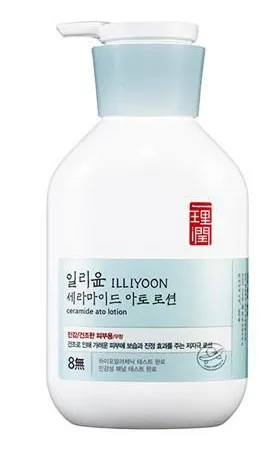
The places it doesn't shine: oily skin, acne-prone skin, and people who genuinely prefer a light gel moisturizer. The lipid loading is real, and while it isn't technically heavy, it's richer than an oily-combination face needs year-round. The cetyl ethylhexanoate is mildly comedogenic for very reactive skin, and the formula isn't fungal-acne safe. Illiyoon's own Ceramide Ato Lotion is the appropriate lighter alternative from the same line — same barrier philosophy, lighter emulsion. The Concentrate Cream is for dry, sensitive, or cold-weather skin specifically. It's also not certified cruelty-free, and outside Korea it mostly turns up through K-beauty retailers rather than local shelves, which adds a shipping wait to any restock.
The value proposition is where the cream becomes genuinely remarkable. Around $22 for 200ml — nearly seven ounces — puts the per-ounce cost far below what complete physiologic-lipid creams typically command, and a tub runs three to four months of nightly facial use, or six to eight weeks if you're also attacking dry patches on the body. The pricing question isn't really whether this is worth the money. It's what, exactly, you'd be paying for elsewhere. With more than twenty thousand reviews behind it and an average that has barely moved in a decade, users consistently describe the same three things: rich without greasiness, fast at calming a flare, and cheap enough to keep in every bathroom in the house.
Families dealing with pediatric eczema, anyone living through a genuinely cold winter with chronically dry skin, retinoid users who need a serious recovery moisturizer, and K-beauty enthusiasts who want a cornerstone cream without premium pricing should all be reaching for this tub. It's not glamorous. It's not TikTok famous. It's just very, very good at the exact job it was designed for.
The hero actives that drive this product's performance.
| Ingredient | Function | Evidence |
|---|---|---|
| Pseudo-Ceramide PC-104 (6310 ppm) (0.631%) | The core active disclosed by exact concentration — 6310 ppm of a synthetic ceramide analog that mimics ceramide NP's barrier function at a cost-effective level, which is how this cream reaches its moisturizing performance without the premium pricing of natural-ceramide formulas. | Established mechanism for Dryness · established mechanism |
| Stearic & Palmitic Acid | Paired free fatty acids that supply the lipid third of the physiologic barrier triad alongside the ceramides and cholesterol in this formula — giving the cream a complete stratum corneum mimicry that single-lipid moisturizers can't match. | Not yet assessed |
| Cholesterol | The third physiologic lipid that completes the ceramide-cholesterol-fatty acid triad proven to accelerate barrier repair. Its inclusion in a sub-$25 cream is what sets this product apart from most K-beauty moisturizers in the same price tier. | Not yet assessed |
| Lactobacillus/Soybean Ferment Extract | A fermented postbiotic that adds a mild soothing and skin-conditioning effect, chosen here to work with the barrier lipids on atopic-prone and sensitive skin without adding a fragrance or botanical irritation profile. | Not yet assessed |
Ingredient standings describe the active at treatment-level doses and vehicles; this product's own condition grades weigh its actual formula.
Purified Water, Butylene Glycol, Glycerin, Cetyl Ethylhexanoate, Pentaerythrityl Tetraisostearate, Stearic Acid, Cyclopentasiloxane, Palmitic Acid, Behenyl Alcohol, Panax Ginseng Root Extract, Magnolia Biondii Flower Extract, Perilla Ocymoides Seed Extract, Lactobacillus/Soybean Ferment Extract, Hydroxypropyl Bispalmitamide MEA (Ceramide Pc-104 6310Ppm), C12-20 Alkyl Glucoside, C14-22 Alcohols, Glyceryl Caprylate, Dimethiconol, Mannitol, Cyclohexasiloxane, Silica, Arachidyl Glucoside, Arachidyl Alcohol, Acrylates/Ammonium Methacrylate Copolymer, Ethylhexylglycerin, Cholesterol, Polysorbate 20, Polyacrylate-13, Polyisobutene, Propanediol
moisturizer
AM & PM
Apply as final step of skincare, or use as a heavy-duty treatment on dry patches. Can be layered over a lighter lotion in winter or used alone. Works on face and body.
Immediate comfort and softness. Barrier repair metrics improve within 1-2 weeks of consistent use. Long-term eczema and dryness management becomes evident at 4-6 weeks.
The physiologic lipid triad — ceramides, cholesterol, and free fatty acids — is the most robustly supported barrier repair strategy in modern dermatology. Research reported in the Journal of Investigative Dermatology by Elias and colleagues demonstrated that the stratum corneum's lipid matrix requires all three components in approximately equimolar ratios for optimal barrier function, and that topical application of a balanced triad accelerates barrier recovery more effectively than single-lipid or incomplete-lipid formulations. A follow-up study specifically showed that missing any one component of the triad significantly impaired repair in barrier-disrupted skin. The Illiyoon Concentrate Cream delivers this triad through a combination of Hydroxypropyl Bispalmitamide MEA (Ceramide PC-104), cholesterol, and stearic/palmitic free fatty acids. PC-104 is a synthetic pseudo-ceramide developed for cosmetic formulations; research published in Experimental Dermatology has shown that it mimics the biological activity of natural ceramide NP in barrier repair assays, providing a cost-effective alternative to isolated ceramides. The disclosed concentration of 6310 ppm (0.631%) is within the range shown to produce measurable barrier effects in comparable clinical studies. The formula also includes Lactobacillus/Soybean ferment extract, which provides postbiotic benefits whose specific mechanism is less well characterized but which has shown mild soothing effects in some sensitivity studies. Silicones, while biologically inert, contribute to the occlusive seal that allows the physiologic lipids to remain on the skin long enough to integrate into the stratum corneum rather than evaporating away.
Dermatologists specializing in atopic dermatitis and barrier repair frequently recommend Illiyoon's Ceramide Ato line as a budget-friendly alternative to prestige barrier creams, and the Concentrate Cream specifically is often cited as a practical choice for pediatric atopic management. Dermatology professionals generally highlight that the inclusion of the full physiologic lipid triad is the key differentiator from cheaper single-lipid creams, and that the disclosed pseudo-ceramide concentration is unusually transparent for the category. The standard caveat from dermatology is that atopic flares and severe eczema still require prescription topicals as first-line treatment, and that barrier creams like this one function as maintenance support rather than treatment. For most daily barrier maintenance, retinoid recovery, and winter dryness, this is a commonly recommended option.
Apply to clean, damp skin as the final step of your skincare routine, or before sunscreen in the morning. Use the spatula to dispense a small amount and warm between palms before pressing into face, neck, and any dry areas. Can also be used as an intensive moisturizer on elbows, knees, and dry body patches. Safe for twice-daily use. Compatible with retinoids, vitamin C, and most other actives. For severely compromised barrier recovery, apply a thick layer at night and allow it to absorb overnight.
At around $22 for 200ml, this is one of the most cost-effective physiologic-lipid creams available. Comparable full-triad creams from Dr. Jart+, EltaMD, or SkinCeuticals run $40-80 for smaller volumes. Single-lipid ceramide creams from CeraVe or La Roche-Posay offer similar pricing but without the complete lipid architecture. The 200ml tub size is the flagship; smaller 100ml and pump-format options exist but the 200ml has the best per-ounce value. From a brand heritage perspective, Illiyoon's backing by Amorepacific adds research credibility that most drugstore-priced creams lack. This is genuinely one of the clearest value wins in the barrier category.
Dry, sensitive, and atopic-prone skin types who want a serious barrier cream without premium pricing. Families with eczema-prone children, retinoid users needing recovery support, and anyone living in cold dry climates who wants a reliable winter staple.
Oily and acne-prone skin types who find rich creams uncomfortable, users who prefer silicone-free formulations, and those seeking a natural-ceramide-only product. The Ceramide Ato Lotion from the same line is the better lighter alternative.
Ready to try Illiyoon Ceramide Ato Concentrate Cream?
Buy at Amazon ♥Rich emulsion cream with a slightly silicone-cushioned slip
Fragrance-free, very faint clinical base note
Wide-mouth tub with inner seal, utilitarian ivory design
Scoops cleanly with the included spatula. Spreads easily with a cushioned slip from the dimethicone and silicone blend, absorbs to a soft velvety finish within 60-90 seconds. No tingling, no burning, no scent. First impression is immediate comfort on dry or tight skin.
3-4 months with nightly full-face use, 6-8 weeks if using for full body on dry patches
fall winter
Amorepacific launched Illiyoon in 2013 to address the growing Korean market for atopic-dermatitis-friendly skincare, drawing on the parent company's barrier research. The Concentrate Cream debuted within the first year as the flagship of the Ceramide Ato line and has remained largely unchanged since, which in K-beauty is itself a statement of confidence.
Illiyoon launched in 2013 as Amorepacific's dedicated barrier-repair K-beauty line. The Ceramide Ato Concentrate Cream has been one of the brand's flagship products for over a decade and is widely referenced in Korean atopic-skin management resources.
Expensive ceramide creams always work better
Ceramide concentration and accompanying lipid architecture matter more than price. This cream's disclosed 6310 ppm pseudo-ceramide plus cholesterol and fatty acid pairing delivers barrier performance comparable to creams three times the price.
Atopic-rated creams can't be used as regular moisturizers
Atopic ratings mean the formula is tolerable for the most reactive skin — which also makes it a safe, effective choice for any normal-to-dry skin type looking for a minimal-irritation daily moisturizer.
The formulas are broadly similar in barrier intent, but Dr. Jart+ uses natural ceramides at a higher price point, and Illiyoon uses a pseudo-ceramide (PC-104) at a disclosed 6310 ppm. For most users the practical performance is close, and the Illiyoon costs significantly less per ounce.
Cautiously. The cream is rich and contains cetyl ethylhexanoate, which is mildly comedogenic for some. If you're acne-prone, the Illiyoon Ceramide Ato Lotion may be a better lighter alternative from the same line.
Yes — the formula contains no added fragrance. It has a very faint clinical base note from the silicones and lipids, but nothing that should trigger fragrance sensitivities.
Yes. Illiyoon designs the Ceramide Ato line to be safe for infant use, and this cream is widely used for pediatric eczema management in Korea. As always, consult a pediatrician for severe atopic conditions.
Yes. The tub format and rich texture make it practical for dry body areas like elbows and knees, and the formula is gentle enough for facial use. Many users apply it both ways for full barrier coverage during cold months.
Yes. It contains cyclopentasiloxane, cyclohexasiloxane, and dimethiconol, which contribute to its velvety slip and help seal in hydration. Silicones are rinse-off and biologically inert — they don't 'clog pores' as myths suggest.
Recurring themes our editors read across retailer reviews of this product — summaries in our words, not quotations, and not a substitute for your own patch test.
Rich without feeling greasy
Calms eczema flares quickly
Works for whole family
Affordable large tub format
Too rich for oily skin
Slight initial silicone slip
Plain clinical scent profile
Verified answers from our questions library — the nuance a product page cannot carry.