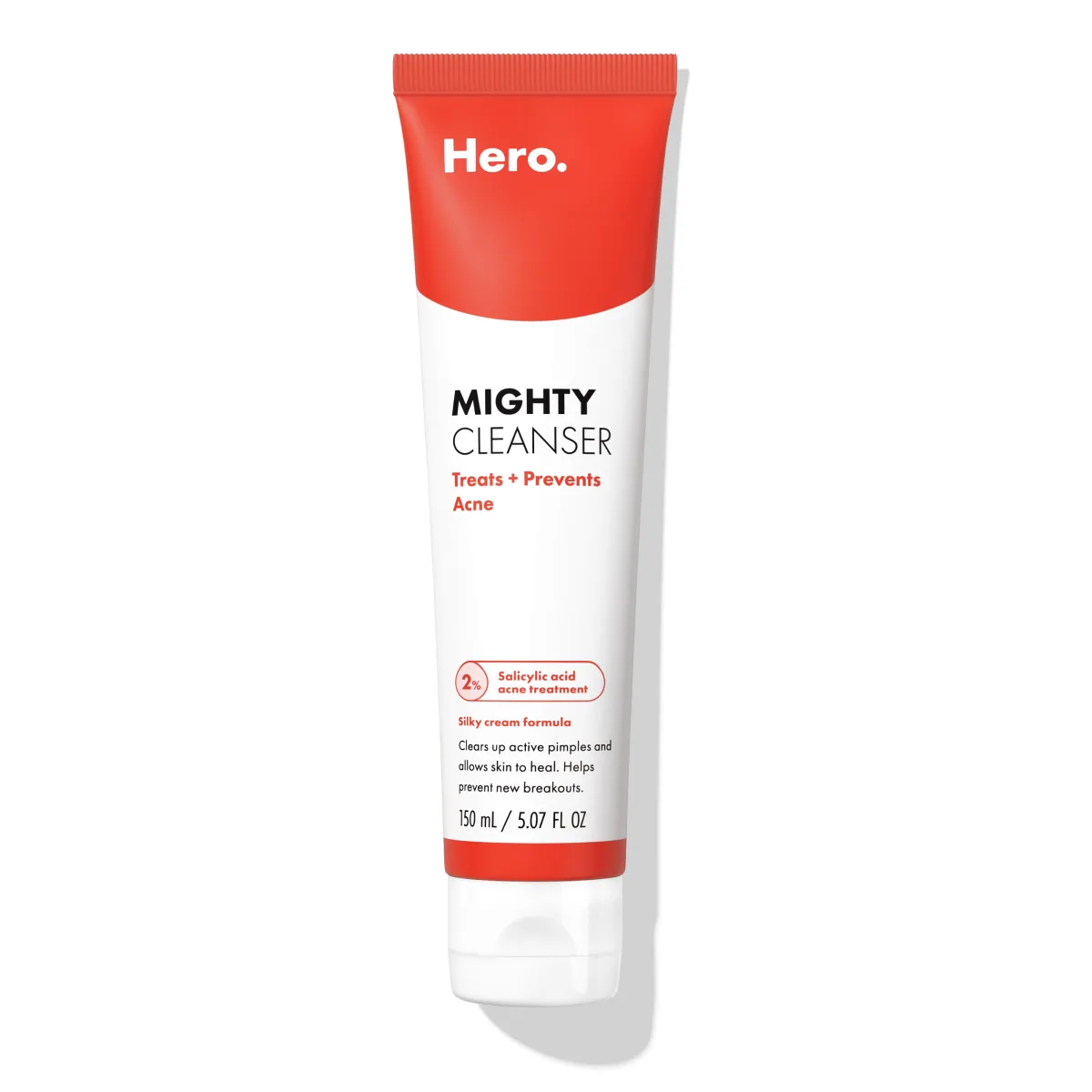
Most 2% salicylic acid washes deliver the acid in a clear, high-foam sulfate or sulfosuccinate gel and accept the tightness that comes with it; Hero built this one as a low-foam amine-oxide cream with glycerin and sodium PCA, so the monograph-maximum dose arrives in a texture that reads as a cream cleanser. It is a patch brand's first proper OTC drug wash, priced at the bottom of the category.
A full two percent salicylic acid acne wash that feels like a cream cleanser, fragrance-free and under eleven dollars, from a brand that finally got round to the step before the patch. It does the daily maintenance job well for oily and combination skin, but it is three months old with barely a hundred reviews, and dry or reactive faces will find even this gentle base too much twice a day.
Three months on the market and a little over a hundred reviews at a single retailer are not enough to say how this wash behaves across many skin types over a full season, and Hero's 171-person panel measured feel, not lesion counts. The judgement here is built on the disclosed OTC label, the surfactant chemistry, and decades of trial data on two percent salicylic acid washes in general rather than on this product specifically; where it lands on long-term breakout control is still to be seen.
Verdicts
How well it fits each concern
Verdict by concern tap a concern for the case
Good choicefor AcneIn your profileYou chose · Salicylic Acid is an approved or monograph active for acne; this rinse-off cream carries it at 2% — short contact still counts for this active, but a leave-on does more.Moderate evidenceGentleNo reviews collected yet
The case for it
Salicylic Acid is a first-line active — approved, monograph-listed or named in current guidelines — for this concern.
It is present at an effective concentration, declared or high in the ingredient list.
The formula carries none of the triggers this concern is sensitive to.
Same rule for everyone. “Good choice” is the verdict on 9,564 of 45,024 concern verdicts across the catalog; rule R2r decided 408 of them.
As of September 25, 2026, engine 5.1.1.
R2r — Rinse-off exceptions (BPO wash, salicylic acid cleanser) deliver a real but smaller effect than the leave-on form; they cap at 'good choice'. Medicated shampoos for scalp concerns are exempt — the shampoo is the treatment form. Editorial decision 2 Sep 2026, pending advisory review. · the full register
Carrying active
Salicylic Acid
Standing
first line — a regulator recognises it for this use; trials support it · per § 333.310 Acne active ingredients. (U.S. Food and Drug Administration — 21 CFR Part 333 Subpart D (Topical Acne Drug Products), Code of Federal Regulations via GovInfo), opened July 27, 2026
Form
adequate (declared 2%) — studied range 0.5–2%, from the OTC monograph or label; judge it after ~6 weeks
Tolerability
gentle
Row checked
against its sources on July 27, 2026 (evidence table ev-2026.09-r228)
Good choicefor BlackheadsIn your profileYou chose · Salicylic Acid is an approved or monograph active for blackheads; this rinse-off cream carries it at 2% — short contact still counts for this active, but a leave-on does more.Moderate evidenceGentleNo reviews collected yet
The case for it
Salicylic Acid is a first-line active — approved, monograph-listed or named in current guidelines — for this concern.
It is present at an effective concentration, declared or high in the ingredient list.
The formula carries none of the triggers this concern is sensitive to.
Same rule for everyone. “Good choice” is the verdict on 9,564 of 45,024 concern verdicts across the catalog; rule R2r decided 408 of them.
As of September 25, 2026, engine 5.1.1.
R2r — Rinse-off exceptions (BPO wash, salicylic acid cleanser) deliver a real but smaller effect than the leave-on form; they cap at 'good choice'. Medicated shampoos for scalp concerns are exempt — the shampoo is the treatment form. Editorial decision 2 Sep 2026, pending advisory review. · the full register
Carrying active
Salicylic Acid
Standing
first line — a regulator recognises it for this use; trials support it · per 21 CFR § 333.350 - Labeling of acne drug products. (US Code of Federal Regulations (Legal Information Institute, Cornell Law School)), opened July 27, 2026
Form
adequate (declared 2%) — studied range 0.5–2%, from the OTC monograph or label; judge it after ~6 weeks
Tolerability
gentle
Row checked
against its sources on July 27, 2026 (evidence table ev-2026.09-r228)
The studies behind the evidence row
OTC monograph, Topical Acne Drug Products — salicylic acid 0.5–2% recognized as an acne treatment active — US Food and Drug Administration
Supporting rolefor Excess OilinessIn your profileYou chose · Rinse-off cream: Salicylic Acid gets seconds of contact, so this supports a routine for excess oiliness rather than treating it.Moderate evidenceGentleNo reviews collected yet
The case for it
Salicylic Acid has early or mechanistic evidence for this concern, not trial-backed standing.
It is in a rinse-off product, so it gets seconds of contact rather than the leave-on exposure the evidence assumes.
The formula carries none of the triggers this concern is sensitive to.
What would change this: The same active in a leave-on form would be judged on its evidence rather than its contact time.
Same rule for everyone. “Supporting role” is the verdict on 8,197 of 45,024 concern verdicts across the catalog; rule R6 decided 2,017 of them.
As of September 25, 2026, engine 5.1.1.
R6 — Contact time cannot deliver a leave-on claim; the product is judged on its job (cleansing without aggravating). Explicit exceptions (BPO wash, SA cleanser, medicated shampoos) never reach this rule because their rows set rinse_off_ok. · the full register
Carrying active
Salicylic Acid
Standing
plausible — trials support it
Form
contact limited — studied range 30%, from the trials on the row; needs leave-on contact; judge it after ~6 weeks
Tolerability
gentle
Row checked
against its sources on July 17, 2026 (evidence table ev-2026.09-r228)
Supporting rolefor Large PoresIn your profileYou chose · Rinse-off cream: Salicylic Acid gets seconds of contact, so this supports a routine for large pores rather than treating it.Not yet assessedGentleNo reviews collected yet
The case for it
Salicylic Acid has been researched for this concern and the evidence does not support it.
It is in a rinse-off product, so it gets seconds of contact rather than the leave-on exposure the evidence assumes.
The formula carries none of the triggers this concern is sensitive to.
What would change this: The same active in a leave-on form would be judged on its evidence rather than its contact time.
Same rule for everyone. “Supporting role” is the verdict on 8,197 of 45,024 concern verdicts across the catalog; rule R6 decided 2,017 of them.
As of September 25, 2026, engine 5.1.1.
R6 — Contact time cannot deliver a leave-on claim; the product is judged on its job (cleansing without aggravating). Explicit exceptions (BPO wash, SA cleanser, medicated shampoos) never reach this rule because their rows set rinse_off_ok. · the full register
Carrying active
Salicylic Acid
Standing
none
Form
contact limited — studied range 0.5–2%, from the OTC monograph or label; needs leave-on contact; judge it after ~6 weeks
Does the jobDoes what a cleanser is for: surfactant mildness, rinses clean without stripping. Not measured from the label: pH match to skin.
A verdict is DermApproved’s assessment of how well a product’s ingredients fit a concern — never a claim about what the product treats. Evidence dots and collected reviews sit beside it and are never blended in.
Rules 0.5.1 · evidence table ev-2026.09-r228 · how we decide
Assessment
Pros & Cons
Pros
✓ Full monograph 2% salicylic acid in a rinse-off acne drug wash
✓ Low-foam amine-oxide cream base leaves skin matte without tightness
✓ Glycerin and sodium PCA sit high enough to offset the acid
✓ Fragrance-free, alcohol-free and free of parabens and silicones
✓ Under eleven dollars for 150 mL, cheapest in its class
✓ Rinses clean so hydrocolloid patches adhere afterwards
✓ Modern preservative system without formaldehyde releasers
Cons
✗ Twice-daily use dries combination cheeks within a couple of weeks
✗ Low lather disappoints anyone expecting a foaming acne wash
✗ Rinse-off format limits how deep the salicylic acid can work
✗ Launched July 2026, with only a thin review record so far
✗ Flip-cap tube has no pump and needs squeezing near the end
✗ Potassium cocoate soap adds alkalinity dry skin will notice
Review
Full Review
Hero Cosmetics spent nearly a decade being the brand you reached for after the breakout had already happened. The Mighty Patch made hydrocolloid stickers a category, the Rescue Balm mopped up afterwards, and the toners and serums that followed were still, in spirit, damage control. What the range never had was the boring, twice-daily wash that decides whether the patch gets used at all. In July 2026 Hero launched three cleansers at once, and the Mighty Cleanser is the one that carries the flagship name and the drug-facts label: two percent salicylic acid, the ceiling for an over-the-counter acne wash, in a cream that behaves nothing like the foams that usually carry that dose.
That texture decision is the whole story of the formula. The surfactant base is cocamidopropylamine oxide leading cocamidopropyl betaine, with potassium cocoate soap and coco-glucoside further down, a low-foam system that builds a dense, cushiony lather rather than a mountain of bubbles. Glycerin, propanediol and sodium PCA sit high enough on the list to matter, which is unusual for an acne wash and is why the skin comes out of the sink matte but not tight. Polyacrylate crosspolymer-6 and a styrene/acrylates copolymer give the cream its pearly body, and the preservative system is a modern one, caprylhydroxamic acid with polyepsilon-lysine and sodium benzoate, no parabens, no alcohol, no fragrance, no colour. Church & Dwight, the parent company since 2022, makes monograph drugs for a living, and the label reads like it: clean, complete, and free of the decorative botanicals that acne washes sometimes use to look kinder than they are.
The salicylic acid is doing what salicylic acid can do in a rinse-off format, which is a real but bounded amount. On the skin for thirty to sixty seconds, the acid loosens the top of the follicle plug, helps oil and dead cells lift with the surfactants, and leaves the pore opening a little clearer each day. Trials of two percent salicylic acid washes have shown genuine reductions in comedones and in total lesion counts over four to twelve weeks, and one of the oldest comparisons in the literature found a salicylic acid cleanser outperforming a benzoyl peroxide wash specifically on comedones. What a wash cannot do is deliver the deep, sustained follicular exfoliation of a leave-on liquid, so the honest framing, and to Hero's credit the brand's own framing, is prevention and daily maintenance. The Mighty Cleanser keeps the surface clear so that fewer clogs mature; it does not replace a leave-on treatment for anyone with more than mild acne.
In use, it is quietly pleasant. A small squeeze on damp hands produces a soft white cream that spreads without dragging, lathers modestly, and rinses in a couple of splashes with no slick residue. Skin feels clean and slightly cool, and on oily skin the difference is noticeable by mid-afternoon, when the T-zone shine arrives later and lighter than usual. A faint tingle around the nose and chin in the first week is the acid announcing itself and is nothing to worry about. Hero's consumer panel of 171 people, which measured feel rather than acne counts, reported that nearly nine in ten found their skin soft, smooth and less oily after washing, and that tracks with the texture; it is the kind of acne wash people keep using because it does not punish them for it.
The limitations are the ones built into the category. Two percent salicylic acid twice a day is a lot of exfoliation for combination skin, and cheeks that are already dry from a retinoid will start to feel tight and flaky within a couple of weeks if the wash is used morning and night; once a day, in the evening, is the sensible starting point for anyone who is not straightforwardly oily. Rosacea-prone or barrier-compromised skin should treat it as a no, cream base or not, because the acid plus a soap-containing surfactant system is still more than that skin wants. The lather will disappoint anyone who equates foam with clean, and the flip-cap tube, while tidy, has no pump and needs squeezing towards the end. And the product is three months old: the hundred-and-twenty-odd reviews at Target are warm but thin, Ulta had none at the time of writing, and there is no long-run record yet of how it performs over a full season of breakouts.
At ten ninety-nine for 150 millilitres, the price is at the bottom of the salicylic acid wash category and well under the going rate for a cream-based one. A tube lasts two and a half to three months at twice daily, longer at once, so the yearly cost is trivial; the value case is strong, and it rests on a formula rather than on the brand's name recognition. Hero's track record is with patches, not washes, and the assessment here leans on the published label and on the well-worn literature for its active rather than on brand-run efficacy trials, which Hero does not publish.
For oily or combination skin with mild, recurring breakouts and blackheads, this is an easy recommendation as the daily wash in a routine that also carries a leave-on treatment and a decent moisturiser. It is the correct cleanser to sit in front of a Mighty Patch, and the correct one for someone who has been avoiding acne washes because they all leave the face feeling like paper. Dry, sensitive or rosacea-prone skin should look at the brand's Gentle Cleanser instead, and anyone with moderate or worse acne should treat this as a support act, not the headline. Give it six weeks, once a day to start, and judge it by how many fewer patches you use.
Formula
Key Ingredients
The hero actives that drive this product's performance.
The full monograph maximum for an acne wash, carried in a low-foam amine-oxide and betaine surfactant base rather than a stripping sulfate system; because the wash is rinsed within a minute, the acid's job here is to loosen the top layer of the follicle plug and clear surface oil daily, with the deeper pore work left to leave-on steps.
The lead surfactant, an amine oxide that builds a creamy, moderate lather and buffers the harsher potassium cocoate soap below it; it is the reason a two percent BHA wash comes out feeling silky rather than squeaky, and it keeps the salicylic acid dispersed in a cream instead of a clear gel.
Paired with sodium PCA and propanediol, glycerin is the humectant counterweight to the acid and the soap, deposited briefly enough during a wash to leave the skin feeling hydrated rather than tight, which the brand's own panel of 171 users flagged as the product's main distinction from a typical acne wash.
A fermentation-derived polypeptide with antimicrobial activity that sits in the preservative system alongside caprylhydroxamic acid and sodium benzoate; in an acne wash it adds a mild antibacterial note without the drying alcohol or the cinnamon-family fragrances brands often reach for.
A natural moisturising factor component that rinses off mostly but leaves the surface a little more water-holding than a plain surfactant wash would; its presence, with glycerin ahead of it, is what allows the cream to be used twice daily on skin that also runs a leave-on retinoid or exfoliant.
Not yet assessed
Ingredient standings describe the active at treatment-level doses and
vehicles; this product's own condition grades weigh its actual formula.
Massage over damp skin for thirty to sixty seconds and rinse, then follow with a hydrating toner or moisturiser before any leave-on acid or retinoid; on nights when a retinoid or a leave-on BHA is in the routine, this wash is enough exfoliation on its own, so skip a second acid. Start once daily in the evening and add the morning wash only if skin stays comfortable.
Results Timeline
Skin feels less oily from the first wash and blackheads on the nose loosen within about two weeks; a measurable drop in active breakouts, in line with what trials of 2% salicylic acid washes report, takes four to six weeks of once or twice daily use, with the full effect on recurring blemishes at eight to twelve weeks.
The question a two percent salicylic acid wash has to answer is whether an acid that is rinsed away inside a minute does anything a plain cleanser would not, and the trial literature says yes, within limits. A 1989 crossover study in Clinical Therapeutics compared a two percent salicylic acid cleanser with a ten percent benzoyl peroxide wash in thirty patients over four weeks and found that only the salicylic acid cleanser produced a significant reduction in comedones, which fits the acid's oil-soluble, follicle-loosening chemistry. More recently, a 2025 report in the Journal of Drugs in Dermatology followed thirty-five subjects using a two percent salicylic acid cleanser built on a polymeric, low-irritation surfactant system for twelve weeks and recorded significant reductions in acne lesions from week four, with no reported irritation and less barrier disruption than conventional surfactant washes. The Mighty Cleanser is not that product, but it is built on the same principle: pair the monograph dose with a surfactant system chosen for mildness so the acid can be used daily without the tightness that drives people to quit.
The surfactant chemistry is where this formula earns its cream-cleanser feel. Cocamidopropylamine oxide and cocamidopropyl betaine are amphoteric and zwitterionic surfactants that foam modestly and disrupt the stratum corneum far less than sulfates; potassium cocoate, a true soap, is present but buffered by the two ahead of it, and coco-glucoside softens the mix further. Glycerin, propanediol and sodium PCA are humectants that deposit briefly during washing, an effect that is small per wash but measurable in skin-feel panels, which is exactly what Hero's 171-person self-assessment captured. Salicylic acid itself needs a low pH to stay in its active, un-ionised form; citric acid and sodium hydroxide on the label are there to set that pH, though Hero does not publish the figure. What none of this changes is contact time: the acid's depth of action scales with how long it sits on the skin, so a wash delivers a surface-first effect that supports, rather than substitutes for, a leave-on treatment.
Clinicians treating mild acne generally see a salicylic acid wash as the lowest-commitment first step and the easiest thing to keep in a routine once prescription treatment starts, and this formula fits that role neatly. The usual clinical advice with a two percent wash is to run it once daily at first, at night, and to reserve the morning wash for skin that is plainly oily, because the most common reason acne patients abandon salicylic acid is dryness from stacking it with a retinoid rather than any lack of effect. The cream base here makes that stacking easier than a foaming gel would, though it does not make the acid disappear. Guidance for rosacea and for barrier-damaged skin is to avoid acid washes altogether, and the potassium cocoate in this formula reinforces that. In pregnancy, rinse-off salicylic acid at two percent is widely regarded as acceptable given negligible absorption. Where a patient's acne is moderate or inflammatory, the standard framing is that a wash like this is an adjunct to benzoyl peroxide or a topical retinoid, not the treatment itself.
Guidance
Usage & Recommendations
How to Use
Wet the face with lukewarm water and rub a small squeeze, about the size of a hazelnut, between damp palms until it turns creamy. Massage over the face for thirty to sixty seconds, concentrating on the nose, chin and forehead and staying clear of the eyes, then rinse thoroughly and pat dry. Begin with one wash a day in the evening for the first two weeks; add a morning wash only if skin is oily and shows no tightness. Follow with a hydrating toner or moisturiser, and on nights when a retinoid or leave-on acid is used, let this be the only exfoliation. If the cheeks flake or sting, drop back to alternate evenings rather than stopping outright.
Value Assessment
Ten ninety-nine for 150 millilitres puts the Mighty Cleanser at the floor of the salicylic acid wash market, and cream-based versions from clinical brands typically run two to three times that. There is a single size, and a tube lasts two and a half to three months at twice daily or around five months at once, so the annual spend is negligible. What the price does not buy is a track record: Hero is an established patch brand, not a cleanser house, and it publishes a feel panel rather than an efficacy trial, so the quality here is inferred from a well-composed OTC label and the general literature on its active. On that basis the value is excellent; the risk is only that the product is new, and at this price the risk is cheap to take.
Who Should Buy
Oily and combination skin with mild, recurring breakouts and blackheads, especially anyone who has quit acne washes because they left the face tight, and anyone already using Hero patches who wants the matching daily wash. It suits teenagers and adults alike as the maintenance step under a leave-on treatment, at a price that makes it easy to try.
Who Should Skip
Pass on it if your skin is dry, sensitive, rosacea-prone or barrier-compromised; even in a cream base, two percent salicylic acid with a soap component in the surfactant system is more than that skin tolerates daily. Anyone with moderate or cystic acne needs a leave-on treatment first, and those who want a rich foaming lather will find this wash underwhelming.
A soft, pearly white cream that turns to a low, dense, cushiony lather with water, closer to a cream cleanser than an acne foam, and rinses clean without a slick film.
Scent
No added fragrance; a faint soapy-neutral smell from the surfactant base that disappears on rinsing.
Packaging
A 150 mL soft white squeeze tube with a flip cap in the Hero orange-and-white livery, sized like a drugstore face wash and easy to control; no pump, so the last bit needs coaxing.
Finish
non-greasylightweight
What to Expect on First Use
The first wash is a mild surprise for anyone used to acne foams: the cream barely bubbles, feels almost like a moisturising wash, and rinses to skin that is matte but not tight. A faint tingle around the nose and chin is normal in the first week; a brief run of small surface breakouts as clogged pores clear can happen in the second and settles by week four. Skin that starts to feel tight or flaky is a sign to drop to once daily.
How Long It Lasts
Two and a half to three months with a small squeeze twice a day; around five months as an evening-only wash.
Hero spent its first nine years teaching people to stick a hydrocolloid patch on a spot and leave the rest of the routine alone; the Mighty Cleanser, launched in July 2026 alongside a Pore Cleanser and a Gentle Cleanser, is the brand's move into the daily wash that comes before the patch. The name is borrowed from the Mighty Patch, the formula is a monograph OTC acne drug built with Church & Dwight's manufacturing behind it, and the consumer panel Hero ran was about feel, because feel is what keeps someone using an acne wash twice a day.
About Hero Cosmetics Established Brand (5–20 years)
Hero Cosmetics launched in 2017 on the Mighty Patch and has been owned by Church & Dwight since 2022, which gives it OTC-drug manufacturing infrastructure behind a monograph acne cleanser like this one. The brand publishes consumer-perception panels rather than controlled efficacy trials, so its products are judged on formulation and on the well-documented literature for their actives.
Brand founded: 2017 · Product launched: 2026
Myth vs. Reality
Common Myths
Myth
A cleanser with two percent salicylic acid clears pores as thoroughly as a two percent leave-on liquid.
Reality
Contact time decides how deep salicylic acid gets, and this wash is on the skin for under a minute; trials of 2% rinse-off washes do show real reductions in comedones and lesions over weeks, but the effect is surface-first, which is why the brand frames it as prevention and daily maintenance rather than a spot treatment.
Myth
Because it barely foams, the Mighty Cleanser is not cleaning properly.
Reality
Lather volume comes from the surfactant chemistry, not cleaning power; the amine oxide and betaine system here is chosen for low foam and low irritation, and the brand's panel found 93 percent of users reported no residue after rinsing.
FAQ
Frequently Asked Questions
How much salicylic acid is in the Hero Mighty Cleanser?
Two percent, the maximum permitted for an over-the-counter acne wash under the FDA monograph, declared as the active ingredient on a drug-facts label. It is carried in a cream base with glycerin and sodium PCA rather than a clear foaming gel.
Can the Mighty Cleanser be used twice a day?
The label allows once or twice daily. Oily skin usually handles both; combination skin often does best with the Mighty Cleanser at night and a plain wash in the morning, and any tightness on the cheeks is a cue to cut back.
Is the Hero Mighty Cleanser safe during pregnancy?
Rinse-off salicylic acid at two percent is generally considered acceptable in pregnancy because so little is absorbed from a wash, and it is not on the list of actives obstetric guidance advises avoiding; anyone with concerns should confirm with their own clinician.
Does the Mighty Cleanser work with Hero's Mighty Patch?
Yes, and that is how the brand intends it. Wash with the cleanser, pat dry, and apply a patch to any whitehead; the cleanser leaves no oily film, so the hydrocolloid sticks well, and it does not contain benzoyl peroxide, which can interfere with patch adhesion.
Which Hero cleanser should I pick: Mighty, Pore or Gentle?
The Mighty Cleanser is the 2% salicylic acid drug wash for active breakouts; the Pore Cleanser is aimed at clogged pores and oil, and the Gentle Cleanser is the non-medicated option for dry or sensitive skin that is also using leave-on acne treatments. Pick by how much acne you have and how much exfoliation the rest of the routine already provides.
Will the Hero Mighty Cleanser cause purging?
Some users see a short run of small surface breakouts in the second and third week as salicylic acid loosens existing clogs; it should settle by week four. Breakouts that keep worsening past six weeks, or irritation with redness and flaking, are not purging and mean the wash is too strong for that skin.
Reviews
What Reviewers Tend to Say
Recurring themes our editors read across retailer reviews of this product — summaries in our words, not quotations, and not a substitute for your own patch test.
Common Praise
Creamy texture that does not leave skin tight
Noticeably less oily by midday
Fragrance-free and no sting on cleansing
Under eleven dollars for a full-strength BHA wash
Pump-free tube is tidy for travel
Common Complaints
Low lather feels underwhelming to foam fans
Can dry cheeks if used twice daily
Too new to judge long-term breakout control
Salicylic acid stings around the nose if skin is raw
The whole case for salicylic acid rests on one unglamorous fact of chemistry: it dissolves in oil. Understand that, and you know exactly when it beats a glycolic acid — and when it's overkill.
Those tiny dots on your nose are almost certainly not blackheads — they're normal, functional plumbing you will never 'clear,' and the extraction obsession is quietly wrecking the skin around them.
Adult hormonal acne and teenage acne are different beasts, yet grown women keep drying out deep jawline cysts with teenage products and wondering why it spreads.
May 30, 2026· 5 min
Questions people ask about Acne
Verified answers from our questions library — the nuance a product page cannot carry.
Products, answers, therapy guides, tools and articles in one search. Brand names,
slang and abbreviations all work — accutane finds isotretinoin, bacne finds truncal acne.