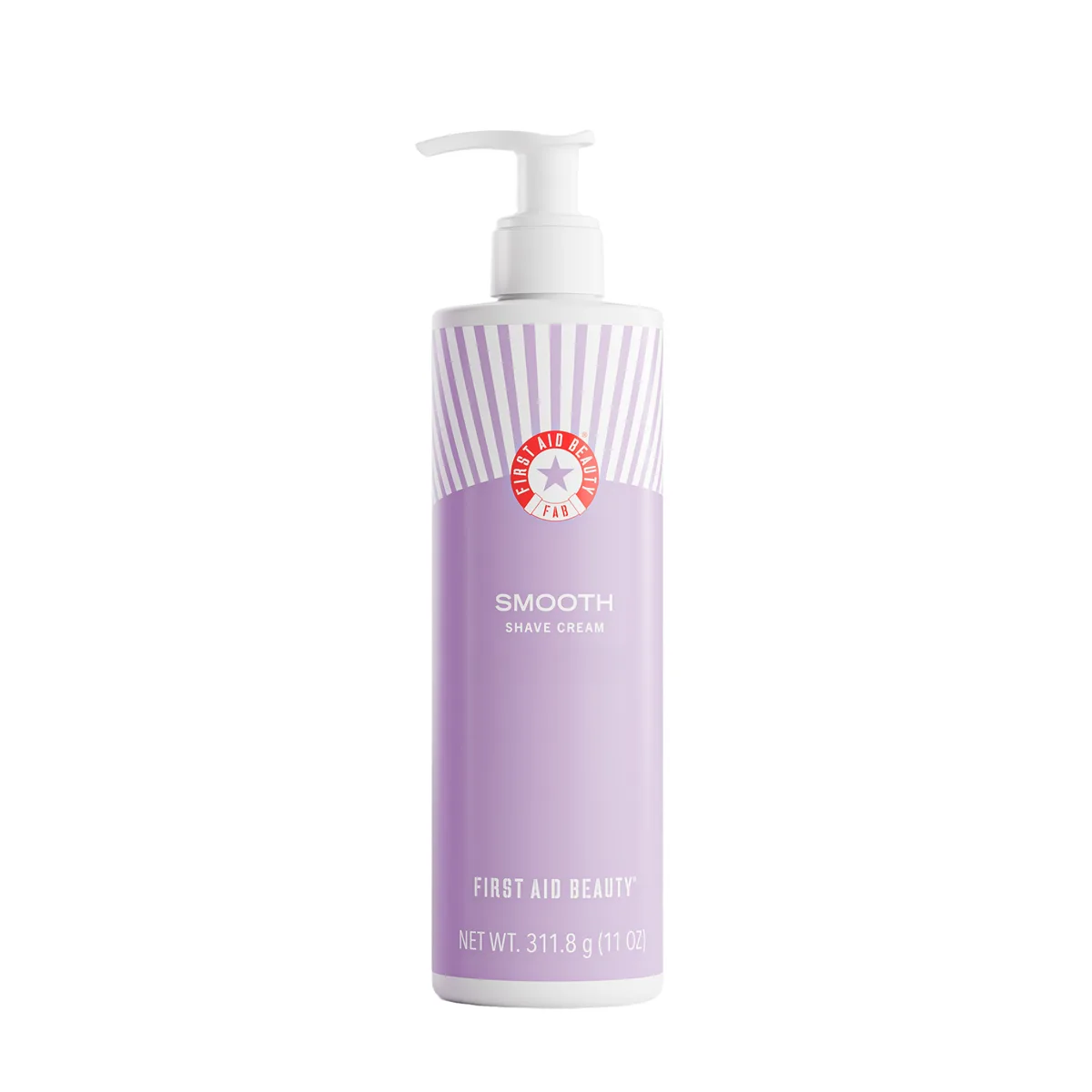
A brushless shave cream built by a sensitive-skin skincare brand with Gillette's shaving-formulation team — mild isethionate base, fatty-acid glide, high glycerin, allantoin placed high, no fragrance — sold in an 11 oz tube as part of a razor-plus-cream system. It is the rare shave cream designed around the skin rather than the hair, and it reads more like a cleanser with glide than a foam.
body carecreamclean beautyParaben FreeVeganNot Cruelty Free
A properly engineered brushless shave cream — mild isethionate base, fatty-acid glide, glycerin high in the list, allantoin where it can help — with no fragrance and nothing in it that reactive skin needs to fear. It shaves better than foam and gentler than soap, and the Gillette collaboration shows in how well the film behaves under a blade. The price is high against traditional creams of the same architecture and the botanicals do little in a rinse-off, but for skin that gets razor burn from everything else, it earns its place.
The current Smooth Shave Cream dates from a March 2025 relaunch under the Gillette collaboration and replaces an earlier, discontinued First Aid Beauty product of the same name, so its record is around eighteen months of sales and a review base in the low hundreds across the brand, Sephora and Ulta. The formula is fully published and mechanically conventional, and this assessment draws on shaving-preparation science and that early but consistent user feedback rather than on any independent testing, which does not exist.
Verdicts
How well it fits each concern
Verdict by concern tap a concern for the case
Good choicefor SensitivityIn your profileYou chose · No fragrance, drying alcohol, declarable allergens or sensitising preservatives in this cream — the profile sensitive skin looks for.Not yet assessedGentleNo reviews collected yet
The case for it
Sodium Cocoyl Isethionate has no evidence row yet for this concern — it is in the research queue.
The formula carries none of the triggers this concern is sensitive to.
What would change this: A researched evidence row for the lead active would replace this with a verdict.
Same rule for everyone. “Good choice” is the verdict on 1,938 of 45,024 concern verdicts across the catalog; rule F2 decided 1,938 of them.
As of September 25, 2026, engine 5.1.1.
Good choicefor DrynessIn your profileYou chose · Glycerin is a reference standard by mechanism for dryness; this cream carries it high in the ingredient list.Moderate evidenceGentleNo reviews collected yet
The case for it
Glycerin has trial-supported standing for this concern.
It is present at an effective concentration, declared or high in the ingredient list.
The formula carries none of the triggers this concern is sensitive to.
Same rule for everyone. “Good choice” is the verdict on 9,564 of 45,024 concern verdicts across the catalog; rule R5 decided 9,072 of them.
As of September 25, 2026, engine 5.1.1.
Supporting rolefor Keratosis PilarisIn your profileYou chose · Nothing here targets keratosis pilaris directly; emollient hydration is the recognised companion to treating it, and this cream does that without known triggers.Not yet assessedGentleNo reviews collected yet
The case for it
Sodium Cocoyl Isethionate has no evidence row yet for this concern — it is in the research queue.
The formula carries none of the triggers this concern is sensitive to.
What would change this: A researched evidence row for the lead active would replace this with a verdict.
Same rule for everyone. “Supporting role” is the verdict on 8,197 of 45,024 concern verdicts across the catalog; rule R8 decided 4,250 of them.
As of September 25, 2026, engine 5.1.1.
R8 — The category's job (barrier care, humectant hydration, gentle cleansing, photoprotection) is the documented supportive role for this concern. This is the honest verdict for a moisturizer on an acne page. · the full register
As a body productNot judged: what a body product is for — real substance, not just slip, realistic to use daily — cannot yet be measured from the ingredient list (only fragrance load can).
A verdict is DermApproved’s assessment of how well a product’s ingredients fit a concern — never a claim about what the product treats. Evidence dots and collected reviews sit beside it and are never blended in.
Rules 0.5.1 · evidence table ev-2026.09-r228 · how we decide
Assessment
Pros & Cons
Pros
✓ Isethionate base and fatty-acid glide form a real lubricating film, not a foam
✓ Glycerin third in the list softens hair for a cleaner, lower-drag cut
✓ Allantoin placed high, where a blade-side anti-irritant can actually help
✓ Fragrance-free, alcohol-free, sulfate-free and silicone-free throughout
✓ Parthenolide-free feverfew — the brand's signature soothing extract, allergen engineered out
✓ Markedly less razor burn on sensitive legs, underarms and bikini line
✓ Large 11 oz tube lasts three to four months at a thin-layer dose
Cons
✗ Thirty-six dollars is steep against traditional brushless creams of the same design
✗ Over-application clogs the razor — a learning curve after canned foam
✗ Botanical trio does less in a rinse-off than the Ultra Repair branding implies
✗ No exfoliant, so existing ingrown hairs need a separate product
✗ Bulky tube with no travel size
Review
Full Review
A shaving cream has one job, and it is not to foam. It is to put a lubricating film between a steel edge and living skin, soften the hair so the edge cuts it cleanly, and rinse away without leaving the skin drier than it found it. Foam is a way of doing that job that mostly delivers air. First Aid Beauty's Smooth Shave Cream, relaunched in March 2025 as the centrepiece of a collaboration with Gillette — both brands sit under Procter & Gamble, which is how a sensitive-skin skincare company came to share a tube with a razor maker — does the job the older, better way, and it is worth reading the formula in that light rather than as skincare.
The backbone is sodium cocoyl isethionate, the mild syndet surfactant that made the classic beauty bar gentle, listed second and supported by sodium isethionate and a pinch of coco-glucoside and cocoamphodiacetate further down. That is a cleanser's surfactant system, not a foam's, and it explains why the cream thins to a slick, low-lather layer on wet skin instead of a froth. The glide comes from the next lines: stearic acid, hydrogenated coconut acid and stearyl alcohol, the fatty pairing that traditional brushless shave creams have relied on for a century, forming a cushioning film that keeps the blade riding on the surface and the hair rather than dragging across skin. Glycerin sits third, above all of them, which is a high humectant load for a rinse-off and the thing that softens the hair shaft in the minute or two the cream sits before the razor arrives. A softened hair cuts cleaner and at less angle, and that is where a shave cream earns or loses its keep. This one earns it: the first shave with it is a recalibration for anyone used to canned foam, because a thin layer is enough, the razor moves with an obvious lack of drag, and the blade stays in contact with the contours of a knee or an ankle rather than skating over bubbles.
Then the skincare brand's fingerprints. Allantoin is eighth, placed unusually high for a soothing agent, and a shave cream is one of the few rinse-off formats where that placement makes sense — the compound is on the skin for several minutes with a blade passing over it, which is precisely the moment a mild anti-irritant has a role. Below it comes the trio First Aid Beauty calls its Antioxidant Booster and carries through the Ultra Repair range: feverfew extract with the sensitising parthenolide removed, green tea leaf extract and licorice root extract, plus aloe leaf juice and tocopherol. In a leave-on cream these have a modest but real anti-inflammatory and antioxidant record; in a shave cream rinsed off after a few minutes their contribution is smaller than the label suggests, though not zero, and the parthenolide-free feverfew in particular is the brand's genuine piece of formulation craft. Sodium PCA adds a second humectant. The preservative system is phenoxyethanol with potassium sorbate and sodium benzoate, which is conventional and low-risk. There is no fragrance, no essential oil, no alcohol, no sulfate, no silicone, no colour.
That absence is the point. Shaving is a controlled injury — every pass removes a layer of stratum corneum along with the hair — and the skin that suffers most from it is the skin that reacts to fragrance and dries out from soap. Most shave products, including most marketed to women, are scented, foaming and drying, and the razor burn they leave is half chemistry and half blade. This cream removes the chemistry half. On sensitive legs, underarms and the bikini line, the difference shows within the first week as fewer red bumps the day after, and people who have been shaving with a drugstore gel and blaming their razor tend to discover that the razor was fine.
In use, there are two things to learn. The first is dose: roughly a teaspoon does both lower legs, and applying it as generously as a foam produces a thick paste that clogs the blade and needs constant rinsing — the most common complaint in the reviews, and entirely a habit problem. The second is water: the cream wants skin that has been in a warm shower for a couple of minutes, so the hair is already half-softened before the glycerin gets to it. Used that way it rinses cleanly, leaves skin soft rather than tight, and a fragrance-free lotion on damp skin afterwards finishes the routine. It suits the face as well as the body, and the bikini line as well as the shins.
The formula does not exfoliate and does not claim to, which is worth saying because the brand sells it as part of a shave system with its BHA-and-AHA Ingrown Hair Pads, and it is the pads, used on alternate days, that address bumps once they have formed. The cream's contribution to ingrown hairs is prevention through glide — less micro-abrasion, less close-cutting — which is real but indirect.
The price is where a fair-minded reader pauses. Thirty-six dollars for an 11 oz tube on the brand's site is a lot next to traditional brushless creams built on the same stearic-acid architecture, which have sold for a fraction of that in tubes and tubs for decades, and next to the drugstore sensitive-skin gels that Gillette itself makes. What the premium buys is a fragrance-free brief taken seriously all the way down the list, the isethionate base in place of soap, the allantoin and parthenolide-free feverfew, and P&G-scale quality control. The tube lasts three to four months at two leg shaves a week, which softens the cost per shave, but there is no smaller size and it is a bulky thing to travel with.
The relaunched cream has about eighteen months of sales behind it and a review base in the low hundreds across the brand, Sephora and Ulta, consistently praising the glide and the absence of razor burn and consistently grumbling about the price and the learning curve. An earlier First Aid Beauty shave cream of the same name was discontinued years ago; this is a new formula and older reviews do not describe it. No independent testing exists, and none is really needed for a product whose mechanism is this well understood.
What it comes to is a shave cream that treats the skin as the priority and the hair as the task — which, for anyone whose legs or bikini line punish them for every shave, is the right way round. It is expensive, it takes a shave or two to learn, and the botanicals are more signature than substance. It also works, quietly and every time, and it has nothing in it to react to. That is a harder thing to find in a shave product than it should be.
Formula
Key Ingredients
The hero actives that drive this product's performance.
Second in the list and the backbone of the formula — the mild syndet surfactant that made the classic beauty bar gentle, here paired with stearic acid and hydrogenated coconut acid to build a dense, creamy lather rather than a foam. It is what lets a shave cream cleanse and lift hair without the drying of a soap or the propellant-driven froth of a can.
The fatty pair that gives the cream its cushion and, more importantly, its glide — a lubricating film that keeps the blade off the skin surface and lets it travel over the hair instead. This is the mechanism the brand's 'protective layer' language refers to, and it is the same one traditional brushless shave creams have relied on for a century.
Third, ahead of the fatty acids — a high humectant load that softens the hair shaft while the cream sits, which makes the cut cleaner and the drag lower, and leaves skin less tight after rinsing than a foam would. Backed by sodium PCA further down, it is the reason the post-shave feel is soft rather than stripped.
Established mechanismfor Dryness · established mechanism
Eighth, placed high for a soothing agent — a skin-conditioning compound with a long record in products for irritated and razor-burned skin. In a shave cream it is on the skin for a few minutes with the blade passing over it, which is a sensible place for a mild anti-irritant to be.
The brand's signature botanical trio, carried across from the Ultra Repair line. Feverfew is used parthenolide-free — the sensitising component removed — leaving a plant extract with anti-inflammatory data in leave-ons; green tea and licorice add antioxidant and mild anti-redness roles. In a rinse-off with a few minutes of contact, their contribution is modest but not nothing.
Not yet assessed
Ingredient standings describe the active at treatment-level doses and
vehicles; this product's own condition grades weigh its actual formula.
It works best on skin that has been in warm water for a couple of minutes, which softens the hair before the glycerin does. Exfoliating pads or a scrub belong the day before, not the same session; after the shave, a fragrance-free lotion while the skin is still damp finishes the job. It is not a leave-on and should be rinsed fully — residue from the fatty acids can feel filmy if left.
Results Timeline
The difference is felt on the first shave: less drag, fewer nicks and no post-shave tightness compared with a foam or soap. Over two or three weeks of regular use, people prone to razor burn report calmer skin the day after, which is the glide and the humectants reducing micro-abrasion — there is no cumulative treatment effect to wait for beyond that.
Pairs Well With
a fresh multi-blade razor and warm waterFirst Aid Beauty's Ingrown Hair Pads used on alternate daysa fragrance-free body lotion after shaving
THIS PRODUCT — thin layer on wet skin, shave, rinse
Fragrance-free lotion on damp skin
Sample PM Routine
Exfoliating pads or scrub on non-shave days
THIS PRODUCT on shave days
Lotion
Evidence
Science & Expert Perspective
The Science
The performance of a shave preparation is governed by three measurable things: the friction between blade and skin, the cutting force required for the hair, and the degree of stratum corneum disruption left behind. This formula addresses each with well-characterised chemistry. Stearic acid, hydrogenated coconut acid and stearyl alcohol form a lamellar, fatty film on wet skin that lowers the coefficient of friction of the razor pass — the mechanism of every brushless shave cream since the early twentieth century — and studies of shaving tribology consistently show that lubricant films reduce both the force needed and the epidermal damage inflicted per stroke.
Hair softening is a hydration effect. Keratin fibre absorbs water and its cutting force falls substantially as it does; warm water alone achieves much of this in two to three minutes, and humectants such as glycerin, listed third here, and sodium PCA extend and stabilise the hydration while the preparation sits on the skin. This is the scientific basis for the advice to shave after, not before, a warm shower.
The surfactant choice matters for the third measure. Sodium cocoyl isethionate is among the mildest anionic cleansing agents in comparative irritation and transepidermal water loss testing, well below soap and sodium lauryl sulfate, and its use in place of a soap base is why post-shave skin retains more of its barrier lipids and feels less tight. Shaving itself removes corneocytes with each pass, so a surfactant that does not compound that loss is a meaningful design choice for sensitive skin.
Allantoin has a long regulatory and clinical record as a skin-protectant and anti-irritant, and feverfew extract with parthenolide removed has been studied in cosmetic leave-ons for reduction of erythema and inflammatory markers; in a rinse-off with a few minutes of contact, benefit from the botanicals is plausible but has not been measured for this product. The formula is fragrance-free and free of the alcohol and menthol found in many shave gels, both of which are known to aggravate post-shave irritation.
Dermatologist Perspective
Clinical advice on shaving for sensitive skin, pseudofolliculitis and keratosis pilaris is consistent: hydrate the hair with warm water first, use a lubricating preparation rather than soap, shave with the grain using a sharp blade, and moisturise afterwards with a fragrance-free emollient. This cream is a good fit for the second of those steps — dermatologists would recognise the isethionate base and fatty-acid glide as the same architecture found in the brushless creams often recommended to patients with razor irritation, with the addition of a fragrance-free brief and an allantoin dose that are welcome in this context. It would not be considered a treatment for existing ingrown hairs, which need chemical exfoliation or a change in shaving technique, and the botanical content would be regarded as inert in a rinse-off. For patients with atopic skin, the usual caution applies that shaving over an active flare should be avoided regardless of the product used.
Guidance
Usage & Recommendations
How to Use
Spend two or three minutes in a warm shower or bath first so the hair is hydrated, then squeeze out roughly a teaspoon of cream for both lower legs — far less than a foam — and spread it thinly over wet skin until it turns slick. Let it sit for thirty seconds to a minute, then shave with a sharp blade, rinsing the razor often; if the blade clogs, too much cream was used. Rinse the skin fully, since residue from the fatty acids can feel filmy if left, and pat dry. Apply a fragrance-free body lotion while the skin is still damp. It suits legs, underarms, the bikini line and the face, and can be used at every shave; exfoliating pads belong on the days in between, not immediately before.
Value Assessment
At thirty-six dollars for 11 oz on First Aid Beauty's site, this is priced well above the traditional brushless shave creams and the drugstore sensitive-skin gels that share much of its chemistry, and there is only one size. Against that, a thin-layer dose stretches the tube to three or four months of regular leg shaving, which brings the cost per shave into reasonable territory, and the formula delivers the fragrance-free, soap-free, isethionate-based brief that sensitive-skin users actually need rather than a scented gel with a sensitive label. First Aid Beauty is an established brand with P&G resources and a strong tolerability record, though no clinical data on this product; the premium is buying that reputation and a carefully assembled formula rather than proof. Fair for the skin it is designed for, and hard to justify for anyone who shaves without incident on cheaper creams.
Who Should Buy
People whose skin punishes them for shaving — red bumps, tightness, stinging from scented gels — and who want a fragrance-free cream that shaves closer with less drag than foam. It suits sensitive legs, underarms and the bikini line particularly well, and anyone already using First Aid Beauty's ingrown-hair pads who wants the matching shave step.
Who Should Skip
Anyone who shaves without incident on drugstore creams and is comparing on price, people who want a foaming or scented shave experience, and those looking for a product to clear existing ingrown hairs — this prevents rather than treats. Frequent travellers may find the single large tube impractical.
A dense, white, buttery cream that thins to a slick, low-foam layer on wet skin — more like a lotion-in-water than a lather
Scent
None; a faint clean, soapy note from the isethionate base while rinsing and nothing on the skin
Packaging
A large 11 oz white flip-cap tube in the brand's red-and-white livery carrying both First Aid Beauty and Gillette marks; sturdy and shower-friendly, though bulky enough that there is no travel size
Finish
non-greasyvelvety
What to Expect on First Use
The first shave with it is a recalibration for anyone used to canned foam — a thin layer is enough, it barely lathers, and the razor glides with an obvious lack of drag. There is no sting, no scent and no tightness afterwards; the only early mistake is using too much, which gums up the blade. Skin that usually shows red bumps the next day tends to look calmer from the first week.
How Long It Lasts
About three to four months at two full-leg shaves a week; the 11 oz tube is sized for that, and a thin layer is all it needs
First Aid Beauty sold a Smooth Shave Cream in its early years, then dropped it; the product returned in March 2025 as the centrepiece of a First Aid Beauty x Gillette collection, a collaboration between two Procter & Gamble brands pairing FAB's ingrown-hair pads and post-shave skincare with a Gillette-engineered razor. The relaunched cream was reformulated for the partnership and sized up to 11 oz.
About First Aid Beauty Established Brand (5–20 years)
First Aid Beauty, founded in 2009 and owned by Procter & Gamble since 2018, built its reputation on fragrance-free formulas for sensitive skin and is a fixture at Sephora and Ulta. This shave cream is the product of a 2025 collaboration with Gillette, a sister P&G brand — which brings a century of shaving-formulation expertise to a skincare brand's sensitive-skin brief, and explains why the two logos share a shelf.
Brand founded: 2009 · Product launched: 2025
Myth vs. Reality
Common Myths
Myth
A shave cream that does not foam is not doing anything.
Reality
Foam is mostly air; what protects skin during a shave is a lubricating film between the blade and the surface. This cream's fatty acids and stearyl alcohol form that film without lather, which is why it feels slicker than a foam and why a thin layer is enough — and why the razor stays in contact with the skin's contours rather than skating on bubbles.
Myth
Feverfew is a known allergen, so it has no place in a sensitive-skin product.
Reality
The sensitising component of feverfew is parthenolide, which First Aid Beauty removes from its extract — the brand's whole Ultra Repair line is built on parthenolide-free feverfew. The remaining extract has anti-inflammatory data; the allergen risk is largely engineered out, though daisy-family allergies still warrant a patch test.
FAQ
Frequently Asked Questions
Is the First Aid Beauty Smooth Shave Cream made by Gillette?
It was developed as part of a 2025 First Aid Beauty x Gillette collection — both are Procter & Gamble brands — and the tube carries both names. The formula follows First Aid Beauty's fragrance-free, sensitive-skin brief with Gillette's shaving-formulation input, and it is sold alongside a Gillette-engineered razor.
Why does the Smooth Shave Cream barely lather?
It is a brushless cream, not a foam. Its glide comes from a film of stearic acid and stearyl alcohol, with a mild isethionate surfactant for cleansing, so it thins to a slick layer rather than a froth. A thin coat is enough; more just clogs the razor.
Can I use First Aid Beauty's shave cream on my face or bikini line?
Yes. It is fragrance-free, alcohol-free and built on the same mild isethionate base as a gentle cleanser, so it suits the bikini line, underarms and facial shaving alike. On the bikini line, warm water for a couple of minutes first makes the biggest difference.
Is the Smooth Shave Cream fragrance-free and safe for eczema-prone skin?
It contains no fragrance, essential oils, alcohol or sulfates, and is preserved with phenoxyethanol and food-grade sorbate and benzoate. The feverfew extract is parthenolide-free. For eczema-prone skin it is one of the gentler shave creams available, though shaving over an active flare is best avoided regardless of product.
Does the Smooth Shave Cream help with ingrown hairs or razor bumps?
Indirectly. Its glide reduces the micro-abrasion and close-cutting that lead to bumps, and the glycerin softens hair for a cleaner cut, but it contains no exfoliant. First Aid Beauty pairs it with its BHA-and-AHA Ingrown Hair Pads on alternate days for that job.
How much of the Smooth Shave Cream do I need per shave?
Less than you think — roughly a teaspoon for both lower legs, spread thin on wet skin. The 11 oz tube typically lasts three to four months at two leg shaves a week, and over-applying is the most common cause of a clogged razor.
Reviews
What Reviewers Tend to Say
Recurring themes our editors read across retailer reviews of this product — summaries in our words, not quotations, and not a substitute for your own patch test.
Common Praise
Noticeably less razor burn and fewer nicks on sensitive legs
Rich cream that does not foam away and lets you see where you have shaved
Fragrance-free with no sting on freshly shaved skin
Skin feels moisturised rather than tight after rinsing
Common Complaints
Pricey next to drugstore shave creams
Thick texture clogs the razor if applied too generously
Tube is bulky for travel and there is no small size
Low lather takes getting used to after canned foam
Notable Endorsements
Co-developed with Gillette under a 2025 First Aid Beauty x Gillette shave collection
Hada Labo, Senka, Melano CC, Curel and Minon occupy a price-to-formulation tier the West does not have. Reading them correctly requires knowing one rule that inverts everything you assume about ingredient lists.
Every word on a plant oil label describes what was left in — including the proteins that sensitise and the compounds that go rancid — and the variable that decided the one head-to-head trial isn't printed anywhere.
The burn trials are real and the skeptics who dismiss aloe as folklore are wrong — but the same substance has delayed healing in other wounds, and none of it says anything about what a soothing gel does to intact skin.
Aug 28, 2026· 9 min
Questions people ask about sensitive skin
Verified answers from our questions library — the nuance a product page cannot carry.
Products, answers, therapy guides, tools and articles in one search. Brand names,
slang and abbreviations all work — accutane finds isotretinoin, bacne finds truncal acne.