

Silicones Don't Suffocate Your Skin — We Literally Put Them on Healing Wounds
Clean-beauty marketing cast silicones as pore-clogging plastic wrap for your face. The chemistry — and the scar clinic — say almost the exact opposite.

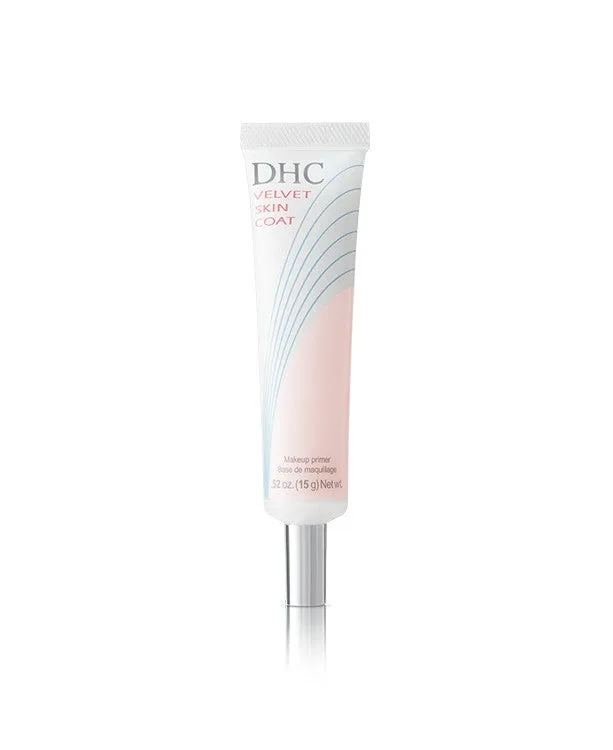
This is the fluid, tube-packaged evolution of DHC's iconic Velvet Skin Coat balm. The added water phase makes it lighter and more comfortable for dry or sensitive skin, and the squeezable tube solves the original jar's hygiene and travel issues without losing the soft-focus elastomer effect that made the original famous.
The squeeze-tube evolution of DHC's cult Velvet Skin Coat balm, and for many users it's the better buy. A lighter silicone fluid with a touch of water and glycerin makes it comfortable on every skin type, while still delivering the pore-blurring finish the original made famous.
Listed for Large Pores and Rough Texture — the actives here (Dimethicone, Silica, Olive Oil) are in our research queue for those concerns; there is no verdict until their evidence rows are written. That is a gap in our table, not a mark against the product.
A verdict is DermApproved’s assessment of how well a product’s ingredients fit a concern — never a claim about what the product treats. Evidence dots and collected reviews sit beside it and are never blended in. Rules 0.5.1 · evidence table ev-2026.09-r228 · how we decide
If you read enough J-beauty forums, you'll notice the same two complaints show up in every thread about DHC's original Velvet Skin Coat balm. The first: 'I love the finish, but the jar is gross to travel with and I keep getting product under my fingernails.' The second: 'It was too dry on my cheeks and the silicones kind of grabbed at my dry patches.' Velvet Skin Coat Primer is, essentially, DHC's quiet answer to both of those complaints. It's the same pore-blurring silicone elastomer technology reformulated into a lighter water-in-silicone fluid, and packaged in a hygienic squeeze tube that actually fits in a makeup bag. That origin story tells you exactly who this version is for — people who wanted the original's results without the original's small frustrations.
Out of the tube, the texture is noticeably different from the balm. Where the original feels firm and waxy until it hits warm skin, this version flows out as a thin, creamy fluid that spreads instantly. The water phase gives it a slip that the balm doesn't have, and the smaller percentage of elastomer means it dries down to a slightly thinner blur layer. That's a fair trade-off. You lose a small amount of dramatic pore-filling effect, but you gain a finish that plays well with dry patches, sensitive areas, and the kind of weather that makes heavy silicones feel suffocating. The first time you apply it, expect it to feel cooler and lighter than you imagined. Within about fifteen seconds the silicone flashes off, the finish sets to a soft, powdery velvet, and your skin looks visibly smoother in the mirror.
The ingredient list reveals the engineering clearly. The first few positions are dominated by cyclopentasiloxane, dimethicone, and dimethicone crosspolymer — the same three silicones that make every good elastomer primer work. Water comes in fourth, followed by silica for mattification, butylene glycol for slip, and a chain of supporting silicone emulsifiers that hold the water-in-silicone blend together. The olive oil and tocopherol are DHC signatures, present in trace amounts mostly for brand identity and formula stability. What makes this particular formulation smart is the small glycerin inclusion. It's not enough to turn this into a hydrating product, but it's just enough to soften the overall feel so that people with drier skin don't feel like they're putting a blotter on their cheeks.
On performance, the blurring is real and immediate. Dimethicone crosspolymer particles physically occupy the visual dip of your pores and diffuse incoming light, which is why your skin looks softer the instant you pat this in. The silica rounds it out with a subtle mattifying effect that keeps your T-zone from going shiny by lunch. Foundation glides over it beautifully — liquid, cream, or powder, they all apply more evenly and cling less to dry patches than they would on bare skincare. You won't get a full airbrush-filter effect like you would from the original jar (that formulation has more elastomer per square centimeter), but you'll get eighty-five percent of the result with twenty percent less fuss.
The flaws are minor but worth naming. The tube becomes harder to squeeze toward the end of its life, which means a small amount of product is usually stuck in the shoulders. Pilling is possible if you rush through your layering, especially over sunscreens that are still tacky — this is true of every silicone primer and the fix is always the same: let your SPF set, press the primer in rather than rub, and wait thirty seconds before foundation. And while the formula is fragrance-free and fungal-acne safe, very reactive skin may still want to patch test because the elastomer network sits on the skin for hours at a time.
Value is where this product genuinely shines. At $28 for a 30-gram tube, you're paying a fair premium for Japanese manufacturing and DHC's decades of formulation experience, but the math works out to well under a dollar per use. A pea-sized amount covers the full face, and the tube lasts most users five to eight months. Compared to the $38-$50 fluid silicone primers from Western luxury brands that rely on the same basic technology, this one delivers comparable results at a lower price and with a more pleasant application experience. It's a rare case of the newer version actually being the stronger purchase — the original balm is still excellent for oily skin that wants maximum blur, but this primer is the one most readers should reach for if they're buying from the Velvet Skin Coat line for the first time.
Put it this way: if the original balm was a cult J-beauty secret, this version is DHC meeting global audiences halfway without compromising what made the original good. It deserves the quiet, word-of-mouth following it has built, and it's one of the few primers we recommend without hedging.
The hero actives that drive this product's performance.
| Ingredient | Function | Evidence |
|---|---|---|
| Dimethicone Crosspolymer | The pore-blurring workhorse of this tube. A three-dimensional silicone elastomer that sits inside the visual texture of pores and fine lines, creating an instant soft-focus effect on contact. In this fluid version, the elastomer sits in a water-and-silicone emulsion for a lighter feel than the balm. | Not yet assessed |
| Silica | Provides the soft-focus mattifying finish that partners with the elastomer network. Absorbs surface oil across the T-zone and diffuses light to make pore texture recede. | Not yet assessed |
| Cyclopentasiloxane | The volatile silicone that gives this primer its flash-off application feel — it evaporates within seconds, leaving behind the elastomer blur layer without any heavy residue. | Not yet assessed |
| Olea Europaea (Olive) Fruit Oil | A small, signature addition from DHC that softens the overall feel and adds subtle conditioning to balance the otherwise silicone-heavy formula. | Not yet assessed |
| Glycerin | Unlike the balm version, this primer includes water and a small amount of glycerin to provide a touch of humectant hydration, making it more comfortable for normal-to-dry skin that found the original balm too dry. | Not yet assessed |
Ingredient standings describe the active at treatment-level doses and vehicles; this product's own condition grades weigh its actual formula.
Cyclopentasiloxane, Dimethicone, Dimethicone Crosspolymer, Water, Silica, Butylene Glycol, PEG-9 Polydimethylsiloxyethyl Dimethicone, Polymethylsilsesquioxane, Trimethylsiloxysilicate, Disteardimonium Hectorite, Olea Europaea (Olive) Fruit Oil, Tocopherol, Glycerin, Sodium Chloride, Phenoxyethanol
treatment
AM
Let sunscreen fully absorb before applying. Dispense a pea-sized amount and smooth over skin. Wait 30 seconds before foundation to prevent pilling.
Immediate — blurring and smoothing effects happen on contact. No long-term skincare benefits; this is a finishing product only.
Water-in-silicone emulsions are a well-understood vehicle in cosmetic formulation. In this primer, cyclopentasiloxane and dimethicone form the continuous phase while water is suspended as dispersed droplets stabilized by PEG-9 polydimethylsiloxyethyl dimethicone and disteardimonium hectorite. This architecture lets DHC deliver the same spherical dimethicone crosspolymer elastomer particles that make the original balm blur pores, but in a lighter application feel. The blurring mechanism itself is optical: elastomer particles in the 5-20 micron range sit inside the visual depression of a pore and scatter light, which a human eye interprets as reduced pore size. Published cosmetic-science literature, including work in the International Journal of Cosmetic Science on soft-focus pigment systems, has confirmed that this type of particle geometry produces measurable reductions in apparent pore visibility without altering underlying skin structure. The silica in this formula contributes additional light scattering and modest oil absorption. Dermatological reviews of silicone-based primers consistently find them non-comedogenic, non-irritating, and compatible with acne-prone skin, because dimethicone and its derivatives are chemically inert, do not penetrate below the stratum corneum, and wash off cleanly with routine cleansing. The small amounts of olive oil, tocopherol, and glycerin present here sit at concentrations too low to deliver measurable skincare benefits and are best understood as formulation aids rather than actives. This is good cosmetic engineering in a mature category, not a breakthrough formulation.
Dermatologists tend to recommend silicone-based primers as a safe cosmetic layer for patients with acne-prone, rosacea-prone, or sensitive skin who want a smoother canvas for foundation without layering on additional actives. Clinically, silicones are among the most inert and well-studied classes of cosmetic ingredients, and that properly formulated silicone primers are extremely unlikely to trigger breakouts or irritation in healthy skin. This fluid version of DHC's Velvet Skin Coat is considered a reasonable choice for patients on topical retinoids or prescription acne medications who want something simple and non-reactive to apply under makeup in the morning. The main guidance from dermatologists is practical rather than clinical — allow sunscreen to fully set before applying any silicone primer, and press rather than rub to avoid mechanical disruption of sensitive skin.
Apply after your complete morning skincare routine, including sunscreen, and wait two to three minutes for your SPF to fully set. Squeeze out a pea-sized amount onto the back of your hand or a fingertip. Warm briefly and press into the areas where you want pore-blurring, typically the T-zone, cheeks, and forehead. Do not rub in circles; pressing and patting gives the cleanest finish. Wait thirty seconds before applying foundation, concealer, or powder. For dry skin, apply only to the central face rather than all over. Store the tube at room temperature with the cap closed.
At $28 for 30 grams, Velvet Skin Coat Primer sits between drugstore liquid primers and department-store luxury silicone primers, and it delivers performance that competes with products costing twice as much. The per-use cost is well under a dollar thanks to the minimal application amount needed, and the tube typically lasts five to eight months. The only drawback on the value front is that DHC does not offer a larger size for heavy users. Compared to the $26 jar of the original balm, you're paying a small premium for the tube packaging, lighter texture, and broader skin-type compatibility — and for most readers, that premium is worth paying.
Readers who loved the idea of DHC's original Velvet Skin Coat but found the jar impractical or the balm too dry. Combination, dry, and sensitive skin types who want silicone-primer blurring without a heavy or chalky feel. Travelers who need a hygienic tube format for their makeup bag.
Oily skin that specifically wants maximum pore-blurring — the original balm version delivers a slightly stronger effect. Readers hoping for a treatment primer with real skincare actives; this is purely a cosmetic finisher. Silicone-avoiders will not find anything for them here.
A light silicone fluid with a creamy edge — slides on like a thin lotion and dries down to a powdery, blurred finish.
Essentially odorless with a faint silicone note.
A squeezable plastic tube with a flip-top cap. Hygienic, travel-friendly, and easy to dispense consistent portions.
First application feels cooler and lighter than expected — the water content gives it a different slip from the original balm. It blurs pores visibly within seconds and leaves a soft, dry finish that foundation glides over. No tingling or adjustment period.
Daily use makes one last about 5-8 months
All Year
DHC expanded the Velvet Skin Coat line with this primer version in response to international demand for a lighter, travel-friendly format. The original jar had cult status but scared off users who wanted a lotion-feel primer or a tube they could throw in a carry-on. This version keeps the same silicone elastomer technology while addressing the packaging complaints.
DHC is a long-standing Japanese skincare and cosmetics brand founded in 1972, best known for its Deep Cleansing Oil and its olive-oil-based skincare line. The brand has a deep bench of formulation experience in the Japanese domestic market and has earned credibility through decades of consistent product performance rather than through high-profile marketing.
Liquid silicone primers always pill under sunscreen.
Pilling is almost always a layering timing issue. When this primer is applied after sunscreen has fully set and pressed (not rubbed) into the skin, it layers cleanly under foundation without rolling.
This tube version is a water-in-silicone fluid rather than a dense balm, so it feels lighter and more comfortable on dry or sensitive skin. The pore-blurring effect is slightly less dramatic because the elastomer concentration is lower, but the tube packaging is more hygienic and travel-friendly.
Yes — the formula uses silicones, silica, and a small amount of olive oil with no fatty alcohols, esters, or fermented ingredients that typically feed Malassezia. The minor water and glycerin content don't change that.
Yes, as long as you wait two to three minutes after your SPF for it to fully set before applying this primer. The most common pilling issue comes from applying over sunscreen that is still tacky.
Absolutely. Many users wear it alone as a soft-focus finisher on no-makeup days because it smooths texture and mattifies slightly without any color payoff or heavy feel.
A 30g tube typically lasts five to eight months with daily use because you only need a pea-sized amount. Users who only prime their T-zone will get closer to eight months.
Not really — this is a cosmetic finishing product. Glycerin and olive oil provide a token level of hydration and conditioning, but you should not expect meaningful skincare benefits. Use it for what it is: a pore-blurring, foundation-prepping primer.
Recurring themes our editors read across retailer reviews of this product — summaries in our words, not quotations, and not a substitute for your own patch test.
Lighter feel than the original balm
Tube packaging is travel-friendly
Smooth blur effect
Works with nearly any foundation
Smaller blur effect than the balm version
Can pill with certain sunscreens
Tube can be hard to squeeze last bit out