Silicones (Siloxanes, Dimethicone Family)
Products with Silicones (Siloxanes, Dimethicone Family)
 Overnight Cactus Hydration Mask
 Secret of Sahara Sleep Mask Good Night
Huxley's overnight take on its cactus story, a comfortable, low-transfer sleeping mask that layers deep humectant hydration with barrier ceramides and soothing botanicals to leave skin plump and rested by morning. It is a genuinely pleasant overnight hydrator for normal to dry skin, with a touch of alcohol and several fragrance allergens the main reasons reactive skin should look elsewhere.
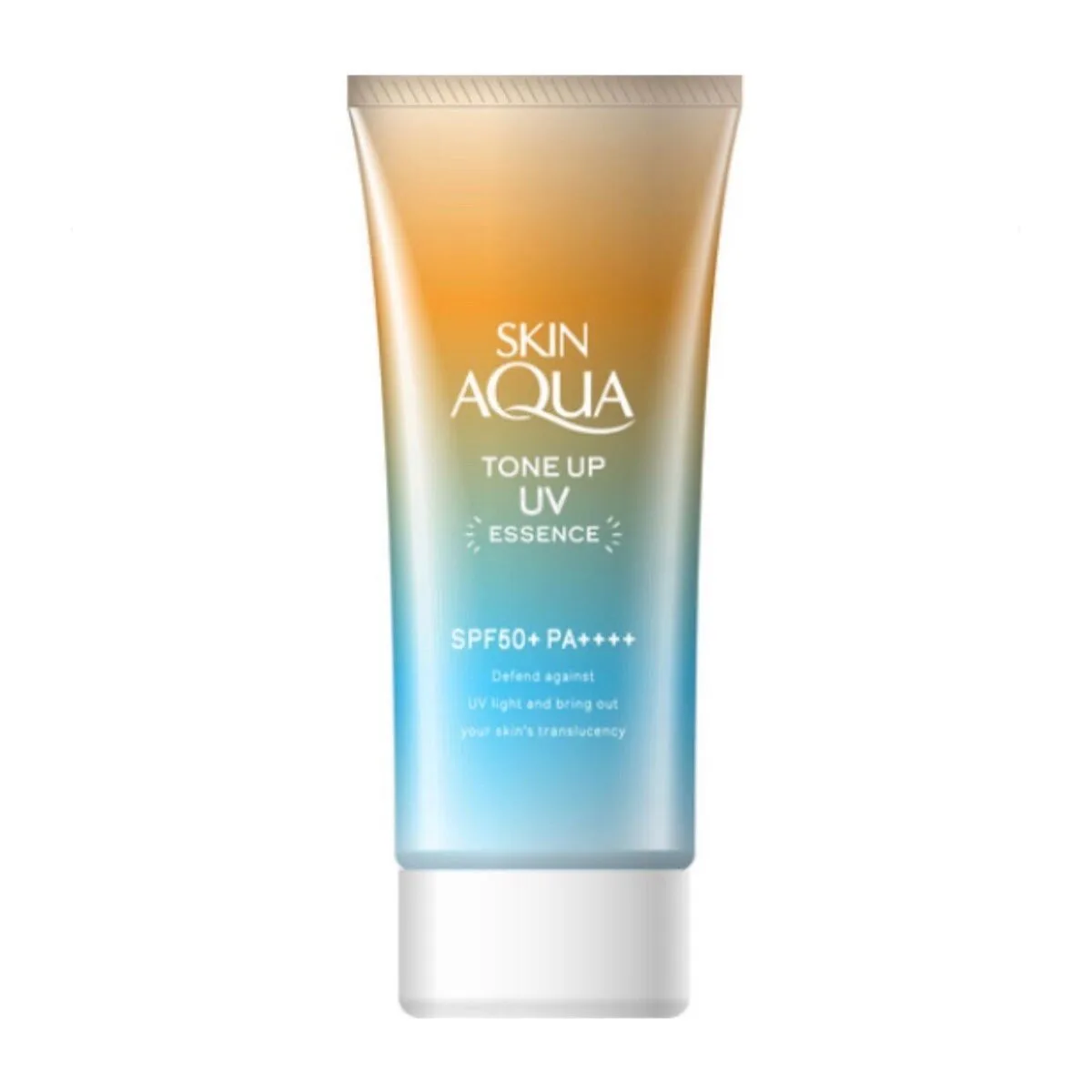 Tone-Up Makeup-Base Sunscreen
 Skin Aqua Tone Up UV Essence Latte Beige SPF50+ PA++++
A broad-spectrum SPF50+ PA++++ tinted essence in a natural latte-beige shade that doubles as a blurring, pore-softening makeup base, with modern filters and a light skincare layer at a budget price. It is the most foundation-like of the Skin Aqua tone-up sunscreens, with fragrance and a single beige shade the main reasons it won't suit everyone.
 Oily-Skin Gel Staple
 Holy Hydration! Gel-Yeah Moisturizer
A bouncy, cooling gel that hydrates oily and combination skin without shine, built on trehalose, diglycerin, squalane and allantoin at positions that matter, with a fungal-acne-friendly list and a thirteen-dollar price. The fragrance is the one thing standing between it and a sensitive-skin recommendation, and dry skin will need more. For oily skin on a budget it is close to ideal.
 Face & Scalp SPF Spray
 SPF 50 Face & Scalp Mist
Australian Gold's SPF 50 Face & Scalp Mist combines US chemical filter quartet with Australian botanical chemistry (desert honey myrtle, sea kale, lupinus, melaleuca) in a spray format positioned for dual face-and-scalp use at $14.99 for 3.4oz. Addresses the commonly neglected scalp/hair-part SPF gap. Alcohol and fragrance limit sensitive use.
 Weightless Cactus Gel-Cream
 Secret of Sahara Cream Fresh and More
One of the original Huxley moisturizers that built the brand, a genuinely weightless cactus-and-ceramide gel-cream with a silicone-smoothed, soft-blurred finish that hydrates and supports the barrier without a hint of grease. It is an excellent fresh-finish, makeup-friendly daily cream for normal to oily skin, with alcohol, fragrance and a mid-premium price the only real caveats.
 Light Honey Gel-Cream
 Bombee Honey Moist Cream
The moisturizer step of Papa Recipe's honey line, and a mild surprise: despite the cream name, it is a lightweight, silicone-smoothed gel-cream with a fresh, makeup-friendly finish, carrying the Bombee bee complex and soothing botanicals in a fragrance-free formula. It is a gentle, broadly suitable daily moisturizer, with the caveats that it is lighter than the name implies, the bee actives are modestly evidenced, and propolis is an allergy consideration.
 Best-in-Category Lip SPF
 UV Lip Color Splash SPF 35 PA+++
Shiseido's UV Lip Color Splash is one of the rare lip products with genuinely meaningful broad-spectrum SPF 35 PA+++ protection — addressing the chronic UV under-protection of the lip area through the brand's Clear Defense Technology. The Oxybenzone presence is the formula's significant concern (both for individual sensitivity and reef-safety reasons), but for routines that need lip SPF and don't conflict with those constraints, this is one of the few products in the category that genuinely works.
 Primer That Calls Itself a Serum
 Revitalizing Firming Serum
Strip away the reishi story and this is a silicone-forward smoothing serum with a mid-list niacinamide, an acid-free HEPES smoother and one thinly evidenced density active, dressed in fragrance and a yellow dye. It makes skin look better for the evening and softer within weeks, but it will not firm anything in the sense the name implies, and reactive skin should give its preservative system a wide berth.
 Luxury Micellar, Pharmacy Mechanism
 The Cleansing Micellar Water
A pleasant, gentle micellar water built on a single mild surfactant, polysorbate 20, with a generous propanediol, trehalose, glycerin and hyaluronate tier and a water-soluble silicone for glide, which lifts everyday makeup and leaves skin fresh and soft with no rinse. Waterproof mascara defeats it, the leave-on carries a five-allergen parfum, eucalyptus and a blue dye swept over the eyes, and a hundred and twenty dollars buys the Miracle Broth, the scent and the name over a format the pharmacy sells for ten.
 Makeup-Safe SPF Top-Up
 UV Wise On-The-Go Sun Cushion
As a midday top-up over makeup this is one of the most pleasant sun cushions on the market: a cool, photostabilised silicone veil that refreshes a face without moving it, from the company that invented the format. As a sunscreen it is a strong burn shield and a light UVA one, three UVB organics and a small dose of titanium dioxide with no avobenzone or zinc oxide under an SPF 50+ label, with a six-allergen fragrance re-patted onto the face all day. Buy it for what it is; put a real broad-spectrum sunscreen underneath.
The full silicones (siloxanes, dimethicone family) guide
That silky slip a primer has, the way a good scar gel disappears into skin, the reason a face cream stops feeling greasy the moment it touches you — all of it is usually silicone.
This is a whole family rather than one molecule, built on a silicon-oxygen backbone that does not exist in nature, and it is simultaneously among the most rigorously safety-tested materials in cosmetics and among the most feared. Both of those facts deserve unpacking, and the genuine concern turns out not to be the one people worry about.
How it's regulated in the US
FDA does not classify ingredients — it classifies products, by what they are sold to do. The same molecule can be a drug active in one product and a cosmetic ingredient in the next, and only the claim on the label decides which. What follows is a statement about that legal standing, not about whether it works — the evidence question is answered separately above.
Mixed Dimethicone is a skin protectant drug active at 1 to 30 percent. Every other silicone in ordinary use is a cosmetic ingredient.
As emollients and film-formers, silicones are about as settled as cosmetic science gets: chemically inert, exceptionally well tolerated, and used in medicine for decades — in neonatal skin protection, in barrier creams, and as the base of post-surgical scar therapy. Dimethicone is an FDA-recognised over-the-counter skin protectant. The scar evidence is more interesting than the marketing suggests: international clinical recommendations have named silicone gel and sheeting the first-line non-invasive option for hypertrophic scars and keloids since 2002, while Cochrane's reviews have repeatedly noted that the underlying trials are small and highly susceptible to bias. That gap — universally recommended, thinly evidenced — is worth stating plainly rather than smoothing over. What the class carries no credible evidence for is causing acne, suffocating skin or accumulating in the body.
How it works
The backbone is a repeating silicon-oxygen chain with methyl groups hanging off it, and chain length dictates behaviour entirely. Short volatile ones like cyclopentasiloxane spread instantly and evaporate, which is what makes a primer feel weightless and dry down fast. Long ones like high-molecular-weight dimethicone and dimethiconol stay put and form a flexible film. Modified versions carry PEG or amine groups that make them water-soluble or give them affinity for damaged hair keratin. That film is the point. It sits on the surface as a low-permeability layer that slows water escaping from the skin while still letting gas exchange happen — a semi-occlusive, not a seal. Petrolatum blocks water loss far more completely; silicone gives you a meaningful reduction with none of the heaviness, which is precisely the trade formulators want in a daytime moisturiser. The same film also physically shields skin from irritants and friction, which is why barrier creams and diaper preparations lean on it. The molecules are large and chemically unreactive, so they sit on top rather than penetrating into or through skin. In scar therapy that surface occupancy plus the hydration it maintains appears to modulate how fibroblasts lay down collagen, though the mechanism remains incompletely understood. On hair, silicones coat the cuticle, smoothing raised scales so light reflects evenly and combs pass through with less breakage.
Key benefits
- Reduce water loss without the heaviness of petrolatum-based occlusives
- Create the slip and fast dry-down that make textures feel elegant
- Physically shield skin from friction, irritants and allergens
- Form the base of first-line topical scar management products
- Chemically inert with a very low rate of allergic reaction
- Smooth the hair cuticle, reducing frizz and combing breakage
Concentration & usage
Read position and type rather than chasing a number. High on an INCI list, dimethicone or dimethiconol is doing structural work — it is a genuine moisturiser component or scar treatment. Low down, it is a texture adjustment. The distinction that actually matters for hair is solubility: dimethicone and amodimethicone are not water-soluble and need a proper surfactant to remove, while anything prefixed PEG- or bearing a hydroxyl-rich modification rinses out with plain shampoo. For scar products, look for silicone as the base of the formulation rather than one entry among botanicals, and expect to use it consistently for months. The one number worth knowing now is regulatory: 0.1%, the EU cap on the cyclic siloxanes D4, D5 and D6.
Who it's for & who should be cautious
Who it's for
Oily and combination skin often gets on best with silicone-based moisturisers, because they deliver water-loss protection without the greasy weight of heavier occlusives. They suit anyone with a compromised barrier who needs a physical shield, anyone managing a new surgical or burn scar, and anyone whose skin reacts to almost everything — inertness is a real virtue when reactivity is the problem. In hair care they are the most reliable route to smoothing coarse or damaged texture.
Who should be cautious
The honest caution is environmental rather than dermatological, and it comes from regulators rather than marketers. The EU identified the cyclic siloxanes D4, D5 and D6 as very persistent and very bioaccumulative, and adopted a restriction in May 2024 capping them at 0.1% — applying to rinse-off cosmetics from 6 June 2026 and to all other cosmetic products from 6 June 2027. That is a real, evidence-driven finding about environmental persistence, and anyone who has been sceptical of silicones on those grounds was reading the science correctly. It says nothing about skin harm. On the skin side, the genuine limitations are practical: silicone films can pill under or over certain sunscreens and makeup, they will not repair a barrier the way ceramides and lipids do, and non-soluble silicones on hair need real cleansing or they accumulate and flatten curl patterns.
Pairs with & conflicts
Myths & facts
Myth: Silicones clog pores and cause breakouts.
Reality: Controlled research does not support it. The molecules are too large to enter a follicle, they are chemically inert, and dimethicone rates as effectively non-comedogenic — it appears in medicated acne products for exactly that reason. Where people do break out from a silicone-containing product, the likelier culprits are heavy oils, waxes or emollient esters elsewhere in the formula, or inadequate cleansing of a long-wear film.
Myth: Silicones suffocate skin and stop it breathing.
Reality: Skin does not take in oxygen through its surface in any meaningful way — it is supplied by blood. And the film is semi-permeable rather than sealed: it slows water leaving while gas passes through, which is precisely why silicone reduces water loss far less completely than petrolatum does. The sensation of skin being 'coated' is a texture experience, not a physiological event.
Myth: The EU is restricting silicones because they are unsafe for skin.
Reality: The restriction targets three specific cyclic siloxanes — D4, D5 and D6 — and the grounds are environmental: they were identified as very persistent and very bioaccumulative, with the measure expected to cut emissions substantially. The concern is what happens after these molecules go down the drain, not what they do on a face. Conflating environmental persistence with skin toxicity misreads the finding in a way that helps nobody.
Frequently asked questions
How do I tell which silicone is in a product?
The suffixes give it away: -methicone, -siloxane and -siloxysilicate are all silicones. Cyclopentasiloxane is volatile and evaporates; dimethicone and dimethiconol stay and form a film; amodimethicone binds preferentially to damaged hair; anything starting PEG- has been modified to be water-soluble. Where the name sits on the ingredient list tells you whether it is doing structural work or fine-tuning texture.
Do silicone scar gels actually work?
International scar-management recommendations have listed silicone gel and sheeting as first-line non-invasive therapy for two decades, and clinicians use it routinely. Cochrane reviewers, looking at the same trials, judged them small and prone to bias. Both readings are fair: the treatment is cheap, safe and widely endorsed, while the evidence supporting it is weaker than its status implies. It needs consistent daily use over months to have a chance.
Should I avoid silicones if I have curly hair?
Not categorically — they reduce friction and breakage, which matters for fragile textures. The real issue is removal: non-soluble silicones need a surfactant shampoo, and a routine that skips those will accumulate coating that weighs curls down and blocks moisture. Either use water-soluble versions, or keep a clarifying wash in rotation.
Are silicones absorbed into the body?
The large film-forming ones are far too big to cross the stratum corneum and remain on the surface until washed off. The volatile cyclic types largely evaporate. The concern regulators have raised is about environmental accumulation once these compounds are rinsed into waterways, not accumulation in human tissue from topical use.
Why does my makeup pill when I use a silicone product underneath?
Pilling is a physical incompatibility between films, not a chemical reaction — a water-based or gel layer applied over a silicone film cannot bond to it, so friction rolls both into little balls. Let each layer dry fully, apply less product, and try matching bases: silicone under silicone, water under water. It has no bearing on whether either product works.
Sources
- https://echa.europa.eu/hot-topics/cyclosiloxanes
- https://www.intertek.com/products-retail/insight-bulletins/2024/commission-adopts-eu-wide-restriction-on-cyclosiloxanes/
- https://www.cochranelibrary.com/cdsr/doi/10.1002/14651858.CD013357.pub2/full
- https://pubmed.ncbi.nlm.nih.gov/24030657/
- https://dermatology.mhmedical.com/content.aspx?bookid=2812§ionid=244978358
- Ingredient ScienceThe 'Instant Tightening' Is a Film. That's Not Automatically a Cheat.Critics call film formers fraud and marketers call them science. Both are wrong in interesting ways — a film has real optical and occlusive function. It just is not remodelling anything, and almost nothing on the label tells you which one you bought.
- Ingredient ScienceSilicones Don't Suffocate Your Skin — We Literally Put Them on Healing WoundsClean-beauty marketing cast silicones as pore-clogging plastic wrap for your face. The chemistry — and the scar clinic — say almost the exact opposite.