



Niacinamide vs Vitamin C: You're Asking the Wrong Question
They brighten through completely different machinery — which is exactly why the 'pick one' framing is a trap.
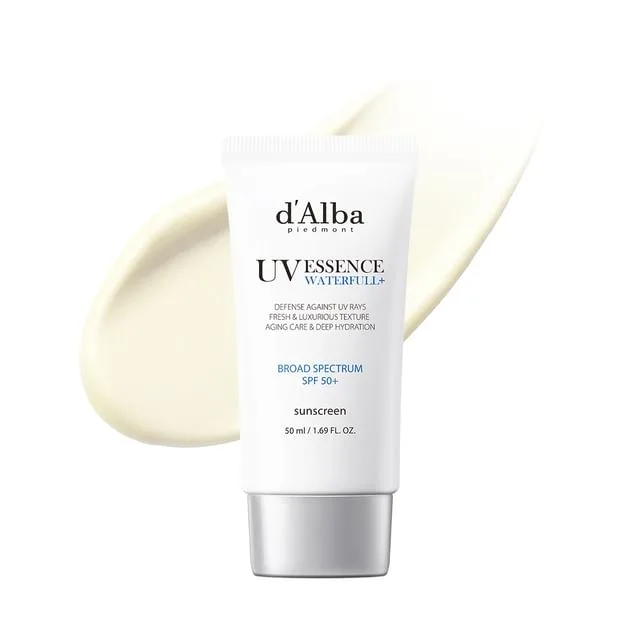
Most K-beauty 'essence sunscreens' rely on octinoxate-heavy filter blends that degrade quickly and leave a white cast. This one uses the modern Uvinul A Plus + Uvinul T 150 + Tinosorb S trio — filters not legal in the US — paired with niacinamide and panthenol concentrations high enough to function as a real treatment step, not just sun protection.
A modern Korean chemical sunscreen that earns its hype. The Uvinul A Plus + Tinosorb S filter blend gives broad-spectrum protection with zero white cast, while niacinamide and panthenol push it past sun protection into genuine skincare territory. The 50ml tube at $32 is the only real friction.
Marketed since 2022 with several thousand reviews across Olive Young, YesStyle, and Amazon, this sunscreen has enough feedback to gauge texture and wear confidently. The score combines that with analysis of its modern Uvinul-Tinosorb filter system; independent SPF lab confirmation in Western publications is the missing piece for d'Alba's emerging line.
The case for it
What would change this: A declared concentration would move this to a firmer reading of the dose.
Same rule for everyone. “Full protection” is the verdict on 2,288 of 45,024 concern verdicts across the catalog; rule P1 decided 2,232 of them. Unchanged since September 5, 2026, engine 5.1.1.
Brand or formulator? Disclose a concentration or correct a fact →
The studies behind the evidence row
The case for it
What would change this: A declared concentration would move this to a firmer reading of the dose.
Same rule for everyone. “Full protection” is the verdict on 2,288 of 45,024 concern verdicts across the catalog; rule P1 decided 2,232 of them. Unchanged since September 5, 2026, engine 5.1.1.
Brand or formulator? Disclose a concentration or correct a fact →
The studies behind the evidence row
The case for it
What would change this: A declared concentration would move this to a firmer reading of the dose.
Same rule for everyone. “Good choice” is the verdict on 9,564 of 45,024 concern verdicts across the catalog; rule R5 decided 9,072 of them. Unchanged since September 5, 2026, engine 5.1.1.
Brand or formulator? Disclose a concentration or correct a fact →
The studies behind the evidence row
The case for it
What would change this: A declared concentration would move this to a firmer reading of the dose.
Same rule for everyone. “Promising” is the verdict on 7,858 of 45,024 concern verdicts across the catalog; rule R9p decided 7,858 of them. Unchanged since September 5, 2026, engine 5.1.1.
Brand or formulator? Disclose a concentration or correct a fact →
The studies behind the evidence row
Does the jobDoes what a sunscreen is for: UVA coverage, kind to the skin wearing it. Not measured from the label: pleasant enough to actually use.
A verdict is DermApproved’s assessment of how well a product’s ingredients fit a concern — never a claim about what the product treats. Evidence dots and collected reviews sit beside it and are never blended in. Rules 0.5.1 · evidence table ev-2026.09-r228 · how we decide
Let's get this out of the way first: white truffle extract is not why this sunscreen works. d'Alba built its entire identity around the ingredient — the packaging invokes Italian Alba truffles, presumably to evoke a vague sense of luxury and rarity — but flip the tube around and read the INCI, and you'll find the truffle sitting comfortably in the back half of the list, below the emulsifiers and right next to the green tea. What is actually doing the work here is a filter system that, frankly, isn't even legal in the United States.
The lineup is Diethylamino Hydroxybenzoyl Hexyl Benzoate (Uvinul A Plus), Ethylhexyl Triazone (Uvinul T 150), Diethylhexyl Butamido Triazone (Uvasorb HEB), and Bis-Ethylhexyloxyphenol Methoxyphenyl Triazine (Tinosorb S) — four modern filters, none of them approved for OTC use by the FDA, and collectively one of the most elegant blends a chemist can assemble right now. Uvinul A Plus handles long-wave UVA-1, the radiation responsible for most photoaging, with a photostability that avobenzone — America's only UVA-1 option — can only dream of. The two triazones absorb UVB with an efficiency high enough to reach SPF 50+ at modest concentrations, which leaves room in the formula for the things that actually feel good on your face. And Tinosorb S provides genuinely broad coverage while stabilizing everything around it, which is why this sunscreen holds up across a day rather than quietly degrading by lunchtime.
That photostability is the whole ballgame, and it is worth understanding why. A filter that breaks down under UV is not merely losing effectiveness; it is losing effectiveness invisibly, while you go on believing you are protected. The reason older chemical sunscreens needed octocrylene stacked on top of avobenzone was to prop up a molecule that fell apart in sunlight — an absurd requirement for a product whose only job is to be in sunlight. This formula does not have that problem, and no American-market chemical sunscreen can currently say the same.
Sitting just under the filters is niacinamide, high enough on the list to be present at a meaningful concentration. This is where the formula stops being just a sunscreen and starts being skincare. Niacinamide regulates oil, supports the barrier, and offers mild brightening, which means wearing this all day is a quiet treatment step you didn't have to add. Underneath it: propanediol and pentylene glycol for hydration, glycerin, panthenol for soothing, sodium hyaluronate for water-binding, adenosine at what is almost certainly the Korean-regulated anti-wrinkle dose, tocopherol as an antioxidant, and allantoin and centella for calm. It is a genuinely thoughtful supporting cast, and the antioxidants matter more than they look — no filter stops every photon, and mopping up the radicals that get through is the second half of real photoprotection.
The texture earns the 'waterfull essence' marketing. It pours from the tube as a milky liquid that breaks into a watery cream on contact and absorbs in under a minute. There is a brief tacky window — maybe thirty seconds — before it settles into a soft dewy finish that makes skin look hydrated rather than coated. There is no white cast on any skin tone, which is the entire reason to build a chemical sunscreen with these filters in the first place. If you have spent years dealing with the gray flash from zinc-heavy formulas, the first time you put this on a melanin-rich face is a small revelation.
The caveat that undoes most sunscreens applies here too: the dose. Two finger-lengths — roughly a quarter teaspoon — for face and neck is what the SPF 50+ rating assumes. Almost nobody applies that much, which is why real-world protection routinely lands far below the label. A 50ml tube used correctly lasts five to seven weeks. If yours is lasting four months, the number on the front is a fiction you are telling yourself.
Is it perfect? No. Fifty millilitres is small for something you are meant to use generously, and at $32 the per-millilitre cost sits well above other Korean sunscreens using similar filter systems. The dewy finish, flattering on most skin, can read as shine on very oily faces by afternoon. It is not a beach sunscreen — light water resistance handles a commute and incidental sweat, not swimming or a long run. And while it is labeled fragrance-free, the plant extracts leave a faint earthy whisper that the most reactive users should know about. The olive-derived emulsifiers, meanwhile, put it outside fungal-acne-safe territory.
The brand-heritage question deserves honesty too. d'Alba launched in 2017, which makes it new by skincare standards, and it grew on shelf placement and influencer adoption rather than independent clinical validation. The marketing leans hard on vague luxury cues, and that is fine, but it is not the same as decades of dermatologist-developed track record. What rescues the brand from feeling like pure theater is that the formulators clearly know what they are doing. There is a difference between an indie using hype to disguise a thin formula and one using a strong formula to justify its hype, and d'Alba sits firmly in the second camp — the truffle is the story, the filters are the product.
Who is this for? Anyone who needs a daily sunscreen that disappears on the skin, plays nicely with serums and makeup, and does not pick fights with sensitive or dehydrated complexions. It is particularly good for people coming off retinoids or acids who need their daytime barrier left alone, and for anyone with melanin-rich skin who has given up on mineral formulas. Three thousand-odd reviewers averaging four and a half stars mostly praise exactly those things: no cast, no sting, comfortable under makeup.
Just go in knowing what you are paying a premium for. It is a small tube of legitimately well-formulated SPF with filters most of the world cannot legally buy — not a truffle.
The hero actives that drive this product's performance.
| Ingredient | Function | Evidence |
|---|---|---|
| Diethylamino Hydroxybenzoyl Hexyl Benzoate (Uvinul A Plus) | A modern UVA filter that anchors the photostable filter system in this essence sunscreen. Working alongside Uvinul T 150 and Tinosorb S, it gives the watery base broad UVA-1 protection without the heavy white cast you'd get from high-zinc formulas — which is the whole point of marketing this as 'waterfull.' | Regulator-approved for Sun Damage · limited certainty |
| Ethylhexyl Triazone (Uvinul T 150) | One of the most efficient UVB absorbers available. Paired with Tinosorb S in this formula, it delivers high SPF performance while keeping the texture light enough that the brand can credibly call this an 'essence sun cream' rather than just a sunscreen. | Regulator-approved for Sun Damage · limited certainty |
| Bis-Ethylhexyloxyphenol Methoxyphenyl Triazine (Tinosorb S) | Provides photostable broad-spectrum coverage and stabilizes the entire filter blend, preventing UV-induced degradation of the other actives during wear. It's why this sunscreen holds up better than typical chemical-only Korean SPFs that rely on octinoxate. | Regulator-approved for Sun Damage · limited certainty |
| Tuber Magnatum (White Truffle) Extract | d'Alba's signature ingredient — marketed for antioxidant and amino acid content. In this sunscreen it functions more as brand identity than primary actor; the heavy lifting on hydration comes from the glycerin, panthenol, and sodium hyaluronate sitting just below it on the list. | Not yet assessed |
| Niacinamide | Sits high on the list and adds barrier support, oil regulation, and a mild brightening effect to a sunscreen that most users will leave on all day. It's the kind of multitasker that justifies wearing this as a moisturizer-replacement step on simple routine days. | Limited for Sun Damage |
| Panthenol & Sodium Hyaluronate | The hydration backbone that makes the 'waterfull' claim hold up. Panthenol soothes any sting from the chemical filters while sodium hyaluronate pulls water into the upper layers, keeping the finish dewy rather than the typical dry-down of high-SPF essence sunscreens. | Established mechanism for Dehydration · established mechanism |
Ingredient standings describe the active at treatment-level doses and vehicles; this product's own condition grades weigh its actual formula.
Water, Propanediol, Dibutyl Adipate, Diethylamino Hydroxybenzoyl Hexyl Benzoate, Ethylhexyl Triazone, Diethylhexyl Butamido Triazone, Bis-Ethylhexyloxyphenol Methoxyphenyl Triazine, Niacinamide, Pentylene Glycol, Methylpropanediol, Glycerin, Cetearyl Olivate, Sorbitan Olivate, 1,2-Hexanediol, Polyglyceryl-3 Methylglucose Distearate, Tuber Magnatum Extract, Camellia Sinensis Leaf Extract, Centella Asiatica Extract, Adenosine, Tocopherol, Sodium Hyaluronate, Panthenol, Allantoin, Carbomer, Tromethamine, Xanthan Gum, Disodium EDTA, Caprylyl Glycol, Ethylhexylglycerin
sunscreen
AM
Apply as the final AM step over moisturizer. Use roughly two finger-lengths for face and neck to actually hit SPF 50+. Reapply every two hours of direct sun exposure.
Immediate hydration and a soft dewy finish on first use. UV protection is active immediately. Long-term photoprotection benefits — reduced sun damage, slower visible aging — accumulate over months and years of consistent daily use.
The filter system here is the formula's strongest scientific argument. Uvinul A Plus (BEMT — bemotrizinol's UVA-focused cousin) absorbs in the 320-400nm range with a peak around 354nm, covering the UVA-1 band that drives photoaging and indirect DNA damage. Unlike avobenzone, it remains photostable on its own and does not require pairing with octocrylene to prevent rapid breakdown during sun exposure. Ethylhexyl Triazone is one of the highest-efficacy UVB filters in cosmetic chemistry, with a molar extinction coefficient that allows lower use concentrations to achieve high SPF — leaving formulation room for the supporting actives. Tinosorb S provides truly broad-spectrum coverage from 280-400nm and acts as a stabilizer for the rest of the filter system.
The niacinamide content is the second pillar. The barrier-supporting effects of topical niacinamide are well documented; published research has shown that topical niacinamide at 2-5% improves transepidermal water loss, reduces sebum excretion, and modulates melanosome transfer to keratinocytes — the mechanism behind its mild brightening effect. While d'Alba doesn't disclose the exact concentration, niacinamide's high position on the INCI list suggests a level within that effective range. Panthenol, sitting alongside it, has long-standing evidence as a humectant and barrier soother, particularly useful in a leave-on daytime product where it can buffer any irritation from the chemical filter load. The white truffle extract itself has a thinner evidence base — most published work centers on its amino acid and antioxidant content in food-science contexts rather than topical efficacy in human skin trials, so it's reasonable to consider it a supporting marketing actor rather than a primary mechanism of action.
Dermatologists in everyday practice generally favor sunscreens with photostable filter systems over older avobenzone-only formulas, and Korean and European products frequently come up in clinical recommendations because they have access to filters like Tinosorb S and Uvinul T 150 that the US has not yet approved. Dermatologists treating patients with melasma, post-inflammatory hyperpigmentation, or rosacea often look for sunscreens that combine high broad-spectrum protection with anti-inflammatory ingredients — and a niacinamide-supported chemical SPF like this one fits that brief well. The fragrance-free, alcohol-free profile makes it a reasonable suggestion for sensitive or actives-heavy routines, with the standard caveat that any patient with a history of reactions to specific chemical filters should patch test before committing to daily use.
Apply as the final step of your morning routine, after moisturizer and before makeup. Use approximately two finger-lengths of product — about a quarter teaspoon — to cover face and neck at the dose required to actually achieve labeled SPF protection. Pat in gently rather than rubbing aggressively, and wait about 60 seconds for the brief tacky window to pass before applying foundation. Reapply every two hours of direct sun exposure, or after sweating or swimming. For desk-based days, a single morning application is usually adequate provided you're not sitting next to a sun-facing window.
At $32 for 50ml, this is in the upper range of K-beauty sunscreens. Comparable per-milliliter prices put it well above Beauty of Joseon and Round Lab options that use similar (if slightly less elegant) filter blends. What you're paying for is a formula where every ingredient pulls its weight: modern filters, meaningful niacinamide and panthenol, no fragrance, vegan certification. For people who've struggled with white cast or sensitivity from other sunscreens, the premium is defensible. For anyone happy with $15-20 alternatives that work for their skin, this is a stretch. The brand sells only the 50ml size, so there's no larger-format value play.
Anyone with normal, dry, dehydrated, or sensitive skin who wants a daily sunscreen that disappears on the skin, layers cleanly under makeup, and adds a quiet skincare benefit through niacinamide. Especially good for melanin-rich skin tones tired of white cast and for people coming off harsh actives who need a calm daytime barrier.
Very oily users who hate any added dewiness, swimmers and outdoor athletes who need true water-resistant protection, and anyone on a strict budget who can get the same UV protection from a $15 alternative. It is similarly a skip if you're following a strict fungal-acne-safe routine.
Ready to try d'Alba Waterfull Essence Sun Cream SPF 50+?
Buy at Amazon ♥Lightweight milky essence that breaks into a watery cream on contact
Fragrance-free with a faint natural note from the plant extracts
Soft squeeze tube with a narrow nozzle for controlled dispensing
Spreads easily and absorbs in under a minute with no white cast on most skin tones. The first few applications can feel slightly tacky for 30 seconds before settling into a soft dewy finish. No stinging or sensitivity in our experience.
About 5-7 weeks with daily two-finger face-and-neck application
All Year
d'Alba built its identity around white truffle extract, but the brand's sunscreens are where its formulation team actually flexes. This essence sun cream launched in 2022 as part of the broader Korean shift toward filter blends that achieve high SPF without zinc-induced cast, and quickly became one of Olive Young's best-selling chemical sunscreens.
d'Alba launched in 2017 as a Korean indie brand built around Italian white truffle extract as its signature ingredient. The brand grew through Olive Young and global e-commerce expansion, but independent clinical validation of its formulations remains limited compared to legacy K-beauty houses.
Korean essence sunscreens aren't strong enough for serious sun exposure.
This formula uses three of the most photostable UV filters available globally. The 'essence' descriptor refers to texture and feel, not protection level — the SPF 50+ PA++++ rating is genuine.
White truffle extract is what makes this sunscreen work.
White truffle is brand identity, not a hero active here. The actual heavy lifting comes from the modern UV filter system and the niacinamide, panthenol, and hyaluronic acid supporting cast.
No. The formula uses entirely chemical UV filters — no zinc oxide or titanium dioxide — so it absorbs invisibly across all skin tones, which is one of its strongest selling points versus Western mineral SPFs.
It contains no oxybenzone or octinoxate, the two filters most commonly flagged for reef damage. It does contain other chemical filters, so 'reef-friendly' is more accurate than 'reef-safe' under strict definitions.
Yes — the dewy essence finish actually grips foundation well after about 60 seconds of dry-down. Tinted bases tend to apply more evenly over it than over heavier mineral sunscreens.
It performs well for most oily skin thanks to the niacinamide and lightweight base, but the dewy finish may feel like extra shine in very oily users. It is not fungal-acne safe due to several oil-derived emollients.
Roughly two finger-lengths for face and neck, which translates to about 1.2 grams. Most users underapply sunscreen by half — accurate dosing is the difference between getting the labeled SPF 50+ and effectively SPF 15-20.
It has light water resistance but is not labeled for swimming or heavy sweating. For beach or pool days, choose a dedicated water-resistant sunscreen and reapply more frequently.
Recurring themes our editors read across retailer reviews of this product — summaries in our words, not quotations, and not a substitute for your own patch test.
No white cast
Hydrating finish
Comfortable under makeup
No fragrance
Doesn't sting eyes
Small 50ml size for the price
Slight initial tackiness
Not water-resistant enough for heavy sweating
Verified answers from our questions library — the nuance a product page cannot carry.