Rosacea Isn't One Thing — and That's Why Your 'Anti-Redness' Routine Isn't Working
Flushing, bumps, and visible vessels are three different problems hiding under one word, and treating them the same way is how most people make their skin angrier.
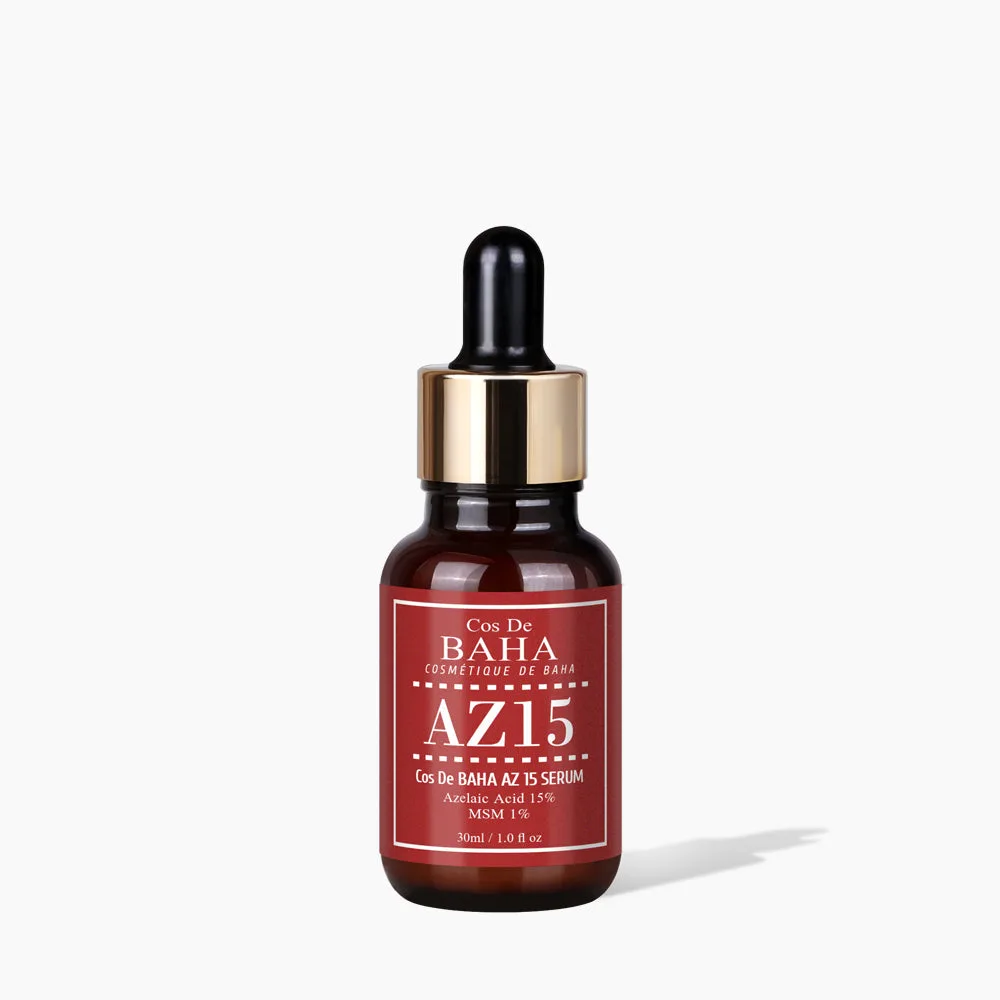
It dissolves 15 percent azelaic acid into a clear, watery serum by partly neutralising it and using propylene glycol as a solvent, avoiding the gritty feel of suspension gels, with MSM, ceramide, panthenol and centella for comfort.
An impressively elegant way to use 15 percent azelaic acid: a clear, fragrance-free serum with soothing MSM, ceramide and panthenol at a very low price. Partial neutralisation and an undisclosed pH mean it may not match prescription gels for potency, and it has little real-world track record yet, but it is an excellent entry point for mild acne, redness and dark marks.
As a 2025 launch with very few independent reviews, AZ15 is assessed mainly on its published ingredient list and the clinical evidence for azelaic acid at this concentration. Its pH and real-world tolerability have not been documented.
The case for it
Cautions: fungal-acne triggers.
Same rule for everyone. “Strong choice” is the verdict on 1,459 of 45,024 concern verdicts across the catalog; rule R2 decided 892 of them. As of September 25, 2026, engine 5.1.1.
Brand or formulator? Disclose a concentration or correct a fact →
The studies behind the evidence row
The case for it
Same rule for everyone. “Strong choice” is the verdict on 1,459 of 45,024 concern verdicts across the catalog; rule R2 decided 892 of them. As of September 25, 2026, engine 5.1.1.
Brand or formulator? Disclose a concentration or correct a fact →
The studies behind the evidence row
The case for it
Same rule for everyone. “Good choice” is the verdict on 9,564 of 45,024 concern verdicts across the catalog; rule R5 decided 9,072 of them. As of September 25, 2026, engine 5.1.1.
Brand or formulator? Disclose a concentration or correct a fact →
The studies behind the evidence row
The case for it
What would change this: Guideline or regulatory standing for the active on this concern would move this from a promising bet to a recommendation.
Same rule for everyone. “Promising” is the verdict on 7,858 of 45,024 concern verdicts across the catalog; rule R9p decided 7,858 of them. As of September 25, 2026, engine 5.1.1.
Brand or formulator? Disclose a concentration or correct a fact →
The studies behind the evidence row
A verdict is DermApproved’s assessment of how well a product’s ingredients fit a concern — never a claim about what the product treats. Evidence dots and collected reviews sit beside it and are never blended in. Rules 0.5.1 · evidence table ev-2026.09-r228 · how we decide
Azelaic acid is a stubborn molecule to formulate. It barely dissolves in water, which is why most products containing it are thick creams or gels in which fine crystals are suspended, and why they often feel slightly gritty. Cos De BAHA's AZ15 does something different: it is a clear, watery serum that carries fifteen percent azelaic acid, the same concentration as the prescription gel approved in the United States for rosacea. The trick is on the ingredient list. Sodium hydroxide sits right after the azelaic acid, converting part of it into its far more soluble salt, while propylene glycol, the second ingredient, works as a solvent for the rest. The result is an unusually elegant texture for a high-strength azelaic product, with one open question about how much of the acid remains in its most active form.
That question matters because pH governs how azelaic acid behaves. Neutralising the acid makes it dissolve and feel gentler, but the salt form penetrates the skin less readily than the free acid. Prescription formulations typically keep a low pH and suspend the undissolved acid instead. Cos De BAHA does not publish the pH of AZ15, so it is impossible to say how the finished serum compares, but the design choice leans towards comfort and wearability over maximum potency. For many people that trade-off will be worth it, because the main reason people stop using azelaic acid is itch, sting and a gritty feel on the skin.
The supporting cast is thoughtful and fragrance-free. MSM, listed as dimethyl sulfone and declared at one percent, is an organic sulfur compound often used for its soothing reputation, though evidence for it in skincare is modest. Panthenol, allantoin and dipotassium glycyrrhizate from liquorice are established soothers. Ceramide NP, two forms of hyaluronic acid, betaine and centella with madecassoside add hydration and barrier support. A small group of botanicals, green tea, elderflower, bitter melon and edelweiss, appears near the end. None of these compete with the azelaic acid; they exist to make a fifteen percent serum easier to live with, and that is the right priority.
Azelaic acid itself earns its place on a very short list of multitasking actives with solid clinical evidence. It reduces the acne-related bacterium Cutibacterium acnes, normalises the way cells line the follicle, calms inflammation, and inhibits tyrosinase, the enzyme that drives pigment production. That combination makes it useful for acne, the redness and bumps of papulopustular rosacea, and post-inflammatory dark marks. It is also one of the few acne treatments considered compatible with pregnancy, which is why dermatologists often recommend it to people who cannot use retinoids.
In practice, the serum spreads easily, absorbs within a minute and leaves a slightly tacky film that disappears under moisturiser. Expect a mild tingle or itch in the first week or two, which is normal for azelaic acid at this strength and usually fades with continued use. Starting once a day, as the brand suggests, and then moving to twice daily if tolerated is sensible. Results build slowly: redness and inflamed spots may start to settle within four weeks, while dark marks usually need eight to twelve.
It also combines well with other steps. Azelaic acid and niacinamide target overlapping problems through different mechanisms, so layering a niacinamide serum or moisturiser alongside AZ15 is a common and well-tolerated pairing. With retinoids, the usual approach is to alternate evenings until the skin has adjusted, then use both if there is no irritation. Stacking it with strong glycolic or salicylic acid exfoliants on the same night is where problems tend to start, because all three can cause stinging on their own. For people with rosacea, a plain ceramide moisturiser and mineral sunscreen are the most forgiving companions, keeping the rest of the routine calm while the azelaic acid does its slow work. Photographing the skin in consistent light at the start makes it easier to judge progress after two or three months, since gradual changes in redness and marks are notoriously hard to notice day to day.
There are real limitations. The azelaic acid percentage is declared, but the pH and the proportion that remains as free acid are not, so you cannot be certain this serum performs like a prescription product. The propylene glycol that helps dissolve the acid is a mild irritant and occasional allergen for some people. And, as with any exfoliating active, daily sunscreen is important when treating pigmentation.
Cos De BAHA has built its reputation on inexpensive, single-focus serums sold largely through Amazon and its own stores, and AZ15 is one of its newer, higher-strength launches from 2025. There are few independent reviews so far, which means the long-term tolerance and results in real users are not yet well documented.
The value is striking. At about fifteen dollars for 30 ml on the brand's own US store, and slightly more at other retailers, it costs a fraction of prescription azelaic acid, although the comparison is imperfect because the prescription gel has been proven in large trials and this serum has not. For people with mild acne, redness or dark marks who want to try a high-strength azelaic acid without a prescription, it is a well-designed, fragrance-free, easy-to-use option. Anyone with moderate to severe rosacea or acne should still consider seeing a dermatologist, where prescription formulations and other treatments are available.
The hero actives that drive this product's performance.
| Ingredient | Function | Evidence |
|---|---|---|
| Azelaic Acid (15%) | Declared at 15 percent and partly neutralised with sodium hydroxide so it dissolves into a clear serum, targeting acne, redness and dark marks with less grit than suspension gels. | Regulator-approved for Rosacea · well-established certainty |
| Dimethyl Sulfone (MSM) (1%) | Included at one percent for its soothing reputation, supporting tolerance of the high azelaic acid dose rather than acting as a primary treatment. | Not yet assessed |
| Ceramide NP | Works with betaine and two forms of hyaluronic acid to support the barrier while the azelaic acid causes its typical early tingling. | Not yet assessed |
| Panthenol | Joins allantoin and dipotassium glycyrrhizate in calming the itch and sting common in the first weeks of azelaic acid use. | No qualifying study for Rosacea |
| Madecassoside | A purified centella compound added with centella extract to support recovery in skin treated for acne and redness. | Limited for Rosacea |
Ingredient standings describe the active at treatment-level doses and vehicles; this product's own condition grades weigh its actual formula.
Water, Propylene Glycol, Azelaic Acid, Sodium Hydroxide, 1,2-Hexanediol, Polysorbate 20, Dimethyl Sulfone, Propanediol, Betaine, Panthenol, Dipotassium Glycyrrhizate, Allantoin, Ceramide NP, Sodium Hyaluronate, Hydrolyzed Hyaluronic Acid, Centella Asiatica Extract, Madecassoside, Hydroxyethylcellulose, Sodium Polyacrylate, Polyglyceryl-10 Laurate, Camellia Sinensis Leaf Extract, Sambucus Nigra Flower Extract, Momordica Charantia Fruit Extract, Leontopodium Alpinum Extract
serum
AM & PM
Apply a thin layer to clean, dry skin before moisturiser, once daily at first; on nights with a retinoid or other exfoliant, alternate rather than layer until tolerance is established.
First one to two weeks: mild tingling or itching that usually fades. Four weeks: redness and inflamed spots often begin to settle. Eight to twelve weeks: dark marks and uneven tone improve more visibly.
Azelaic acid is a dicarboxylic acid with several relevant actions: it is antibacterial against Cutibacterium acnes, normalises keratinisation in the follicle, reduces inflammatory mediators and inhibits tyrosinase, which explains its use in acne, rosacea and hyperpigmentation. Its strongest clinical evidence comes from prescription formulations. In a 2003 study in the Journal of the American Academy of Dermatology, Thiboutot and colleagues reported two vehicle-controlled phase III trials of azelaic acid 15% gel in papulopustular rosacea, with therapeutic success in about 61 to 62 percent of patients versus 40 to 48 percent with vehicle, and inflammatory lesion reductions of 51 to 58 percent.
This serum shares the concentration but not the vehicle. Azelaic acid dissolves poorly in water, so prescription gels generally suspend it at low pH. AZ15 instead partly neutralises it with sodium hydroxide and uses propylene glycol as a co-solvent. Raising the pH increases the proportion of azelate salt, which dissolves better and irritates less but penetrates the stratum corneum less readily than the free acid. Without a published pH, the balance between comfort and bioavailability cannot be assessed, and the trial results above should not be assumed to transfer.
The supporting ingredients are chosen to improve tolerability: panthenol, allantoin and dipotassium glycyrrhizate have soothing effects, ceramide NP and hyaluronic acid support the barrier, and MSM is used for its anti-inflammatory reputation, although clinical data for topical MSM are limited.
Azelaic acid is a well-established option in dermatology for mild to moderate acne, papulopustular rosacea and post-inflammatory hyperpigmentation, and it is often chosen during pregnancy or for patients who cannot tolerate retinoids. Clinicians typically advise starting once daily, expecting transient stinging or itching, and allowing eight to twelve weeks to judge results. Over-the-counter azelaic acid products vary widely in formulation, and their performance may not match that of prescription gels and foams, so patients with persistent or moderate disease are usually encouraged to seek assessment. Daily sunscreen is recommended when treating pigmentation.
Once the face is cleansed and completely dry, place three to four drops on the fingertips and press a thin layer over the whole face, or over areas with acne, redness or dark marks. Start once daily, preferably in the evening, for the first two weeks, then increase to twice daily if your skin tolerates it. Follow with moisturiser, and use a broad-spectrum sunscreen every morning. Avoid the eyes and lips, and alternate nights with retinoids or strong exfoliating acids at first.
At about fifteen dollars for 30 ml on Cos De BAHA's US store, and around sixteen dollars at other retailers, this is exceptional value for a 15 percent azelaic acid product, and a bottle lasts about two months. The formula is fragrance-free and thoughtfully soothed. The main uncertainty is performance relative to prescription azelaic acid, which cannot be assumed; still, as a low-cost way to try a high-strength azelaic acid, it is hard to beat. Cos De BAHA's pricing reflects a no-frills, direct-to-consumer model rather than any compromise on key ingredients.
People with mild acne, papulopustular redness or post-acne dark marks who want an affordable, fragrance-free high-strength azelaic acid in a lightweight serum, including those who need a pregnancy-friendly option.
People with moderate to severe rosacea or acne who need prescription treatment, those sensitive to propylene glycol, and anyone who cannot tolerate the initial tingling of azelaic acid.
Ready to try Cos De BAHA Azelaic Acid 15% MSM 1% Ceramide CICA B5 Serum?
Buy at Amazon ♥A clear, watery serum that spreads easily and dries to a faintly tacky film.
No added fragrance; essentially odourless apart from a faint neutral note.
A 30 ml amber glass bottle with a gold-collared dropper.
Mild tingling or itching is common in the first week or two, particularly on redness-prone cheeks, and usually eases. Some flaking may appear as azelaic acid normalises cell turnover. Visible changes in marks take at least a month.
About two months with a few drops used once or twice daily on the face.
All Year
AZ15 joined Cos De BAHA's azelaic acid range in 2025 as a higher-strength step up from its 5 and 10 percent serums, aimed at people wanting a prescription-level concentration in a lightweight format.
Cos De BAHA, founded in Korea in 2016, specialises in low-cost, ingredient-led serums with declared active percentages, sold mainly through Amazon and its own stores. It has not published clinical studies of its individual products.
A 15 percent azelaic acid serum is identical to prescription azelaic acid gel.
The concentration matches, but the formulation, pH and the share of free acid differ, and this serum has not been tested in clinical trials.
Tingling means azelaic acid is damaging the skin.
Mild, short-lived tingling or itch is a common early effect of azelaic acid and usually fades. Persistent burning or swelling is a reason to stop.
It contains 15 percent azelaic acid, partly neutralised to dissolve in a clear serum, along with 1 percent MSM.
Azelaic acid at 15 percent is well studied for papulopustular rosacea. This serum may help mild redness and bumps, but moderate to severe rosacea should be assessed by a dermatologist.
Azelaic acid is generally regarded as one of the safer acne treatments in pregnancy, but check with a clinician before starting any active.
Tingling and mild itch are common in the first weeks of azelaic acid use and usually settle. Start once daily and build up.
It pairs well with niacinamide. With retinoids, alternate nights at first to limit irritation.
Yes. It contains no added fragrance or essential oils.
Recurring themes our editors read across retailer reviews of this product — summaries in our words, not quotations, and not a substitute for your own patch test.
Clear, watery texture without grit
Fragrance-free
Very affordable for 15 percent azelaic acid
Tingling in the first weeks
Slightly tacky finish
Often out of stock on the brand store