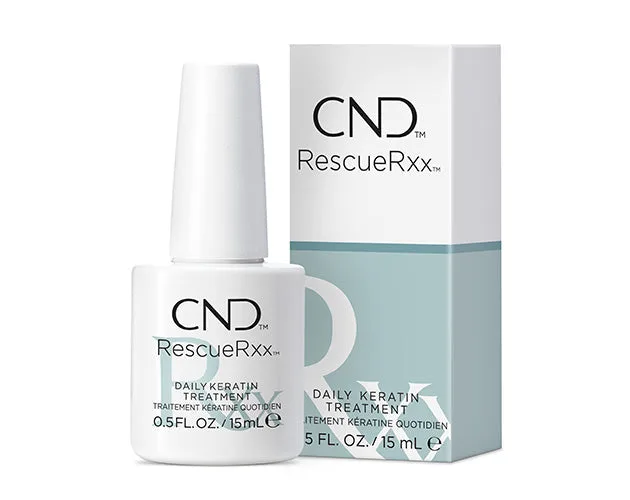
It looks like a cuticle oil and behaves like a delivery system. The nail plate is a water-loving barrier that repels most oils and washes off most water-soluble ingredients, so this is built as an oil-continuous emulsion — jojoba and almond carrying a water phase of hydrolyzed keratin and a cationic polymer that anchors the protein where it lands. Almost nothing else in the aisle is solving that particular problem on purpose.
nail careliquidprofessionalParaben FreeCruelty Free
Sold as a keratin treatment, this is really a smart little delivery vehicle — an oil-continuous emulsion smuggling water-soluble protein and a binding polymer onto a nail plate that repels almost everything. Peeling and white spots genuinely improve over about a month. The catch is twice-daily use from a small expensive bottle, and no polish for the duration.
The efficacy numbers attached to this product everywhere online originate with the manufacturer and have not been published or independently verified, so they inform this assessment without anchoring it. Retail feedback is solid but moderate in volume — 181 ratings at Ulta — meaning user patterns here are reasonably indicative rather than definitive, and the formulation reasoning carries proportionally more weight in the score.
Verdicts
How well it fits each concern
Verdict by concern tap a concern for the case
Avoidfor DrynessIn your profileYou chose · This formula carries drying alcohol — a known trigger for dryness — so it is not a fit however good its actives are.Moderate evidenceCarries a triggerNo reviews collected yet
The case for it
Jojoba Oil has trial-supported standing for this concern.
It is plausibly present at a working level, though the concentration is not declared.
The formula carries a known trigger for this concern, which decides the verdict before any efficacy question.
Cautions: fragrance.
What would change this: Removing the trigger named above would let the actives be judged on their own.
Same rule for everyone. “Avoid” is the verdict on 1,909 of 45,024 concern verdicts across the catalog; rule R1 decided 1,304 of them.
Unchanged since September 5, 2026, engine 5.1.1.
R1 — Safety outranks praise (MASTER-PLAN §1.7). A condition-weighted trigger (multiplier ≥ 2 in condition-fit-matrix) decides the verdict before any efficacy question. · the full register
Carrying active
Jojoba Oil
Standing
supported — its mechanism is established
Form
plausible — studied range 1–100%, from the trials on the row; needs leave-on contact
Tolerability
harsh — drying alcohol
Row checked
against its sources on July 17, 2026 (evidence table ev-2026.09-r228)
The studies behind the evidence row
International Cosmetic Ingredient Dictionary and Handbook — declared function — Personal Care Products Council
A verdict is DermApproved’s assessment of how well a product’s ingredients fit a concern — never a claim about what the product treats. Evidence dots and collected reviews sit beside it and are never blended in.
Rules 0.5.1 · evidence table ev-2026.09-r228 · how we decide
Assessment
Pros & Cons
Pros
✓ Oil-in-water engineering genuinely solves the nail plate's delivery problem
✓ Cationic polymer anchors the protein so it survives handwashing
✓ Peeling and white spots visibly improve at around four weeks
✓ Conditions the cuticle at the same time, replacing a second product
✓ Absorbs in under a minute with no lacquer feel
✓ Sold in a mini size for trialling before committing
✓ Aimed at a specific problem rather than sold as a general tonic
Cons
✗ Twice-daily use drains the 15 ml bottle in about two months
✗ Requires bare nails, ruling out polish during treatment
✗ Efficacy figures come from unpublished company-commissioned testing
✗ Leaves a faint tacky film for a minute after each application
✗ Sweet almond base excludes anyone with a tree nut allergy
✗ Expensive per month compared with a basic conditioning oil
Review
Full Review
There is something faintly circular about a company that spent the 1980s making hard acrylic nails a mass phenomenon now selling the treatment for what hard acrylic nails do to the plate underneath. That is not a criticism so much as an observation about how the nail industry works, and it does mean CND has spent longer than almost anyone looking at the specific wreckage this product addresses: a natural nail a week after a set comes off, thin from filing, chalky at the surface, lifting in translucent layers at the free edge.
What is in the bottle is more interesting than the marketing suggests. Read the list and you see sweet almond oil, jojoba, sorbitan oleate, water, isopropyl alcohol, modified polyamidoamine, hydrolyzed keratin, fragrance. Read it as a formulator and you see a water-in-oil emulsion with a very deliberate job. The nail plate is a dense, hydrophilic, disulphide-cross-linked barrier that shrugs off bulky lipophilic oils and rinses away water-soluble ingredients within minutes of the next handwash. Solving that means finding a vehicle that can get in and a way to make the payload stay. This formula suspends a water phase carrying protein inside an oil phase led by jojoba — the wax ester most likely to make headway into keratin — and adds a small hit of isopropyl alcohol so that water phase spreads thin and flashes off, depositing its cargo evenly. The faint tack you feel a minute after application is not a flaw. It is the point.
The cargo itself deserves a clear-eyed look. Hydrolyzed keratin cannot rebuild a nail; nothing applied topically can, because the plate was assembled weeks ago at the matrix under your skin and has been dead ever since. What protein fragments can do is adsorb onto the surface and settle into the microscopic gaps where layers have begun to delaminate — filling and binding rather than regenerating. That is genuinely useful for a peeling nail, and it is also exactly why the effect is temporary and needs repeating. The modified polyamidoamine is what stops it being useless: a branched cationic polymer that latches onto the negatively charged nail surface and holds the protein in place through handwashing. It is the least advertised ingredient in the bottle and probably the one doing the most to differentiate it from a jar of protein and hope.
CND publishes figures — a 73 percent decrease in splitting and an 80 percent decrease in peeling at four weeks — and those numbers appear on every retailer page carrying it. They come from company-commissioned testing that has not been published in a peer-reviewed journal or independently replicated, which does not make them false but does mean they should be read as a manufacturer's data rather than as clinical evidence. What can be said is that four weeks matches what users describe, and that a fair amount of the visible improvement in the first days is optical: an even film makes a rough plate reflect light like a smooth one.
In practice it is pleasant to use, which matters for something requiring twice-daily application. It handles like a cuticle oil, absorbs in under a minute, and conveniently softens the nail fold while it works, so it replaces rather than adds to a routine. The brush loads more than a nail needs — wipe it on the neck — and one drop per nail, massaged into the plate, the fold and under the free edge, covers everything. The regimen is the difficult part. Twice a day for a month is a genuine ask, the 15 ml bottle empties in roughly two months at that rate, and the whole thing only works on bare nails, meaning a polish-free stretch at precisely the moment your hands look their worst. There is no way around that: the protein cannot reach the plate through a base coat, and anyone hoping to run this under a manicure is buying an expensive cuticle oil.
The exclusions are worth stating plainly. Sweet almond oil leads the list, so this is off the table with a tree nut allergy. Hydrolyzed keratin is animal-derived, typically from wool or feathers, so it is not vegan. And there is a declared fragrance, applied to skin that around a damaged nail is often already split. None of those are formulation failures; they are just facts that rule out more people than the marketing acknowledges.
On price, twenty-two dollars for half an ounce consumed twice daily works out steeper than it looks — call it eleven dollars a month during an active recovery, which is more than most treatment products in this category and considerably more than a bottle of plain oil. The defence is that plain oil does not contain the protein or the polymer, and that the specific problem here, a plate delaminating after enhancement damage, is not one that conditioning alone addresses. Whether that is worth the premium depends entirely on whether your nails are peeling or merely dry. If they are dry, buy an oil. If they are lifting in layers and you are willing to go bare for two months, this is one of the more thoughtfully built things you can put on them, and the fact that its cleverest ingredient never appears on the front of the box tells you the formulators were solving a real problem rather than writing a claim.
Formula
Key Ingredients
The hero actives that drive this product's performance.
The payload the rest of the formula exists to carry — keratin broken into fragments small enough to adsorb onto the nail's own keratin and sit in the microscopic gaps where layers have started to separate, which is what visibly reduces peeling and white spotting on a damaged plate.
Not yet assessed
Modified Polyamidoamine
The least glamorous ingredient and quietly the cleverest: a cationic branched polymer that binds to the negatively charged surface of the nail plate and holds the keratin fragments in place, so the protein does not simply wash off at the next handwash.
Here it works as a vehicle rather than a conditioner — its slim wax-ester molecules move into the plate more readily than triglycerides do, and the emulsion is built so they ferry the water-soluble keratin phase along with them.
Established mechanismfor Dryness · established mechanism
The continuous oil phase that everything else is suspended in, giving the treatment its spreadability and its cuticle-softening side effect — the reason this can be massaged into the fold like an oil rather than painted on like a lacquer.
Not yet assessed
Ingredient standings describe the active at treatment-level doses and
vehicles; this product's own condition grades weigh its actual formula.
Bare nails only — this needs direct contact with the plate, so it goes on before nothing and after nothing except clean, dry hands. Hand cream comes afterward. If you also use a plain cuticle oil, treat this as the replacement rather than an addition, since a second oil layer on top adds nothing but slip.
Results Timeline
The surface looks smoother and less chalky within a few days, which is largely the film. Meaningful reduction in peeling and splitting shows around the four-week mark — the brand's own testing puts it there — and genuinely stronger new growth takes as long as the nail takes to grow out, two to three months for fingernails.
Pairs Well With
hand cream after absorptiona polish-free recovery period after enhancement removalgentle filing to smooth peeling edges
THIS PRODUCT — one drop per nail, massaged into the plate and fold
Let it absorb a minute
Hand cream
Sample PM Routine
Remove any polish and dry nails completely
THIS PRODUCT — second application of the day
Massage into cuticle and under the free edge
Hand cream or overnight gloves
Evidence
Science & Expert Perspective
The Science
Two claims are bundled together here and they deserve separating, because one is well supported and the other is not. The delivery claim rests on established pharmaceutics: the nail plate behaves as a dense hydrophilic gel membrane rather than a lipid barrier, roughly a hundred times thicker than the stratum corneum and cross-linked by disulphide bonds, which makes it far more permeable to small hydrophilic molecules and water than to bulky lipophilic ones — the reason ungual drug delivery research has leaned on keratolytics, penetration enhancers and film formers rather than oils. An emulsion that keeps a water-soluble payload mobile while using a wax ester as the carrying phase is a coherent response to that problem, and the cationic polymer is a recognised strategy for retention, since a positively charged branched polymer will adsorb readily to keratin's negatively charged surface and resist rinsing. The repair claim is where the evidence thins. There is no meaningful published literature demonstrating that topical hydrolyzed keratin is incorporated into an existing nail plate, and mechanistically there is no route by which it could be — the plate is fully keratinised dead tissue produced weeks earlier at the matrix. What protein fragments plausibly do is fill and bridge the microscopic separations between onychocyte layers, a surface effect that reduces the visible delamination people call peeling. The manufacturer's four-week figures for reduced splitting and peeling are consistent with that mechanism and with user reports, but they are unpublished and unreplicated, and no independent trial has tested this formula. Read the evidence as strong on why the vehicle should work and weak on how much the payload contributes.
Clinicians see peeling, splitting nails constantly, and the first move in practice is usually to look for the cause rather than reach for a product. Onychoschizia — the horizontal splitting of the plate into layers — is most often driven by repeated wetting and drying, detergents, solvents including acetone, and mechanical trauma from filing or enhancement removal, which makes exposure reduction and gloves the highest-yield interventions before anything is applied. Where topicals fit, the mainstream recommendation is emollients and occlusives used consistently, with protein-containing treatments regarded as reasonable but not evidence-backed additions. Standard guidance also flags what a surface treatment cannot address: nails that remain brittle despite months of good care warrant evaluation for iron deficiency, thyroid disease or, less commonly, nail psoriasis and lichen planus, and biotin supplementation is generally described as having only weak supporting data in patients without a deficiency. Enhancement wearers are typically advised to take periodic breaks from product rather than to treat continuously through them.
Guidance
Usage & Recommendations
How to Use
Start with completely bare, clean, dry nails — no polish, no base coat, no residual oil. Wipe the loaded brush against the bottle neck, then place a single drop on each nail and massage it across the plate, into the cuticle line and under the free edge with the opposite thumb. Give it a minute to absorb and the alcohol to flash off before applying hand cream or touching fabric. Repeat morning and night; the results people report are built on twice-daily use over four weeks, and consistency matters more than volume. Continue for two to three months if you are recovering from enhancement damage, since improvement tracks nail growth. File peeling edges smooth rather than picking at them, and keep hands out of detergents where possible.
Value Assessment
Twenty-two dollars buys half an ounce, and the twice-daily regimen means roughly two months of use — call it eleven dollars a month while an active recovery is underway, which sits well above most nail treatments and far above a bottle of oil. The mini size exists and is the sensible way to find out whether your nails respond before committing. What justifies the premium, if anything does, is specificity: the protein and the polymer address delamination, which conditioning alone does not, and the alternative for badly peeling nails is usually months of waiting or a return to enhancements that hide the damage while worsening it. For dry-but-intact nails this is overspending on a problem you do not have. For a plate lifting in layers after acrylics, it is a defensible two-month expense with a clear end point rather than an indefinite subscription.
Who Should Buy
Anyone whose nails are peeling, splitting in layers or freckled with white spots after gels, acrylics or dip powder, and who is prepared to go polish-free for a couple of months. It is also a sensible pick for nails thinned by aggressive filing that need help holding together while new growth comes through.
Who Should Skip
Vegans and anyone with a tree nut allergy are ruled out by the keratin and the almond oil respectively. Skip it too if your nails are simply dry rather than delaminating — a plain conditioning oil delivers the same comfort for a third of the price — and if committing to bare nails for two months is not something you will actually do.
A cloudy, faintly viscous oil that sits somewhere between a serum and a cuticle oil — it drags very slightly on the plate before sinking in
Scent
Soft and warm with a faint sweetness, briefly cut by a clean solvent note as the alcohol flashes off
Packaging
Squat glass bottle with a brush in the cap, sold in a full 0.5 oz and a travel-sized mini; the brush loads more than a nail needs, so wipe it on the neck
Finish
non-greasynatural
What to Expect on First Use
The first application feels like using an oil, right up to the moment the alcohol flashes off and leaves a faint tack behind — that residue is the polymer and protein settling, and it is meant to be there. Nails often look slightly better after a single use, which is film and light reflection rather than repair. Genuine change is quiet and slow, and the twice-daily rhythm is the part most people fail at rather than the product.
How Long It Lasts
About 2 months of twice-daily use across ten fingers from the 0.5 oz bottle
CND spent the 1980s and 1990s selling the enhancement systems that made hard, inflexible, over-filed nails a mass phenomenon, then spent the decades after building the products that repair them. RescueRXx belongs to that second act — a treatment aimed squarely at the state a natural nail is in the week after a set of acrylics comes off, when the plate is thin, chalky and lifting in layers.
About CND Legacy Brand (20+ years)
Founded in San Diego in 1979 and now a fixture of professional nail education worldwide, CND has spent decades formulating for the specific problem of nails damaged by its own category — enhancements, gels and the solvents used to remove them. The performance figures it publishes come from company-commissioned testing rather than independent peer-reviewed trials, so they are best read as internally consistent marketing data rather than clinical evidence.
Brand founded: 1979
Myth vs. Reality
Common Myths
Myth
Keratin treatments rebuild the nail the way protein rebuilds hair.
Reality
Neither claim holds up in the way people imagine. Applied protein fragments cannot be incorporated into a nail plate that was fully formed weeks ago at the matrix. What they do is adsorb onto the surface and fill microscopic gaps between separating layers — a real cosmetic and mechanical benefit that is patching, not rebuilding.
Myth
White spots on nails mean a calcium or zinc deficiency.
Reality
Almost always they are leukonychia from minor trauma — a knock at the matrix, or the mechanical stress of filing and enhancement removal — showing up weeks later as the plate grows out. Diet is rarely the culprit, which is why a surface treatment that smooths and fills does more visible good here than a supplement.
Myth
A strengthener should make your nails feel hard.
Reality
Hardness and strength are different properties, and chasing hardness is how people end up with nails that shatter. A brittle plate breaks because it cannot flex; the useful goal is a nail that bends slightly and returns, which is why this pairs conditioning oils with the protein rather than laying down a rigid film.
FAQ
Frequently Asked Questions
How is RescueRXx different from CND's plain cuticle oil?
The oils overlap, but the purpose does not. The cuticle oil is a conditioning blend aimed at the skin and the plate's flexibility; this is an emulsion built to deliver hydrolyzed keratin and a binding polymer onto the nail surface. If your nails are peeling and splitting rather than simply dry, this is the one doing the specific work.
Can I wear polish while using RescueRXx?
Not on the nails you are treating. The protein has to reach the plate directly, and a colour coat or base coat blocks it completely. Most people run it as a two-to-three month bare-nail recovery period after enhancements come off, which is also when nails need it most.
How long until peeling actually stops?
The brand's own testing points to four weeks for a substantial drop in peeling and splitting, and that matches how most people describe it. Bear in mind the damaged section never heals — it grows out — so the fully recovered nail you are picturing is two to three months of growth away.
Does the isopropyl alcohol in this dry nails out?
In this context, no. It is present in a small amount within an oil-dominant formula and its job is to help the water phase spread and flash off so the protein and polymer settle evenly. What is left behind after it evaporates is oil and protein, not solvent.
Is RescueRXx suitable for vegans or people with nut allergies?
Neither group, unfortunately. Hydrolyzed keratin is animal-derived, typically from wool or feathers, and sweet almond oil leads the ingredient list, which puts it firmly off-limits for tree nut allergies. There is no reformulated version that avoids either.
Do I really have to apply it twice a day?
That is the regimen the results are based on, and it is also why the bottle empties in about two months. Once daily will still help, just more slowly. The bigger determinant is consistency across weeks rather than frequency within a day.
Will this help nails that break rather than peel?
Partly. Breakage usually comes from a plate too rigid or too thin to flex, and the oil fraction here addresses flexibility while the protein smooths the surface layers that split first. What it cannot fix is a nail thinned by over-filing — that needs new growth and a break from enhancements.
Reviews
What Reviewers Tend to Say
Recurring themes our editors read across retailer reviews of this product — summaries in our words, not quotations, and not a substitute for your own patch test.
Common Praise
Peeling layers stop lifting within a few weeks
White spots and surface roughness visibly diminish
Doubles as a cuticle treatment while it works
Absorbs like an oil rather than sitting like a lacquer
Common Complaints
Twice-daily use empties the small bottle fast
Expensive relative to a basic strengthener
Requires bare nails, so no polish during treatment
Fragrance and almond base exclude some users
Notable Endorsements
Brand-commissioned testing reports a 73 percent decrease in splitting and 80 percent decrease in peeling after four weeksStandard salon recommendation for natural nail recovery after enhancement removal
Hada Labo, Senka, Melano CC, Curel and Minon occupy a price-to-formulation tier the West does not have. Reading them correctly requires knowing one rule that inverts everything you assume about ingredient lists.
Every word on a plant oil label describes what was left in — including the proteins that sensitise and the compounds that go rancid — and the variable that decided the one head-to-head trial isn't printed anywhere.
The burn trials are real and the skeptics who dismiss aloe as folklore are wrong — but the same substance has delayed healing in other wounds, and none of it says anything about what a soothing gel does to intact skin.
Products, answers, therapy guides, tools and articles in one search. Brand names,
slang and abbreviations all work — accutane finds isotretinoin, bacne finds truncal acne.