


Homemade Sunscreen Fails for a Reason You Cannot Fix in a Kitchen
Every other DIY mistake announces itself. This one stays silent for eight hours, and the equipment that would prevent it does not fit on a countertop.
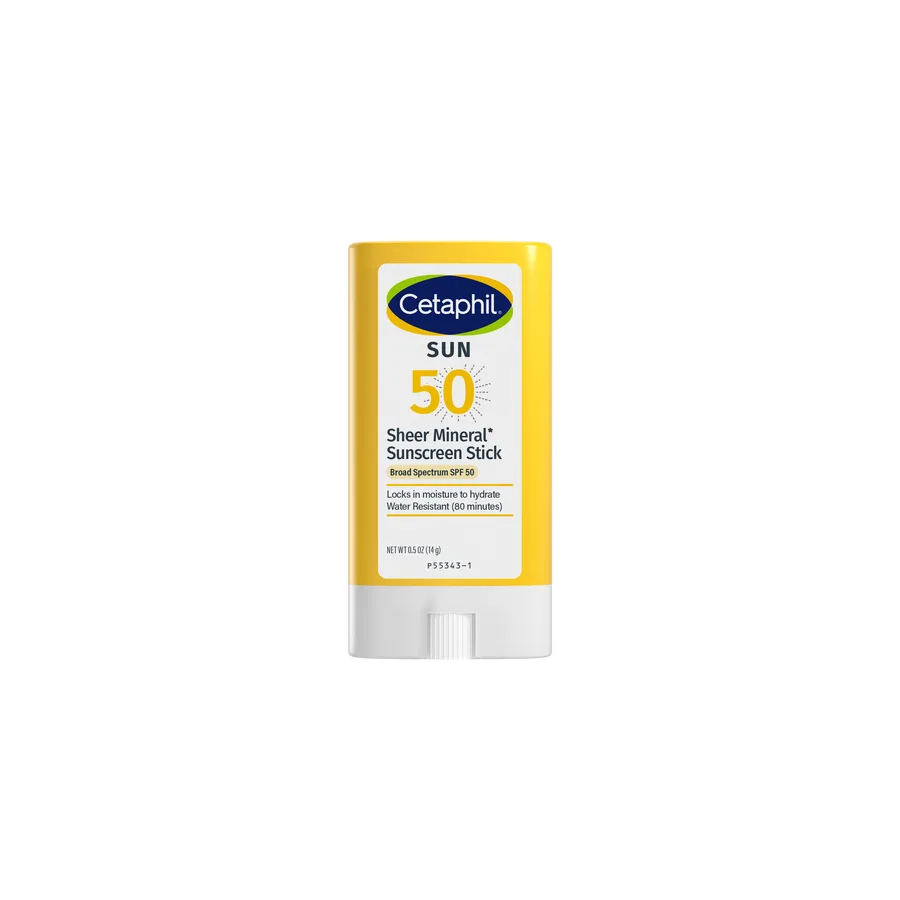
It delivers a high 12% zinc oxide load in a no-rub, eye-area-safe stick that actually blends sheer rather than chalky — a combination most mineral sticks struggle with. The soothing bisabolol-and-allantoin pairing plus a sting-free profile make it one of the few SPF sticks comfortable to swipe right along the lash line and over reactive skin.
A rare mineral sunscreen stick that pairs a serious 12% zinc oxide load with a genuinely sheer, sting-free finish — comfortable enough to swipe right beside the eyes. It's an excellent sensitive-skin travel and reapplication tool, as long as you accept that getting full SPF 50 from any stick means applying far more than one quick pass.
The case for it
Same rule for everyone. “Full protection” is the verdict on 2,288 of 45,024 concern verdicts across the catalog; rule P1 decided 2,232 of them. Unchanged since September 5, 2026, engine 5.1.1.
Brand or formulator? Disclose a concentration or correct a fact →
The studies behind the evidence row
The case for it
What would change this: A researched evidence row for the lead active would replace this with a verdict.
Same rule for everyone. “Good choice” is the verdict on 1,938 of 45,024 concern verdicts across the catalog; rule F2 decided 1,938 of them. Unchanged since September 5, 2026, engine 5.1.1.
Brand or formulator? Disclose a concentration or correct a fact →
The case for it
What would change this: A declared concentration would move this to a firmer reading of the dose.
Same rule for everyone. “Full protection” is the verdict on 2,288 of 45,024 concern verdicts across the catalog; rule P1 decided 2,232 of them. Unchanged since September 5, 2026, engine 5.1.1.
Brand or formulator? Disclose a concentration or correct a fact →
The studies behind the evidence row
Does the jobDoes what a sunscreen is for: UVA coverage, kind to the skin wearing it. Not measured from the label: pleasant enough to actually use.
A verdict is DermApproved’s assessment of how well a product’s ingredients fit a concern — never a claim about what the product treats. Evidence dots and collected reviews sit beside it and are never blended in. Rules 0.5.1 · evidence table ev-2026.09-r228 · how we decide
The sunscreen stick has a credibility problem, and it's worth naming up front: people treat it like a magic wand. One swipe across the cheekbones, a quick pass over the nose, done — and they walk out believing they've got SPF 50 on their face. They have not. Sticks are the single easiest sunscreen format to under-apply, and that reality shadows every stick review, including this one. So let's hold Cetaphil's Sheer Mineral Stick to the standard that matters: not whether it's convenient, but whether it earns its place when you actually use enough of it.
On that test, it does surprisingly well, and the reason is what's inside. This stick runs on 12 percent zinc oxide as its sole active. That's a meaningful load — enough to deliver true broad-spectrum coverage across UVA and UVB without leaning on any chemical filters at all. The catch with high-zinc mineral formulas has always been the white cast and the heavy, draggy feel. Cetaphil's answer is the carrier system: a blend of silicones, isododecane, and dispersing agents that suspends all that zinc into a film thin enough to go on sheer. It is not literally invisible — push it on heavily over deep skin tones and you'll see some lightening — but for a stick carrying this much zinc, the clarity is genuinely impressive. It lays down satin and slightly shiny rather than chalky and gray.
The headline feature, and the one that justifies the stick format over a lotion, is the sting-free, eye-area-safe positioning. This is where sticks quietly shine. Trying to rub a liquid sunscreen along your lash line or over your eyelids is an exercise in self-inflicted misery — it migrates, it stings, you blink it into your eyes. A firm stick lets you glide protection right up to the lash line and over the orbital bone with control and no runoff, and Cetaphil has formulated this one to genuinely not sting when you do. The soothing pair of bisabolol and allantoin backs up the gentleness, and the fragrance-free, eczema-association-approved base means reactive and sensitive skin can use it on the most delicate part of the face without drama. For anyone who's given up on protecting the under-eye and eyelid zone, that alone can be the reason to keep one of these in a bag.
The portability is the other half of the appeal. It's a twist-up, deodorant-style stick — pocketable, mess-free, no need to dirty your fingers and rub. That makes it a near-ideal midday reapplication tool: you can swipe it over makeup on the cheeks, nose, ears, and the back of the neck without disturbing much, then pat to smooth. As a reapplication and touch-up product, it's one of the more practical things you can carry.
Now the honest limitations, and they cluster around the format rather than the formula. First, the size. A 0.5 oz stick is small, and if you try to make it your sole full-face-and-body sunscreen, you'll burn through it fast and probably under-apply in the process. It is far better understood as a face-and-touch-up product than a beach-day workhorse. Second, application discipline: to get anything close to the labeled SPF 50, you need to go back and forth over each area several times until you see an even, slightly opaque layer, not a single confident swipe. Treat it casually and your real-world protection drops well below the number on the tube. Third, on dry or flaky skin the firm stick can drag a little until body heat softens it, and in real heat the film can feel faintly tacky.
Value is fair rather than outstanding. Around ten dollars is reasonable for a sensitive-skin, single-filter mineral stick that blends this well, but the small format means the cost-per-use climbs if you lean on it heavily. The smart way to buy it is as a companion to a full-size daily sunscreen — your reapplication and eye-area specialist — rather than your only line of defense.
Where this stick ultimately lands is as a thoughtful, well-formulated tool for a specific set of jobs: protecting the eye area without stinging, reapplying over makeup, and keeping sensitive skin covered on the go. Judged as that, it's one of the better mineral sticks at the drugstore, with a respectable zinc load and a soothing, gentle base that lives up to the Cetaphil name. Judged as a magic one-swipe SPF wand, it'll disappoint you — but that's the format's fault, not the formula's, and it's a misunderstanding worth correcting before you blame the product. It's worth dwelling for a moment on who benefits most from keeping a stick like this around, because the answer is broader than you'd think. Parents reapplying sunscreen on a squirming child at the playground, hikers and cyclists who need to touch up their ears and nose mid-activity without a greasy mess, contact-lens wearers and the eye-sensitive who've sworn off liquid sunscreen near the eyes, and anyone who simply won't carry a bottle but will pocket a stick — all of them are served by this format in a way a lotion can't match. The 12 percent zinc load means that when you do apply it properly, the protection is real and gentle. Frame it as the most convenient way to reapply and to protect the trickiest facial zones, rather than as your one-and-only sunscreen, and it quietly becomes one of the more-used items in a sun-care kit.
The hero actives that drive this product's performance.
| Ingredient | Function | Evidence |
|---|---|---|
| Zinc Oxide 12% (12%) | The sole UV filter here, doing all the broad-spectrum work; at 12% it gives genuine UVA-through-UVB coverage, and the heavy silicone-and-isododecane carrier system is what lets a mineral filter at this load still blend out sheer rather than chalky. | Regulator-approved for Sun Damage · limited certainty |
| Bisabolol | A chamomile-derived calming agent that, alongside the allantoin, is chosen to keep the stick gentle on the eye area and other sensitive spots it's marketed for, offsetting any tackiness from the wax-and-silicone base. | Not yet assessed |
| Allantoin | Pairs with bisabolol as the soothing half of the formula, supporting the sensitive-skin positioning so the high zinc load doesn't read as drying or irritating on reactive skin. | Limited for Post-Procedure |
| Vitamin E (Tocopherol) | An antioxidant that complements the physical UV block by mopping up surface free radicals UV exposure generates, a sensible addition in a face-and-body stick meant for repeated sun exposure. | Limited for Sun Damage |
Ingredient standings describe the active at treatment-level doses and vehicles; this product's own condition grades weigh its actual formula.
Active Ingredient: Zinc Oxide 12%. Inactive Ingredients: Allantoin, Bisabolol, Butyloctyl Salicylate, C12-15 Alkyl Benzoate, Caprylyl Glycol, Caprylyl Methicone, Dimethicone, Dimethiconol/Propylsilsesquioxane/Silicate Crosspolymer, Ethylhexylglycerin, Hexylene Glycol, Isododecane, Lauryl PEG-10 Tris(Trimethylsiloxy)silylethyl Dimethicone, Lauryl PEG-8 Dimethicone, Niacinamide, Octyldodecyl Neopentanoate, PEG-10, Phenoxyethanol, Polymethylsilsesquioxane, Propanediol, Sodium Chloride, Sodium Hydroxide, Tetrasodium Glutamate Diacetate, Tocopherol, Trilaureth-4 Phosphate, Water
sunscreen
AM
Glide on as the final morning step over moisturizer, then pat with fingers to smooth and even the layer. Ideal as a portable reapplication tool over makeup at midday, focusing on cheeks, nose, ears, and the eye area.
Protective immediately on application as a physical block. The benefit is preventive — consistent daily use guards against UV-driven photoaging and sun damage over months and years rather than producing a visible short-term change.
The protective backbone here is a single mineral filter, zinc oxide at 12 percent, and that's worth understanding mechanistically. Zinc oxide is the broadest-spectrum of the FDA-recognized sunscreen actives, attenuating UVB and both UVA1 and UVA2 wavelengths, which is why a high-percentage zinc formula can claim genuine broad-spectrum coverage without a chemical co-filter. The persistent formulating challenge is cosmetic: zinc oxide particles scatter visible light, producing the characteristic white cast, and the perceived sheerness depends almost entirely on particle dispersion and the refractive properties of the carrier. This stick's heavy reliance on silicones, isododecane, and silsesquioxane film-formers is precisely the kind of vehicle engineering shown to reduce visible whitening and improve the uniformity of the protective film. Critically, sunscreen efficacy is application-dependent: SPF is measured at 2 mg/cm-squared, and a large body of real-world data shows consumers routinely apply a fraction of that, with stick formats especially prone to under-application — meaning the realized protection tracks how thickly the film is laid down, not the label number alone. The supporting actives play minor roles: bisabolol and allantoin have soothing, anti-irritant evidence that supports tolerability on sensitive and periocular skin, and tocopherol contributes topical antioxidant activity that can help neutralize the free radicals UV generates at the skin surface, a reasonable adjunct to physical blocking. The honest summary is that the protection is well grounded in zinc's optical properties, while the real-world result hinges on applying enough.
Mineral sunscreens built on zinc oxide are a mainstay of clinical recommendations for sensitive, rosacea-prone, and post-procedure skin, since the filter is photostable, broad-spectrum, and low on the irritation and allergy scale. A stick format earns specific clinical praise as a reapplication and periocular tool: it allows controlled protection of the eyelids and lash line, areas where liquid sunscreens migrate and sting, and it travels well for midday reapplication. In practice, the consistent caution is application amount — patients are reminded that sticks require multiple passes to approach the tested SPF and should not be relied on as the sole sunscreen for prolonged outdoor exposure. The soothing additives and eczema-association seal make this a sensible suggestion for reactive skin, and its single high-percentage zinc active aligns with guidance favoring mineral filters for the most delicate facial areas.
As the last step of your morning routine, glide the stick back and forth over each area several times until you see an even, slightly opaque layer — one quick swipe is not enough for full SPF 50. Pat with fingertips to smooth and blend, paying attention to the nose, ears, cheekbones, and, carefully, the orbital bone and lash line. Let it set a minute before sun exposure. Reapply at least every two hours outdoors, or after swimming or sweating, swiping it directly over makeup as needed. Keep it out of high heat so the stick doesn't soften.
At roughly ten dollars, the price is fair for a sensitive-skin mineral stick that blends this cleanly and carries a 12 percent zinc load, but the small 0.5 oz size shapes the value story. Used as a face-and-eye-area product and midday reapplication tool, it lasts a reasonable while and the cost-per-use stays sensible; pressed into service as a sole full-body sunscreen, it empties fast and becomes expensive per ounce. Other sizes aren't offered, so the smart purchase is as a companion to a full-size daily SPF rather than a standalone. The pricing reflects proven, eczema-approved tolerability rather than brand markup.
Reach for this if you have sensitive, reactive, or eczema-prone skin and want a mineral SPF gentle and sting-free enough for the eye area, or if you need a tidy, pocketable stick for travel and midday reapplication over makeup. It's also a strong choice for anyone who finds liquid sunscreens migrate into and irritate their eyes.
Skip it as your only sunscreen for long days outdoors — the small stick is easy to under-apply and runs out quickly, so a full-size lotion is a better primary defense. Those who want a truly invisible finish on deep skin tones may still detect some cast, and anyone managing fungal acne should choose a sunscreen formulated for that constraint.
Ready to try Cetaphil Sheer Mineral Sunscreen Stick SPF 50?
Buy at Amazon ♥A firm, slightly waxy balm-stick that warms and softens on skin contact, gliding into a thin, faintly tacky film you smooth out with fingertips.
Fragrance-free, with only a faint neutral note from the silicone-and-wax base.
Compact twist-up deodorant-style stick — pocketable and mess-free, no need to rub it in with bare hands first.
First swipe lays down a sheer, slightly shiny film with little of the white cast you'd brace for from a 12% zinc product. There's no sting even right beside the eyes, which is the point. Patting it in with fingers evens out any streaks; on dry or flaky patches the stick can tug slightly until skin warms it.
The 0.5 oz stick covers roughly 4-8 weeks if used for face touch-ups; far less if relied on as your only full-face and body sunscreen, since adequate coverage uses a lot of product.
All Year
The stick rounds out Cetaphil's Sheer Mineral sun range (which also includes a lotion and face drops), built to give mineral-sunscreen users a portable, mess-free reapplication option. Its eye-area and sensitive-skin focus reflects the brand's broader tolerability-first reputation and its eczema-association credentials.
Cetaphil, a 1947-founded Galderma brand, is one of dermatology's most frequently recommended drugstore lines; its mineral sunscreens lean on the same sensitive-skin tolerability focus that built the brand, and several carry the National Eczema Association Seal of Acceptance.
A sunscreen stick gives you the same protection as lotion with one swipe.
Sticks are notoriously easy to under-apply. Getting true SPF 50 requires several passes back and forth over each area until you see an even layer — a single quick swipe deposits far less than the tested amount.
High zinc oxide always means a heavy white cast.
Cast depends on the carrier system, not just the zinc percentage. This stick uses silicones and isododecane to disperse 12% zinc into a sheer film, so it blends far clearer than older high-zinc formulas would suggest.
Far less than its 12% zinc oxide load would suggest. The silicone-and-isododecane carrier disperses the zinc into a sheer, satin film, though pushing it on heavily over deep skin tones can still show some lightening.
Yes — it's specifically formulated to be sting-free and safe for the eye area, with soothing bisabolol and allantoin. The firm stick lets you apply protection right along the lash line without the migration and stinging of a liquid sunscreen.
No. Like all sunscreen sticks, it's easy to under-apply. You need several back-and-forth passes over each area until you see an even, slightly opaque layer to approach the labeled SPF 50.
Yes. It uses only zinc oxide as its UV filter — a mineral, non-absorbed active — with no chemical sunscreens or ingredients typically flagged during pregnancy, making it a reassuring choice.
It's oil-free and non-comedogenic, so it suits most acne-prone skin, though it isn't formulated to be fungal-acne safe. The mineral filter is also gentle on the inflamed, sensitized skin that often accompanies acne treatment.
Used as a face and touch-up product, the 0.5 oz stick lasts roughly one to two months. It empties much faster if relied on as a full-face and body sunscreen, since proper coverage uses a lot of product.
Recurring themes our editors read across retailer reviews of this product — summaries in our words, not quotations, and not a substitute for your own patch test.
Blends sheer for a mineral stick
No sting near the eyes
Convenient for travel and reapplication
Doesn't feel greasy
Small size runs out fast
Hard to apply enough for full SPF 50
Can drag on dry patches
Slight tackiness in heat
Verified answers from our questions library — the nuance a product page cannot carry.