Octocrylene and Homosalate: The Filters America Is Stuck With
The critics are right about the data gap, and they are right that it took two decades to move. What follows from that is not the conclusion most people draw.
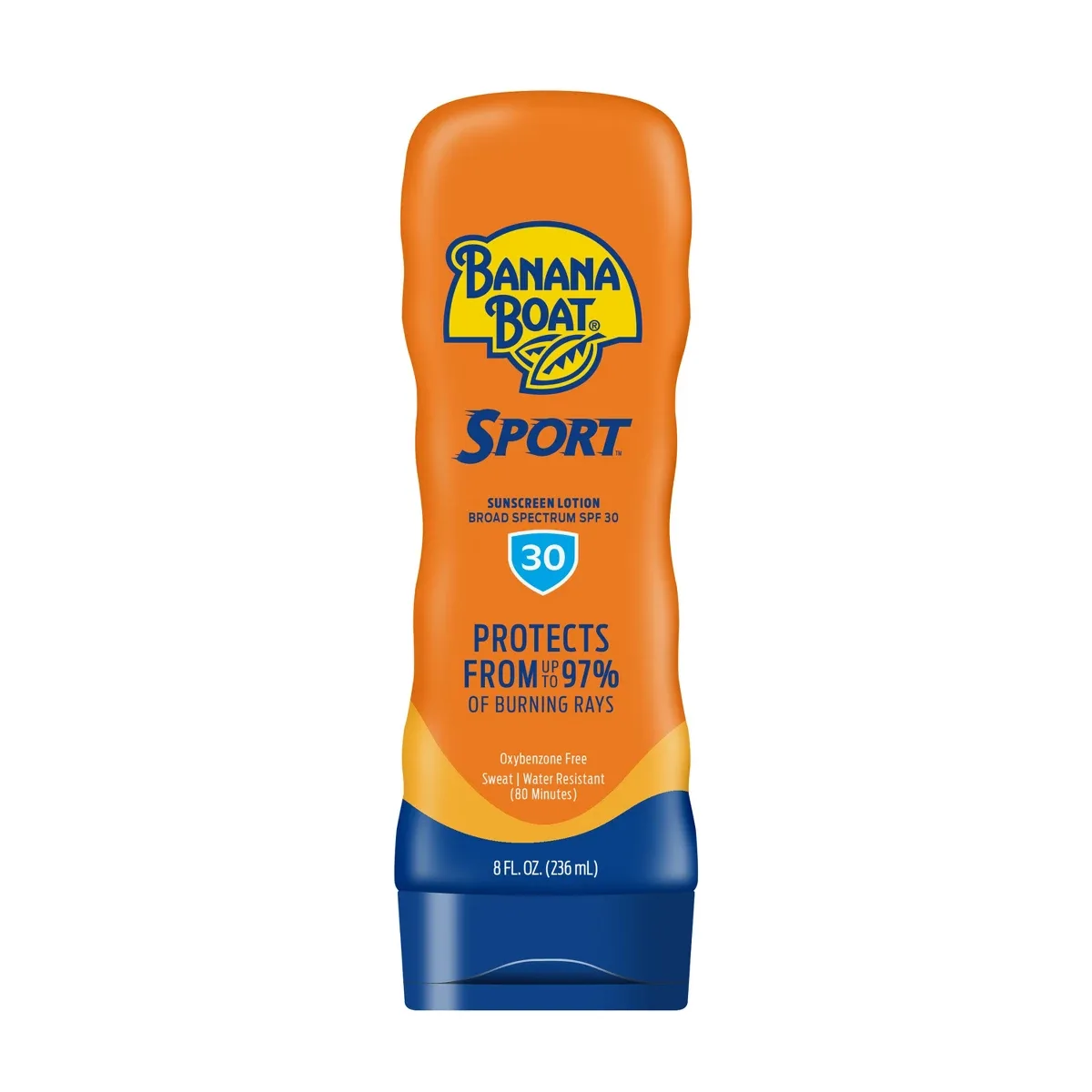
It is the entry-level SPF of Banana Boat's sport line — the same four-filter, eighty-minute-water-resistant idea as the SPF 50 lotions with every filter dialled down to a leaner dose, at a price that makes generous reapplication painless. Its distinguishing feature in 2026 is that it has just been reformulated, with lower avobenzone and homosalate than the Sport Ultra it replaced and a new base, which is why the front of the bottle says 'New & Improved'.
A cheap, light, sweat-resistant SPF 30 body lotion that does what a budget sport sunscreen should — rubs in clear, holds through a swim, costs little enough to reapply without thinking. The catch is the fine print on the 2026 bottle: the 'New & Improved' reformulation cut every filter below the Sport Ultra it replaced, the base changed, and recent reviews are cooler than the thousand-review record the old formula built. Apply it generously, keep it off reactive faces, and read the new label as 'lighter', not 'stronger'.
Most of the nine-hundred-plus retailer reviews behind this lotion were earned by the Sport Ultra formula it replaced, and the current 'New & Improved' version — filed on DailyMed in November 2025 with lower filter percentages and a rebuilt base — has only a season of feedback, some of it noticeably cooler. The protection judgement rests on the monograph chemistry of the filed Drug Facts; the feel and tolerability picture for this specific reformulation is still forming, and the rename trail means older reviews describe a different bottle.
The case for it
Same rule for everyone. “Full protection” is the verdict on 2,288 of 45,024 concern verdicts across the catalog; rule P1 decided 2,232 of them. As of September 25, 2026, engine 5.1.1.
Brand or formulator? Disclose a concentration or correct a fact →
The studies behind the evidence row
Does the jobDoes what a sunscreen is for: UVA coverage, holds up in sunlight. Not measured from the label: pleasant enough to actually use.
A verdict is DermApproved’s assessment of how well a product’s ingredients fit a concern — never a claim about what the product treats. Evidence dots and collected reviews sit beside it and are never blended in. Rules 0.5.1 · evidence table ev-2026.09-r228 · how we decide
This bottle has been three products in ten years without ever changing what it was for. In the 2010s it was Banana Boat Sport Performance SPF 30, the drugstore's default sweat-resistant lotion; around 2019 it became Sport Ultra SPF 30, same job, new label; and in November 2025 Edgewell, Banana Boat's owner, filed a reformulated version on DailyMed under the name that now sits on the front of the bottle, New & Improved Sport. The rename trail matters because it is why old reviews, old product lists and old habits still refer to a formula that is no longer on the shelf — and because the words 'new and improved' invite an assumption that the Drug Facts do not support.
Compare the two labels. The Sport Ultra SPF 30 that this replaced listed avobenzone at 2.7 percent, homosalate at 6, octisalate at 4.5 and octocrylene at 4.5. The 2026 formula lists avobenzone at 2.0, homosalate at 4.0, octisalate at 4.0 and octocrylene at 3.0 — every filter lower, the avobenzone well under its 3 percent maximum, the homosalate cut by a third. The front of the bottle dropped its promise from 98 percent of burning rays to 97. The base changed too: the previous two-polymer water-resistance system became a single acrylate copolymer, silica moved up to third place for a drier feel, and the emulsion was rebuilt around cetearyl alcohol and a stearate pair. It still tests to SPF 30 and broad spectrum under the monograph — that is what the label means — and it is still water-resistant for eighty minutes. But 'improved' here refers to feel and to the oxybenzone-free positioning the brand has leaned on since 2020, not to more protection, and anyone buying it because the old one worked should know they are buying a leaner formula.
On skin, the leaner formula is genuinely light. The lotion spreads easily, rubs in clear within a minute as the silica soaks up its own oil, and sets to a dry, faintly powdery finish that wears under a jersey or a shirt without the slick the brand's SPF 50 sport lotions leave. It smells the way Banana Boat has smelled since 1979 — sweet, tropical, unmistakable — and the scent fades to a note within the hour. It holds through a swim by the eighty-minute test. Glycerin high on the inactive list and a trace of aloe and vitamin E keep it from drying the skin over a day outside, which is the whole of its hydration claim. For a day of sport, a moderate beach afternoon or a long walk, applied at a proper dose and reapplied on schedule, it does its job, and at eight dollars for eight ounces the dose and the schedule are painless.
The complaints are two, and they are the two a budget chemical sport lotion always carries, sharpened by the reformulation. The first is the base: fragrance in a body-wide leave-on, plus avobenzone and octocrylene, the organic filters most often behind stinging eyes and contact reactions. Sensitive, eczema-prone and rosacea-prone skin has no business here, and the face is better served by one of the brand's fragrance-free face lotions. The second is the number and the dose. SPF 30 blocks about 97 percent of UVB at the two milligrams per square centimetre the test uses, which almost nobody applies; at half that dose the effective protection falls sharply, and an SPF 30 gives less margin for a thin hand than an SPF 50 does. The old Sport Ultra's higher filter load gave a little more forgiveness. The new one gives less, and the recent reviews on Target — where the product holds a 4.45-star average over nine hundred reviews, most of them earned by the previous formula — include a run of buyers who feel the reformulation sits heavier and burned them where the old one did not. Some of that is the ordinary noise of any reformulation; some of it is a lower filter load meeting the same thin application.
At eight dollars and change for eight ounces, four to six full-body applications, the value is simple and real: this is among the cheapest broad-spectrum, water-resistant sport lotions on any shelf, and cheapness in sunscreen is a virtue because it removes the last excuse for rationing. The Sport SPF 50 lotion from the same brand costs a dollar more for more margin, and on any day of real sun that dollar is worth spending.
So: for normal, combination or oily skin that tolerates fragrance and chemical filters, on a day of moderate sun with reapplication built in, this is a fair eight dollars and a light, pleasant lotion. For faces, for reactive skin, for peak-sun days or for anyone who applies sunscreen thinly, the fragrance-free face lotion, a mineral formula or the SPF 50 are all better bottles — and for anyone who loved Sport Ultra, the front of this one is the only place the word 'improved' appears.
The hero actives that drive this product's performance.
| Ingredient | Function | Evidence |
|---|---|---|
| Avobenzone (2.0%) + Octocrylene (3.0%) (5.0%) | The UVA filter and its photostabiliser, both at noticeably lower levels than the Sport Ultra version this replaced — 2 percent avobenzone against the 3 percent maximum, 3 percent octocrylene against the old 4.5 — a leaner pairing that still meets the broad-spectrum test at SPF 30 but leaves less margin than the previous formula did. | Regulator-approved for Sun Damage · emerging certainty |
| Homosalate (4.0%) + Octisalate (4.0%) (8.0%) | The two salicylate UVB filters carrying the SPF 30 number, low-sensitising and here dosed conservatively — homosalate at 4 percent is a third of what the same brand's SPF 50 sport lotions use — which is why the lotion feels lighter and why the label promises 97 percent of burning rays rather than 98. | Regulator-approved for Sun Damage · limited certainty |
| Acrylates/C12-22 Alkyl Methacrylate Copolymer (water-resistance film) | The single film-forming polymer that holds the four filters on skin through eighty minutes of sweat and water — the 'Sport' in the name — replacing the two-polymer system of the previous formula, which is one of the changes reviewers of the reformulation have noticed. | Not yet assessed |
| Silica + Dimethicone | Silica in third place absorbs oil and gives the lotion the dry, rub-in-clear finish that lets it wear under a shirt or a jersey, and dimethicone adds slip and a little water resistance of its own — together the reason this feels lighter than the brand's older, heavier sport lotions. | Not yet assessed |
| Glycerin + Aloe Leaf Juice + Vitamin E | Glycerin second on the inactive list and a trace of aloe and tocopheryl acetate at the end are the whole of the hydration story — enough that the lotion does not dry the skin over a day outside, not enough to count as a moisturizer. | Not yet assessed |
Ingredient standings describe the active at treatment-level doses and vehicles; this product's own condition grades weigh its actual formula.
Active Ingredients: Avobenzone 2.0%, Homosalate 4.0%, Octisalate 4.0%, Octocrylene 3.0%. Inactive Ingredients: Water, Glycerin, Silica, Dimethicone, Phenoxyethanol, Caprylyl Glycol, Acrylates/C12-22 Alkyl Methacrylate Copolymer, Cetearyl Alcohol, Sodium Polyacrylate, Chlorphenesin, PEG-100 Stearate, Glyceryl Stearate, Xanthan Gum, Fragrance, Disodium EDTA, Tocopheryl Acetate, Aloe Barbadensis Leaf Juice
sunscreen
AM
A body sunscreen for a day of sport or a moderate beach day — shake the bottle, apply a generous, visible layer to arms, legs, shoulders and back fifteen minutes before going out, and rub in until it disappears. It can go on the face in a pinch but the fragrance and avobenzone make a dedicated face sunscreen the better choice. Reapply after eighty minutes of swimming or sweating, after towelling, and every two hours; for a full day of intense sun, step up to an SPF 50 or add clothing and shade.
Immediate: a light, dry-touch lotion that rubs in clear within a minute and holds through eighty minutes of sweat or water. Short term (a day outside): no burn where it was applied generously and reapplied on schedule — SPF 30 gives less margin than 50 for under-application. Full effect (ongoing): reliable broad-spectrum body protection at the modest end of the sport range, which is exactly what it is priced and labelled as.
The protection is FDA monograph chemistry. Avobenzone at 2.0 percent is the organic UVA-I filter, photostabilised by octocrylene at 3.0 percent; homosalate and octisalate at 4.0 percent each are the UVB salicylates carrying the SPF number. The combination is labelled SPF 30 and broad spectrum, meaning it passed the monograph's SPF test at two milligrams per square centimetre and the critical-wavelength test for UVA breadth, and the acrylates/C12-22 alkyl methacrylate copolymer supports the eighty-minute water-resistance claim tested by immersion. The filter percentages are notably lower than the previous Sport Ultra SPF 30 filed on DailyMed — 2.7, 6.0, 4.5 and 4.5 percent respectively — which is consistent with a formula optimised for a lighter feel at the minimum load that still passes SPF 30, and with the label's revised claim of 97 rather than 98 percent of burning rays; both formulas are compliant, and the difference is margin rather than category. The FDA's 2019 proposed rule requested additional absorption and safety data on all four organic filters, a request for data rather than a finding of harm, and avobenzone and octocrylene carry the highest rates of contact and photocontact allergy among common filters.
The practical evidence concerns application. SPF is measured at two milligrams per square centimetre, and repeated studies — including the Journal of the American Academy of Dermatology literature on real-world sunscreen use — show consumers apply a quarter to a half of that, at which the achieved SPF falls roughly exponentially; an SPF 30 applied at half dose delivers something closer to SPF 5 to 8, which is why dermatologists recommend SPF 30 as a floor and higher numbers for margin. A lower filter load does not change the labelled SPF but does reduce the formula's tolerance for under-application relative to a higher-load equivalent. Silica and dimethicone are inert oil-absorbing and slip agents; glycerin is a well-documented humectant; the fragrance is the formula's only recognised sensitiser beyond the filters. Edgewell publishes no study of this product; its claims are the monograph's and its Drug Facts are on DailyMed.
Dermatologists regard an SPF 30 broad-spectrum, water-resistant lotion as the floor of adequate daily protection, not the ceiling, and would describe this product as a reasonable body sunscreen for ordinary outdoor days with the standard caveats: apply a shot-glass amount to the body, wait fifteen minutes, reapply after swimming or sweating and every two hours, and step up to SPF 50 or add clothing and shade for prolonged or intense exposure. The reformulation is worth a clinician's note — lower filter percentages mean less forgiveness for the thin application most patients practise, and patients who relied on the previous Sport Ultra should not assume equivalent margin. The fragrance and the avobenzone-octocrylene pairing make it a poor choice for atopic, rosacea-prone or otherwise reactive skin and for the face, where a fragrance-free formula is preferable; patients with known octocrylene or fragrance sensitivity should use a mineral zinc oxide product. In pregnancy, mineral filters are generally preferred on precautionary grounds. As a cheap, well-tolerated lotion for the body of a non-reactive adult on a moderate day, it is fine; it is not the sunscreen to choose when protection margin matters.
Give the bottle a shake, then fifteen minutes before heading out squeeze out a generous amount — about a shot glass for the whole body, a teaspoon per limb — and spread it over arms, legs, shoulders, chest and back, rubbing until it disappears. Use a separate fragrance-free sunscreen on the face. Reapply after eighty minutes of swimming or sweating, immediately after towelling, and at least every two hours. Avoid freshly shaved, sunburnt or broken skin. For a full day of intense sun, fair skin, or a thin application habit, choose an SPF 50 or cover up; SPF 30 is adequate only at a full dose with reapplication. Store out of the heat and direct sun.
Eight dollars and change for eight ounces makes this one of the cheapest broad-spectrum, water-resistant sport lotions sold — a dollar an ounce, four to six full-body applications, a long weekend outdoors for the price of a sandwich — and in sunscreen that cheapness is a genuine virtue, because the biggest failure of sun protection is applying too little. What the money buys is monograph-compliant SPF 30 in a light, dry-touch lotion from a brand that has made exactly this for decades. What it does not buy is margin: the reformulated filter load is the leanest the brand sells, and the Sport SPF 50 lotion beside it on the shelf costs about a dollar more for materially more forgiveness on a bright day. Smaller 1 oz and 3 oz sizes cost more per ounce and are for travel; bonus-size and multi-pack promotions bring the 8 oz below seven dollars.
Anyone with normal, combination or oily skin who needs a cheap, light, sweat-resistant body sunscreen for moderate outdoor days — sports practice, a walk, a partly shaded afternoon — and who applies generously and reapplies on schedule. It suits families and teams that go through bottles and want the lowest price that still meets the monograph.
Reactive skin — eczema, rosacea, a history of sunscreen rashes — should avoid the fragrance and the avobenzone-octocrylene pairing, and faces deserve a dedicated fragrance-free product. Anyone facing a full day of strong sun, anyone fair-skinned, and anyone who tends to apply thinly should buy the SPF 50 for margin — and anyone who loved the old Sport Ultra should know the new formula is lighter in every sense.
Ready to try Banana Boat Sport Sunscreen Lotion SPF 30?
Buy at Amazon ♥A light, white, medium-thin lotion that spreads easily, rubs in clear within a minute thanks to the silica and dimethicone, and sets to a dry, faintly powdery finish with a slight sheen — some users of the 2026 formula find it tackier than the old one.
Classic Banana Boat — a sweet, tropical, coconut-adjacent fragrance that announces itself on application and fades to a faint note within the hour.
An 8 fl oz squeeze bottle with a flip cap in the Sport line's orange-and-blue, also sold in 1 oz and 3 oz sizes and bonus packs; the bottle is easy to dose and the label now reads 'New & Improved Sport' rather than 'Sport Ultra'.
The first application is unremarkable in the way a drugstore sport lotion should be — it spreads fast, rubs in clear, smells like a beach, and is dry to the touch in a minute. It holds through a swim. Anyone who used the previous Sport Ultra formula may notice the new one sits a little heavier and takes a moment longer to dry, and that the SPF 30 needs a generous hand on a bright day.
About 4-6 full-body applications per 8 oz bottle at the labelled dose — a long weekend outdoors.
summer
The Sport SPF 30 lotion has been on drugstore shelves under successive names for well over a decade — Sport Performance in the 2010s, Sport Ultra from around 2019 — and in late 2025 Edgewell filed a reformulated version on DailyMed as 'New & Improved Sport', dropping the Ultra name and reducing the filter percentages while claiming better feel. The rename trail is why older reviews and staged product lists still carry the old names.
Banana Boat has sold mass-market sunscreen in the United States since 1979 and is owned by Edgewell Personal Care, whose sunscreens are FDA-regulated OTC drugs with Drug Facts on DailyMed. The SPF 30 sport lotion has carried three names in a decade — Sport Performance, then Sport Ultra, and from the 2026 season 'New & Improved Sport' — and the current version, filed on DailyMed in late 2025, is a reformulation with lower filter percentages than its predecessor; the brand publishes Drug Facts, not studies.
'New & Improved' means stronger protection.
The 2026 formula's Drug Facts list lower percentages of every filter than the Sport Ultra SPF 30 it replaced — avobenzone 2 percent versus 2.7, homosalate 4 versus 6, octocrylene 3 versus 4.5 — and the label's promise dropped from 98 to 97 percent of burning rays. It still tests to SPF 30 and broad spectrum; 'improved' refers to feel and the oxybenzone-free positioning, not to more protection.
SPF 30 is half as good as SPF 60.
SPF 30 blocks about 97 percent of UVB and SPF 60 about 98 percent — a small difference on paper that matters mainly when you under-apply, which most people do. At a full dose and with reapplication, SPF 30 is adequate for a normal day; the higher number buys margin for thin application and long exposure, not double the protection.
It is the same product line under its third name — Sport Performance in the 2010s, Sport Ultra from around 2019, and 'New & Improved Sport' from the 2026 season — but not the same formula. The 2026 version filed on DailyMed uses lower filter percentages and a different base than Sport Ultra, so reviews of the older formula do not describe the bottle now on shelves.
Per the current DailyMed Drug Facts: avobenzone 2.0%, homosalate 4.0%, octisalate 4.0% and octocrylene 3.0% — a four-filter broad-spectrum system labelled SPF 30 and water-resistant for eighty minutes. The previous Sport Ultra SPF 30 used 2.7%, 6.0%, 4.5% and 4.5% respectively.
For a normal day with reapplication every two hours and after swimming, applied at a full shot-glass dose, SPF 30 is adequate for most people. For a full day of intense sun, fair skin, or anyone who applies sunscreen thinly, an SPF 50 body lotion gives more margin, and clothing and shade matter more than the number.
You can, but it is fragranced and carries avobenzone and octocrylene, the pairing most likely to sting eyes and bother reactive facial skin, and it is formulated for the body. A dedicated face sunscreen — Banana Boat's own face lotions are fragrance-free — is the better choice.
Recent reviews say yes — the 2026 reformulation sits a little heavier, takes longer to dry and, some users feel, protects less well at the same application than Sport Ultra did. The base changed from a two-polymer system to one, and the filter percentages dropped. Applied generously and reapplied on schedule it still meets its SPF 30 label.
Its four organic filters are the ones the FDA has asked for more absorption data on, and it contains fragrance, so many pregnant users prefer a mineral zinc oxide sunscreen on principle. There is no evidence of harm at cosmetic use, but a zinc-based formula avoids the question.
Recurring themes our editors read across retailer reviews of this product — summaries in our words, not quotations, and not a substitute for your own patch test.
Rubs in clear and does not feel greasy under clothes
Holds up through sweat and swimming
Cheap enough to use generously and reapply
Familiar Banana Boat scent
The reformulated version feels greasier and protects less well than the old one
Fragrance is strong for a leave-on
Stings eyes if it migrates
SPF 30 is a modest number for a sport sunscreen