



Cutting the Leaf Yourself Gets You a Latex Problem the Bottle Already Solved
Aloe has the best clinical case of any kitchen remedy — and the fresh-leaf version puts a manual processing step between you and the part that works.
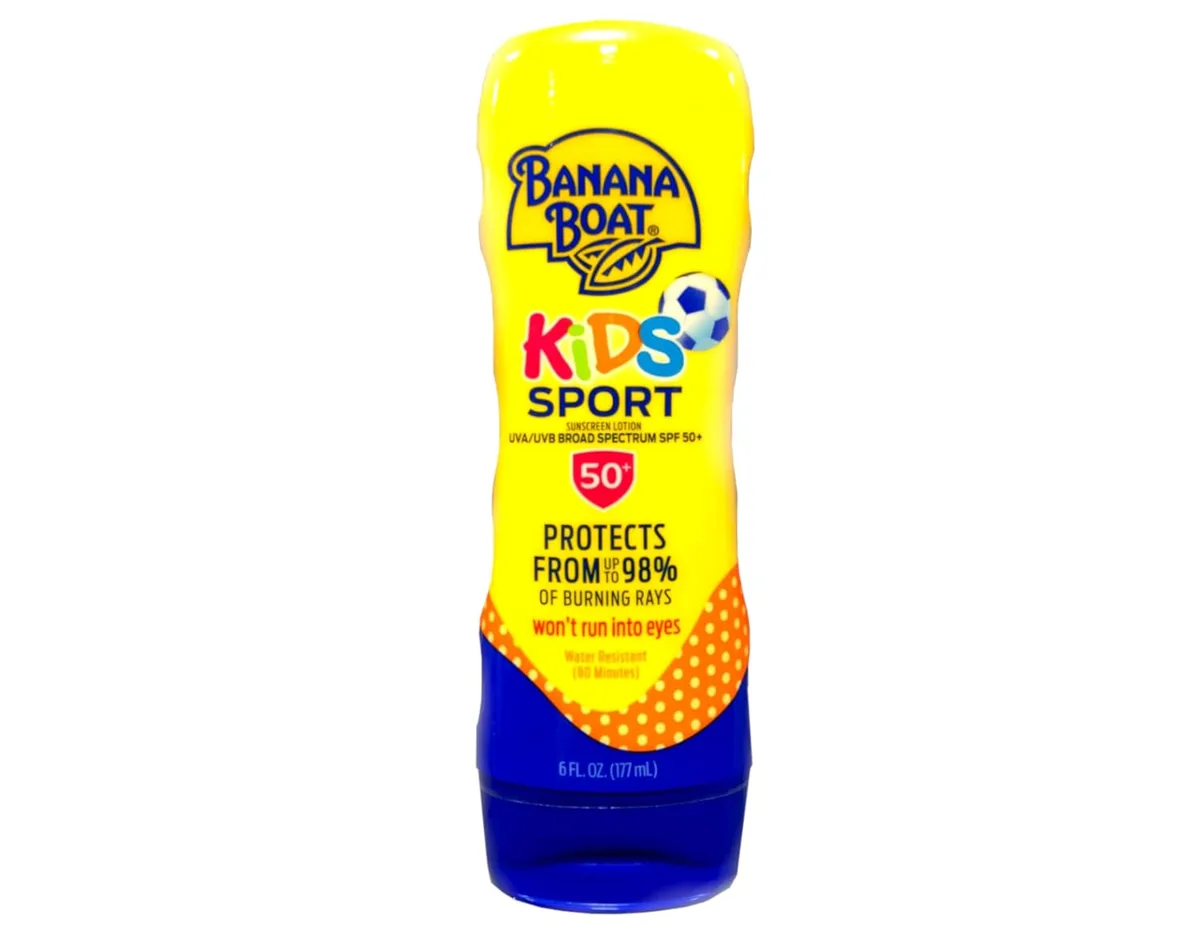
This is a true 100% mineral kids' lotion, fragrance-free and paraben-free, at a price that usually buys a chemical sunscreen. For parents who want the lower sensitization risk of zinc and titanium without paying a clean-beauty premium, that combination is genuinely uncommon in the drugstore aisle.
A rare thing in the drugstore aisle: a true 100% mineral SPF 50 for kids that is fragrance-free, paraben-free, and still cheap. It rewards parents who want zinc and titanium without the clean-beauty markup, asking only that you accept a white cast and a bit of elbow grease to rub it in. For sensitive or eczema-prone little ones it is a smart, gentle default.
The case for it
Same rule for everyone. “Full protection” is the verdict on 2,288 of 45,024 concern verdicts across the catalog; rule P1 decided 2,232 of them. Unchanged since September 5, 2026, engine 5.1.1.
Brand or formulator? Disclose a concentration or correct a fact →
The studies behind the evidence row
The case for it
What would change this: A researched evidence row for the lead active would replace this with a verdict.
Same rule for everyone. “Good choice” is the verdict on 1,938 of 45,024 concern verdicts across the catalog; rule F2 decided 1,938 of them. Unchanged since September 5, 2026, engine 5.1.1.
Brand or formulator? Disclose a concentration or correct a fact →
Does the jobDoes what a sunscreen is for: UVA coverage, kind to the skin wearing it. Not measured from the label: pleasant enough to actually use.
A verdict is DermApproved’s assessment of how well a product’s ingredients fit a concern — never a claim about what the product treats. Evidence dots and collected reviews sit beside it and are never blended in. Rules 0.5.1 · evidence table ev-2026.09-r228 · how we decide
Walk down any drugstore sunscreen aisle and you will notice a quiet pricing pattern: the moment a kids' sunscreen says 100% mineral, the number on the shelf tag tends to jump. Physical filters have become a premium signifier, bundled with clean-beauty branding and clean-beauty prices. So the genuinely interesting thing about this particular Banana Boat lotion is mundane on the surface and quietly notable underneath: it is a real, no-asterisks mineral SPF 50 for children, and it costs about what a chemical sport spray does. That pricing alone earns it a look. The active system is exactly what you want from a gentle kids' formula and nothing you do not. Zinc oxide at six and a half percent does the broad-spectrum heavy lifting across both UVA and UVB, while titanium dioxide at four and a half percent shores up the UVB side. Splitting the load between two minerals is a smart formulation move, because it means neither one has to sit at a sky-high concentration, and concentration is the single biggest driver of how chalky and stubborn a mineral sunscreen feels going on. There are no chemical absorbers hiding in the active list, so this is a sunscreen you can hand to a parent who specifically wanted to avoid them and know you are giving them the real thing. Just as important is what is missing from the inactive list. There is no fragrance, which immediately makes this a far better candidate for reactive or eczema-prone skin than the brand's fragranced chemical sprays. There are no parabens. The supporting cast is sensible and gentle: caprylic/capric triglyceride and a few silicones to give the gritty minerals enough slip to actually spread, glycerin and aloe for a little comfort and hydration, and tocopheryl acetate as an antioxidant. It is a clean, boring, well-behaved ingredient list, and for a kids' sunscreen boring is precisely the goal. Now the honest trade-offs, because mineral sunscreens always come with them. First and most obvious: the white cast. This goes on opaque and white and stays slightly visible until you have really worked it in, and on deeper skin tones it can leave a noticeable ashy film that takes determined rubbing to minimize. That is the unavoidable physics of zinc and titanium sitting on the skin surface, and no drugstore mineral formula has fully solved it. Second, the texture is thick. This is not a sunscreen you whip on in five seconds; it asks for deliberate, section-by-section spreading, which with a squirming toddler can feel like a wrestling match. The upside of that thickness is that it lays down a substantial, water-resistant protective layer, but you pay for it in application effort. Third, the rich finish that sensitive and dry skin will appreciate is simply too much for oily skin in summer heat, where it can feel heavy and occlusive. There is a silver lining to the white cast worth mentioning to parents: because you can see where the lotion is, it is actually easier to spot the bits you missed than with an invisible chemical formula. Used thoughtfully, that residual tint becomes a coverage map. Just resist the temptation to leave thick unblended streaks, because the rated SPF comes from an even layer, not from visible blobs of product. The application experience is otherwise reassuring in the ways that matter for kids. It does not sting on contact, which makes the nerve-wracking job of getting sunscreen near the eyes much less fraught than with a chemical formula that can run and burn. It stays put well in water for the rated eighty minutes, holding up through repeated dunking. And the fragrance-free, paraben-free profile means that if your child does have a reaction, the usual suspects have already been removed from the equation. On value, this is the standout. Mineral protection at a chemical-sunscreen price is the whole pitch, and it delivers. You are not paying a premium for the physical filters or for a kids' label, and a single six-ounce bottle covers a meaningful stretch of summer. For the family that wanted to go mineral but balked at the boutique prices, this is the answer. The recommendation writes itself by skin type. If your child has sensitive, dry, or eczema-prone skin, or you simply prefer mineral filters and fragrance-free formulas, this is an easy, gentle, affordable default that punches above its price. If your child has oily skin and hates anything heavy, or if you cannot abide a white cast and have a child with deeper skin who will end up looking ashy, a well-stabilized chemical formula will feel better in practice. As always, the most effective sunscreen is the one that actually gets applied generously and reapplied, so if the thickness here means it ends up used sparingly, a lighter option you will use properly may serve your child better.
The hero actives that drive this product's performance.
| Ingredient | Function | Evidence |
|---|---|---|
| Zinc Oxide 6.5% (6.5%) | The broad-spectrum mineral filter that anchors this formula, scattering and absorbing both UVA and UVB. Paired here with titanium dioxide, it lets the lotion reach SPF 50 entirely through physical filters, with no chemical absorbers in the active list. | Regulator-approved for Sun Damage · limited certainty |
| Titanium Dioxide 4.5% (4.5%) | Works alongside the zinc oxide to boost UVB protection in particular, sharing the filtering load so neither mineral has to sit at an uncomfortably high level. The combination is what keeps the white cast manageable while still hitting SPF 50. | Regulator-approved for Sun Damage · limited certainty |
| Caprylic/Capric Triglyceride | A light coconut-derived emollient that disperses the gritty mineral particles and gives the lotion enough slip to spread on a child without dragging, helping the zinc and titanium lay down in a more even film. | Not yet assessed |
| Aloe Barbadensis Leaf Juice | A soothing humectant included to make the mineral base feel less drying on young skin; it is a comfort and texture addition rather than a sun-protective active. | Not yet assessed |
Ingredient standings describe the active at treatment-level doses and vehicles; this product's own condition grades weigh its actual formula.
Active Ingredients: Titanium Dioxide 4.5%, Zinc Oxide 6.5%. Inactive Ingredients: Water, Caprylic/Capric Triglyceride, Isohexadecane, Butyloctyl Salicylate, Octyldodecyl Citrate Crosspolymer, Cetyl PEG/PPG-10/1 Dimethicone, Lauryl PEG-8 Dimethicone, C30-38 Olefin/Isopropyl Maleate/MA Copolymer, Sodium Chloride, Ethylhexyl Methoxycrylene, Dimethicone, Phenoxyethanol, Caprylyl Glycol, PEG-8, Alumina, Glycerin, Sodium Citrate, Methyl Dihydroabietate, Phenylisopropyl Dimethicone, Polyglyceryl-3 Stearate/Isostearate/Dimer Dilinoleate Crosspolymer, Tocopheryl Acetate, Aloe Barbadensis Leaf Juice
sunscreen
AM
Smooth on as the final daytime step and give it a moment to set before dressing the child, since mineral lotions can transfer onto clothing while wet. Reapply after swimming or every two hours of sun.
Mineral protection is effective essentially as soon as it is rubbed into an even layer, with no wait required for chemical filters to bind. There is no skin-improvement arc; the value is real-time burn and UV-damage prevention, with reapplication needed every two hours or after 80 minutes in water.
Zinc oxide and titanium dioxide are the two inorganic UV filters recognized as Generally Recognized As Safe and Effective in the FDA's sunscreen review, and they remain the best-studied actives in the category. They work primarily by absorbing UV radiation, with a smaller contribution from scattering, and zinc oxide is notable for offering meaningful coverage deep into the UVA1 range that several chemical filters protect against poorly. Combining the two, as this formula does, is a deliberate strategy: titanium dioxide is comparatively stronger in the UVB region while zinc oxide extends protection further into long-wave UVA, so the pair delivers broader spectral coverage at lower individual concentrations than either could alone, which is what keeps the white cast and grittiness from becoming unbearable. Because these minerals are photostable, they do not degrade in sunlight the way unstabilized organic filters can, so the protection does not fade chemically over a wear period, though it still rubs and sweats off and must be reapplied on the same two-hour schedule. The SPF 50 and 80-minute water-resistance figures are the results of the standardized FDA in vivo testing protocols rather than label estimates. The main real-world performance variable for any mineral sunscreen is application: physical filters protect only the skin they actually cover in an even film, so under-application or patchy spreading undercuts the rated SPF more than it does for self-leveling chemical formulas. That is the trade-off baked into choosing minerals, and it is why generous, methodical application matters even more here.
For children with sensitive, atopic, or eczema-prone skin, fragrance-free mineral sunscreens are frequently the format clinicians steer families toward, precisely because zinc oxide and titanium dioxide carry a low sensitization profile and the absence of fragrance removes a common trigger. A 100% mineral SPF 50 like this one fits that guidance well. Standard clinical advice pairs any sunscreen with shade, protective clothing, and hats for young children, and emphasizes generous application and reapplication every two hours. The practical counseling point with mineral lotions in pediatric practice is usually about technique rather than safety: the white cast and thick texture mean parents need to rub the product in fully and reapply diligently, since uneven coverage is the main way a physical sunscreen underperforms its rating. For infants under six months, the usual recommendation remains shade and clothing over any sunscreen.
Dispense a generous amount and rub it into dry skin in sections about fifteen minutes before going outside, working each area until the white film is blended into a thin, even layer rather than visible streaks. Use more than seems necessary, since mineral sunscreens only protect the skin they actually cover. Let it set for a minute before dressing the child to limit transfer onto clothing. Reapply every two hours of sun exposure, and immediately after swimming, sweating heavily, or towel-drying, as the water resistance lasts up to eighty minutes. For the face, apply by hand and keep it out of the eyes.
The value story here is the headline. Getting a genuine 100% mineral SPF 50 for roughly the price of a chemical sport sunscreen is unusual, because physical-filter formulas typically command a premium in the drugstore aisle. There is no surcharge for the mineral actives or the kids' branding, and the fragrance-free, paraben-free profile is the kind of thing that often costs extra elsewhere. Larger and twin-pack sizes lower the per-ounce cost further and make sense for households that use sunscreen heavily over a summer. The only way the value falters is if the thick texture leads to sparing use; a sunscreen applied too thinly does not deliver its rating, so the savings depend on applying it generously.
Parents who want the lower sensitization risk of a 100% mineral sunscreen for sensitive, dry, or eczema-prone children, without paying a clean-beauty premium. It is also a good fit for families who appreciate a fragrance-free, paraben-free formula and do not mind doing a little extra rubbing to get an even, protective layer onto their child.
Children with oily skin who dislike a heavy finish will be happier with a lighter formula, and families who cannot tolerate any white cast, particularly on deeper skin tones prone to looking ashy, may prefer a well-stabilized chemical option. Anyone who needs a fast, one-pass application on a child who will not sit still may also find the thick texture frustrating.
Ready to try Banana Boat Sport Kids Sunscreen Lotion SPF 50?
Buy at Amazon ♥A thick, opaque white cream that needs deliberate spreading; it sits richer on the skin than a chemical lotion and rewards working it in section by section.
Effectively scentless, with only the faint earthy note of the mineral base.
Squeeze tube or bottle with a flip cap, easy to dispense one-handed onto a child.
Goes on white and stays slightly visible until fully rubbed in, so plan on a minute of spreading per area. There is no sting on contact, which makes it easier to apply near a child's eyes than chemical formulas. No purge or break-in period applies.
Roughly three to four full beach days for one child at proper application amounts, or about two to three weeks of everyday outdoor play with reapplication.
summer
Banana Boat developed its mineral kids' line in response to growing parental demand for physical-filter sunscreens after years of headlines about chemical-filter absorption. The formula deliberately splits the work between zinc oxide and titanium dioxide so neither has to sit high enough to make the white cast unbearable on a child.
Banana Boat has produced mass-market sun care since 1979 and is owned by Edgewell Personal Care. It is a drugstore brand rather than a dermatologist-developed one, but its mineral kids' formulas are made to FDA monograph standards and several carry the National Eczema Association Seal of Acceptance.
Mineral sunscreens do not protect as well as chemical ones.
This lotion is a tested broad-spectrum SPF 50 using only zinc oxide and titanium dioxide. The SPF rating reflects the same standardized testing as any chemical sunscreen; the difference is texture and white cast, not protective strength.
You can skip rubbing it in fully because the white tint shows you it is there.
An even, fully blended layer is what delivers the rated SPF. Leaving thick streaks unblended means uneven coverage and a higher chance of missed spots, even though the residual tint can help you spot gaps.
It is a 100% mineral sunscreen, using only zinc oxide and titanium dioxide as its active filters. There are no chemical absorbers in the formula, which is why it leaves a white cast but carries a lower sensitization risk.
Yes, like all mineral sunscreens it goes on white and stays slightly visible until rubbed in. It can look ashy on deeper skin tones, so it benefits from thorough, section-by-section blending into a thin even layer.
It is one of the better drugstore options for eczema-prone skin because it is fragrance-free, paraben-free, and uses only mineral filters. As with any product on compromised skin, patch testing a small area first is sensible.
This lotion uses zinc oxide and titanium dioxide and is fragrance- and paraben-free, while the chemical spray uses avobenzone and related filters with fragrance and parabens. The mineral lotion is gentler but leaves a white cast and takes more effort to apply.
It is water resistant for up to eighty minutes, which sets the reapplication schedule around swimming. Reapply immediately after the child gets out of the water or towels off, and otherwise every two hours.
For infants under six months, the standard guidance is shade and protective clothing rather than sunscreen. For older babies and toddlers, this fragrance-free mineral formula is a reasonable choice, ideally after a patch test on a small area.
Recurring themes our editors read across retailer reviews of this product — summaries in our words, not quotations, and not a substitute for your own patch test.
Gentle enough for sensitive kid skin
No stinging or eye irritation
Reassuring 100% mineral formula
Affordable for a mineral sunscreen
Leaves a white cast
Thick and takes effort to rub in
Can feel heavy in heat
Needs vigorous spreading on darker skin tones
Verified answers from our questions library — the nuance a product page cannot carry.